
Cebu’s food reputation rests almost entirely on lechon, and that single dish does most of the work for tourist marketing. It’s also the smallest part of how Cebuanos actually eat. The lechon is real. It’s also Sunday food, fiesta food, the kind of dish you order in a half-pig portion for a baptism, not what someone living in Mabolo eats on a Tuesday lunch. Tuesday lunch is a plate of grilled liempo at Larsian, a knot of puso rice, and a chilled San Miguel for ₱180 total. Or it’s siomai sa Tisa with toyomansi at four in the afternoon, ₱8 a piece, eaten on a plastic stool. Or it’s danggit and garlic rice for breakfast at a roadside karinderia for ₱120, ordered before anyone has thought about a hashtag.
In This Article
- The lechon question, sized properly
- How to eat lechon like you live there
- Carbon Market at five in the morning
- Carbon Market practical tips
- Larsian and the inihaw alley
- Larsian vs the ones nobody mentions
- Sutukil at Sugbo Mercado, and what it actually is
- What to actually order at sutukil
- Halo-halo, and the airport version isn’t it
- Danggit, dried fish, and the breakfast that smells worse than it tastes
- Other dried-fish things worth the trip to Taboan
- Cebuano-Chinese: ngohiong, lechon manok, siomai sa Tisa
- Ngohiong
- Siomai sa Tisa
- Lechon manok
- Where to stay if food is the point
- Practical bits, the part most guides skip
- Cash, queues, and timings
- Cebu City vs Mandaue vs Lapu-Lapu (Mactan), for food
- Language
- What I’d do with three days, food-only
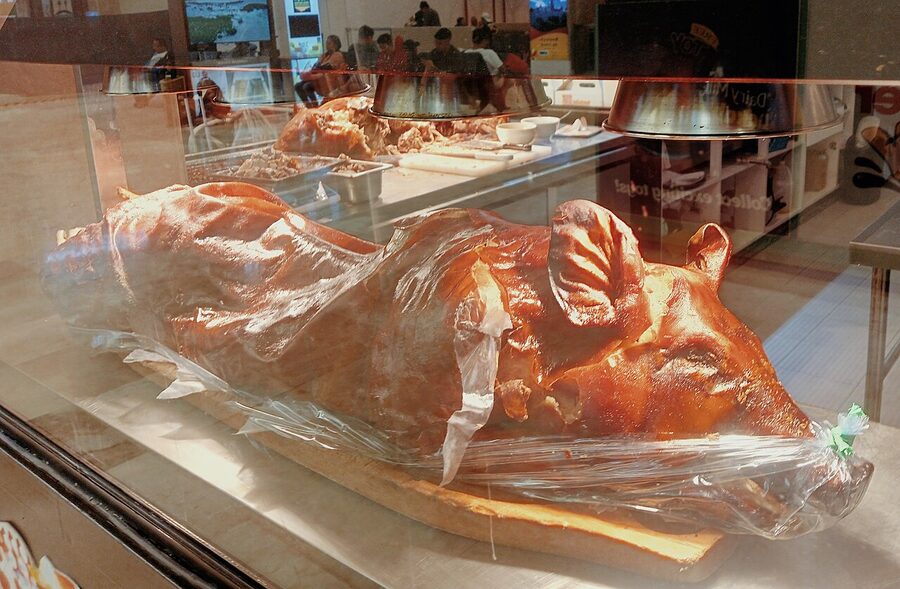
This guide takes the lechon as a given and points you everywhere else. Markets, hawker rows, midnight chicken places that locals only mention after their second beer, fish picked off ice and cooked on the spot, dried-fish breakfasts that are spectacular if you’ll get over the smell. Cebu City, Mandaue, and Lapu-Lapu are technically three cities, but they share one stomach. I’ve eaten my way through all of it across multiple trips, and the parts I keep going back for are not the parts the airport billboards advertise.
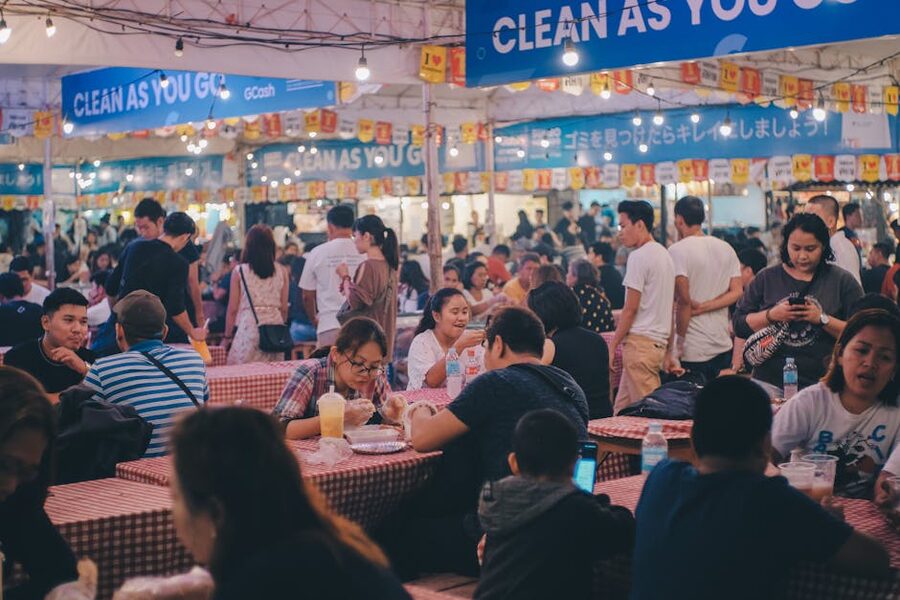
The lechon question, sized properly
Yes, you should eat lechon in Cebu. No, it’s not the only thing, and it’s not even the main thing if you’re staying more than three days. Here’s what’s actually going on with Cebu lechon, why it’s different from lechon elsewhere in the Philippines, and how to eat it without spending a tourist tax.
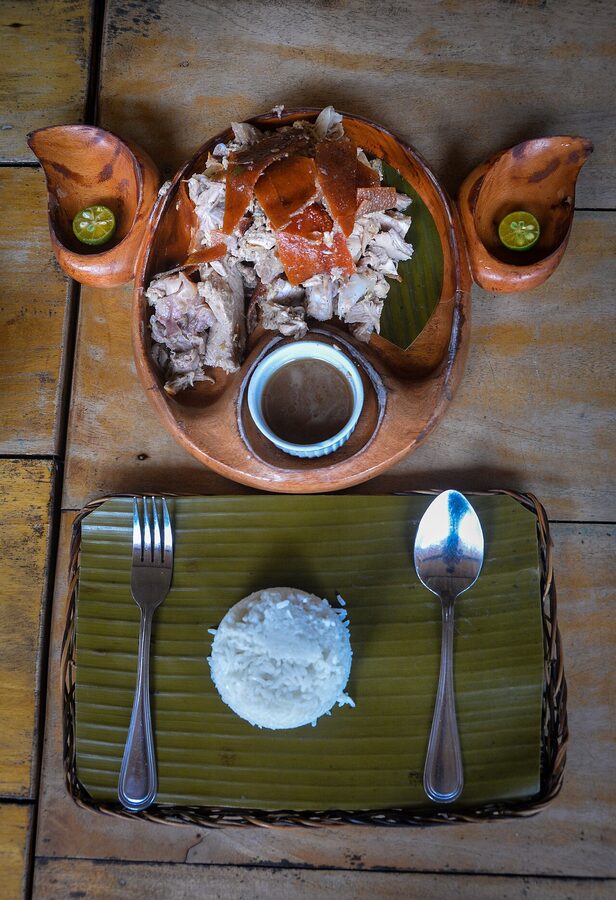
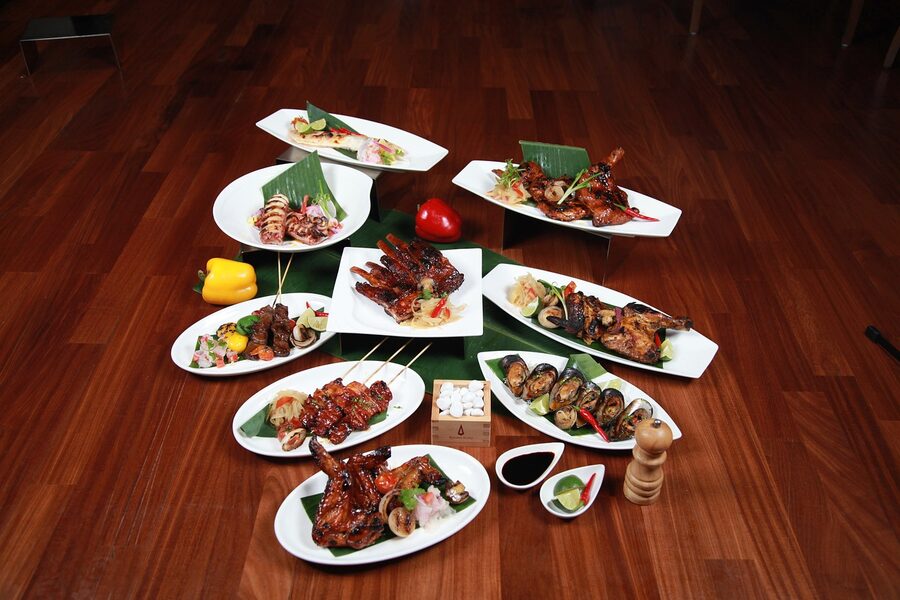
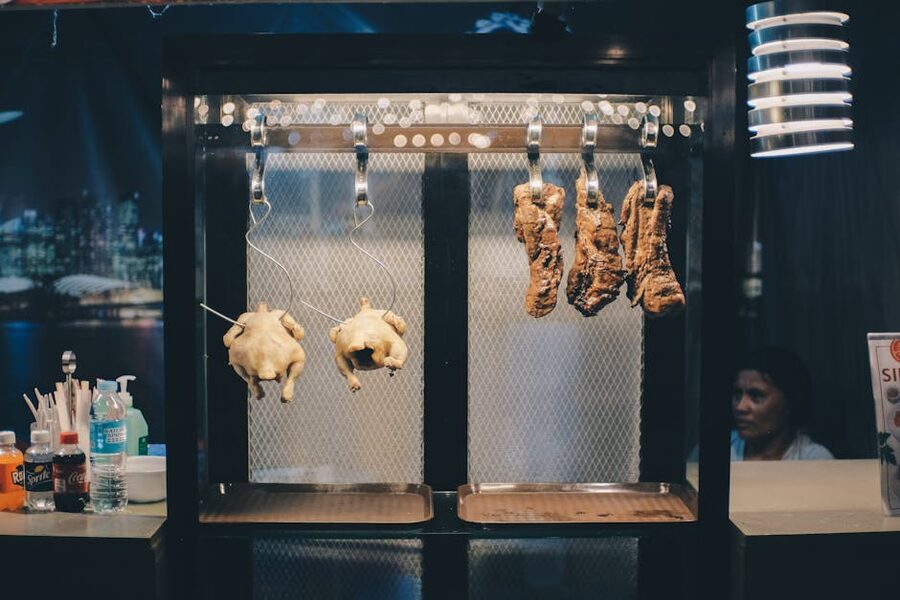
Cebu lechon is brined and stuffed differently than the Luzon version. Tanglad (lemongrass), bay, garlic, salt, lots of black pepper, sometimes star anise, sometimes onions. The pig is rotated over coconut husks and gentle wood for four to five hours. The result is the most heavily-seasoned roast pork in the country: skin like a cracker, meat that doesn’t need any sauce. In Manila people eat lechon with Mang Tomas. In Cebu, the dipping sauce is usually just a vinegar with chillies and onions, sometimes nothing. The meat carries itself.
The famous names are Zubuchon, Rico’s, and CnT. Zubuchon is the one Anthony Bourdain put on the map in 2009; the SM Seaside branch is convenient, the airport branch is fine for a last meal. Rico’s has the more old-Cebu following and arguably the better skin. CnT is the budget option. All three are good. None of them are the best lechon I’ve eaten in Cebu.
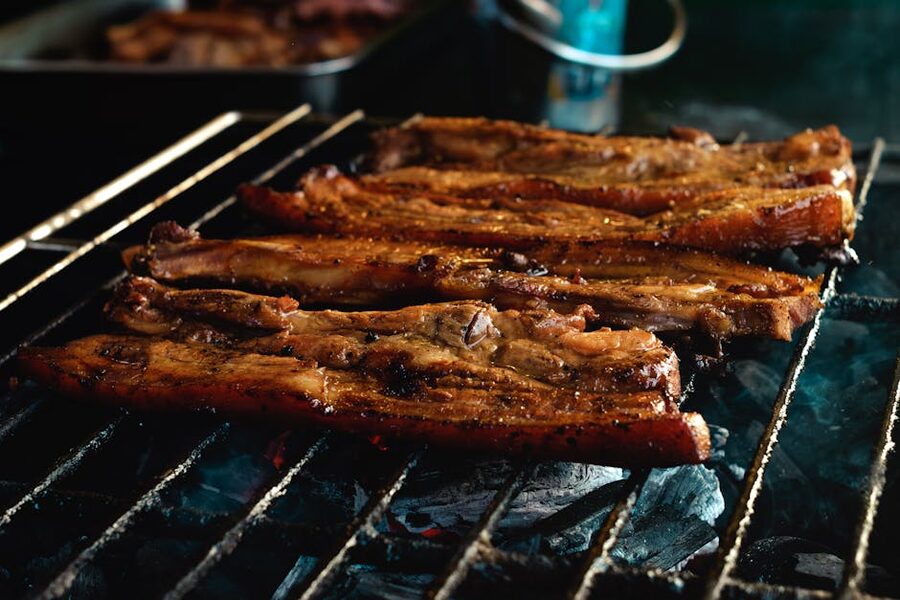
The best is the Carcar lechon, sold by the kilo at the Carcar public market, an hour south of the city, and the Talisay roadside lechoneras you pass on the highway. Talisay is closer, twenty minutes from downtown. You can get a quarter kilo for around ₱400, eat it standing at a plastic table, drink a Red Horse, and watch the trucks go by. That’s the meal. If you want the recipe and the cooking method explained from the cook’s side, including how to make a version of it at home, I wrote a separate piece on Balamban liempo; it’s the lechon belly cousin from a town up the western coast, and the technique is the closest most home cooks can come.
How to eat lechon like you live there
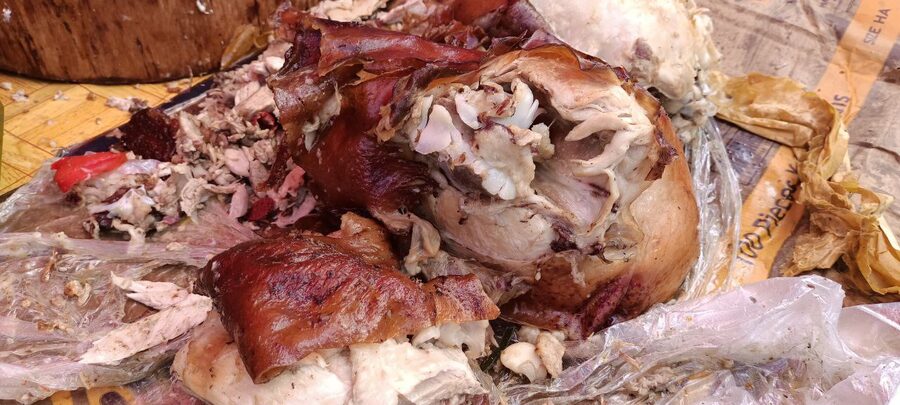
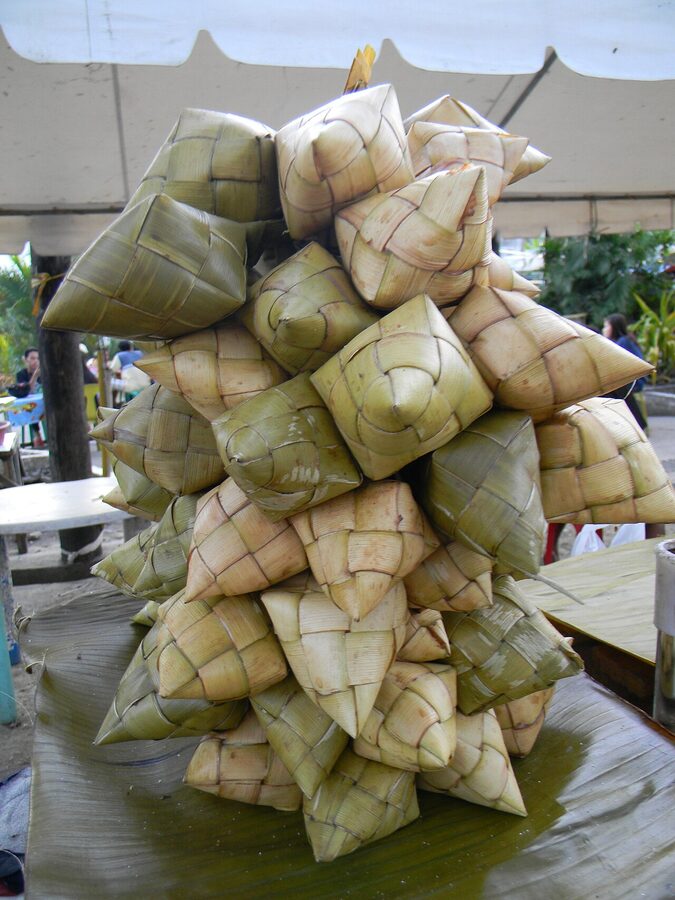
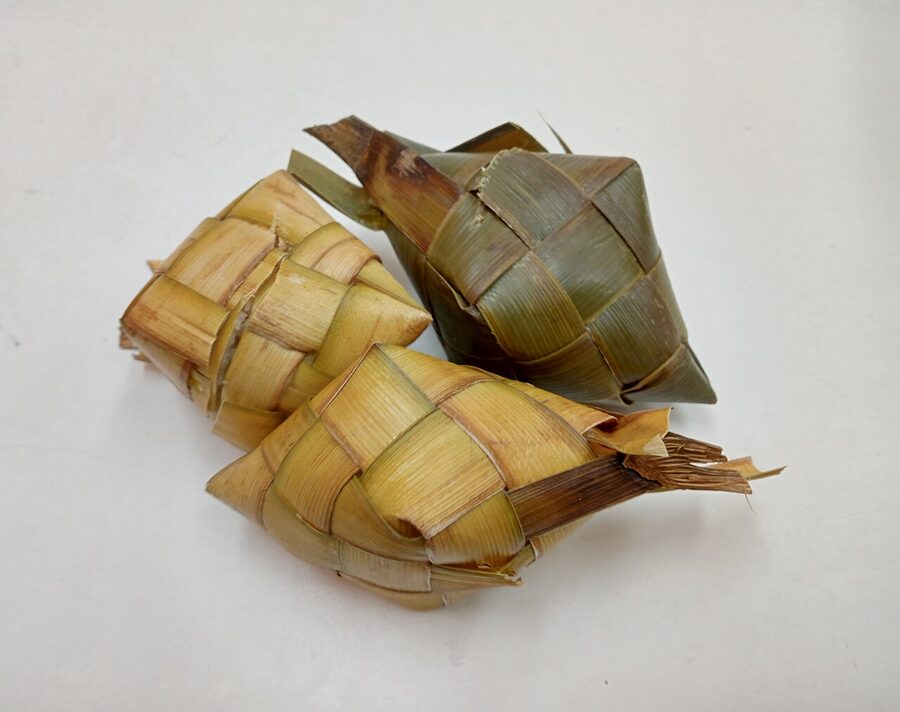
Order half a kilo, not less. Get a side of puso (woven hanging rice). Dip the meat in spiced vinegar, not Mang Tomas, and don’t ask for it; if they have any, they’ll bring it. Order one beer. Eat with your hands. The skin goes first, while it’s still loud under your fingers; the meat lasts longer and is better with the puso. If you’re at Rico’s or Zubuchon and you have the option, get the cheek meat (mukha). It’s the best part of the pig and the part most travellers miss.
One genuinely useful negative: avoid lechon at hotel buffets. The chafing dish ruins the skin, the meat goes from juicy to stringy in fifteen minutes, and the marinade flavour gets diluted by reheat. Buffet lechon is the worst version of an excellent dish.
Carbon Market at five in the morning
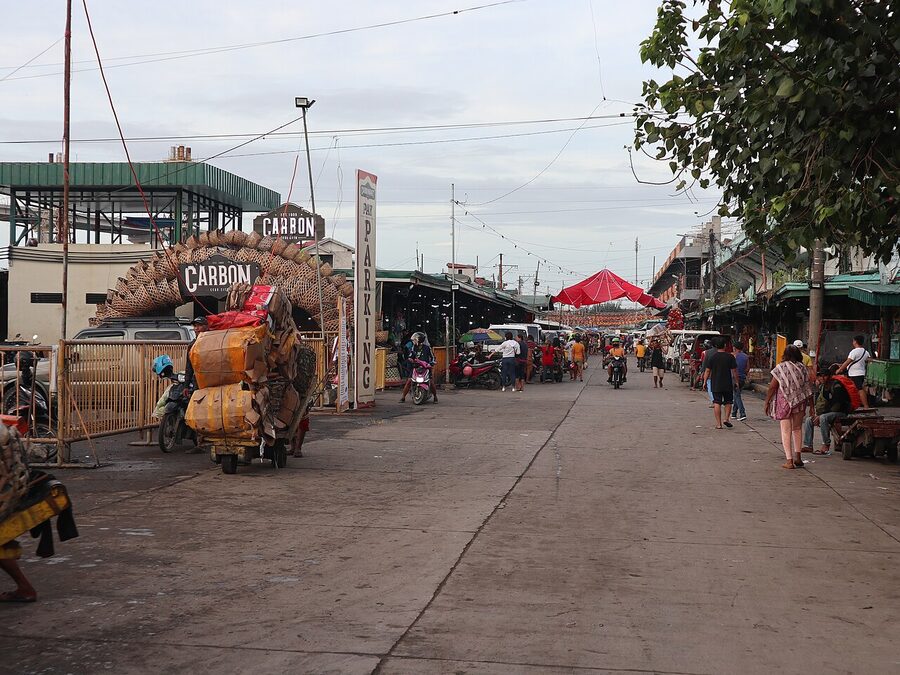
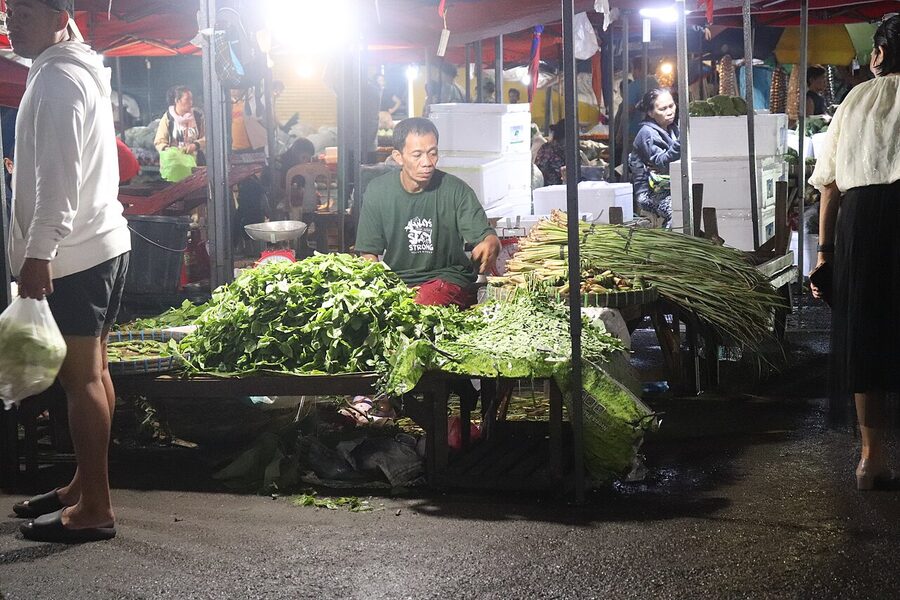
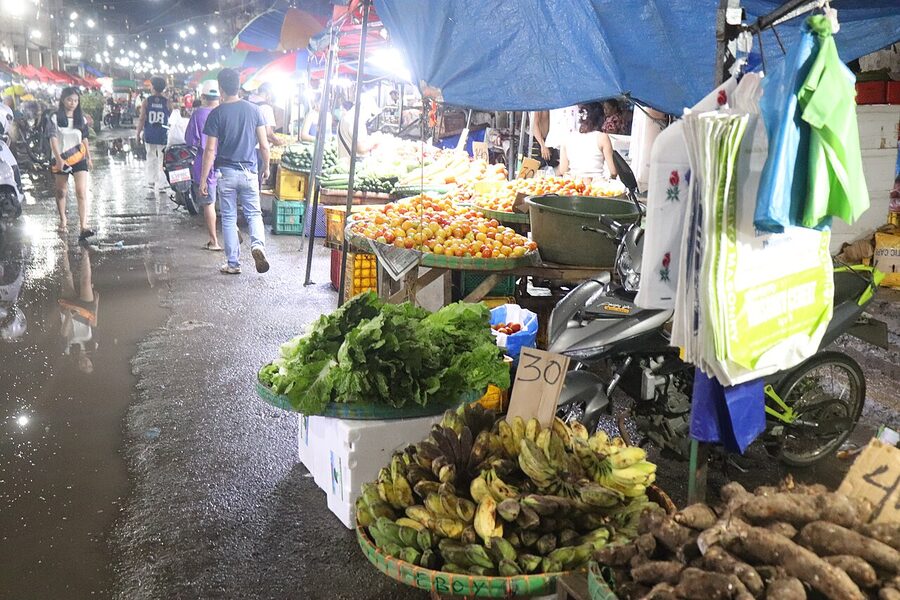
Carbon is Cebu’s oldest and biggest public market. It’s also currently in the middle of a long redevelopment, so what you find depends on which year you turn up. The wet section runs every day. The dry section, which is where the dried fish, the spices, and the fruit vendors sit, is at its peak between four and eight in the morning. After ten the heat sets in, the trucks have already left, and the best produce is gone. If you arrive at noon you’ll wonder what the fuss was about; arrive at six and you’ll understand.
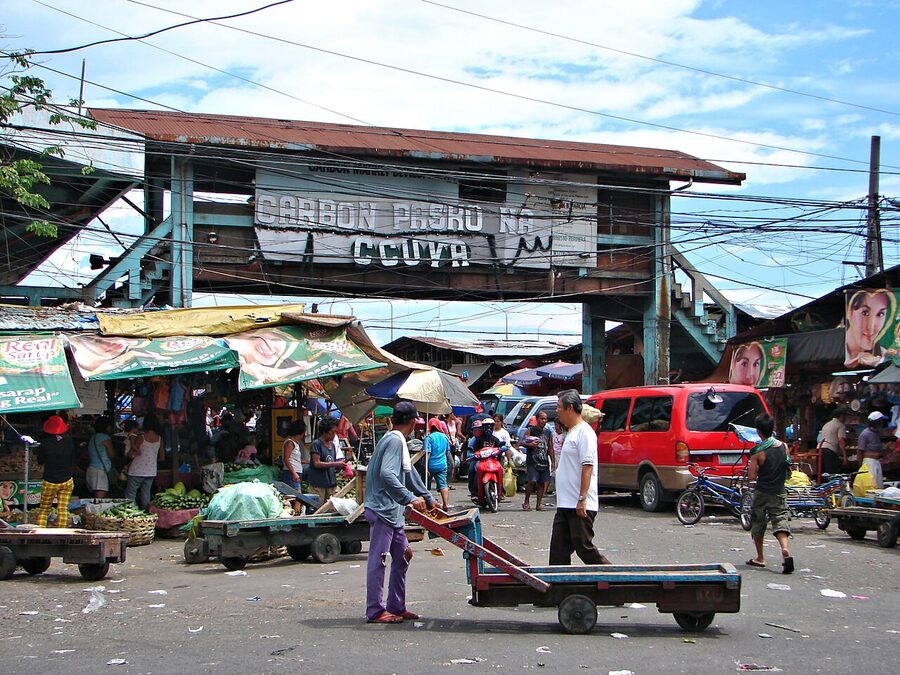
Carbon is not Sugbo Mercado. Carbon is the actual food supply chain for half of Cebu City; Sugbo Mercado is a curated weekend night market for tourists and millennials, which I’ll get to in a minute. Both are worth your time. Don’t conflate them.
What to eat at Carbon, in rough order of how much you’ll regret skipping:
- Puto maya with sikwate at one of the breakfast tables on the market periphery. Puto maya is sticky rice steamed with ginger and a little coconut; sikwate is unsweetened thick chocolate made from local tablea. ₱40-60 for both. Filipino kids drink this on cold mornings; it’s the Cebuano version of porridge and the best ₱50 breakfast in the city.
- Ngohiong from a street vendor near the back. ₱15-25 a piece. (More on ngohiong later.)
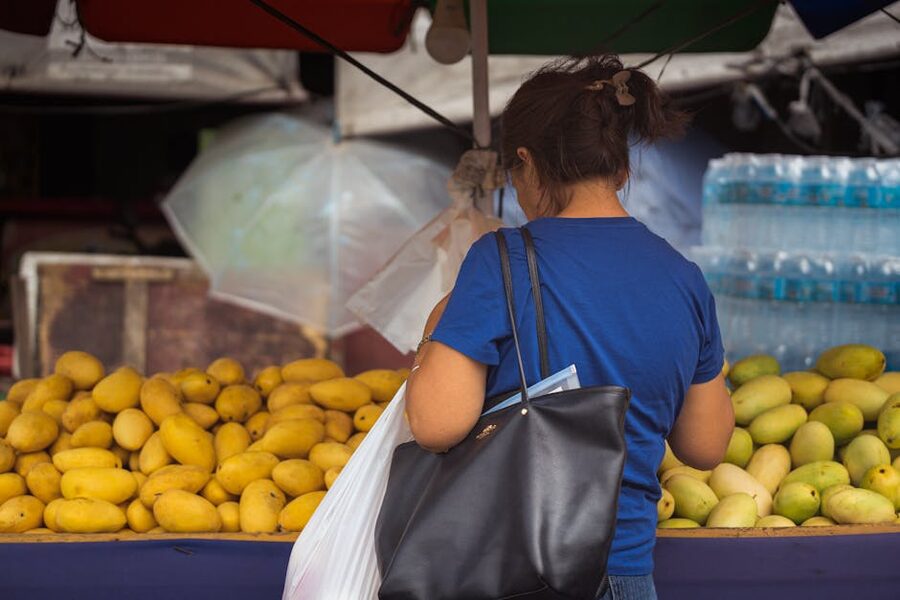
- Fresh mango. The Carcar and Guimaras varieties cost more than the imported ones at SM, and they’re worth the markup. Look for the smaller ones, slightly green-tinged at the stem; they ripen in two days on a counter and are sweeter than the giants.
- Dried fish. This is also Taboan Market territory (a 10-minute taxi away), but Carbon has it. Buy danggit, vacuum-sealed if you’re flying it home; it’ll keep for months.
Carbon Market practical tips
Cash only. Bring small bills, ideally ₱20s and ₱50s. The vendors don’t care about your big notes and will sometimes pretend not to see you if you flash a thousand. Wear closed shoes; the wet section’s wet section is wetter than you think. Bring a thin reusable bag in your pocket if you plan to actually buy something, the sellers’ plastic ones tear within five minutes of carrying mango.
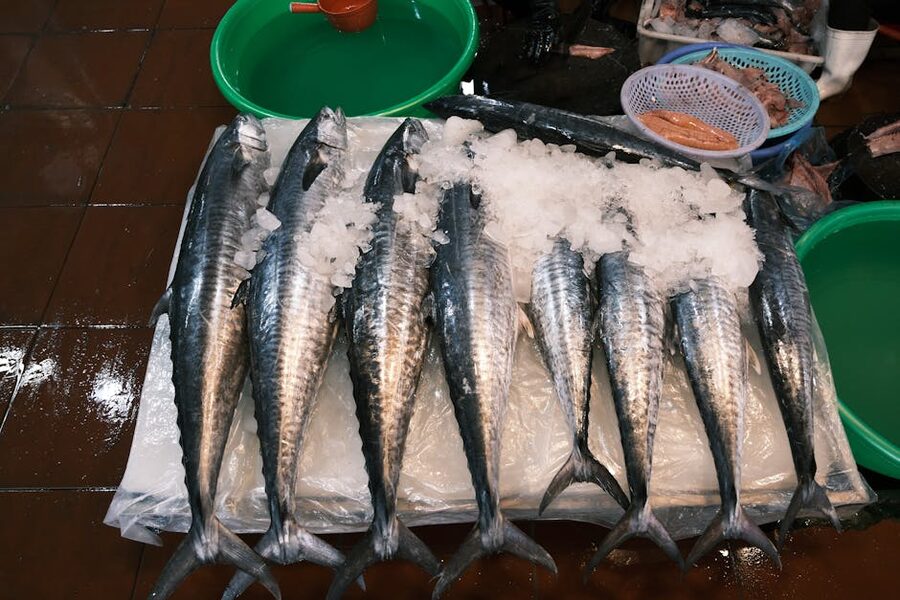
Speaking of fresh fish at Carbon: the catch comes in overnight and the wet section starts around three in the morning. By eight the best of it is gone, by ten the leftovers are being moved to ice. If you want to actually eat the fish you saw at Carbon, the play is to buy from one of the morning market vendors and take it to a sutukil restaurant, or skip the buy-and-take routine and go straight to a sutukil place near the seafront where they have their own ice and their own grills. I unpack the whole sutukil ritual in a separate piece; fish-picking, the negotiating, what to grill versus what to make into kilaw; and it’s worth the read before you turn up at one of these places hungry and confused.
Larsian and the inihaw alley
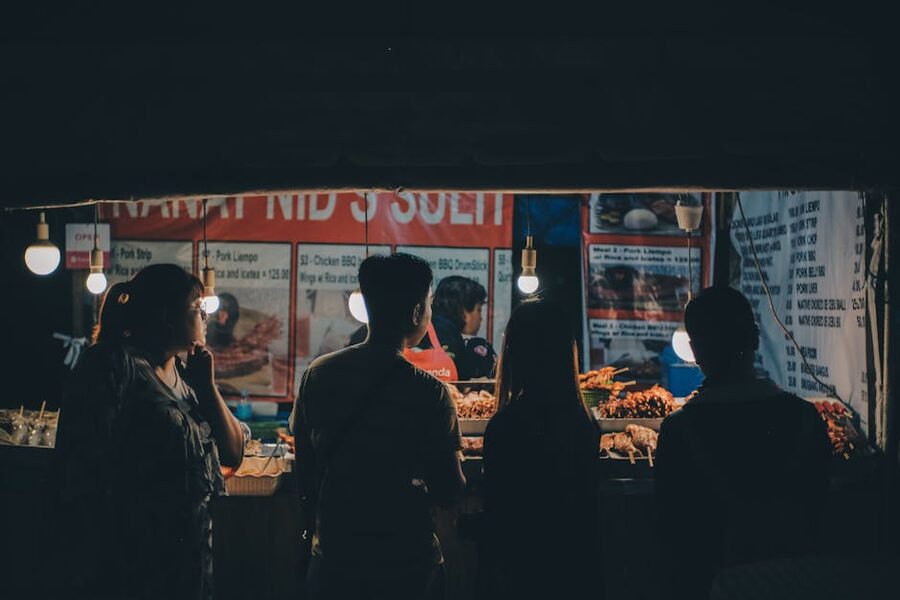
Larsian is a row of barbecue stalls on Don Pedro Cui Street, right behind the Cebu Doctors’ University Hospital. It’s the busiest grilled-meat street in the city, and it has been since the 1980s. Locals call it Larsian sa Fuente. Every cab driver knows it. Tell them “Larsian Fuente” and they’ll know.
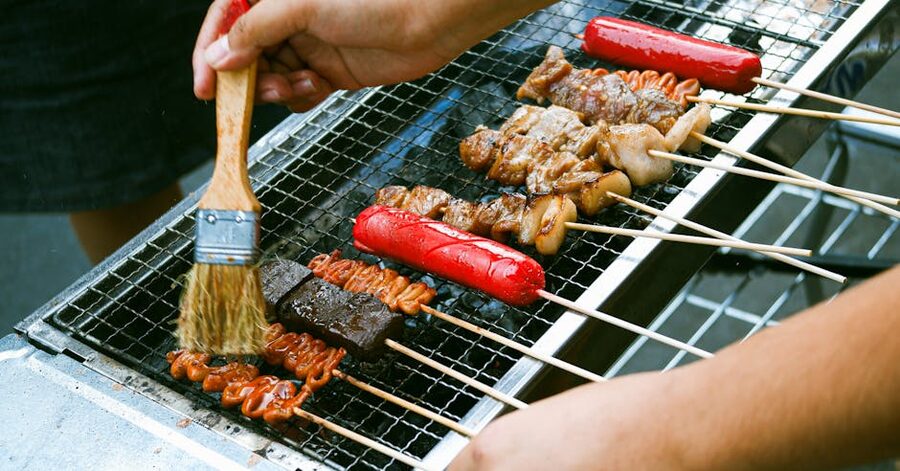
The system: you walk down the row, you pick a stall (any stall; they’re roughly the same), you point at the meat you want from the trays in front of the grill, you sit down, the grilled food comes to you on a plate with puso. Order in this rough order:
- Liempo: pork belly cut into strips, marinated in soy-vinegar-garlic-7Up, grilled hot and fast. ₱45-60 a stick.
- Chorizo Cebu: fat, sweet, garlicky pork sausages. Two per stick. ₱40 each stick.
- Chicken inasal: wings, thighs, the odd whole leg. The atsuete (annatto) marinade gives the skin its red colour. ₱60 a piece for thigh, ₱30 for wings.
- Atay: chicken liver, marinated and grilled until just past pink. Polarising. The good ones are the size of a thumb and properly seasoned; the bad ones are dry and chalky. ₱20 a stick.
- Tuyo or pusit: small dried fish or squid, char-grilled. ₱25-50.
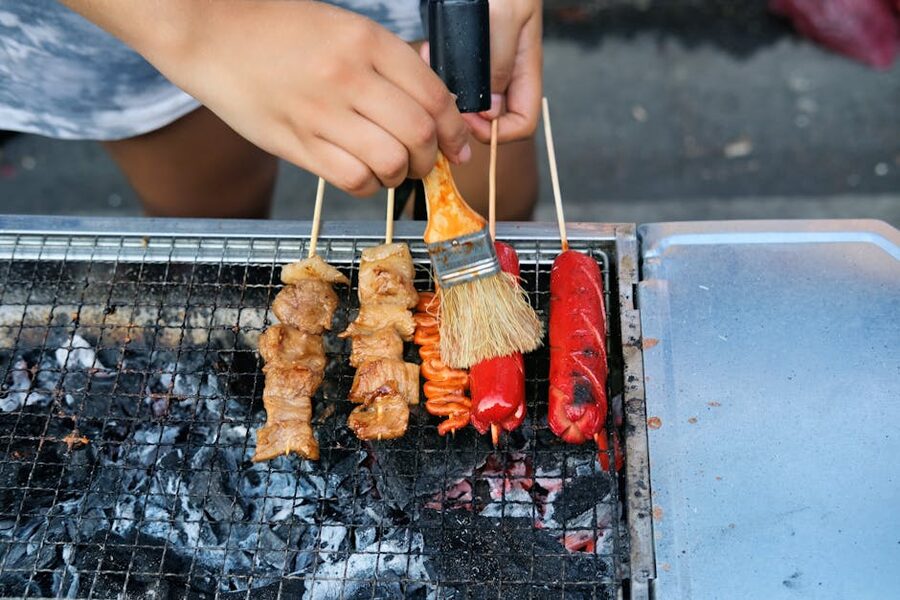
What to skip: the seafood at Larsian is fine but not why you’re there; for that, go to a sutukil place. The shanghai (Filipino spring rolls) at Larsian is also not the version you want; ngohiong is better. And the basting sauce is sweet; sweeter than what you might be used to. Don’t over-baste, and ask for vinegar dip on the side. Most of the stalls have a soy-and-calamansi dip with chilli; if you don’t see one, ask for it (toyomansi).
Larsian vs the ones nobody mentions
Matias BBQ on A.S. Fortuna in Mandaue is the one most Cebuanos point to when you ask for the best version. It’s busier than Larsian at lunch, the puso comes hot and gummy in the way you want, and the chorizo is the best in the city. Walk past the line of trays at the entrance, point at what you want, watch them grill it, take it to your table. Around ₱150-250 a head, maybe ₱350 if you’re hungry. The Mandaue location is fifteen minutes from Cebu City Marriott in a Grab.
AA BBQ on Andres Abellana in Guadalupe is a third option, slightly more sit-down, with the same paluto (point-and-cook) system extended to seafood and stews. ₱250-400 a head. Their pork sisig and lechon kawali are honest. Don’t bother with the dessert.
If you want a guided pass through the Cebu street-food circuit on your first night and you’re not yet brave enough to wing it solo, the Klook and Viator listings are the most reliable way to book. The two products that come up consistently are Viator’s Cebu City Historical and Food Tour and the GetYourGuide street-food walk with a local guide; if you’re looking for a hands-on cooking class, Klook’s traditional Filipino cooking class covers a few of the dishes in this guide. I’d usually do a tour like this on night one and use it to decide what to chase down on my own for the rest of the trip.
Sutukil at Sugbo Mercado, and what it actually is
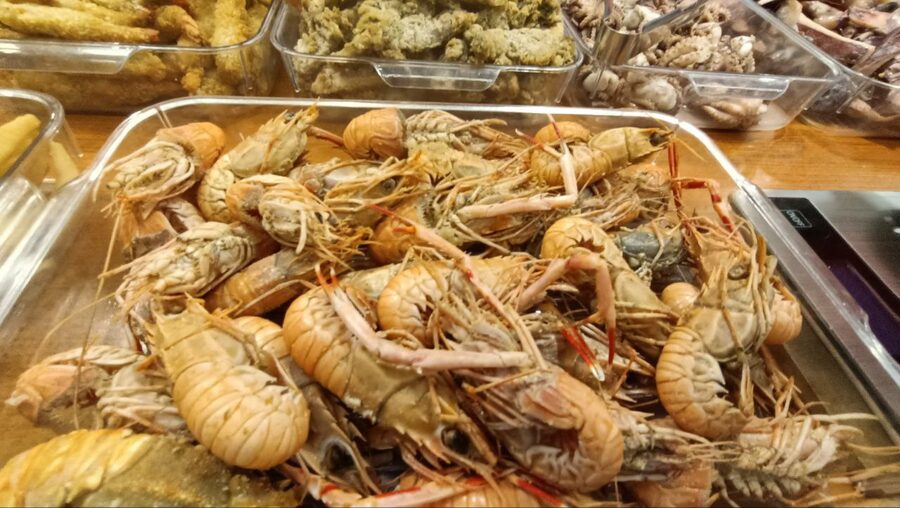
Sutukil is one of those words you have to say out loud once before it makes sense. Su-tu-kil. It’s a portmanteau: sugba (grilled), tula (sour soup), kilaw (raw, vinegar-cured). The original sutukil concept came out of the Mactan seafood markets, where you pick a fish off the ice, hand it over, choose how you want it cooked, and the stall gives it back to you three ways: half grilled, half in soup, the trimmings as kilaw. One fish, three preparations, one sitting.
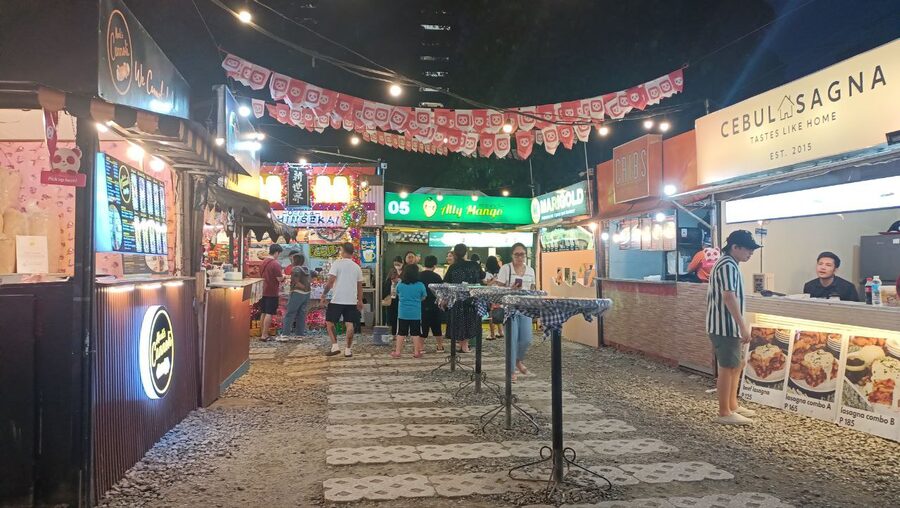
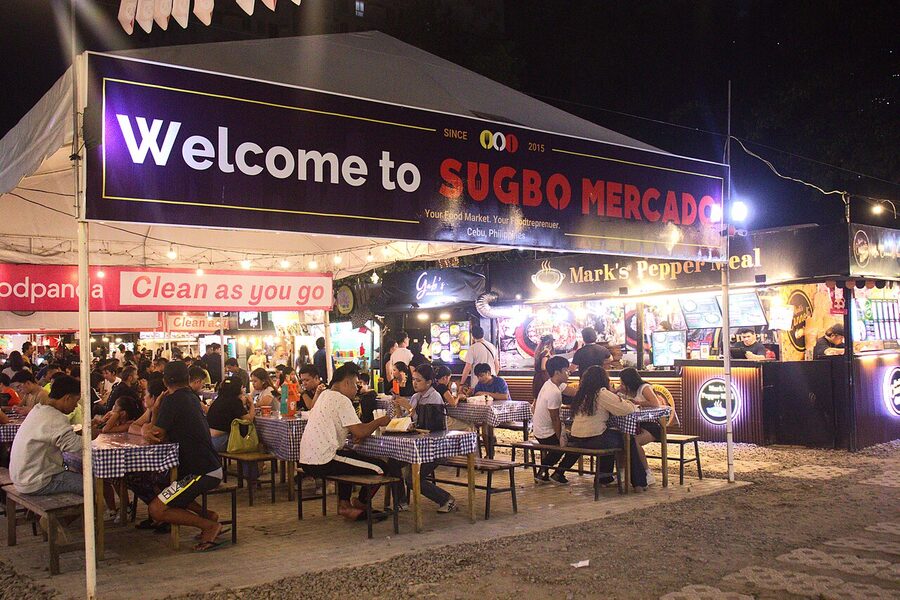
The cleanest, most polished version of this experience is at Sugbo Mercado in IT Park, Cebu City; open Thursday to Sunday, evenings only. It’s a curated night market with maybe forty stalls; some sutukil, some grilled meats, some Korean, some Japanese, some craft soda. Easy to navigate, English on most signs, card sometimes accepted. Good if you’re tired or it’s your first night.
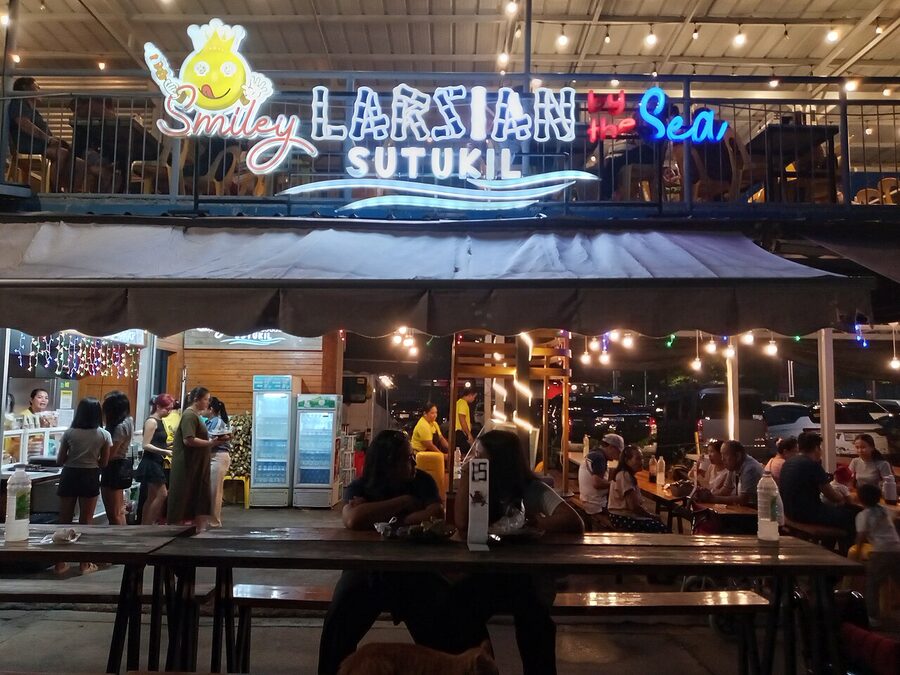
The deeper version is on Mactan, in the Lapu-Lapu City seafood markets and the Mactan Larsian-by-the-Sea stretch on the coast road. Pick the fish off the ice, watch them clean it, walk it across to the cooking station, agree on the prep. ₱600-1,200 for a meal for two depending on what fish you pick. Ten minutes by Grab from Mactan-Cebu International Airport.
What to actually order at sutukil
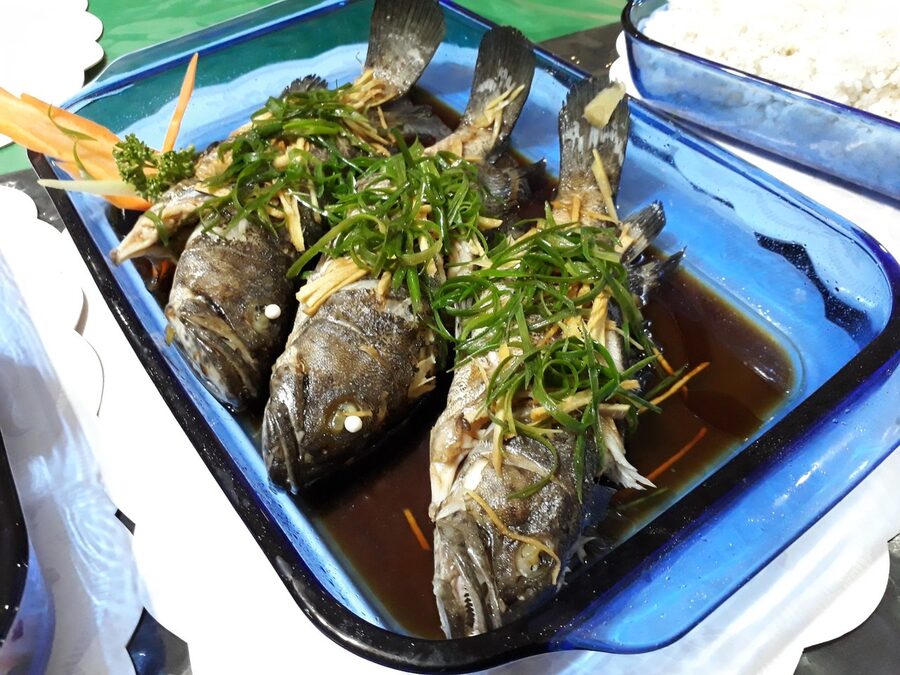
Lapu-Lapu (grouper) for the grill. It holds up well to direct heat, the flesh stays moist, and the skin gets that crisp, slightly bitter char. Around ₱600/kg at Sugbo Mercado; ₱400-500/kg on Mactan if you negotiate.
Tula (sour soup) is best with snapper or any oilier fish. The broth is kamias-based or tomato-and-ginger, mildly sour, almost cleansing after the grilled course.
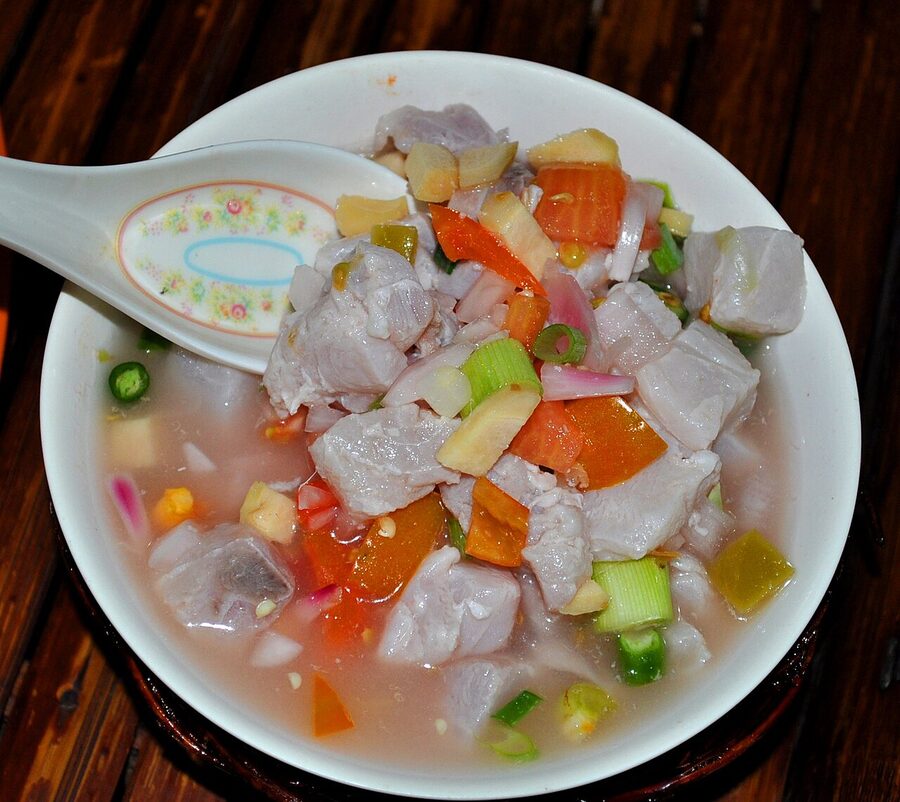
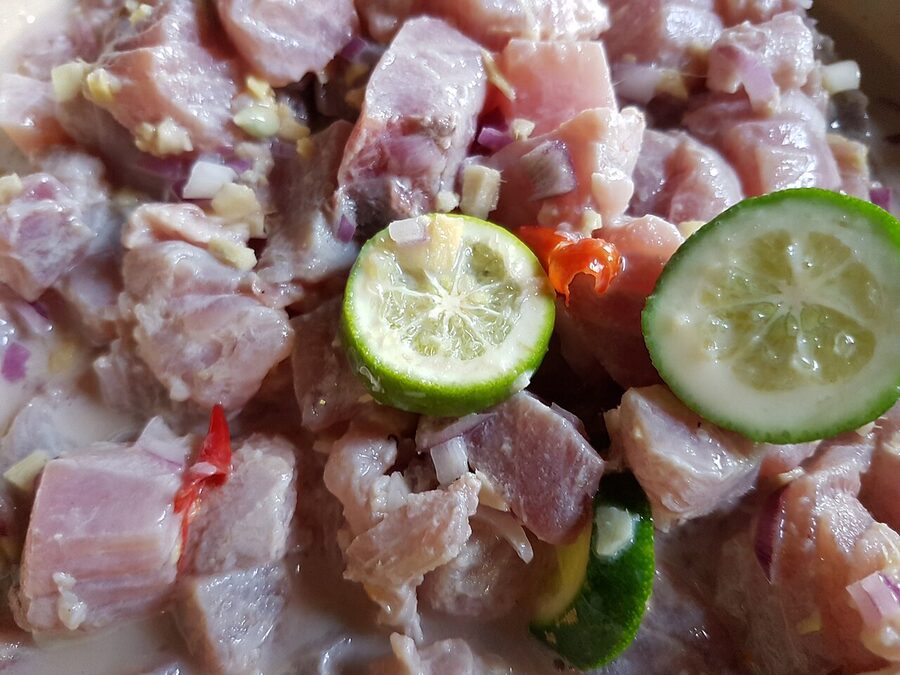
Kilaw is what most travellers skip and shouldn’t. It’s raw fish (usually tuna or tanigue) cured in vinegar with chilli, ginger, onion, sometimes coconut milk. Closer to ceviche than to sashimi. The acid does the cooking. ₱200-350 a plate. Order it first while it’s coldest.
Halo-halo, and the airport version isn’t it
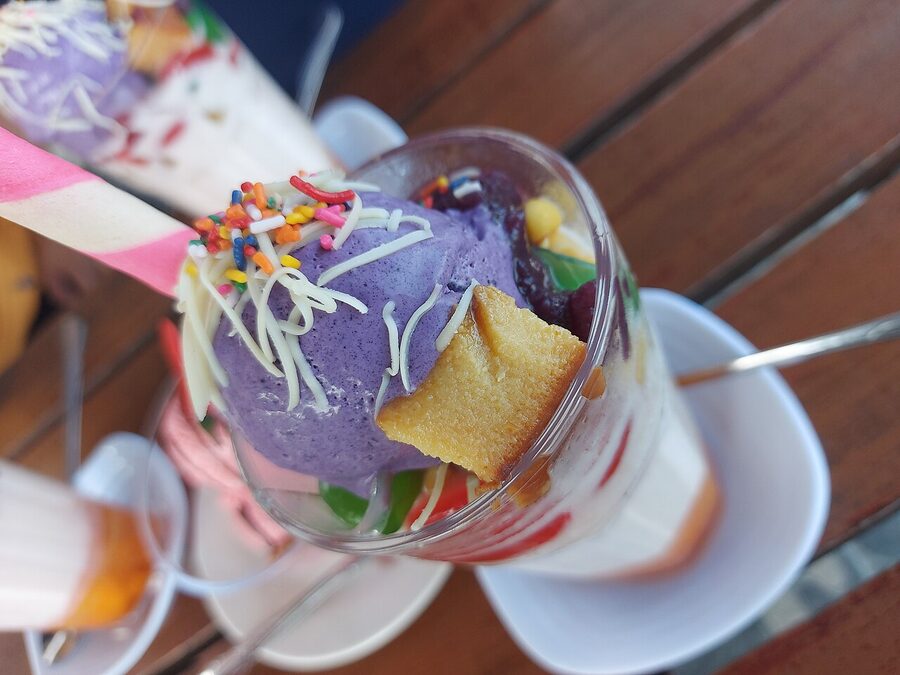
Halo-halo is the dessert that’s been mauled hardest by tourist marketing. The real thing is precise: shaved ice, evaporated milk, ube halaya, leche flan, sweet beans (kidney and chickpea), nata de coco, kaong (sugar-palm fruit), macapuno, sometimes corn, sometimes pinipig, topped with a scoop of ube ice cream. Eight to ten layers. ₱120-200 in Cebu for the proper version; ₱350 at the airport, where they leave half the ingredients out.
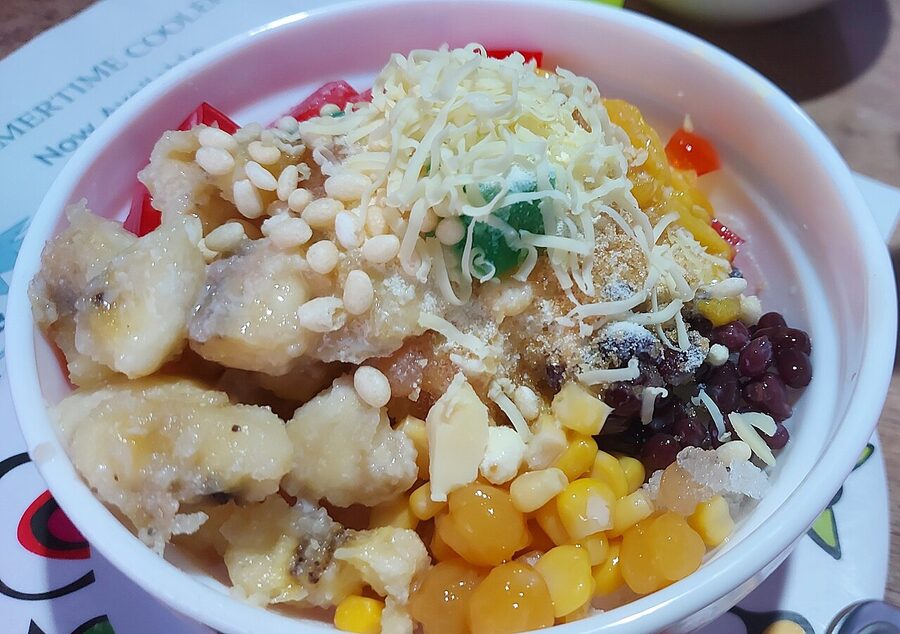
The two best in Cebu City: Razon’s of Guagua, branch in Robinsons Galleria, has the cleanest, simplest version (just three ingredients: macapuno, leche flan, sugared bananas). And Chowking does a surprisingly decent ₱130 mall version that gets the layering right because they just do it a lot. Skip the upscale restaurant takes; halo-halo doesn’t get better with $20 ingredients.
The mango angle: Cebu mangoes are at their best March through May, and that’s also when the halo-halo at the smaller stalls switches to using fresh mango cubes instead of preserved. If you’re in Cebu in those months, get a halo-halo that visibly has fresh mango on top, and don’t pay over ₱180 for it.
Danggit, dried fish, and the breakfast that smells worse than it tastes
The Cebuano breakfast you should plan a morning around: garlic rice, danggit (dried rabbitfish), an egg fried until the edges crisp, and a tomato-onion salad with vinegar. ₱100-150 at most karinderias. Coffee on the side. The whole thing takes ten minutes, and it sets up a market crawl better than any oats-and-fruit smoothie ever will.
Danggit is filleted, salted, sun-dried, and re-rehydrated by frying. The smell while it’s cooking is divisive; some travellers find it pungent, my own first reaction was “yes please, more of this”. The texture is somewhere between a salt crisp and jerky; the flavour is concentrated sea, with the salt level of an anchovy. Eat it with the rice, mash a bit of the garlic into each forkful, hit the tomato salad to cut through.
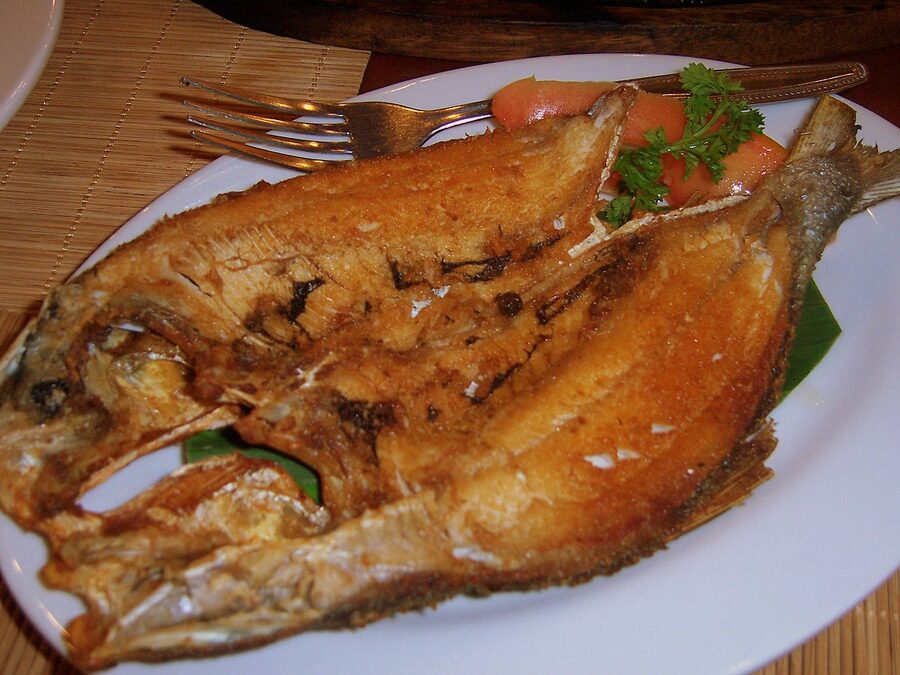
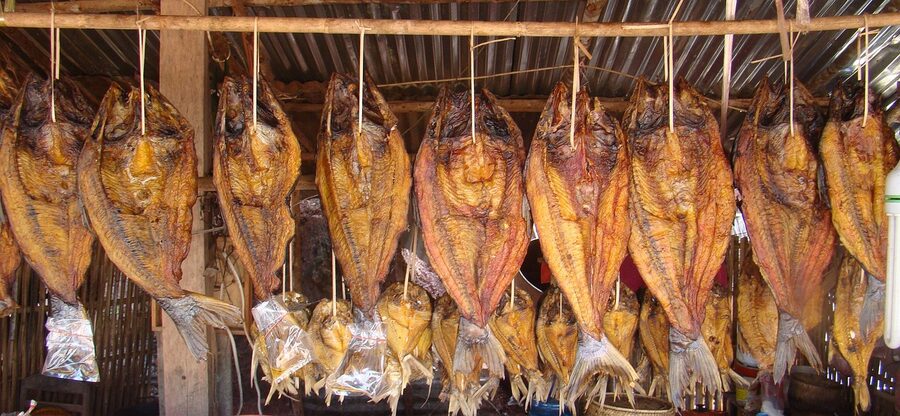
Where to eat it: any karinderia open at 7am will do; I’m fond of the breakfast counter at STK ta Bay! on Cebu Doctors street, and any of the small spots around Mango Square. If you want to take danggit home, Taboan Public Market in the city is the dried-fish specialist. Vacuum-sealed bags travel fine in checked luggage; not in carry-on, the whole plane will know.
Other dried-fish things worth the trip to Taboan
Pusit (dried squid) for grilling; soak first, then char briefly. Tinapa (smoked bangus) for breakfast or a fast lunch. Bulad (a generic local dried fish, smaller than danggit) by the kilo. The dried mango from Taboan is also better than the supermarket-packaged kind; the colour is more amber, the texture chewier.
Cebuano-Chinese: ngohiong, lechon manok, siomai sa Tisa
Cebu’s Chinese cooking history runs deep. The big wave came from Fujian via Manila over two centuries; the smaller wave came directly into Cebu through Lapu-Lapu’s port. The food that came out of those kitchens has been completely absorbed into Cebuano cooking. Three things you should eat:
Ngohiong
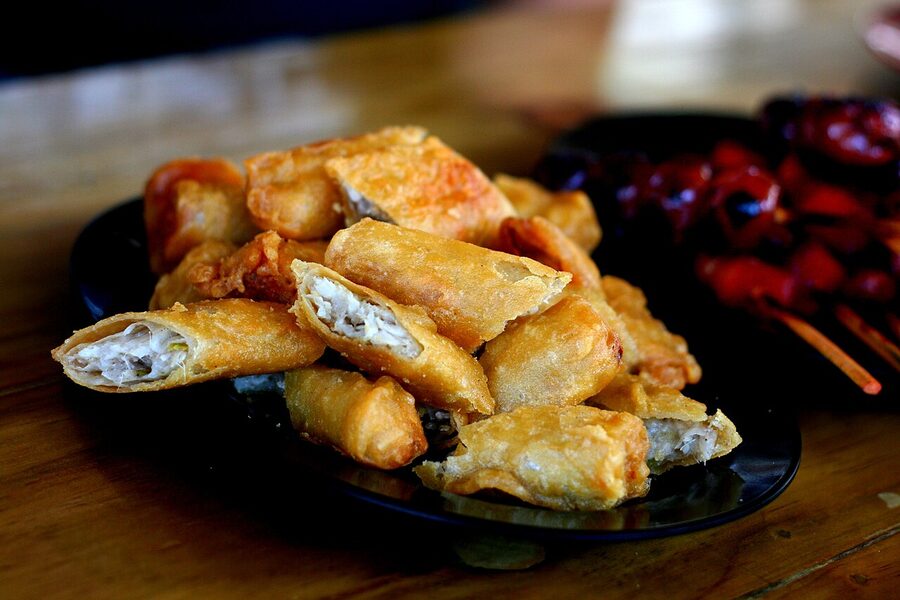
The Cebuano spring roll. Five-spice, ground pork sometimes mixed with shrimp or singkamas, wrapped in a thin spring-roll skin, deep-fried. Eaten with a slightly sweet vinegar dip, sometimes with a peanut-based sauce on the side. ₱15-25 a piece at street stalls, ₱40 at sit-down places. The Cebu version is shorter and fatter than the Manila version, and the five-spice (gho-hiong = “five spices” in Hokkien) is more aggressive.
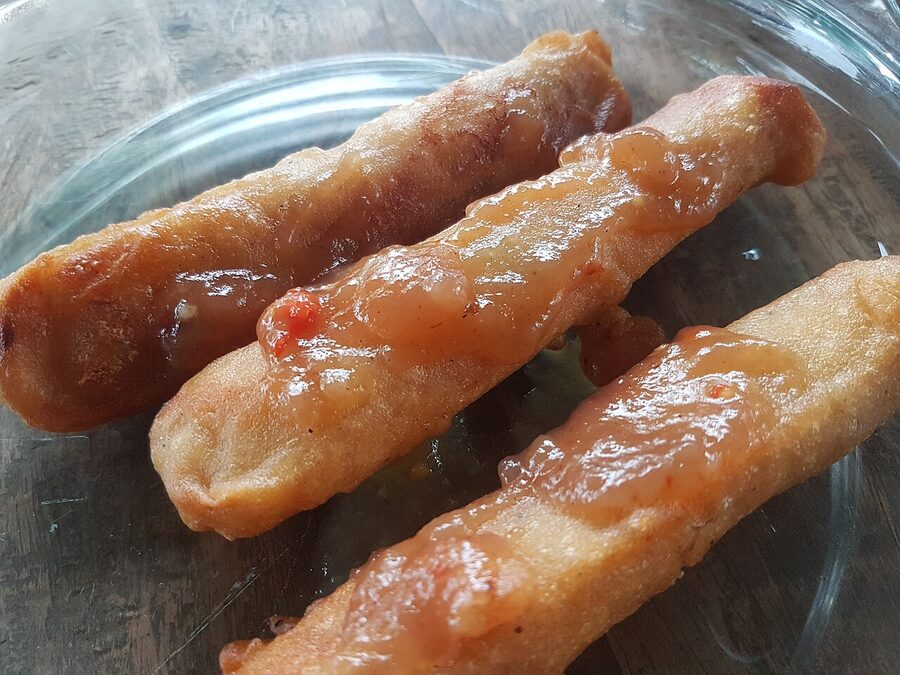
Best ngohiong I’ve had in Cebu City: Ngohiong House on Pelaez Street near Mango Square. Order four pieces minimum. They come out two minutes after you order, hot enough to burn your tongue, and they don’t keep; eat them on site, do not get the takeaway box.
Siomai sa Tisa
An entire Cebu food category named after a neighbourhood. Tisa is a working-class barangay in Cebu City where, in the 1980s, the siomai stall culture took off. The siomai is bigger than the dim sum version, the wrapper is thicker and chewier, and it’s served with a soy-calamansi-chilli oil dip you mix yourself. ₱8-15 a piece. Order eight per person. There is no upmarket version, by design; the cheap, plastic-stool, neighbourhood version is the version.
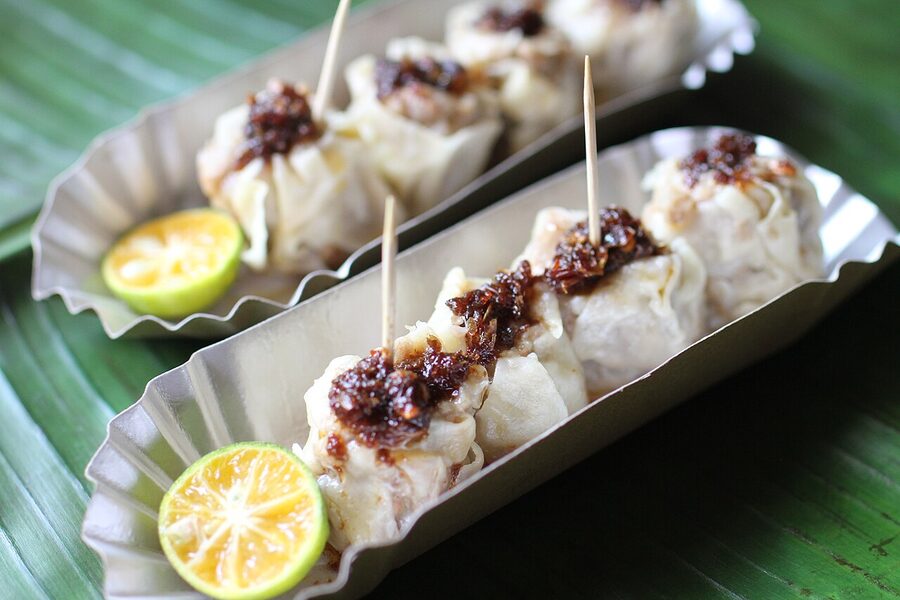
The original Tisa block is along Tisa Maxilom (now MJ Cuenco). Half a dozen stalls. They’re best between 3pm and 7pm; before then, the siomai is from the morning batch and the wrappers go gummy. After 7 the queue gets long. Bring small bills, again. Cash only.
Lechon manok
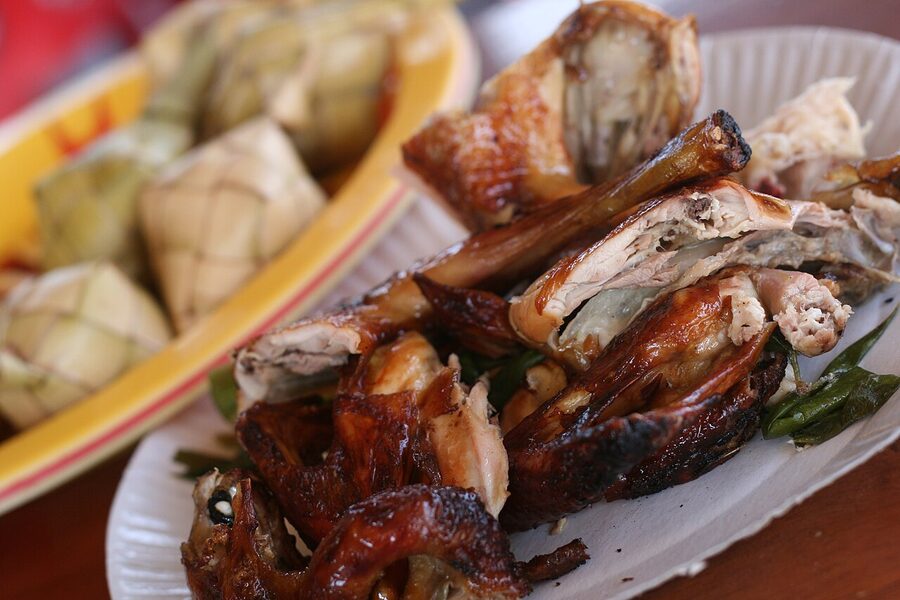
The roast-chicken cousin of lechon. Marinated overnight in soy, lemongrass, garlic, sometimes a touch of star anise, then roasted on a rotisserie until the skin is mahogany. Sold whole or half from streetside lechon manok stands. ₱250-350 for a whole bird; eat with puso, with a vinegar-and-chilli dip on the side. Andok’s, Sr. Pedro, and Conching’s are the chains; Conching’s is the Cebu native and worth seeking out over the others. The neighborhood places are usually better than the chains, but you’ll have to ask around.
Where to stay if food is the point
Two areas make sense if you’re choosing accommodation around eating: Cebu Business Park / IT Park (for the modern restaurant scene plus Sugbo Mercado on weekends), or near Fuente Osmeña (for Larsian, the Pelaez Street ngohiong, the karinderia breakfast circuit). Mactan only makes sense if you’re flying in late, eating sutukil that night, and flying out the next morning; otherwise the airport-area hotels are more about beach access than food access.
Two hotels worth booking on the food angle, both verified bookable through the major OTAs:
Quest Hotel and Conference Center Cebu (Official site | Booking | Expedia | Agoda | Hotels.com): closest mid-range option to Larsian and the Fuente Osmeña food zone. Walkable to Robinsons Galleria for Razon’s halo-halo. Around 8 minutes’ walk to Larsian. The pool is fine, the breakfast is mid (but you’re not here for that; you’re here because you can fall out of bed and into a barbecue line).
Bai Hotel Cebu (Official site | Booking | Expedia | Agoda): Mandaue side, closer to Matias BBQ and Mandaue’s quieter food spots, and better for the Sugbo Mercado nights since IT Park is a 10-minute Grab away. The rooftop bar gets busy on weekends. Skip the in-house Filipino restaurant; the food on the streets nearby is better.
Practical bits, the part most guides skip
Cash, queues, and timings
Carbon Market, Larsian, ngohiong stalls, siomai sa Tisa, all karinderias, all street vendors: cash only. Sugbo Mercado some stalls take card, most don’t. Mall halo-halo and sit-down restaurants: card fine. Carry ₱2,000-3,000 in 20s, 50s, 100s, and 500s for any day that involves the markets.
Queue timings: Larsian gets bad between 7 and 9pm; arrive at 6 or after 9:30. Sugbo Mercado Thursday nights are the most chaotic; Friday and Saturday are paced. Carbon Market pre-7am is for serious shoppers, post-9am is for tourists. Lechon at Rico’s and Zubuchon: order ahead by phone if you can, the lunch rush at the SM Seaside branches is real.
Cebu City vs Mandaue vs Lapu-Lapu (Mactan), for food
The three cities are physically next to each other but the food character differs. Cebu City has the deepest karinderia layer, the Larsian-Fuente Osmeña inihaw circuit, the Tisa siomai, the densest street-food walk. Mandaue has Matias BBQ, the more old-school neighbourhood eateries, and the better lechon-belly spots on the way out toward Talisay. Lapu-Lapu (Mactan) has the seafood; the live-tank sutukil places, the Mactan Larsian-by-the-Sea row, and the airport-side restaurants. If you’re choosing one, choose Cebu City for breadth. Mactan if seafood is the priority. Mandaue is rarely a base on its own but worth a half-day day-trip for Matias and the lechon route to Talisay.
Language
Cebuano is the local language; everyone speaks Tagalog and most speak English. Useful market phrases: “tagpila ni?” (how much), “pwede ba pakuhaan ng ₱20?” (can I take this for ₱20?), “salamat” (thank you), “lami kaayo” (very delicious; vendors love hearing this from foreigners). Cebuano “kaon ta” (let’s eat) is also a greeting; you’ll hear it more than “hello”. Use it back, even badly, and prices soften. Slightly.
What I’d do with three days, food-only
Day 1: Carbon Market at 6am. Puto maya and sikwate breakfast. Back to hotel for a nap. Larsian for an early dinner at 6pm. Halo-halo at Robinsons Galleria after. Day 2: lechon lunch at Rico’s or Zubuchon. Drive to Carcar in the afternoon for the second-best lechon and the Carcar kinilaw. Back to Sugbo Mercado for late dinner. Day 3: ngohiong breakfast at Pelaez. Mactan in the afternoon for a real sutukil session. Last danggit-and-rice meal at the airport karinderia before flying.
If you only have one day, do: Carbon morning, Larsian dinner, halo-halo for dessert, sleep. Lechon will have to wait until the next trip; better to eat the everyday stuff well than to rush the special-occasion thing.
Cebu food rewards the morning person. The ones who come down at 11am for a brunch buffet leave thinking the city’s overrated. The ones who set an alarm for 5:30 the first day come back twice.
More food-city deep dives are on the Travel Food Blog front page, written the same way.