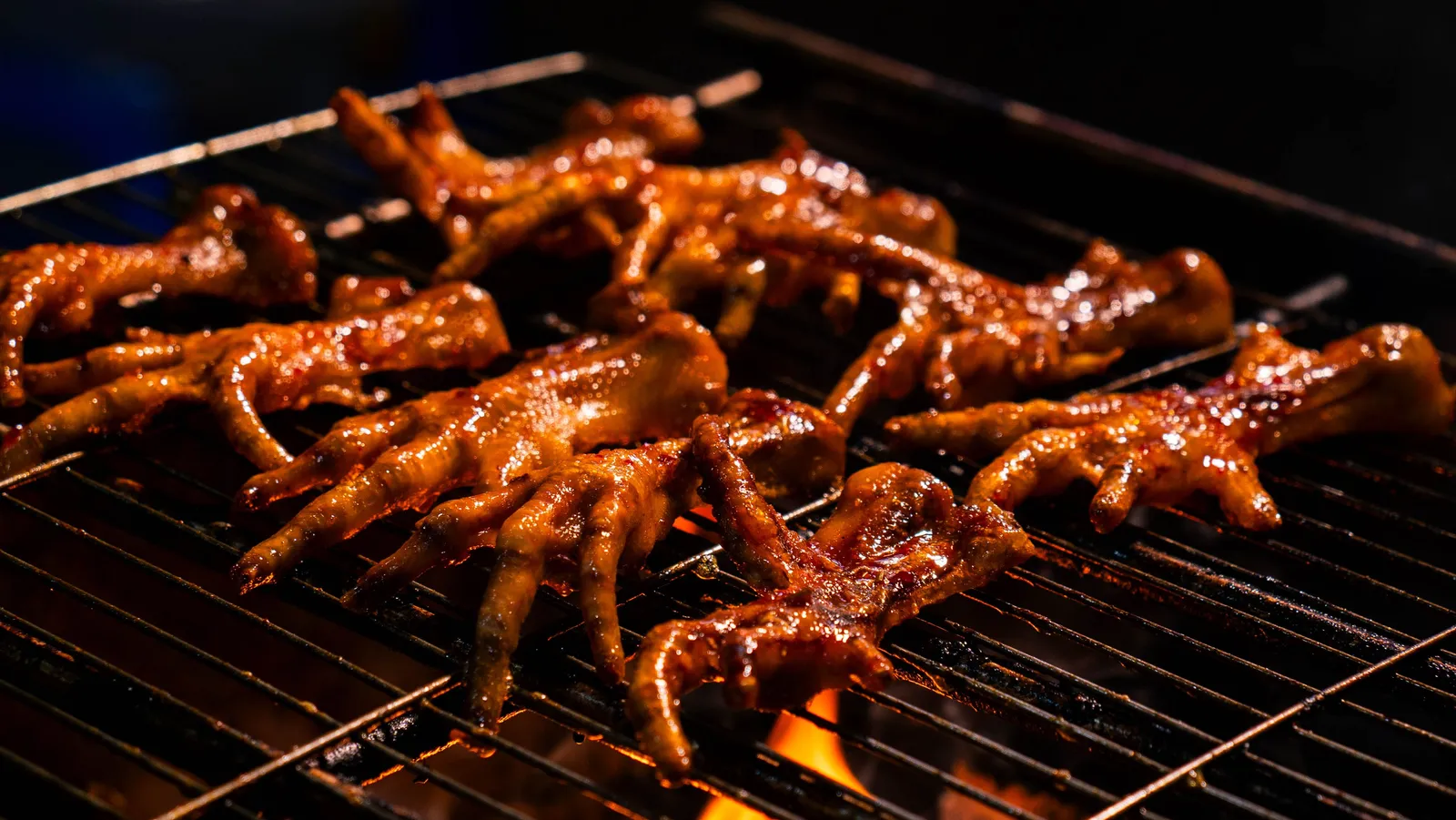
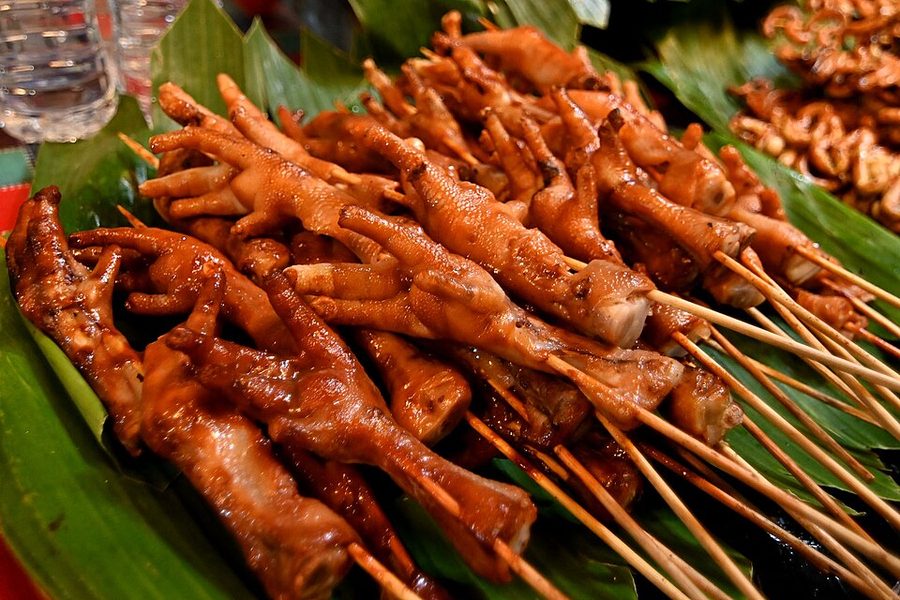
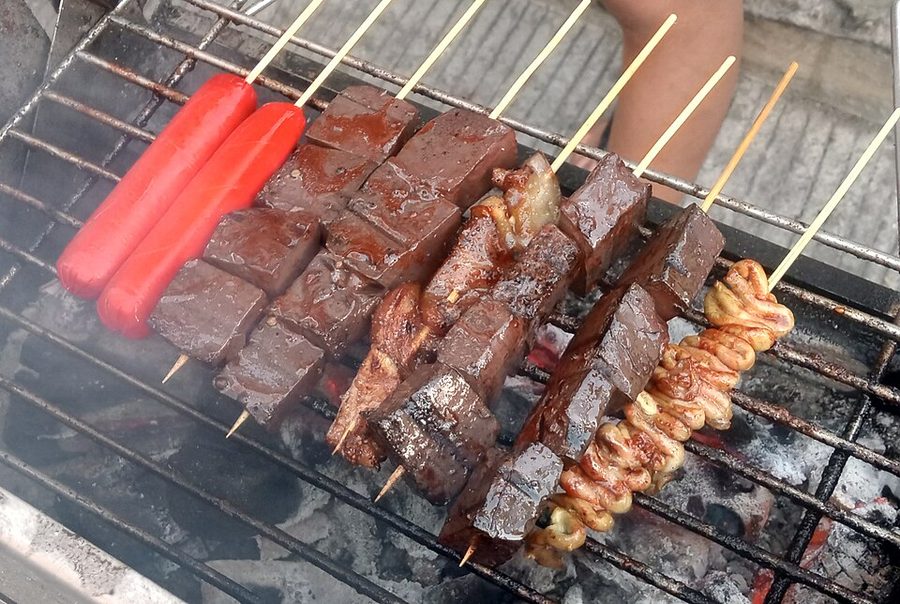
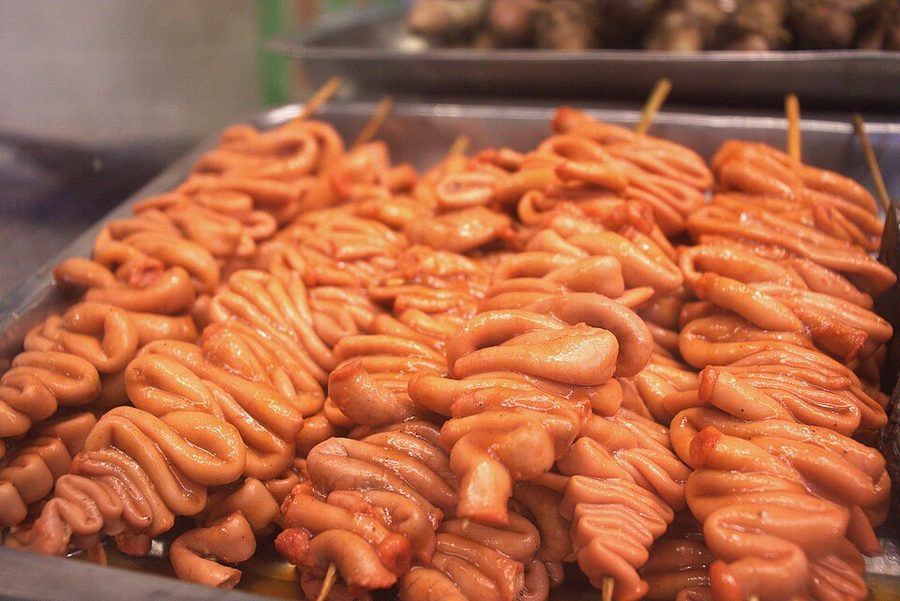
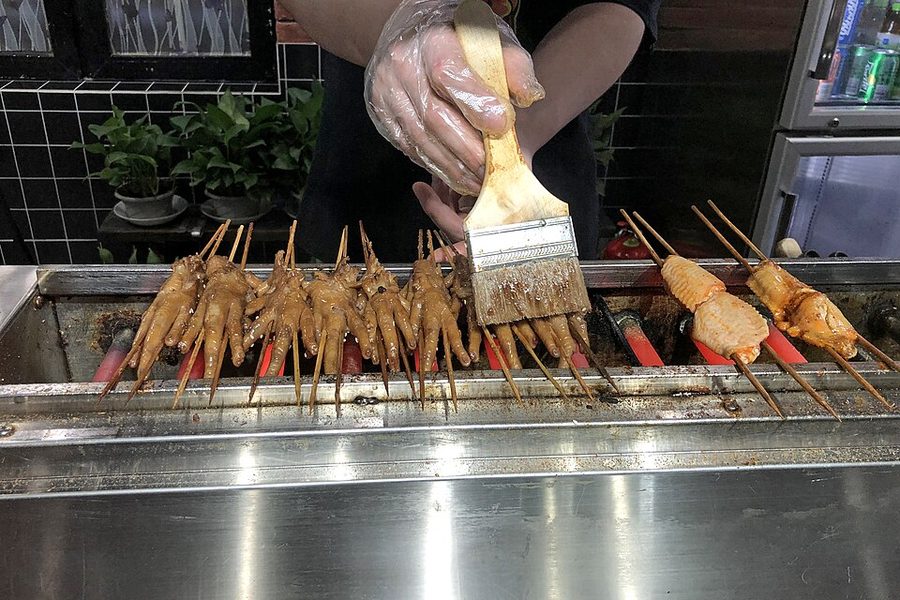
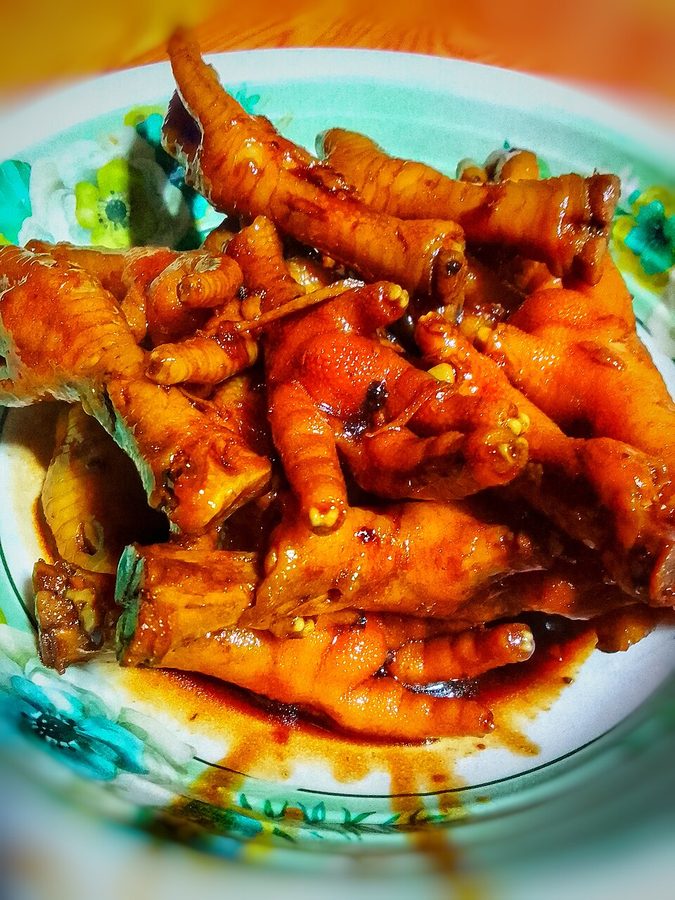
The cheapest stick on a Filipino barbecue tray is usually the strangest-looking one. Three chicken feet threaded on bamboo, claws clipped, toes curled, lacquered the dark red of a ketchup glaze. The vendor calls it adidas, nobody at the stall finds that odd, and it goes on the grill between the coils of isaw and the black squares of betamax.
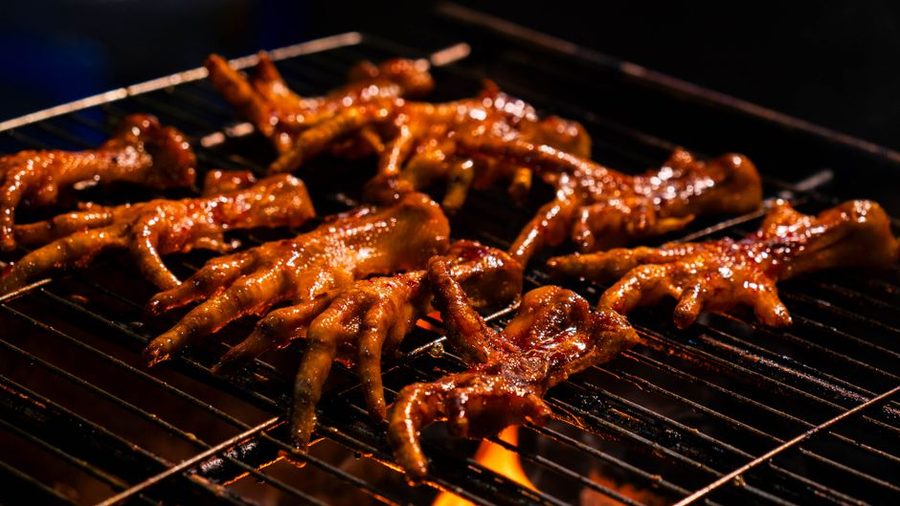
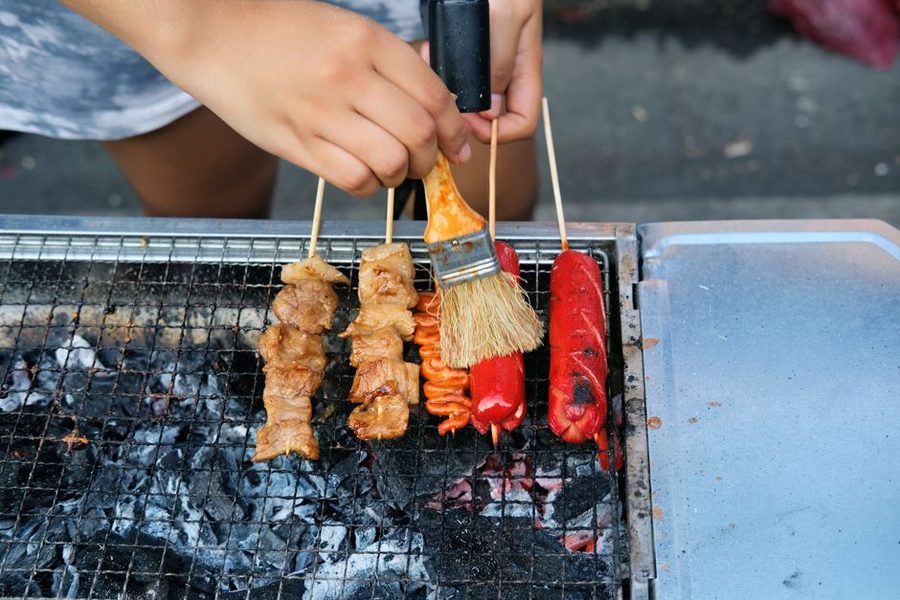
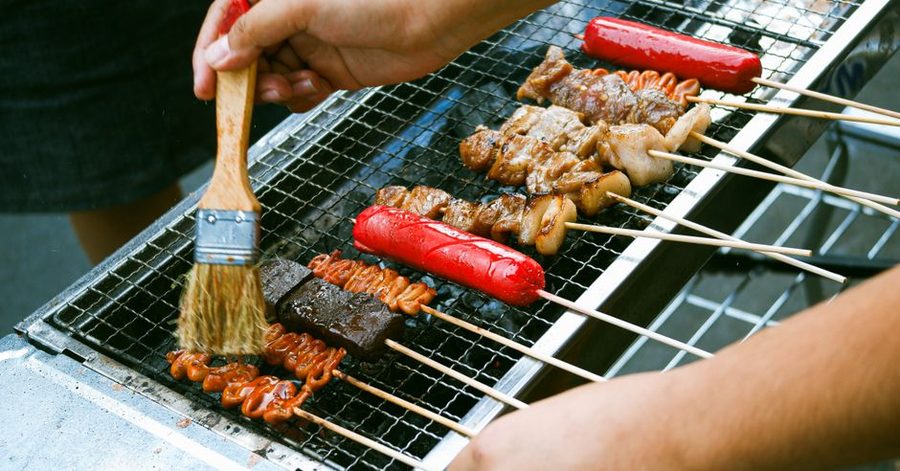
Watch the grill for a few minutes and you see how the feet got there. They arrive already soft, simmered in a pot of soy, vinegar and sugar somewhere behind the stall, so the coals only have to do the last part: blister the skin, catch the sugar at the edges, take on smoke. The vendor fans the charcoal with a woven pamaypay, brushes the sticks from a tin of sauce, turns them, brushes again.
That order of work is the whole recipe. A raw chicken foot is skin, tendon and a fan of little bones, and no amount of grilling will make it tender before it burns. Simmer it first and the grill becomes ten minutes of colour, a job any balcony, back yard or hot oven can do.
Contents 7 parts
Why chicken feet are called adidas
In Tagalog a chicken foot is paa ng manok; in Cebuano it is tiil sa manok, and grilled it becomes inihaw na paa ng manok in Manila and sinugbang tiil in Cebu. Almost nobody orders it by those names. A foot has three toes pointing forward, and those three toes reminded someone of the three stripes on a certain German sneaker, which is the explanation GMA’s Pinas Sarap gave when it filmed a Marikina barbecue house. That the brand sells shoes finishes the joke.
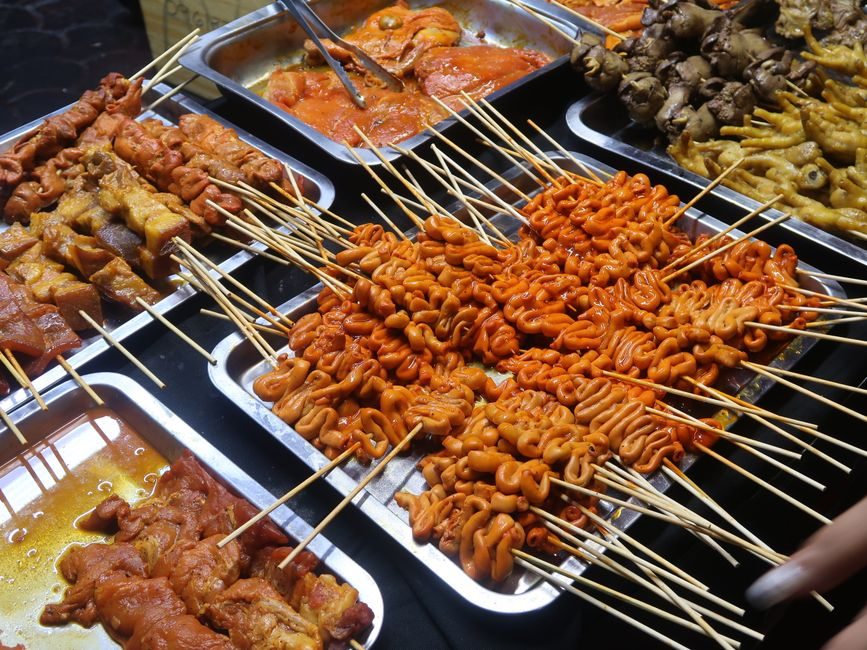
Adidas is one entry in a whole street vocabulary. The food historian Doreen Fernandez wrote about this tray in “Balut to Barbecue”, her essay on Philippine street food in the 1994 collection Tikim. Several of the nicknames borrow from gadgets of the late 1970s and 1980s, which fits the usual account that cheap offal moved onto the barbecue grill in the hard economic years of that era.
| Street name | What it is | The joke |
|---|---|---|
| Adidas | Chicken feet | Three toes, three stripes |
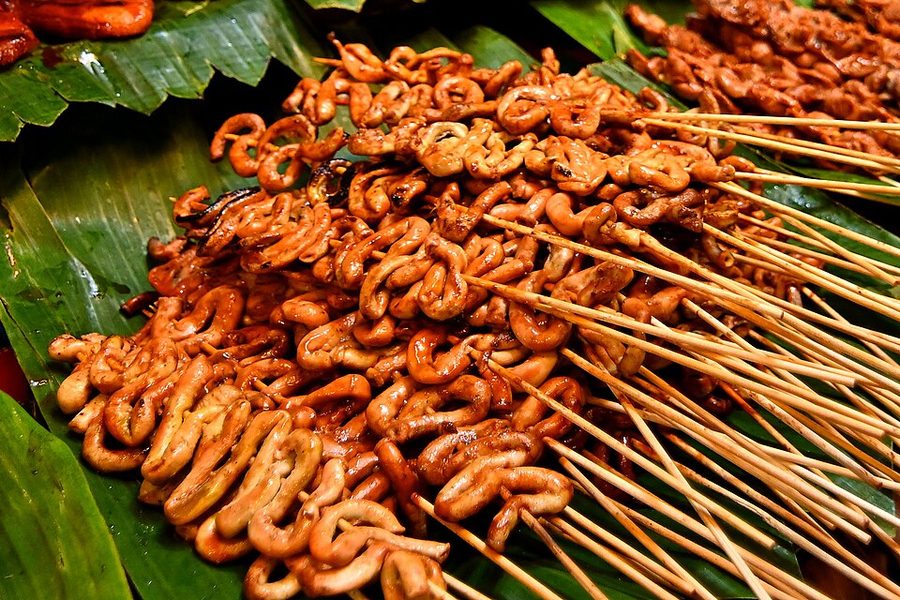
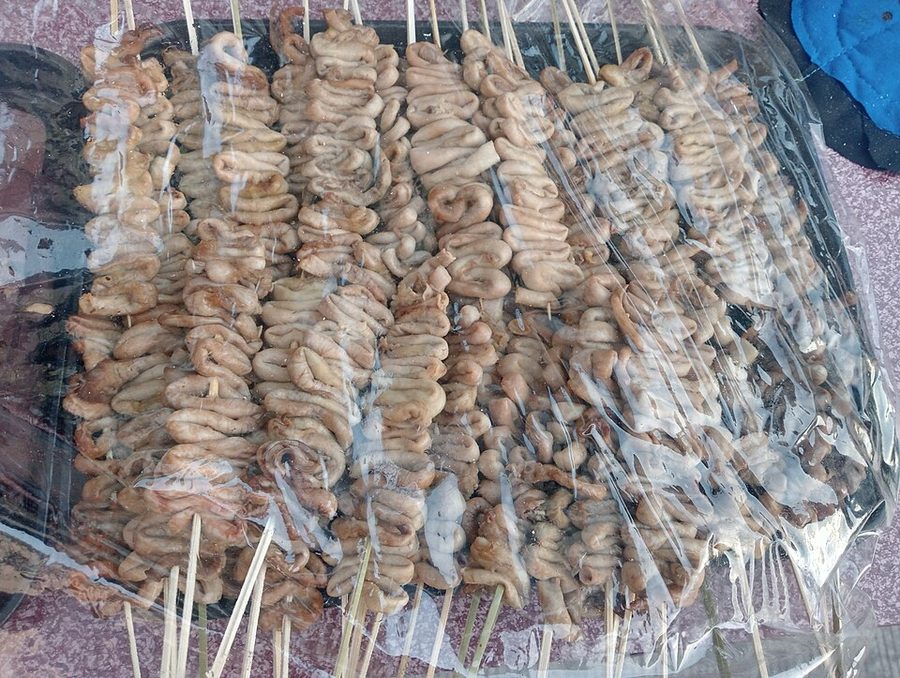
| Isaw | Chicken or pork intestine, coiled on a stick | Not a nickname, just the word for intestine; chicken isaw is also called IUD for its shape |
| Betamax | Cubes of set chicken or pork blood | A dark rectangle the size of a video cassette |
| Helmet | Chicken head | Round, hard, worn on top |
| Walkman | Pig’s ear | Where the headphones go |
| PAL | Chicken wing | Philippine Airlines |
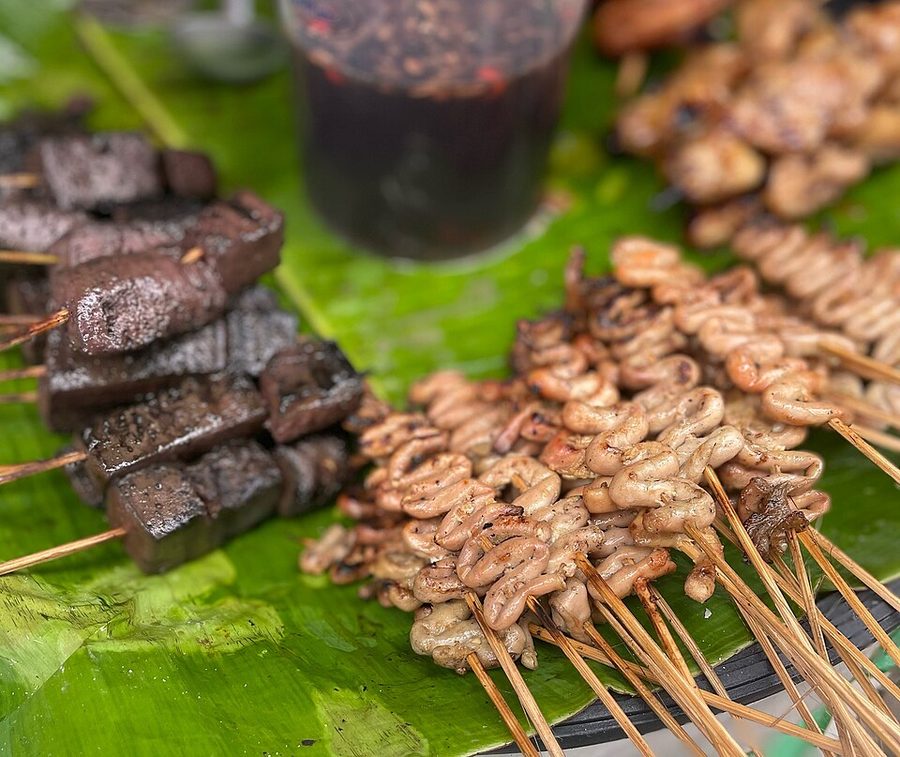
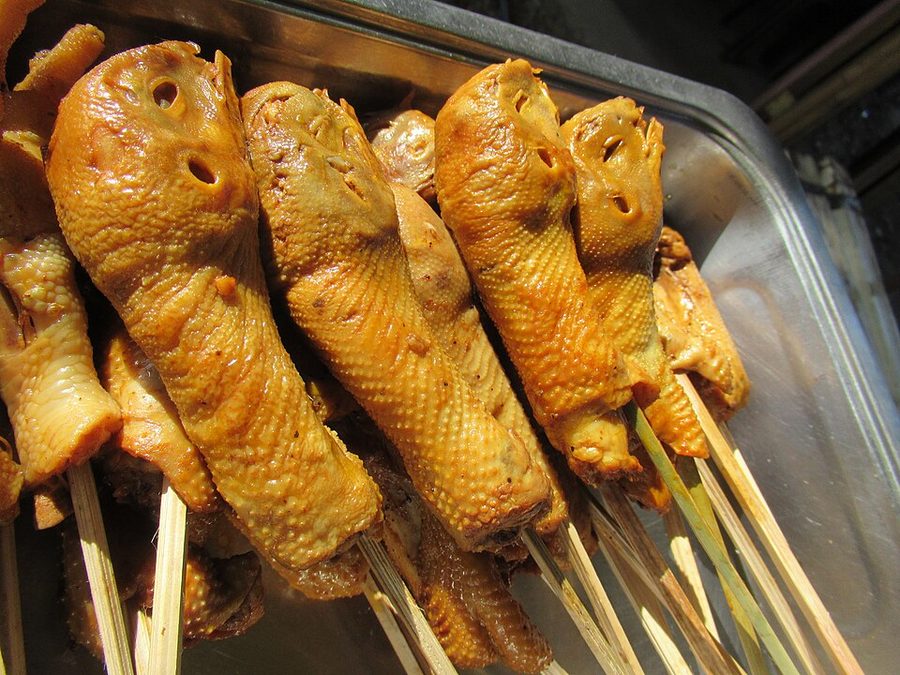
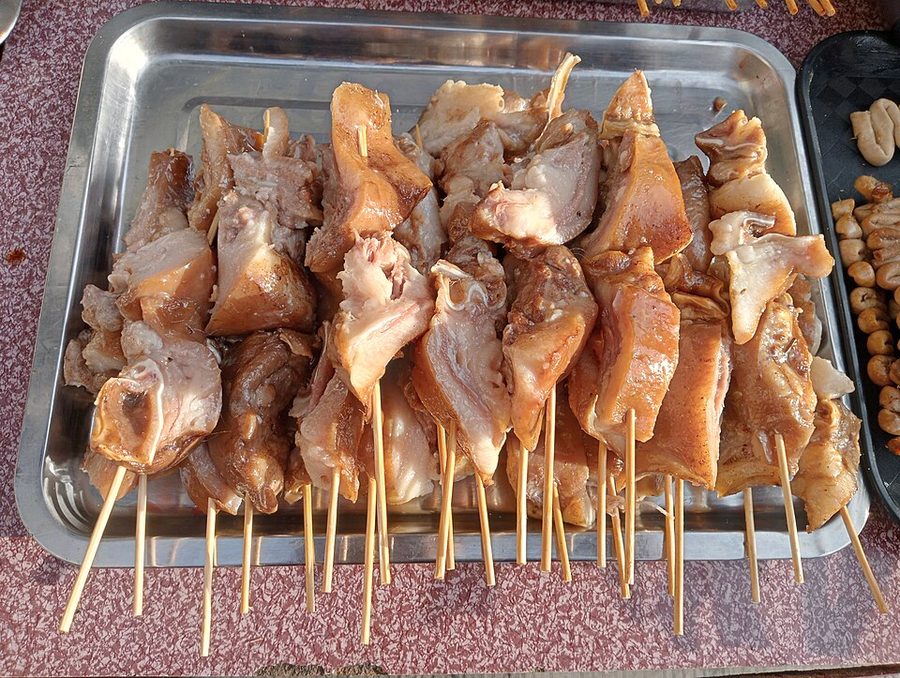
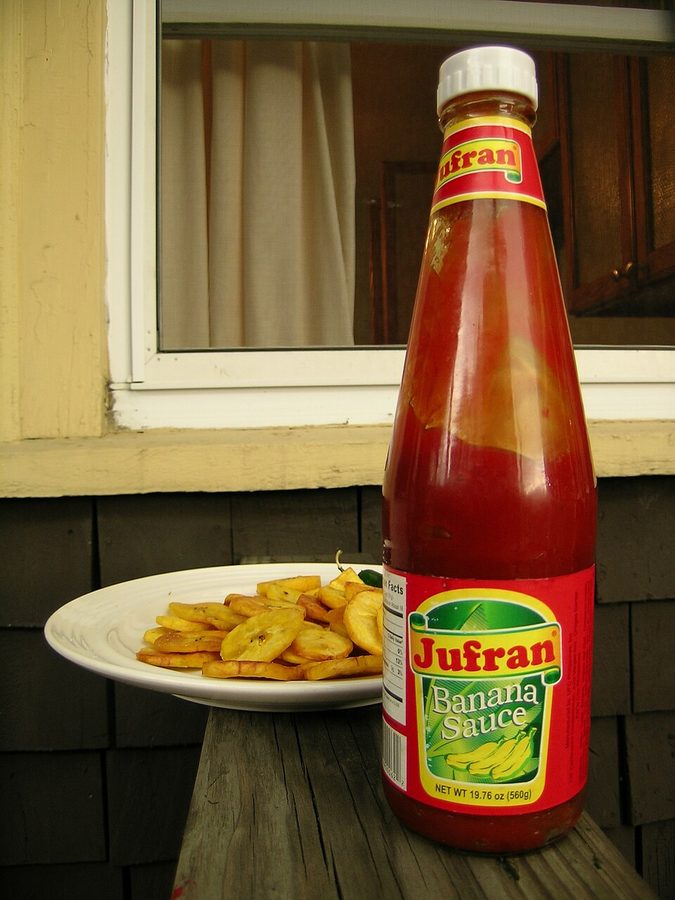
The sauce on all of them is much the same. Filipino barbecue rests on a marinade of soy sauce, calamansi, banana ketchup and often lemon-lime soda, a style that took shape in Manila in the 1950s. The food historian Ige Ramos told the BBC that vendors swear the fizz tenderises cheap cuts, and that the sugar and citrus leave a caramelised film once the meat hits the coals. Banana ketchup itself was a wartime substitute, made when tomatoes were scarce, and it never left.
When adidas gets eaten
Adidas is a snack, never quite a meal. In the late afternoon it is merienda, the in-between food that carries you from lunch to a late dinner, eaten standing at the stall with a cup of vinegar. After dark it becomes pulutan, the thing you pick at with beer, and a plate of feet can last a long conversation because each one takes a while to work through.
For a lot of families it is also what the anthropologists Gideon Lasco and Jhaki Mendoza call pantawid-gutom: food that bridges hunger between serious meals. A stick or two of feet, a pouch of rice and the free vinegar make a filling stop for very little money, which is the reason the tray of joke names exists at all.
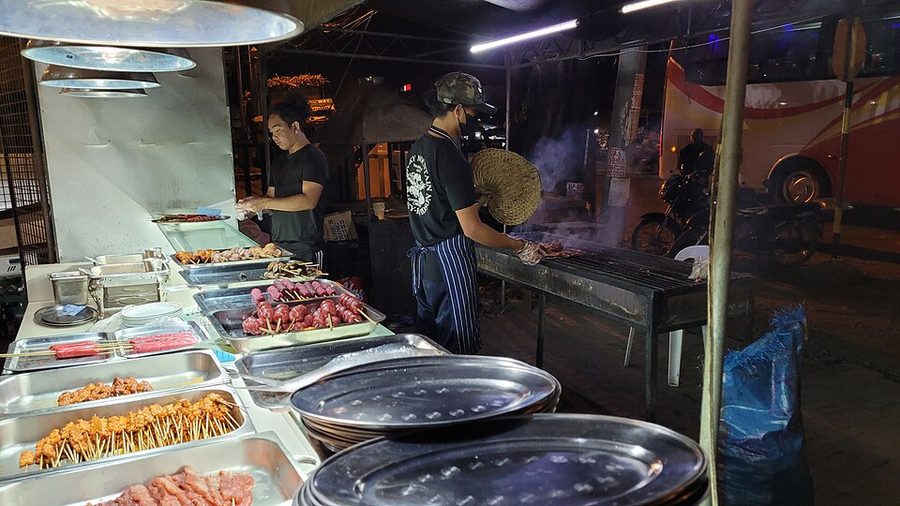
Where to eat adidas in Cebu and Manila
Every town has its grill corner, and the best adidas is usually at the nearest busy one, because a busy stall turns its feet over fast. Two places carry more history than the rest. Both have had a hard couple of years.
Larsian, Fuente Osmeña, Cebu City
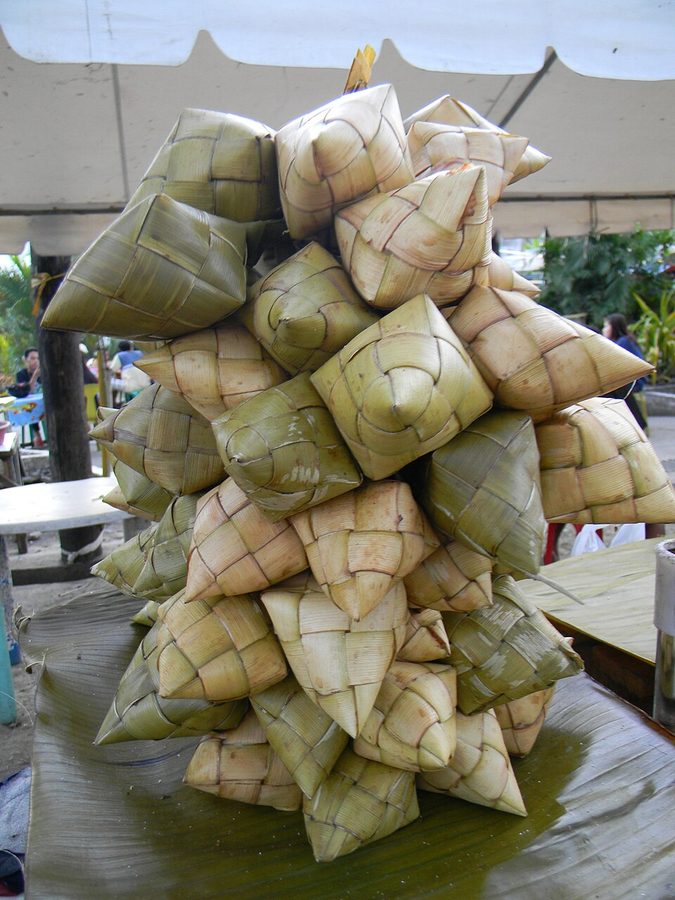
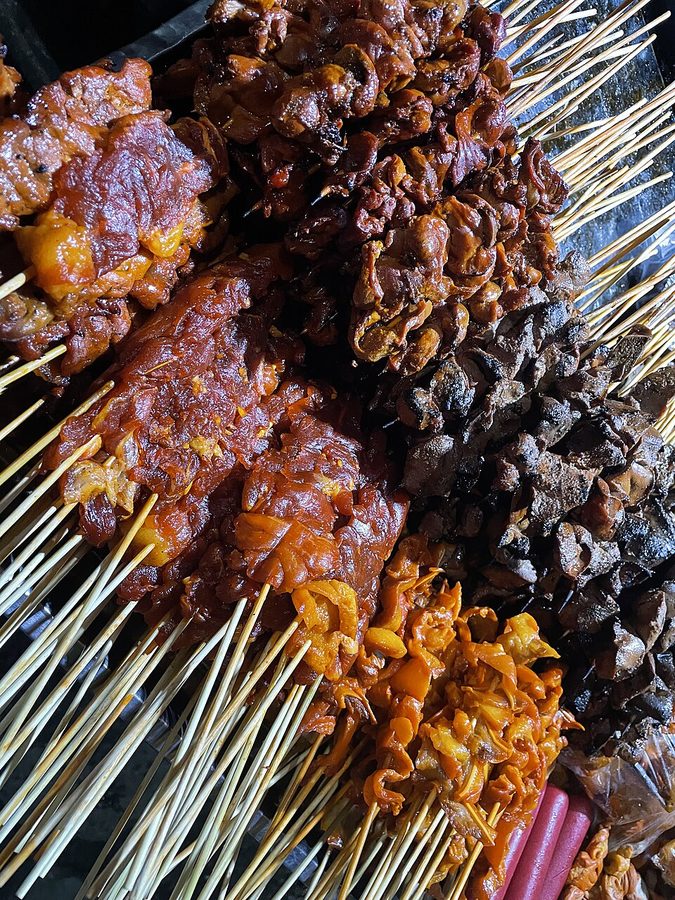
If you know Cebu food through lechon and the pick-your-fish sutukil houses, Larsian is the third leg: a strip of barbecue stalls on a province-owned lot beside a hospital, a short walk from the Fuente Osmeña rotunda. It has fed the city at night for about half a century. You pick raw skewers of pork, chicken parts and seafood from the display, the stall grills them, and they come with puso, rice boiled in a pouch of woven coconut leaf.
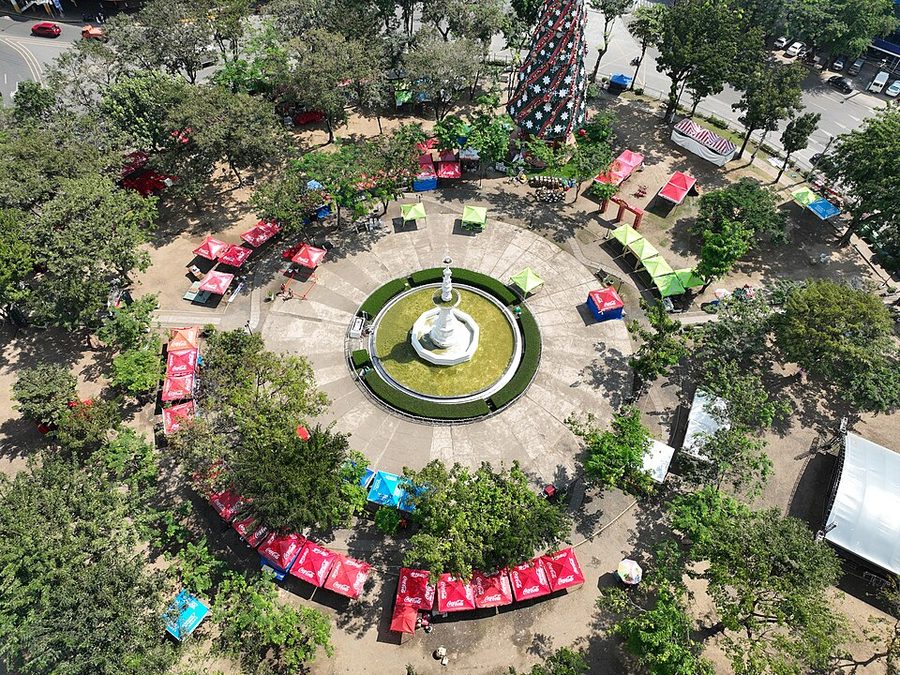
It has not aged well. In 2017 a Cebu City Health Office report described in Cebu Daily News found vendors without sanitary permits, servers without health cards, no wash area for customers and a water supply that ran only in the small hours. The province has announced more than one renovation since.
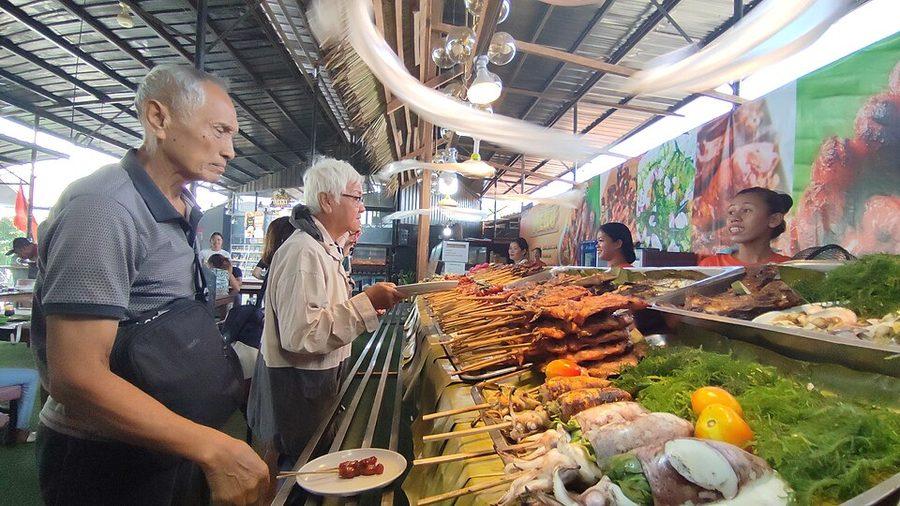
The latest plan is the biggest. In November 2026 the Cebu Provincial Government said it was weighing an unsolicited proposal to replace Larsian with a 22- to 27-storey tower, with the barbecue stalls moved to an open-air second floor and vendors relocated to a temporary site under a kilometre away during three to four years of building. The project still needed approval. The province’s investment office also said only about 12 vendors remained on the lot, so go knowing it is a shadow of the old strip, and go soon if you want to see it as it is.
Manila’s barbecuhan, and Mang Larry’s new address
In Metro Manila the grills are everywhere and mostly nameless: a charcoal trough on a street corner, outside a church or a school gate, near a transport terminal, a table of skewers and a stool. That is where most adidas is eaten, and it is the right way to eat it. Go at merienda time, when the first trays come out, and choose the stall where you can see the feet going from the pot to the grill.
The famous name is Mang Larry’s Isawan, the isaw stall that fed University of the Philippines Diliman students for about 50 years. It closed in February 2026 after a Quezon City court ordered its closure over unpaid rent. By late March it was grilling again at 28 Road 20, Project 8, Quezon City. It is an isaw place first, so treat any adidas there as a bonus.
The dips: sweet sauce and sukang sawsawan
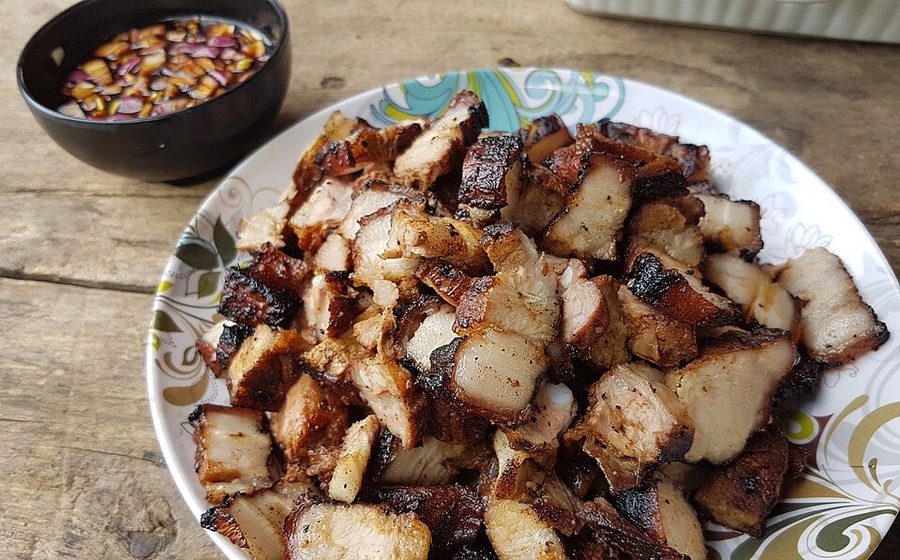
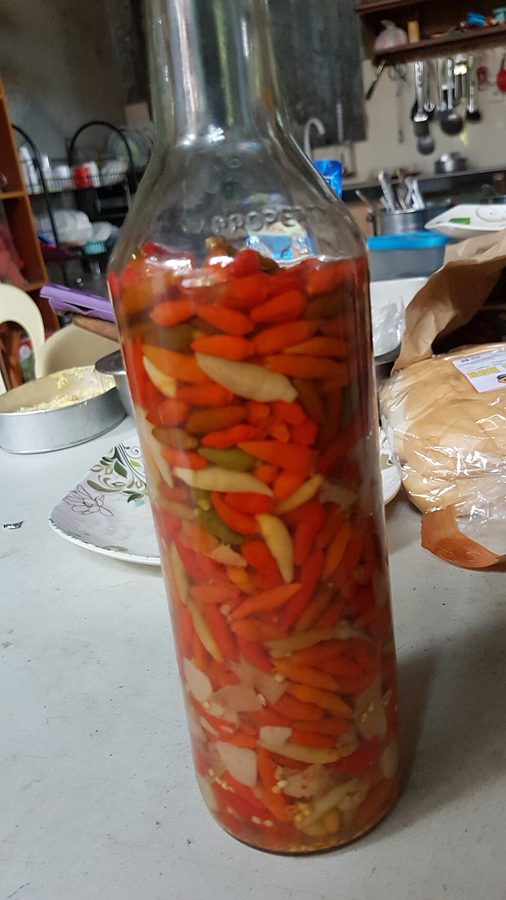
Two things wait at the end of the grill. One is the thick, sweet barbecue sauce, the same baste the vendor has been brushing on. The other is sukang sawsawan, dipping vinegar: cane or coconut vinegar with chopped onion, garlic, chilli and pepper, sometimes a little sugar or soy. In the Visayas the bottle is often sinamak, vinegar steeped for days with chillies and aromatics.
At many stalls the vinegar sits in a big shared pot and everyone dunks. I’d pour some into a cup and dip from that, or ask for your own. The vinegar is there for sourness and heat to cut the sugar, not to clean anything, and a pot that has had a hundred half-eaten sticks through it by nine in the evening is the one part of the stall I skip.
Buying and cleaning chicken feet
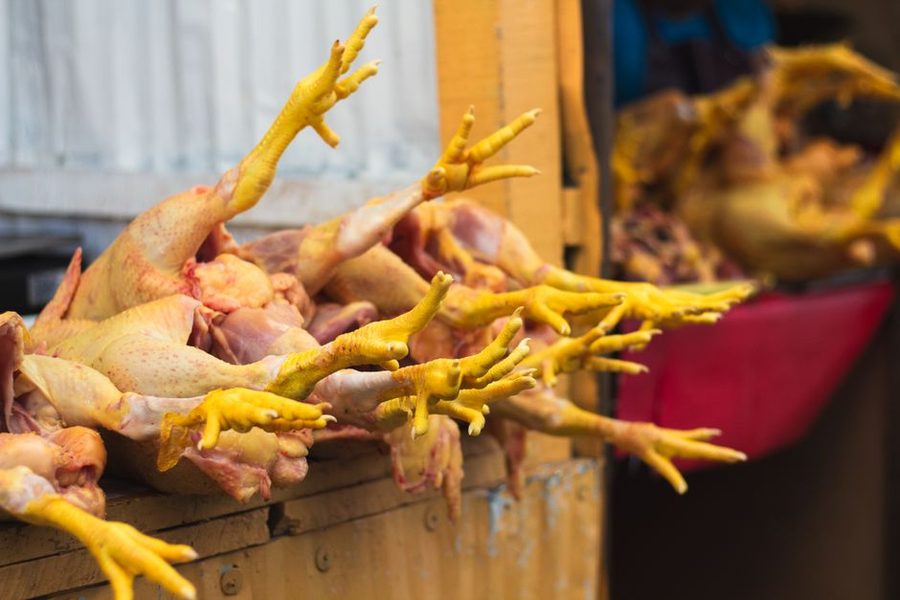
In the Philippines chicken feet are sold at the poultry section of any wet market and by the kilo from chicken dealers. Many sellers offer them already cleaned, skinned and clawless; home recipes in Tagalog often start with malinis na, tanggal kuko, cleaned, nails off. Poultry dealers’ posted price lists in Luzon in late 2026 ran from about ₱75 a kilo for wholesale bundles to ₱120 to ₱130 retail.
Outside the Philippines, look in the freezer of a Chinese, Vietnamese or Filipino grocer, where the feet are often sold as “chicken paws”, usually with the yellow outer skin already removed. A kilo is roughly 20 to 30 feet depending on the size of the bird.
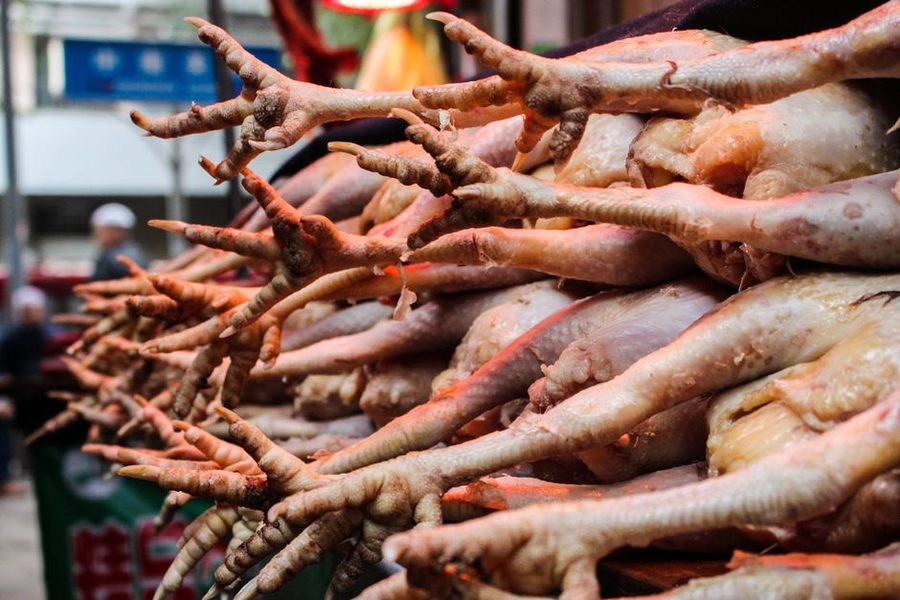
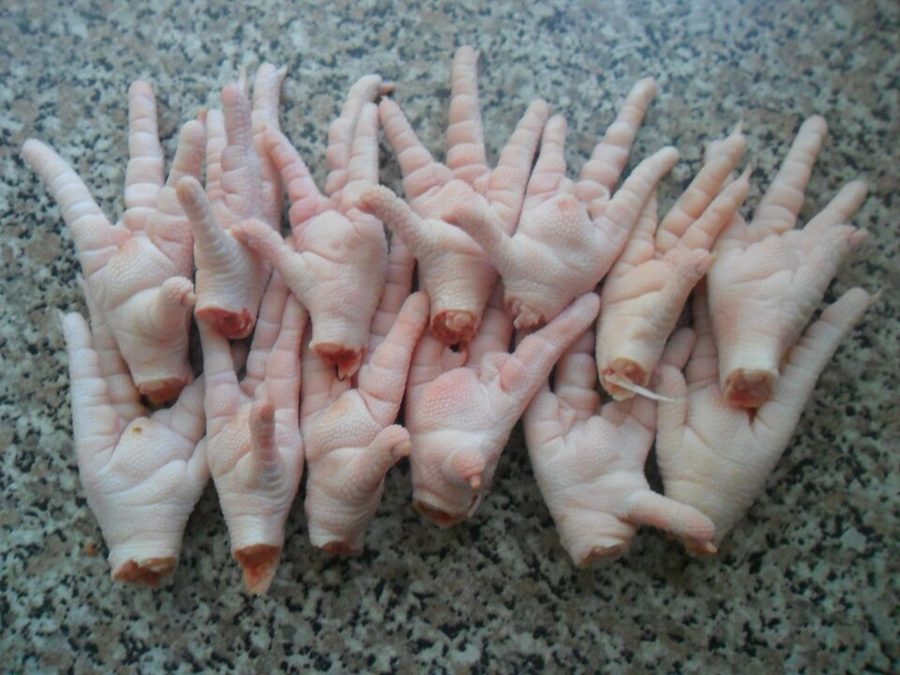
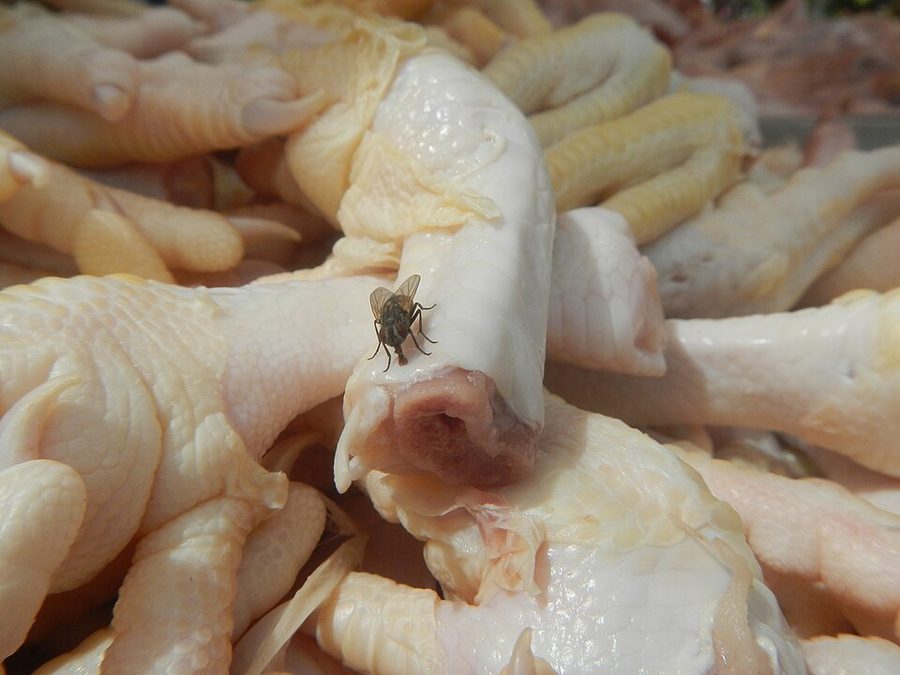
What you want: pale, plump feet with tight skin and a faint shine. A sticky surface means they have been sitting too long. Dark, scabby patches on the pads, which the trade grades as ammonia burns, are worth trimming off, or pick another pack.
If the feet still wear their yellow outer skin, drop them into just-boiled water for a minute or two, lift them into iced water, and the skin pulls away like a glove. Snip off each claw at the first joint with kitchen shears. Pare away any hard callus on the pad with a small knife. Do the washing in a bowl, not under a splashing tap, and wipe down the sink afterwards, since raw chicken water carries the same bacteria as the chicken.
Why the feet are boiled before they are grilled
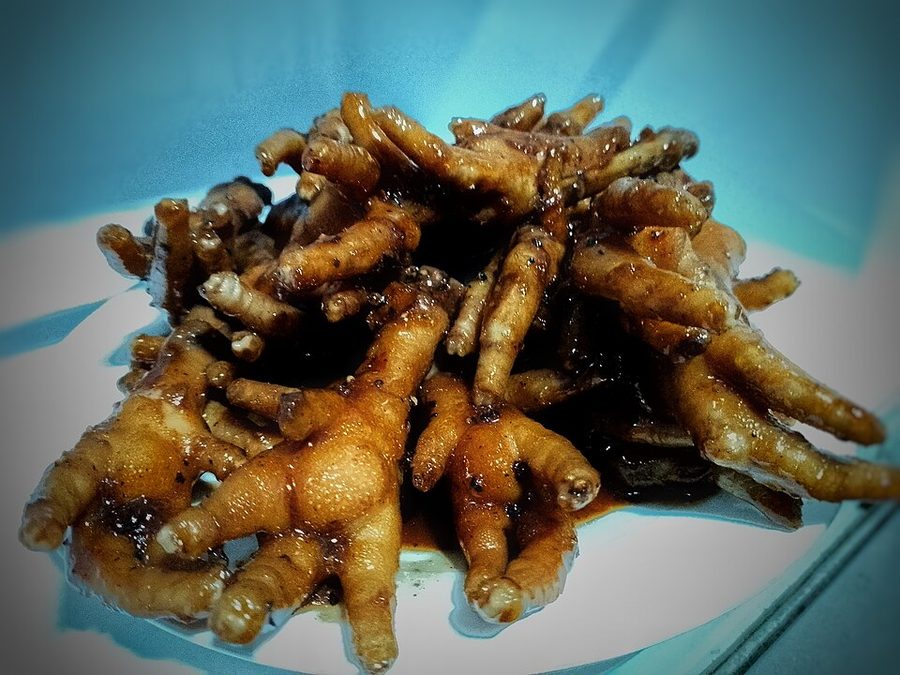
Parboiling is not optional for adidas. The edible part of a foot is skin and tendon, both thick with collagen, and collagen only softens with long, wet heat. On the grill alone it turns hard and rubbery long before it turns tender. Street vendors simmer their feet in the marinade itself, which seasons them through, cooks them through and leaves a pot of sweet, sticky liquid for basting.
The recipes I checked disagree on time. A Marikina barbecue house boils its feet in the marinade for 20 to 30 minutes; Cantonese home braises run 30 to 40; recipes for soft, fall-apart feet go to an hour or even two. I settle on 30 to 35 minutes, because adidas has to stay on a skewer. Overcook the feet and the toes slide off the stick into the coals.
Recipe card
Grilled adidas with sukang sawsawan
This follows the street method: feet simmered in a soy, vinegar and banana-ketchup marinade, then threaded and grilled with the reduced liquid as a baste. The liquid proportions come from a Tagalog home recipe for half a kilo of feet, doubled, with the aromatics checked against Filipino barbecue marinades. Serves 4 as merienda or pulutan, about 10 skewers. About 1 hour 30, plus 20 minutes in the marinade.
Ingredients
- 1 kg (2.2 lb) chicken feet, skinned and clawless
- 500 ml (2 cups) water, or 250 ml (1 cup) water and 250 ml (1 cup) lemon-lime soda
- 125 ml (½ cup) soy sauce
- 125 ml (½ cup) cane or coconut vinegar
- 125 ml (½ cup) banana ketchup
- 50 g (¼ cup) brown sugar
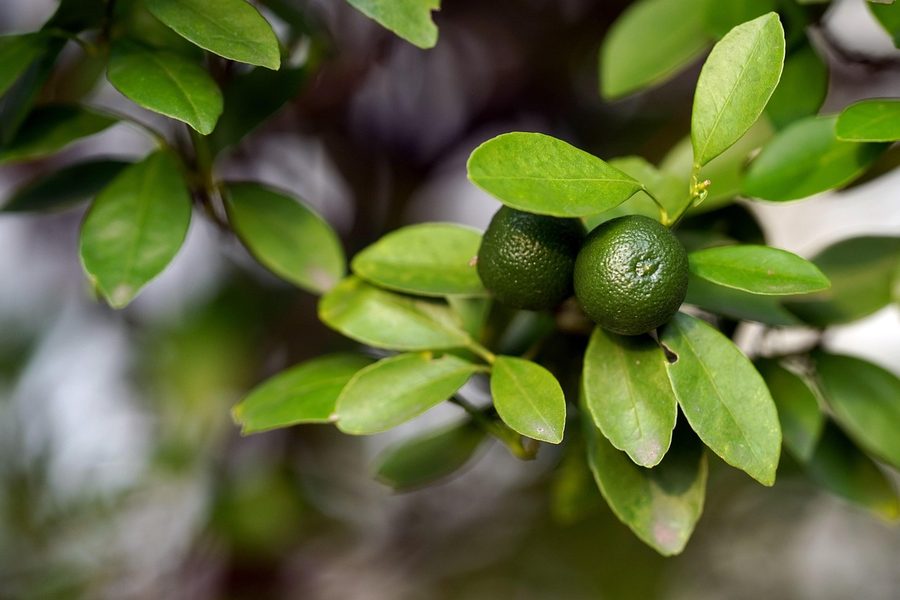
- Juice of 7 calamansi (bottled or frozen calamansi juice from an Asian grocer will do)
- 1 head garlic, cloves peeled and crushed
- 2 bay leaves
- ½ tsp ground black pepper
- Salt, to taste
For basting
- The reduced cooking liquid (from step 5)
- 2 tbsp neutral cooking oil
- 10 bamboo skewers, soaked in water while the feet simmer
For the sukang sawsawan
- 250 ml (1 cup) cane or coconut vinegar
- 3 cloves garlic, chopped
- ½ small red onion, chopped
- 3 to 5 siling labuyo or bird’s eye chillies, chopped
- 1 tsp sugar
- ¼ tsp ground black pepper
- A pinch of salt
Method
- Check the feet. If any yellow skin remains, dip them in just-boiled water for 1 to 2 minutes, move them to iced water and peel. Clip any claws at the first joint and pare away calluses.
- For a cleaner-tasting sauce, put the feet in a pot, cover with cold water, bring to the boil and simmer 5 minutes. Drain and throw that water away.
- In a heavy pot, stir together the water (or water and soda), soy sauce, vinegar, banana ketchup, brown sugar, calamansi juice, garlic, bay leaves and pepper. Add the feet, turn them through the liquid and leave for 20 minutes.
- Bring the pot to the boil, then lower the heat and simmer 30 to 35 minutes, stirring now and then and skimming off any grey foam, until the skin is soft and a toe bends easily but stays attached.
- Lift the feet out onto a tray. Turn up the heat and boil the liquid hard, stirring, until it has reduced by about half and coats a spoon. Taste, add salt if it needs it, then stir in the oil. This is your baste.
- While the liquid reduces, make the sukang sawsawan: stir the vinegar, garlic, onion, chillies, sugar, pepper and salt together in a jar or bowl and leave it to stand.
- When the feet are cool enough to handle, thread three onto each soaked skewer through the thick ankle end, so the toes fan out flat.
- Grill over medium-hot charcoal for 5 to 10 minutes, turning every couple of minutes and brushing with the baste at each turn, until the glaze bubbles and catches dark at the toe tips.
- Serve hot, with the sawsawan in small cups for dipping and rice or puso on the side, or with cold beer.
Other ways with paa ng manok
Grilling is the street version. At home, chicken feet more often end up in a pot, and the cleaning and parboiling above apply to every one of these.
Adobong paa ng manok
Adobo is the obvious home for feet: soy sauce, vinegar, lots of garlic, bay leaf and black pepper, simmered until the feet are soft and the sauce has gone sticky. One Filipino home version I cross-checked uses 125 ml (½ cup) soy sauce and 80 ml (⅓ cup) vinegar for 450 g (1 lb) of feet, with three cloves of garlic and an onion. Some cooks brown the feet in oil first, some add chilli, and one variation finishes the pot with coconut milk, which pushes it towards ginataang feet.
The texture is the opposite of adidas. Adobo feet are cooked longer, until the skin is slippery and almost melting, and they are eaten with rice and a spoon for the sauce. Simmered feet also go into tinola, the ginger and green papaya soup, where they add body to the broth.
The dim sum version
Cantonese cooks call the dish phoenix claws (凤爪), best known in black bean sauce. The restaurant method is longer than anything on a Filipino grill: the feet are boiled, deep-fried until the skin blisters, soaked in cold water so the skin puffs and wrinkles, then braised or steamed with fermented black beans, garlic, chilli and soy. That puffing is what gives dim sum feet their soft, almost spongy skin.
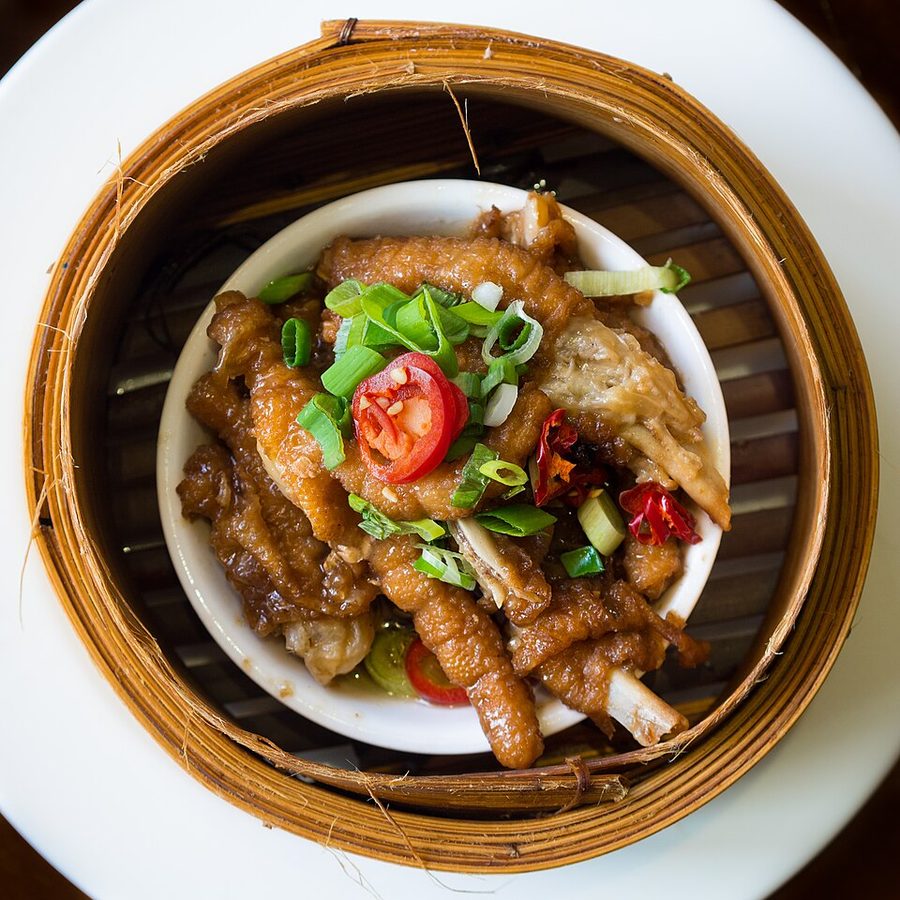
A home shortcut skips the deep-frying: blanch 5 minutes, toss in oil and air-fry at 200°C (390°F) for about 10 minutes until blistered, soak in cold water for 2 hours, then braise with black beans for around 30 minutes, or 40 if you skip the frying.
An oven or air fryer for a city kitchen
No charcoal, no balcony, no problem. Since the feet are fully cooked in the pot, the second stage is only about colour and glaze. Thread them on short skewers or leave them loose, brush with the baste and put them in an air fryer at 200°C (390°F) for 8 to 10 minutes, brushing again halfway. In an oven, use the top shelf under the grill element at its hottest, on a rack over a foil-lined tray, and turn the feet once when the first side bubbles.
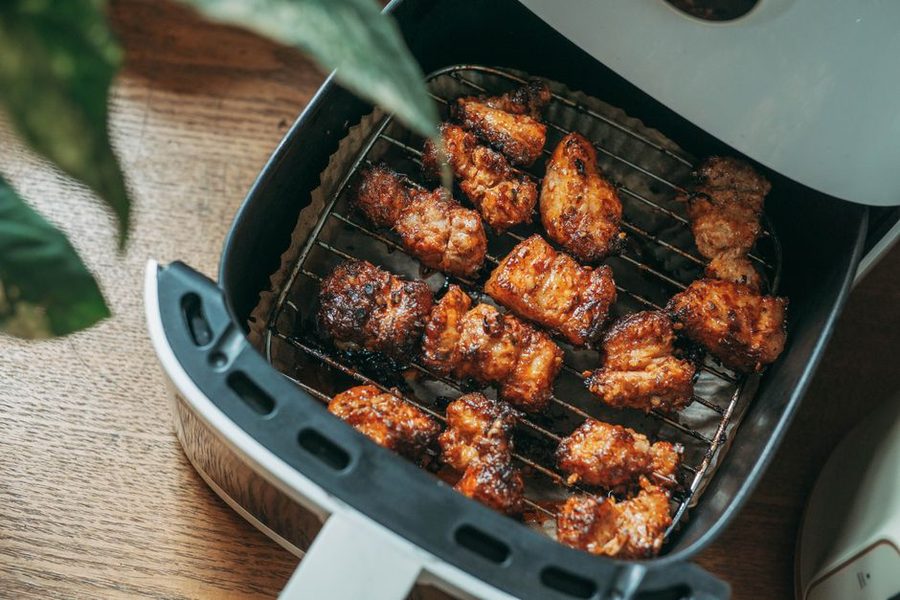
You lose the smoke, which is a real loss. A pinch of smoked paprika in the baste is not traditional, but it gets you closer than nothing.
Fried adidas
Fried feet, pritong paa ng manok, are a popular snack in their own right. The order matters: simmer the feet first, dry them well, then deep-fry at 190°C (375°F) for 3 to 5 minutes, plain or in a light flour coating. The skin goes crisp like chicharon while the tendon inside stays chewy. Dry them properly, because wet skin makes the oil spit.
What you are actually eating
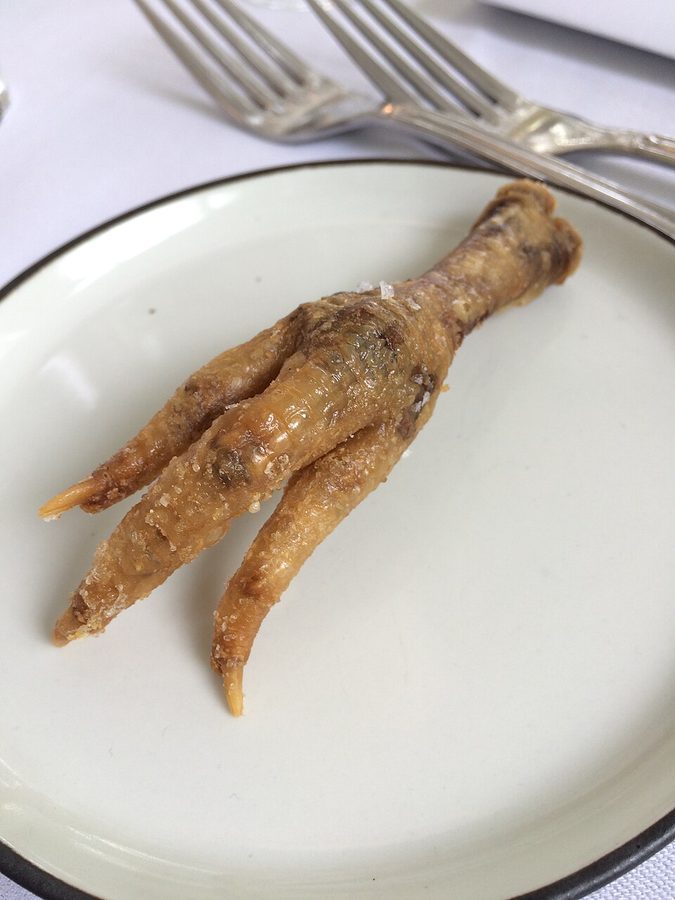
A chicken foot has almost no muscle. What you eat is skin, tendon and the cartilage between a lot of small bones, all of it rich in collagen. With long, moist heat that collagen turns to gelatin, which is why simmered feet are soft and sticky, and why the cooking liquid sets to a jelly when it cools. Keep a little of that jelly for the next pot of broth.
Eating one takes practice. Hold the stick, bite between the joints, pull the skin and tendon off with your teeth, and spit out the bones as you go; at a stall there is usually a plate for them. The pad of the foot has the most to it. The toe tips, glazed and charred, are the best part.
You will hear plenty at the grill about feet being good for your skin or your knees. I have not seen good evidence for either, so eat them because they taste of soy, smoke and burnt sugar and have a texture nothing else on the tray has.
Eating grilled offal safely
The safety rules for feet are the rules for any chicken. The USDA’s Food Safety and Inspection Service puts all poultry, giblets included, at a safe minimum of 74°C (165°F). Feet simmered for half an hour pass that easily. The risk at a stall is not the pot; it is what happens after.
Pre-cooked skewers often sit on the tray for hours before they are reheated. The same agency advises never leaving perishable food out more than 2 hours, or 1 hour above 32°C (90°F), and a Philippine afternoon is that hot for much of the year. Ask for your sticks to go back on the grill until they sizzle all the way through, and buy from the stall that is selling fast.
The baste is safe because it has boiled. Marinade that has held raw chicken should only be used as a sauce if it is boiled first, and here the feet are cooked in it for half an hour. If you marinate raw feet for grilling some other way, keep a separate bowl of fresh sauce for brushing.
The vinegar is flavour. A dunk in sour vinegar does nothing for a skewer that was not cooked properly, and a shared dip pot is a way for one person’s mouth to reach the next person’s stick. Pour your own cup.
Back at the tray, the feet you ordered have had their few minutes on the coals and come back blistered and dark at the toes, still hot enough to sting your fingers through the bamboo. Make your own the same way: simmer a kilo on a Saturday afternoon, keep them in the fridge, and grill a few sticks whenever someone opens a beer.