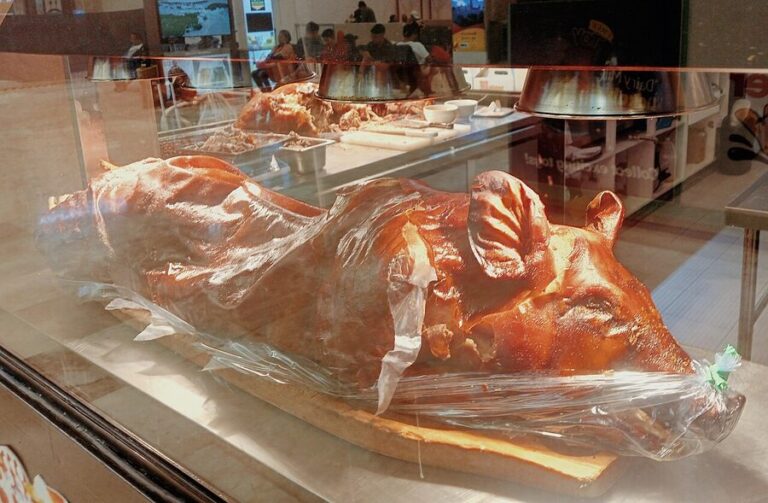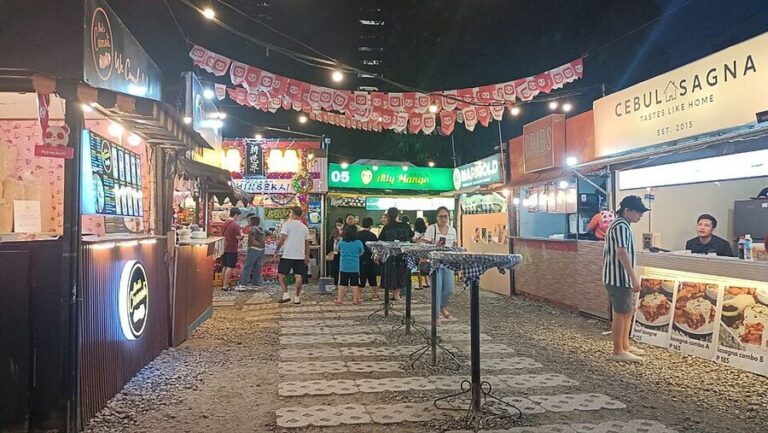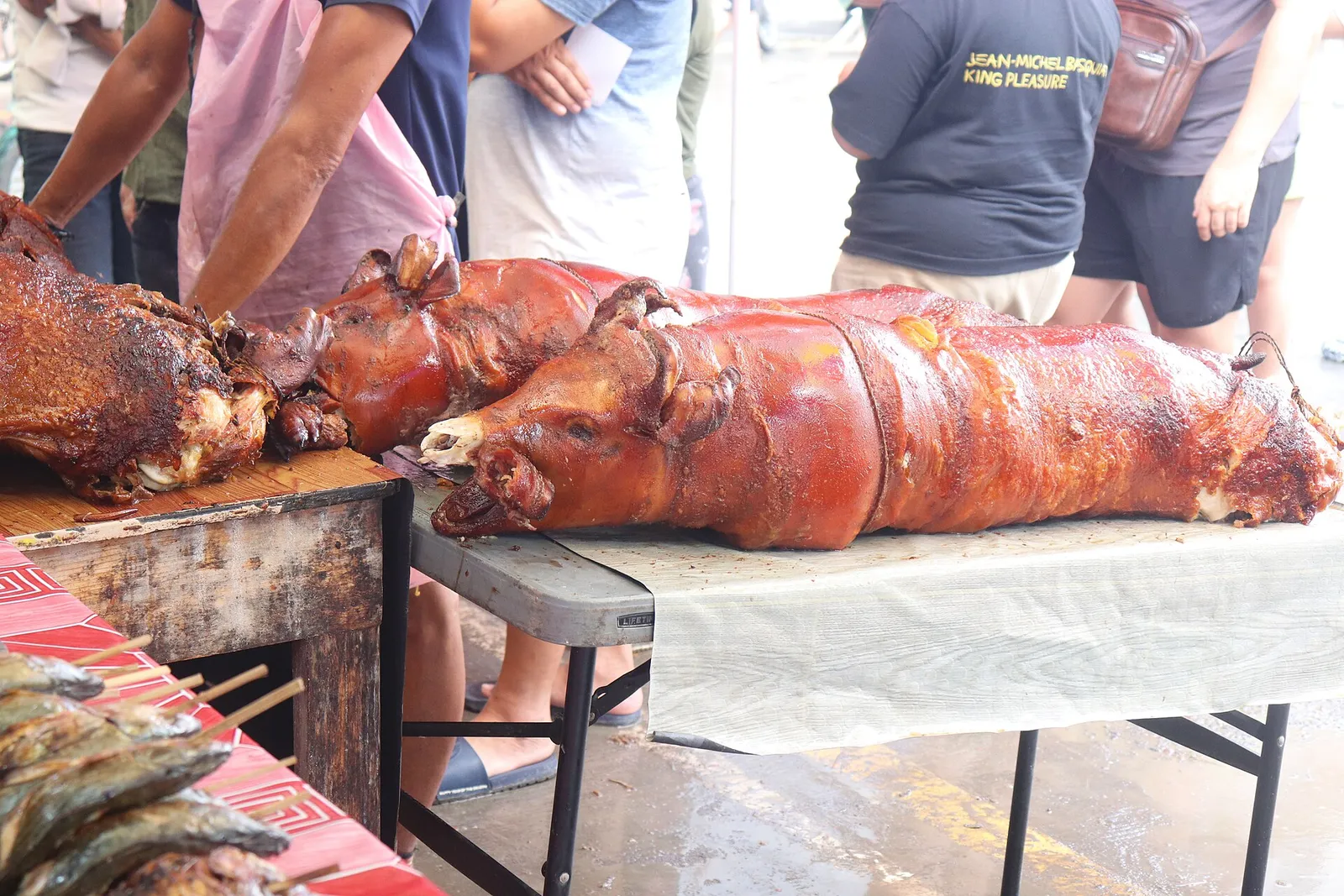
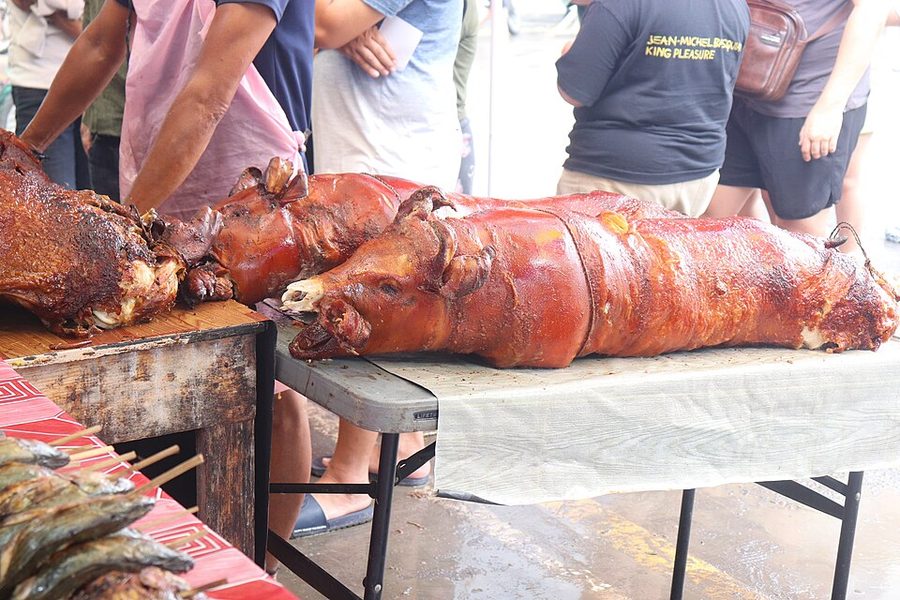
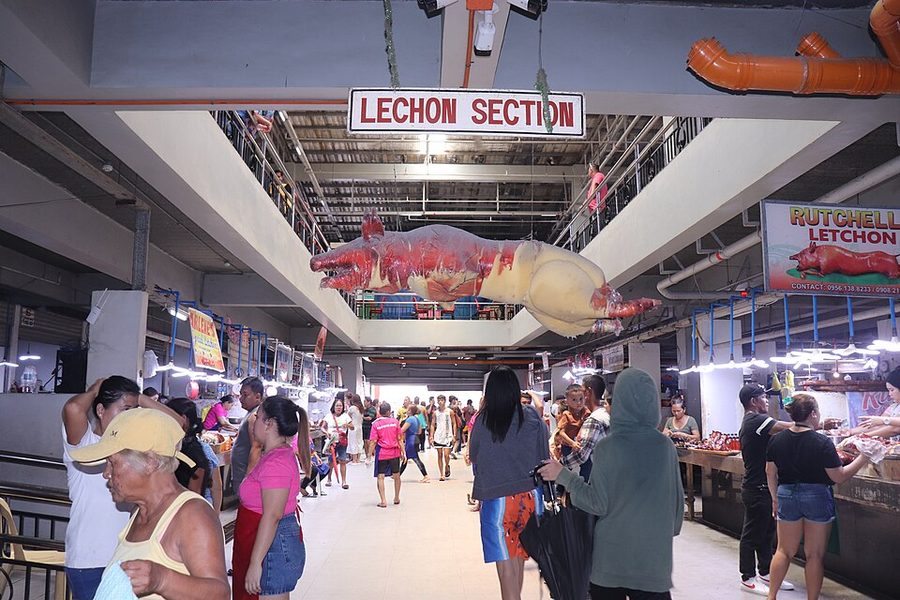
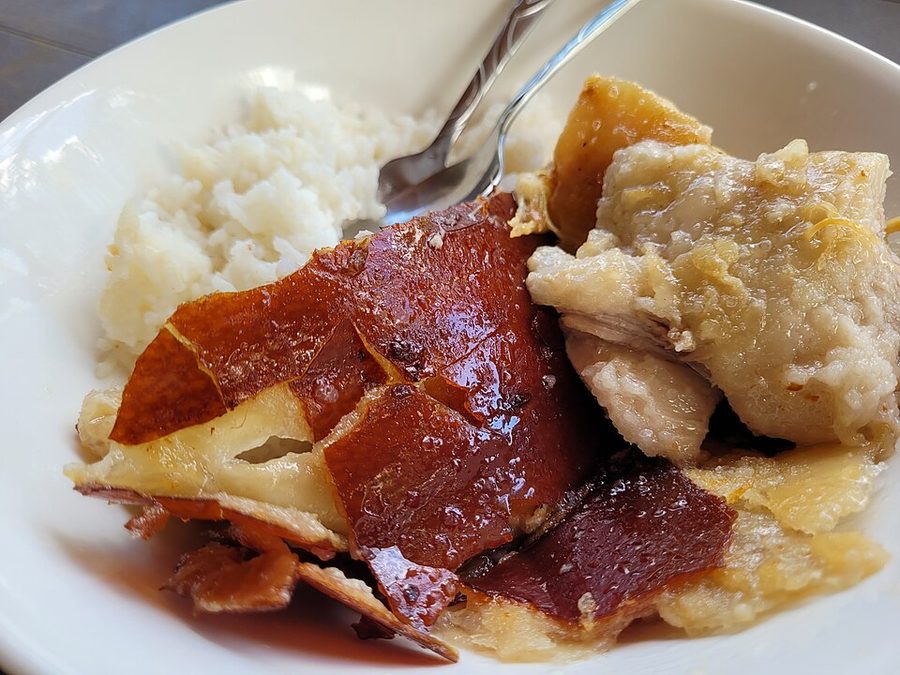
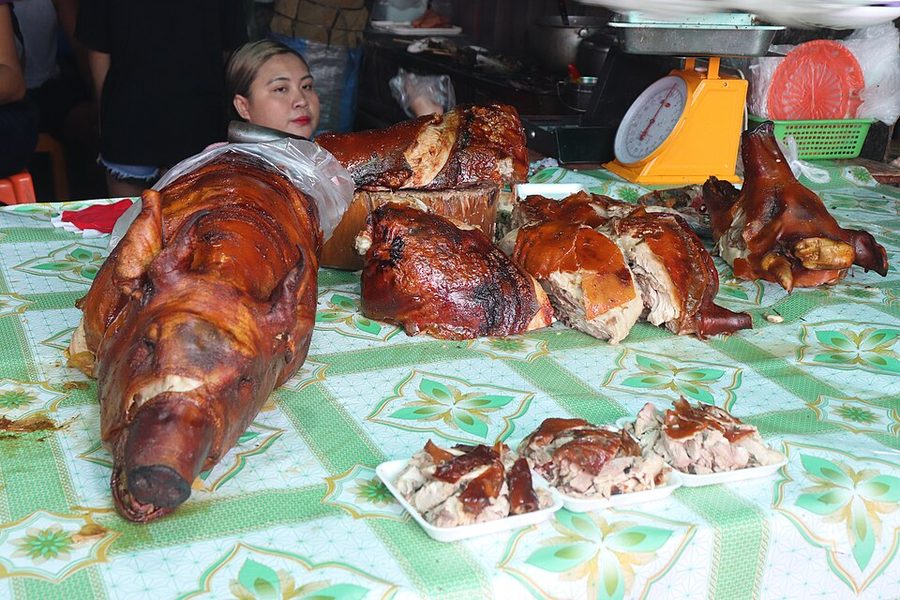
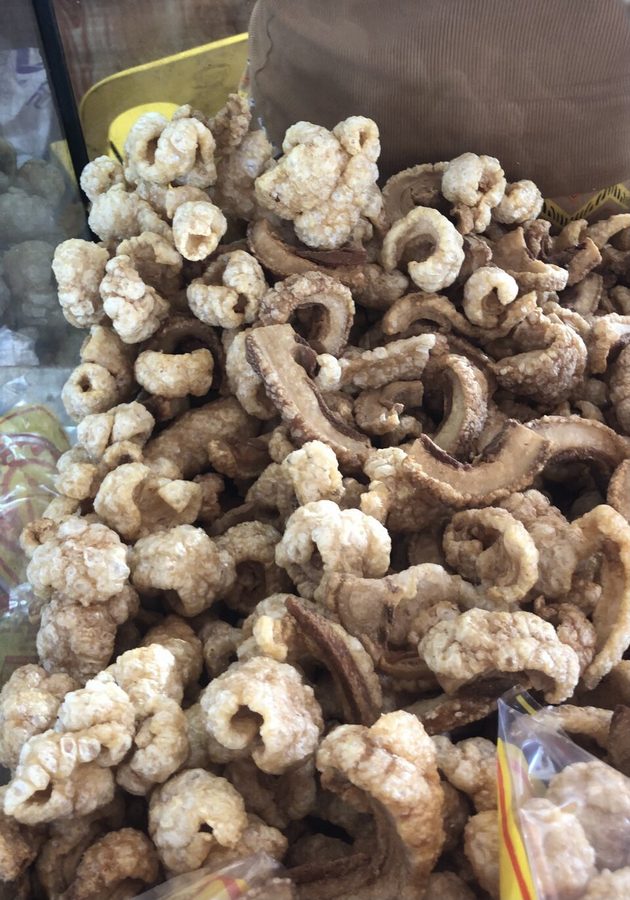
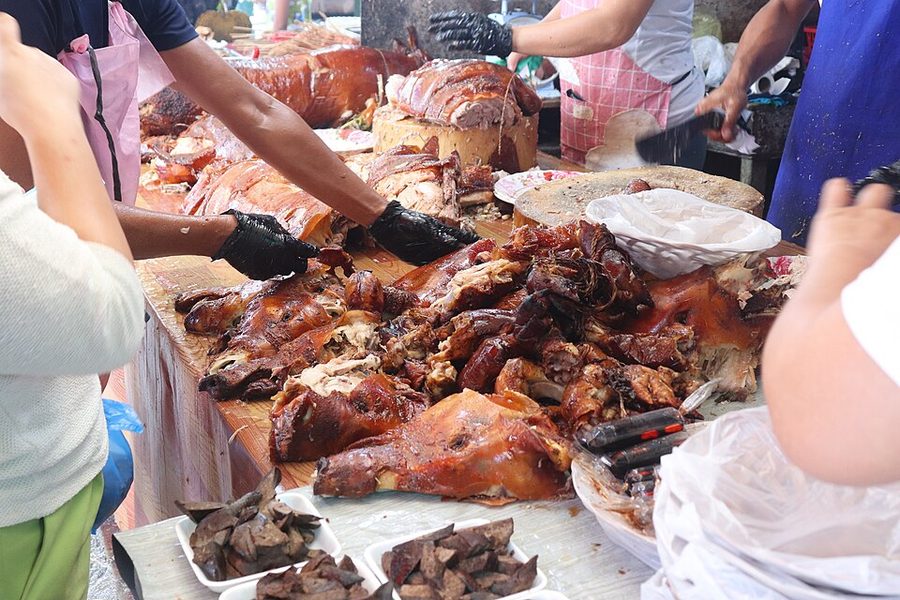
The lechon section of the new Carcar City Public Market is one long aisle of whole pigs, each one lying on its own counter with a vendor and a cleaver behind it. The vendors do not need to shout. They hold out a shard of skin instead, a free taste, because a Carcar lechon vendor knows the skin closes the sale. It is amber and glassy, and it shatters with the sound of a dropped roof tile.
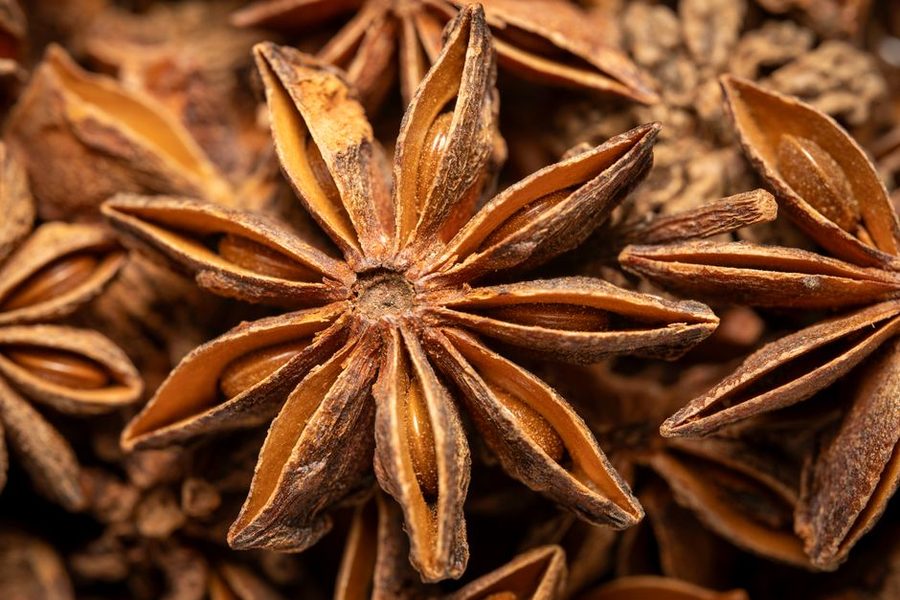
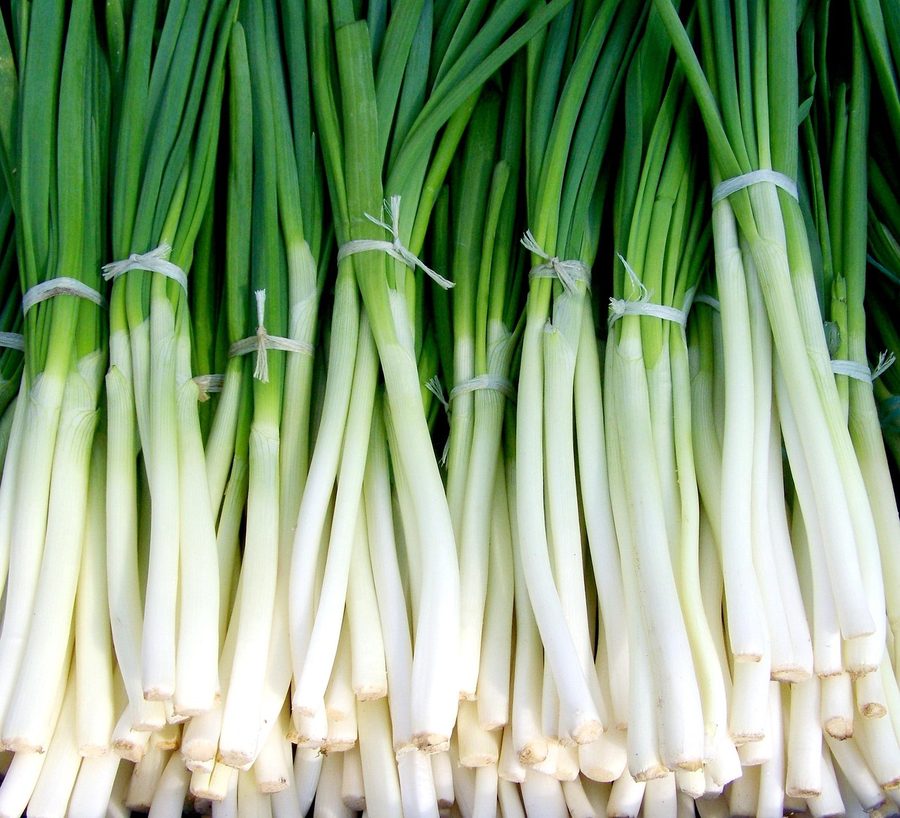
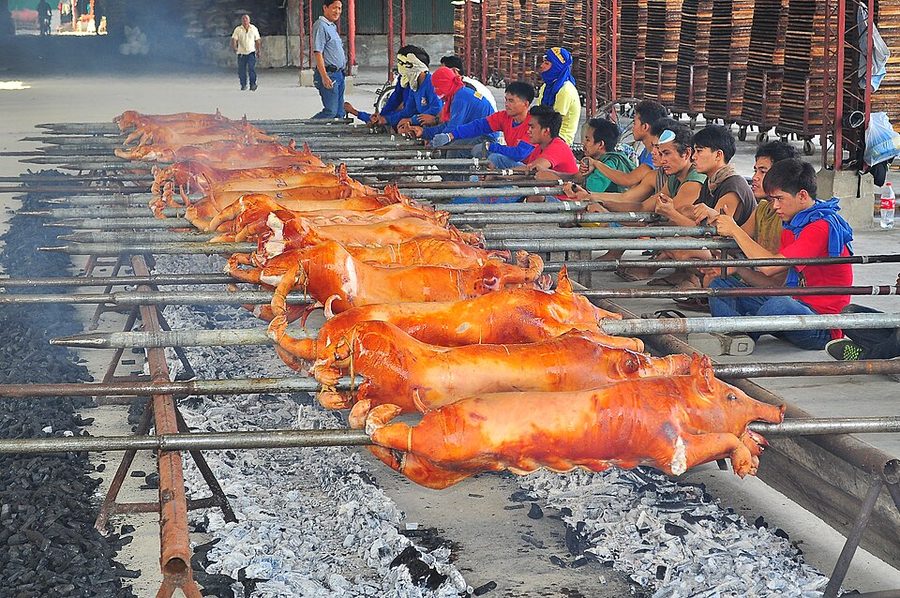
Then you notice there is no sauce anywhere. No liver gravy, no bottles, nothing but a cup of vinegar with chillies floating in it. In Cebu the seasoning went into the pig before it went over the coals: a cavity packed with lemongrass, garlic, spring onions and star anise, sewn shut and turned by hand over charcoal for hours.
Anthony Bourdain called Cebu lechon the best pig ever, and Cebuanos have quoted him since. Good Manila roasters can match the skin. What they cannot match is the meat under it, seasoned to the bone by herbs that steamed inside the pig the whole time it turned.
Contents 10 parts
What makes a lechon Cebuano
Lechon comes from the Spanish lechón, a suckling pig, and in Tagalog it is spelled litson. Cebu had its own word. Until the 2000s most Cebuanos called a pig roasted on bamboo over coals inasal, from asal, to roast that way, and the older word still names Talisay City’s October festival. Spanish name aside, roasting a whole pig on these islands is older than Spain’s arrival.
Whatever you call it, three things make a Cebu lechon different from a pig roasted anywhere else in the country: what goes inside it, what kind of pig it is, and what is missing from the table.
The stuffing
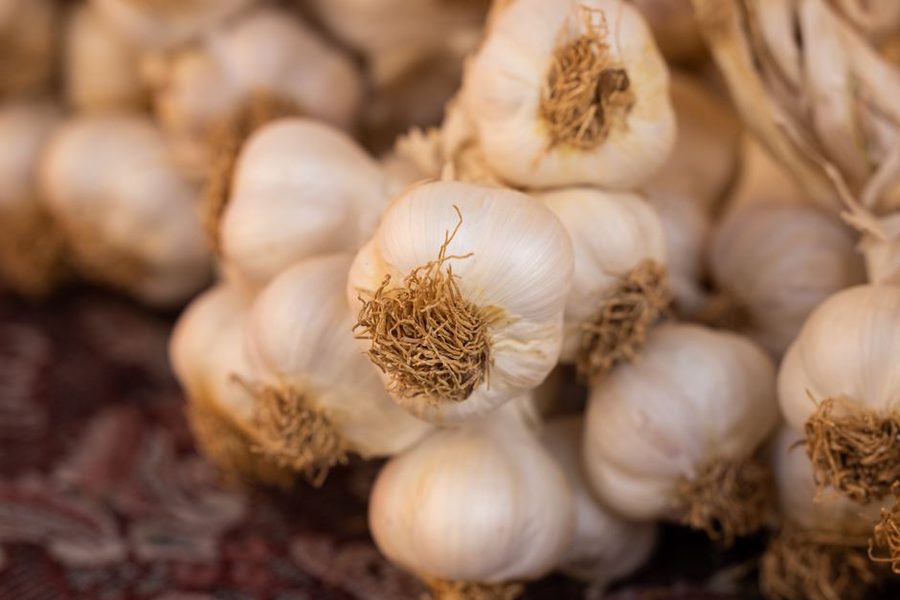
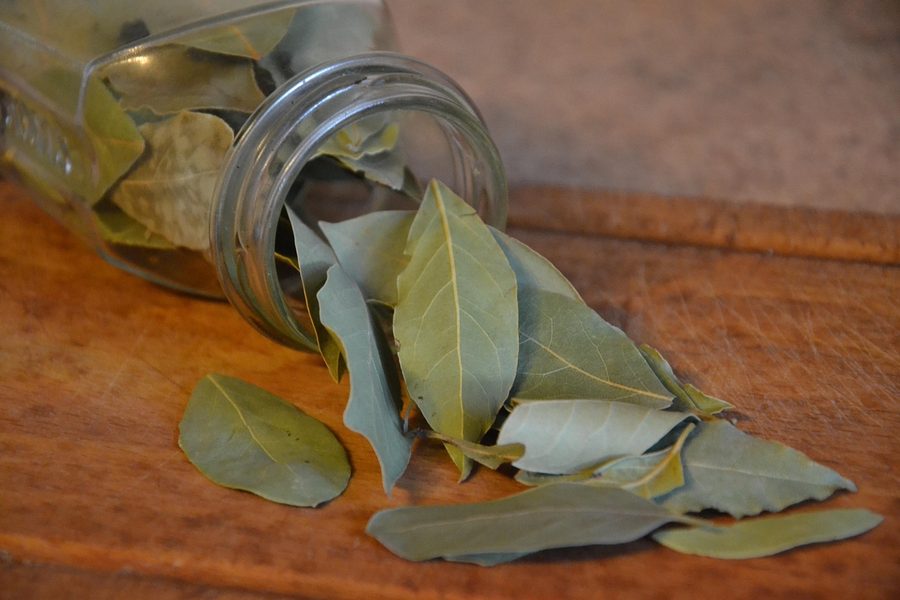
The cavity is rubbed with salt and pepper, then packed with whole stalks of tanglad (lemongrass), heads of garlic, bundles of spring onions, bay leaves and star anise. Every roaster has a variation and most guard it. Some add the leaves of native citrus or tamarind trees, Carcar’s version is credited to fruit juice and a local leaf called patiotes, and the 2026 Cebu Lechon Festival’s best lechonero puts pineapple in his.
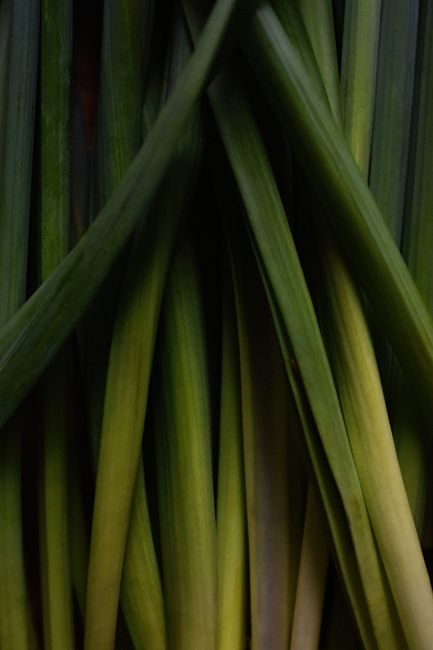
None of it is meant to be eaten. The herbs steam inside the closed belly for hours and perfume the meat from the inside, so the loin, which would taste of nothing on a plain roast, tastes of lemongrass and garlic right to the bone.
The pig and its skin
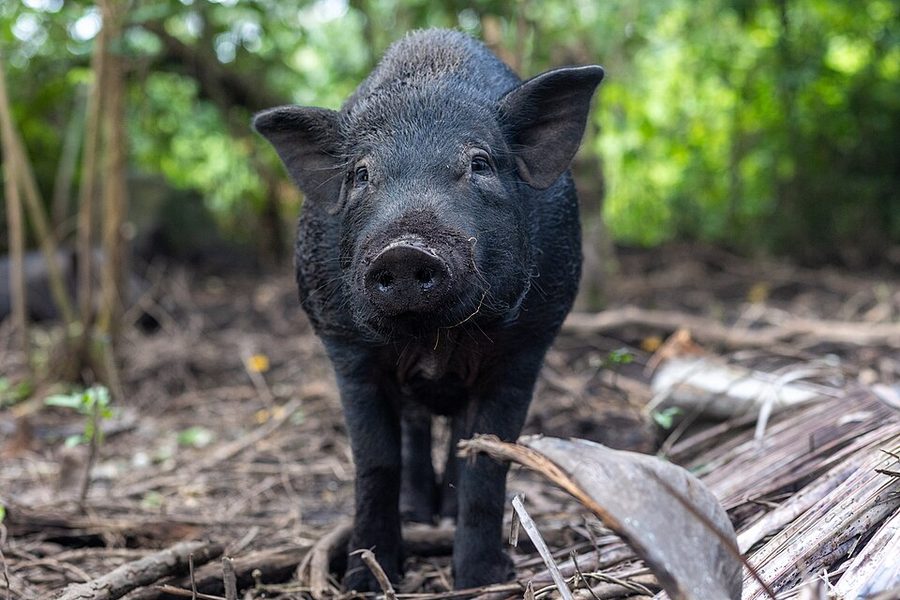
The skin is what people queue for, and it starts with the animal. Cebu lechoneros prefer small native pigs, and most of those come across the strait from the Negros Island Region. Asked by SunStar Cebu why, the vice chairman of the Pork Producers Federation of the Philippines was blunt: the native pigs are crispier, and the meat tastes the same. A SunStar editorial in Cebuano put the reason in a line: the skin is thin and carries little fat.
Thin skin over a thin layer of fat is what turns into glass over charcoal. A bigger, fattier commercial hog is harder to crisp evenly, which is why a lechon-size pig is a category of its own in Cebu’s pork trade, and why its supply makes the news.
No sauce, and why
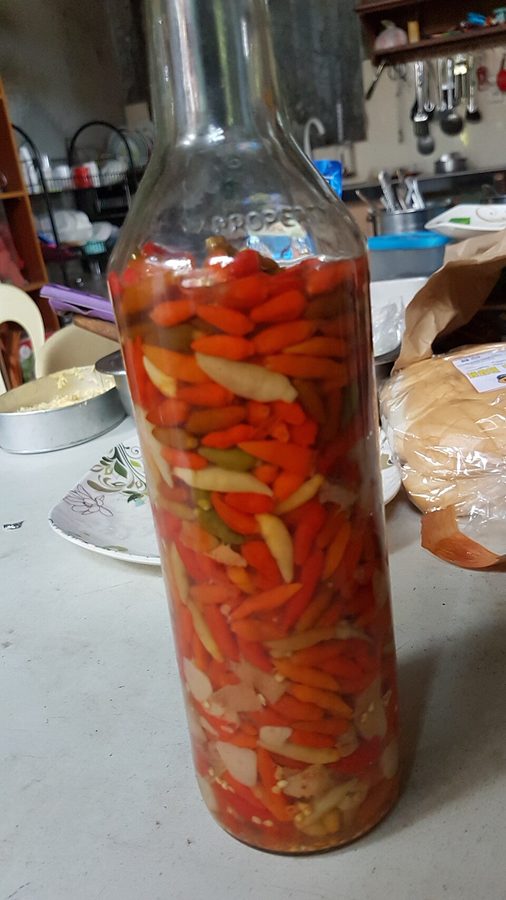
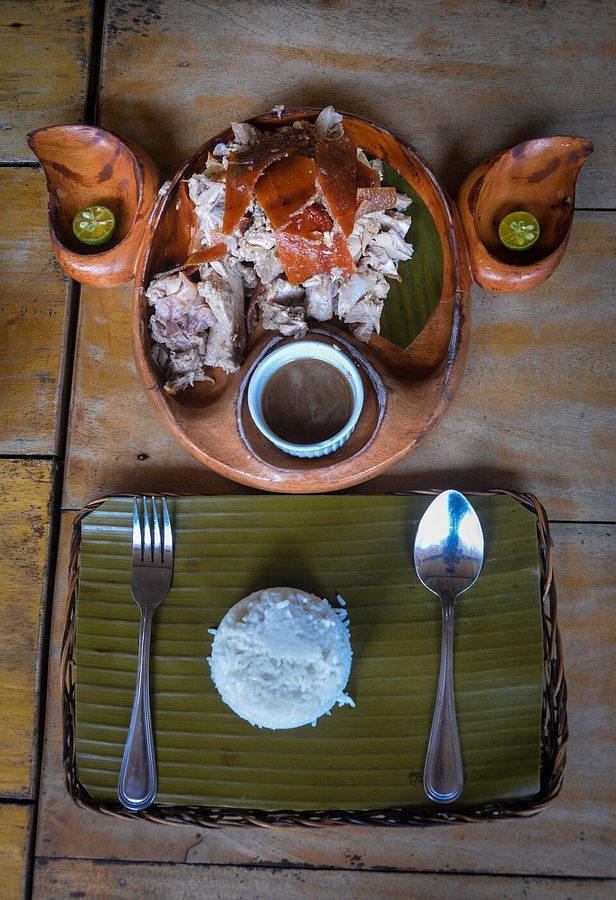
Because the seasoning is inside, a Cebu lechon arrives at the table finished. You will be given vinegar, often spiked with chilli and garlic, or soy sauce with calamansi and chilli. Both cut the fat; neither changes the flavour. Ask for liver sauce in Carcar and you will get a polite look.
Cebu lechon and Manila lechon
On Luzon the pig is usually roasted with little more than salt and pepper, often over a wood fire, and the flavour comes afterwards from sarsa: a thick, sweet sauce of mashed liver or liver spread, vinegar, brown sugar, breadcrumbs, garlic and onion. Most households now buy it bottled. La Loma in Quezon City is Manila’s lechon district, with roasting shops along its streets and its own lechon festival every May.
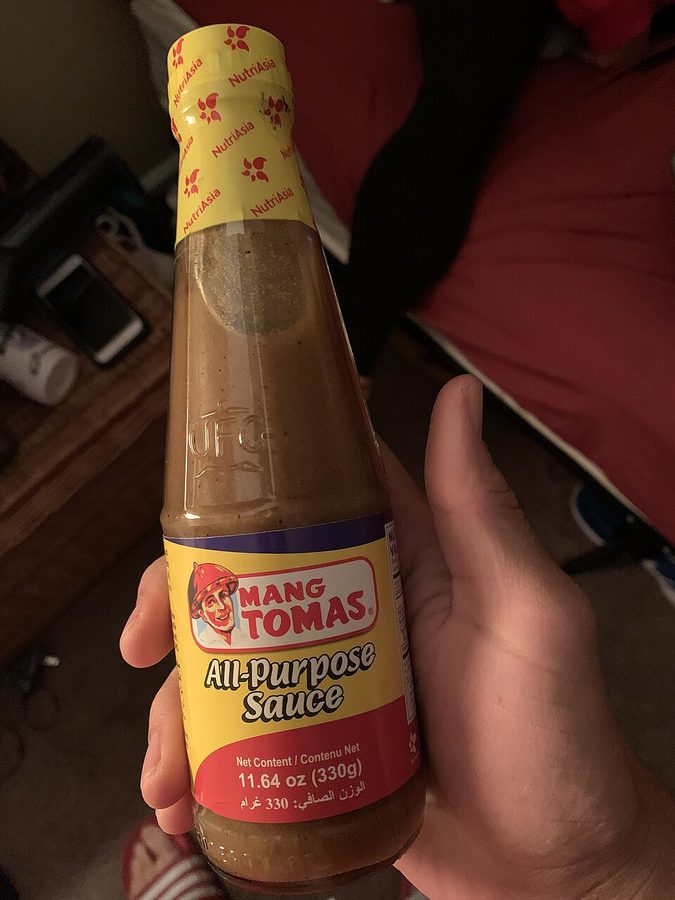
Neither is wrong. A Manila lechon is a blank, beautifully crisp canvas; a Cebu lechon is seasoned meat with a crust. If you were raised on the sauce, the first Cebu plate tastes oddly bare for about two bites.
| Cebu (Visayan) lechon | Manila (Luzon) lechon | |
|---|---|---|
| Inside the pig | Lemongrass, garlic, spring onions, bay, star anise, salt, pepper | Usually salt and pepper, if anything |
| Fire | Charcoal, traditionally from coconut husks | Often wood |
| On the table | Spiced vinegar or soy with calamansi | Liver sauce (sarsa) |
| Leftovers | Paksiw with vinegar and soy | Paksiw built on liver sauce |
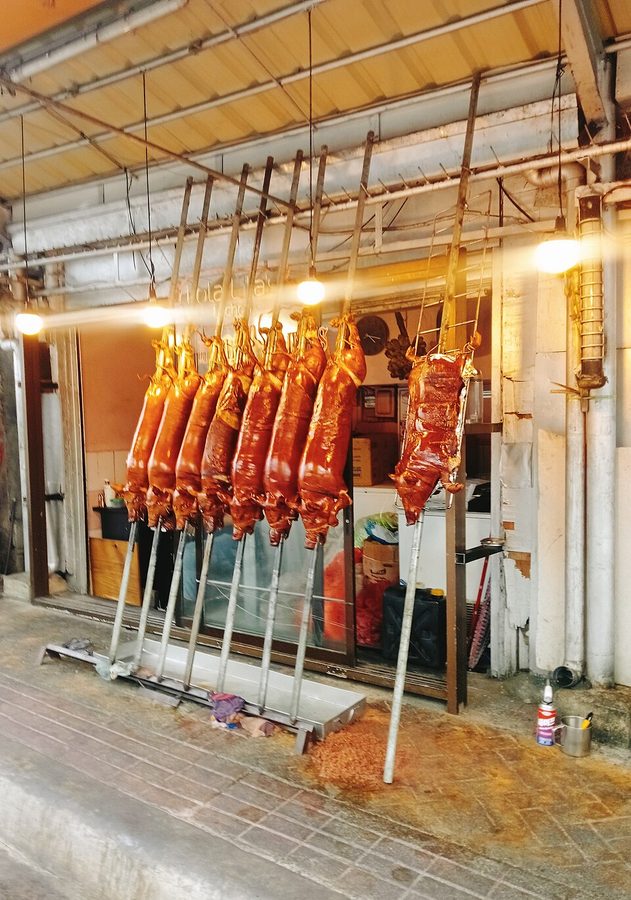
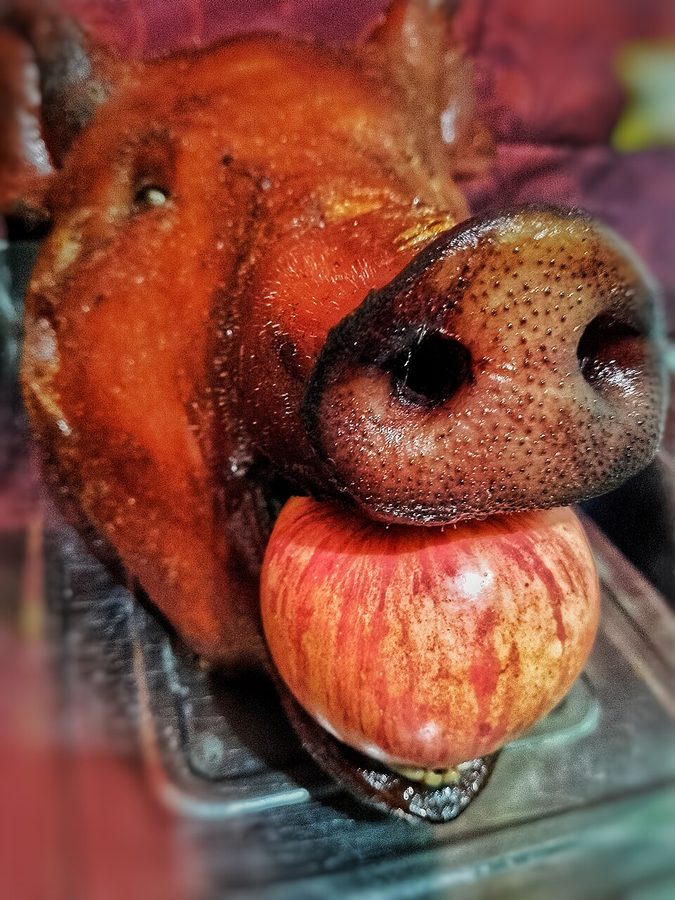
Talisay and Carcar, the lechon towns
Ask anyone who knows Cebu food where the best lechon comes from and you get one of two answers, both south of the city, and an argument about which. Talisay City is next door to Cebu City; Carcar is about 40 kilometres south. Both are worth the trip, and Talisay is close enough for breakfast.
Talisay
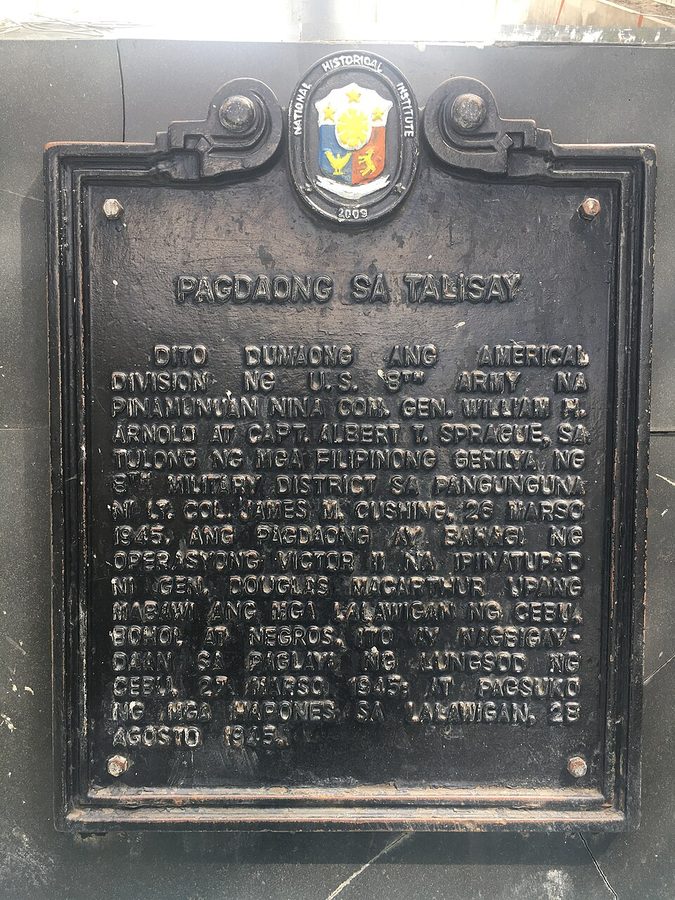
Talisay’s lechon makers work in barangays such as Biasong, and the place to eat their work is the Talisay Litson Food Park near the American Landing Memorial, which draws a crowd every week. Order by the kilo with puso on the side and eat at the tables. In October 2026 the mayor named the lechon park among the sites the city plans to improve, so expect some works.
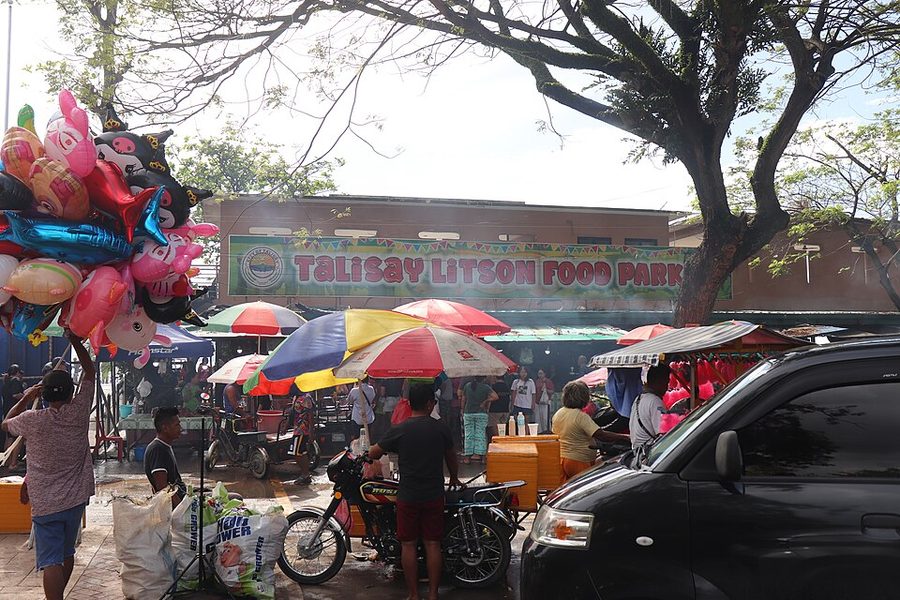
Prices moved in 2026. When the province banned pigs from Negros in July, Biasong roasters raised a whole lechon from ₱7,000 to about ₱8,000, while food park vendors held chopped lechon at around ₱900 a kilo. Those were the going rates in mid-2026; check before you order for a crowd.
Carcar
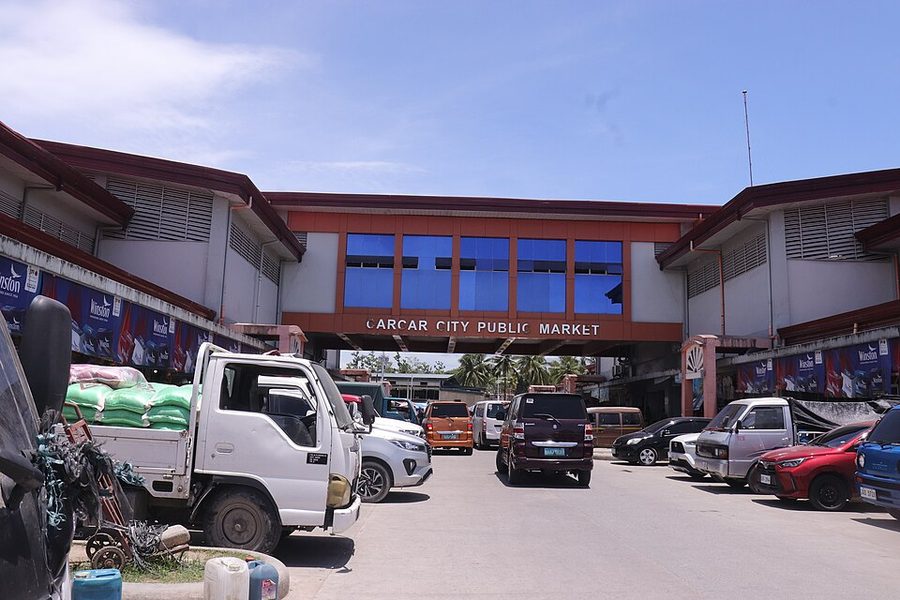
Carcar’s lechon is sold from the lechon section of the New Carcar City Public Market, open 5am to 10pm, with free tastes along the row and a dining area upstairs. The Carcar style pours the drippings collected during roasting back over the chopped meat, so it arrives wetter and richer than Talisay’s. I’d go to Talisay for the skin and to Carcar for the meat. The famous city restaurants are fine, but a market counter in either town is better and cheaper.
Where to eat lechon in Cebu City
You do not have to leave the city, and with a group, children or no car, it is easier not to.
- House of Lechon, Acacia Street at Tojong Street. Carcar-style lechon in a large, comfortable dining room, open 10am to 9pm daily, cards accepted. It is in the 2027 Michelin Guide selection, as it was in the 2026 guide. Also does lechon sisig.
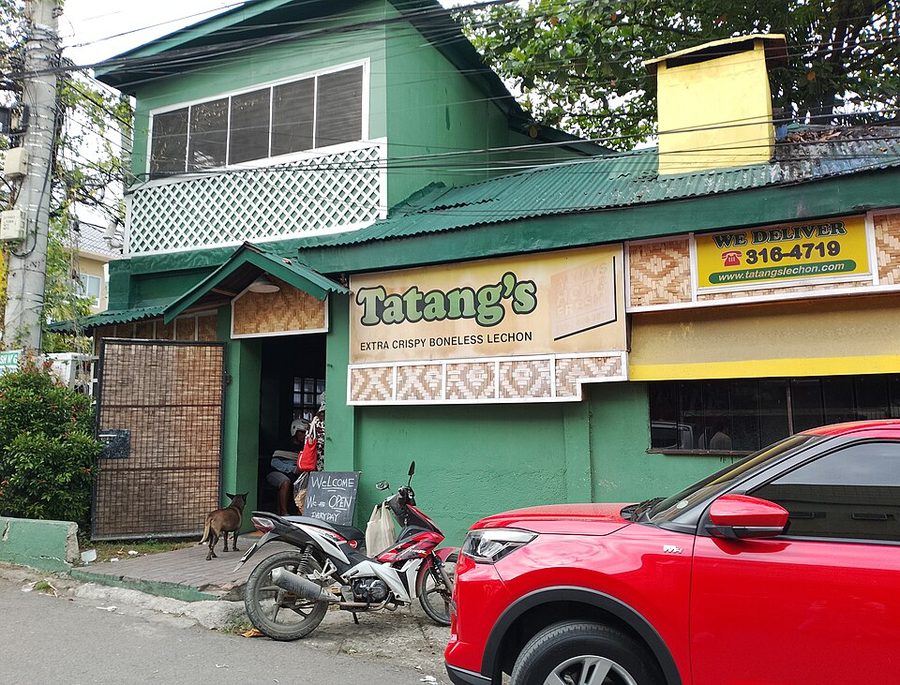
- Tatang’s Lechon, Wilson Street, Lahug. A budget place with a Bib Gourmand in the 2027 guide. Classic or spicy, both heavy on lemongrass, as single meals or by weight. Cash only.
- CnT Lechon, several branches, including Ayala Center Cebu, Jose L. Briones Street across from SM City Cebu, V. Rama Avenue in Guadalupe and Patria de Cebu. Good for takeaway and boxed lechon to fly home with.
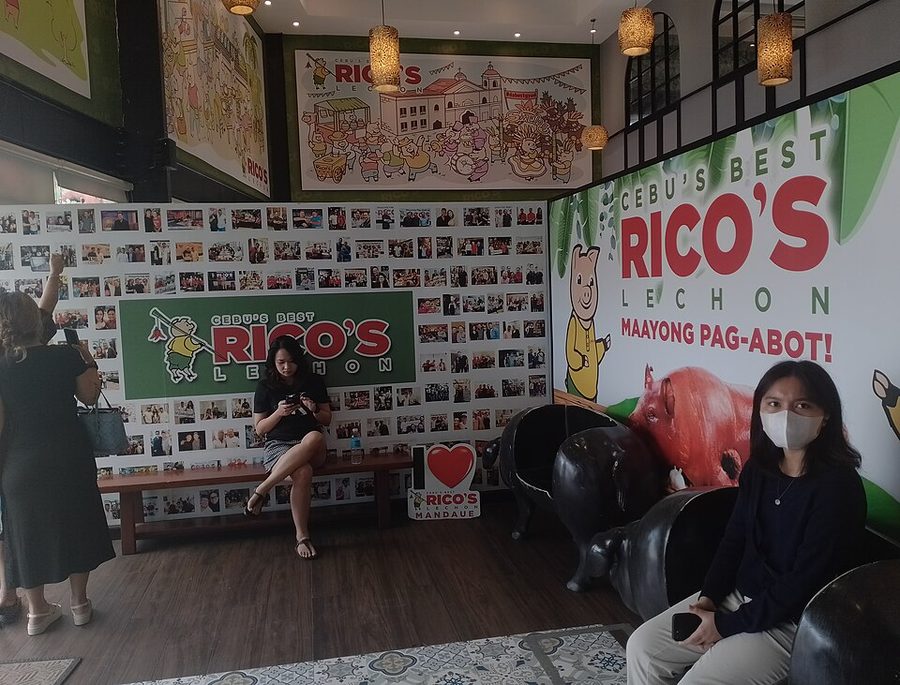
- Rico’s Lechon, branches at Ayala Malls Central Bloc in IT Park, Axis Entertainment Avenue on Escario, Mandaue and Promenade Mactan. Founded in 1995 by Enrico “Rico” Dionson; the company says it was the first to sell spicy lechon.
- Carbon Market, downtown. Lechon chopped at market stalls, at market prices.
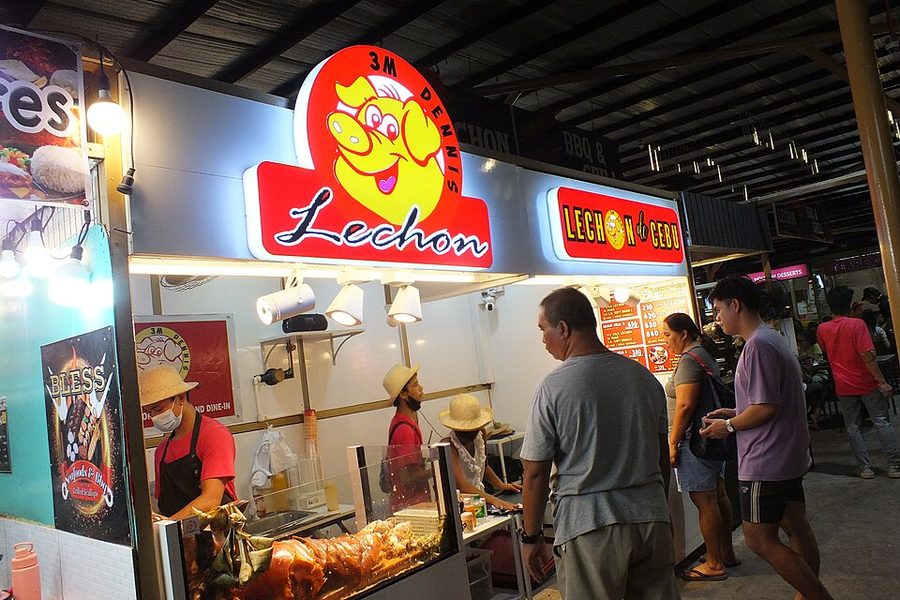
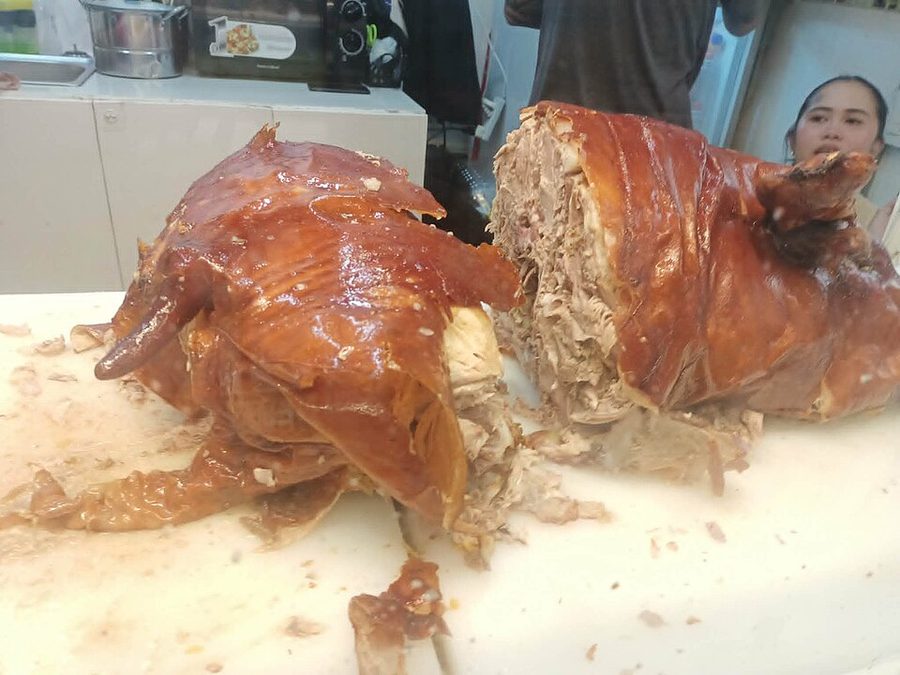
That certificate matters more than it sounds. Cebu City’s veterinary office runs an “Operation Hot Meat” against pigs slaughtered outside accredited slaughterhouses, with a ₱5,000 fine per citation, and it keeps up the checks through the peak seasons. A stall that can show its paper is a stall whose pig was inspected before and after slaughter.
What to order
Buy by the kilo or the quarter-kilo, and say what mix you want. A good order is half belly, for the skin and the fat, and half meat from the shoulder or ribs. The loin is leaner; the belly is the richest. If the vendor has the head, ask for an ear.
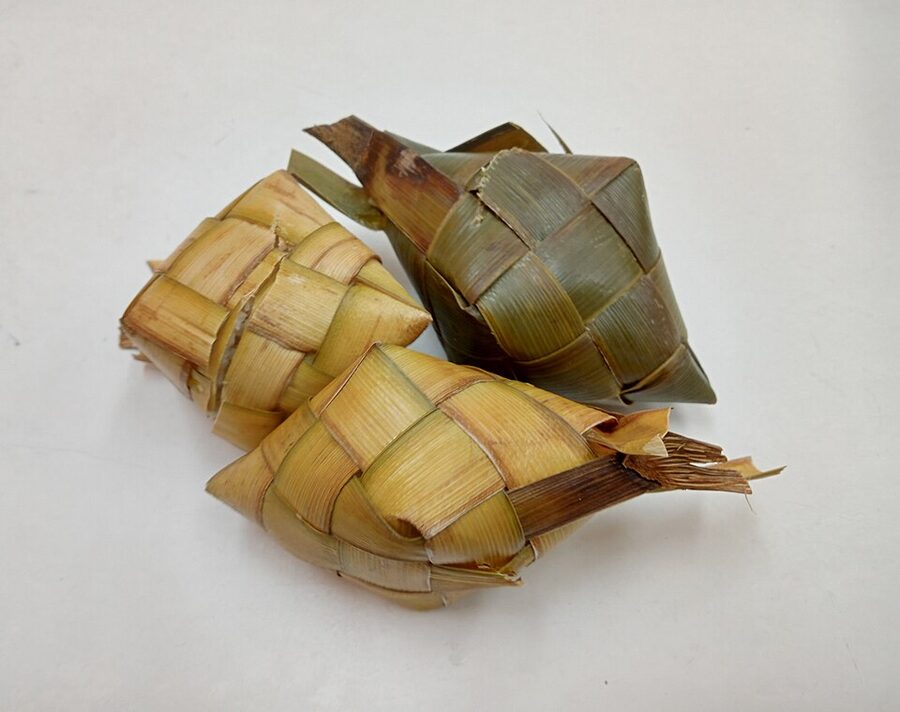
Eat it with puso, rice boiled inside a pouch of woven coconut leaf. It hangs in bunches at most lechon counters; cut it open lengthwise and eat the rice in slices. Spicy lechon, now on many menus, is seasoned with chilli and has a slow, building heat. Try it once, then go back to the plain one.
Ordering a whole pig
For a party you buy the whole animal, and in Cebu that is an ordinary errand. Roasters in Talisay and Carcar take orders directly; the chains take them online. Rico’s whole lechon list for Cebu runs from ₱12,300 for a pig that feeds 15 to 20 people to ₱15,100 for one that feeds 60 to 80, with the spicy version ₱600 more. A roadside roaster in Talisay charged about ₱8,000 for a whole pig in 2026.
Order at least three days ahead, which is what Rico’s asks, and earlier in December. Ask for the pig chopped and boxed if you have no one to carve, and ask for the head and trotters separately: they are the base of tomorrow’s paksiw.
The 2026 pig problem
Cebu’s lechon trade runs on small native pigs, and Cebu does not raise many. African swine fever in Negros led the province to ban Negros hogs from July 2026, and cases in the southern Cebu towns of Ginatilan and Samboan followed. Roasters paid more, and boatloads of pigs smuggled across the strait were seized.
Under Executive Order 55, issued on 26 October 2026, live hogs may enter Cebu again, but only if they go straight to an accredited slaughterhouse for lechon, with a negative ASF test and full papers. The province estimates it needs about 30,000 lechon-size pigs for the holidays, and up to 320 a day over Christmas and Sinulog. If you want a whole pig for Christmas, order in November.
How a Cebu lechon is roasted
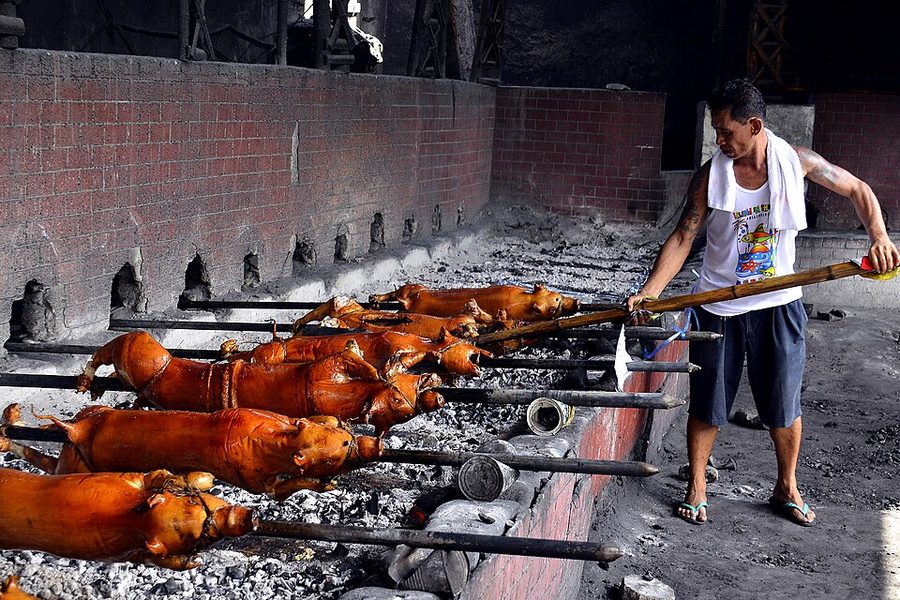
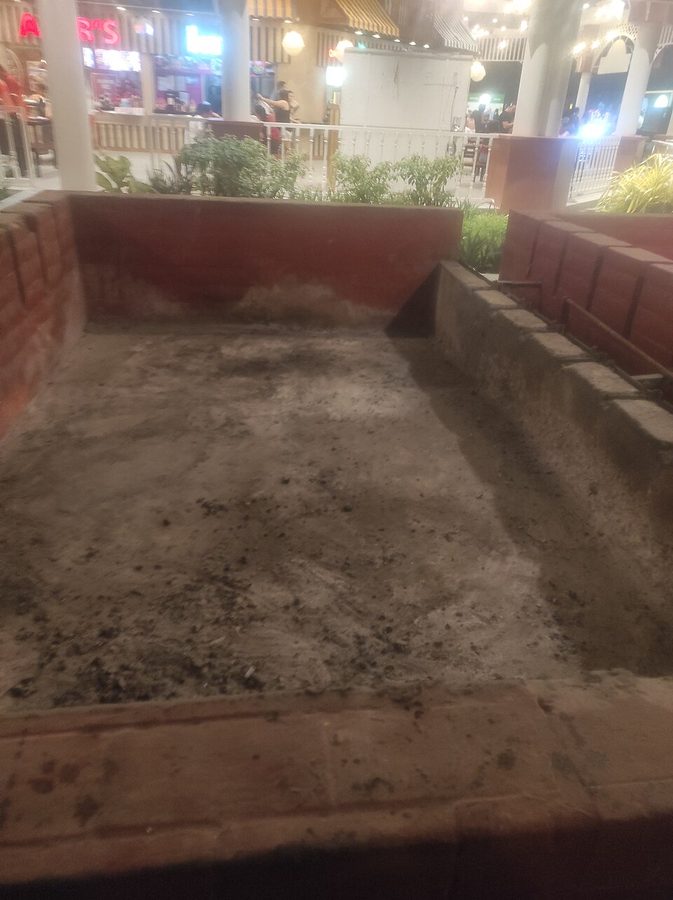
The method has not changed much in generations, only the tools: steel spits at some roasters where bamboo used to be, and brick pits built for the job. What follows is the roasters’ sequence. It is a full day’s work and not something to try at home without a pit and two people to turn.
- The pig. A lechon-size pig, ideally native, slaughtered and cleaned at an accredited slaughterhouse. The innards are kept back; in Cebu they go into dugo-dugo, a stew made with pig’s blood.
- Seasoning the cavity. The inside is rubbed hard with salt and cracked pepper.
- Stuffing. The belly is packed with lemongrass, garlic, spring onions, bay leaves and star anise, plus whatever the house adds.
- Sewing. The belly is stitched shut so the steam stays in.
- The spit. A pole is run through from rear to snout and the pig is tied to it so it turns as one piece rather than slipping around the pole.
- The skin. The outside is rubbed with salt. Some roasters baste it with soft drink for colour.
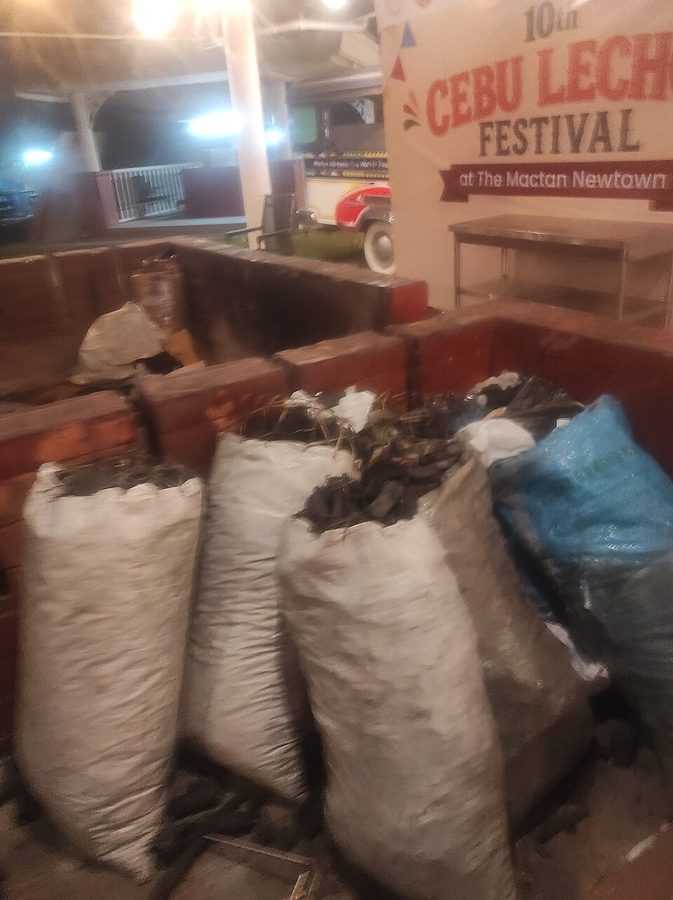
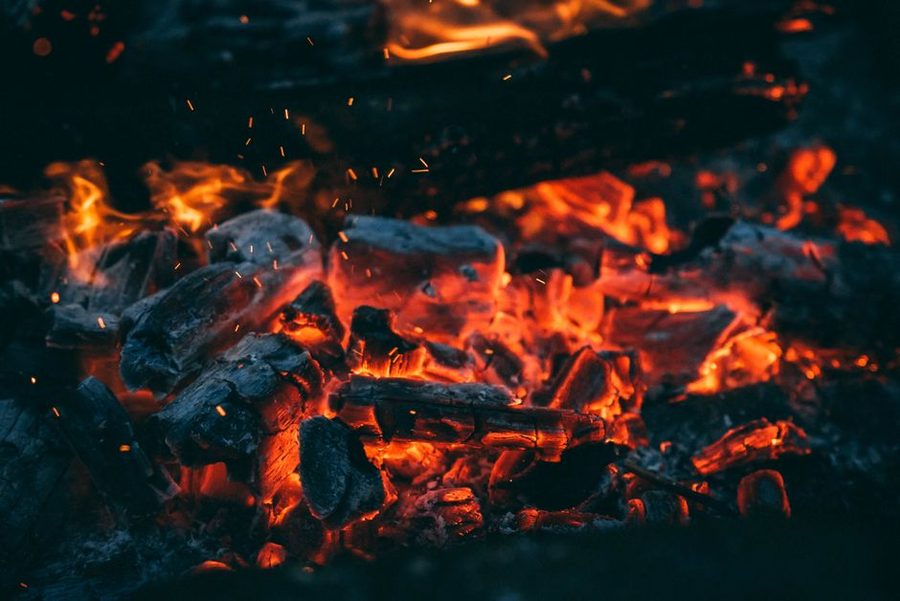
- The fire. Charcoal is spread evenly along the pit, not piled in one place, so the heat reaches the whole length of the pig.
- The turning. The pig is turned by hand, steadily, for several hours, and basted as it goes. Four to six hours is the range you hear most often, more for a big pig. Stop turning and the side facing down burns.
- Done. The skin turns from pale to gold to deep reddish amber and goes hard; it should sound hollow when you tap it.
- Resting and chopping. The pig rests briefly, the stitches come out, the herbs are pulled and thrown away, and the cleaver goes in.
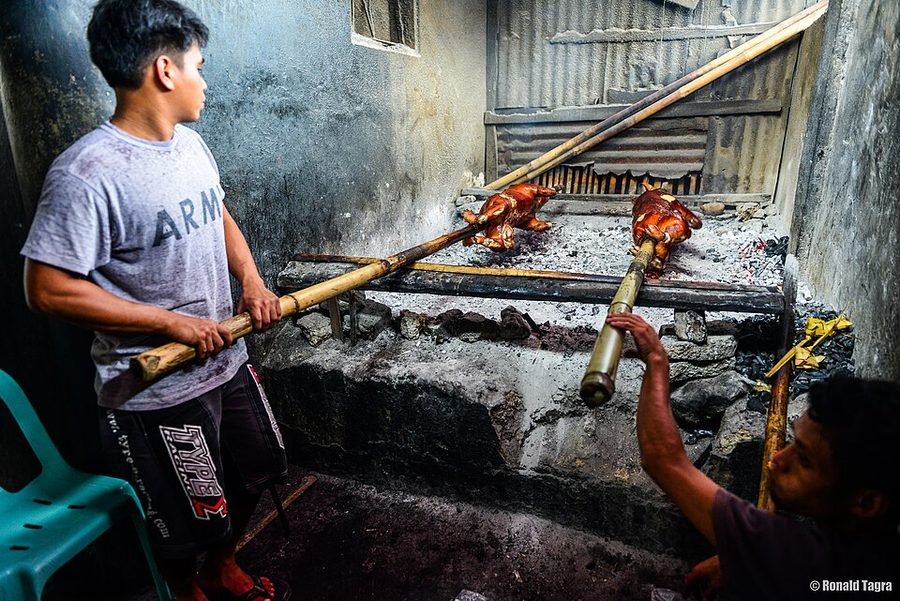
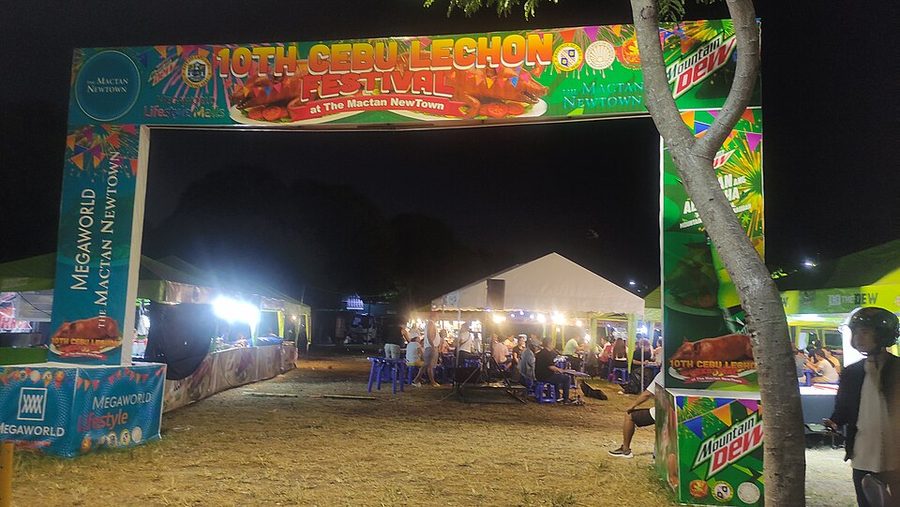
Roasters differ on almost every detail. At the 10th Cebu Lechon Festival, towns from across the province showed their versions: more lemongrass in one, local vinegar or a splash of local rum in another, bamboo over the pit instead of steel. The year’s best lechonero, from Lapu-Lapu, adds pineapple to the seasoning and says his skin keeps its crunch for more than four hours.
The second day: lechon paksiw
Lechon does not reheat well. The skin goes from glass to leather overnight and the meat dries out. So the leftovers, and especially the head, trotters and ribs, become paksiw: stewed in vinegar until the skin softens into something gelatinous and the sauce turns glossy. It is so much a part of the lechon cycle that the Cebu Lechon Festival runs a paksiw contest.
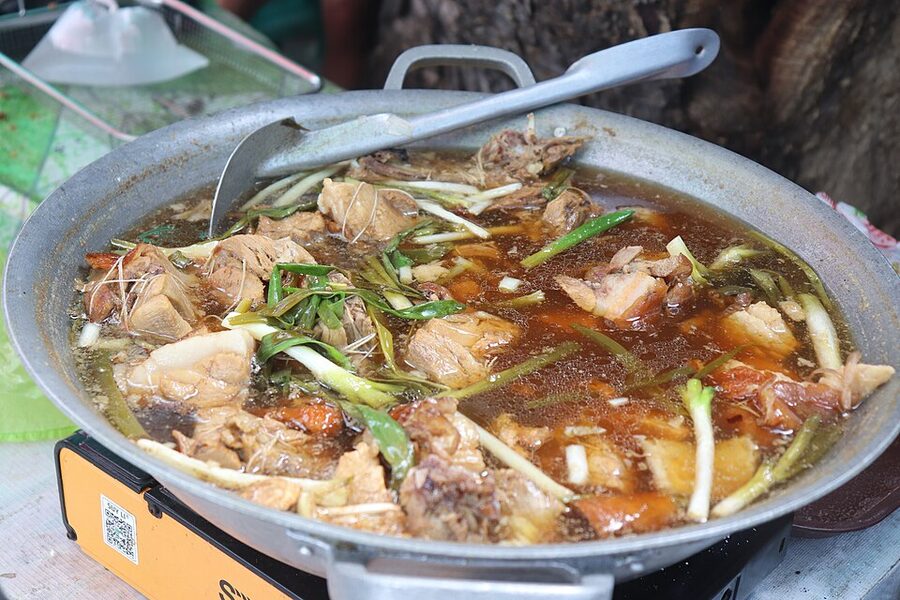
Here the Manila and Cebu traditions split again. Luzon paksiw is built on liver sauce, often a cup or more per kilo of meat, which makes it sweet and thick. Cebu lechon has no sauce to use up, so the Visayan version uses vinegar, soy and a little sugar, and tastes of the lemongrass the pig was roasted with. The recipe below is that version.
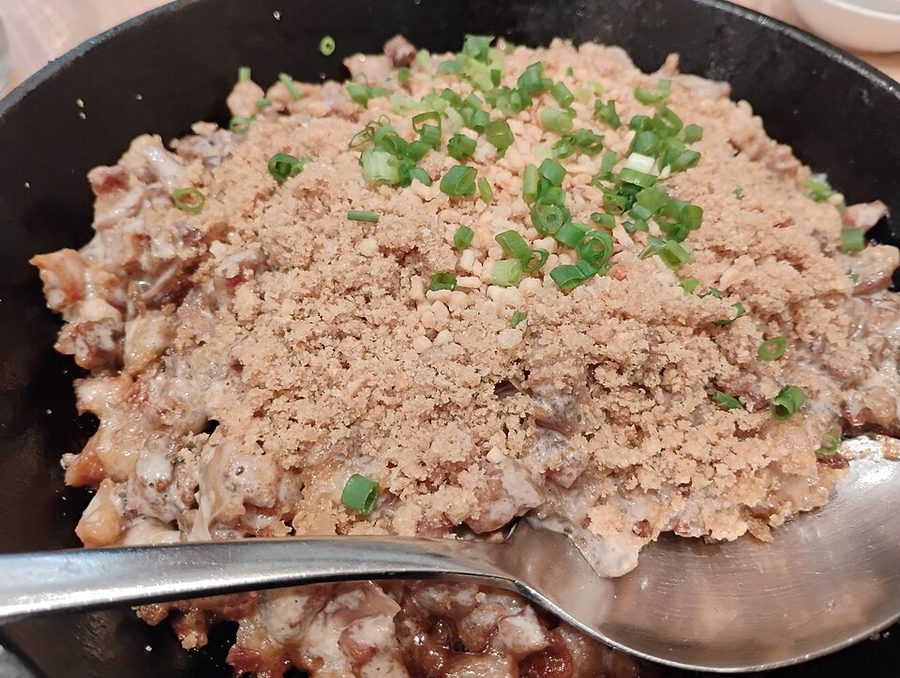
Other second-day uses: chop the meat and skin small and fry it hard in a pan for lechon sisig with onions and calamansi, or crisp chunks of belly in a 220°C (425°F) oven for ten minutes and eat them before they cool. The microwave is where leftover lechon goes to die.
Cebu-style lechon paksiw
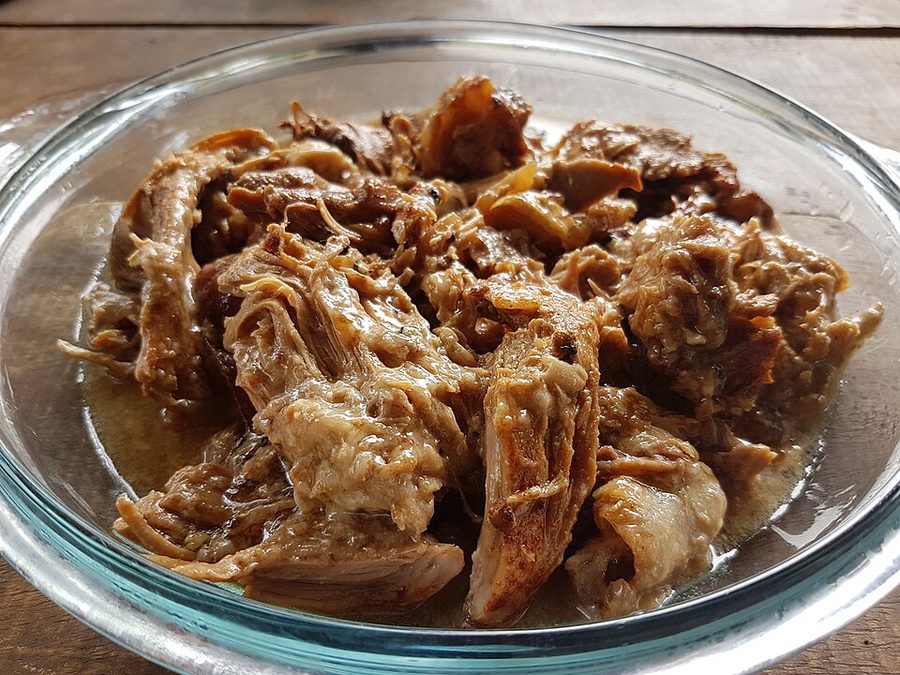
Use whatever is left: head, trotters, ribs and belly all work, and a mix is best. Published versions use anywhere from a quarter cup to three-quarters of a cup of vinegar per kilo of meat. The high end belongs to the sweet liver-sauce paksiw, which needs the acid; with soy and no sauce, half a cup is right.
Serves 4 to 6 with rice. About 1 hour.
Recipe card
Ingredients
- 1 kg (2¼ lb) leftover Cebu lechon, with skin and bone, chopped into 5 cm (2 in) pieces
- 1 tbsp vegetable oil
- 1 head garlic, cloves peeled and crushed
- 1 large onion, sliced
- 125 ml (½ cup) coconut or cane vinegar
- 60 ml (¼ cup) soy sauce
- 375 ml (1½ cups) water
- 2 tbsp brown sugar or muscovado
- 3 dried bay leaves
- 1 tsp whole black peppercorns
- Optional: a handful of dried banana blossoms, soaked 10 minutes and knotted
Method
- Heat the oil in a wide pot over medium heat. Fry the garlic and onion for 2 to 3 minutes, until soft and starting to colour.
- Add the lechon and turn it in the pot for 2 minutes, until some fat runs.
- Pour in the vinegar and do not stir. Let it boil uncovered for 3 minutes so the raw edge cooks off.
- Add the water, soy sauce, sugar, bay leaves, peppercorns and banana blossoms if using. Bring to the boil, then lower the heat, cover and simmer for 30 minutes, stirring now and then, until the skin is soft and wobbly.
- Uncover and simmer 10 to 15 minutes more, until the sauce has reduced by about half and coats the meat.
- Taste. It should be sour first, then salty, then faintly sweet. Add sugar a teaspoon at a time if it is too sharp, or a splash of vinegar if it is flat.
- Serve hot with rice. Covered in the fridge, it keeps 3 to 4 days and is better on the second.
If you want the Luzon taste, stir in 2 to 3 tablespoons of liver spread for the last 5 minutes. It thickens the sauce and adds a deep, slightly bitter edge.
Taking lechon home
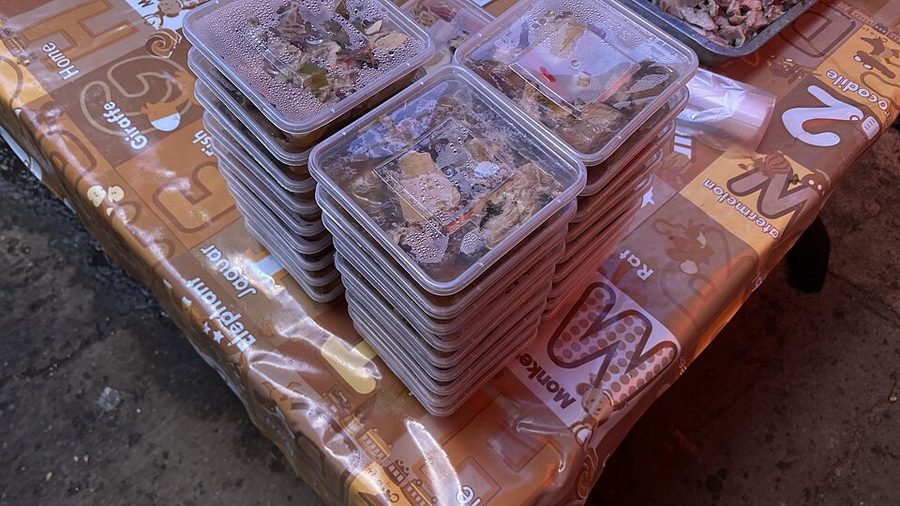
Cebuanos fly with lechon the way other people fly with chocolates. Lechon houses sell it boxed for travel, whole pigs come wrapped in plastic and cardboard, and Rico’s sends whole Cebu lechon to Manila for airport pickup. For what else goes in the bag, I’ve covered the rest in these packing tips.
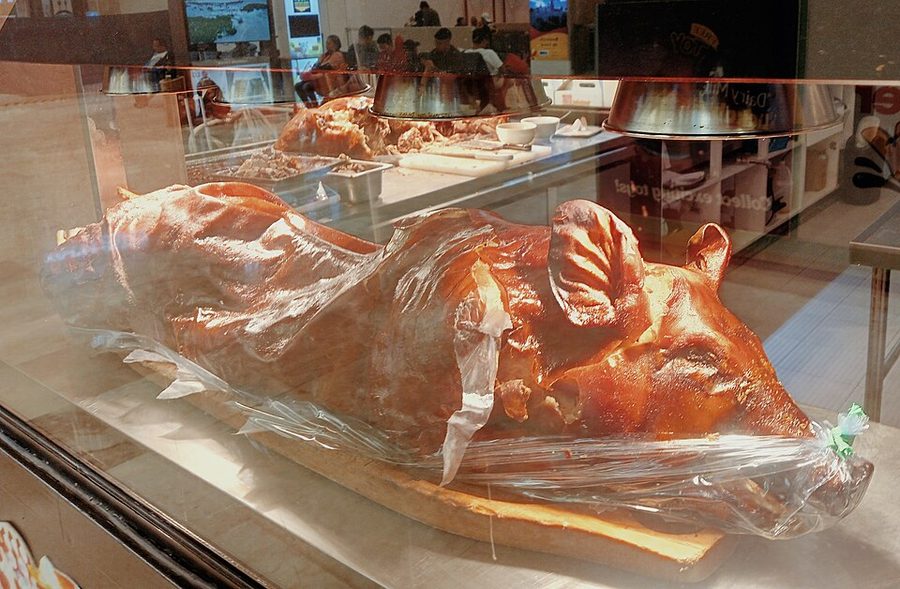
How long it keeps is a matter of food safety, not taste. Cooked pork should be refrigerated within two hours, then kept 3 to 4 days in the fridge or 3 to 4 months frozen, and reheated to 74°C (165°F). A Cebu to Manila trip, with the airport time, runs past that two-hour mark. People do it every day, but put it in the fridge as soon as you land, and know the skin will be soft by then anyway.
International is another matter. The Philippines has African swine fever, and American agriculture officials ask travellers not to bring pork from affected countries. Every meat product must be declared on arrival, and undeclared prohibited items are confiscated, with penalties up to $1,000 for a first offence. Other countries have their own rules; check them before you pack a pig.
Fiestas, Christmas and festivals
In Cebu a lechon marks the occasion as much as it feeds it. It goes on the table at town fiestas, baptisms, birthdays, weddings and the Christmas Eve meal, and a whole pig is how a family says the day matters. Demand peaks twice in the year: over Christmas, and in January for Sinulog, Cebu City’s feast of the Santo Niño.
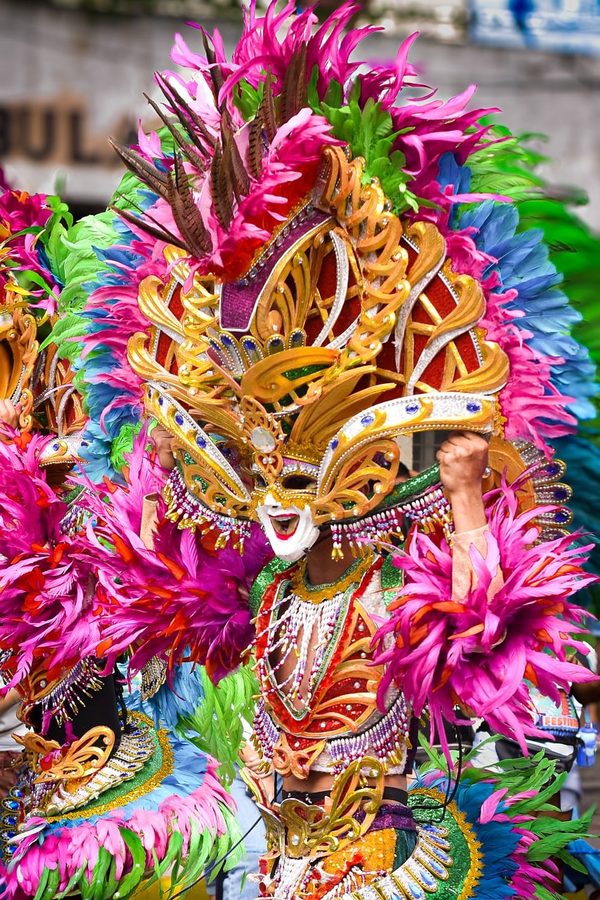
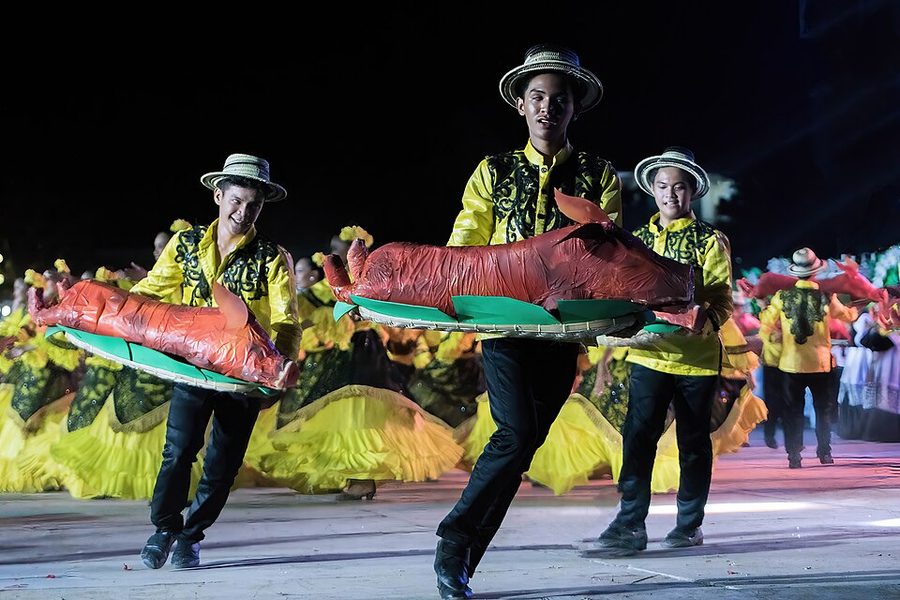
Talisay’s Halad Inasal Festival every October is built around the pig, and the name keeps the old Cebuano word. In 2026 the city lined up 25 lechon at City Hall for a free tasting, and the festival dancers perform with lechon props.
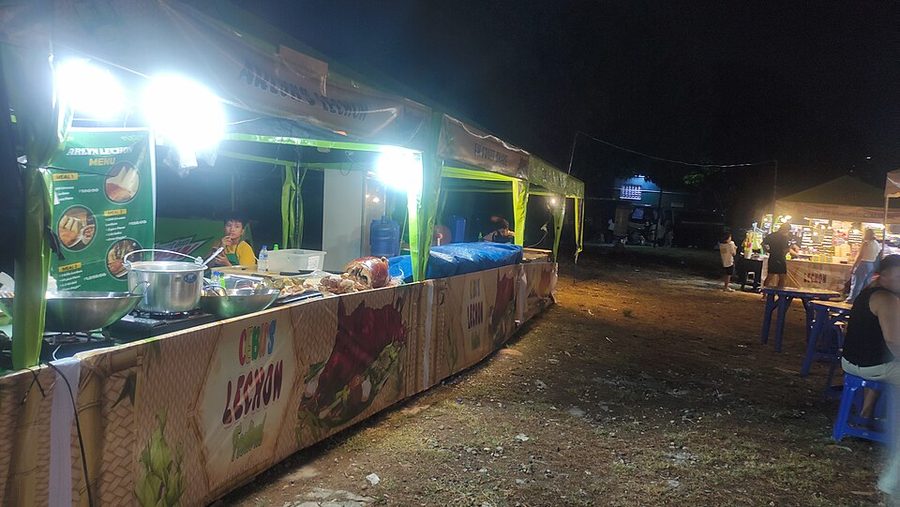
The Cebu Lechon Festival at The Mactan Newtown in Lapu-Lapu City reached its tenth edition in August 2026. It runs for well over a week, with roasting demonstrations, a best-lechonero contest, a paksiw contest and a night market of roasters from towns across the province. It is the one place to taste five towns’ lechon in an evening.
The belly-only cousin
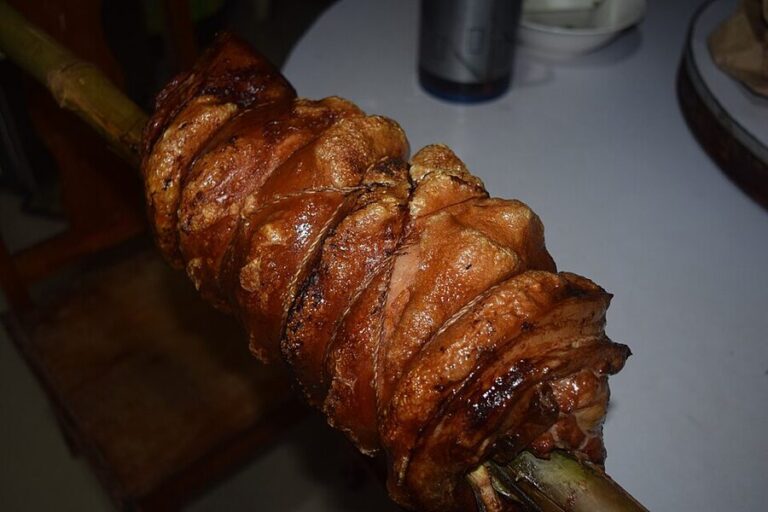
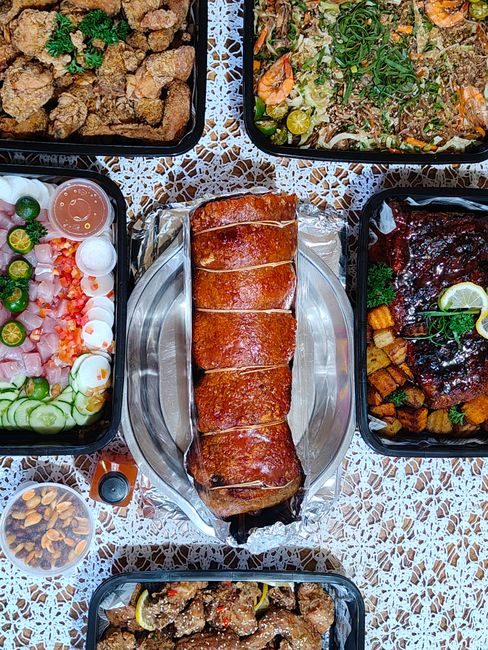
When a whole pig is too much, Cebu roasts just the belly. Balamban liempo, from the west-coast town of Balamban, is a slab of pork belly with a pocket cut into it, stuffed with the same kind of aromatics, tied, and roasted on a pole until the skin crackles. It is lechon for a family of four rather than a village.
Back at the Carcar market the vendors are still holding out their shards of skin. Take one, then buy half a kilo of belly and two puso, eat it upstairs, and ask the vendor to set aside the head for tomorrow’s paksiw.