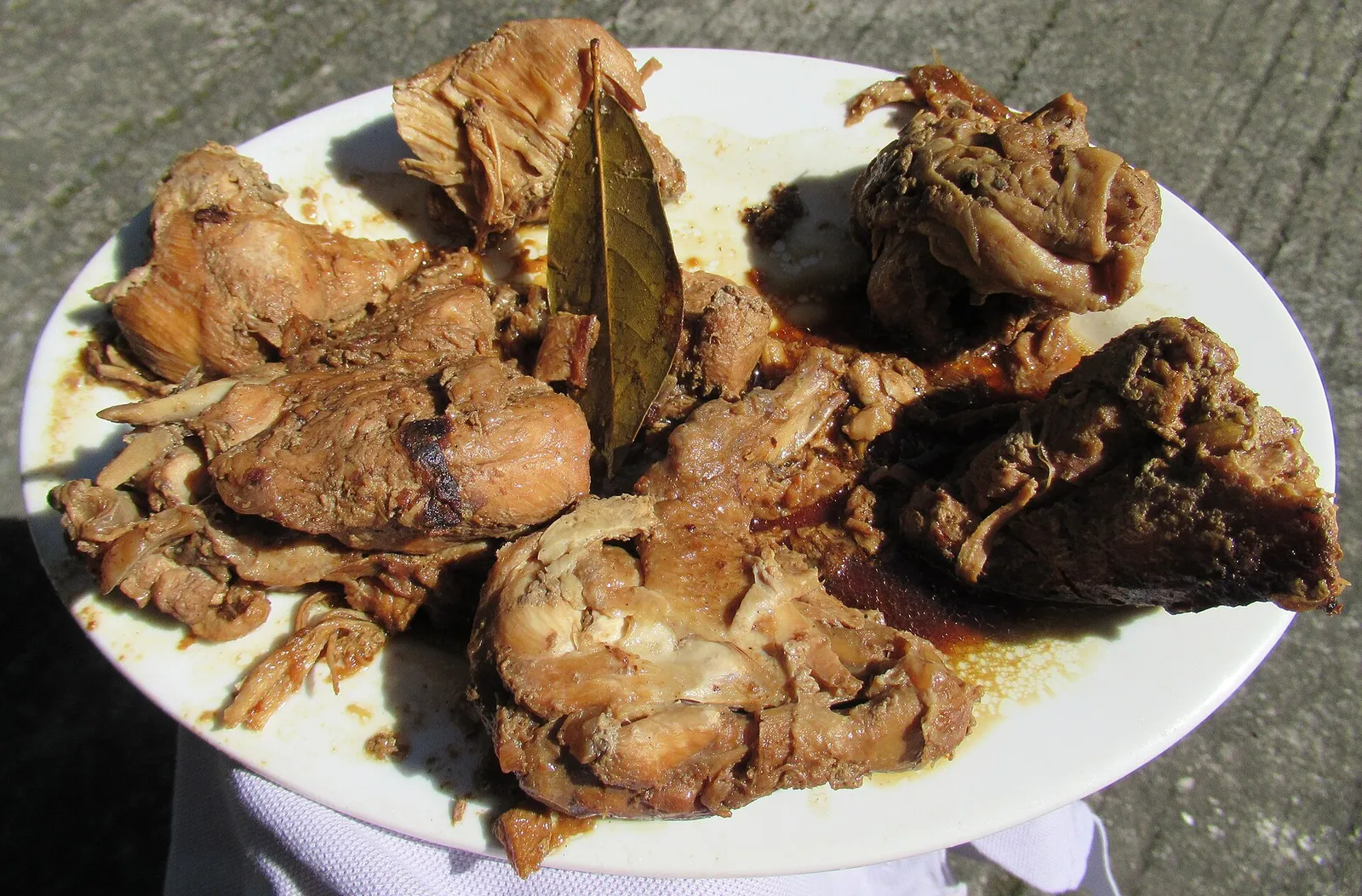
Pour Filipino cane vinegar over a pot of chicken and garlic, bring it to the boil, and for about three minutes the kitchen smells like a pickling shed. Then the sharpness lifts. The garlic comes through, the bay leaves start to matter, and by the time the meat is tender the sourness has gone round and soft, the way a pickle mellows after a week in the jar.
That vinegar is the dish. Most chicken adobo recipes written in English treat it as a soy sauce stew with a splash of something sour, and the result is salty, brown and a little flat. The older Filipino versions run the other way: vinegar first, garlic in quantity, bay, whole black pepper, salt or a modest pour of soy, and a sauce cooked down until the chicken starts to fry in its own fat. In parts of Batangas the soy is left out altogether.
The vinegar keeps working after the stove is off. It softens the meat, pulls the garlic through the sauce and slows spoilage, which is why adobo was the pot Filipinos packed for long journeys before anyone owned a fridge, and why most Filipino cooks will tell you it is better on the second day.
Contents 8 parts
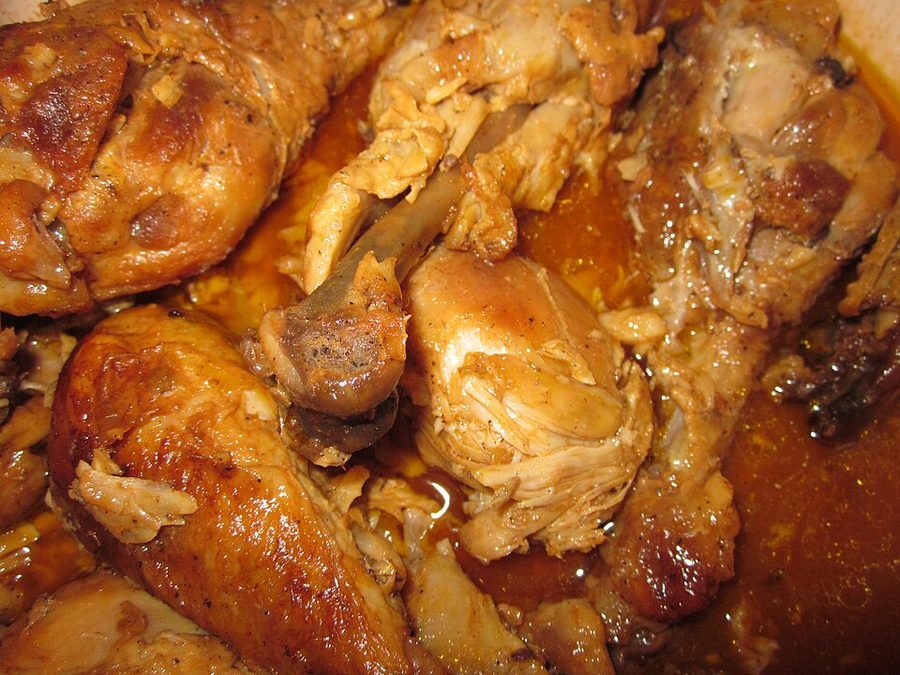
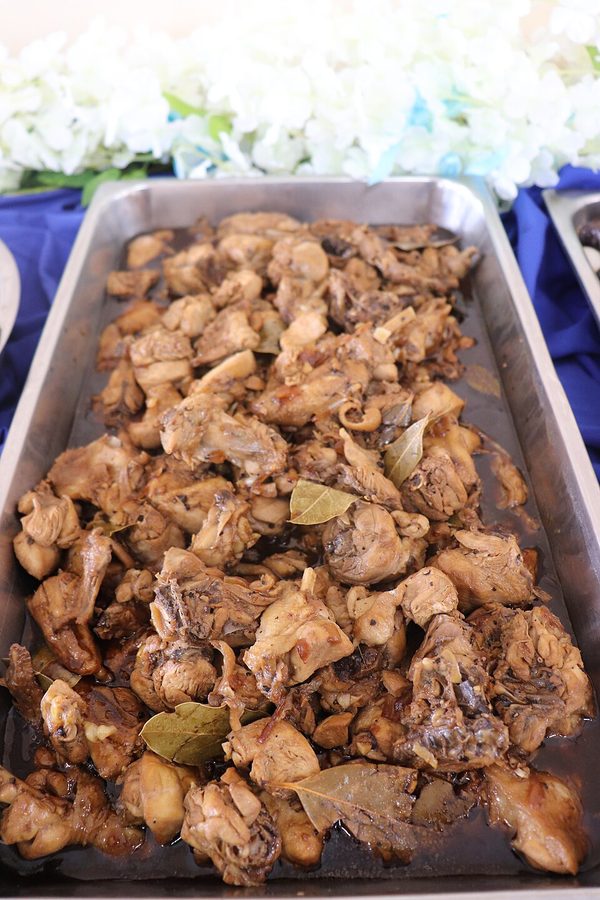
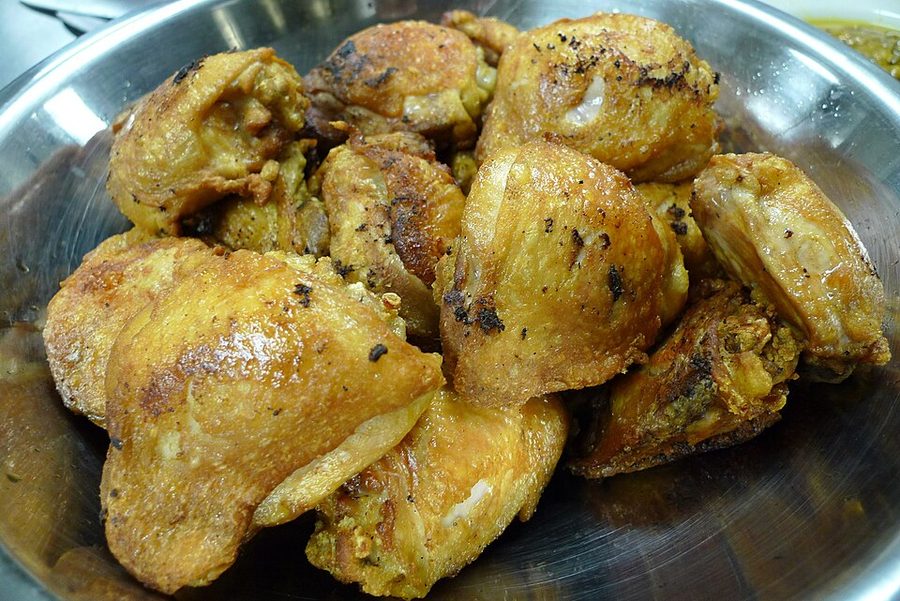
A Filipino method with a Spanish name
The Philippines has four old ways of cooking with vinegar, and they line up by how much heat they get. Kinilaw is raw fish or meat dressed in vinegar and spices; paksiw is meat or fish simmered in a vinegar broth. Sangkutsa is a quick part-cooking in vinegar, done ahead of a longer dish. Adobo is the full braise of vinegar, garlic, salt or soy and spice, cooked until it keeps.
The Spanish found it already on the stove. When the Franciscan Pedro de San Buenaventura compiled his Spanish-Tagalog dictionary, printed in 1613, he described a native dish as adobo de los naturales, “the natives’ adobo”, borrowing the Spanish word for anything marinated or pickled. The name stuck, and whatever the cooks themselves had called it did not survive.

The Visayas had their own words. A Bisaya dictionary of 1711 used guinamus for any marinade, fish or pork, and older Visayan names for adobo-like dishes include dayok and danglusi. In modern Cebuano, guinamos and dayok mean other things entirely, so if you ask for either in a Cebu market you will be handed fermented fish paste, not chicken.
Food historians do not quite agree on the route. Raymond Sokolov, the American food writer, argued that the Spanish simply put their word on a dish that was already there. Doreen Fernandez, who did more than anyone to write Filipino food down, allowed that the dish may have been indigenised from Mexican adobo, while pointing out how little the two share beyond vinegar and garlic. Either way, the cooking on a Filipino stove is its own.
Soy sauce came later, usually credited to Chinese influence, and replaced salt in most kitchens. The version without soy, adobong puti (“white adobo”), is usually taken as the closer descendant of the precolonial dish, and the soy version is sometimes called adobong itim, black adobo, to tell them apart. The bay leaf changed too: the leaves in old adobo were from local cinnamon trees, and the Mediterranean laurel on Filipino supermarket shelves now is a later swap.
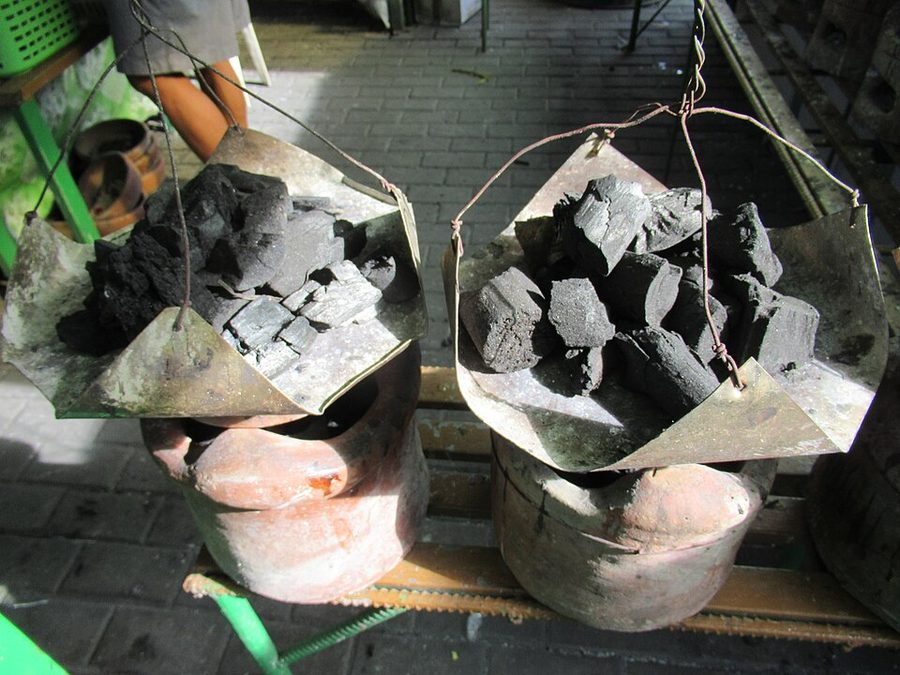
Its keeping power is the practical reason adobo spread. Vinegar inhibits the bacteria that spoil meat, so a well-reduced pot held up without refrigeration, and adobo became the dish Filipino travellers and mountaineers packed. In a modern kitchen it goes in the fridge all the same.
Adobo has never had a single official form, and the one attempt to give it one went badly. In 2021 the Department of Trade and Industry’s standards bureau announced it would define a basic Philippine adobo for promotion abroad, using Glenda Barretto and Myrna Segismundo’s 2008 guidebook Kulinarya as the reference. The public reaction was loud enough that the secretary went on camera to say the standard would not be mandatory and every family recipe was still welcome.
What goes in the pot
Adobo has six or seven ingredients, so each one shows. The vinegar and the soy sauce change the result most, and both are worth a trip to a Filipino grocer.
Vinegar: cane, coconut and palm
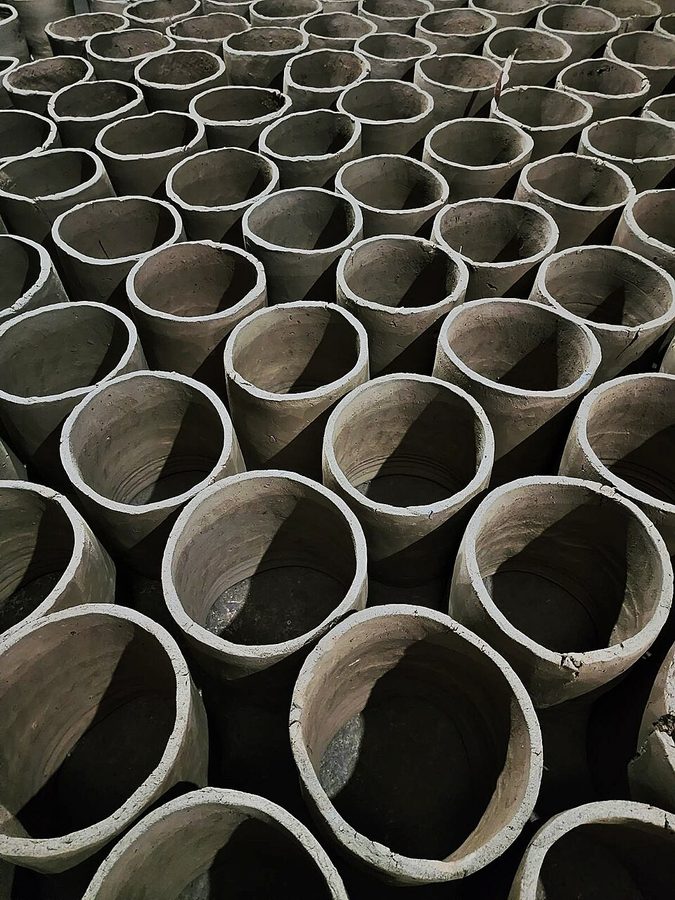
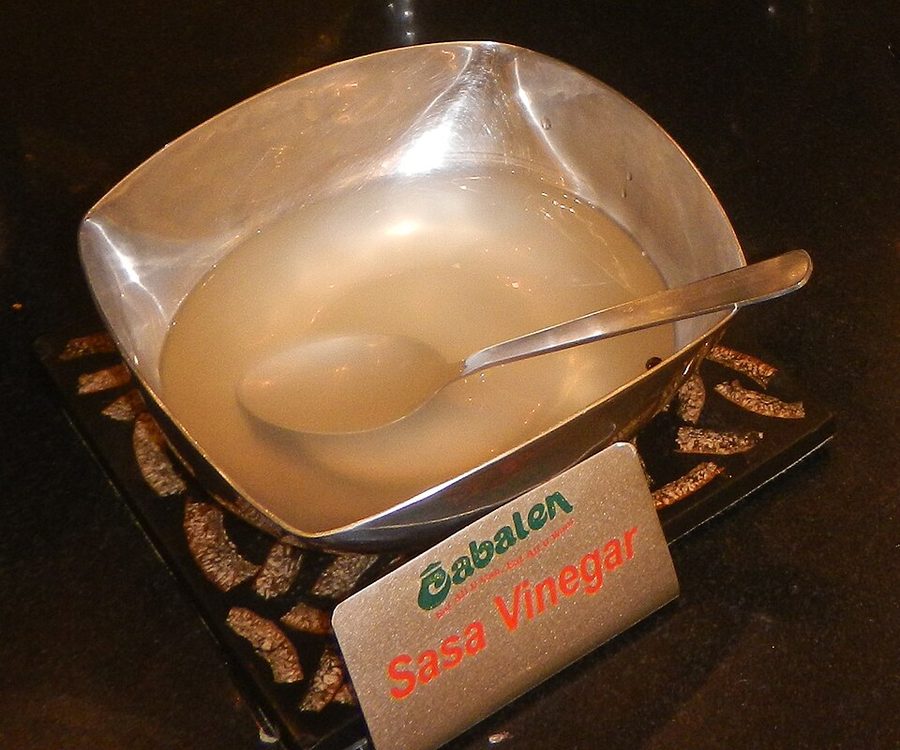
Filipino vinegar, suka in Tagalog and langgaw or suka in Cebuano, is fermented from whatever sugar a region has. Sugarcane gives sukang Iloko, the Ilocos cane vinegar and the most common choice for adobo. Coconut sap, the same sap that makes the palm wine tuba, gives sukang tuba or coconut vinegar; nipa palm gives sukang sasa, and the sugar palm gives kaong vinegar. All of them come out of the same tradition of alcohol fermentation, which is why the better ones taste faintly of the wine they started as.

Cooks describe the difference simply. Cane vinegar is clean and bright; coconut vinegar is softer and rounder and more common in the southern Philippines, a contrast the Filipino cooks interviewed in a January 2026 piece on Filipino vinegar drew in almost the same words. For chicken I would use cane; for pork belly, where you want the fat cut, either works.
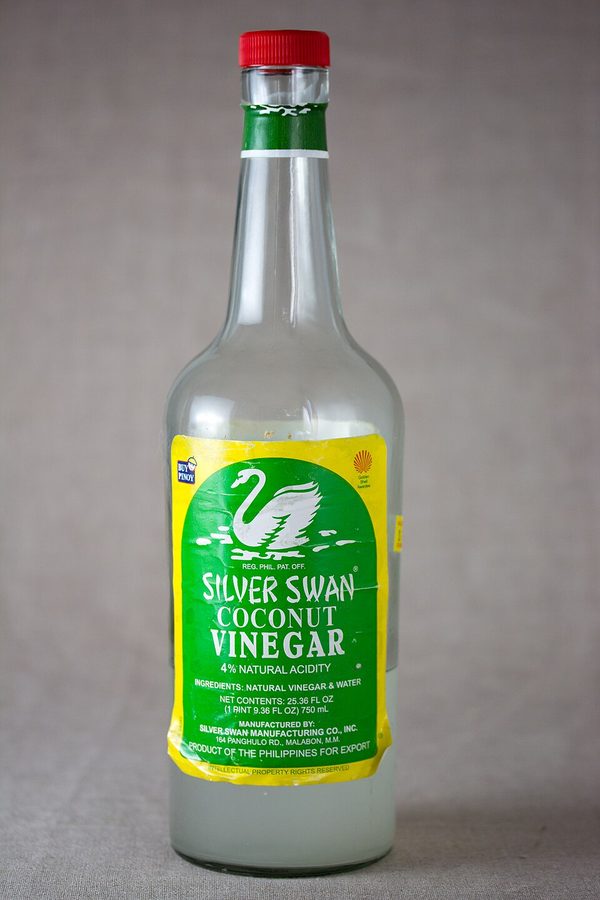
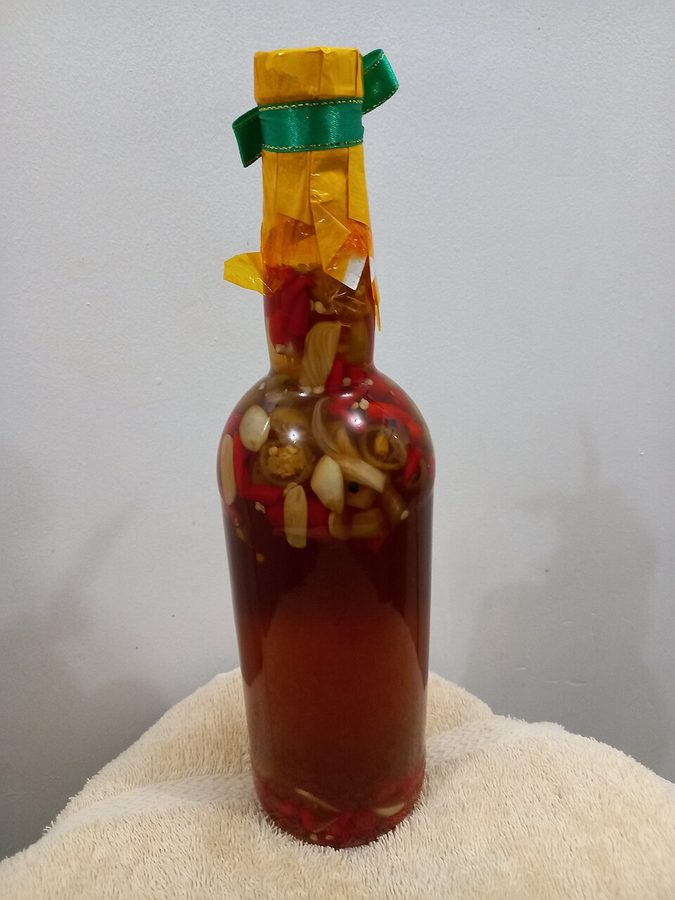
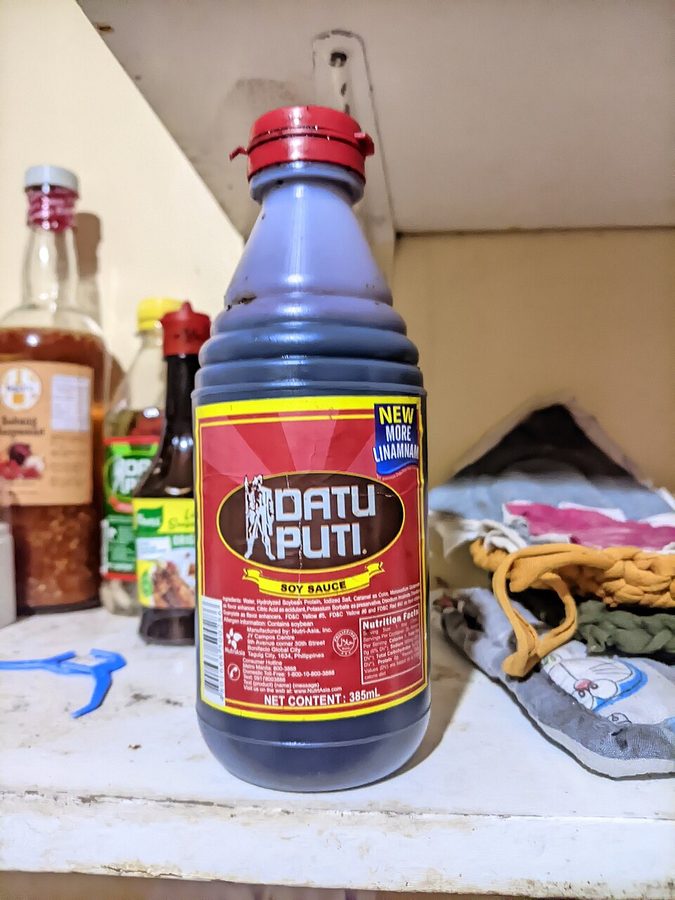
Outside the Philippines, Datu Puti cane vinegar is easy to find in Filipino shops. If you cannot get any Filipino vinegar, distilled white vinegar or Japanese rice vinegar will do. Skip cider and balsamic: they bring fruit and sweetness that fight the garlic. Skip spiced vinegar too, the bottled sinamak with chillies and garlic floating in it, which is a dipping vinegar for fried fish and grilled pork, not a braising liquid.
Soy sauce
Filipino soy sauce, toyo, is thinner in body and darker in colour than Japanese shoyu. Silver Swan and Datu Puti are the two names you will see on Philippine supermarket shelves. With Kikkoman or another Japanese soy the adobo comes out a little lighter and sweeter; that is fine, just taste before you add salt. Do not use Chinese dark soy, which is thick and sweet and turns the sauce black.
Garlic, bay and black pepper
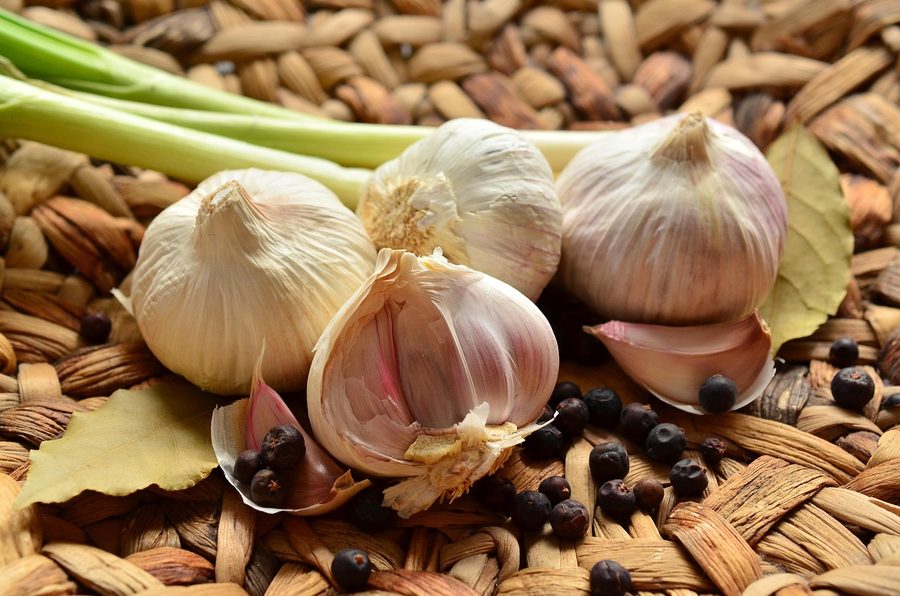
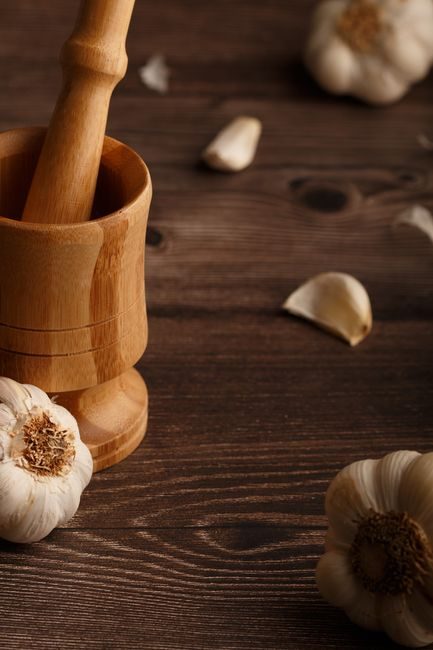
Use a whole head of garlic for a kilo of chicken, ten or twelve cloves, crushed with the flat of a knife or in a mortar so they split but stay in pieces. Half goes into the braise and softens to sweetness; if you fry the chicken at the end, the rest can be fished out and fried golden alongside it.
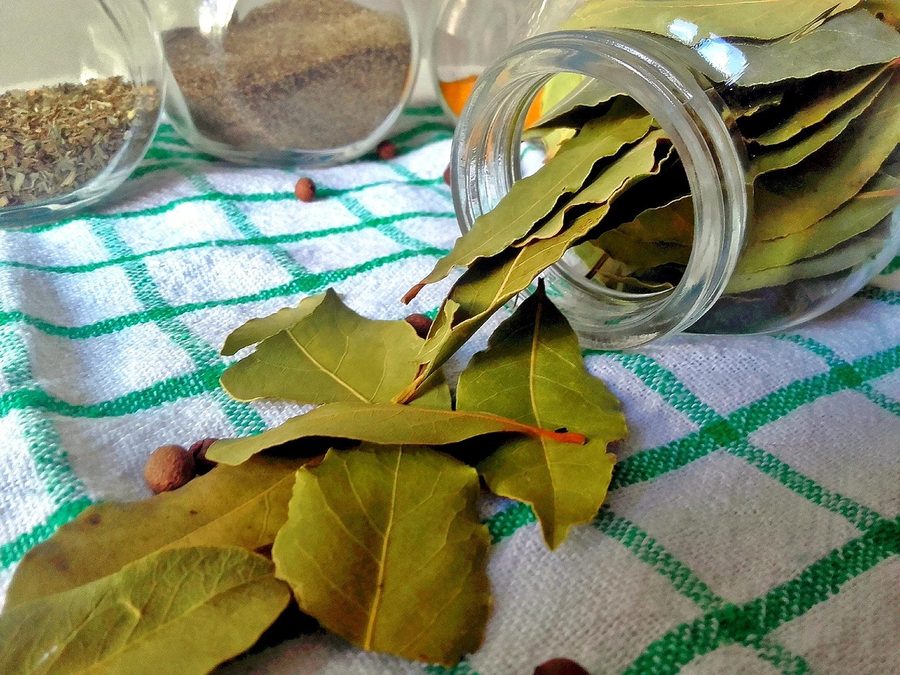
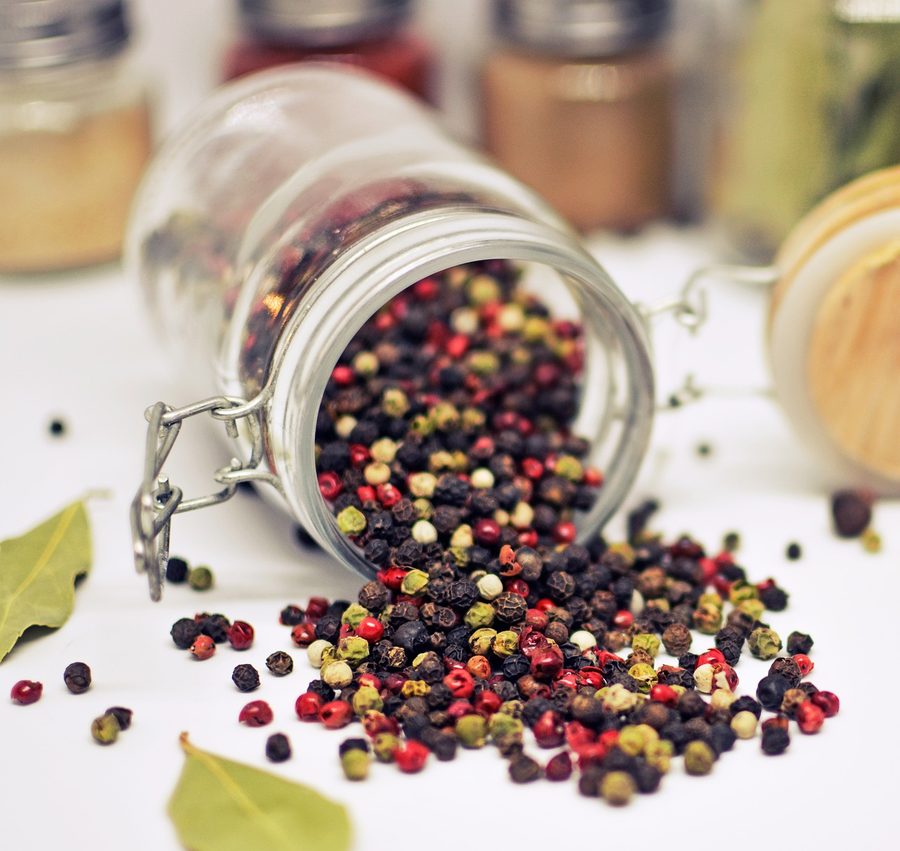
Three dried bay leaves and a teaspoon of whole black peppercorns are enough. Crack the peppercorns lightly if you want more heat; leave them whole if you want little bursts of it. Ground pepper turns the sauce grey and dusty, so leave the jar of it in the cupboard.
The chicken
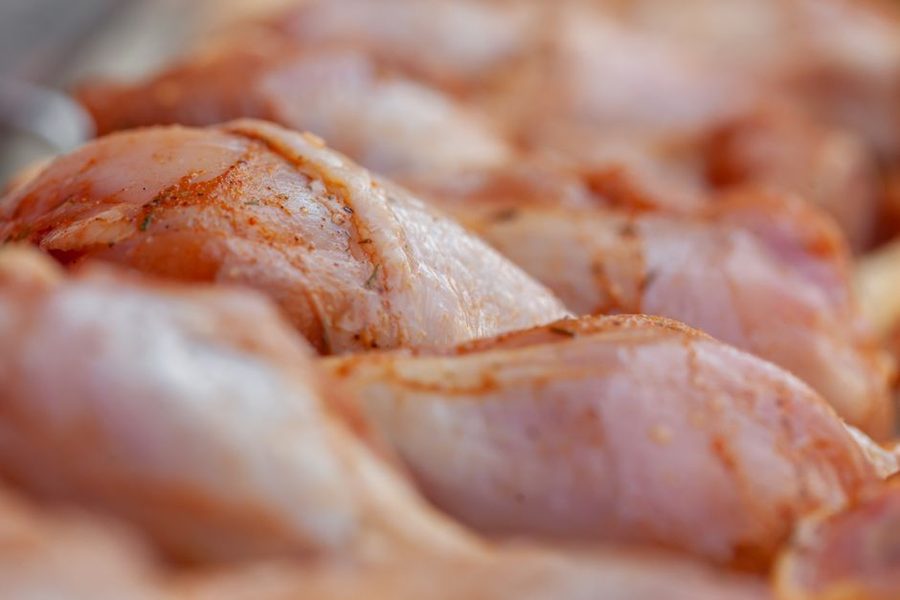
Bone-in thighs and drumsticks, skin on. Dark meat stays moist through a forty-minute braise and the bones give the sauce body. Breast dries out long before the sauce is ready; if you must use it, add it for the last fifteen minutes only.
Filipino recipes call for chicken “cut into serving pieces”, often a whole bird chopped through the bone, and thighs and drumsticks do the same job. Native chicken, smaller and leaner, takes longer and is worth it in adobo sa gata.
One method, many adobos
Ask ten Filipino cooks for their adobo and you get ten answers, all of them correct. The column a Philstar writer devoted to the cookbook author Nancy Reyes-Lumen in May 2026 made the point well: her family’s version differed from the neighbours’ only in the brand of soy, the vinegar and the cut, and that was enough to make it theirs. Underneath the family differences, though, there are regional styles worth knowing by name.
Adobong puti: no soy at all
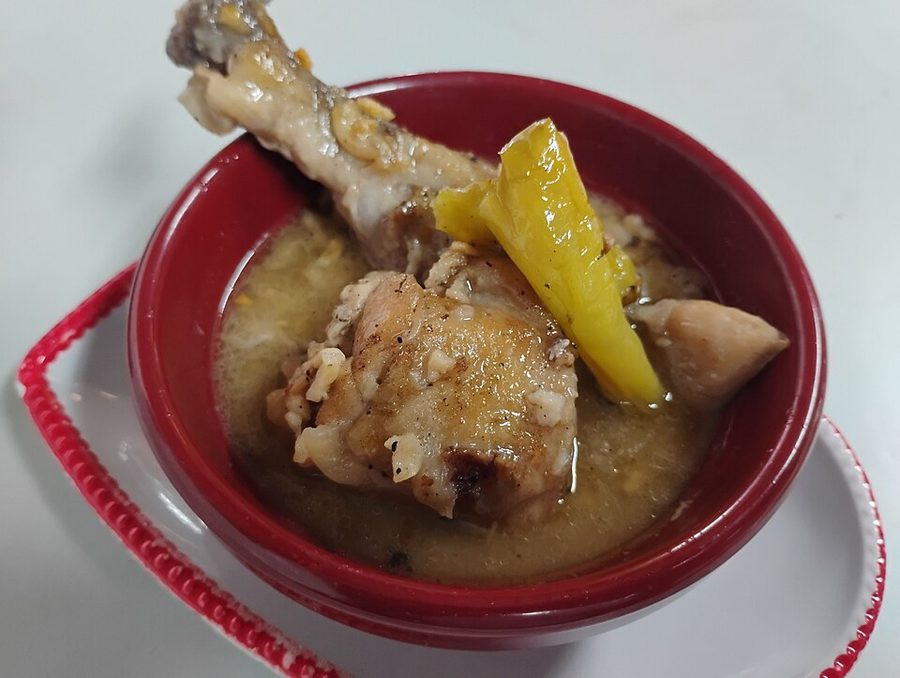
White adobo uses salt instead of soy, sometimes with a little patis (fish sauce), and comes out pale gold rather than brown. It tastes more of garlic and vinegar, and the chicken fat, which the dark versions hide, becomes part of the flavour. Batangas cooks often take it right down until the liquid is gone and the meat fries in its own rendered fat.
Adobo sa gata: coconut milk, Bicol and Quezon
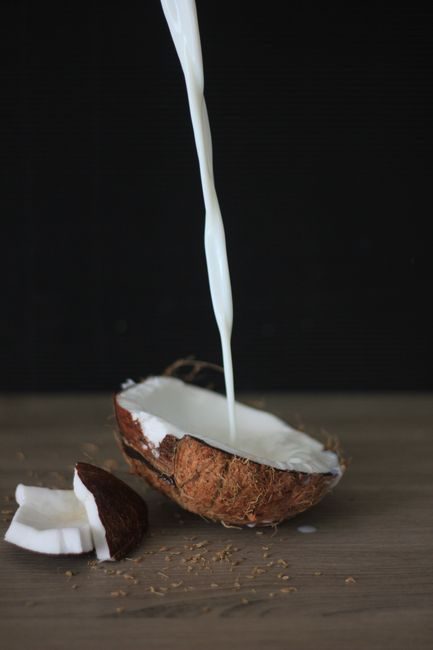
In Bicol, Quezon and Zamboanga City, coconut milk goes in near the end. The vinegar braise is done first, uncovered, and the gata is stirred in for the last ten or fifteen minutes so it thickens without splitting. Bicol cooks add chillies, because Bicol cooks add chillies to most things. The result is rich, sour and hot, and the oil that rises to the top is meant to be there.
Adobong dilaw: turmeric in Batangas and Laguna
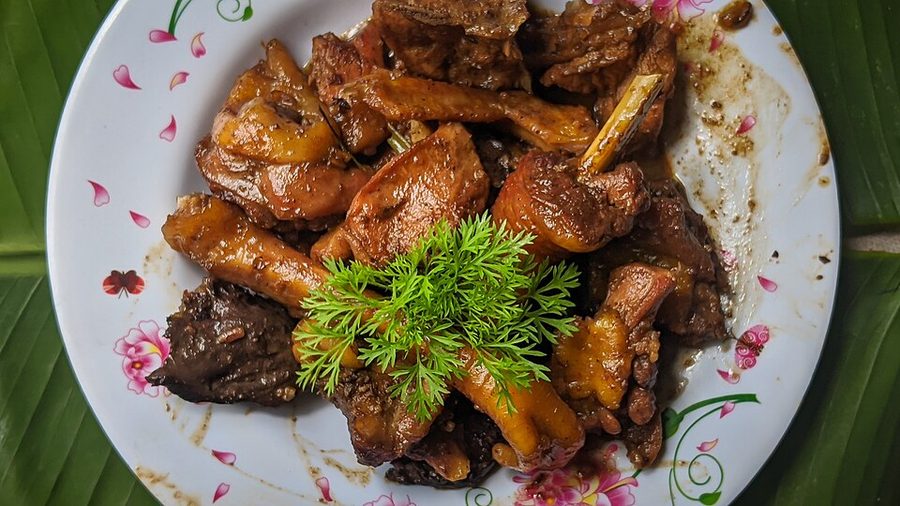
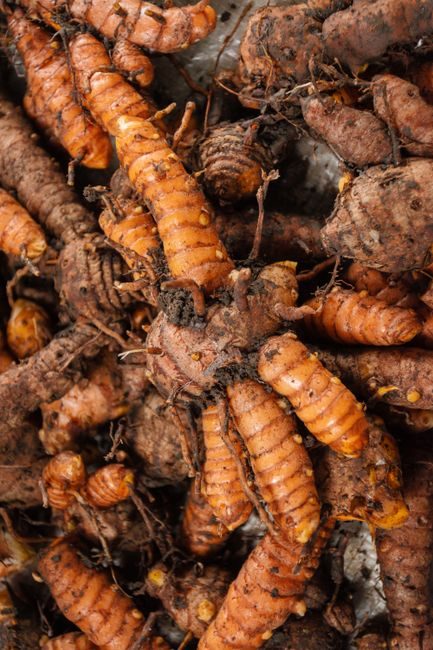
Yellow adobo replaces soy with fresh turmeric, luyang dilaw, and is usually cooked with cane vinegar, garlic, onion and a little sugar. It belongs to Batangas and Laguna, and Batangas also makes a red version coloured with achuete seeds. Both taste brighter and earthier than soy adobo.
Pork, chicken and pork, and the extras
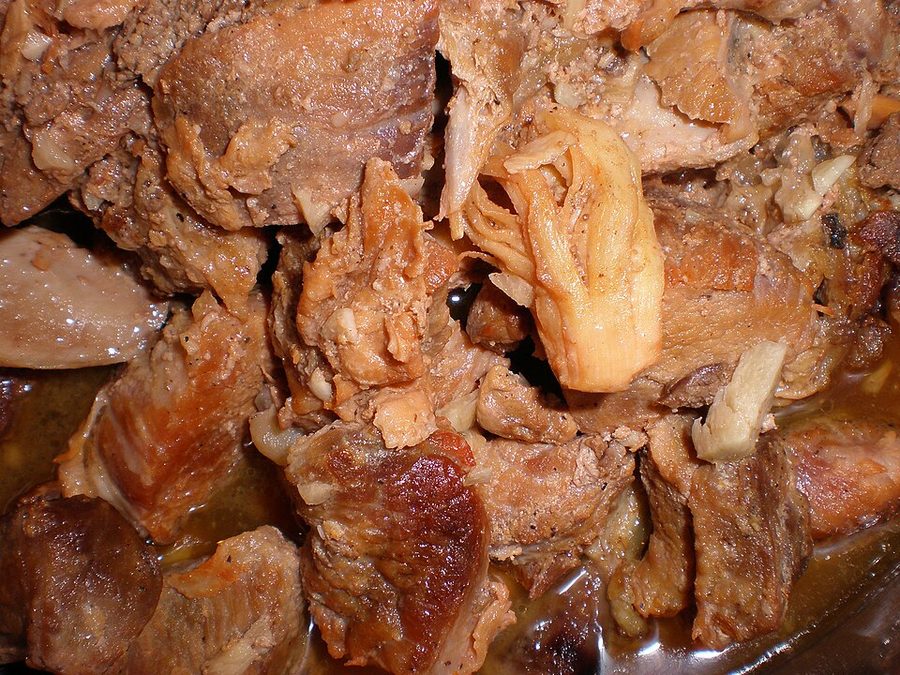
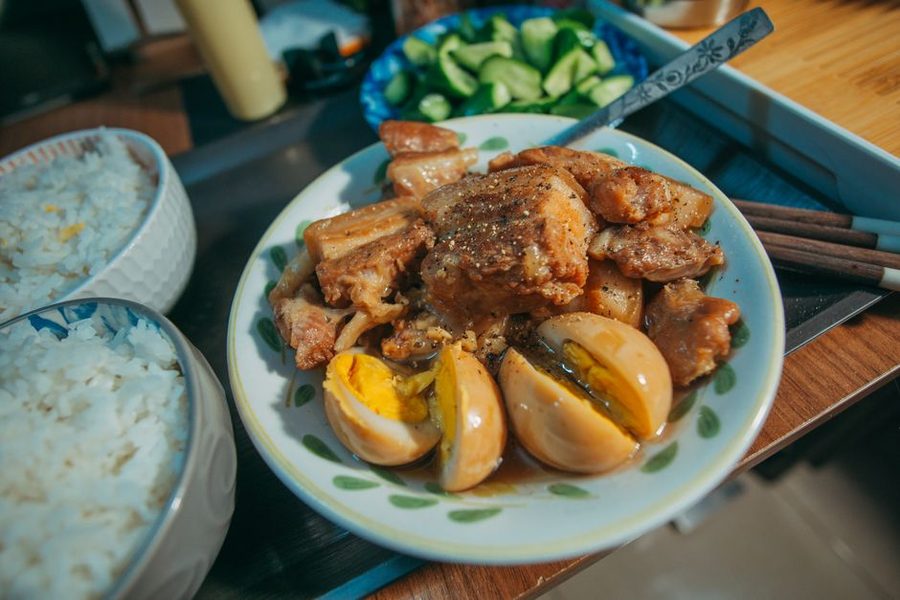
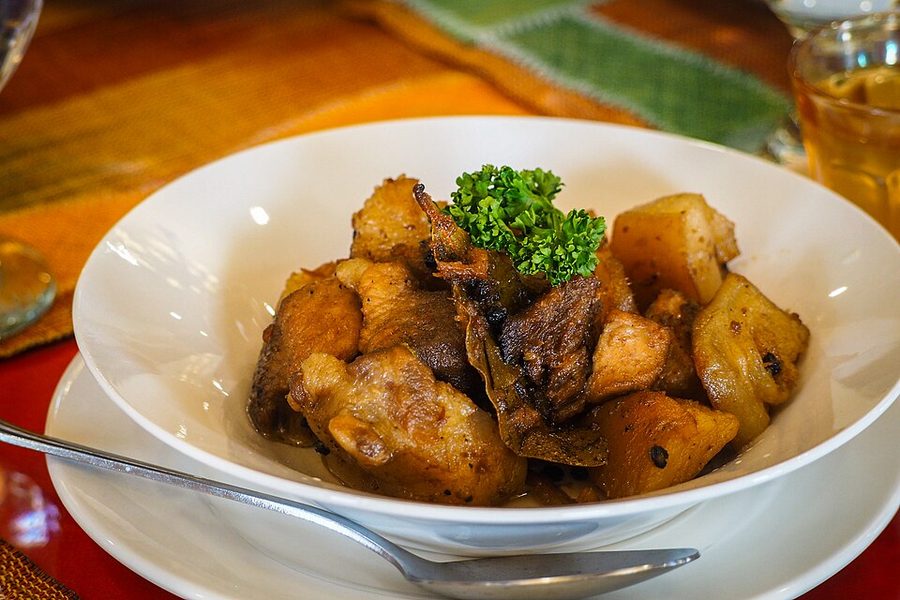
Adobong baboy, pork adobo, is as common as chicken, made with belly or shoulder. Chicken and pork together in one pot is the big-family version: the pork gives fat, the chicken gives bulk. Hard-boiled eggs are a common addition, dropped in for the last ten minutes to take on colour. Potatoes go in too, in plenty of homes.
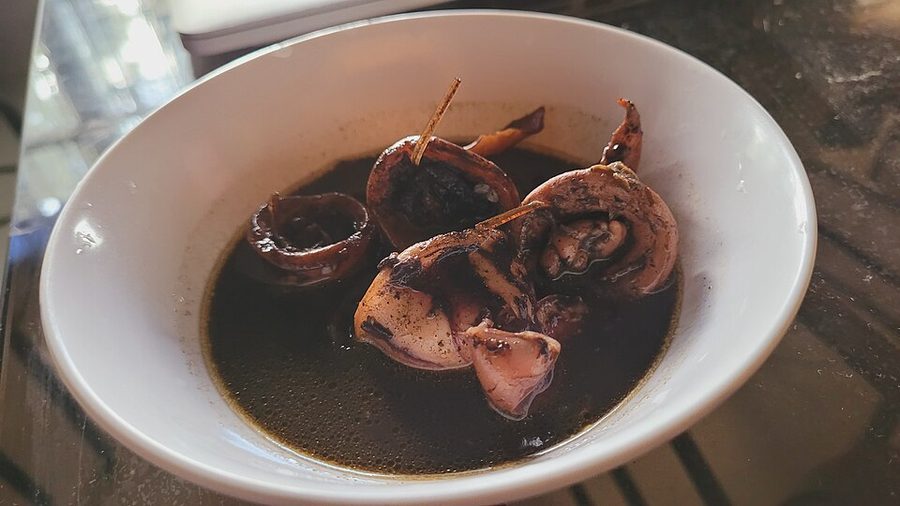
Adobong pusit is squid adobo cooked in the squid’s own ink, black and briny and quick, since squid toughens if it sits between a short cook and a very long one. In Cavite, mashed pork liver is stirred in to thicken the sauce. In Batanes, at the far north, the Ivatan make luñis, pork preserved in salt and stored in jars; Philstar’s May 2026 column describes it instead as meat kept under its own lard, like a confit. Both may be true in different kitchens.
Then there is the matter of sauce. Some cooks want adobong tuyo, dry adobo, reduced until there is barely a glaze. Others want it masabaw, with plenty of sauce for the rice. Neither is wrong, and the same family can split on it.
Cebu and the Visayas
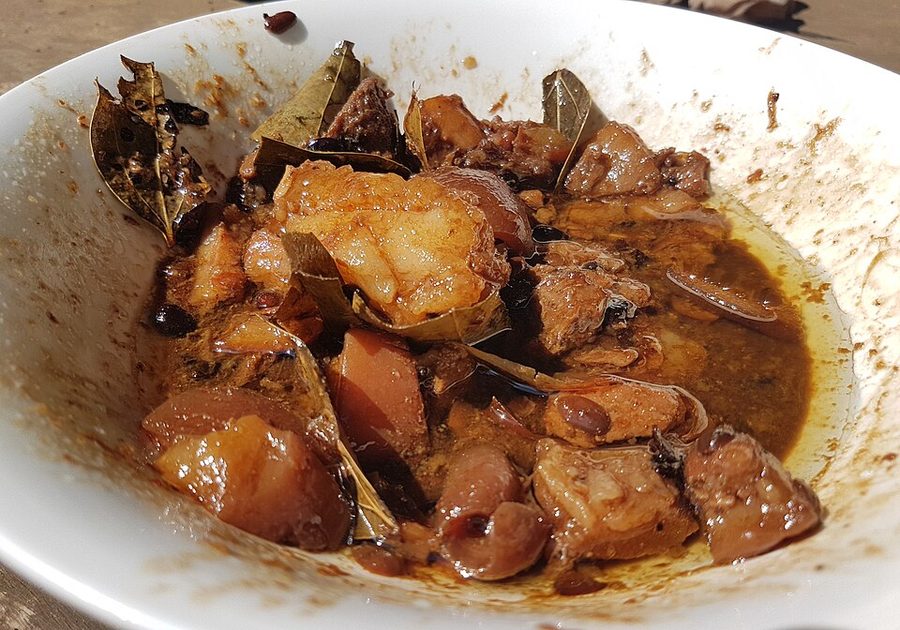
Cebu food has its adobo like everywhere else, but the Visayan braise to know is humba, adobo’s sweeter cousin. Humba is pork belly or hock cooked with soy, vinegar, garlic, bay and peppercorns, sweetened with muscovado and given body by tausi, fermented black beans, often with banana blossoms. The name comes from the Hokkien red-braised pork, hong-bah, but the Visayan version uses far more vinegar, and without the tausi it would be a sweeter adobo.
In Cebu, coconut vinegar made from tuba is sold as langgaw as well as suka. If you cook adobo there with coconut vinegar, use a little more of it than a cane-vinegar recipe asks for, since it is softer.
Chicken adobo, the classic way
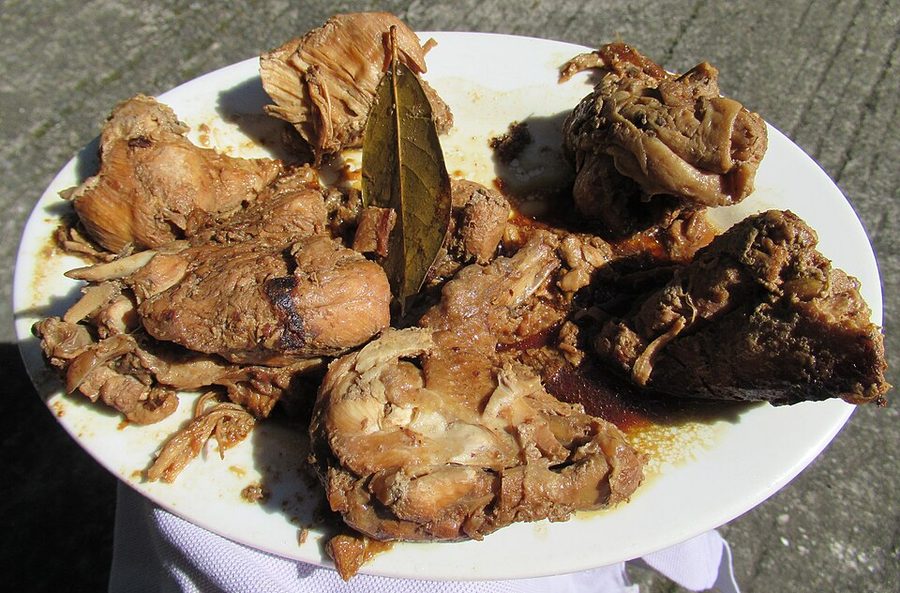
Serves 4. About 1 hour 15, plus 30 minutes to overnight marinating if you have the time.
Recipe card
Serves 4 · about 1 hour 15Ingredients
- 1 kg (2¼ lb) bone-in, skin-on chicken thighs and drumsticks
- 1 head garlic (10 to 12 cloves), crushed and peeled
- 80 ml (⅓ cup) soy sauce, Filipino if you can get it
- 125 ml (½ cup) cane vinegar or coconut vinegar
- 250 ml (1 cup) water
- 3 dried bay leaves
- 1 tsp whole black peppercorns, lightly cracked
- 1 tbsp neutral oil
- 1 tsp brown sugar (optional)
- Salt, only if needed at the end
Method
- Put the chicken in a wide, heavy pot with the soy sauce and half the garlic. Turn the pieces to coat and leave for 30 minutes, or cover and refrigerate overnight.
- Add the vinegar, water, bay leaves, peppercorns and the rest of the garlic. Set the pot over medium-high heat, uncovered, and bring it to a full boil without stirring. Let it boil for 2 to 3 minutes, until the sharp smell of the vinegar eases.
- Now stir, turn the heat to low, cover and simmer for 25 minutes, turning the pieces once.
- Uncover and simmer for another 10 to 15 minutes, until the meat is tender and the thickest thigh reads at least 74°C (165°F) near the bone.
- Lift the chicken out onto a plate and pat the skin dry with kitchen paper. Turn the heat up under the pot and boil the sauce until it has reduced by about half, 5 to 8 minutes.
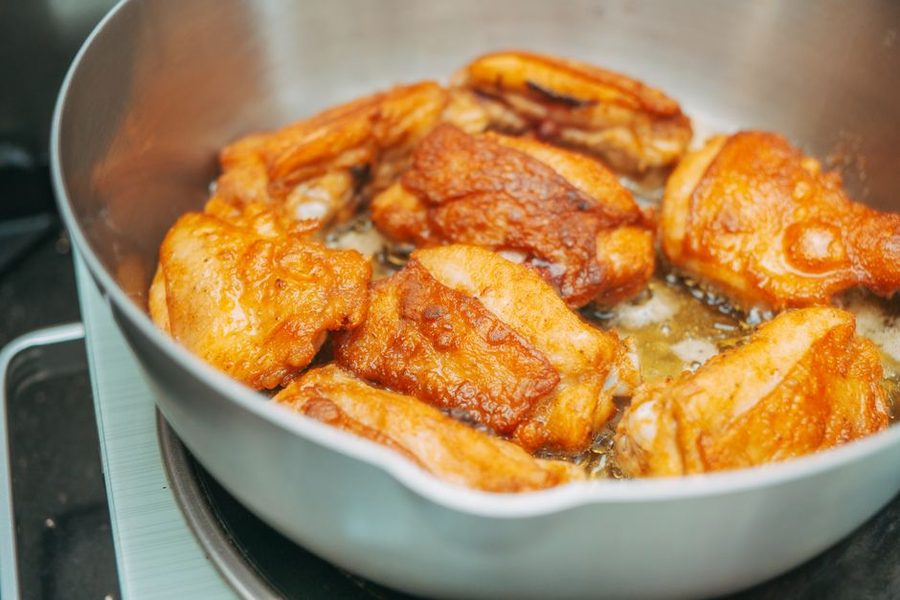
- Meanwhile heat the oil in a frying pan over medium-high heat. Fry the chicken skin side down until deep gold, 4 to 5 minutes, then turn and fry 1 to 2 minutes more. Fish a few garlic cloves out of the sauce and fry them alongside if you like.
- Return the chicken to the reduced sauce with the sugar, if using, and simmer 2 to 3 minutes, turning the pieces to coat. Taste: if it is too sharp, simmer a little longer; if too salty, add a splash of water. Rest 5 minutes and serve with rice.
The proportions sit in the middle of the recipes I compared. English-language versions run from soy-heavy (half a cup of soy to a third of a cup of vinegar for a large batch) to vinegar-led, and the Tagalog home recipes I read land on half a cup of soy and a third to half a cup of vinegar per kilo. I give the vinegar the edge because Filipino cane and coconut vinegars are mild, because the soy is already bringing salt, and because a vinegar-led braise is the one that keeps. The 74°C reading is the USDA safe minimum for poultry; thighs will be well past it and still juicy by the time they are tender.
Recipe card 2
Adobong puti, the white version
Serves 4. About 1 hour.
Ingredients
- 1 kg (2¼ lb) bone-in chicken pieces
- 1 head garlic, crushed and peeled
- 125 ml (½ cup) coconut or cane vinegar
- 250 ml (1 cup) water
- 1 tsp fine salt, or ½ tsp salt and 2 tbsp patis (fish sauce)
- 3 dried bay leaves
- 1 tsp whole black peppercorns
- 1 tbsp neutral oil
Method
- Rub the chicken with the salt and put it in a pot with the garlic, vinegar, water, bay leaves and peppercorns (and the patis, if using).
- Bring to a boil over medium-high heat without stirring and let it boil 2 to 3 minutes.
- Stir, cover and simmer on low for 30 minutes, until tender.
- Uncover and keep simmering until the liquid is nearly gone and the fat starts to sizzle, 10 to 15 minutes. Add the oil and let the chicken fry in the pot, turning, until browned on both sides. Taste for salt and serve.
With nothing to cover it, the vinegar shows here: coconut vinegar gives a softer, almost sweet white adobo, cane a sharper one.
Technique, and what the old rules are for
Do not stir until it boils
Every Filipino cook has heard it: once the vinegar is in, leave the spoon alone until the pot boils. The usual explanation is that stirring early leaves the vinegar tasting raw. Whether the spoon itself matters is doubtful, but the open boil does: a few minutes uncovered drives off the sharpest smell before the lid goes on and traps it. The rule makes sure you take those minutes, and it costs nothing.
Brown before or after
Both ways are traditional. Browning first, as many modern recipes do, adds a roasted note to the sauce. Browning after, as in the recipe above, gives crisper skin and a cleaner sauce, because the fat has rendered into the braise and the skin is dry when it hits the pan. For adobo sa gata, brown first; the coconut milk would hide the crisp skin anyway.
Reducing to a glaze
Adobo goes through a stage where the sauce looks hopelessly thin, and then, in the last few minutes, it turns. The water has gone, the fat has emulsified into what is left, and the sauce becomes a glaze that coats a spoon. Watch it closely at that point; a minute too long and the soy catches on the bottom of the pot.
The next day: flakes and fried rice
Leftover adobo is the reason to make a big pot. Pull the cold meat off the bones and shred it, then fry it in a dry pan with a spoonful of the set fat from the top of the sauce until the shreds go brown and crisp. That is adobo flakes, a breakfast dish in its own right. For adobo fried rice, fry day-old rice in the same pan with chopped garlic, add the shredded meat and a few spoons of sauce, and stop when the rice starts to toast.
Covered in the fridge, adobo keeps four to five days. It also freezes well for up to two months; thaw it overnight in the fridge and reheat it gently with a splash of water.
Where to eat adobo in the Philippines
You do not go looking for adobo in the Philippines. It finds you, on the counter of every carinderia, the small cooked-food eateries that line market streets and bus terminals. They are also called turo-turo, “point-point”, because that is how you order: you point at the pots, the cook spoons a portion onto rice, and you pay for what you pointed at.
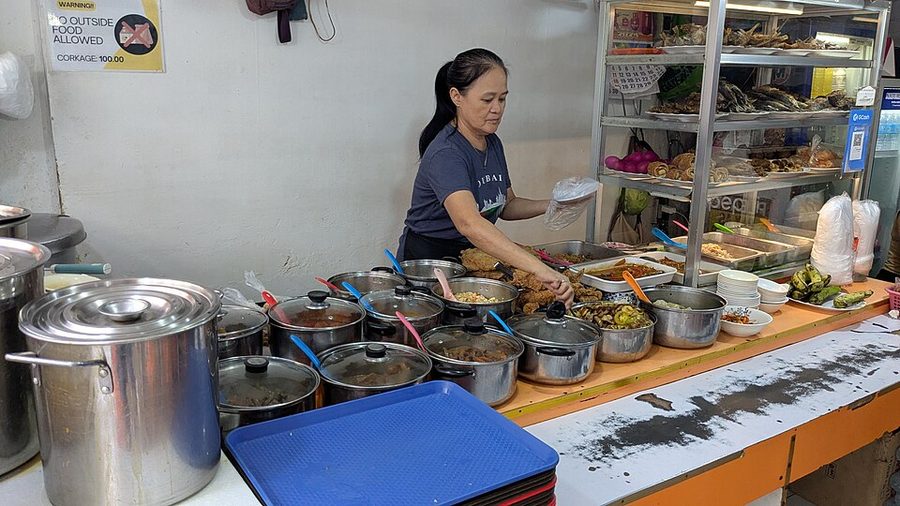
The name probably comes from kari, curry, and one account by the food historian Felice Prudente Sta. Maria ties the first karihan to Indian sepoys who deserted the British occupation of Manila in the 1760s and settled east of the city. Carinderias multiplied along the pilgrimage roads to Antipolo, feeding travellers. They have been feeding travellers since.
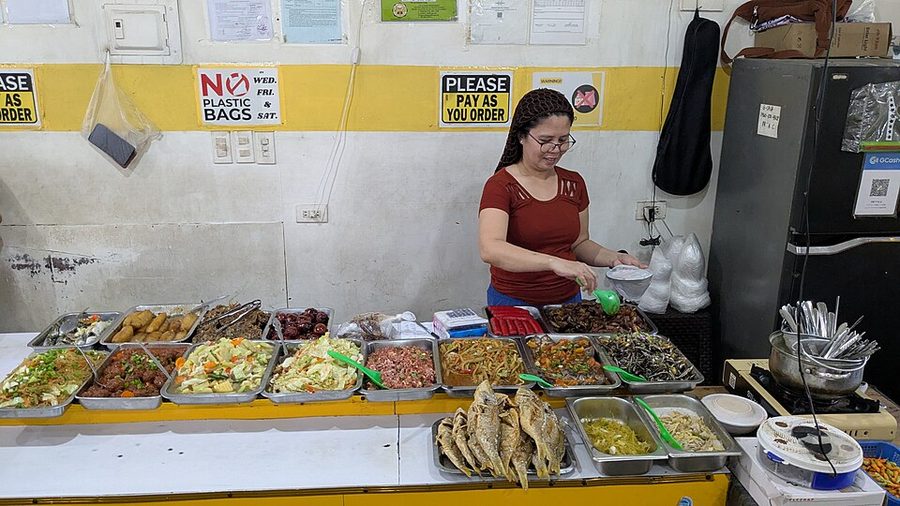
In Cebu City, carinderias cluster around the markets and in older neighbourhoods like Pasil, the fish-market district by the port. Pick the one with a queue: busy pots turn over before lunch is done, and the adobo is fresher for it.

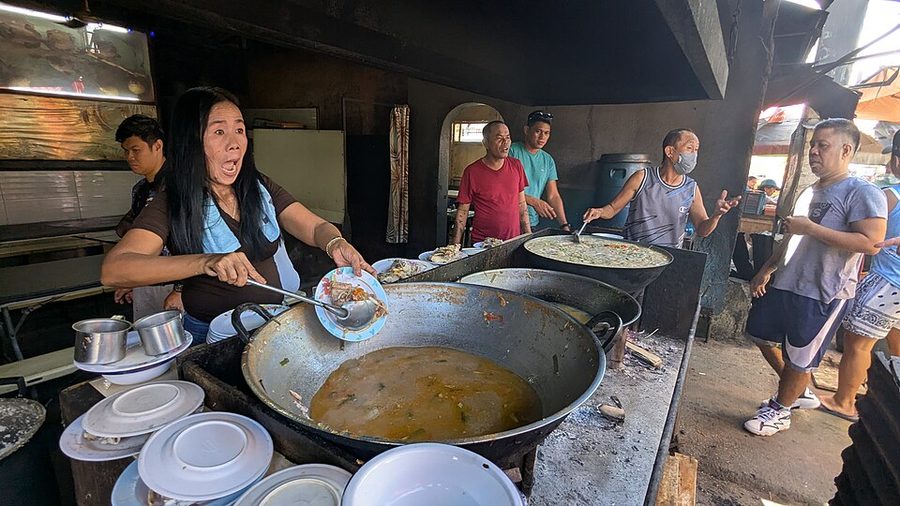
Carinderias got an unexpected promotion in 2025, when the first Michelin Guide to the Philippines gave a Bib Gourmand to Esmen, a family carinderia in Pasil that has been running for about sixty years and is known for linarang, a sour porcupine-fish soup. When the Department of Tourism handed out the plaques in December 2025, the family said their linarang had gone from eleven batches to sixteen cauldrons, all sold out. Esmen is listed again in the 2027 selection, announced in October 2026. The linarang is the reason to go; the counter changes daily, so treat any adobo there as a bonus.
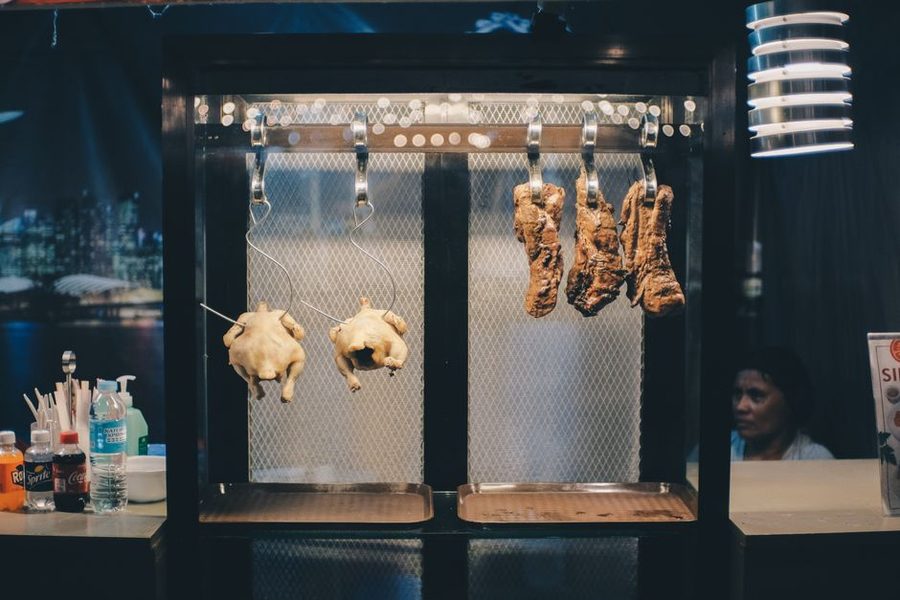
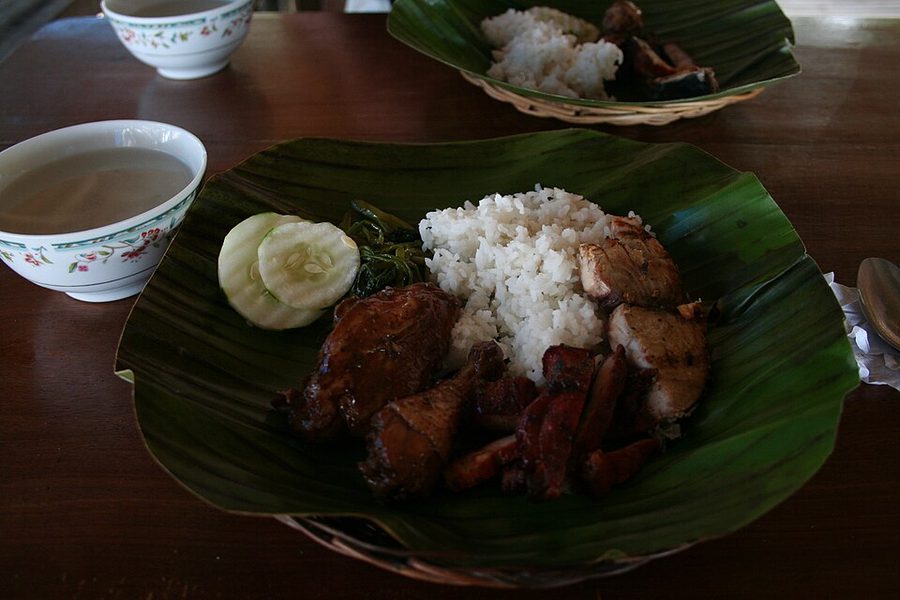
Adobo also travels the old way. It is eaten cold over hot rice and can be wrapped in banana leaves for the road; the Philstar column on Reyes-Lumen made the point that it goes anywhere, unlike a soup such as sinigang.
Serving: rice, egg and something sharp
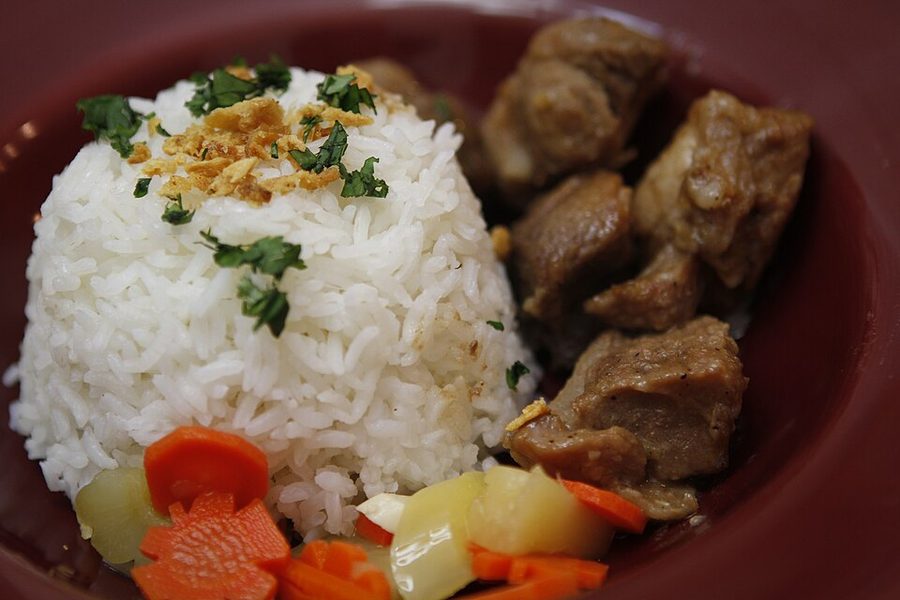
Adobo is an ulam, a dish for rice, and it is too salty and too sour to eat without it. Plain steamed white rice is the standard; spoon the sauce over it and let it soak in. Day-old rice fried with garlic, sinangag, is the breakfast version.
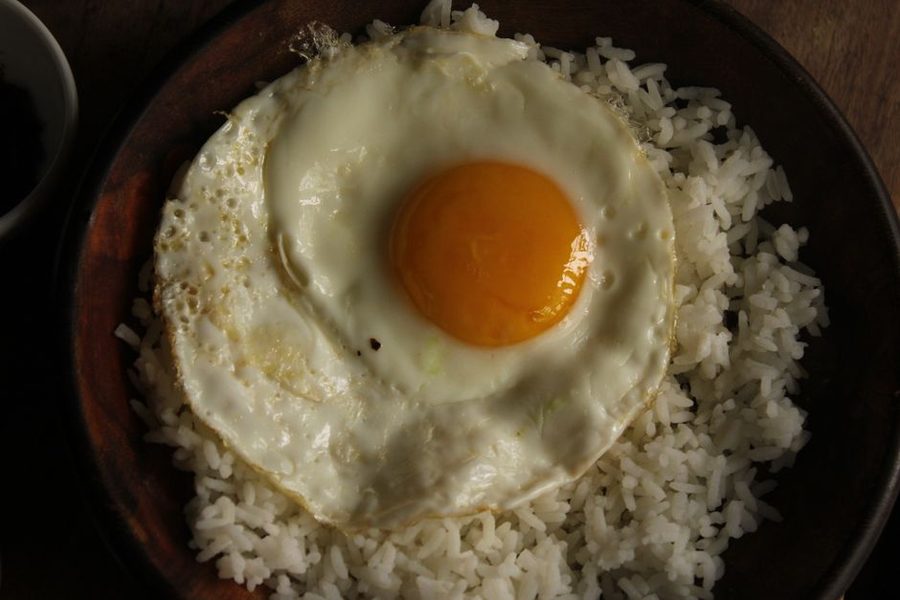
A fried egg on top is the standard upgrade, especially at breakfast. Hard-boiled eggs cooked in the pot are the other, and restaurants often serve adobo with one on the plate.
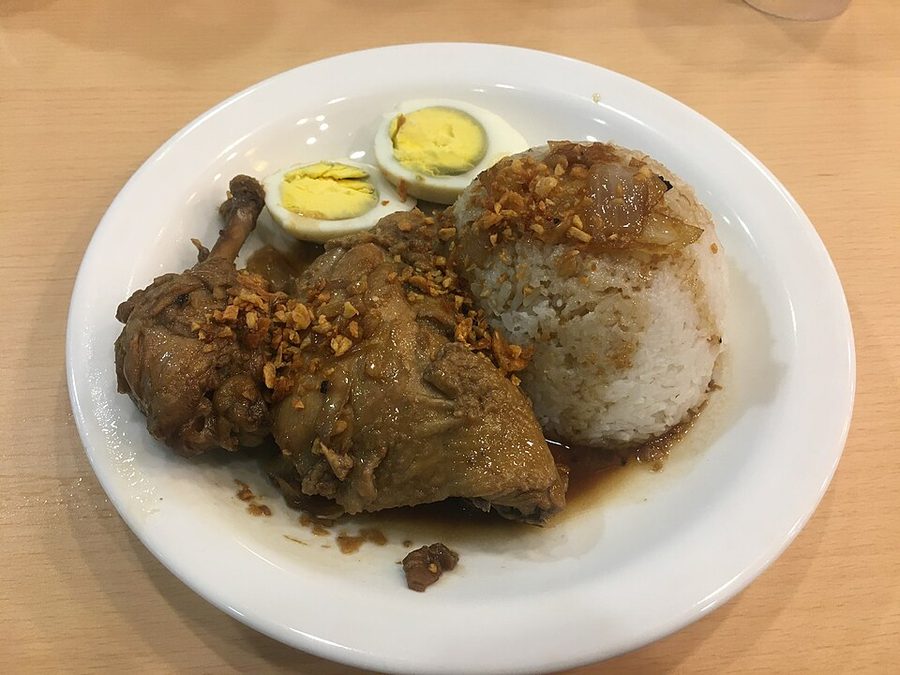
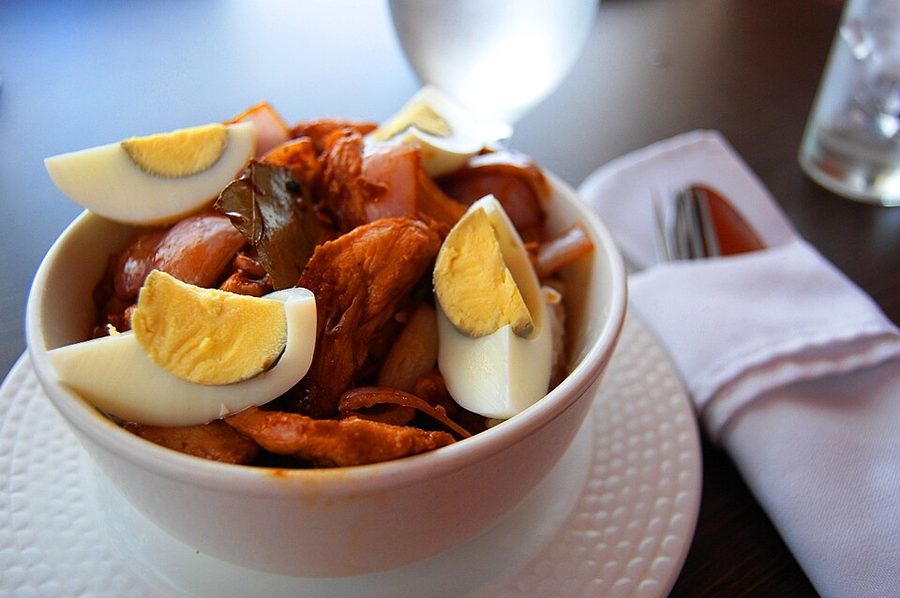
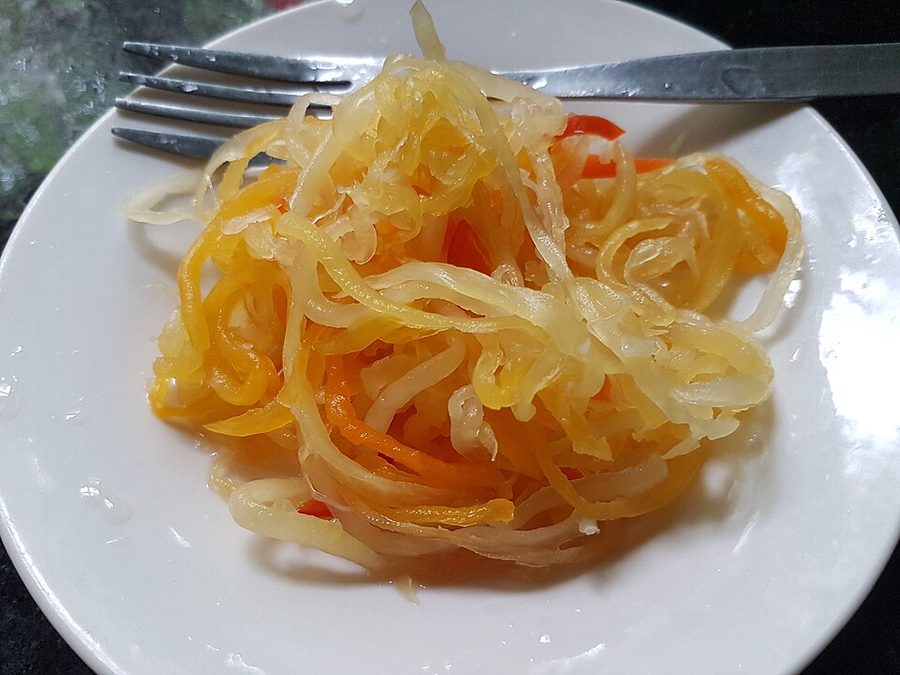
The third thing on the plate should be sharp and crunchy. Atchara, pickled green papaya with carrot, ginger and a little sugar, is the classic, and a jar keeps for weeks. Sliced tomato with onion does the same job, as do cucumbers in vinegar. Something green and plain, like boiled kangkong or string beans, is welcome against all that salt.
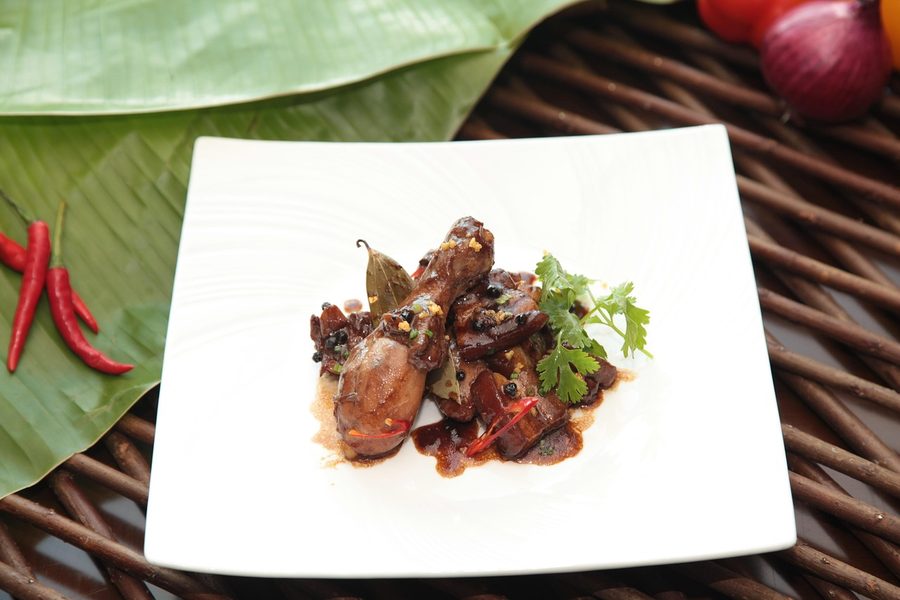
Make a double batch, keep half in the fridge for two days before you touch it, and on the third morning shred it into a hot pan for adobo flakes with a fried egg and garlic rice.