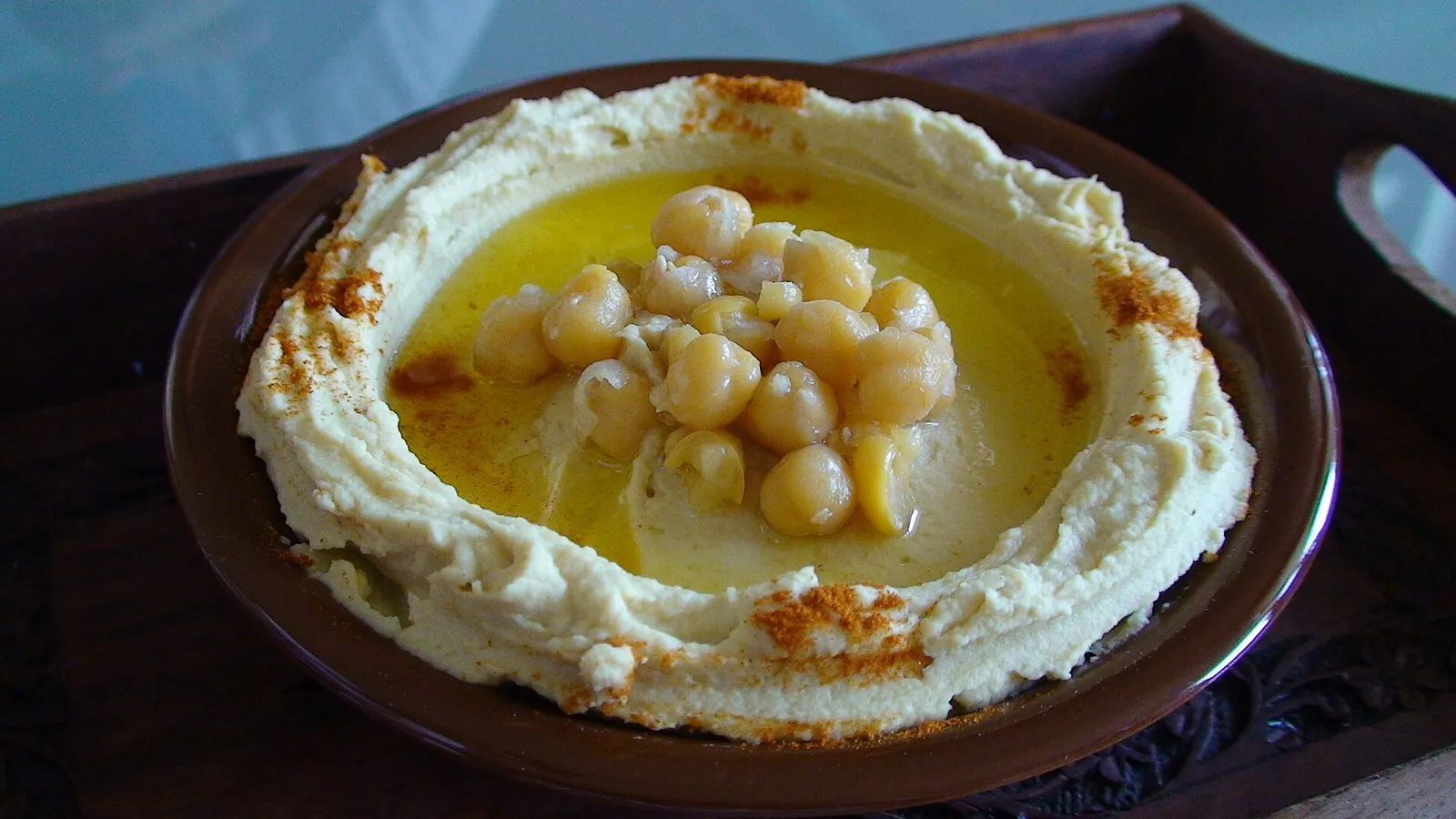
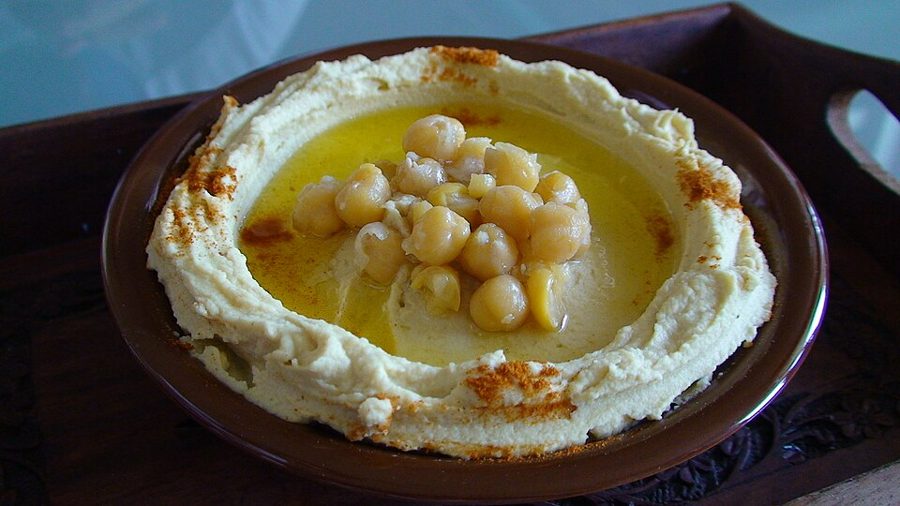
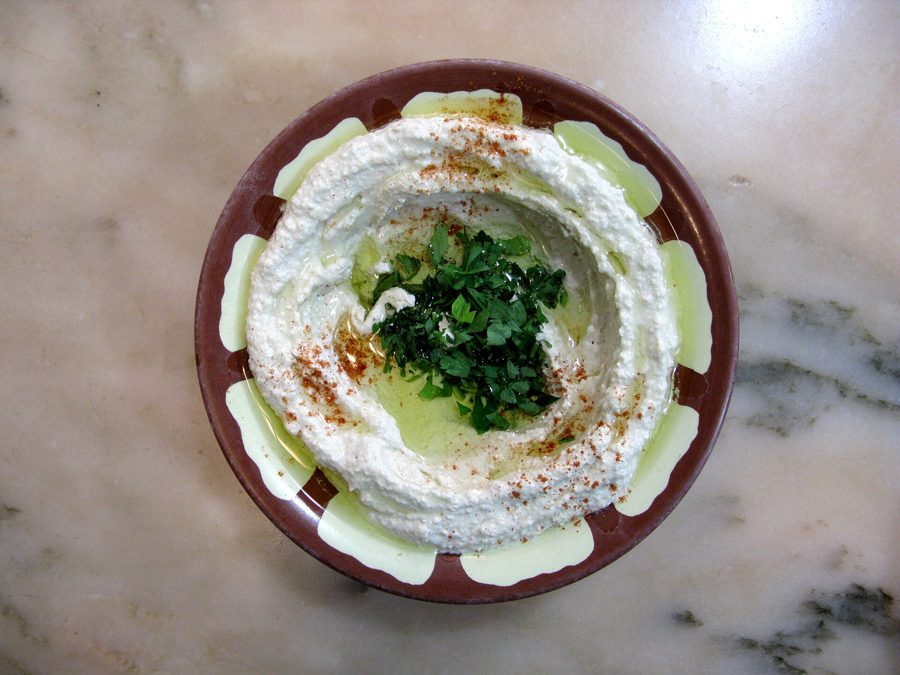
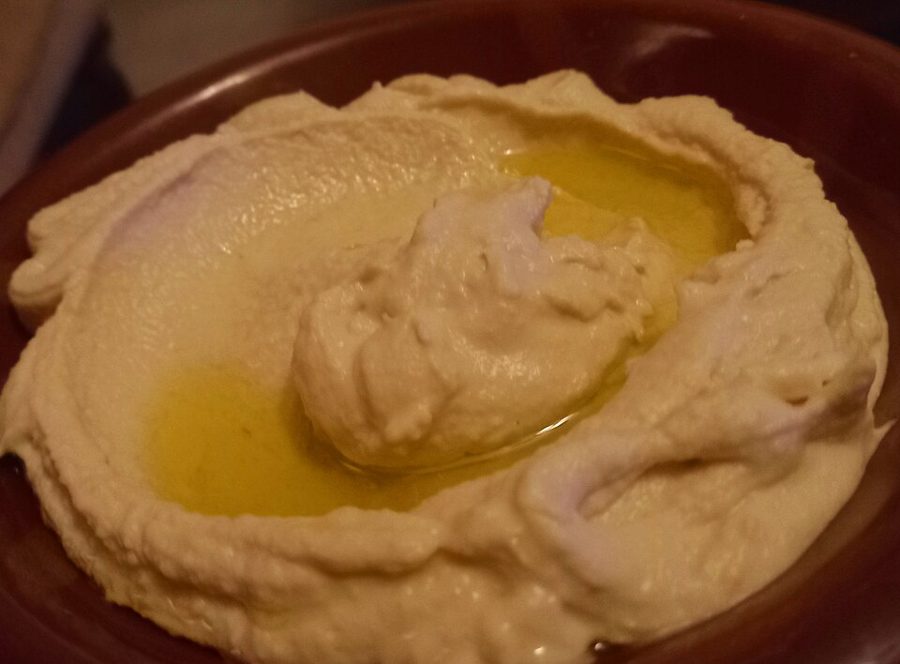
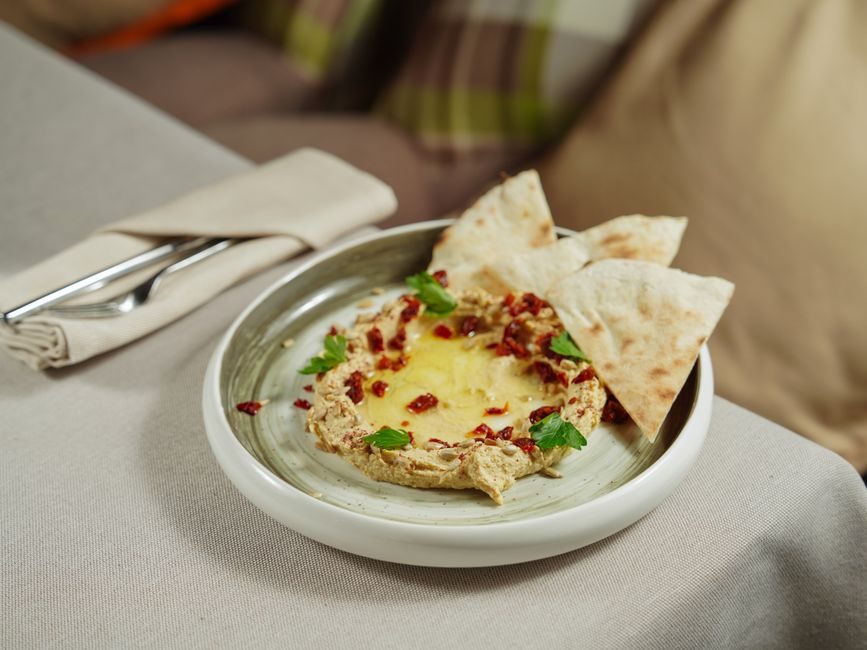
A plate of hummus bi tahini (حمص بطحينة) in Beirut arrives spread across the whole dish, pushed into a ring with the back of a spoon, the hollow in the middle filled with olive oil and a few whole chickpeas. It comes with a basket of flatbread, a saucer of pickles and a fistful of mint and radishes. Very often it comes before 8am, next to a plate of foul and a glass of tea.
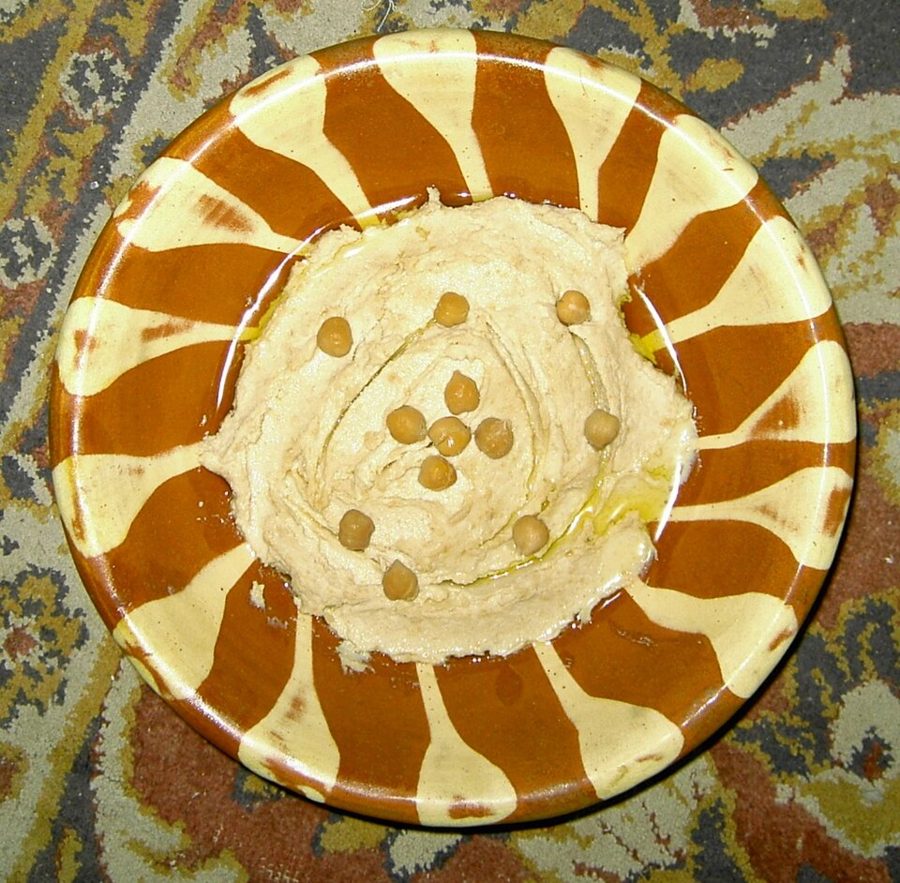
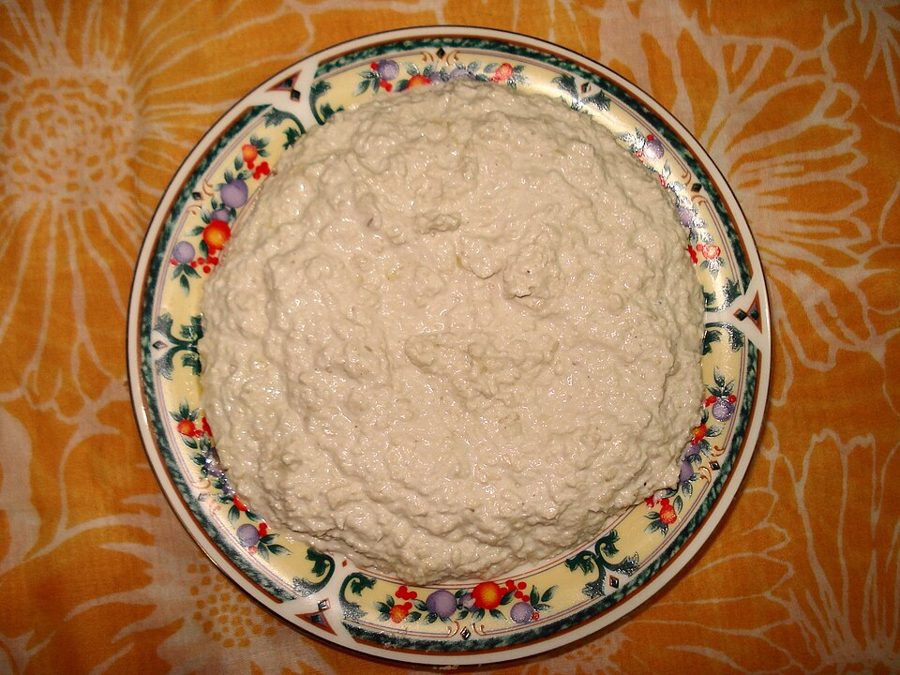
The difference from the tub in a supermarket fridge starts in the pot. A Lebanese cook boils dried chickpeas until they collapse between two fingers, blends them while they are still hot, and adds enough tahini to taste of toasted sesame without turning the plate into paste. Done that way, the hummus is so smooth that a spoon drawn through it leaves a clean groove that holds its shape.
None of that needs a restaurant kitchen. It needs a night of soaking, a teaspoon of bicarbonate of soda, a jar of decent tahini and the patience to keep the blender running for longer than feels sensible.
Contents 8 parts
- 01Chickpeas with tahini: the name and the story
- 02The ingredients that decide it
- 03Classic hummus bi tahini from dried chickpeas
- 04Fast hummus from canned chickpeas
- 05Hummus beiruti, hummus bil lahmeh and the warm ones
- 06How Beirut serves it
- 07Storage, and fixing grainy, bitter or thin hummus
- 08Where to eat hummus in Beirut
Chickpeas with tahini: the name and the story
Hummus is simply the Arabic word for chickpeas. The dish is hummus bi tahini, chickpeas with tahini, and in Lebanon the full name still turns up on menus and jars. In Damascus the same purée is often called msabbaha, a word that in Beirut means a different, looser dish, which is the first sign that nobody in the region agrees on much more than the chickpeas.
The oldest recipe that looks like hummus comes from a 13th-century cookbook attributed to Ibn al-Adim, a historian of Aleppo. It mixes chickpeas with lemon, sesame and olive oil, and leaves out garlic. A 14th-century Cairo collection, Kanz al-Fawa’id, has a cold chickpea purée sharpened with vinegar and pickled lemon, with herbs and spices but no tahini at all.
The food historian Nawal Nasrallah found no written hummus recipes after the 14th century until a Lebanese cookbook of 1885. By then garlic had become standard. The ingredients themselves had been eaten together across Egypt and the Levant for centuries, and there is not enough evidence to say which town first blended them cold with tahini.
That uncertainty is why Lebanese, Syrian, Palestinian, Jordanian and Israeli cooks can each serve a plate they consider their own. The Lebanese version is defined by texture: very smooth, quite lemony, served at room temperature, with the oil on top.
The record plates
For a few years the argument was settled by weight. On 24 October 2009, about 250 Lebanese cooks in Beirut made more than two tonnes of hummus from 1,350 kg of chickpea purée and 400 litres of lemon juice, and AFP reported the organisers calling it a patriotic event to claim the dish as Lebanese. In January 2010 a restaurant owner in Abu Ghosh, outside Jerusalem, took the record back.
On 8 May 2010 the chef Ramzi Choueiri and around 300 students of Al-Kafaat University in Beirut answered with 10,452 kg of hummus on a ceramic plate 7.17 m across. Guinness World Records still lists it as the largest serving of hummus. Nobody has topped it since, which is probably the sensible outcome.
The ingredients that decide it
Hummus has five ingredients and no place to hide a bad one. The chickpeas and the tahini do most of the work; lemon, garlic and salt only decide whether you want a second piece of bread.
Dried or canned chickpeas
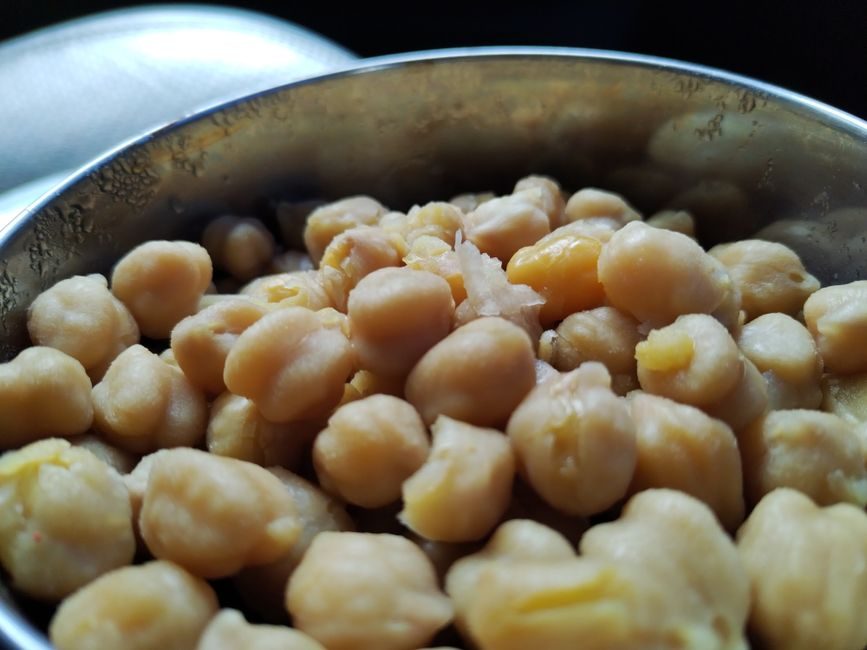
Dried, if you have the time. Chickpeas you cook yourself can be taken past the point any canner would sell them, to the stage where they mash under a finger, and that softness is what makes hummus smooth. Arabic recipes say this flatly: if the chickpeas are not soft enough, the hummus stays grainy however long you blend it.
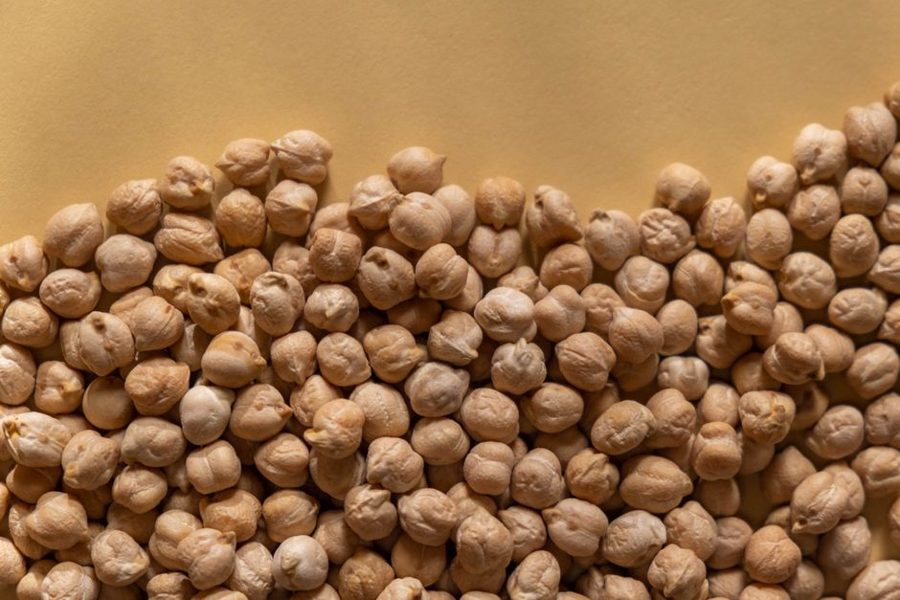
I buy the smallest chickpeas I can find and the freshest bag, from a shop that sells a lot of them. Very old chickpeas can simmer for hours and stay firm in the middle. Canned chickpeas work well with one extra step, covered in the second recipe below.
Bicarbonate of soda
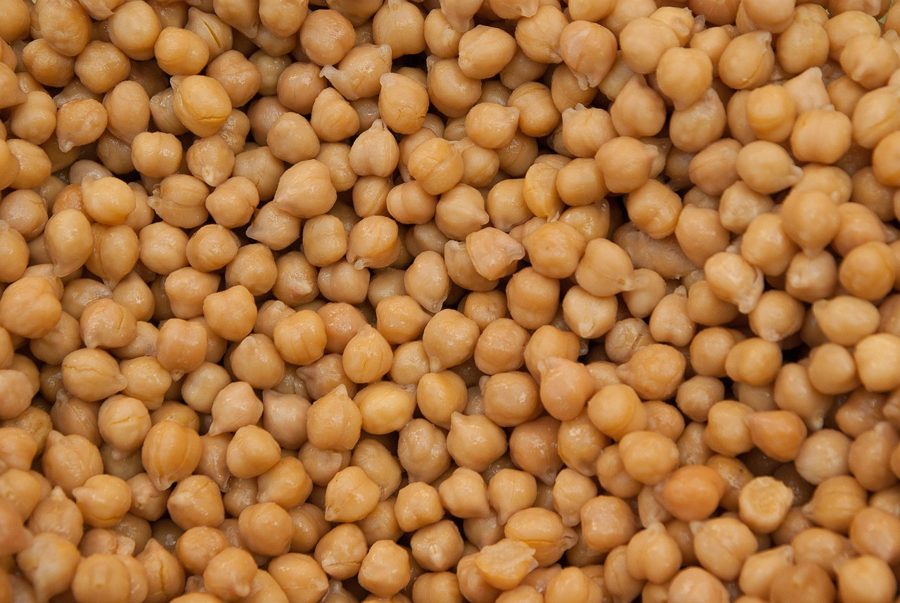
A little bicarbonate in the soaking water and again in the pot is standard in Lebanese kitchens. It makes the water alkaline, which softens the skins and helps the chickpeas break down into a pulp. With it you do not need to peel them one by one, which some recipes ask you to do and which takes far longer than it is worth.
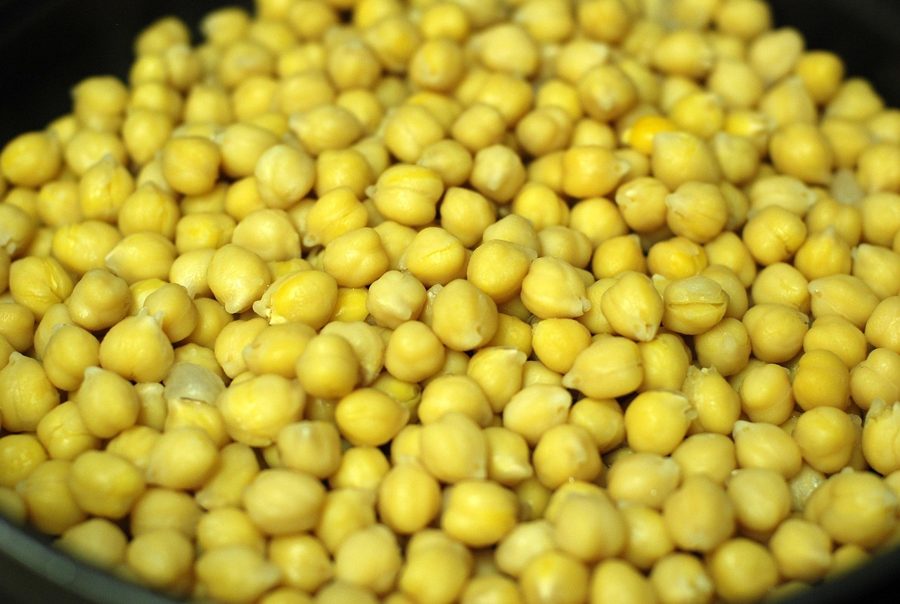
Use a teaspoon at most for 250 g of chickpeas, split between soak and pot. More than that and the hummus tastes faintly of soap, and no amount of lemon will hide it.
Tahini, and how to read the jar
Tahini is sesame seeds, usually hulled and roasted, ground to a pourable paste. One Arabic name for it translates as “sesame juice”, which is a good description of what you want: something that runs off a spoon. The label should list sesame and nothing else.
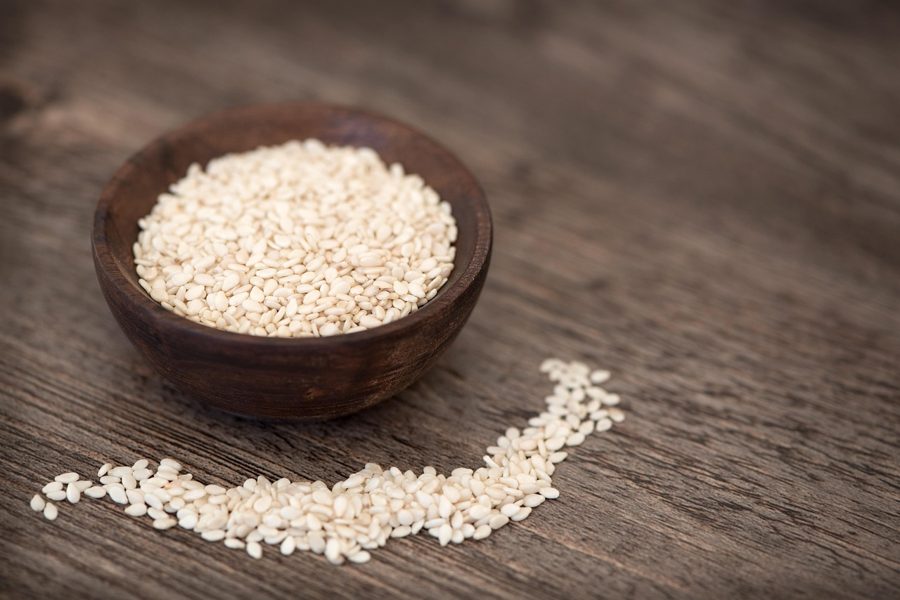
Oil separating on top of the jar is normal, and you stir it back in before measuring. What you are checking for is taste. Put a little on your finger: it should taste nutty and only very slightly bitter. If it is harsh or stale, the hummus will be too, and nothing you add later fixes it.
Lemon, garlic and salt
Squeeze the lemons yourself. Bottled juice tastes flat and slightly cooked, and in a dish this plain you can tell. Lebanese hummus runs sharper than most versions made abroad, so start with the full amount in the recipe and taste before deciding it needs less.
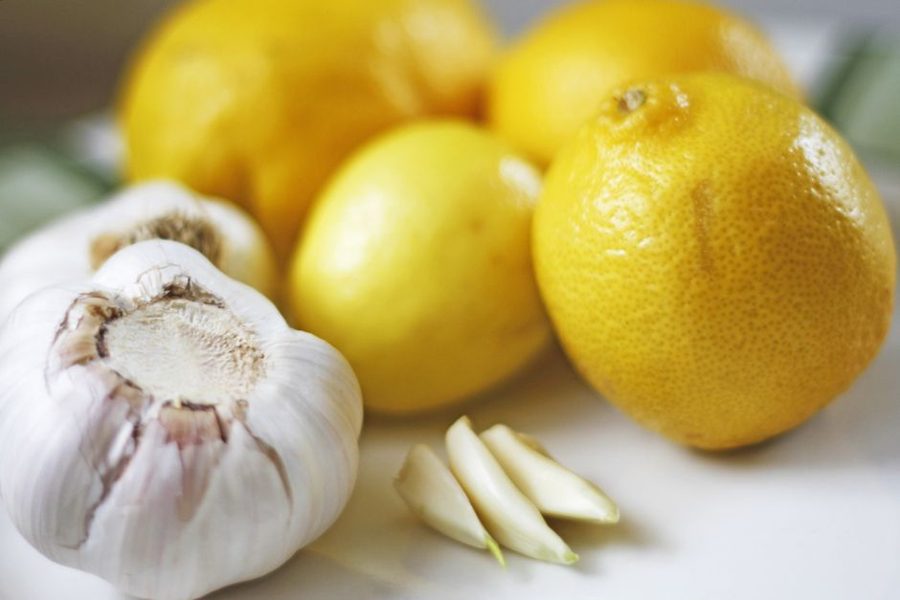
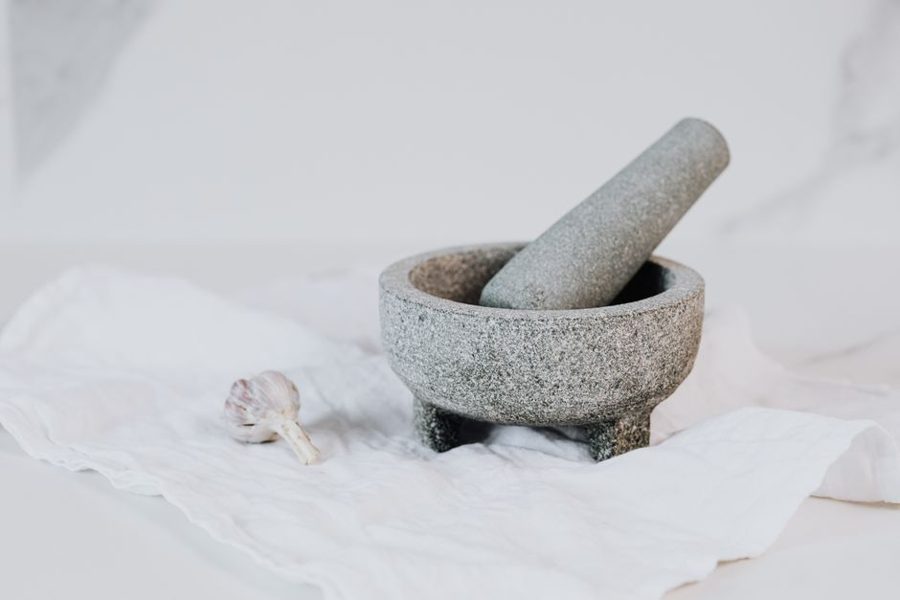
Crush the garlic to a paste with the salt before it goes in, in a mortar or under the flat of a knife. Fine paste disappears into the hummus; chopped garlic leaves sharp little pieces. If raw garlic is too strong for you, let the crushed garlic sit in the lemon juice for ten minutes before blending, which takes the edge off it.
Iced water, and keeping the oil out
Iced water is the last ingredient and the one most English recipes treat as optional. Added slowly while the blades run, it loosens the tahini, lightens the colour and gives the hummus its soft, almost whipped texture. Ordinary tap water works, but cold water does it better.
Olive oil stays out of the blender. Arabic cooks are firm on this: tahini gives all the richness the purée needs, and oil blended in dulls the colour and the taste of sesame. Pour the good oil on top at the table, where you can taste it.
Classic hummus bi tahini from dried chickpeas
Serves 6. About 2 hours, plus 12 hours soaking.
The recipes I cross-checked, in Arabic and English, disagree most on tahini. The Arabic ones keep it to roughly a fifth of the cooked chickpeas by weight; some American recipes use twice that, which tastes rich but makes a heavier, beige paste. I’ve gone with the Lebanese proportion below, and you can add another two or three tablespoons if your tahini is mild.
Recipe card
Serves 6 · about 2 hours, plus overnight soakingIngredients
- 250 g (1¼ cups) dried chickpeas, the smallest you can find
- 1 tsp bicarbonate of soda (baking soda), divided
- 120 g (½ cup) tahini, well stirred
- 75 ml (5 tbsp) lemon juice, from about 2 lemons, plus more to taste
- 2 garlic cloves
- 1 tsp fine salt
- 60 to 120 ml (¼ to ½ cup) iced water
To serve
- Extra virgin olive oil
- A spoonful of whole cooked chickpeas, kept back from the pot
- Paprika or ground sumac
- Chopped flat-leaf parsley
Method
- Put the chickpeas in a large bowl with three times their volume of cold water and ½ tsp bicarbonate. Leave to soak for 12 hours or overnight.
- Drain and rinse the chickpeas. Put them in a large pot, cover with fresh water by about three times their depth, add the remaining ½ tsp bicarbonate and bring to the boil over high heat.
- Boil for 10 minutes, skimming off the foam and the loose skins that float up.
- Lower the heat and simmer gently for 60 to 90 minutes, topping up with boiling water if the level drops, until a chickpea crushes to a smooth paste between your fingers with no hard core. Test several, not one.
- Lift out two tablespoons of whole chickpeas for the top and set them aside. Drain the rest, keeping a cupful of the cooking water.
- While the chickpeas are still hot, put them in a food processor and blend for 2 to 3 minutes into a thick, smooth paste, scraping down the sides once or twice.
- Crush the garlic with the salt to a paste. Add it to the processor with the tahini and lemon juice and blend for 1 minute.
- With the motor running, add the iced water a spoonful at a time and keep blending for 3 to 4 minutes, until the hummus is pale, glossy and soft enough to fall slowly from a spoon. It firms as it cools, so stop when it looks a touch looser than you want.
- Taste for salt and lemon and adjust. Let it cool to room temperature, at least 30 minutes, and taste again: hummus tastes flatter hot than cool.
- Spread on a wide plate and push a ring into it with the back of a spoon. Fill the hollow with olive oil, add the whole chickpeas, dust with paprika or sumac and scatter over the parsley.
Cooking times vary more than any other part of this recipe. The Arabic recipes I checked give 80 to 90 minutes of simmering; new-crop chickpeas can be done in under an hour, old ones take longer, so start testing at 60 minutes and trust your fingers over the clock.
Recipe card 2
Fast hummus from canned chickpeas
Serves 4 to 6. About 35 minutes.
Canned chickpeas are cooked to be eaten whole, so they are firmer than hummus wants. The fix is to simmer them again with bicarbonate until they bloat and the skins slip. One Arabic recipe gives 10 minutes and an English one 20; I go with 20, because the extra time costs nothing and an under-softened chickpea is the one mistake blending cannot undo.
Ingredients
- 2 cans (400 g / 14 oz each) chickpeas, drained and rinsed, about 480 g drained
- ½ tsp bicarbonate of soda (baking soda)
- 100 g (a scant ½ cup) tahini, well stirred
- 60 ml (4 tbsp) lemon juice, plus more to taste
- 1 to 2 garlic cloves
- ¾ tsp fine salt
- 60 ml (¼ cup) iced water, plus more as needed
Method
- Put the chickpeas in a saucepan with the bicarbonate and cover with water by several centimetres. Bring to the boil, then simmer for 20 minutes, until they look swollen, the skins are coming away and they crush easily.
- Drain and rinse briefly under warm water to wash off the bicarbonate. Set aside a spoonful of whole chickpeas for the top.
- Blend the warm chickpeas alone for 2 minutes, scraping down once.
- Crush the garlic with the salt and add it with the tahini and lemon. Blend for 1 minute.
- With the motor running, add the iced water a spoonful at a time and blend for another 3 minutes, until smooth and pale.
- Taste, adjust, cool to room temperature and serve as above.
Hummus beiruti, hummus bil lahmeh and the warm ones
Every hummus counter in Lebanon sells plain hummus. The menu then runs on into versions with herbs, with meat, with nuts, and into the warm chickpea plates that sit somewhere between hummus and a stew. Abou Hassan’s menu in Bourj Hammoud lists hummus, hummus with meat, hummus with cashews, msabbaha and balila one under the other.
Hummus beiruti
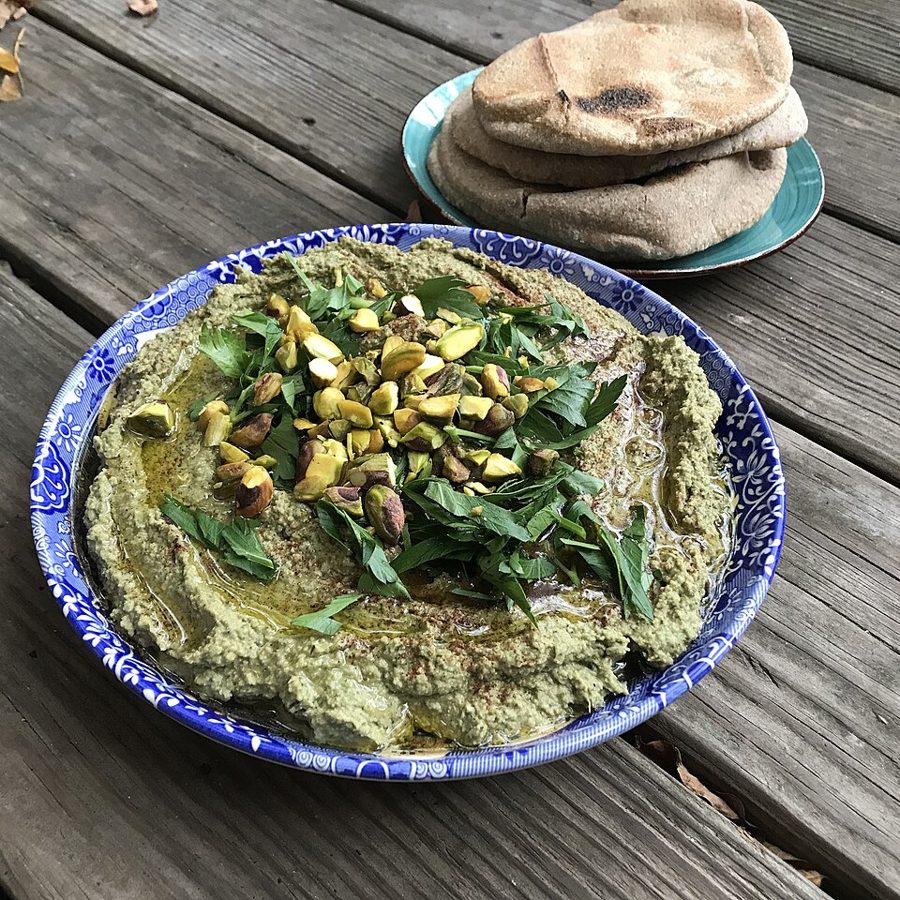
Beirut-style hummus is the plain recipe with parsley, more garlic, ground cumin and usually green chilli folded through it. The recipes I compared agree on those four and differ only on how much. For half the classic batch, roughly one can’s worth, add 60 ml (¼ cup) chopped flat-leaf parsley, one more crushed garlic clove, 1 to 2 tsp ground cumin and one green chilli, finely chopped.
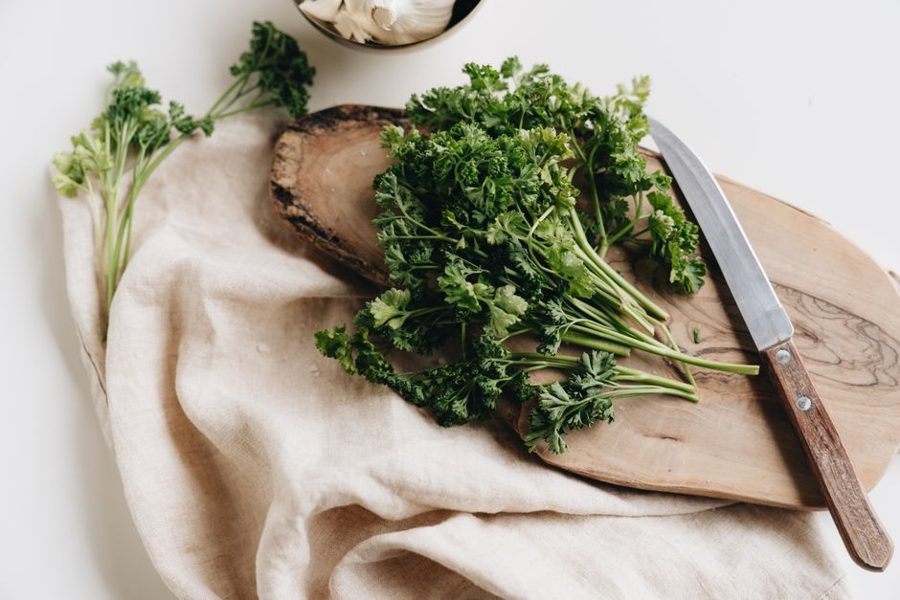
Add the cumin with the tahini, then pulse in the parsley and chilli for a few seconds at the end so they stay as green flecks. Blend them fully and you get a khaki-coloured paste that tastes the same but looks tired. Finish with oil, a little cumin dusted over and a few whole chickpeas.
Hummus bil lahmeh
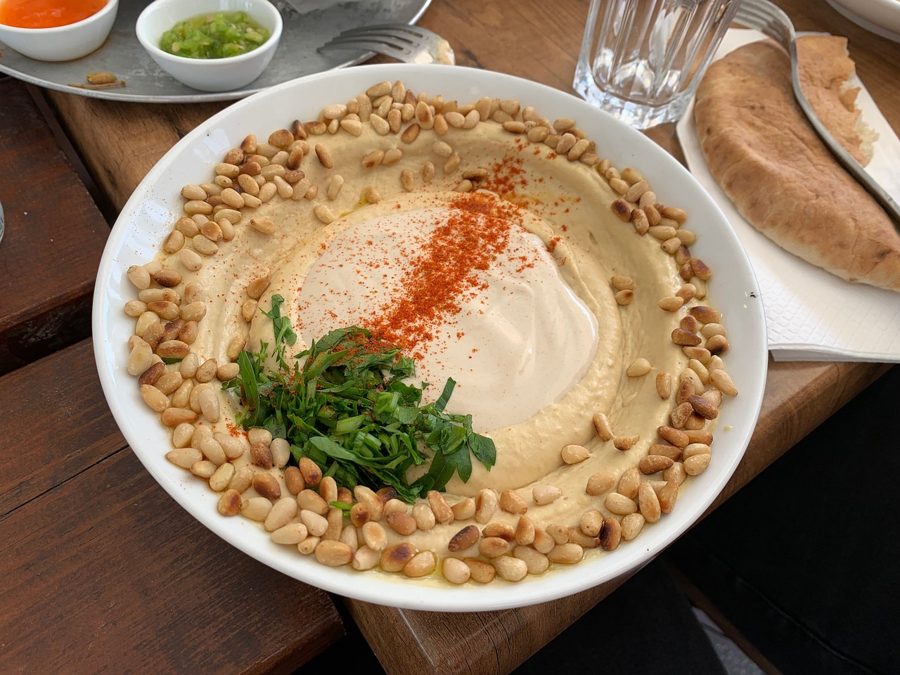
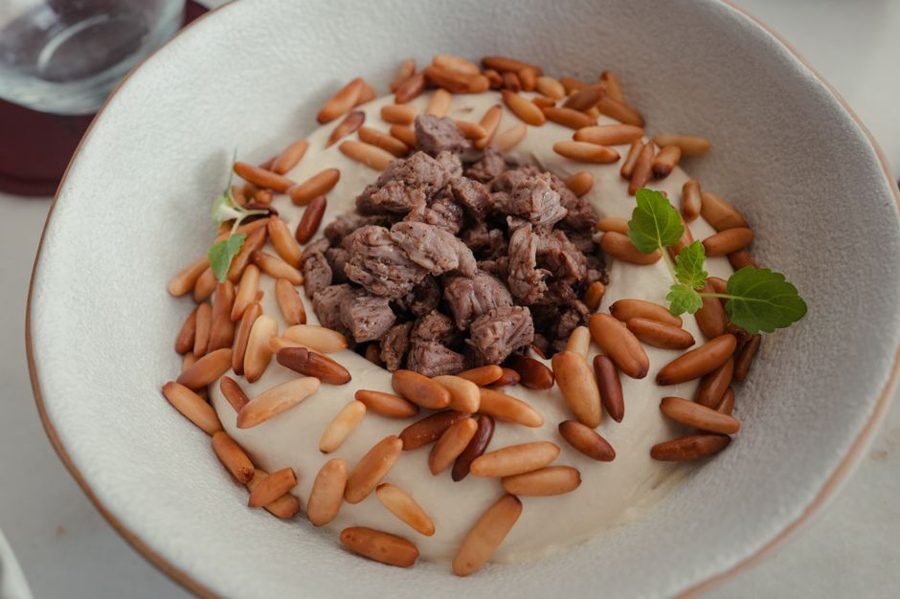
Hummus with meat is the plate you order when hummus is the meal. Beirut kitchens top the hummus with minced lamb or small cubes of beef fried with cinnamon and black pepper, and toasted pine nuts; some use awarma, lamb preserved in its own fat. The hot meat and its fat go straight onto the cool hummus, and the contrast is the point.
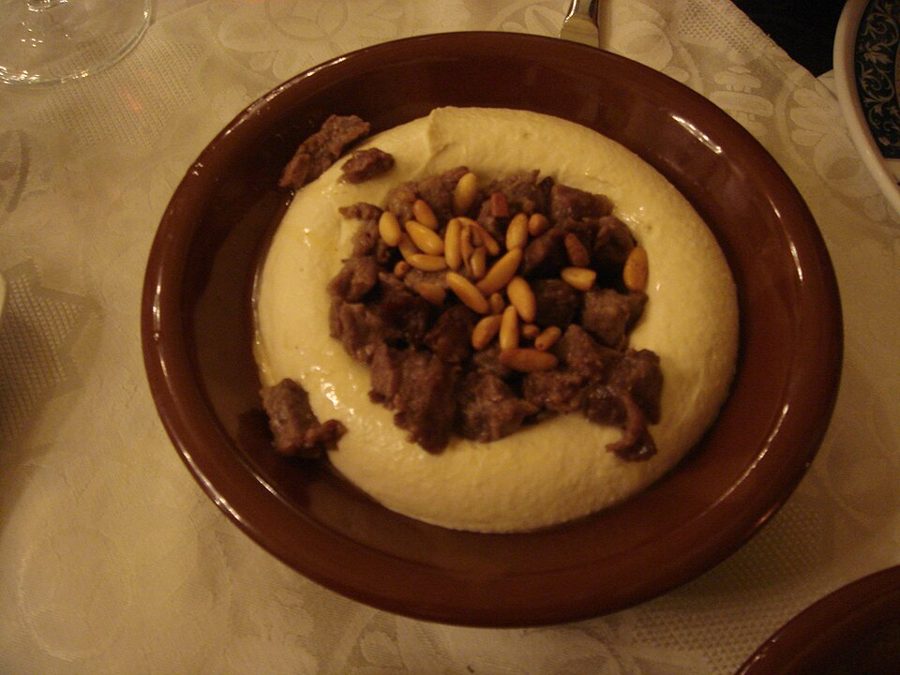
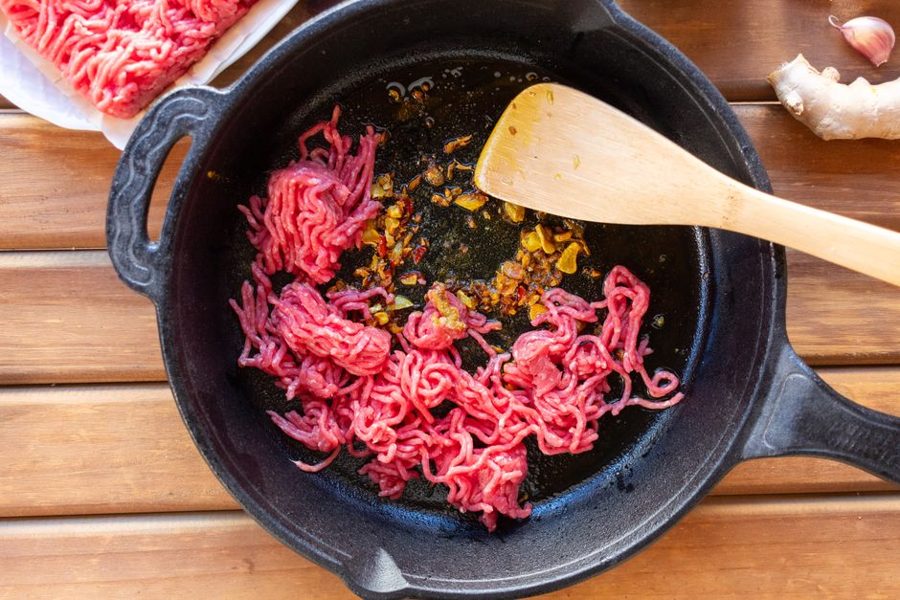
For the classic batch, heat 1 tbsp ghee or olive oil in a frying pan and fry 30 g (¼ cup) pine nuts, stirring, until golden; lift them out. Turn the heat up and brown 200 g (7 oz) minced lamb hard, breaking it up, then season with ½ tsp allspice, ¼ to ½ tsp cinnamon, salt and black pepper. Spoon the meat and its fat over the plated hummus and scatter the pine nuts on top. Annahar’s note on the king of Lebanese mezze gives the same pairing of minced meat and pine nuts.
Msabbaha and balila
Msabbaha comes from the Arabic root for swimming: whole chickpeas swimming in tahini, lemon and oil. In Lebanon, where it is also called mashawsha, it means warm, just-cooked chickpeas, some left whole and some crushed, dressed with a garlicky tahini and lemon sauce and finished with oil. It is looser and rougher than hummus, and it has to be eaten warm.
Balila is simpler still: warm whole chickpeas in a little of their cooking water, with garlic, cumin, lemon and olive oil. Neither needs a recipe of its own if you are making hummus from dried chickpeas. Keep back a cupful of hot chickpeas at step 5, and for msabbaha spoon over some of the finished hummus loosened with lemon and cooking water; for balila, season the chickpeas with crushed garlic, cumin, lemon and oil.
How Beirut serves it
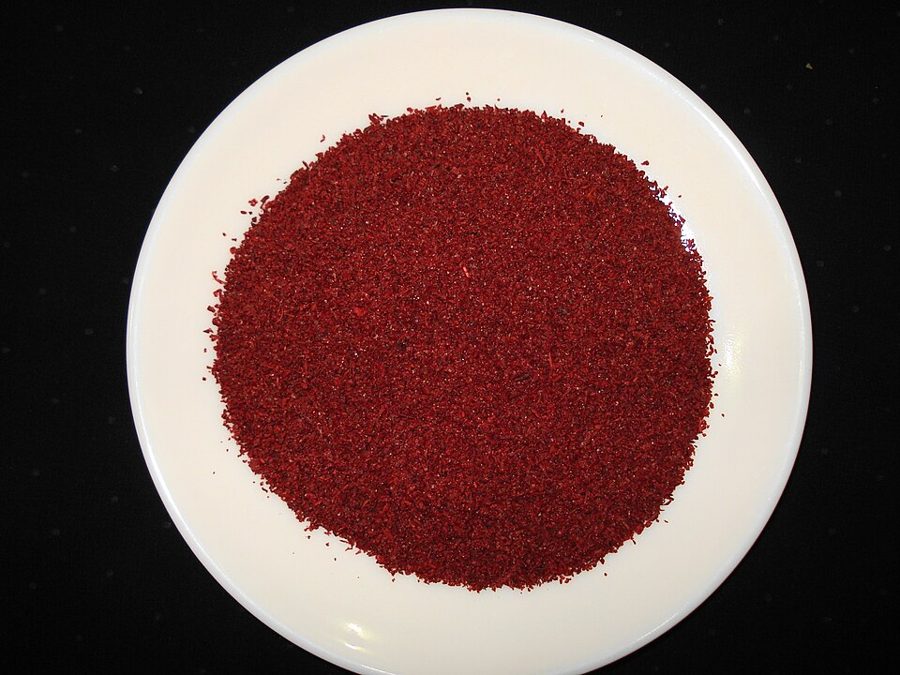
The plate is part of the recipe. Lebanese hummus goes onto a wide, shallow dish, spread thin at the edges and higher at the rim, so the oil has somewhere to sit. Paprika goes on for colour, sumac for a sour, fruity edge; ground cumin goes only on hummus beiruti.
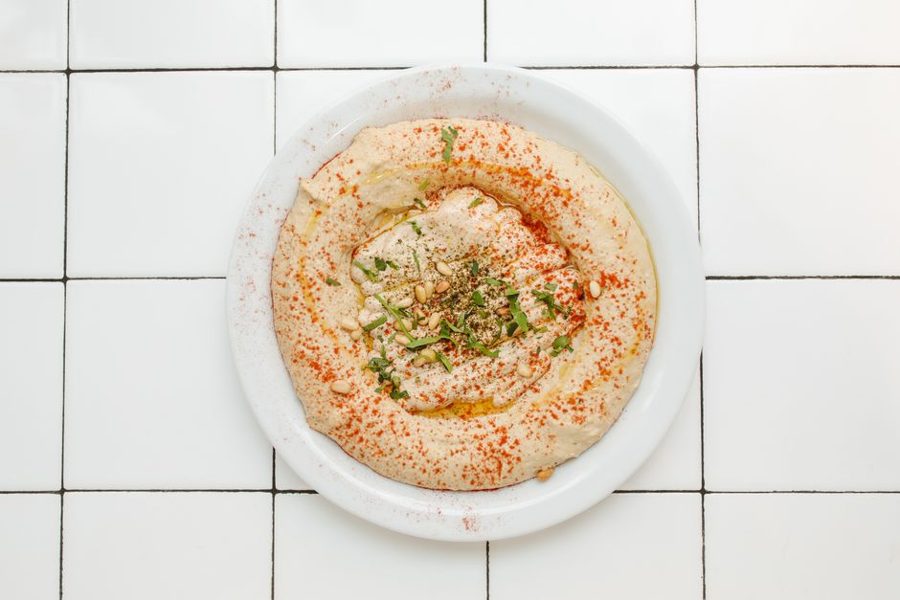
Sumac, ground from dried berries, is the better topping if you want it to taste of anything. It brings the sourness of lemon without the liquid. Hummus can also be finished with hot samneh, clarified butter, instead of oil, which is worth trying on a cold morning.
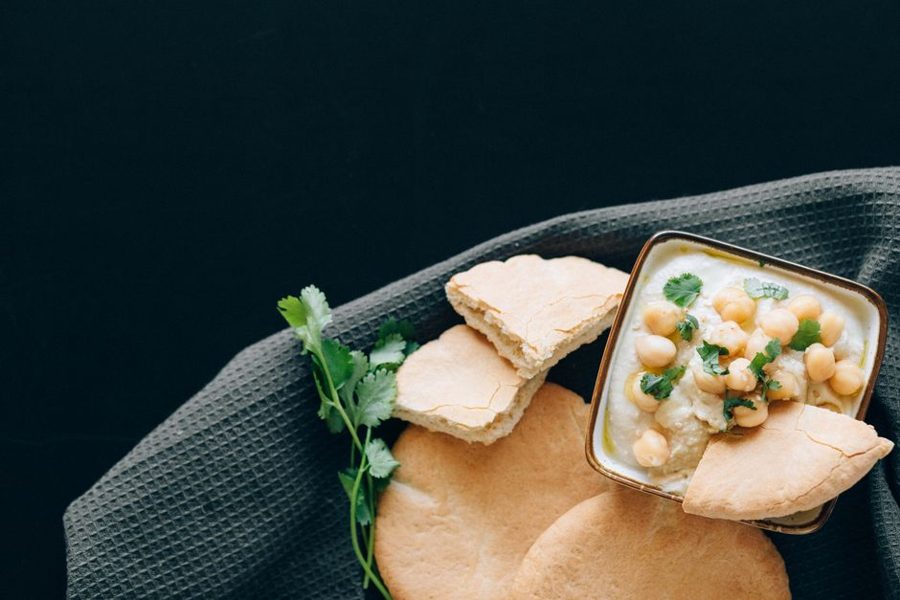
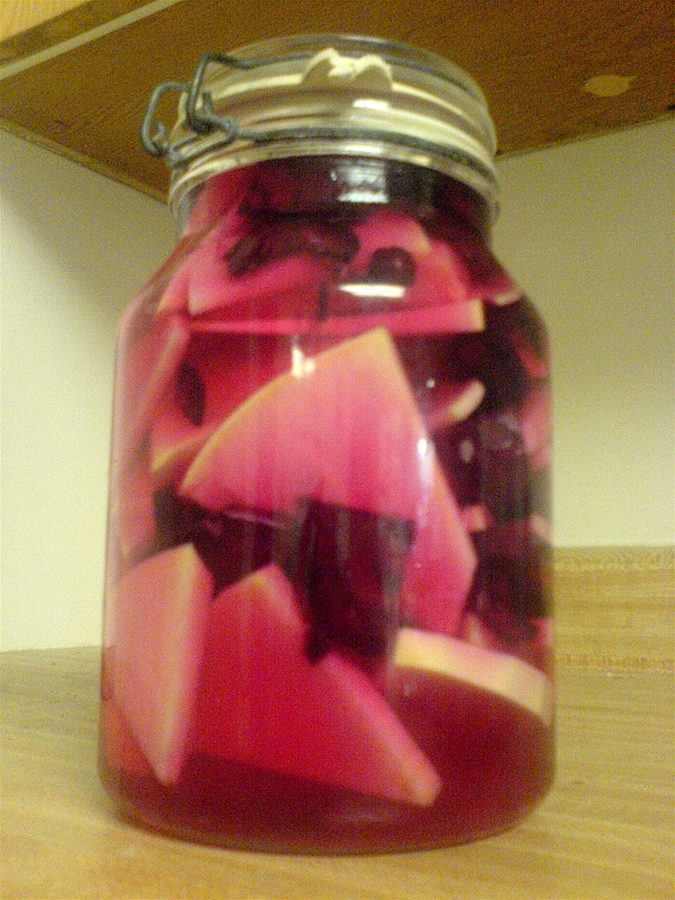
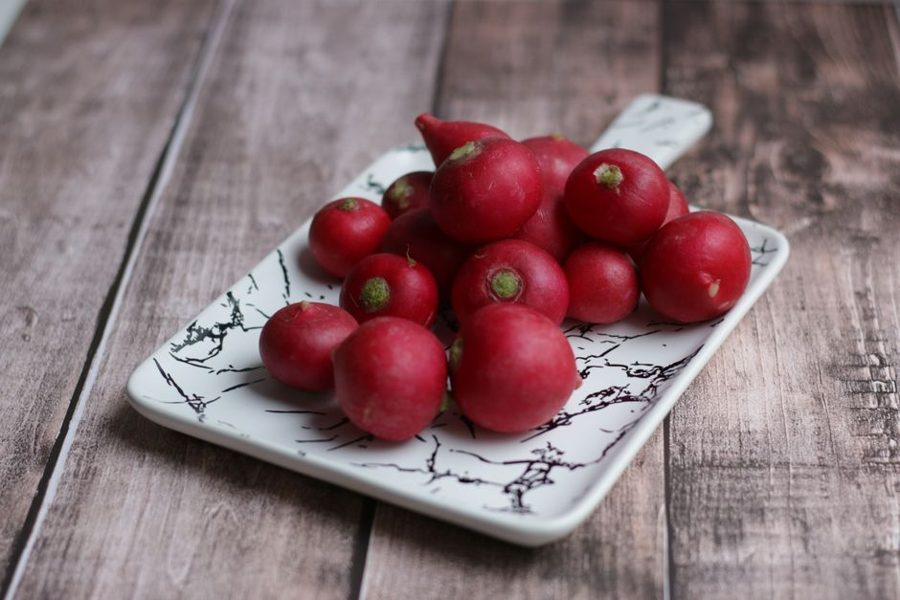
Next to the plate comes bread, thin Lebanese flatbread, warm if the bakery is close. Abou Hassan’s menu has a sign at the top announcing that hot bread is available, which tells you how much it matters. Then the extras: a dish of kabees, the pickles, with turnips stained pink by beetroot; radishes; fresh mint; green chillies; sometimes raw onion.
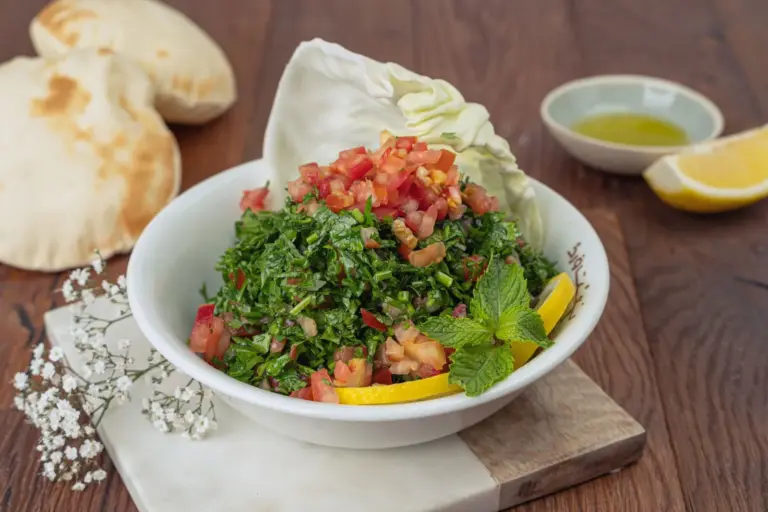
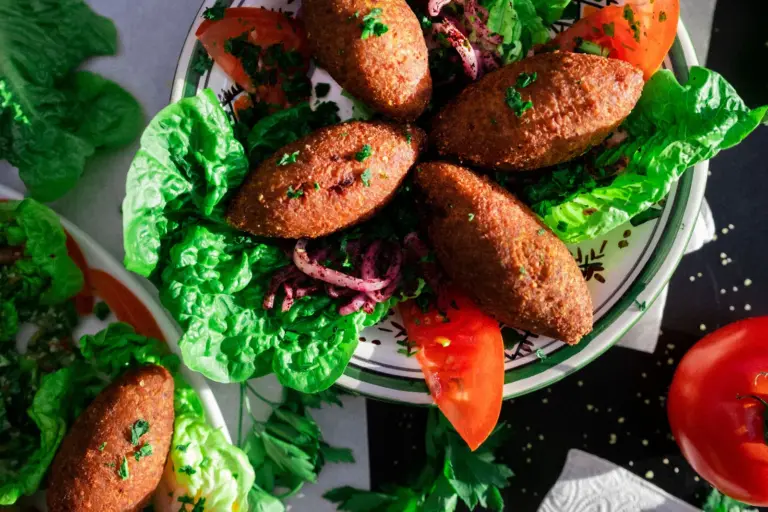
At a mezze table hummus sits beside tabbouleh, moutabal and fried kibbeh, and it is usually the plate the bread goes to first. At breakfast it shares the table with foul, the stewed fava beans, and with fatteh, chickpeas layered over toasted bread under a tahini and yoghurt sauce.
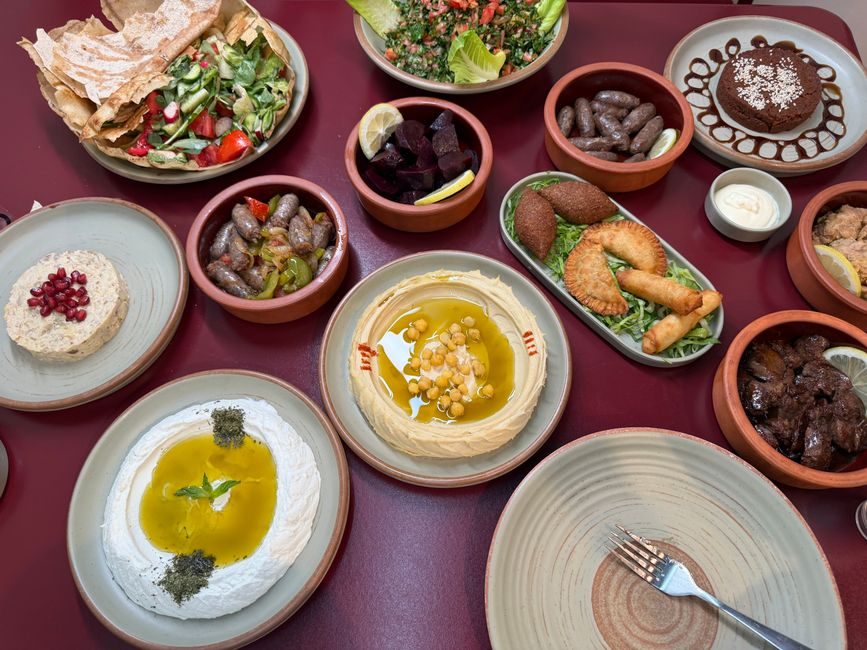
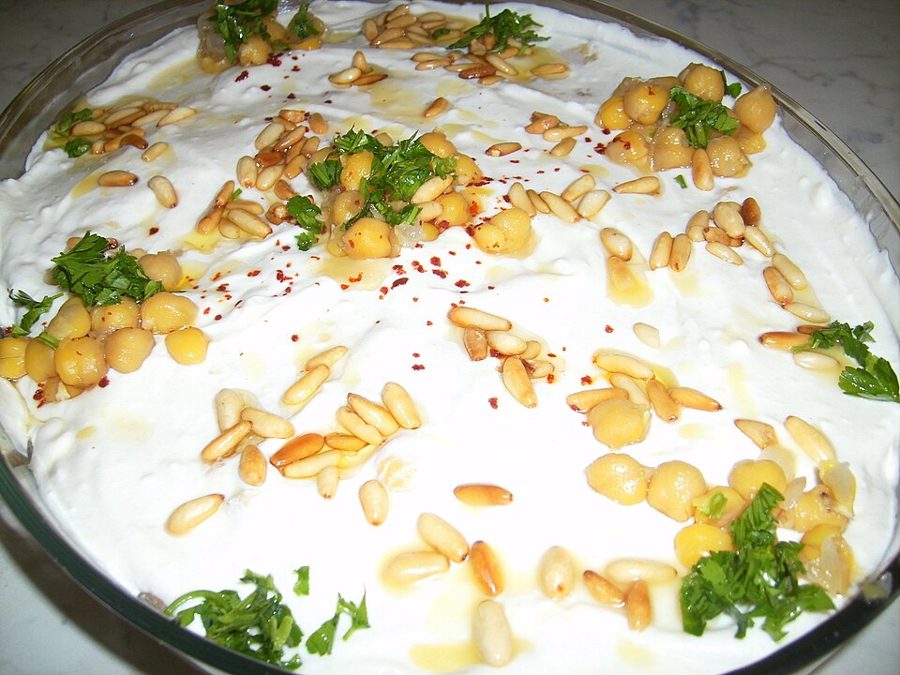
Hummus for breakfast is ordinary in Lebanon, and some of Beirut’s best hummus counters never close. Order it with foul and fatteh, and let the table share.
Storage, and fixing grainy, bitter or thin hummus
Keep hummus in a closed container in the fridge, with a thin film of olive oil on top to stop a skin forming. I’d eat it within four days; some recipes say a week, but the lemon and garlic fade and the texture tightens. It freezes for about a month under its layer of oil and needs a good stir and a spoonful of water once thawed.
Take it out of the fridge half an hour before serving. Cold hummus tastes of very little and spreads badly, and a spoonful of water or lemon juice beaten in brings it back to its first texture.
Grainy
Almost always the chickpeas. Either they were not cooked soft enough, or they were blended cold, when they are firmer and break into crumbs rather than a paste. Extra blending with a splash of hot cooking water helps a little; an undercooked batch cannot be rescued, so next time cook them longer and blend them hot.
Bitter
Look at the tahini first: if it tastes bitter from the jar, the hummus will too. Over-blended lemon pith and too much raw garlic also add a harsh edge. More salt and a little more lemon cover mild bitterness, and blending in a few more chickpeas dilutes it; badly bitter tahini means a new jar.
Thin
Too much water, or water added too quickly. Remember that hummus firms in the fridge, so slightly loose hummus is often right by the next meal. If it is properly runny, blend in more chickpeas or a spoonful of tahini, and add water more slowly next time. Tahini that seizes into a stiff lump when the lemon goes in is normal, by the way: keep the blade running and keep adding water, and it will loosen.
Where to eat hummus in Beirut
Lebanon has priced most things in US dollars since 2023, and Beirut’s restaurants mostly follow, though some counters still print their menus in Lebanese pounds. Every place below was serving and taking orders in the autumn of 2026. Breakfast places fill up early, especially on Sundays.
Abou Hassan, Bourj Hammoud
Abou Hassan has been in Haret Sader, in the Armenian district of Bourj Hammoud, since 1948, and it is open around the clock. Hummus, foul, fatteh, msabbaha and balila are the core of the menu, with hot bread from the oven and eggs fried with meat or sujuk.
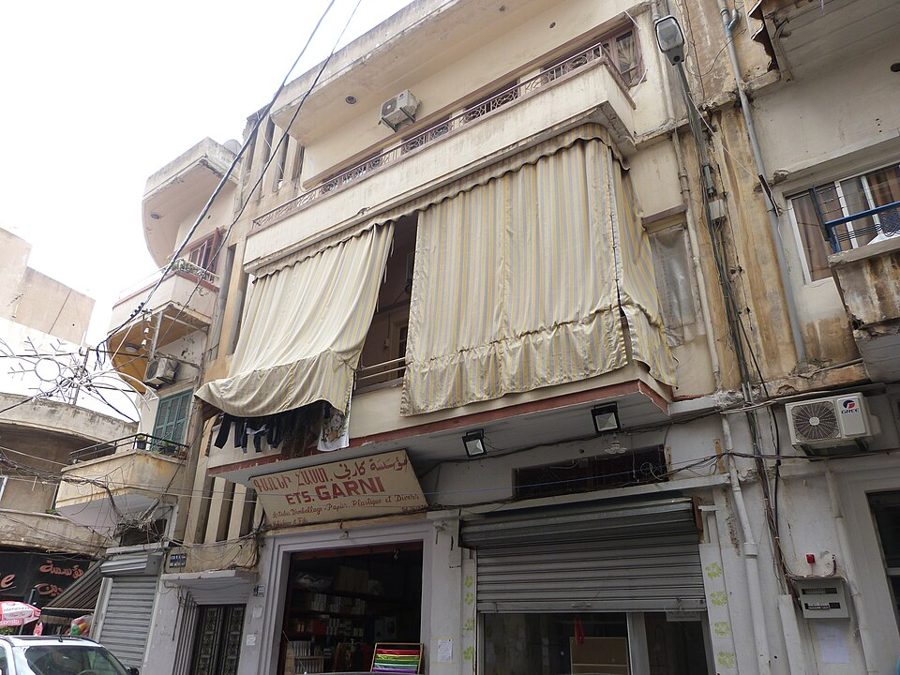
Order hummus and foul together, with a plate of fatteh if there are more than two of you. The vegetable basket, the bread and the tea are the rest of the meal.

Al Soussi, Mar Elias
Al Soussi is a family breakfast restaurant on a narrow street in Mar Elias, west Beirut, and it is the place to try hummus with awarma, the preserved lamb. It also does fatteh with tahini, liver, and eggs with awarma. It is small, busy, and not cheap by local standards, and there is nowhere to park.
Abu Hassan Hummus & Fool, Hamra
On Hamra Street, Abu Hassan Hummus & Fool keeps a 24-hour kitchen of its own, which makes it the reliable answer for hummus at 6am, a few minutes’ walk from the big hotels on Hamra. The fatteh with yoghurt is the dish people come back for; portions are large, so order fewer plates than you think.
Le Chef, Gemmayzeh
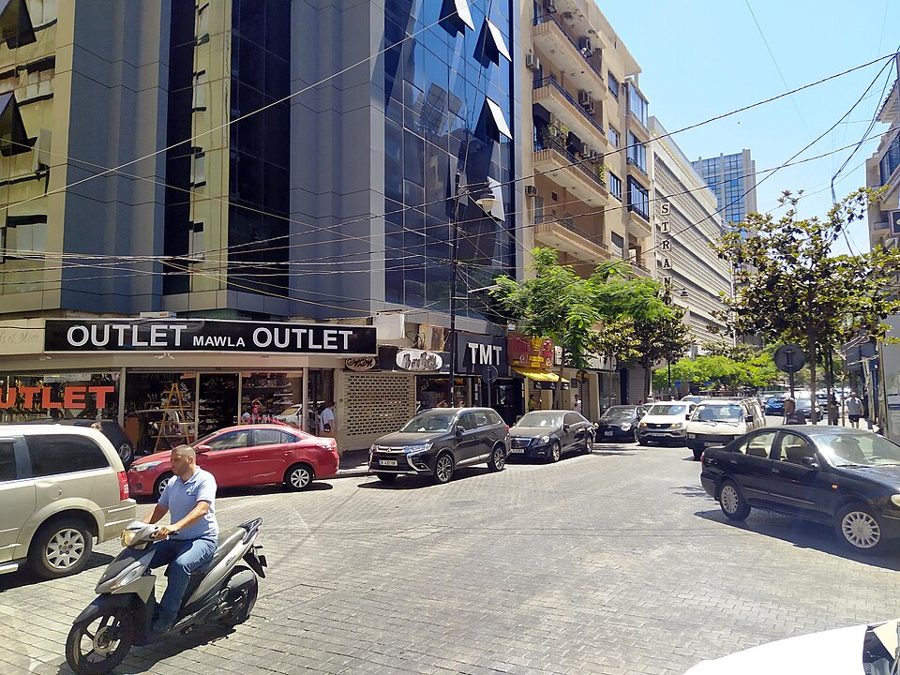
Le Chef, on Rue Gouraud in Gemmayzeh, is a small, old-fashioned restaurant with a menu of home cooking that changes every day, and hummus and moutabal among the mezze. It is one of the cheapest sit-down meals in the neighbourhood, busy and the service is quick.
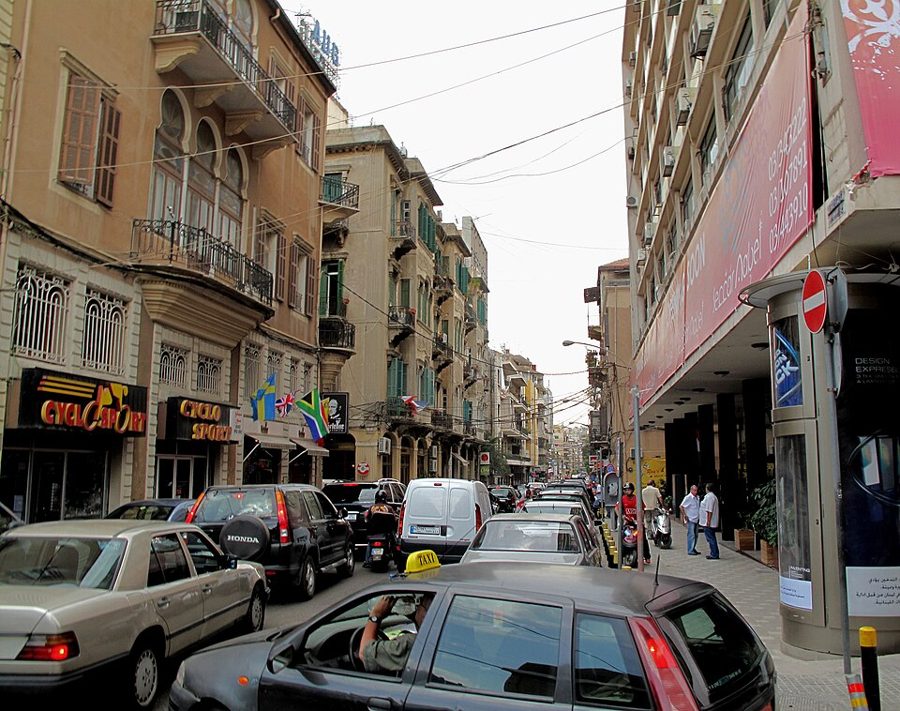
Abou Abdallah, Dora
Abou Abdallah, on Pierre Gemayel Street among the workshops of Dora, on the north-eastern edge of the city, has been making breakfast since 1956 and is worth the drive. The hummus special, balila with awarma and fatteh with awarma are what to order. It is clean, quick and on the expensive side for breakfast.
Then go home, soak 250 g of the smallest chickpeas you can find, and draw the spoon through your own plate.