A fried kibbeh (كبة) gives itself away in the first ten seconds in the oil. If the shell is right, it hisses, settles and darkens evenly. If it is wrong, a seam opens, a thread of filling escapes and the oil starts to spit. Every split has a cause you can fix at the bench, and most of them come down to two ingredients and one temperature.
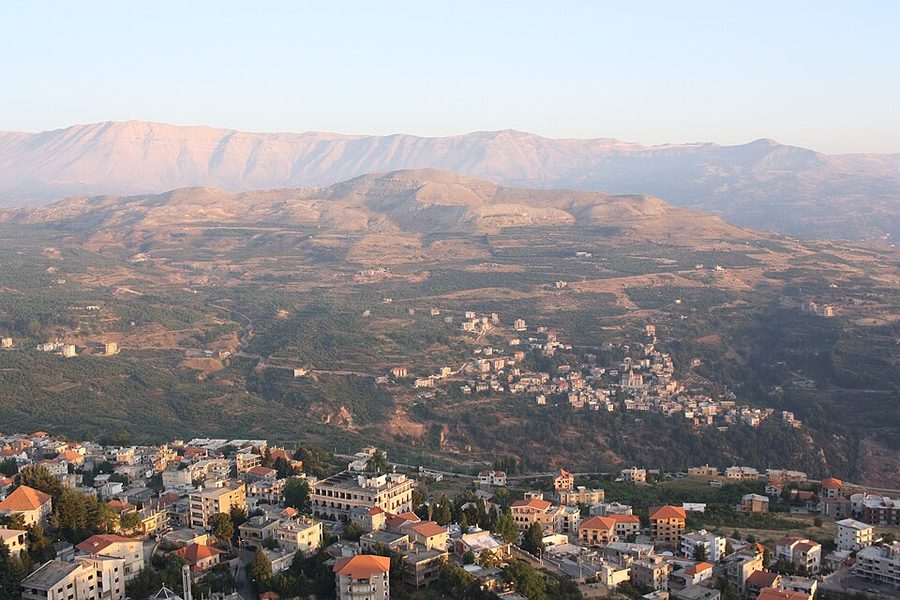
In Ehden, the mountain town where the families of Zgharta spend their summers, the paste is still made the slow way in public once a year. On Monday 14 September 2026, the Feast of the Holy Cross, the Ehden Youth Association invited the public to a festival for pounding Zgharta-style kibbeh in the mortar, under the patronage of Lebanon’s Ministry of Tourism, at a restaurant near the town’s Monastery of the Holy Cross. The mortar in question is the jurn, a hollowed stone, and the pestle is wood.
You do not need a jurn. You need meat with no fat on it, the finest bulgur you can buy, a bowl of iced water within reach and a little patience with your hands. Get the shell right and the rest of the dish forgives you almost anything.
Contents 8 parts
One name, dozens of dishes
Kibbeh comes from the Arabic root k-b-b, and at its simplest it means meat and wheat pounded together until they hold a shape. After that the word spreads wide. The food historian Nawal Nasrallah traces the first description of a filled shell of ground meat and grain to an 18th-century Arabic dictionary, the Taj al-‘Arus, which credits it to the people of al-Sham, the Levant.
The American missionary William McClure Thomson, in Lebanon in 1847, saw wheat crushed in a mortar for it and called it the national dish of the Arabs. A Beirut cookbook of 1885, Ustadh al-Tabbakhin by Khalil Khattar Sarkis, already gave fifteen kibbeh recipes, among them the yoghurt, tray and grilled versions still cooked today. Calling it Lebanese came much later.
The historian Graham Pitts, interviewed for L’Orient Today’s history of kibbeh, dates the first labelling of kibbeh as Lebanese to George al-Rayyis’s 1951 cookbook, which has sixteen recipes for it. Ramzi Choueiri, the Arab world’s first television chef, later catalogued thirty-seven kibbeh recipes in Min Turath Lubnan, each tied to a village. That is the real scale of the thing: a Lebanese cook asked for “the” kibbeh will ask you which one.
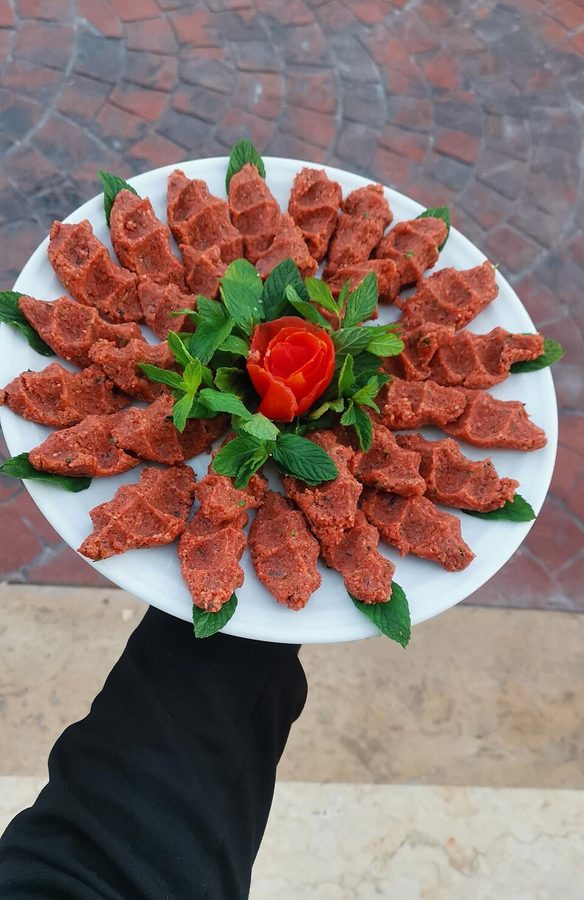
Kibbeh nayyeh, raw
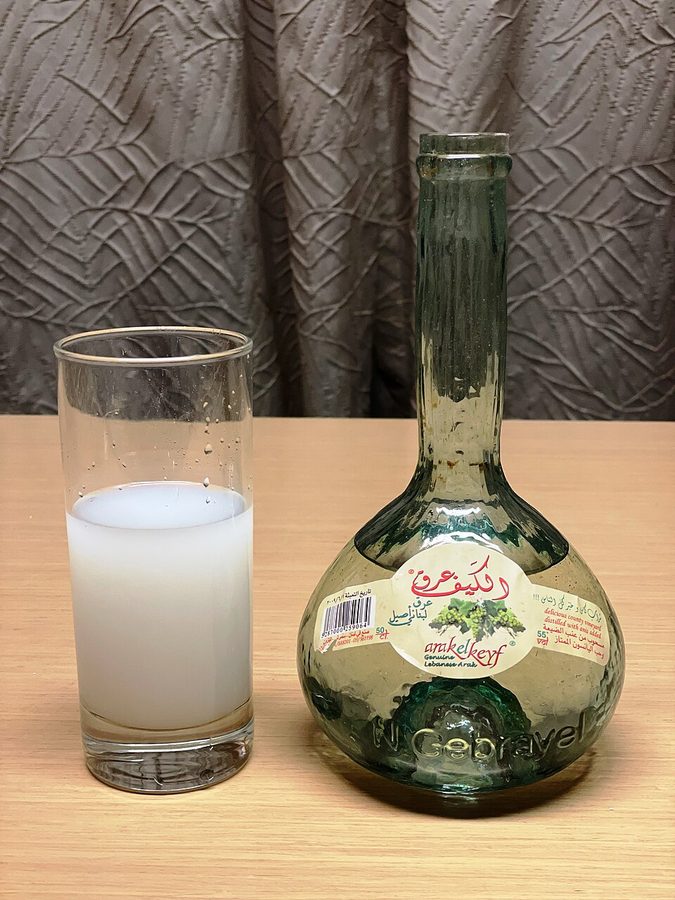
Kibbeh nayyeh is the paste served raw, smoothed onto a plate, furrowed with a fork and finished with olive oil and mint. It is eaten with raw onion, green chilli and bread, and in the north it comes with arak. An Ehden cook told L’Orient-Le Jour that a glass of arak does not go down without it.
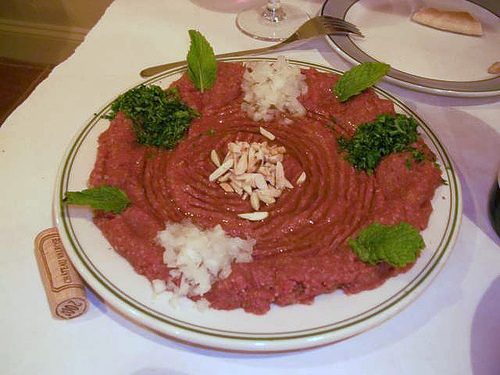
Raw meat is a choice you make knowingly. The USDA’s safe minimum temperature for ground meat is 71°C (160°F), and raw kibbeh never gets near it. I’d only eat it from a butcher who grinds kibbeh meat to order, and never serve it to children or anyone pregnant.
In the south the raw dishes change character. In Nabatieh the base is kammouneh, a fresh green mix of bulgur pounded with cumin, basil, marjoram and onion, and the name changes with how much of it goes into the meat and the shape it takes: kibbeh nayyeh, frakeh, lahmeh madouha.
Kibbeh qrass, fried
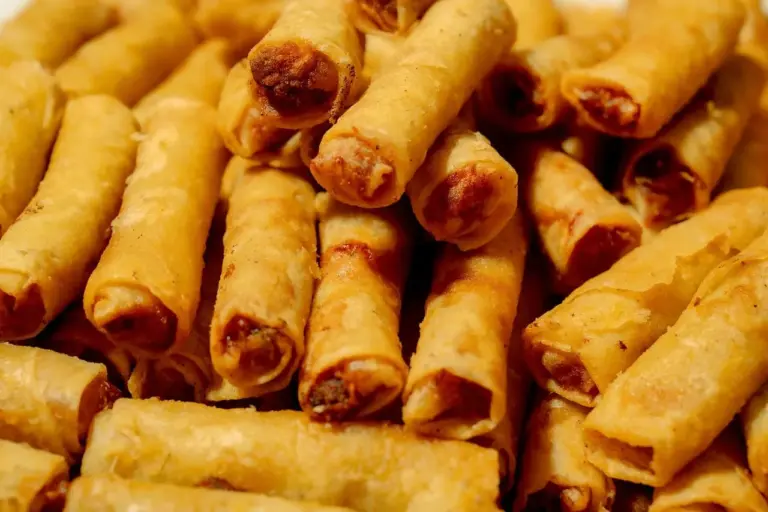
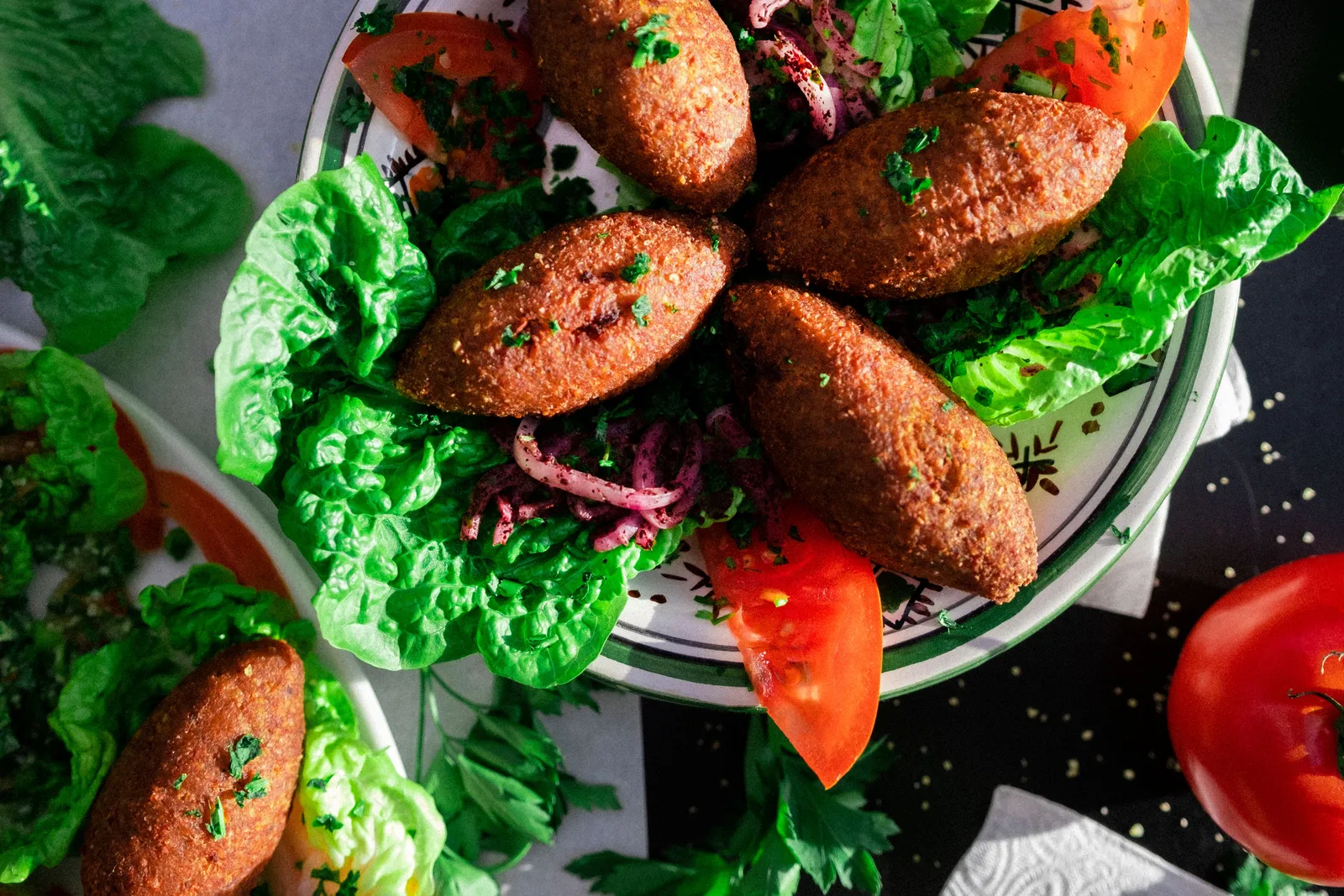
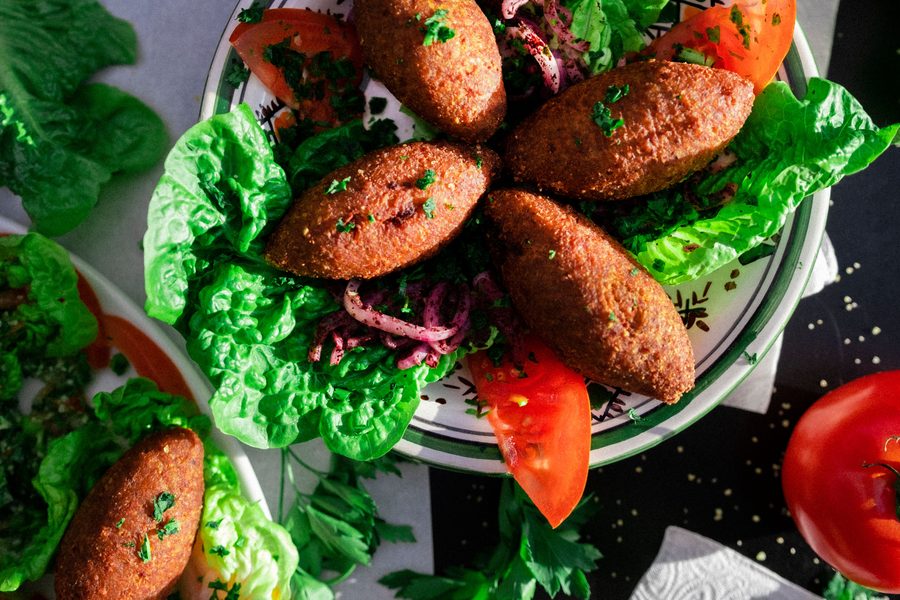
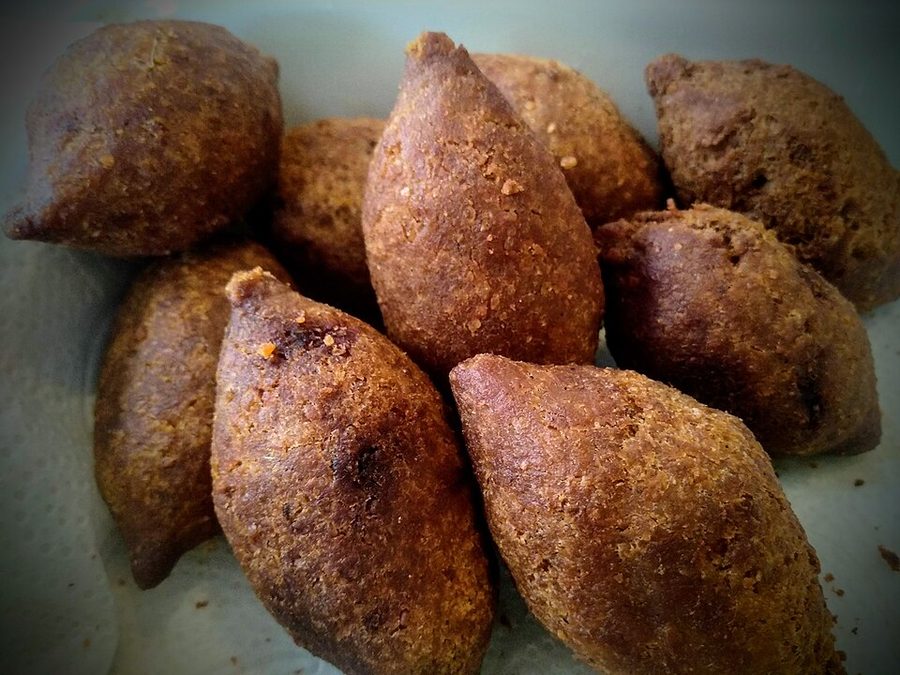
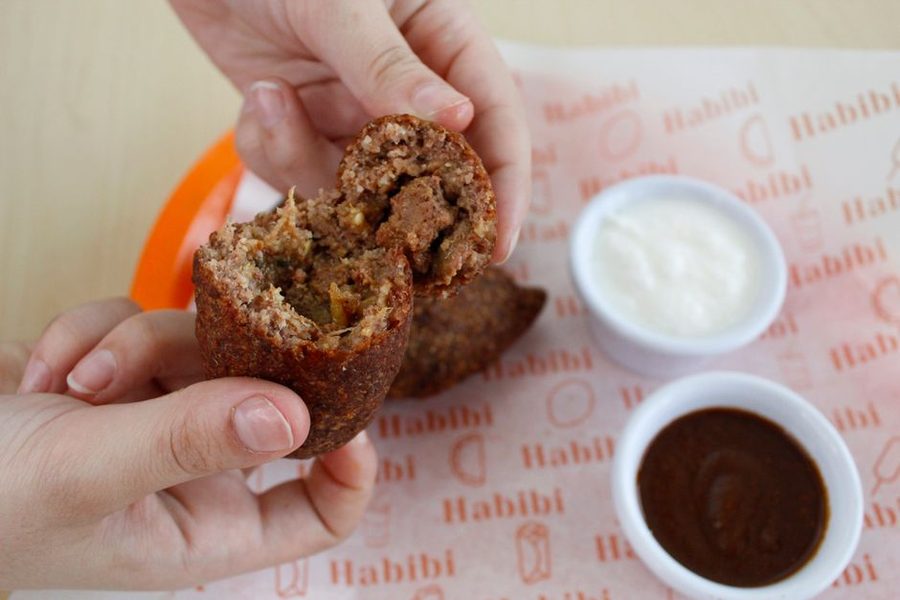
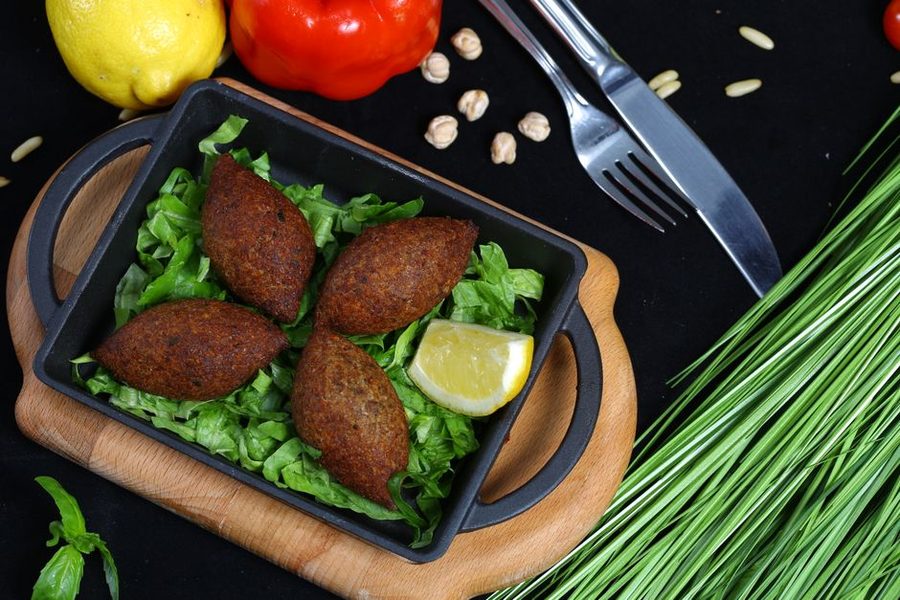
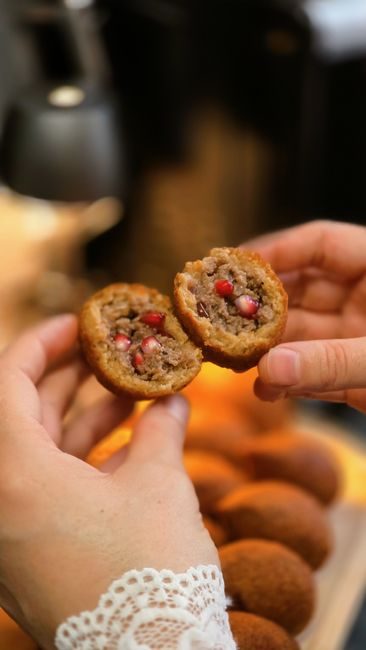
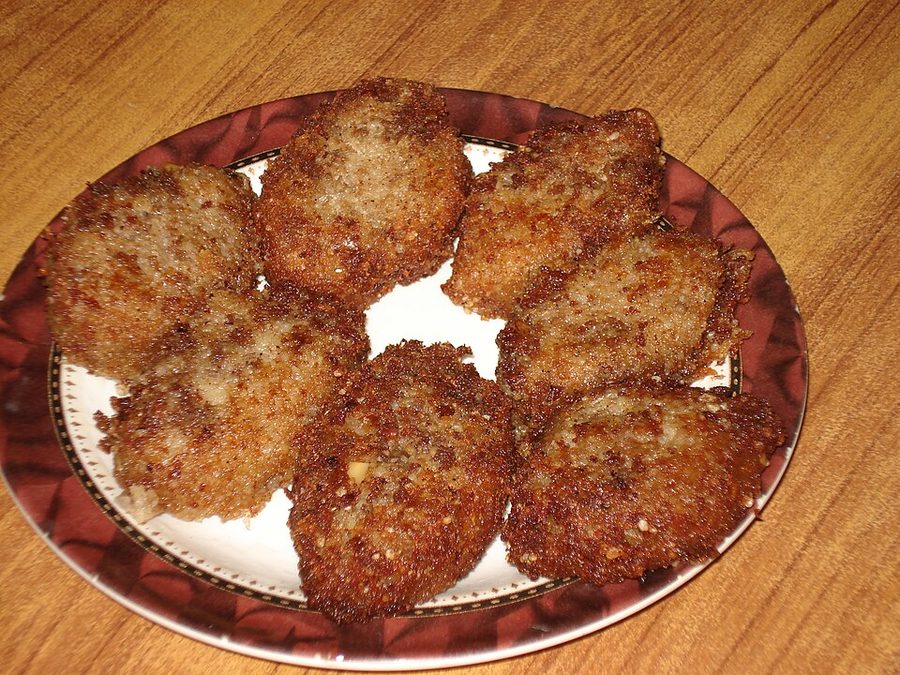
The fried torpedoes are what most menus mean by kibbeh: a hollow shell, a spoonful of cooked filling, two pointed ends, deep-fried. Lebanese menus list them as kibbeh qrass or just fried kibbeh, and they turn up on almost every mezze table and in the trays that bakeries and caterers sell. This is the kibbeh in the recipe below.
Kibbeh bil sanieh, the tray
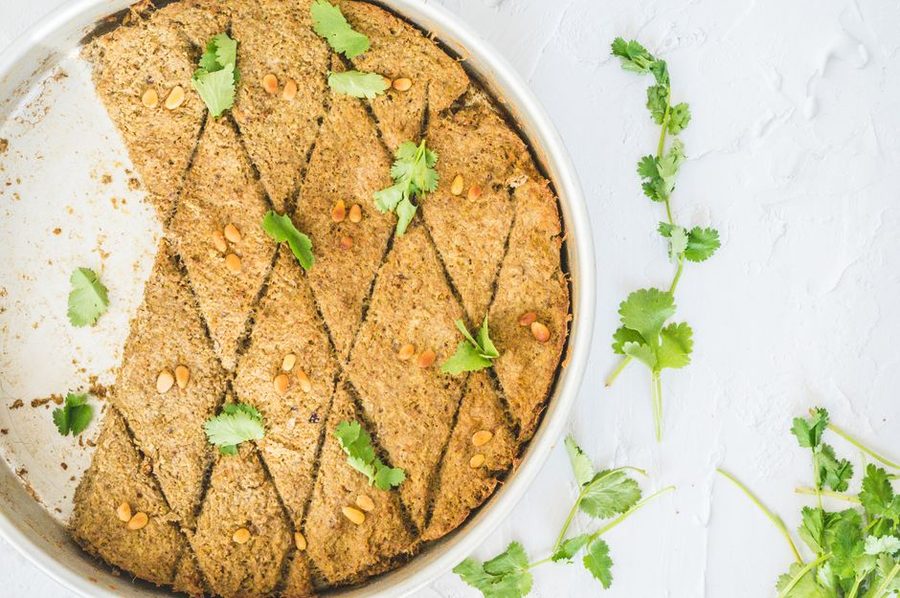
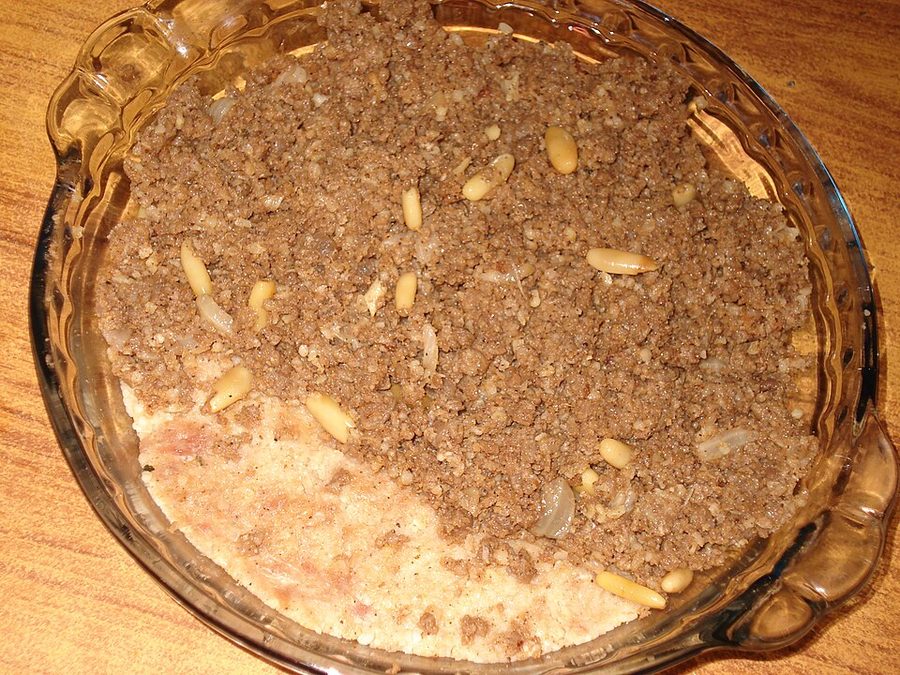
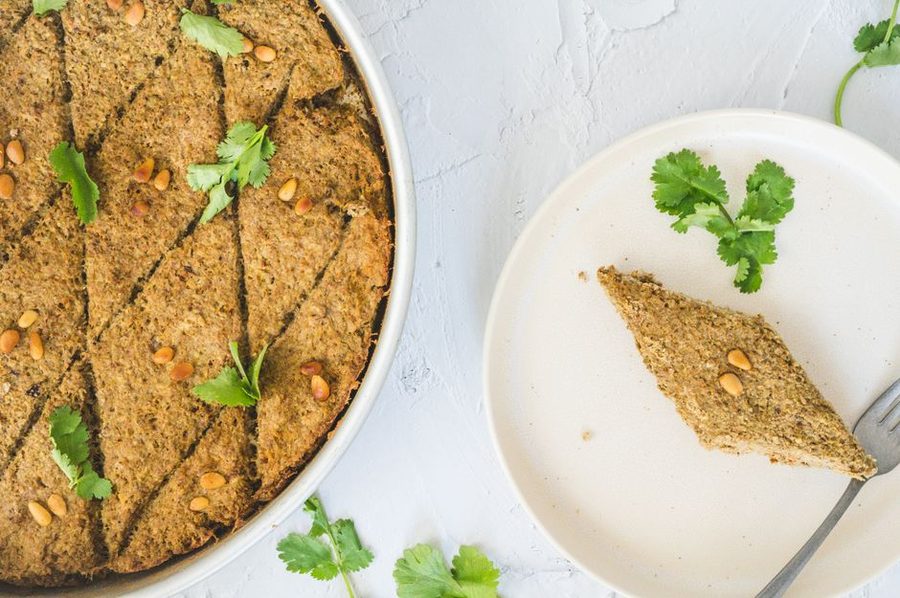
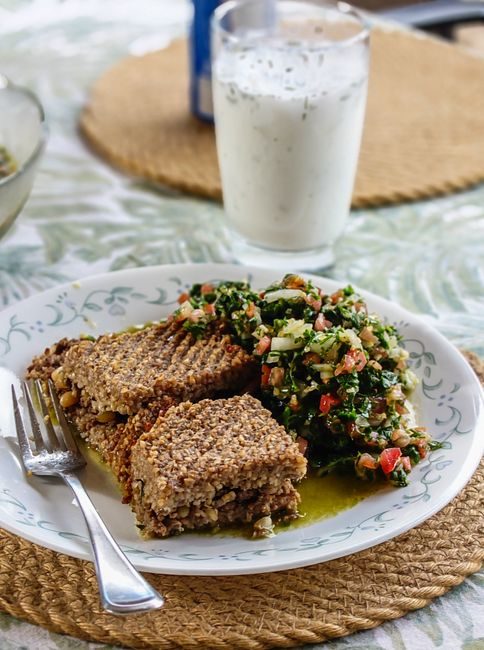
Kibbeh bil sanieh is the same paste pressed into a tray in two layers with the filling between, scored into diamonds and baked. It is the Sunday version, cut into squares or diamonds and served warm with yoghurt and salad, and it is easier than the fried kind because nothing needs shaping.
Kibbeh labanieh, in yoghurt
For kibbeh labanieh the balls, often small and sometimes unfilled, are cooked in yoghurt that has been stabilised and warmed so it does not split, and the dish is eaten with rice. It was already in the 1885 Beirut cookbook.
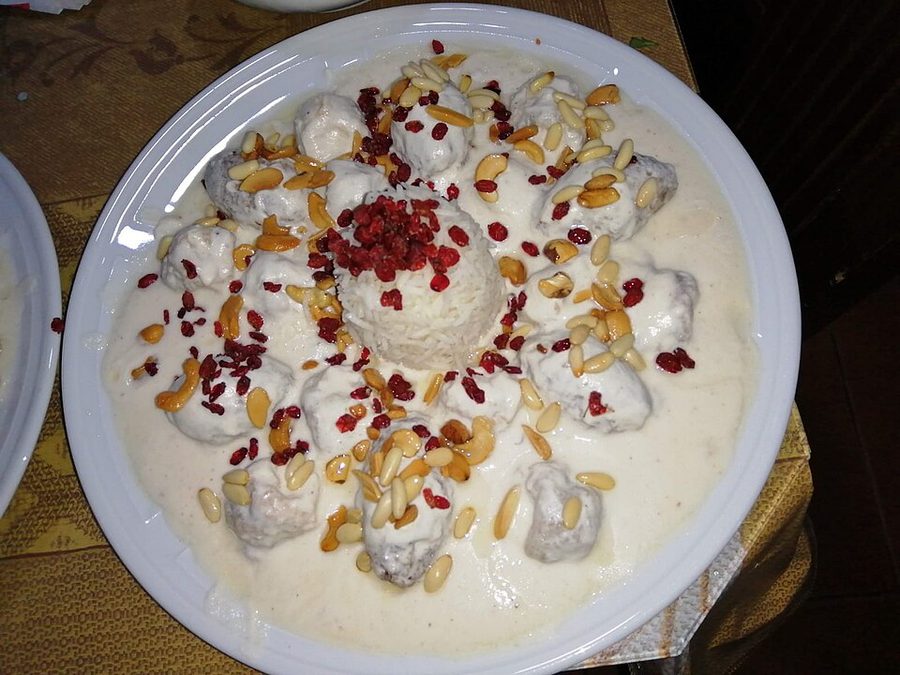
On the coast the balls go into tahini sharpened with citrus juice for kibbeh arnabiyeh, and kibbet samak swaps the meat for fish. The Food Heritage Foundation’s survey of regional kibbeh adds kibbeh summakiyeh from the northern Bekaa, boiled in sumac water until it turns pink.
Pumpkin and potato kibbeh
Lent and poverty made the meatless kibbeh. Pumpkin kibbeh swaps the meat in the shell for pumpkin purée, roughly two parts pumpkin to one of fine bulgur, and Lebanese Christians bake it in Lent with a filling of onion, walnuts, chickpeas and spinach. In West Bekaa the pumpkin balls are stuffed with labneh and kawarma and simmered in a thin kishk soup.
Potato kibbeh, kibbet batata, is built in three layers like the tray: potato and bulgur, a filling, potato and bulgur again. Claudia Roden called it an “oriental shepherd’s pie”, which is close enough. In Zgharta they also make kibbeh with chickpeas for Lent.
Zgharta and the north
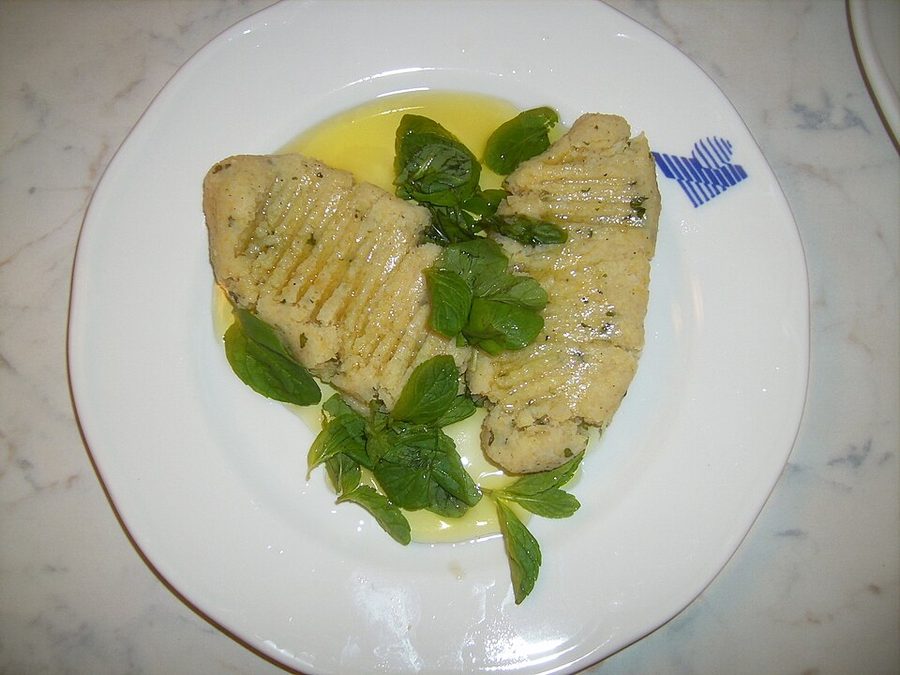
Zgharta, inland from Tripoli, and its summer town of Ehden are what L’Orient Today called Lebanon’s kibbeh capital, and their version is the plainest in the country. Jad Abdallah, who runs the Zgharta kibbeh restaurant Joulia in Beirut, put it simply: meat, bulgur and salt, no spices. The mountain families had goat and wheat, and that was the dish.
The showpiece is kibbeh arass, a large ball, or two domes pressed together, stuffed with minced dried fat, onion, mint and marjoram and cooked over charcoal. In an Ehden cook’s kibbeh repertoire published by L’Orient-Le Jour, arass was the one for honouring visitors, while the tray with two layers and a filling, kibbeh moutabbaka, fed the family. Her advice was that arass is better grilled than baked.
Zgharta’s trays used to go to the communal oven, the furn, where the baker slid in tray after tray for the neighbourhood. L’Orient Today found in 2023 that only a handful of these kibbeh ovens were left, mostly in Zgharta and Ehden, and that they once burned jefet, the dried olive pomace left after pressing, before fuel oil replaced it.
The shell: bulgur, lean meat, onion and kammouneh
The shell, the part Lebanese cooks call the kibbeh itself, has four ingredients, and each one has a job. Bulgur gives it body and crunch. Lean meat glues it together. Onion and spice give it a smell, and iced water keeps the whole thing pliable without making it wet.
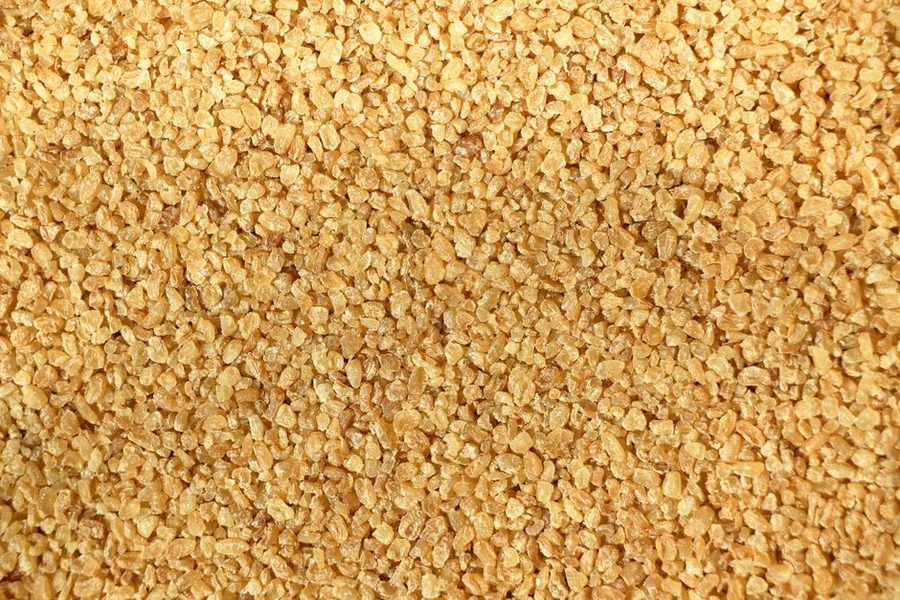
Buy fine bulgur, sold as #1 or as “bulgur for kibbeh” in Middle Eastern shops. It is wheat that has been boiled, dried and cracked, so the fine grade needs only a soak, never cooking. Brown and white both work; the brown has more taste. Coarse bulgur, the kind for pilaf, will not bind into a thin wall however long you knead it.
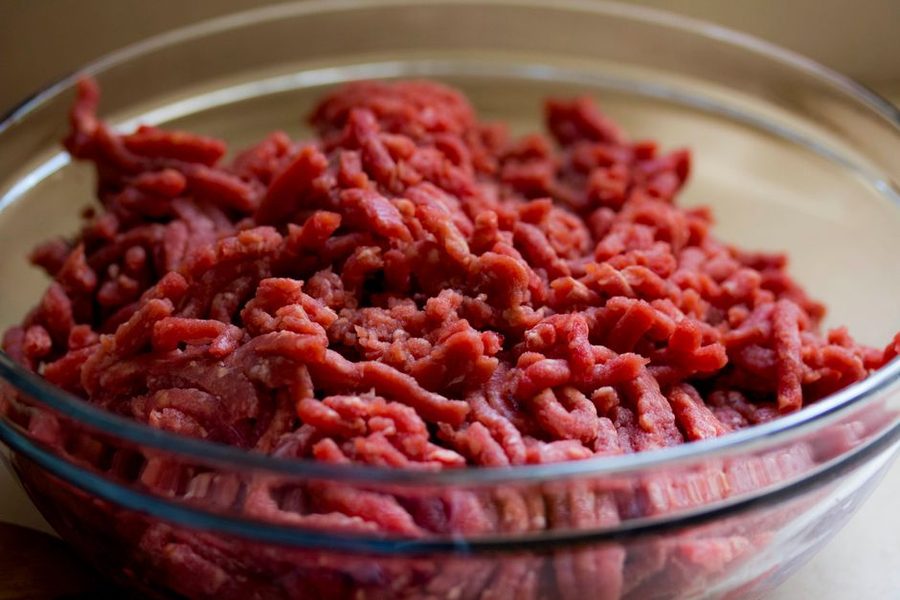
The meat must be lean, and I mean lean: leg of lamb or a lean beef cut such as topside or sirloin tip, with every bit of fat, sinew and silverskin trimmed off before mincing. Fat smears as the paste warms and stops the bulgur from binding, and sinew catches in the wall and tears it. Ask the butcher to mince it twice, or three times, through the fine plate.
Kammouneh, two ways
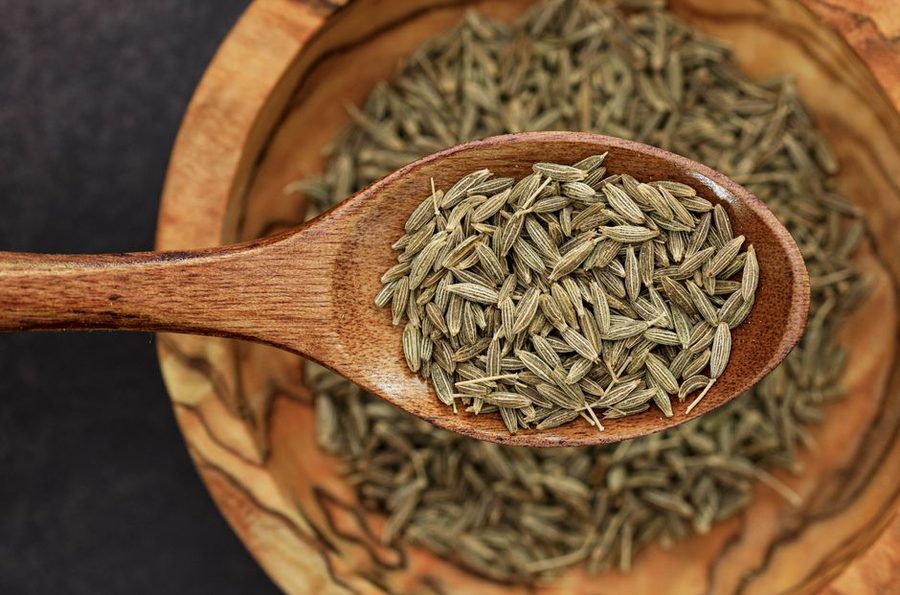
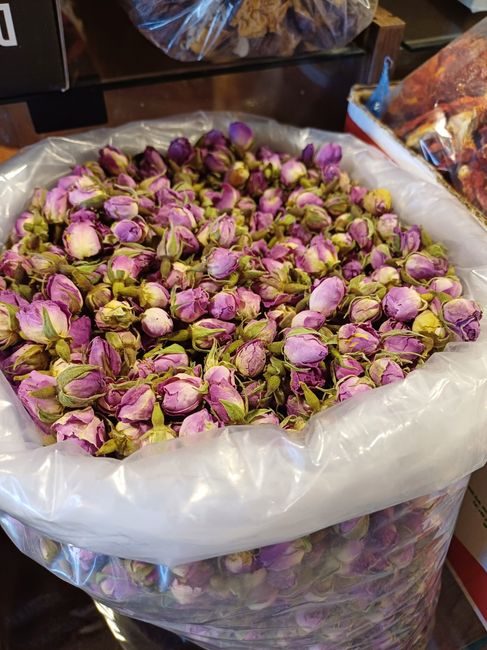
Kammouneh is the spice of the shell, and the word means two different things. In most Lebanese kitchens it is a dry blend built on cumin, with dried rose, marjoram, basil, mint, black pepper and a little cinnamon, sold ready-made as kibbeh spice. In the south it is a fresh paste: fine bulgur pounded with basil, marjoram, mint, onion, dried rose, orange rind, cumin and chilli.
Zgharta uses none of it, and I see the point: with very good meat, salt is enough. With supermarket beef, a teaspoon or two of kammouneh earns its place.
The jurn, and the food processor now
The old way is the jurn: lean meat in a stone mortar, pounded with a heavy wooden pestle until it turns to paste, then the soaked bulgur worked in by hand. One Ehden regular told L’Orient Today that everyone there still has a jurn, kept as decoration. Meat-grinding machines took over first, and Arabic speakers gave the electric one a nickname, sitt al-beit, the lady of the house.
A food processor does the job of the pestle. Process the meat with the onion, spice and an ice cube or two in batches until it is a smooth, sticky paste, then knead in the bulgur by hand. The ice matters: a processor blade heats meat fast, and warm kibbeh paste turns greasy and short. The Ehden cook in L’Orient-Le Jour added small ice cubes to the mixer for exactly this.
The ratio, and why the shell cracks
The ratio of bulgur to meat runs across a wide range. That Ehden recipe uses a kilo of each. Alan Geaam’s kibbeh bil sanieh, from the Tripoli-raised chef with a Michelin-starred restaurant in Paris, uses 480 g of bulgur to 600 g of beef. Thrifty Arabic home recipes push the other way, up to twice as much bulgur as meat.
I use 400 g of fine bulgur to 500 g of meat, close to Geaam’s proportion. Equal weights give a crisper, nuttier shell but less room for error, and the bulgur-heavy versions are hard to shape thin without cracking. With a little more meat than wheat, the paste forgives a first-timer’s hands.
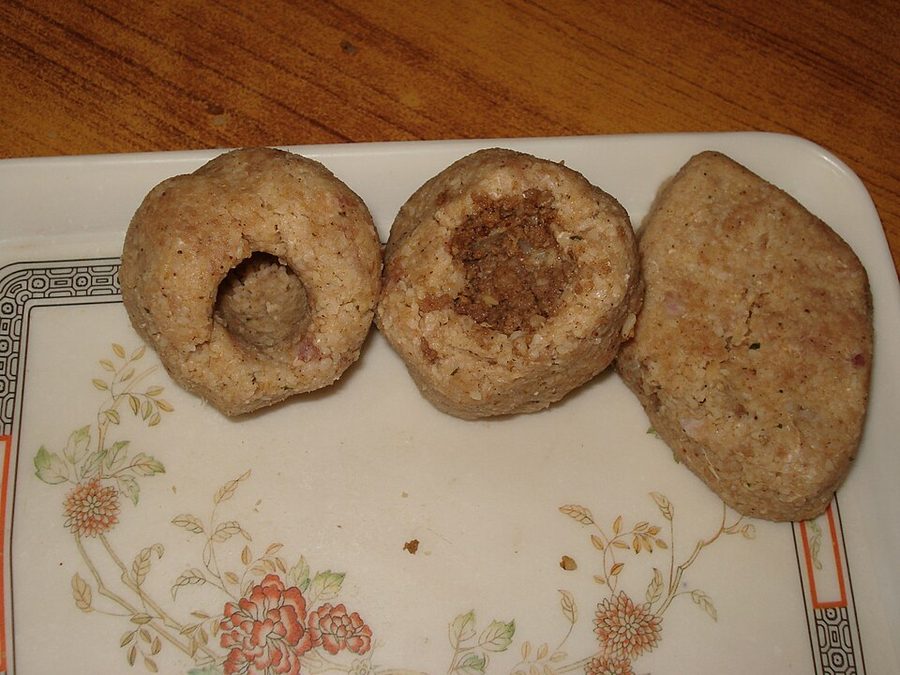
When a shell cracks, it is almost always one of these:
- The paste is too dry. Too much bulgur, or bulgur squeezed bone-dry, and the grains have nothing to hold them. Knead in iced water a spoonful at a time until a rolled ball, pressed with your thumb, dents without cracking at the edges.
- Fat or sinew in the meat. Both break the bond. Trim harder or ask for a leaner cut.
- The paste got warm. Warm paste is soft and smeary and splits in the oil. Keep it in the fridge and work in batches, with your hands dipped in iced water.
- Air or a thin spot. Air trapped at the seam expands in the oil. Close the shell by drawing the rim up and pressing, then roll and smooth every crack with a wet finger.
- Hot or wet filling. Warm filling softens the shell from inside and wet filling turns to steam. Cool it completely and drain off any fat.
- The oil is wrong. Too cool and the shell soaks oil and softens before it sets; too hot and the outside sets while the inside swells and bursts it. Fry at 175°C (350°F) and in small batches.
- No rest. Shaped kibbeh go into the fridge for an hour before frying so the paste firms. Skip that and they are far more likely to split.
The filling, hashweh
The filling is everything the shell is not: fattier meat, coarse, cooked, loose. Mince with 15 to 20% fat browns and stays moist, and lamb or beef both work. Cook a lot of onion in it, slowly, until soft and golden before the meat goes in, because that sweetness is what balances the lean, salty shell.
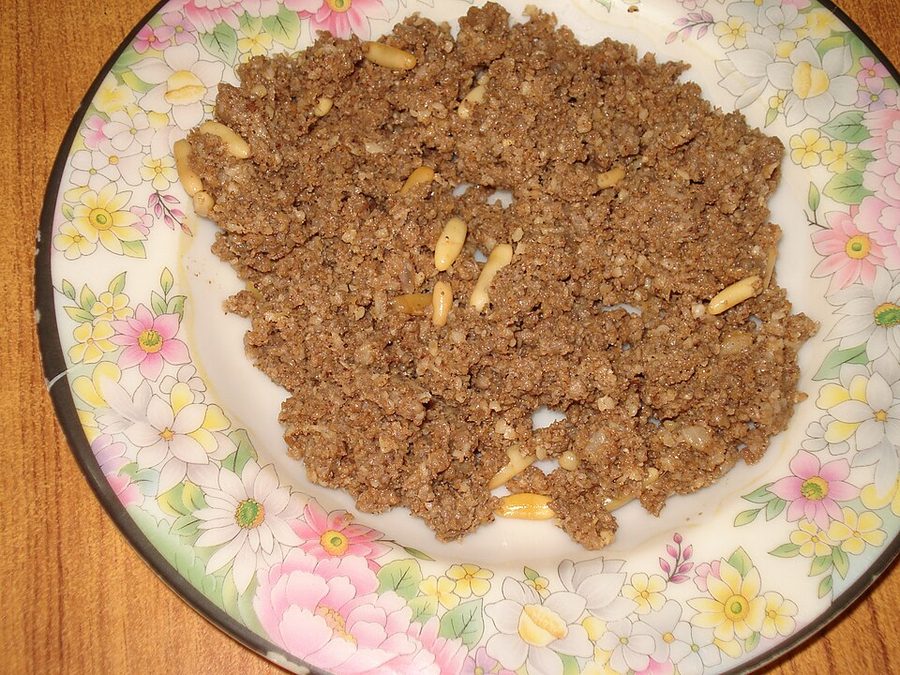
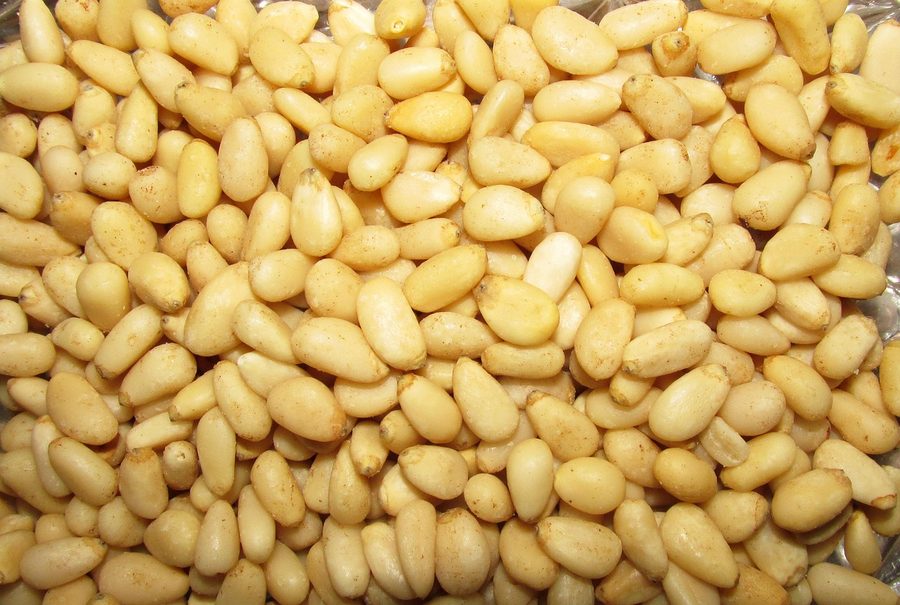
Pine nuts are the classic, toasted separately in a dry pan and stirred in at the end. Walnuts or almonds are the cheaper alternatives the old Levantine recipes also use, and I’d take toasted walnuts over pale, stale pine nuts every time. Season with seven-spice, the allspice-led Lebanese blend, plus cinnamon and salt.
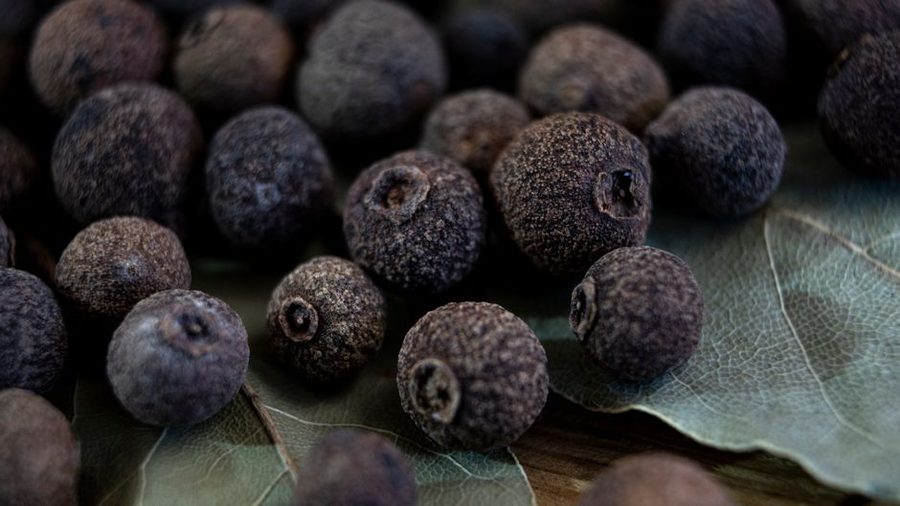
Something sharp at the end lifts it. A squeeze of lemon is common in Lebanon, and Aleppo cooks add pomegranate molasses or sour pomegranate seeds to the filling of their grilled kibbeh. A tablespoon of pomegranate molasses in this filling is not traditional everywhere, but I like the way it cuts the fat.
Recipe card
Recipe: fried kibbeh (kibbeh qrass)
Makes about 26 kibbeh, enough for 6 as part of a mezze or 4 as a main. About 3 hours, including 1 hour chilling; about 1 hour 30 of it hands-on.
Ingredients
For the shell
- 400 g (2½ cups) fine bulgur (#1)
- 500 g (1 lb 2 oz) very lean beef or lamb, trimmed of all fat and sinew and minced twice, kept cold
- 1 medium onion (about 120 g / 4 oz), quartered
- 2 tsp kammouneh (kibbeh spice), or 1 tsp ground cumin with ½ tsp allspice and ¼ tsp cinnamon
- 1½ tsp fine salt
- ½ tsp ground black pepper
- Up to 125 ml (½ cup) iced water, plus a bowl of iced water for your hands
For the filling
- 2 tbsp olive oil or samneh (clarified butter)
- 2 medium onions (about 250 g / 9 oz), finely chopped
- 300 g (10½ oz) minced beef or lamb, 15 to 20% fat
- 1 tsp Lebanese seven-spice
- ½ tsp ground cinnamon
- ¾ tsp salt
- 40 g (⅓ cup) pine nuts, toasted
- 1 tbsp pomegranate molasses or the juice of ½ lemon (optional)
To fry and serve
- 1.5 litres (6 cups) sunflower or other neutral oil
- Plain yoghurt, pickled turnips and a salad
Method
- Put the bulgur in a sieve and rinse it under the cold tap. Tip it into a bowl, cover with cold water by 1 cm and leave for 15 minutes, then drain and squeeze it firmly in your hands, a handful at a time. Fifteen minutes is enough for fine bulgur; longer soaks, such as Geaam’s 30 minutes in twice its volume of water, work too, but you then have to squeeze harder, and I’d rather add the water back myself.
- Make the filling while the bulgur soaks. Heat the oil in a frying pan over a medium flame, add the chopped onions and cook, stirring now and then, for 12 to 15 minutes until soft and golden.
- Add the minced meat, break it up with a wooden spoon and cook for 8 to 10 minutes until browned and the liquid has gone. Stir in the seven-spice, cinnamon and salt, take the pan off the heat and stir in the pine nuts and the pomegranate molasses or lemon. Spread it on a plate and leave it to cool completely.
- For the shell, blitz the onion in a food processor with the kammouneh, salt and pepper to a wet purée.
- Add half the cold meat and two ice cubes and process until smooth, sticky and pale, about 1 minute. Tip it into a large bowl, then repeat with the rest of the meat and two more ice cubes.
- In a large bowl, knead the meat paste and squeezed bulgur together with wet hands for about 5 minutes, adding iced water a tablespoon at a time, until it is smooth and holds together like soft clay. Test it: roll a walnut-sized ball and press your thumb in. If the edges crack, add more water; if it sticks to wet hands and slumps, chill it for 20 minutes.
- Fry a small flat patty of the paste in a little oil and taste it for salt and spice. Adjust, then cover the bowl and keep it in the fridge while you set up.
- Set out a tray lined with baking paper, the bowl of iced water, the cooled filling and the paste. Wet your hands. Take a piece of paste the size of a golf ball, about 50 g, and roll it smooth.
- Hold the ball in one palm and push the index finger of your other hand into it. Turn the ball against your finger, pressing outwards, until you have a deep cup with walls about half a centimetre thick all round.
- Spoon in a heaped teaspoon of filling, about 18 g, and press it down lightly. Draw the rim up over the filling, pinch it closed and roll the kibbeh between your palms into an oval, pinching each end to a point. Smooth any cracks with a wet finger and set it on the tray.
- Repeat with the rest, re-wetting your hands every kibbeh or two. Cover the tray and chill the shaped kibbeh for 1 hour. If you want to freeze some, this is the moment.
- Heat the oil in a deep, heavy pan, no more than a third full, to 175°C (350°F). Fry 5 or 6 kibbeh at a time for 4 to 5 minutes, turning once they have browned underneath, until they are deep brown all over and the filling is piping hot.
- Lift them out onto a rack set over a tray, let the oil come back to 175°C (350°F) and fry the next batch. Serve hot or warm.
Recipe card 2
Second method: kibbeh bil sanieh, the baked tray
Serves 6 to 8. About 2 hours 45, including 50 minutes in the oven. The shell and filling are the quantities above.
Ingredients
- 1 quantity shell paste and 1 quantity filling, as in the fried recipe
- 2 tbsp olive oil for the tray
- 60 g (4 tbsp) samneh or butter, melted
- A small handful of pine nuts, to set into the top (optional)
Method
- Heat the oven to 200°C (400°F) and oil a 30 cm (12 in) round tray or a 23 x 33 cm (9 x 13 in) baking dish.
- With wet hands, press half the paste over the base of the tray in an even layer about 1 cm thick, smoothing it with wet fingers.
- Spread the cooled filling over it and press it down gently with the back of a spoon.
- Flatten the rest of the paste between your wet palms into patties the size of your hand and lay them over the filling edge to edge. Press the joins together and smooth the top with wet fingers until no filling shows.
- Score the top into diamonds with a sharp knife, cutting down to the filling but not through the base. Press a pine nut into each diamond if you like, run the knife round the edge of the tray and brush the top with oil.
- Bake for 40 minutes. Take it out, run the knife along the score lines again and pour the melted samneh evenly over the top.
- Bake for 10 minutes more, until deep brown and crisp at the edges, then leave it to rest for 10 minutes before cutting along the lines.
Geaam bakes his at 180°C (350°F) for 40 minutes. I go hotter for a crustier top in a domestic oven; at his temperature, expect to finish the tray under the grill for a few minutes to brown it.
Freezing, reheating, and what to serve with it
Kibbeh freezes better than almost anything in the Lebanese kitchen, which is why people make it in huge batches. Freeze the shaped, uncooked kibbeh on the tray until hard, then bag them; they keep for about 3 months. Fry them straight from frozen at the same temperature, adding a minute or two. Thawed kibbeh go wet on the surface and split.
The tray freezes whole or in cut diamonds, baked or unbaked. Cooked kibbeh keep in the fridge for 3 or 4 days. Reheat fried ones on a rack in a hot oven until the crust crackles again, never in the microwave, which turns the shell to leather.
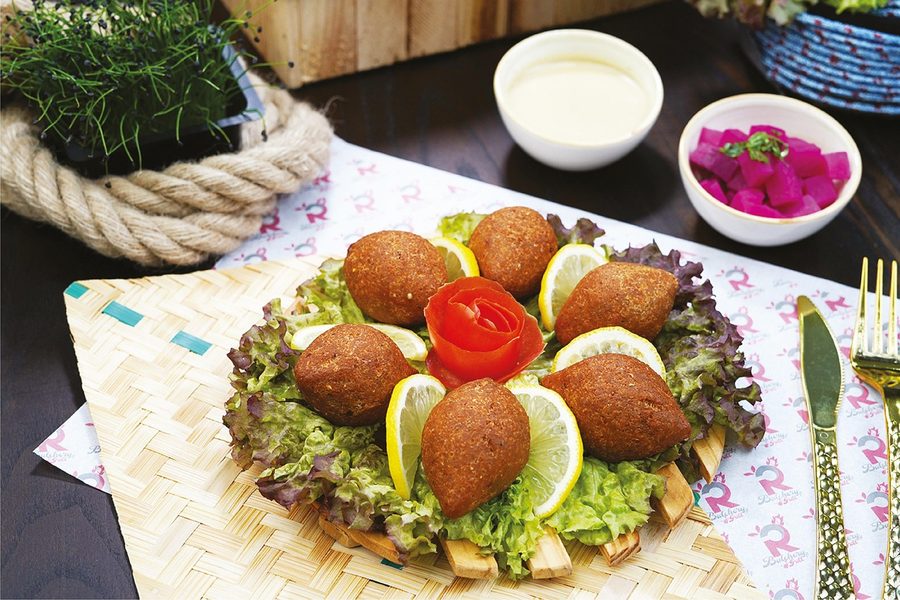
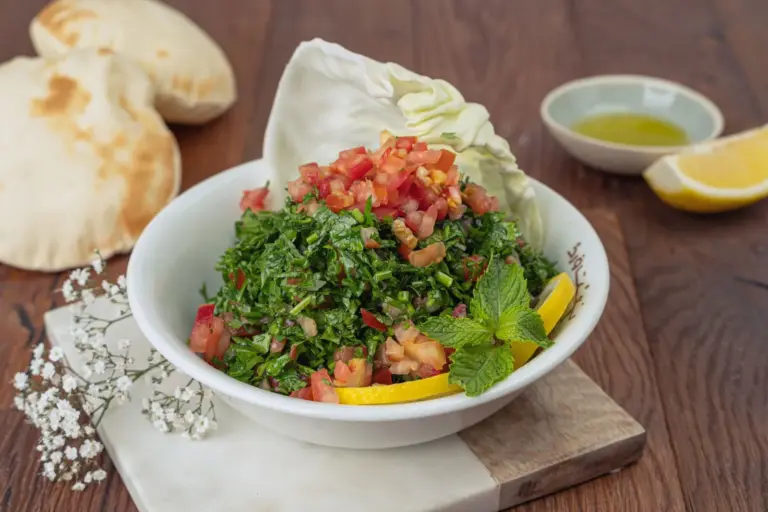
Serve fried kibbeh with plain yoghurt, or yoghurt beaten with crushed garlic, cucumber and dried mint. Tahini sauce works too. Then something sharp and crunchy beside it: pickled turnips, pickled cucumbers, radishes, a fattoush or a tabbouleh.
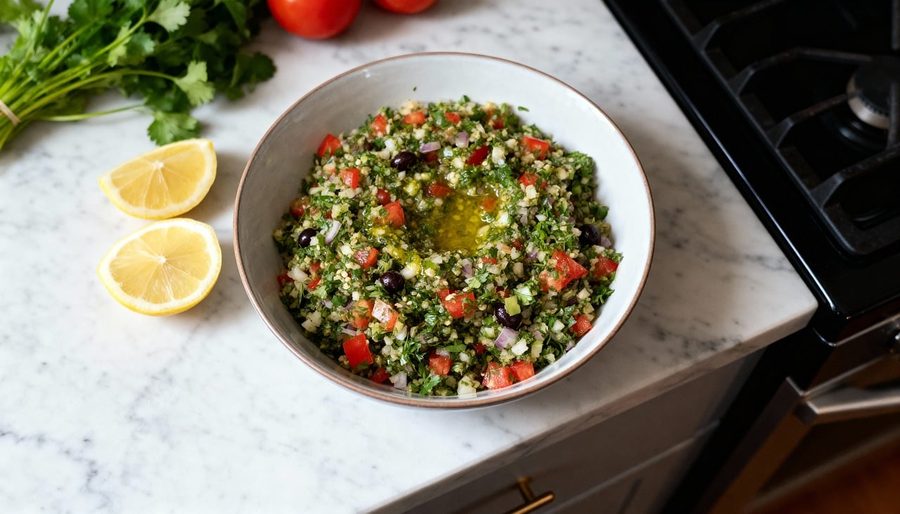
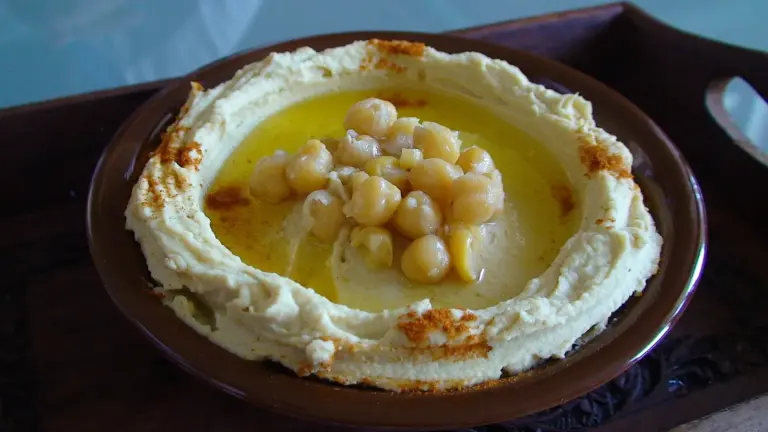
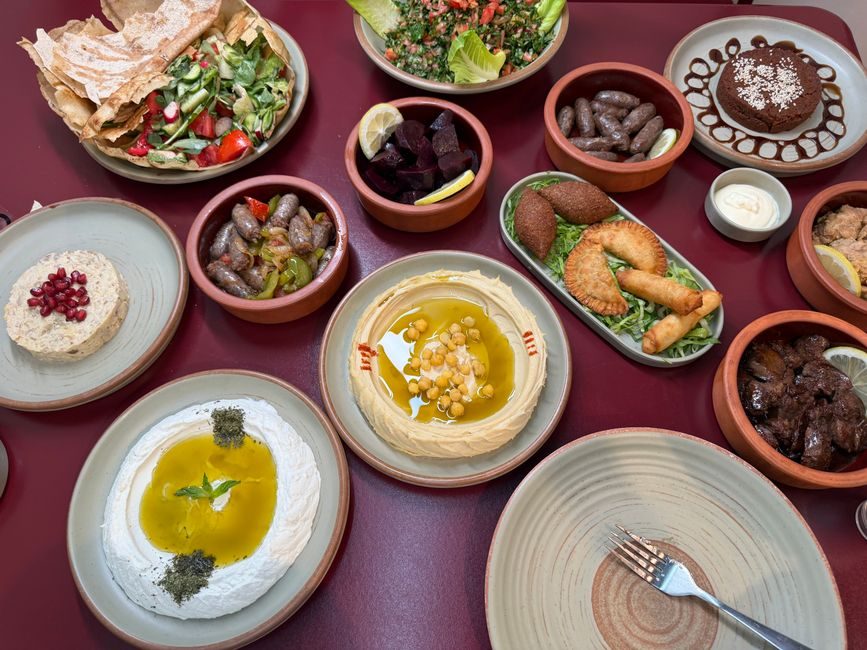
Kibbeh labanieh goes over plain rice. Whatever kind you make, a few mezze around it, hummus, mutabbal, olives, make the afternoon’s work feel worth it.
Where kibbeh is eaten in Lebanon now
Everywhere, is the short answer: fried kibbeh is on almost every mezze menu, and bakeries and caterers sell trays of it. The kibbeh worth travelling for is the regional kind, and that means the north in summer and the south for raw dishes.
In Ehden and Zgharta, Zgharta-style kibbeh, kibbeh arass and the trays are what the restaurants are known for, and the September festival is the day to see the jurn in use. The raw-meat cooking of Nabatieh in the south, kibbeh nayyeh and frakeh made with fresh kammouneh, is the other end of the country and the other end of the dish.
In Beirut, Joulia in Achrafieh has built its menu around kibbeh since 2022, and over the years that menu has run to Zgharta-style kibbeh, raw goat kibbeh, pumpkin kibbeh and kibbeh made with chickpeas. Its founder, Jad Abdallah, named it after his grandmother, who ran a small restaurant in Zgharta in the 1980s. In September 2026 it was still advertising its kibbeh sajiyeh, the thin filled disc, made in the mountains and brought down to Beirut. Lebanon has priced restaurant meals in US dollars since 2023, so check the menu in dollars before you sit down.
Kibbeh beyond Lebanon
Lebanon has no monopoly on it. Aleppo is the other great kibbeh city: a Syrian saying calls it the mother of stuffed vegetables and kibbeh, and Aleppo cooks have counted dozens of kinds, cooked with quince, sumac, cherries or yoghurt, grilled in big discs over charcoal, or fried as long hollow fingers. Kibbeh sajiyeh, a thin filled disc cooked on the domed saj, is an Aleppo speciality.
In Iraq it is kubba, and the shell is often rice or semolina rather than bulgur. Kubba Mosul is a large flat disc; kubba halab, named after Aleppo, has a rice and potato crust; and there are kubba soups with turnip, chard or beetroot. Turkey’s içli köfte is a close cousin, which is why so many photos labelled kibbeh are Turkish.
Levantine emigrants carried it to Latin America from the late 19th century. In Brazil it became quibe, a standard in bakeries and snack bars, sometimes filled with Catupiry cheese; the Dominican Republic has quipe; and on Colombia’s Caribbean coast it is a party snack beside empanadas. The shape survived the journey better than the lamb did: most of these versions are beef.
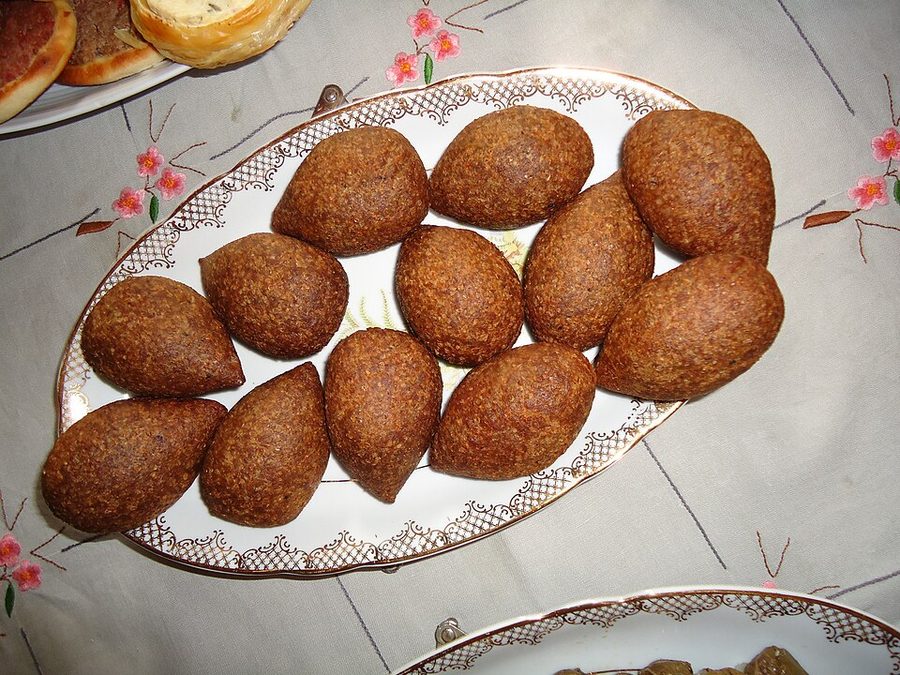
Back at the pan, the first batch is the test. Drop one kibbeh in at 175°C and watch it: an even hiss, no bubbles from a seam, a steady darkening. Break that first one open, check the wall and the salt, adjust the paste if you need to, and fry the rest.