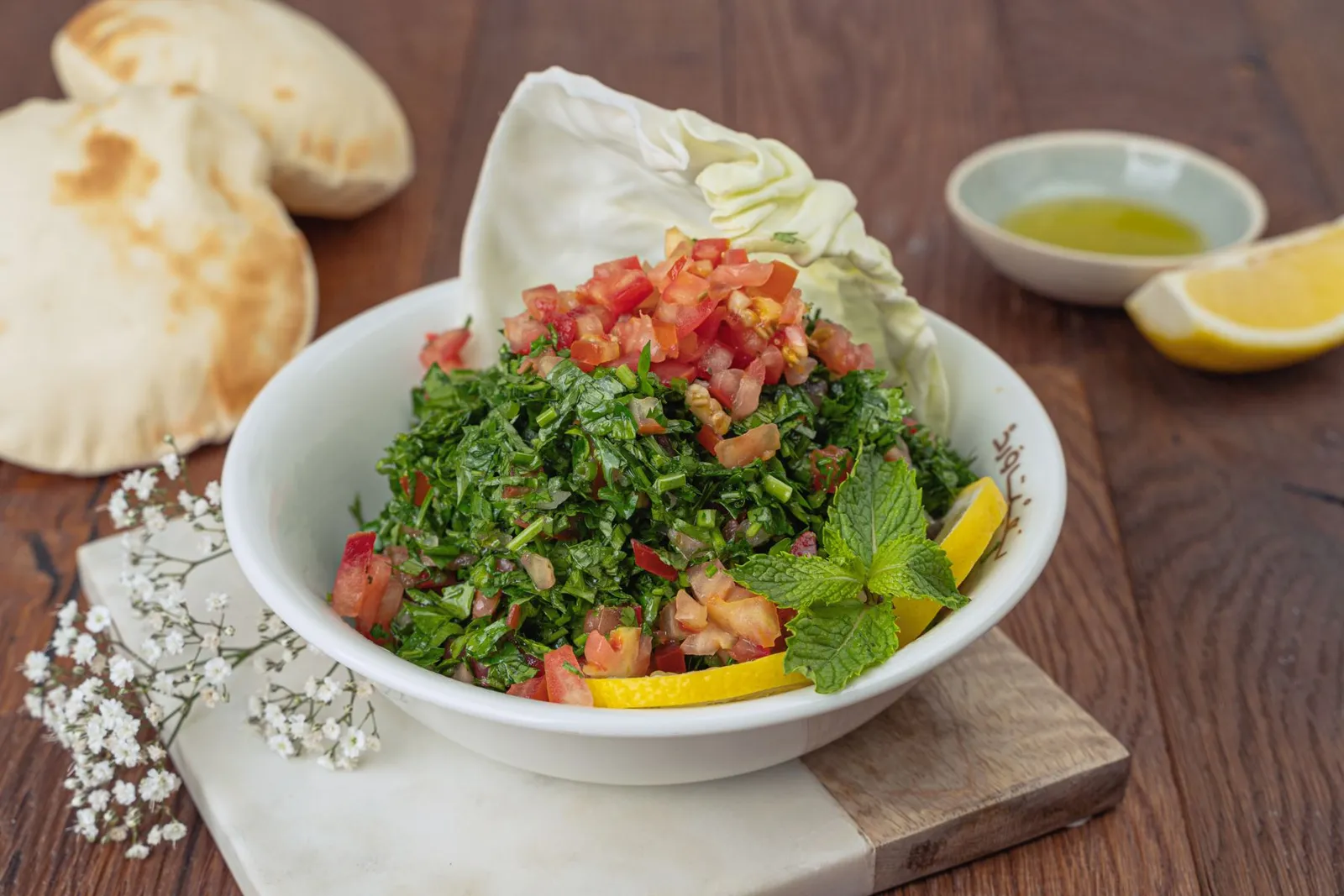
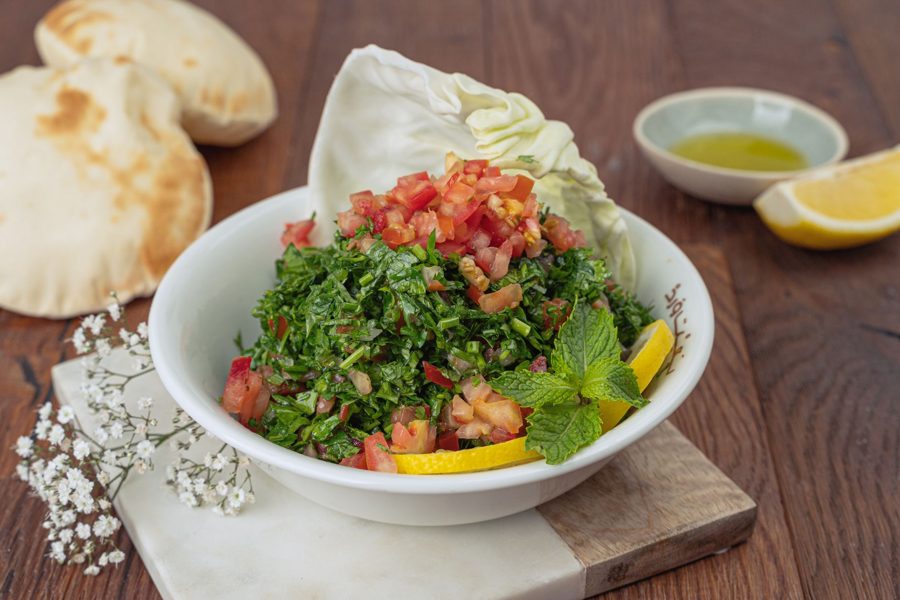
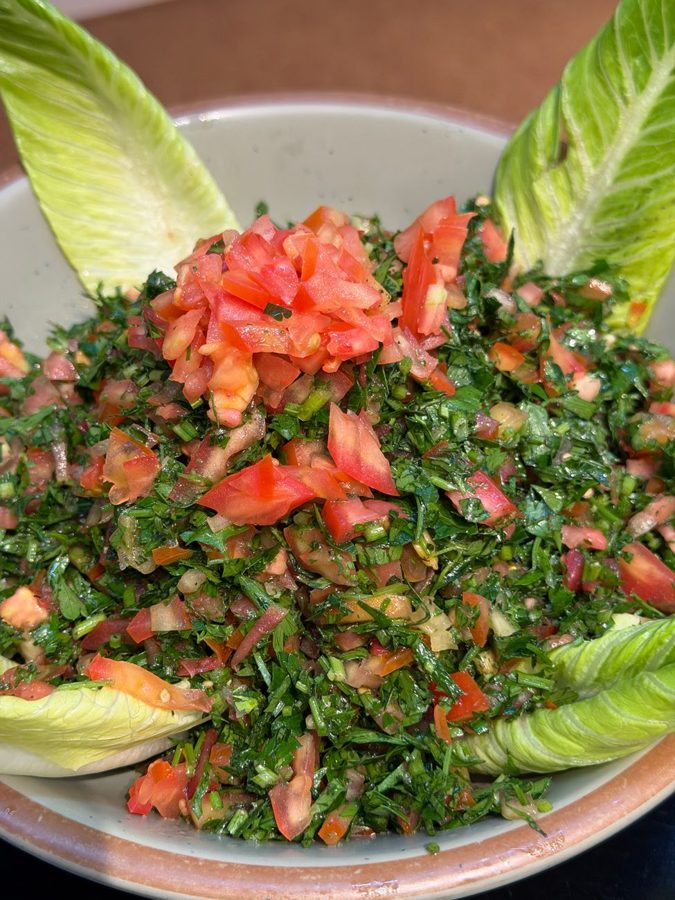
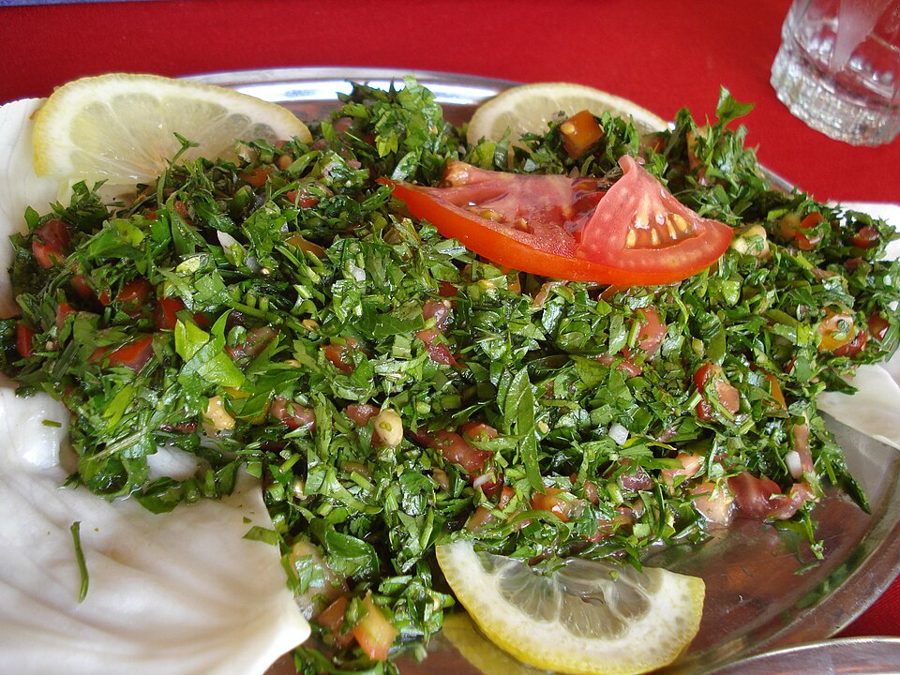
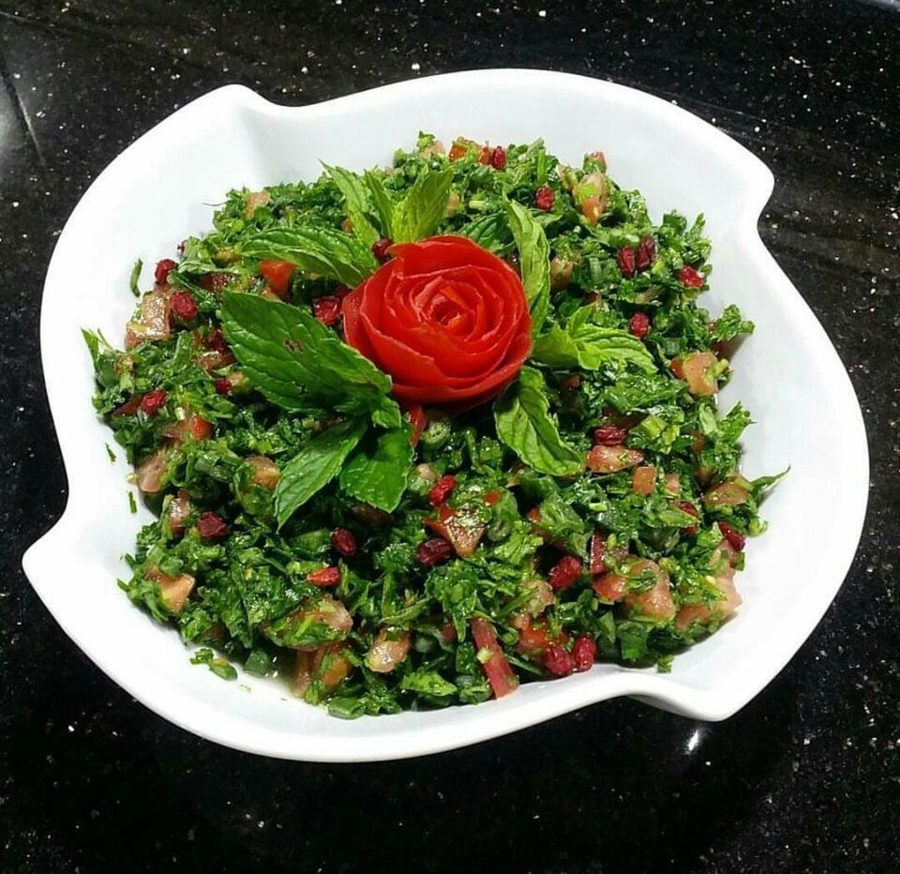
Most tabbouleh (تبولة) sold outside Lebanon is a bulgur salad with some parsley in it. In Lebanon it is the other way round: a heap of finely cut parsley, a little tomato and onion, a good squeeze of lemon, and so little wheat that you have to look for it. Lebanese cooks who meet the export version on a deli counter tend to say so out loud.
Kamal Mouzawak, who started Beirut’s first farmers’ market, Souk El Tayeb, made it the first of nine rules he gave L’Orient Today in June 2026 with his recipe for “true” tabbouleh: the dish is essentially parsley, with a few minor additions. His version for four people uses two bunches of flat-leaf parsley, about 300 g, and one tablespoon of fine bulgur. One.
That ratio changes how you make it. You are not cooking a grain, you are cutting herbs, and the knife, the drying and the last five minutes before the bowl reaches the table matter more than any measurement in the recipe.
Contents 7 parts
A parsley salad with a pinch of wheat
The name comes from the Arabic tābil, seasoning, from an Aramaic root, t-b-l. The dish itself belongs to the mountains of Lebanon and Syria, and Arabic references file it under both countries. In both, the salad is green: parsley first, then tomato, mint and onion, with bulgur as a seasoning rather than a base.
The grain-heavy version has its own history. The food writer Gil Marks, in his Encyclopedia of Jewish Food, describes a Syrian Jewish tabbouleh built on bulgur, which Syrian Jews brought to Israel and the United States in the 1970s. It is the version most Western recipes resemble. The Philadelphia chef Michael Solomonov, by contrast, has described the tabbouleh Palestinian cooks make as “80 percent parsley”.
The tomato came late
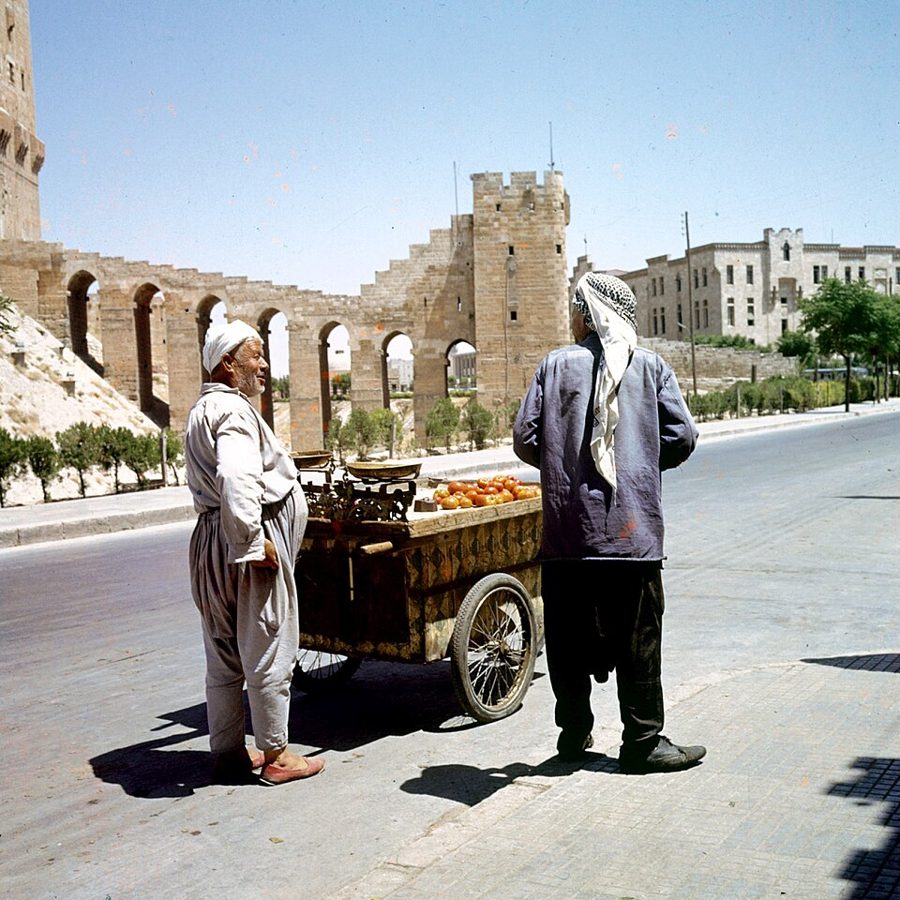
For most of its life tabbouleh had no tomato in it at all. Tomatoes reached the Levant in the 19th century, and the historian Tylor Brand of Trinity College Dublin told L’Orient Today in 2023 that they came first to Aleppo, brought by the British. The city did not take to them.
The Syrian writer Georges Tarabishi recorded that Aleppo’s residents called the red fruit tiz al-sheitan, Satan’s backside, and that the city’s mufti banned eating it. The ban did not last. The Levantine word for tomato, banadura, still carries the Italian pomodoro inside it.
Older habits survive in the mountains. Some villages sharpen tabbouleh with husrom, the juice of unripe grapes, or with pomegranate molasses instead of lemon. Mouzawak has also described a winter tabbouleh, tabboulet el shetteeh, made in the days before parsley grew all year, with sprouted lentils and coarse, boiled bulgur to give some heat.
A day of its own
Lebanon has a National Tabbouleh Day. It began in 2001 and falls on the first Saturday of July, the idea being that anyone, anywhere, makes a bowl and shares it. In 2027 that is Saturday 3 July. The TV chef Ramzi Chueiri, who calls tabbouleh his favourite salad, holds the Guinness World Record for the largest one ever made.
What goes in, and how to buy it
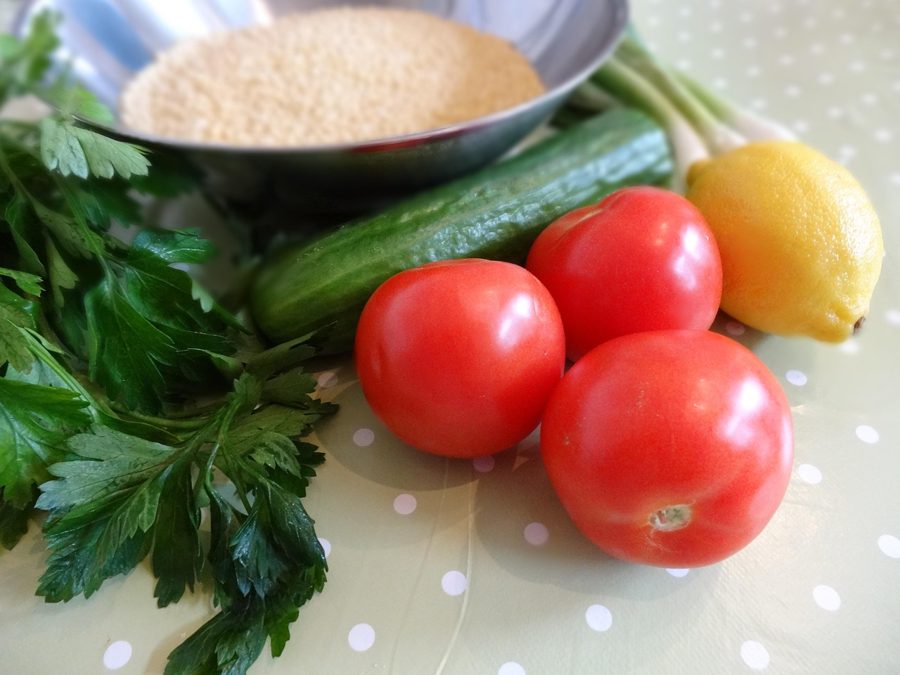
Seven or eight ingredients, none hard to find. The difference between a good bowl and a sad one is how fresh they are and how dry they are when the knife meets them, so shop on the day.
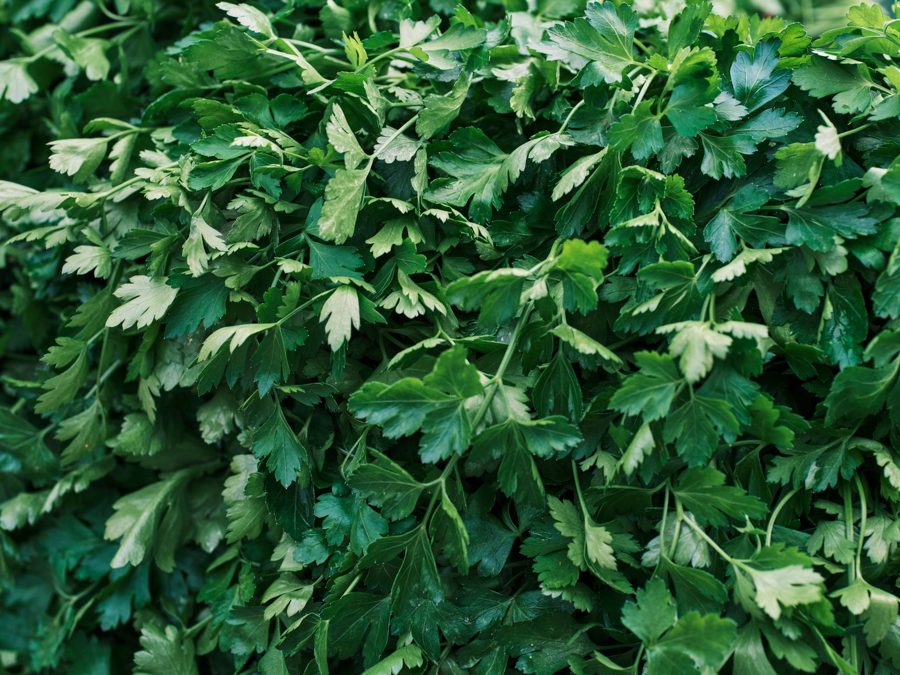
Flat-leaf parsley, and lots of it
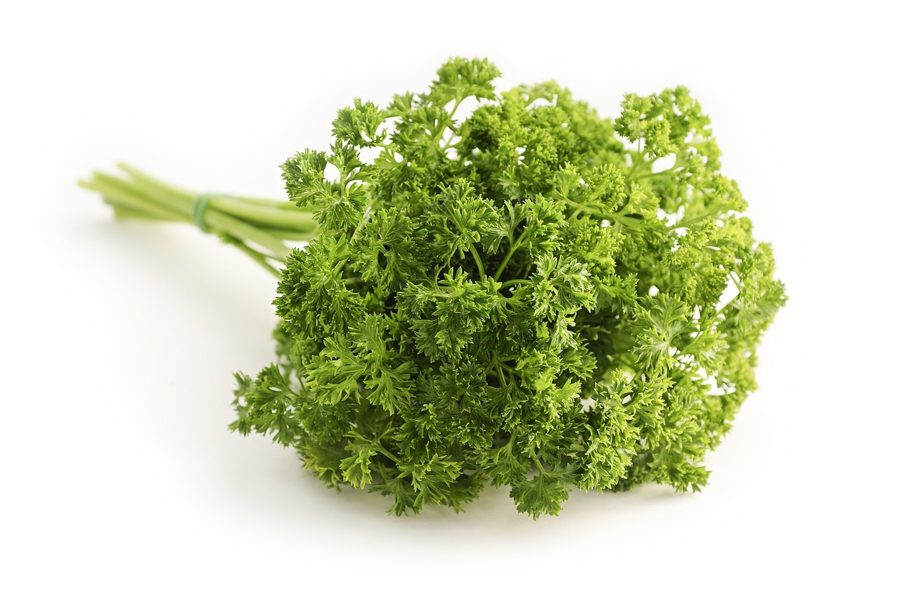
Flat-leaf only. Mouzawak’s second rule is that no other parsley is recognised, and most Lebanese cooks agree. Curly parsley is tougher, drier and harder to cut finely, and it turns the salad into something closer to a garnish.
Lebanese cooks also talk about two kinds of flat-leaf: baladi, the local seed, and amerkeneh, the “American” one, which has a milder taste. Tender leaves matter more than the variety. Look for bunches with bright, unbroken leaves, thin stems and no yellowing at the base, and buy more than you think: Anissa Helou uses 400 g for four to six people.
Washing and drying the bunch
Wash parsley whole, still in its bunch, by plunging it head first into a sink of cold water and shaking it, then changing the water until no grit settles. Shake it hard, run it through a salad spinner in batches, then roll it loosely in a clean tea towel and leave it for half an hour or more. Wet parsley is the main cause of mushy tabbouleh, because water on the leaf turns to green juice under the knife.
Mouzawak calls the next step tebwi’ah, from the word for a bouquet. Line the bunch up so the lowest leaves all sit at the same height, then cut off the stems below them in one go. You keep the leaves and a little of the tender upper stem, and you throw away the thick ends.
The television cook Manal Al Alam goes further: she cuts the parsley and mint, puts them in a large colander, and leaves them to drain for an hour before mixing. If your parsley went in damp, that hour saves the salad.
Fine bulgur, number one
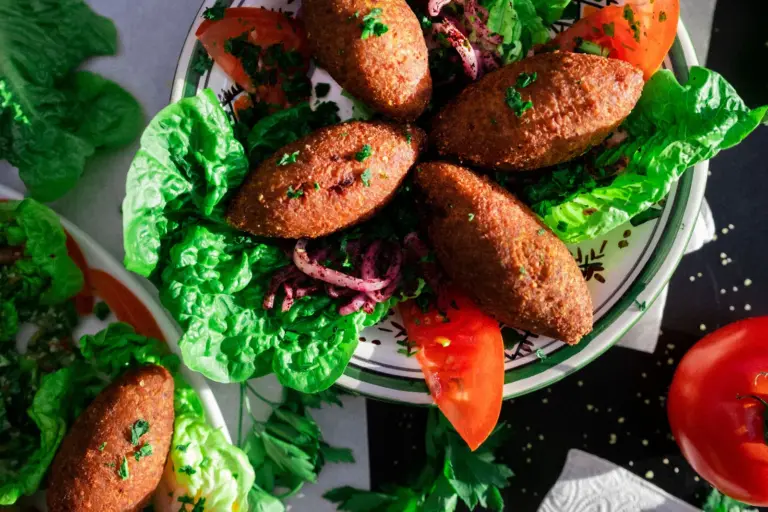
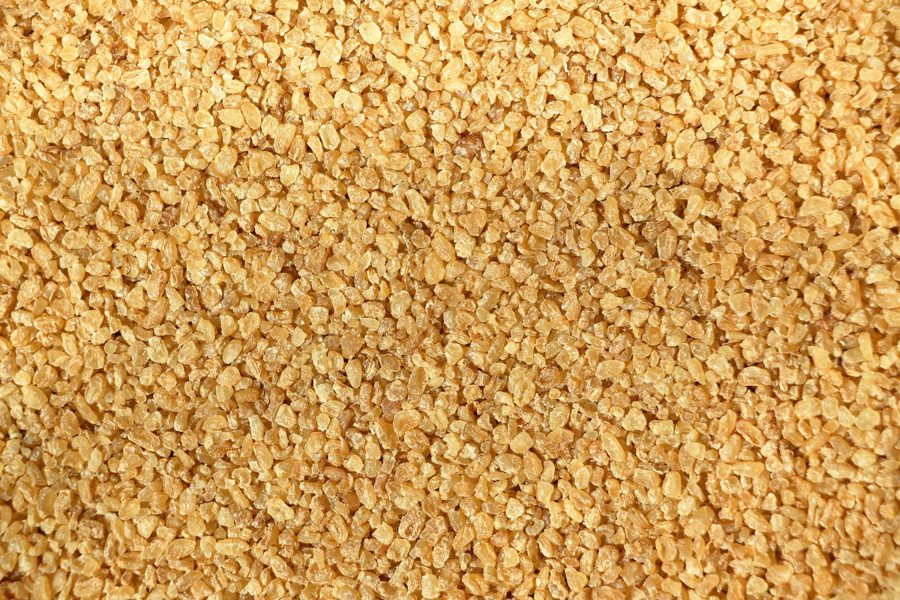
Bulgur is wheat that has been boiled, dried and cracked, an old way of keeping the harvest through the year. In the Beqaa Valley, the salamouni variety of wheat has long been prized for it. For tabbouleh you want the finest grade, which shops selling Middle Eastern brands label #1, close in size to couscous.
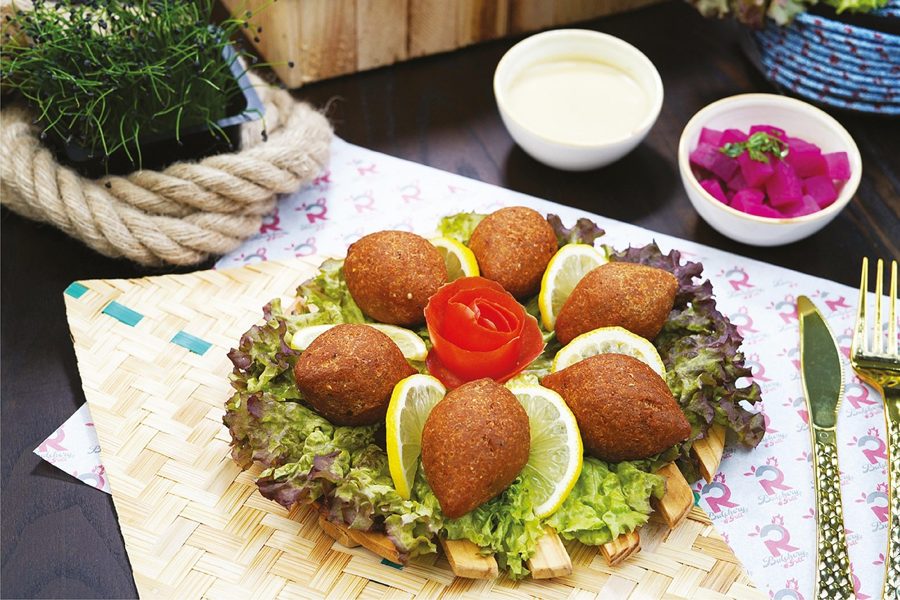
Do not cook it, and do not pour boiling water over it. Rinse it in a fine sieve, drain it well, and let the juice of the tomatoes soften it. Coarse bulgur, the #3 and #4 grades, belongs in pilaf and in the shell of a good kibbeh, where the finest grade is also used.

Tomato, onion and mint
Use tomatoes that are bright red but firm, so they dice cleanly and hold their shape. Helou drains off their juice to keep the salad crisp for longer; Claudia Roden, and Yotam Ottolenghi and Sami Tamimi, let the bulgur soak in it. I side with Roden, because that juice is the only liquid the wheat needs.
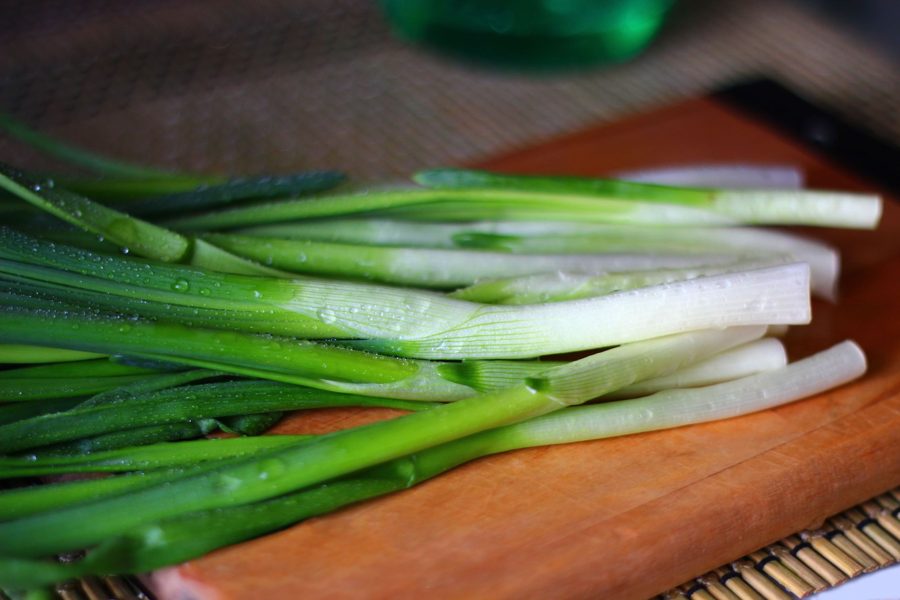
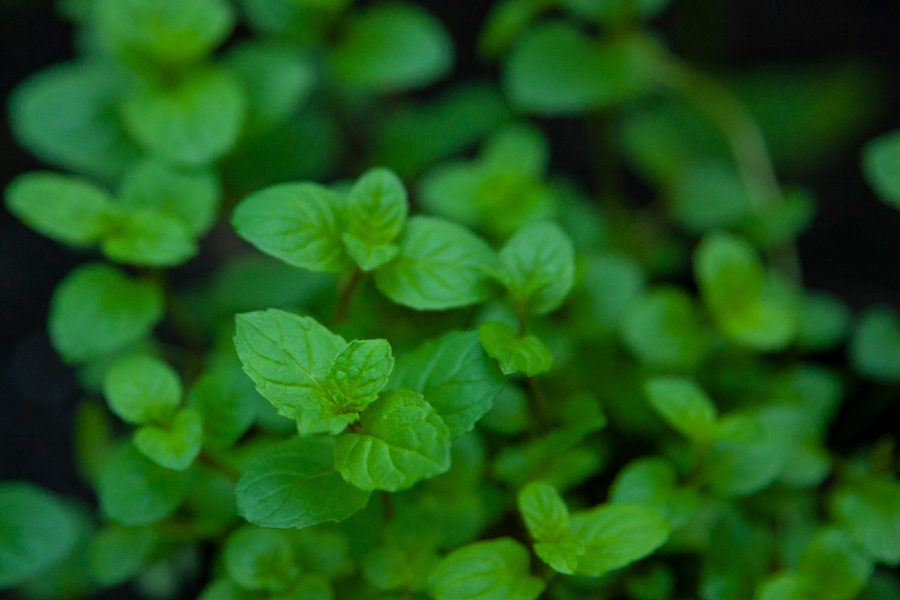
Spring onions are the usual choice in Beirut, sliced thin. Mouzawak rubs them with salt and bhar helu, the mild Lebanese spice blend, to soften their bite before they go in, and it works: the onion stops tasting raw. Mint is fresh only, the leaves stripped from the stems, at roughly one part to four of parsley.
Lemon, oil and a little spice
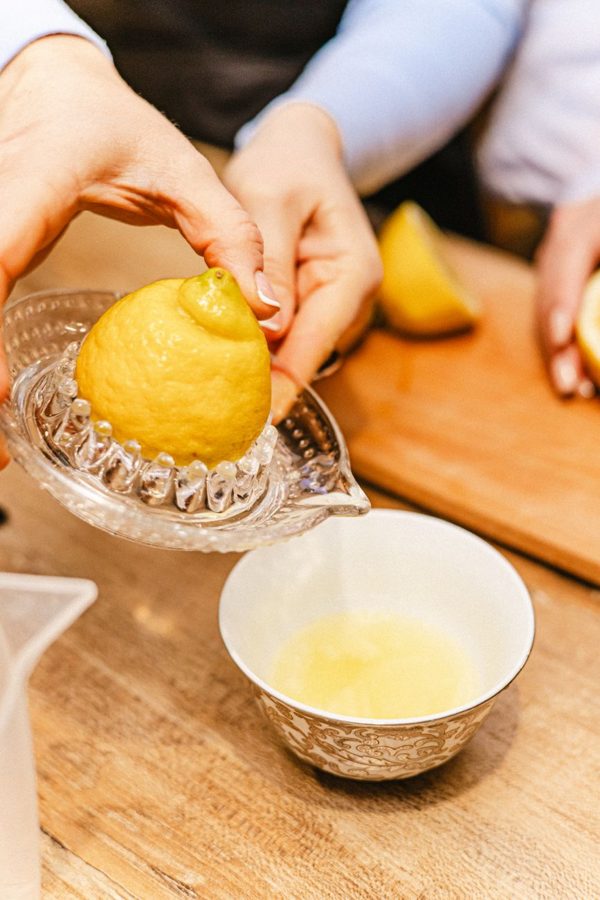
Lemon juice, freshly squeezed, and plenty of it: tabbouleh should taste sharp. Use a good extra virgin olive oil, preferably a grassy one. Salt goes in at the end with the dressing, never early, because it pulls water out of the herbs.
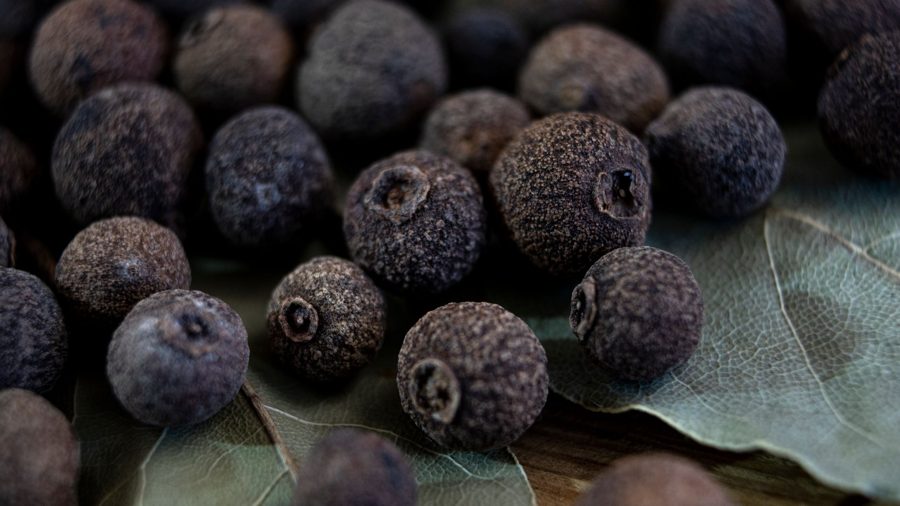
The spice is a whisper, half a teaspoon at most. Lebanese seven-spice, baharat or bhar helu, is usually allspice, black pepper and cinnamon with nutmeg, coriander, cloves and ginger in some mix; Helou’s blend uses all seven. If you have none, a quarter teaspoon of ground allspice and a pinch of cinnamon will do. Mouzawak also wants a good dose of green chilli, which is less common but very good.
Slice it once: the knife work
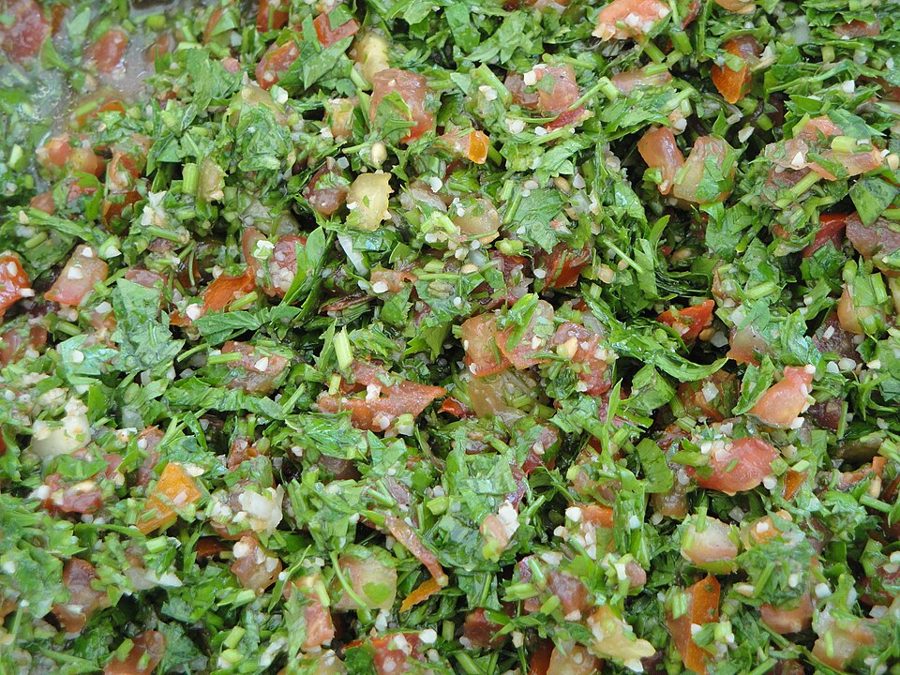
This is the part that separates Beirut tabbouleh from everything else. Parsley is a fragile leaf. Every time a blade crushes it, the cells break, the leaf goes dark and the board fills with green water, and that water ends up as a puddle in the bowl.
So the Lebanese rule is to slice, not chop. Claudia Roden, in Arabesque, quotes a Beirut friend named Kamal on exactly this point, and Helou warns against the rocking mezzaluna for the same reason. The knife passes through the bunch once and never goes back over what it has cut.
How to hold the bunch
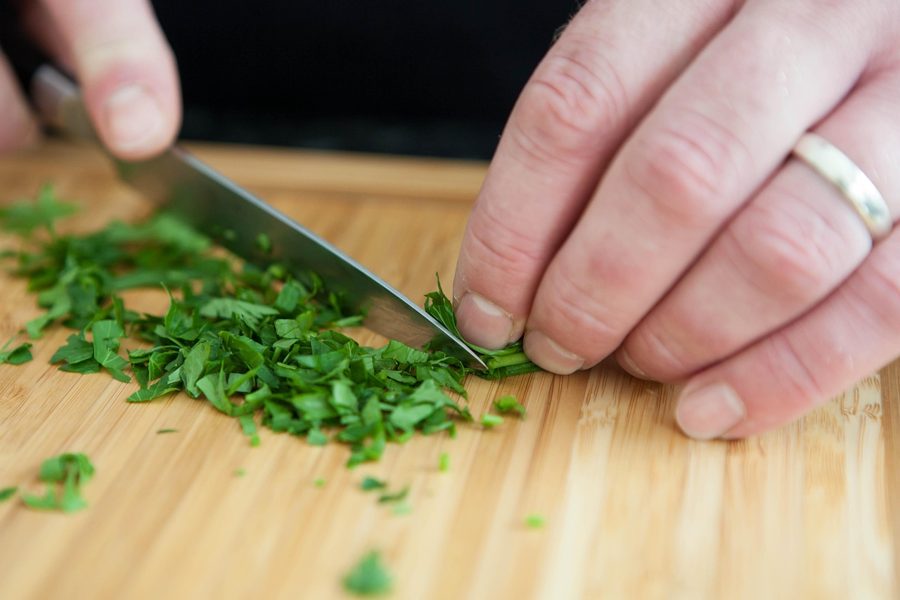
Gather a small handful of leaves into a tight bundle, stems trimmed, and press it flat on the board. Mouzawak’s instructions are precise: hold it firmly with your fingers, not your whole palm, which would warm the parsley and “cook” it. Angle the knife slightly outward, guide it with your index finger, and shave across the top of the bundle as thin as you can.
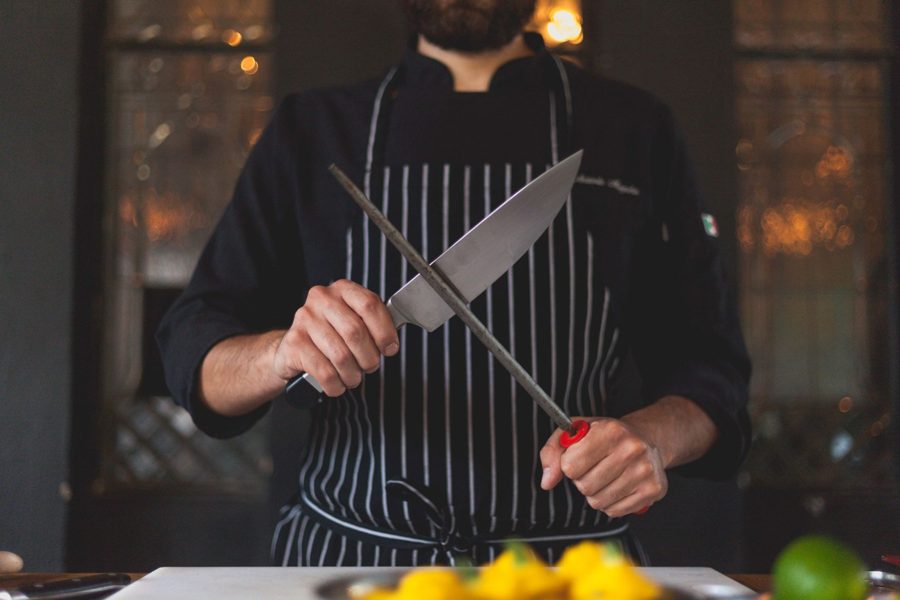
Use your sharpest, longest knife. A dull blade does not slice, it crushes, and no technique saves it. Ten minutes on a steel or a stone before you start will save you twenty minutes of cutting.
And the food processor?
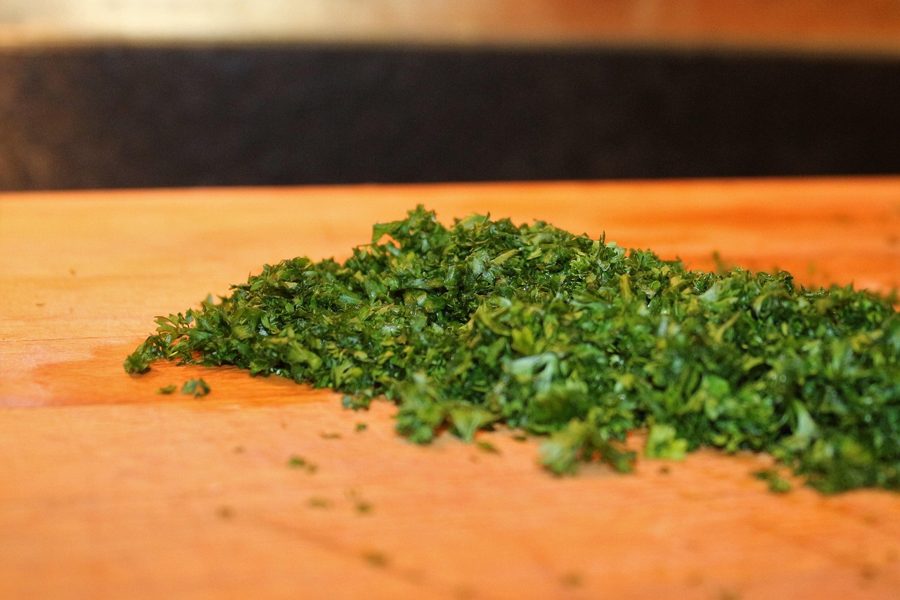
It gives you green paste. The blades crush rather than cut, and you get dust and whole leaves in the same bowl. I would rather make half the quantity by hand than double it in a machine.
If time is short, cut the tomato, onion and mint ahead and keep them cold. The parsley must be cut by hand, close to serving.
The order of the bowl
The careful way to build tabbouleh is in layers, mixed only at the table or close to it. Rinsed bulgur goes in the bottom of the bowl with the diced tomato and a pinch of salt, so the grains drink the juice. The onion, rubbed with spice, goes on top.
Mouzawak puts the sliced mint under the parsley, so the more fragile leaf does not darken in the air. Then the whole bowl is covered and chilled. Lemon, oil and the final salt go on at the very last minute, the bowl is tossed once and it goes to the table.
Recipe card
Recipe: classic Lebanese tabbouleh
The recipes I compared, in English and Arabic, agree on almost everything except the amount of wheat. Mouzawak uses one tablespoon for four people, the Arabic recipe site Mawdoo3 uses three for a single bunch, and Manal Al Alam uses half a cup for three large bunches. I use 30 g, about three tablespoons, for two large bunches: enough to give a little chew without the grain ever taking over.
They also split on how to soften it. Some soak it in lemon juice, some in water, and Mouzawak and Roden let tomato juice do the work. I follow the tomato, because it keeps the lemon for the end, where you can taste and adjust it.
Serves 4 as part of a mezze, 2 as a main salad. About 45 minutes of hands-on work, plus 30 minutes drying the herbs and 1 hour chilling.
Ingredients
- 2 large bunches flat-leaf parsley, about 300 g (10 oz) as bought
- 1 small bunch mint, about 60 g (2 oz) as bought
- 30 g (3 tbsp) fine bulgur (#1)
- 2 large firm, ripe tomatoes, about 350 g (12 oz)
- 3 spring onions
- ½ tsp Lebanese seven-spice, or ¼ tsp ground allspice and a pinch of cinnamon
- 1 tsp fine salt, plus more to taste
- Juice of 2 lemons, about 80 ml (⅓ cup), plus another lemon in reserve
- 90 ml (6 tbsp) extra virgin olive oil
- 1 small green chilli, very finely chopped (optional)
- To serve: the inner leaves of 1 romaine lettuce or 1 small white cabbage
Method
- At least an hour before serving, wash the parsley and mint in several changes of cold water, still in their bunches. Shake them hard, run them through a salad spinner in batches, then roll them loosely in a clean tea towel and leave them for 30 minutes.
- Rinse the bulgur in a fine sieve under cold water until the water runs clear. Drain it well, pressing gently, and tip it into the bottom of a wide serving bowl.
- Core the tomatoes and dice them into 5 mm (¼ inch) cubes on a board, keeping the juice. Add the tomatoes and all their juice to the bulgur with a pinch of the salt, stir once and spread it level.
- Slice the spring onions very thinly, white and green parts. Rub them between your fingers with the seven-spice and a small pinch of salt, and scatter them over the tomato.
- Strip the mint leaves from their stems, gather them into a tight pile and slice them finely, one pass of the knife only. Scatter them over the onion.
- Line up the parsley bunches so the lowest leaves are level, and cut off the thick stems in one go. Take a small handful of leaves, hold it tight with your fingertips and slice it as thinly as you can, moving back a millimetre at a time and never going over the same place twice. Pile it on top of the mint and repeat until all the parsley is cut.
- Cover the bowl and refrigerate it for 1 hour, no mixing. It will hold like this for up to 2 hours.
- Just before you sit down, squeeze the lemons and add the chilli, if using. Pour the lemon juice and olive oil over the parsley, sprinkle with the rest of the salt and toss everything together from the bottom up, quickly, until the bulgur and tomato are spread through the green.
- Taste a forkful. It should be sharp, salty enough to make the tomato taste sweet, and wet without a pool of liquid. Add more lemon or salt if it needs it, toss once more and serve straight away with the lettuce or cabbage leaves.
Dressed tabbouleh is at its best for about twenty minutes. After an hour the parsley has wilted into its own juice. Cooking for a crowd, keep the layered bowl in the fridge and dress it at the table.
Leftovers are not much use as tabbouleh. Drain them and stuff them into a pita with grilled meat the next day.
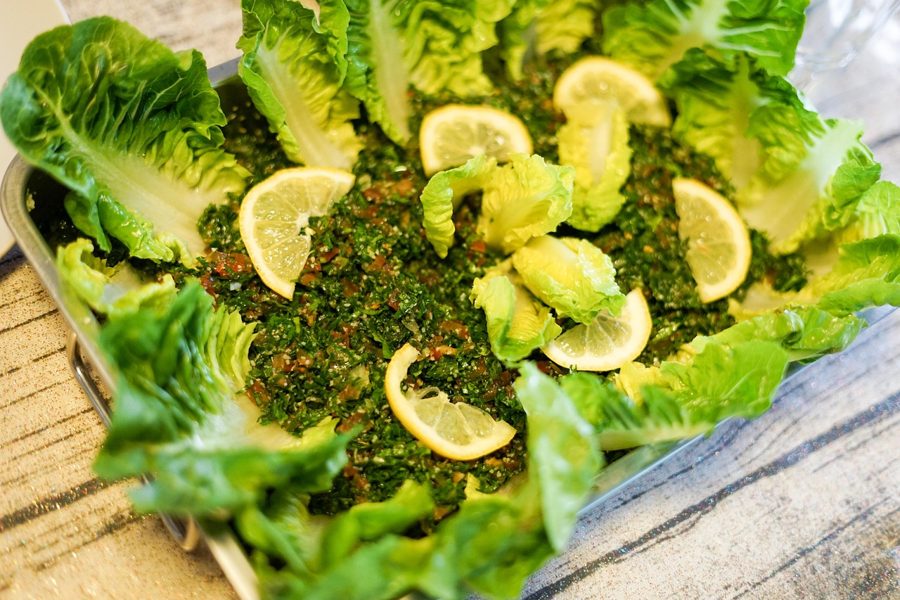
The cousins, and the impostor
Wheat, herbs, tomato and something sour turn up all around the eastern Mediterranean. The proportions decide the name, and most of the neighbours go the other way from Lebanon, with the bulgur in charge.
Syria
Syrian tabbouleh is close kin to Lebanon’s, and in both countries the parsley outweighs the wheat. The differences are the kind families argue about: more onion in some kitchens, a spoon of pomegranate molasses in others, cinnamon or none. The bulgur-led version, as noted above, comes from the Syrian Jewish diaspora rather than from Damascus or Aleppo.
Syrian and Lebanese emigrants carried the dish much further. In the Dominican Republic it became tipili, and it is just as familiar in Brazil, where Syrian and Lebanese families settled in large numbers.
Palestine and Jordan
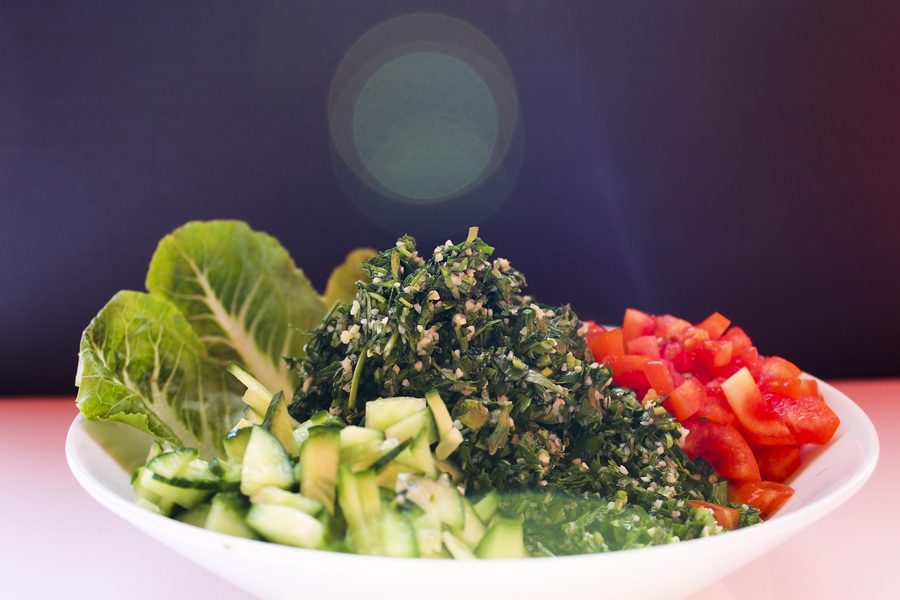
Palestinian tabbouleh is just as green, which is what Solomonov’s “80 percent” was getting at. The one addition you meet often is cucumber, the small thin-skinned Middle Eastern kind, diced very finely. Jordanian home cooks make it much the same way.
Turkey: kısır
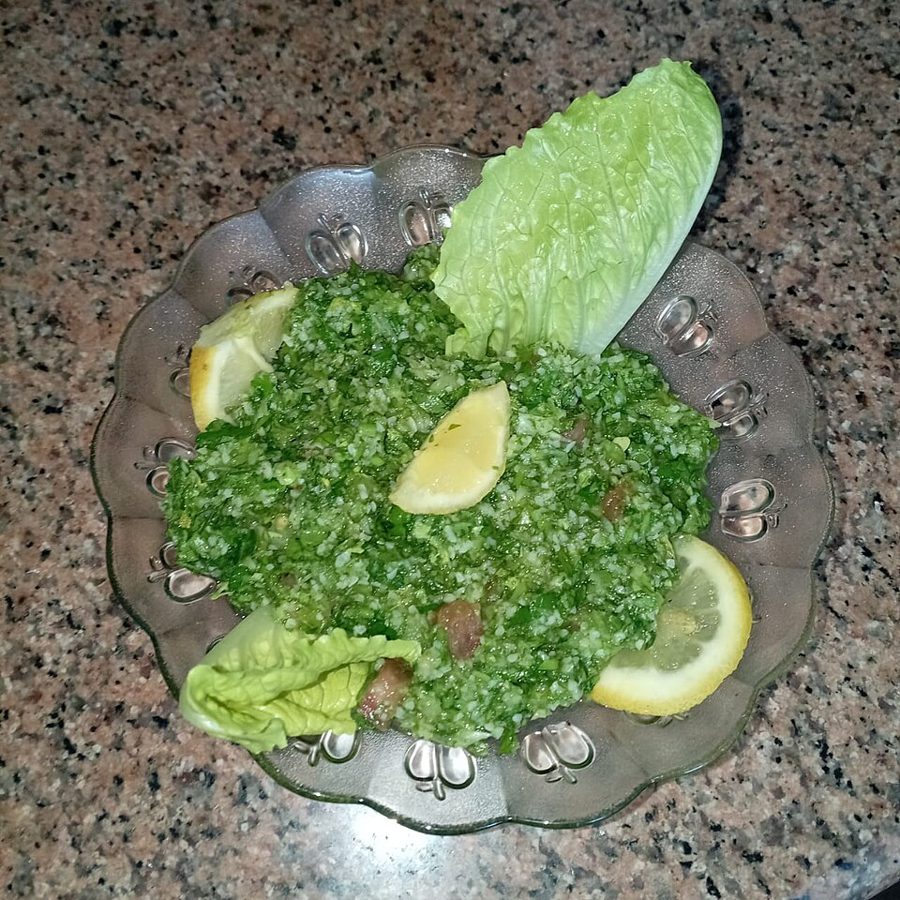
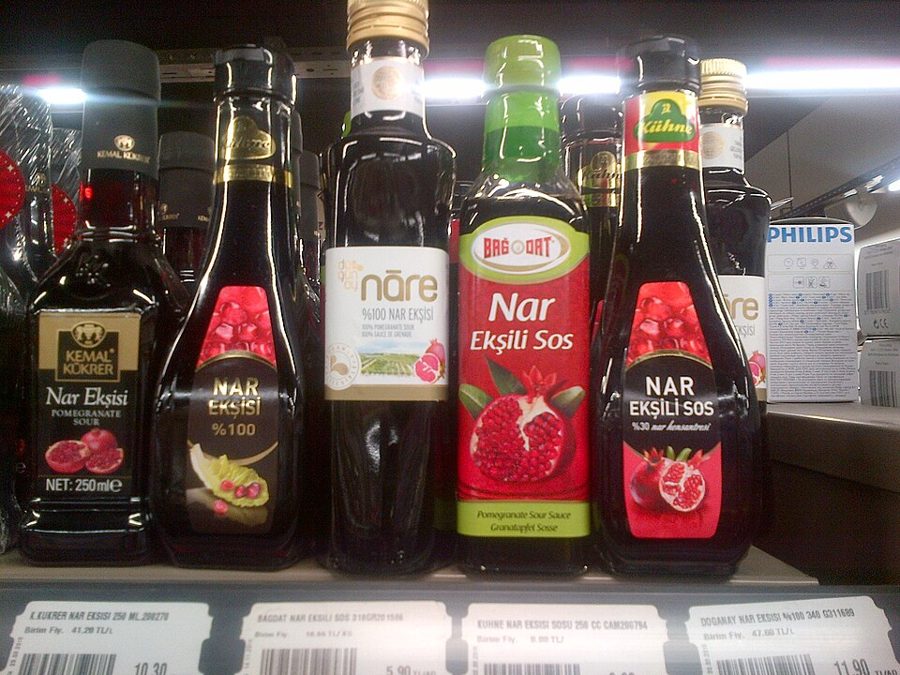
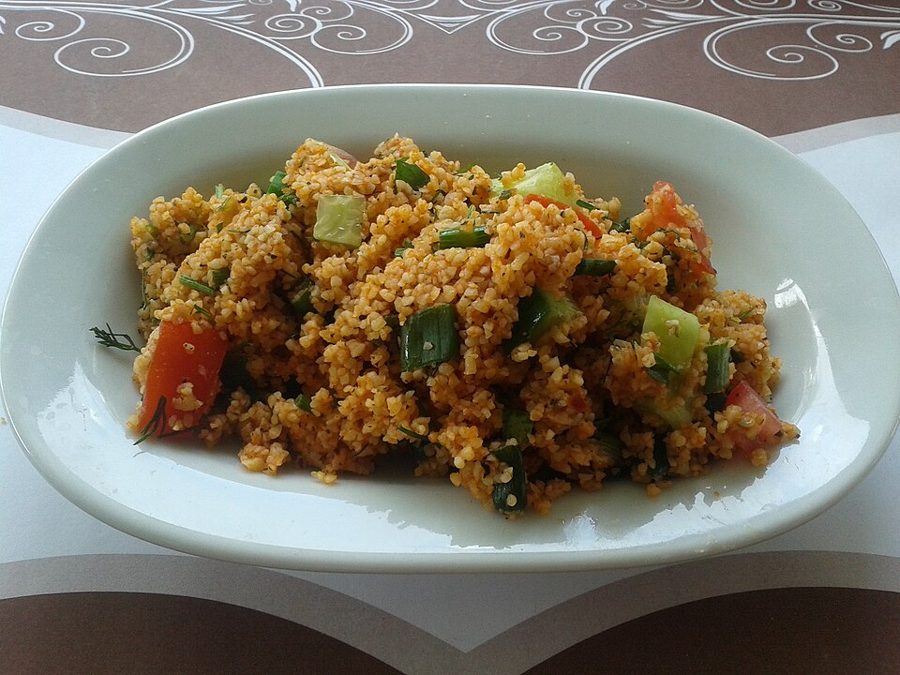
Kısır is a bulgur salad first and a herb salad second. The base is fine bulgur, softened and worked with tomato or red pepper paste (salça), which turns it brick red, then parsley, mint, spring onion, lemon and pomegranate molasses (nar ekşisi). It is served at room temperature as a meze or a side, often with lettuce leaves.
Turkish sources point out that kısır does not appear under that name in 19th-century Ottoman cookbooks such as the Melceü’t-Tabbâhîn, and that tomato paste only entered Turkish dictionaries in the early 1900s. One theory holds that it is an Anatolian reworking of the Levantine salad, with the greens cut back and the wheat built up; the word kısır means barren.
Armenia: eetch
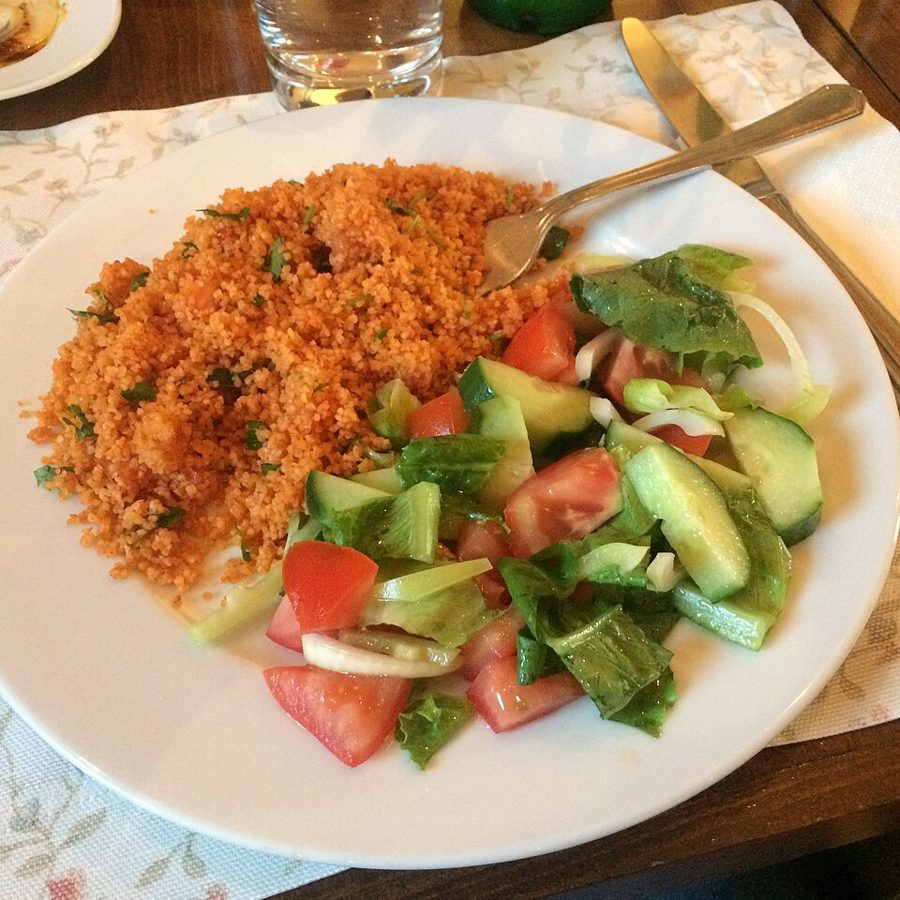
Eetch is the Armenian member of the family: bulgur cooked or soaked with crushed tomato, onion, often peppers and paprika, finished with parsley, lemon and olive oil. It is eaten warm or at room temperature, as a side or a spread, and some Armenians call it mock kheyma, a meatless stand-in for the raw meat dish. Beirut has a large Armenian community, so you may meet it on Lebanese tables too.
The couscous salad that borrowed the name
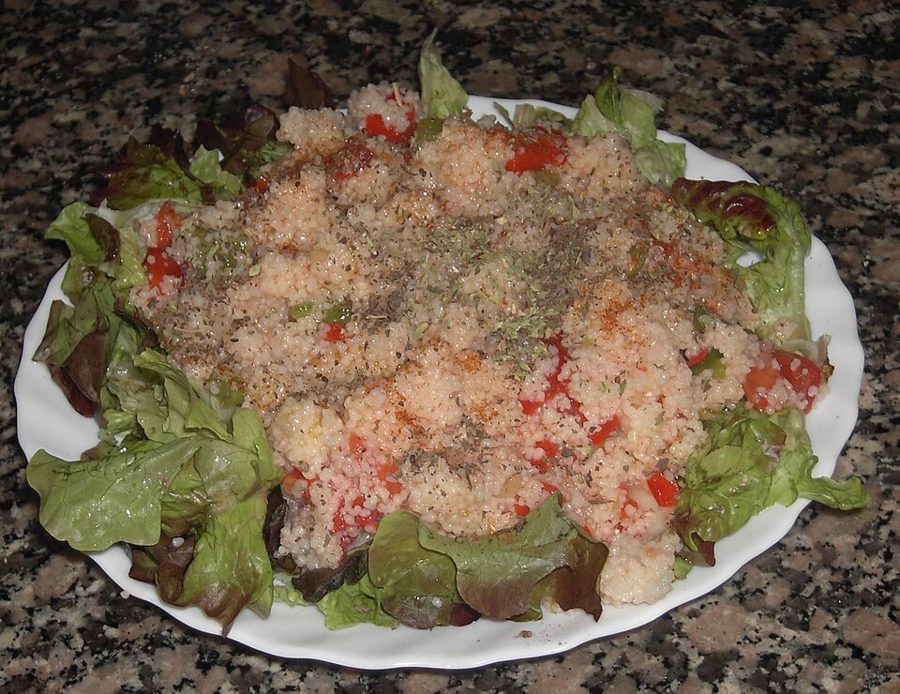
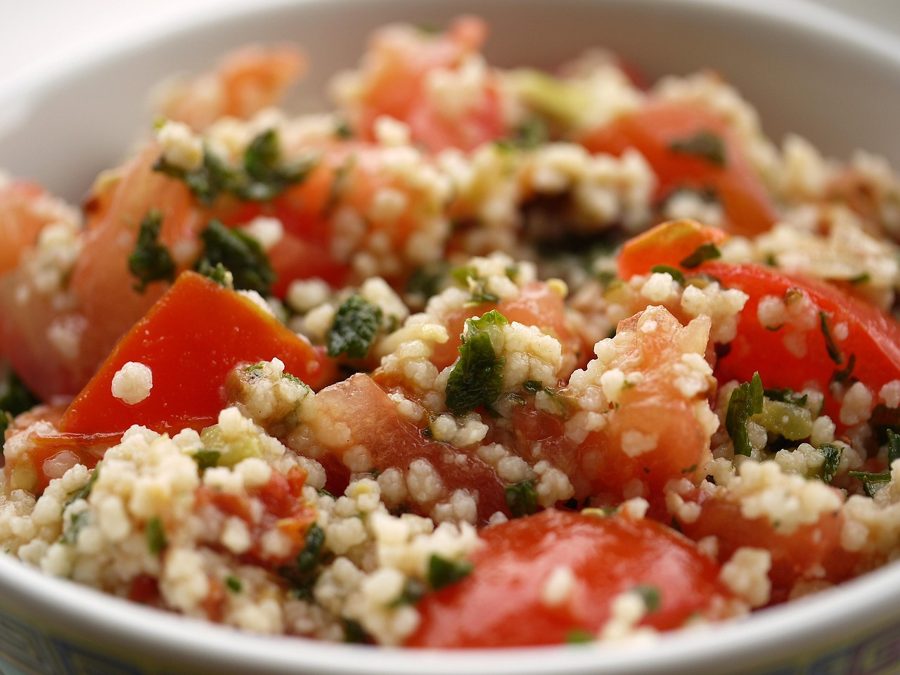
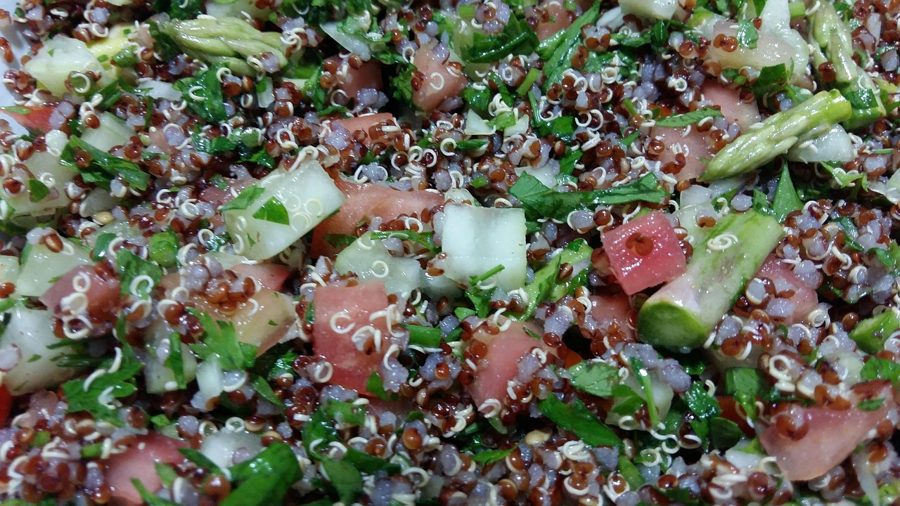
In France, taboulé usually means a supermarket tub of couscous, the semolina grain, with diced tomato, a little mint, often raisins, and parsley as an afterthought. The dish spread into France after the French mandate in Lebanon, and somewhere on the way it met the couscous salads of North Africa. Elsewhere the same slot has been filled with quinoa, farro, lentils and avocado.
Mouzawak’s ninth rule deals with all of it: tabbouleh with shrimp, tabbouleh kept for 24 hours in a caterer’s display, or canned, is not tabbouleh. Any of those may be a good salad. It just needs another name.
How Lebanon eats it
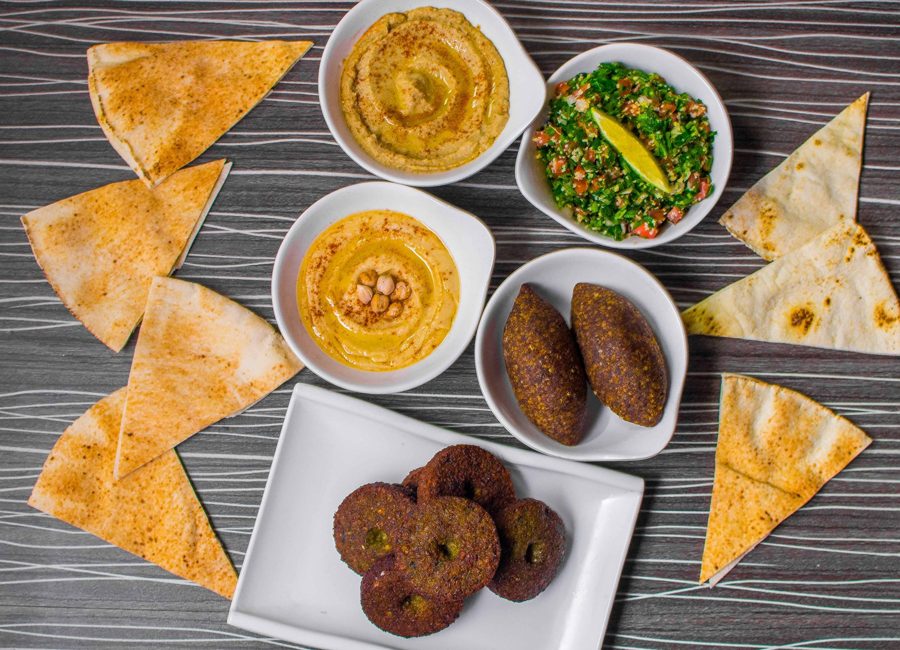
Tabbouleh is eaten with leaves, not bread. The usual scoops are the crisp inner leaves of romaine or a pale white cabbage, broken into small cups; in summer some families use fresh vine leaves, and Mouzawak remembers his mother using tender green pepper leaves. You fold a leaf around a mouthful and eat both.
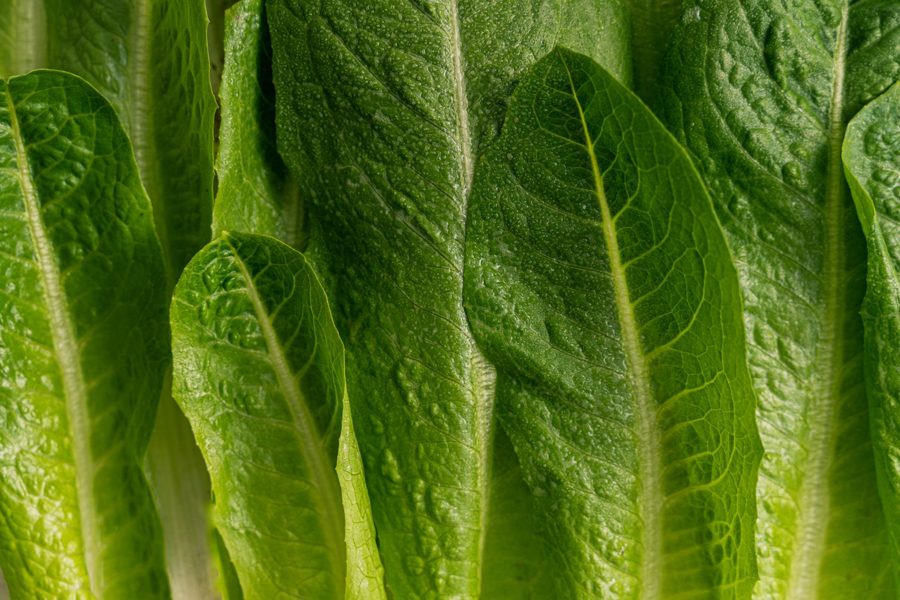
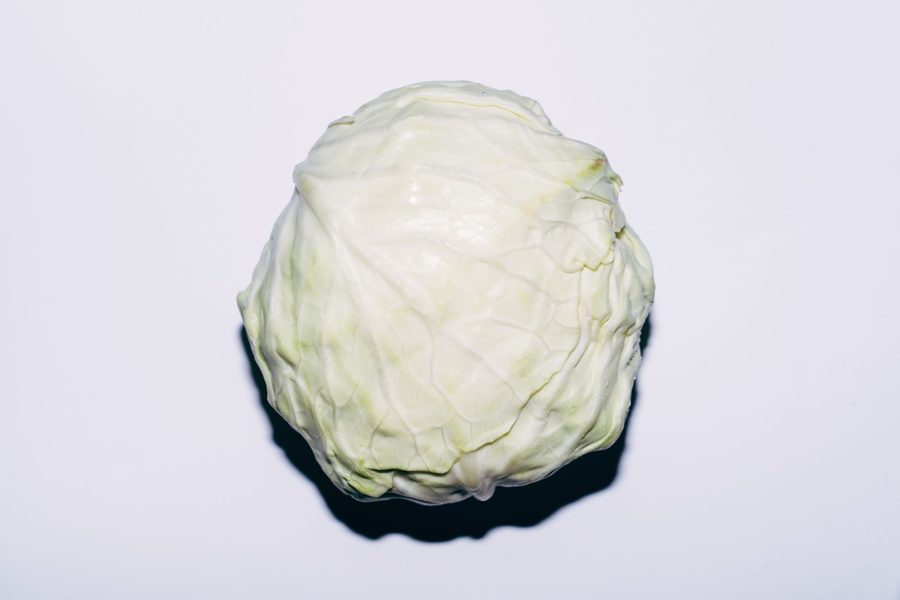
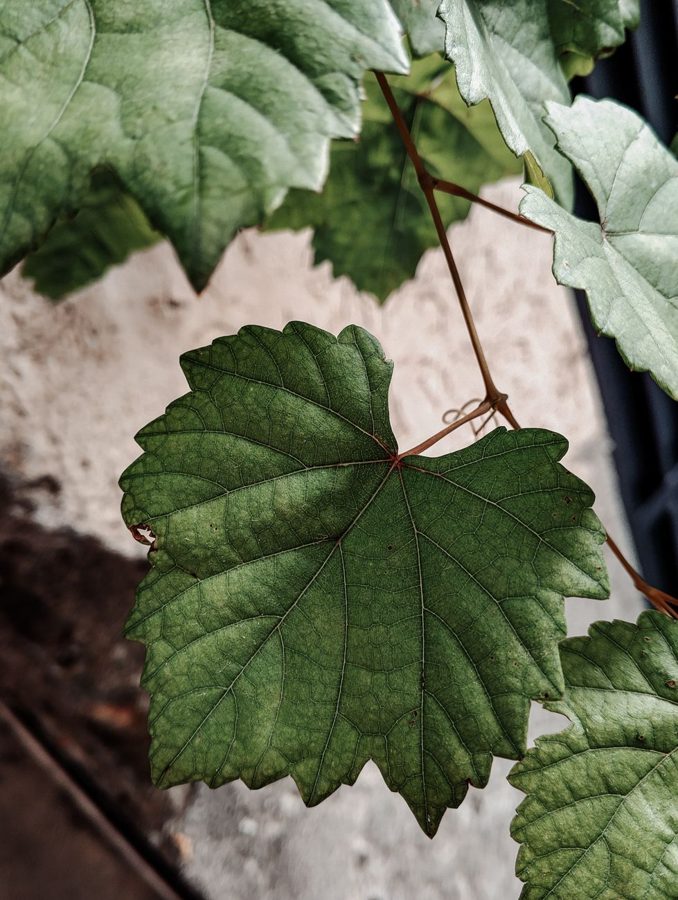
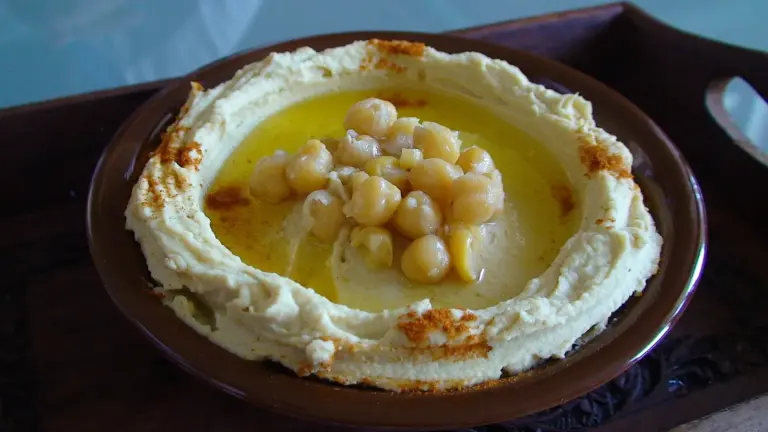
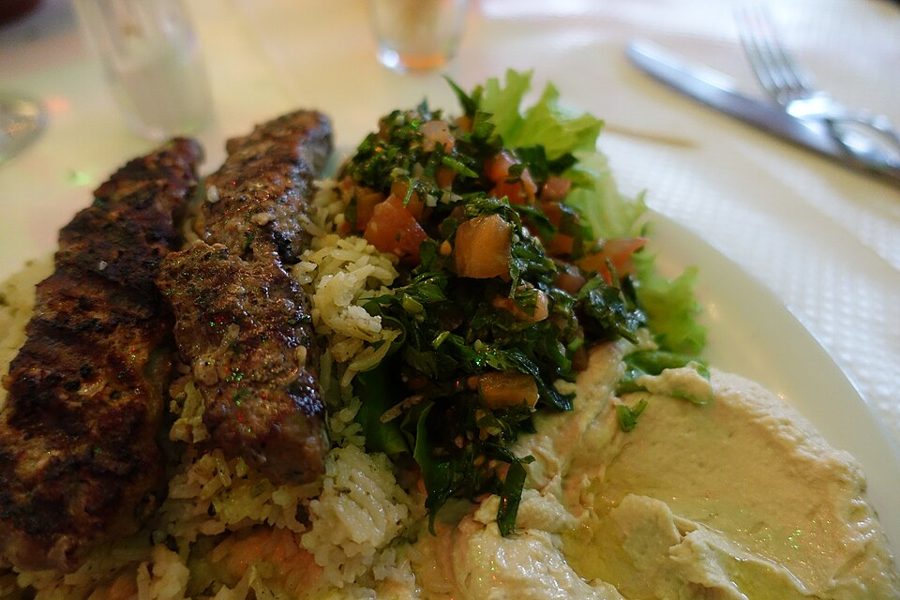
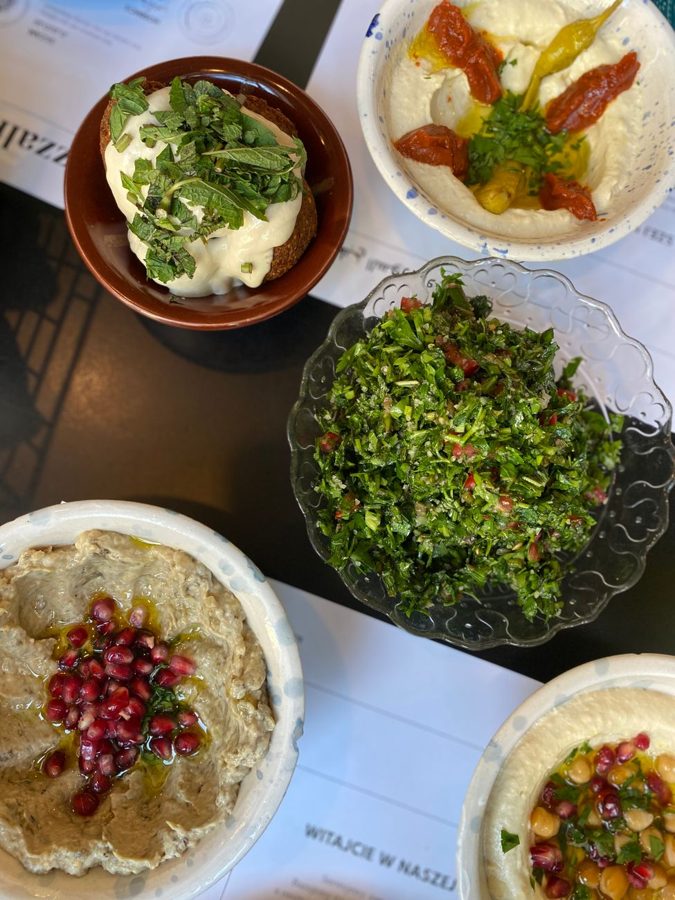
It is rarely eaten alone. In a restaurant it arrives early with the cold mezze, next to hummus, mutabbal and labneh, and it stays on the table when the grills arrive, because a mouthful of lemony parsley is exactly what you want after a skewer of lamb. At home it is the fixed point of Sunday lunch. “There is no Sunday without tabbouleh,” as Mouzawak puts it.
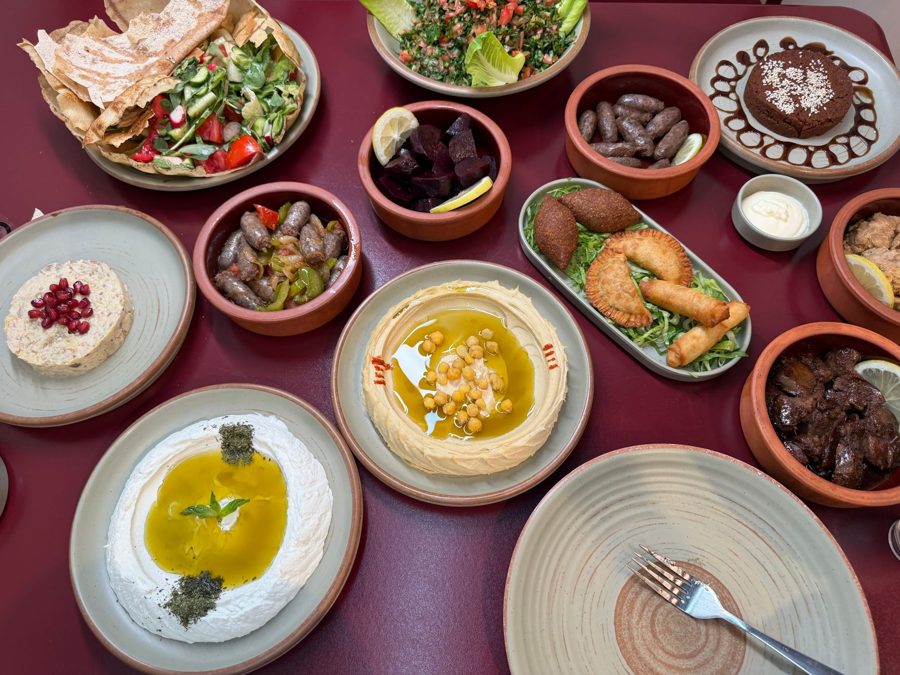
With the grills
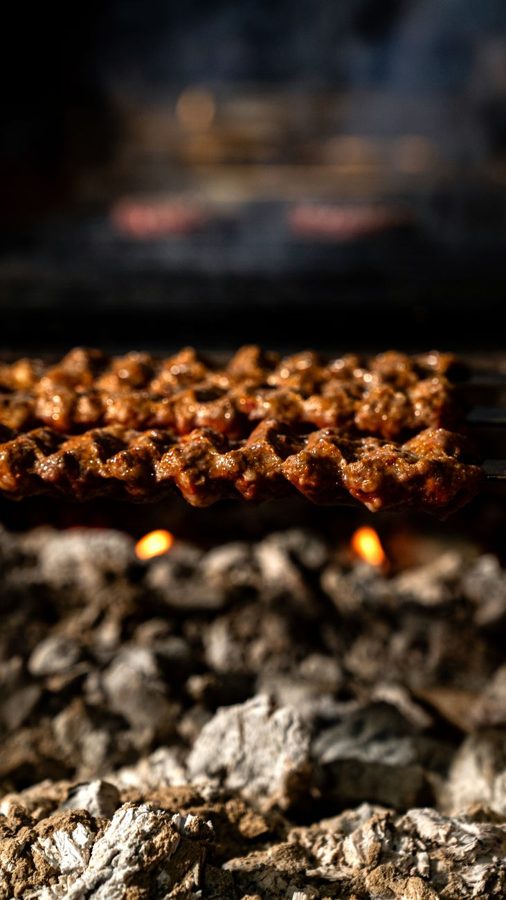
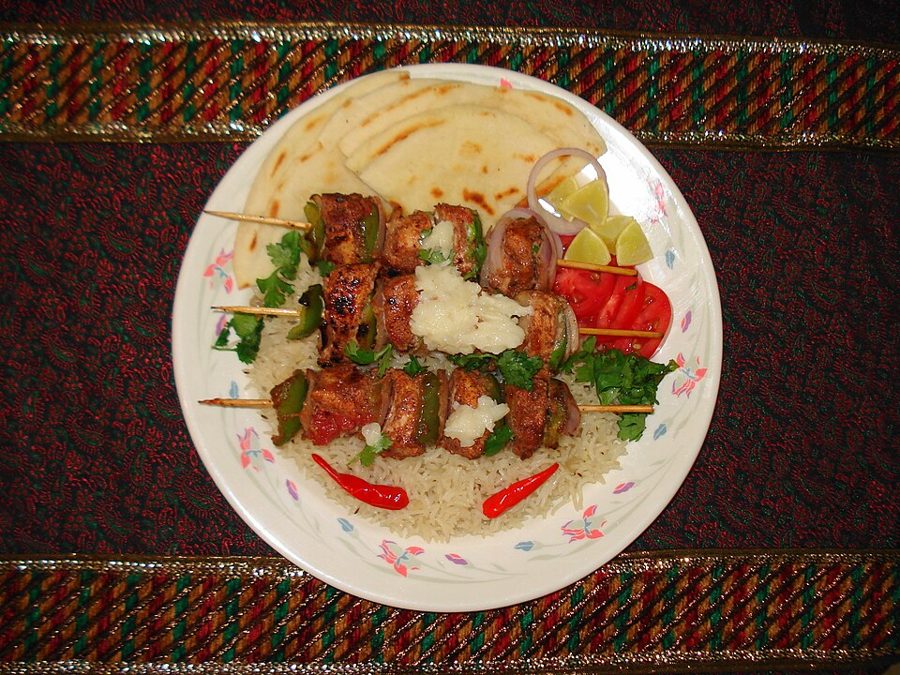
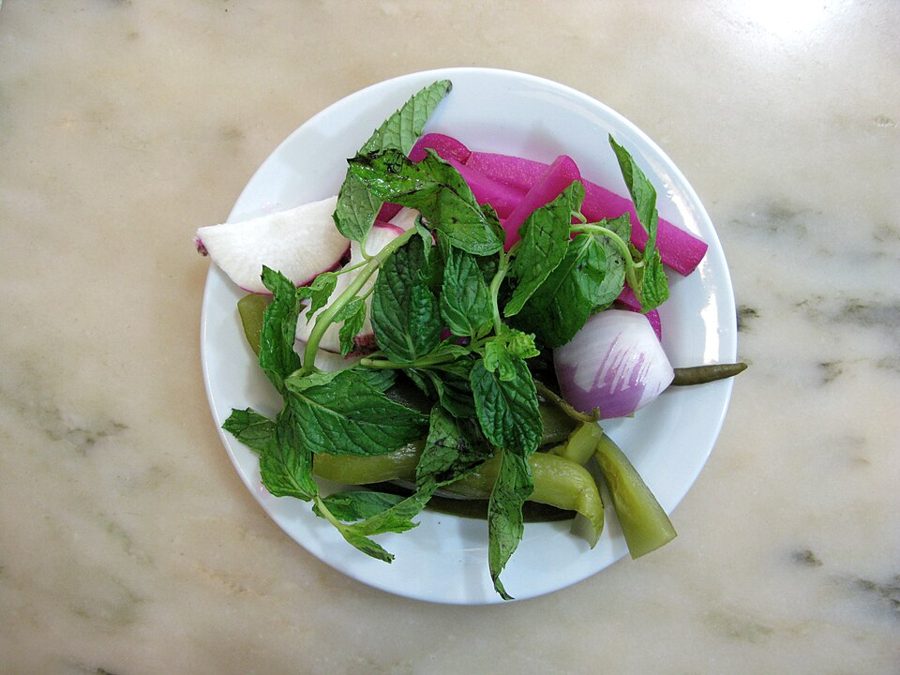
When the kafta and shish taouk come off the charcoal, tabbouleh moves from starter to side. Grill houses in the Beqaa and the mountains also bring a plate of raw greens: whole mint sprigs, radish, raw onion, green chilli and pink pickled turnip, to eat between bites of meat.
Tabbouleh or fattoush?
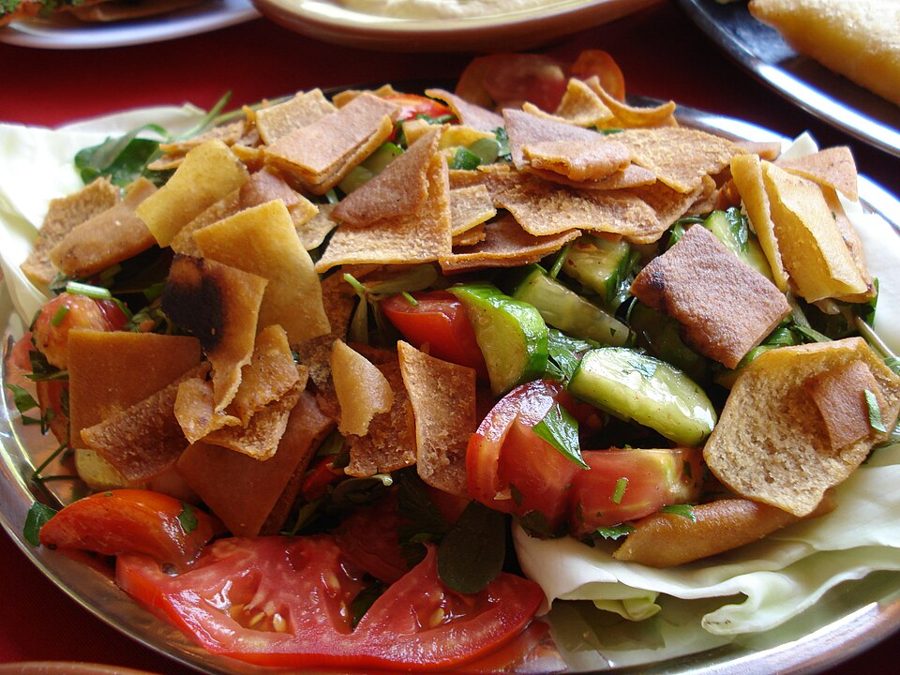
The two salads share a table and are often confused. Fattoush is the chunky one: torn lettuce, cucumber, tomato, radish and purslane, with toasted or fried bread and a dressing heavy with sumac. Tabbouleh is fine-cut, has no bread, and gets its sourness from lemon. Order both; they do different jobs.
Where to eat it in Lebanon
Almost every Lebanese restaurant serves tabbouleh, and the best of it is made in homes on a Sunday. What you can do is buy the ingredients well and eat it somewhere that still cuts the parsley by hand. Restaurant prices in Lebanon have been quoted in US dollars since 2023, so expect a dollar menu.
Souk El Tayeb, for the parsley
Souk El Tayeb opened in 2004 as Lebanon’s first farmers’ market, with growers and home producers from across the country, and Mouzawak’s organisation still runs it. In early 2026 it moved from Mar Mikhael to a larger outdoor site at Jisr al-Wati, Tahwita, on the eastern edge of Beirut, with new stands and a new schedule. Check its current days before you go.
This is the place to buy baladi parsley, olive oil and fine bulgur from the people who grew and milled them, and to make the recipe above with Lebanese ingredients if you have a kitchen.
Socrate, in the Beirut Souks
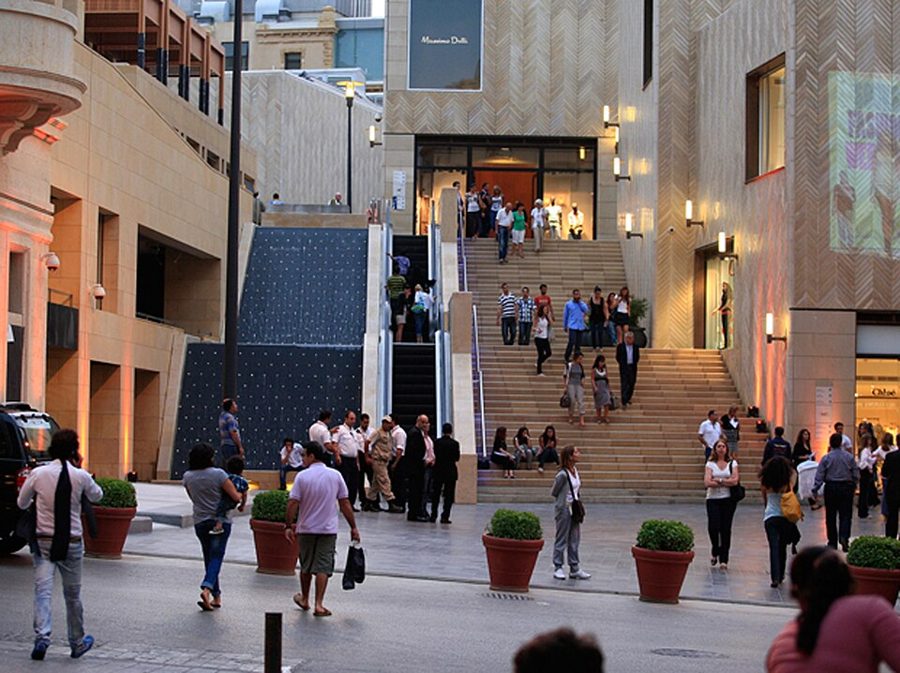
Socrate has been a Beirut name for more than sixty years. In September 2026 it opened a new restaurant in the Beirut Souks, downtown, open 9am to 11pm, with Lebanese dishes cooked daily, cold and hot mezze and a mezze bar of sixteen items. A lunch of tabbouleh, hummus and a grill there is the simplest way to eat it in the centre of the city.
When to go
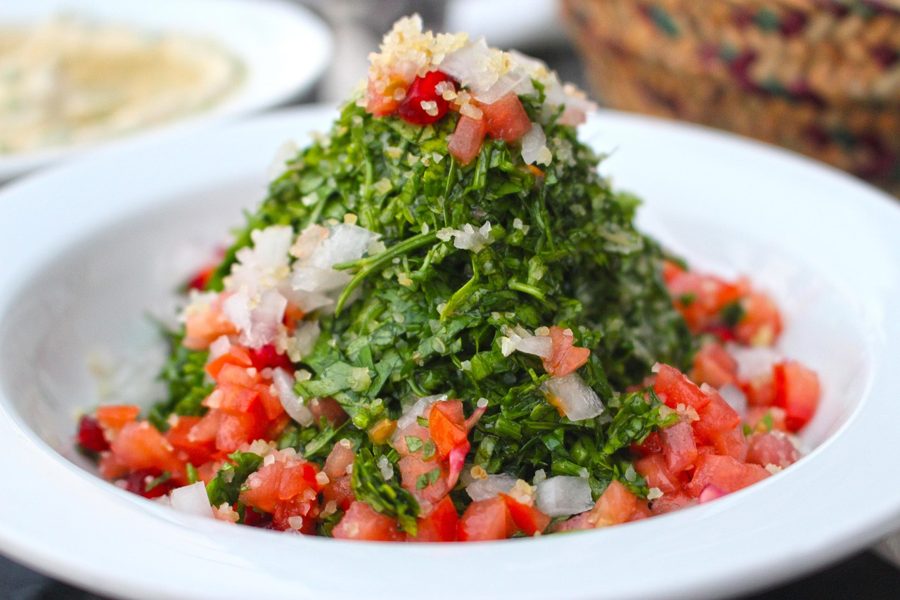
Parsley is sold all year, but tomatoes are at their best from late spring to early autumn, and that is when tabbouleh tastes most like itself. The first Saturday of July, Tabbouleh Day, sits in the middle of that season. Wherever you eat it, judge it by colour, which should be green, by the parsley, which should be in fine dry shreds, and by the bottom of the bowl, which should hold no pool.
Buy three bunches of flat-leaf parsley, not two, the first time you make it at home. One of them is for practice, and by the end of it your knife will have learned to pass through each bundle once.