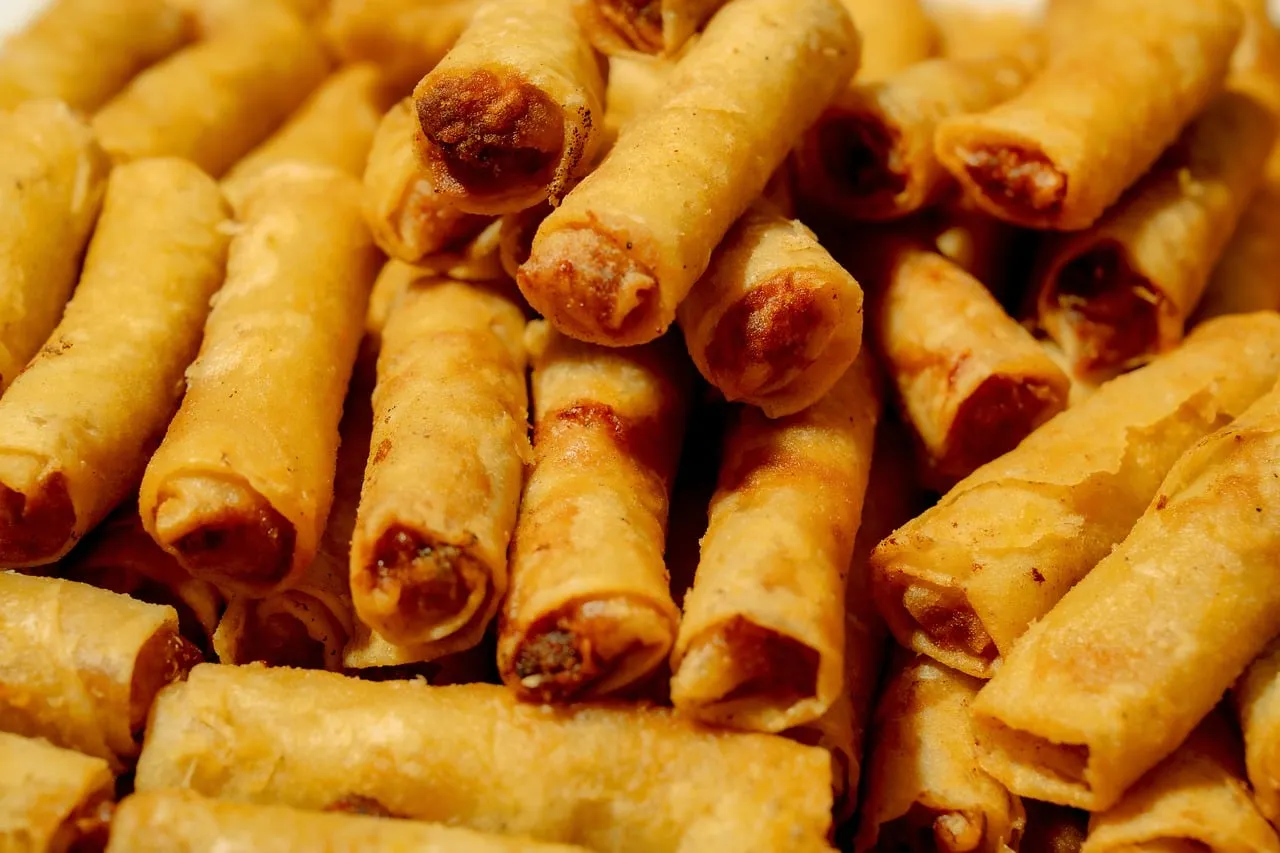
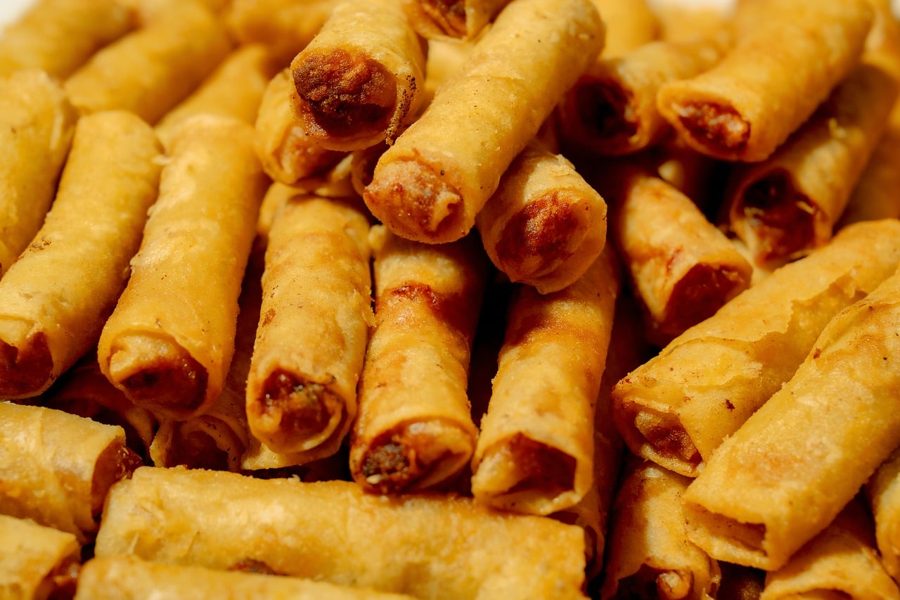
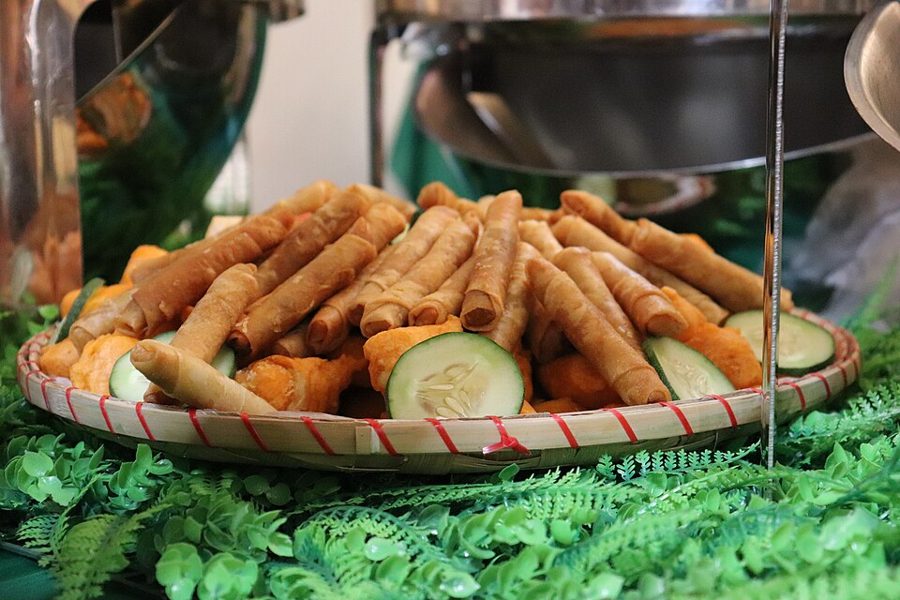
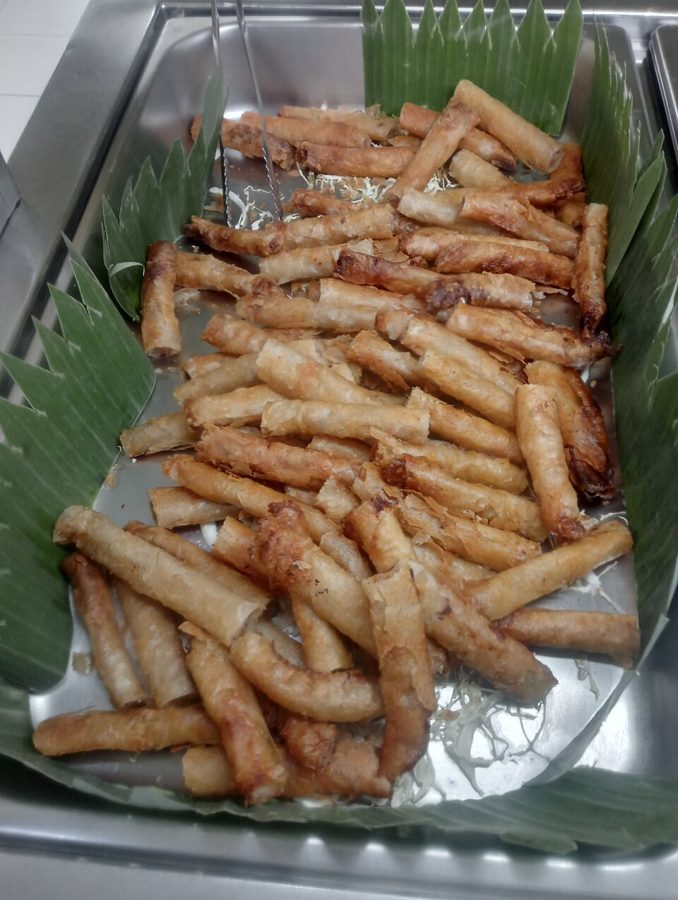
Most lumpia recipes written in English make the rolls too fat. A lumpiang Shanghai on a Filipino party table is slimmer than your little finger, and that is a matter of cooking, not looks. The filling goes into the wrapper raw, and a thin line of pork cooks through in the four or five minutes it takes the wrapper to turn gold. Roll it as thick as a cigar and you are left choosing between a burnt skin and a pink middle.
The thin ones are also the ones that vanish. They come out on a bilao, the round woven tray, at birthdays, christenings, fiestas and Christmas, and they are gone before the pancit is. Filipino jokes about lumpia are mostly about the guest who leaves with a few wrapped in a napkin, a habit people call nagsa-Sharon, and about guests who would skip a party that had none.
Lumpia is bigger than that one roll, though. It is a family that arrived with Hokkien settlers and multiplied: fried and fresh, pork and vegetable, savoury and sweet, sold as merienda from street carts at 3pm and rolled by the hundred for fiestas. The thin fried roll is where most cooks start, so it is where I start too.
Contents 9 parts
From lunpia to lumpiang Shanghai
The name is Hokkien. In Fujian the fresh spring roll is 潤餅, lūn-piáⁿ: lun means moist or soft, pia a cake or flat pastry. It is a soft wheat crepe wrapped around shredded vegetables, omelette and peanut powder, and in Fujian and Taiwan it is still eaten around Qingming, the spring festival for sweeping family graves. The Teochew name for the same roll, popiah (薄餅, “thin cake”), is the one you meet in Singapore and Malaysia.
Hokkien traders and settlers from Fujian brought it to the Philippines, and the wrapper still shows the link. A popiah skin is made by rubbing a ball of very wet dough on a hot steel plate so a film sticks and sets in seconds. A handmade Filipino lumpia wrapper is made the same way; the factories that supply most markets now use a heated revolving drum.
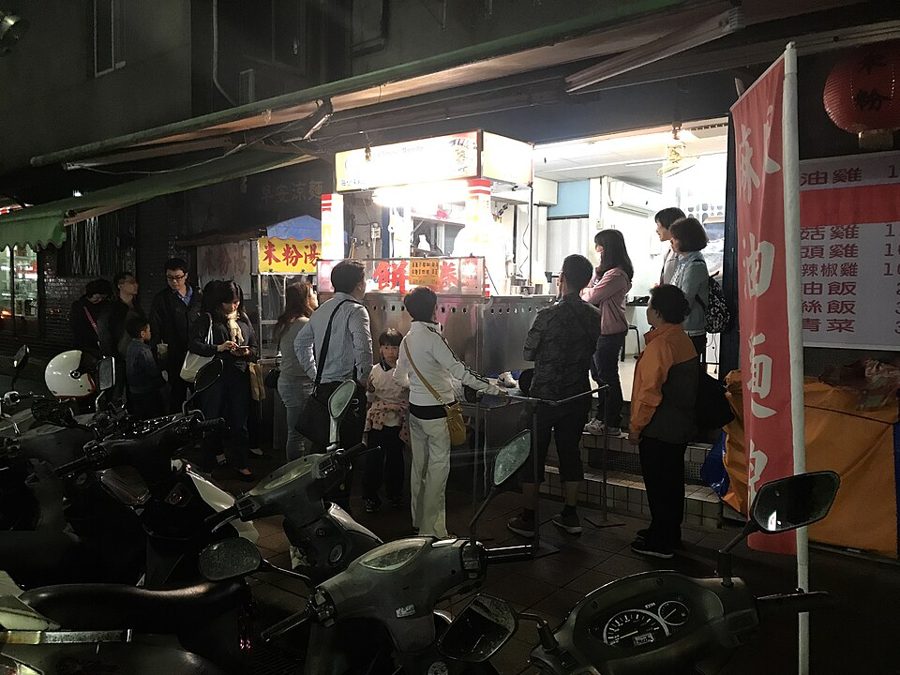
The critic and historian Doreen Fernandez argued that Chinese food entered the Philippines at ground level, through markets, street cooks and noodle shops, as everyday food rather than feast food. Her other point fits lumpia even better: a dish becomes Filipino at its destination, whatever its source, as cooks swap in what grows nearby. Here that meant heart of coconut palm, singkamas (jicama), sweet potato, saba bananas and the sour vinegar dips that go with nearly everything fried.
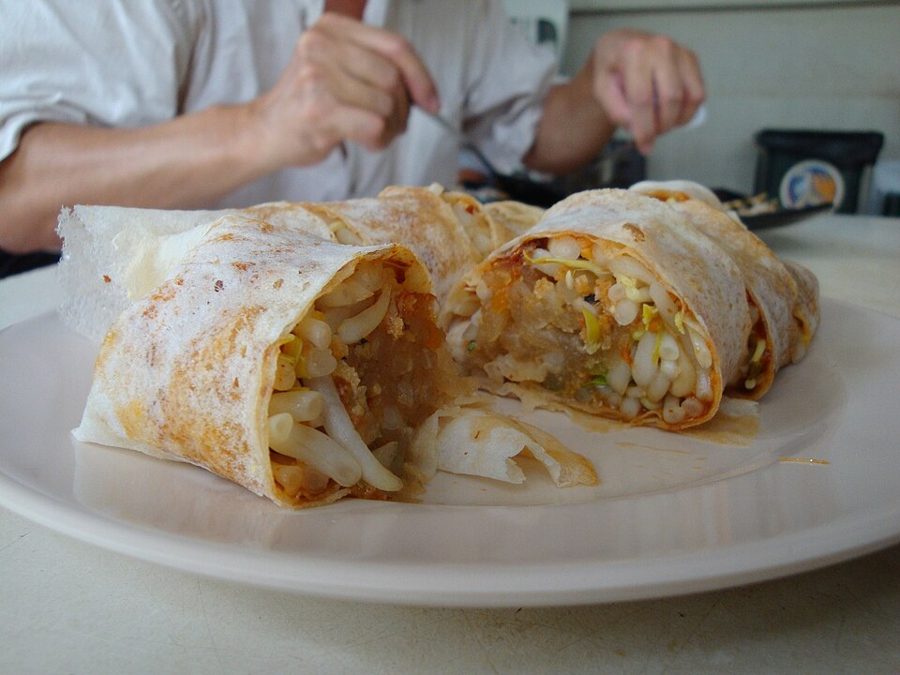
The same roll went to Java with Fujianese settlers, which is why Indonesia has lumpia too, and from there to the Netherlands as loempia. In the United States, lumpia means Filipino, because Filipino cooks carried it there.
And Shanghai? The city is in the name and nowhere in the history. Lumpiang Shanghai is a Filipino-Chinese roll made in the Philippines, and the label seems to have been borrowed to mean “Chinese-style”, the way a menu calls something Cantonese without anyone from Guangzhou going near it.
The lumpia family
Filipino cooks sort lumpia two ways, fried or fresh and savoury or sweet, and every region adds its own. These are the ones you will meet most often, and the ones worth travelling for.
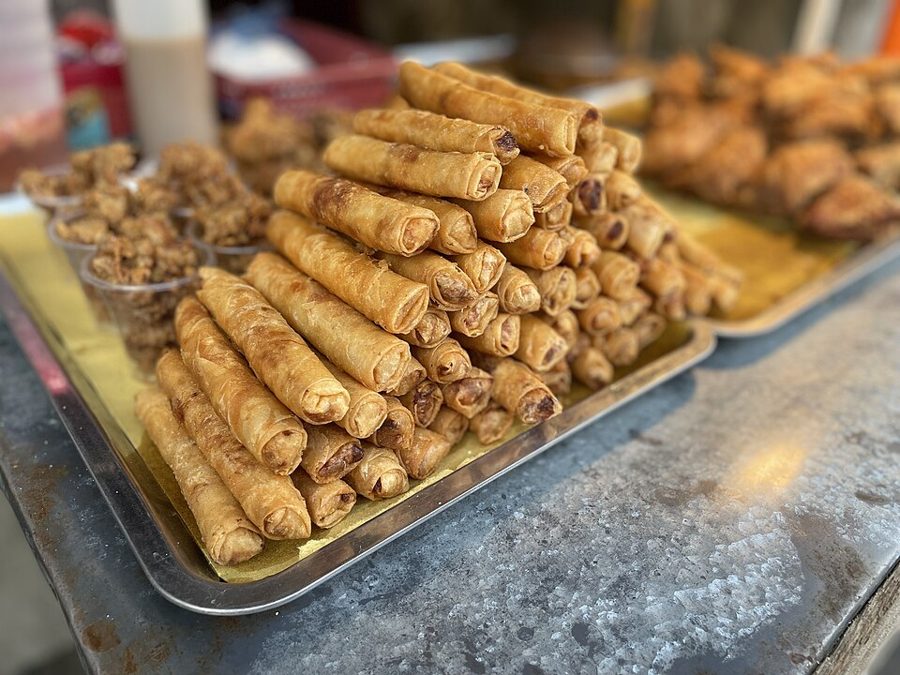
Lumpiang Shanghai
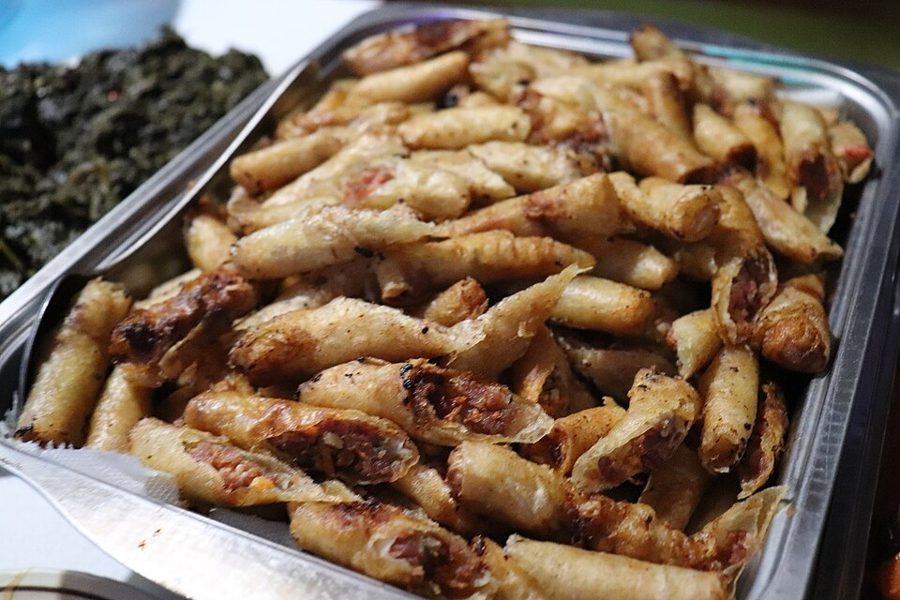
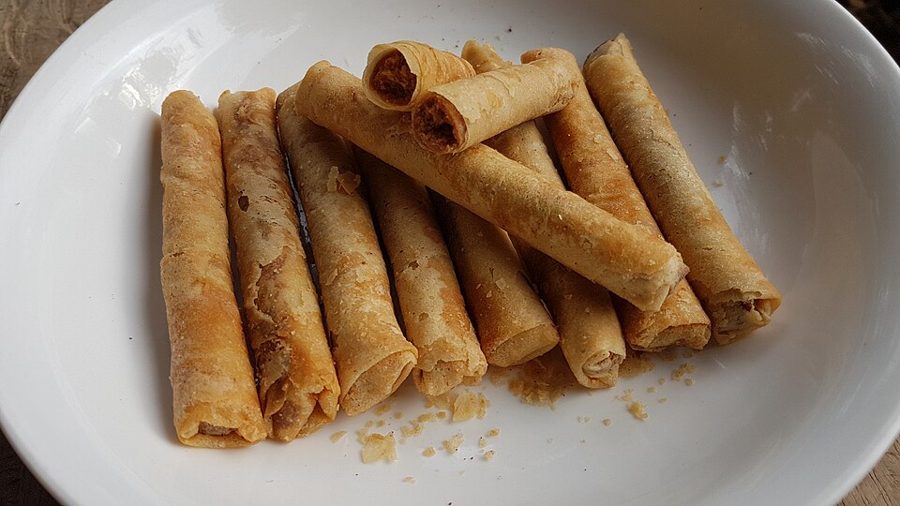
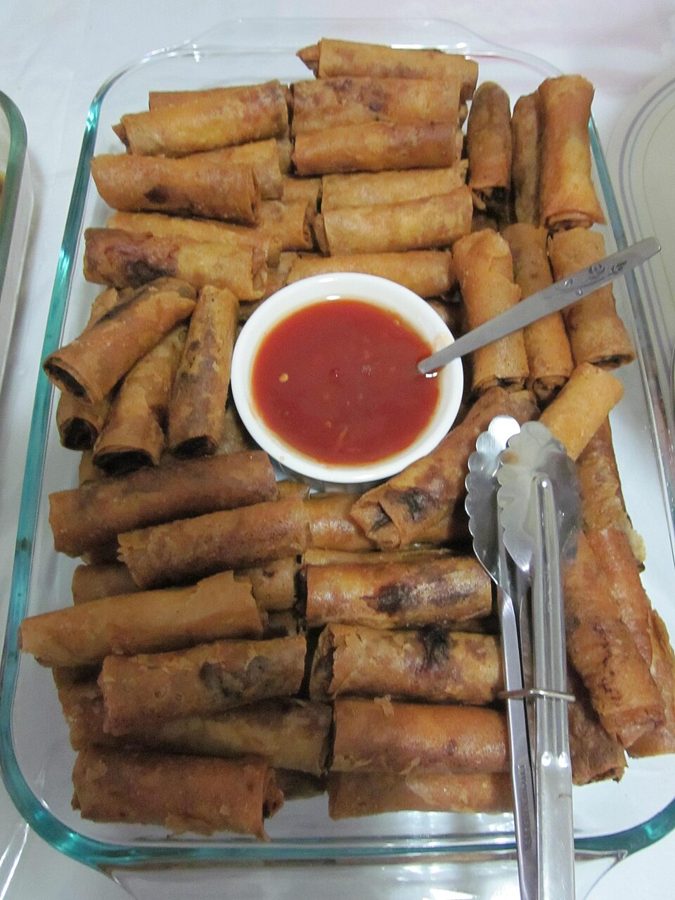
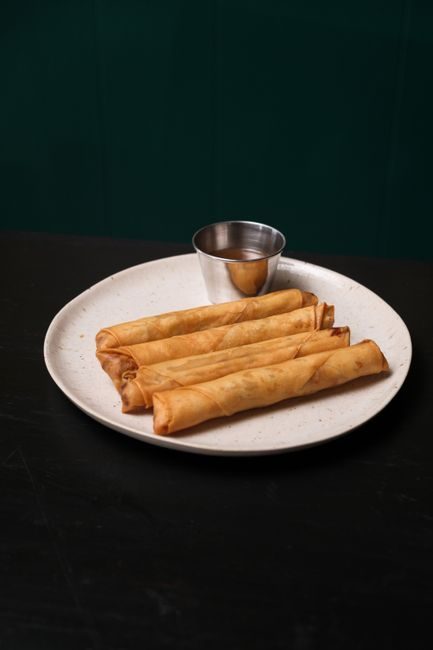
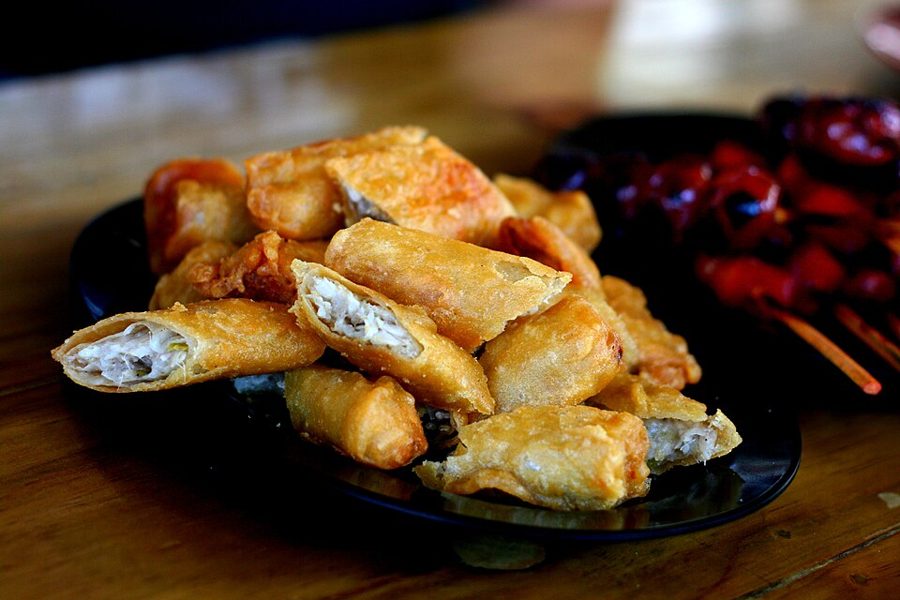
The small fried roll of seasoned ground pork, carrot and onion, sometimes with shrimp, water chestnut or singkamas for crunch. It is the most common lumpia in the country and the default party roll. Most recipes fill it raw and bind it with a little egg, which is why it can be rolled so thin.
Lumpiang prito and lumpiang gulay
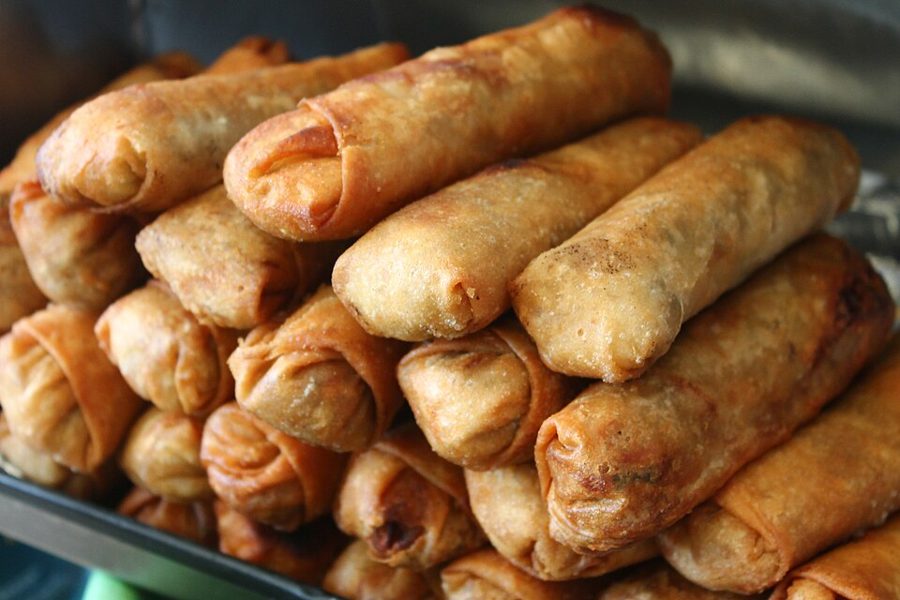
Prito means fried, and in practice lumpiang prito is the fat vegetable roll: cabbage, carrot, green beans, sweet potato, bean sprouts and a little pork or shrimp, cooked first and then wrapped. Lumpiang gulay (“vegetable lumpia”) and lumpiang toge (mostly mung bean sprouts) are its everyday versions, dipped in chilli vinegar or in toyomansi, soy sauce sharpened with calamansi.
Lumpiang sariwa
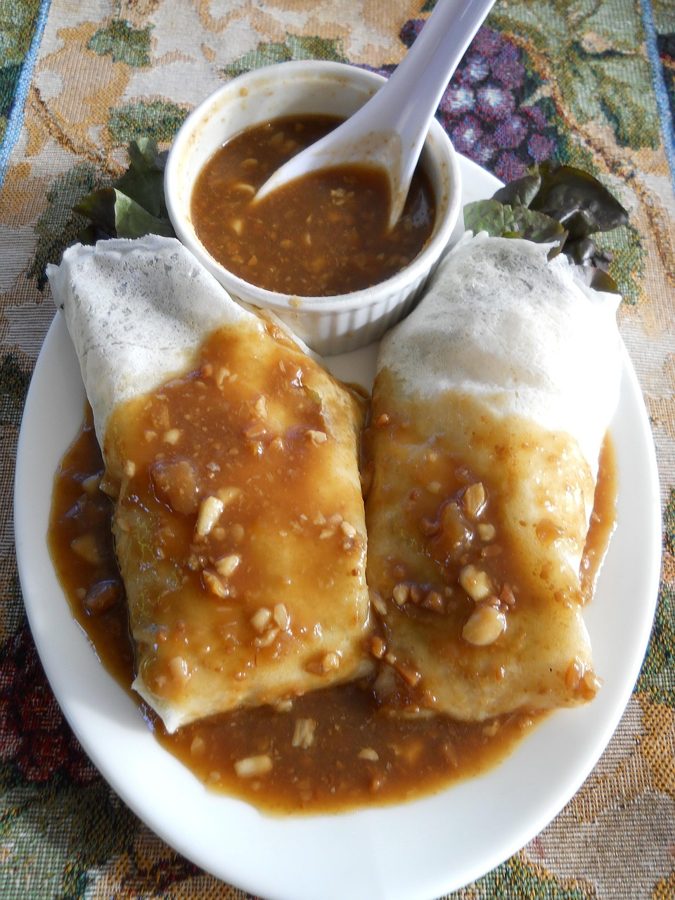
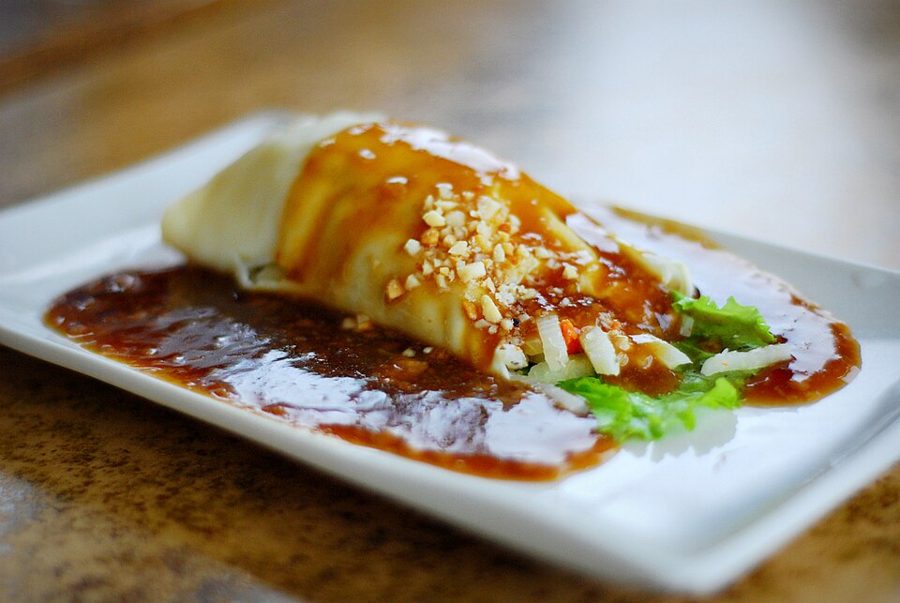
The fresh one, and the closest to its Hokkien parent. A soft egg crepe holds a lettuce leaf and sautéed vegetables, usually with tofu, shrimp or pork and plenty of sweet potato and singkamas, and it is never fried. A thickened sauce of stock, brown sugar, soy and garlic goes over the top, then crushed peanuts and more raw garlic. In Manila the sauce makes it a knife-and-fork dish.
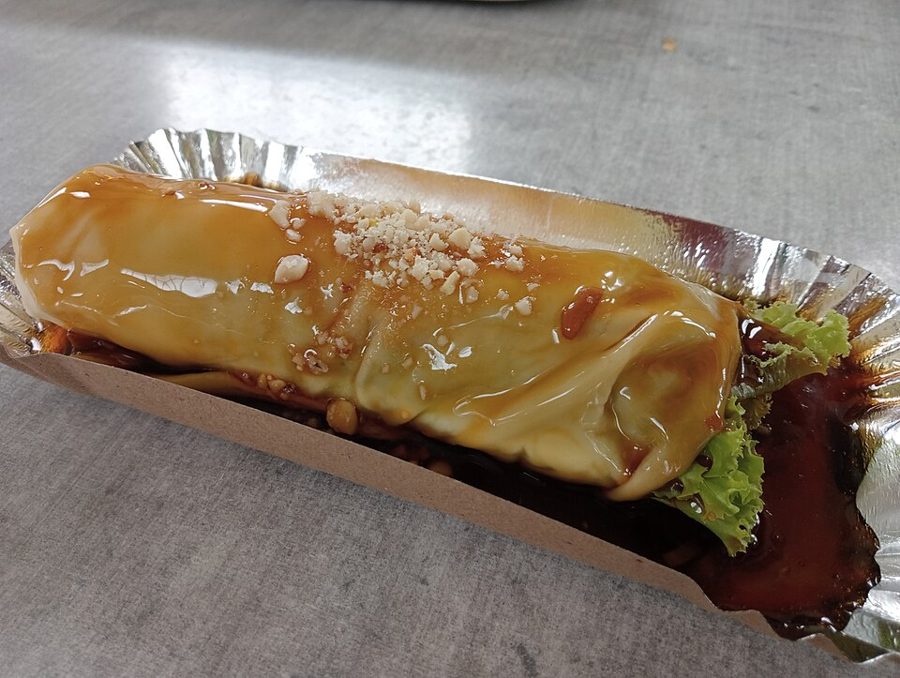
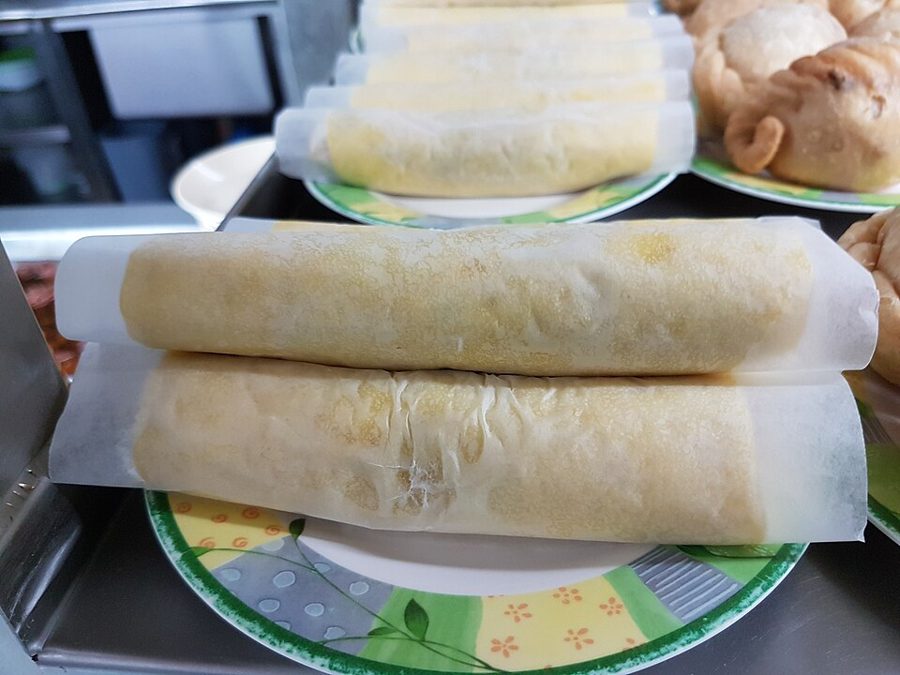
Lumpiang hubad, “naked lumpia”, is the same filling and sauce with no wrapper at all, which is what happens when the crepes tear or the cook runs out of patience.
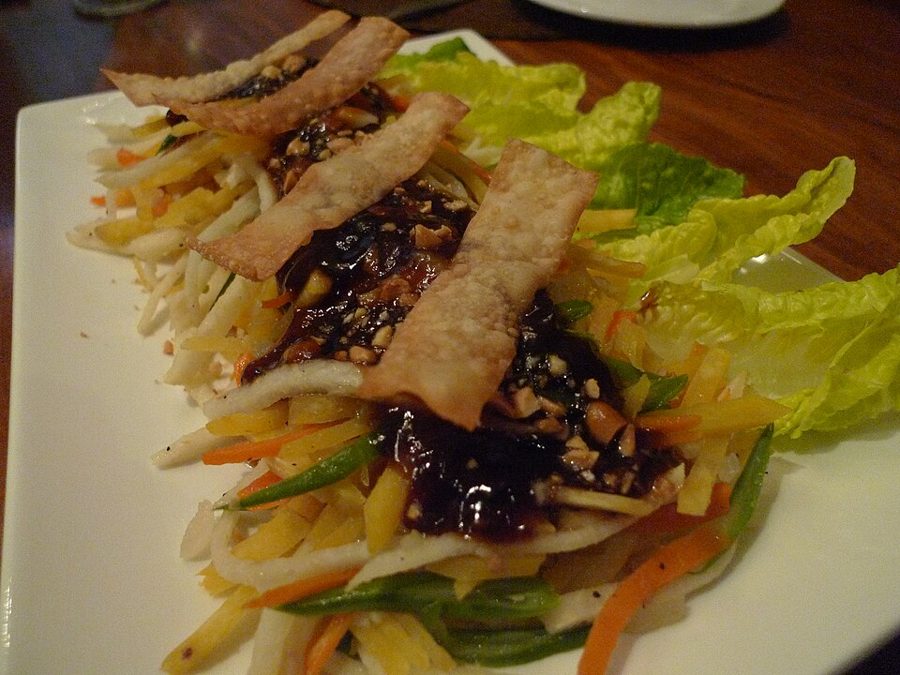
Lumpiang ubod, the Silay roll
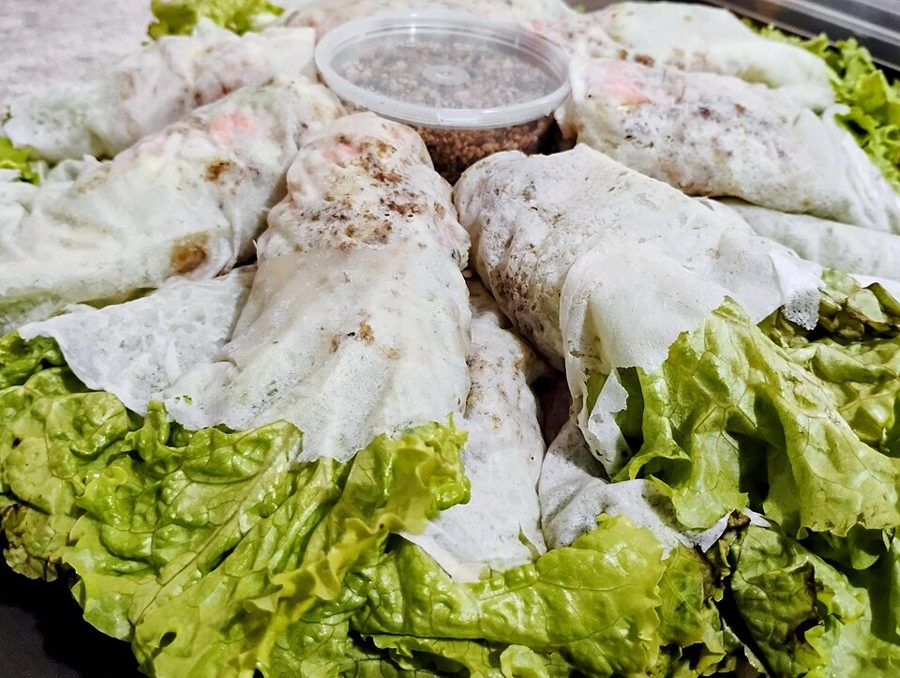
Ubod is the heart of the coconut palm, the pale core cut from the top of the trunk, and Silay in Negros Occidental is where the fresh roll made with it is said to come from. The Negrense version looks nothing like the Manila plate. It is small, pale and neat: julienned ubod sautéed with garlic and onion, bound with a slurry of cornstarch, brown sugar and water, and wrapped in a crepe thin enough to see through, with a lettuce leaf or a spring onion stem poking out of one end.
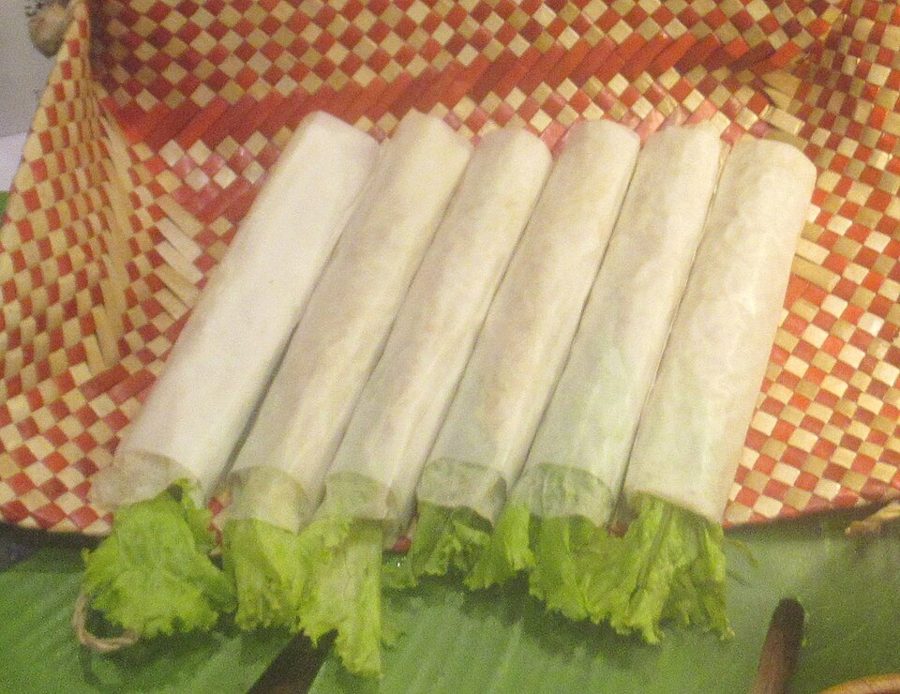
Silay’s lumpia makers date the dish to Chinese families who settled in the town in the early 1900s, when sugar money was building its big houses. In 2022 the Negros Season of Culture had the chef Richard Ynayan taste five Negrense versions of fresh lumpia ubod side by side, and the differences were the point: one with crushed chicharron for crunch, one sharp with raw garlic, one more savoury than sweet with mashed hard-boiled egg in the filling.
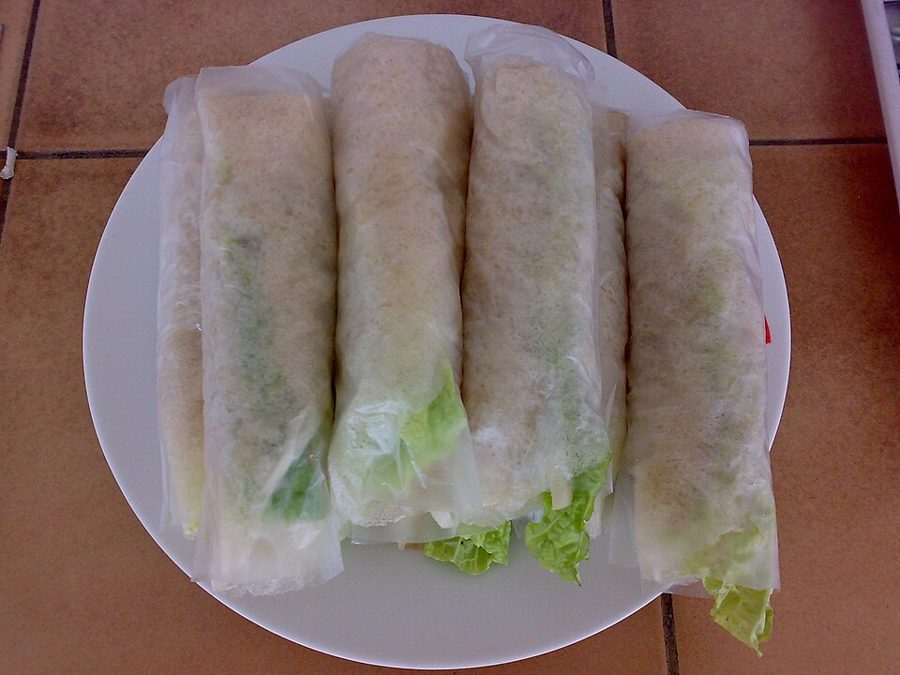
Turon, the sweet one
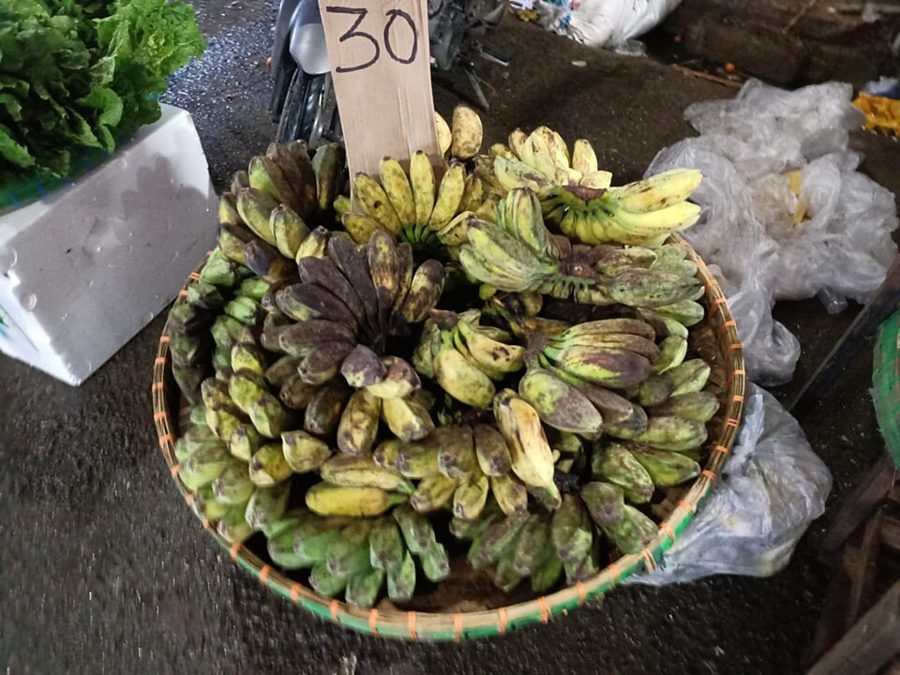
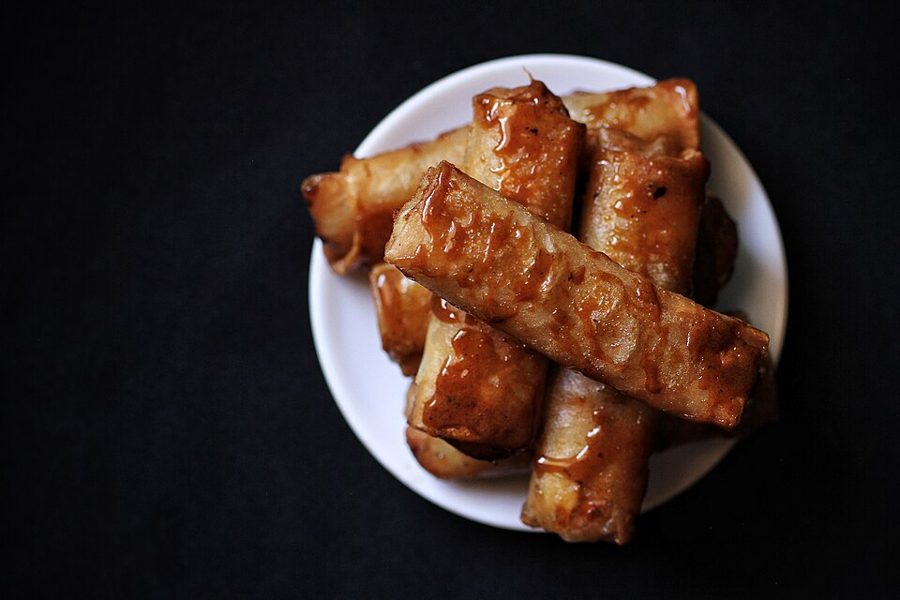
Turon, also called lumpiang saging, is a slice of ripe saba banana, often with a strip of ripe jackfruit (langka), rolled in brown sugar, wrapped and fried until sugar from the pan glazes the outside. Saba is a short, thick cooking banana that holds its shape in hot oil; a dessert banana turns to mush. Street carts sell turon all afternoon beside banana cue and camote cue, at ₱10 to ₱20 a piece in late 2026.
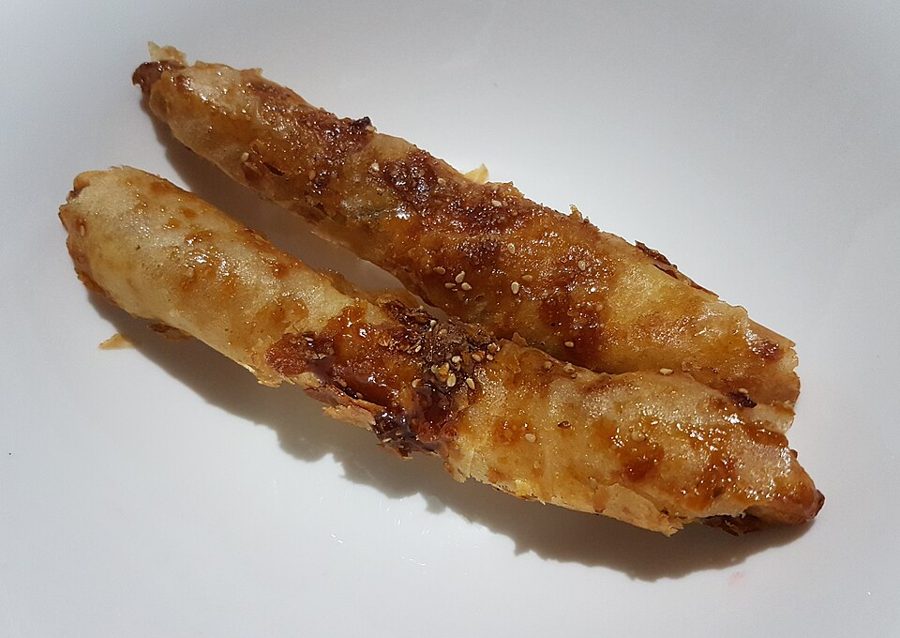
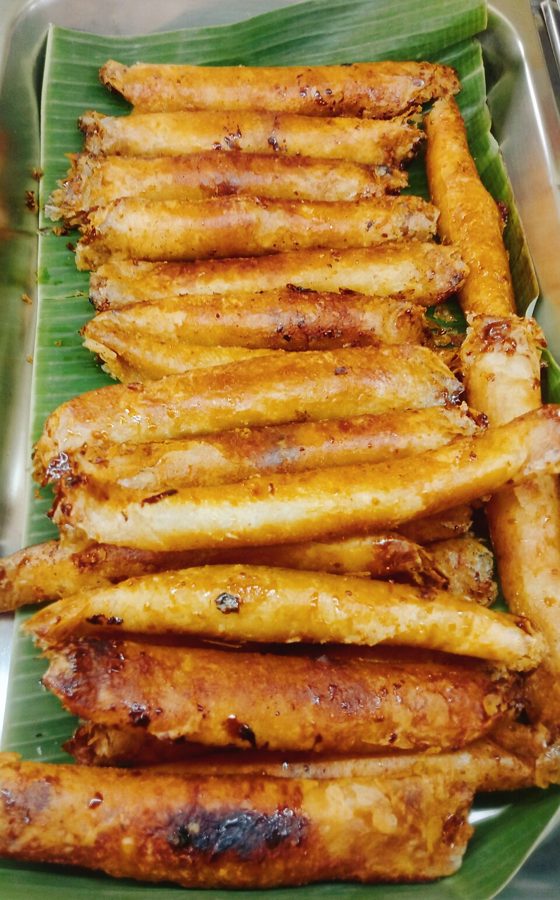
The sweet branch has its own spin-offs: ube turon with purple yam, turon with cheese, mango turon, and turrón de maní, a slim roll of crushed peanuts in an egg wrapper. In Malabon, north of Manila, “turon” can mean a mung bean roll and the banana one goes by another name, which is the kind of thing that starts arguments at a merienda table.
Ngohiong and dinamita
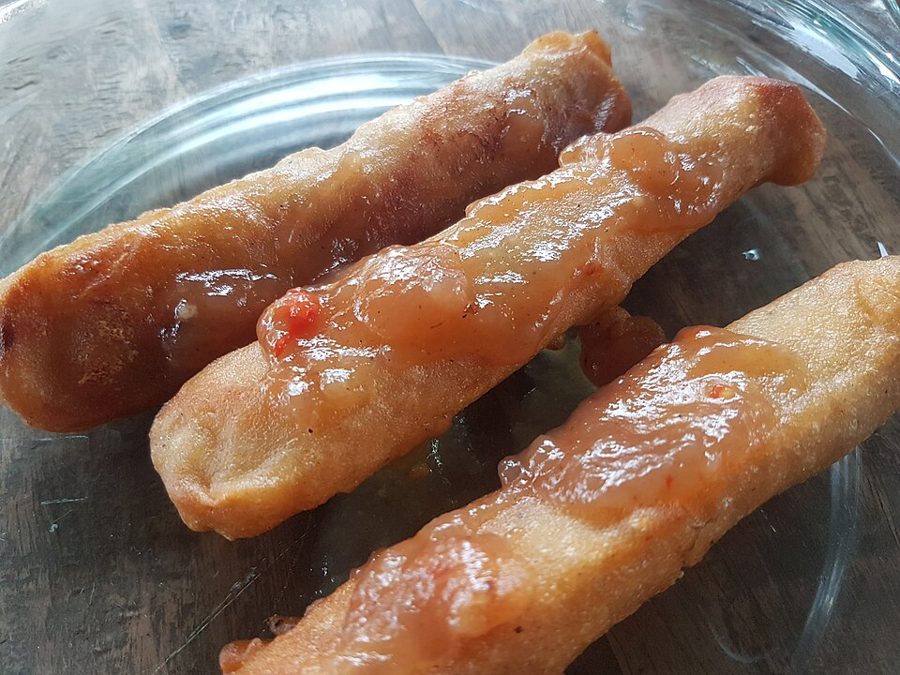
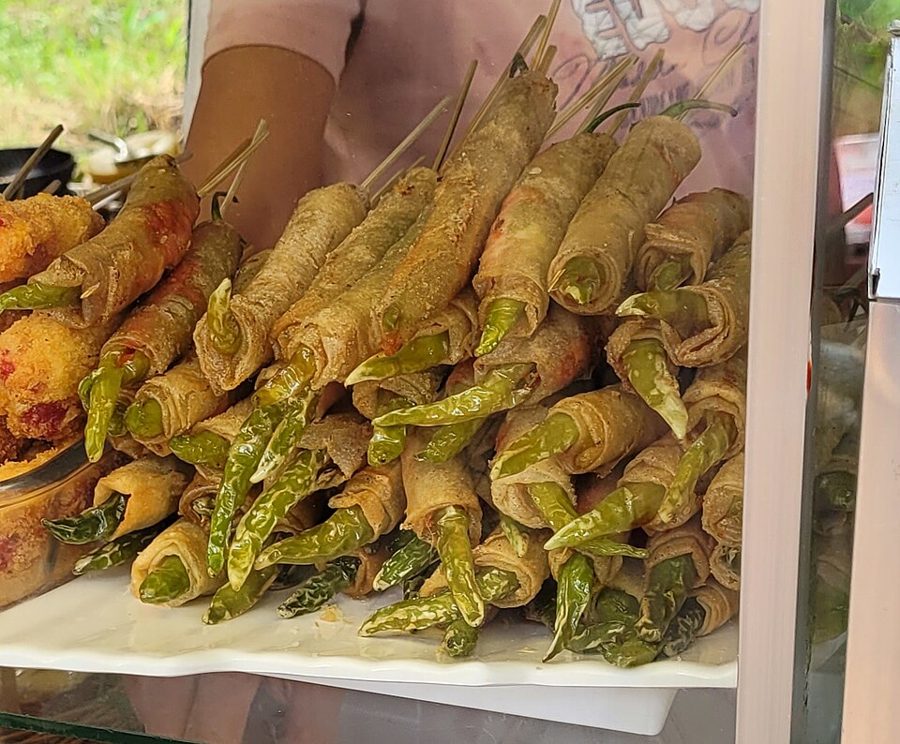
Ngohiong is Cebu’s lumpia, named after the Hokkien five-spice roll ngo hiang: ubod or singkamas seasoned with five-spice powder, wrapped, dipped in a thin batter and deep-fried, then eaten with a chilli dipping sauce and puso, rice boiled in a woven coconut-leaf pouch. Dinamita, “dynamite”, is a long green chilli stuffed with cheese or seasoned pork, wrapped with its stem sticking out, and fried as a beer snack.
Wrappers: thin, fresh and the wrong one
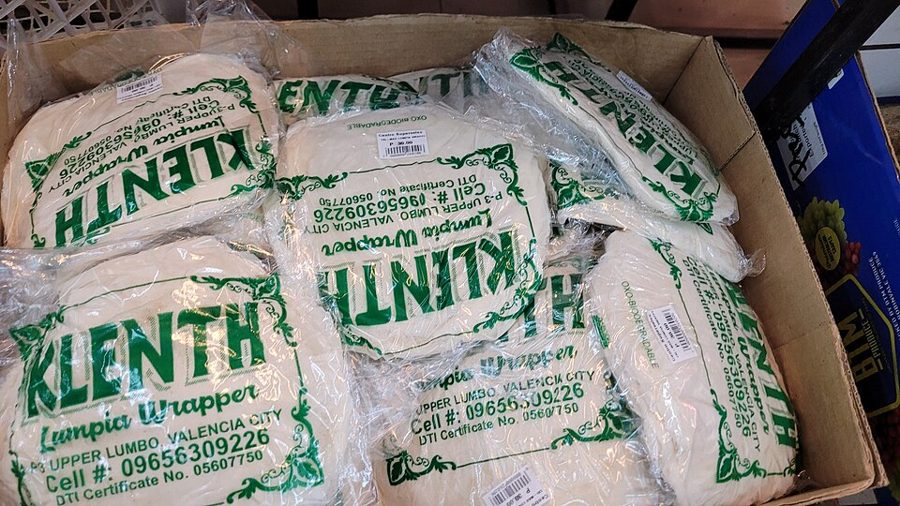
The fried-lumpia wrapper is flour, water and salt, sometimes with cornstarch, made by smearing a wet dough on a hot plate until a film sets. It fries up blistered and brittle. American egg roll wrappers are thicker and contain egg; they hold a filling, but the roll comes out heavy and bready, so use them only if there is nothing else.
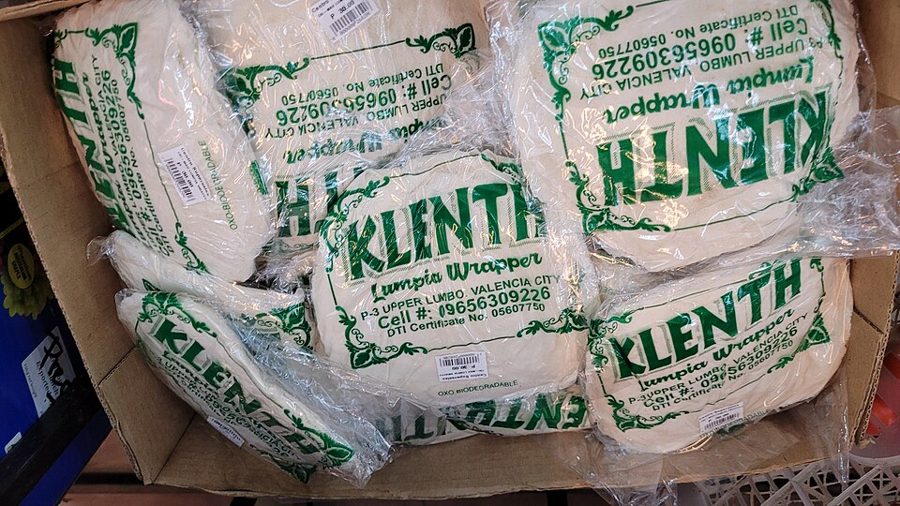
Outside the Philippines, look in an Asian grocer’s freezer for packs labelled “lumpia wrapper” or “spring roll pastry”, such as TYJ’s Spring Home. Thaw them completely in the unopened pack, then peel them apart one at a time; half-frozen sheets tear. Rice paper is a different thing, made for fresh Vietnamese rolls, and it fries badly.
Thin wrappers dry out within minutes once separated, and a dry one cracks when you fold it. Keep the stack under a damp, not wet, tea towel and take one sheet at a time. Old wrappers are stiffer and harder to seal, so buy the freshest you can.
The fresh-lumpia crepe is a different wrapper again: egg, flour and water, cooked in a lightly oiled non-stick pan until it lets go. It folds without cracking and is never fried. Some Philippine markets sell them, but they are easy to make, and the recipe below includes them.
Recipe card
Lumpiang Shanghai
Makes 40 to 45 thin rolls, about 80 bite-size pieces once halved, enough for 8 to 10 as party food. About 1 hour 30, most of it rolling, plus freezing time if you make them ahead.
Ingredients
For the filling
- 500 g (1 lb) ground pork, not the leanest
- 1 medium carrot, very finely minced (about ½ cup)
- 1 medium onion, very finely minced
- 3 cloves garlic, minced
- 60 g (½ cup) singkamas (jicama) or drained water chestnuts, finely chopped
- 2 spring onions, finely sliced
- 1 egg
- 1 tbsp soy sauce
- ¾ tsp salt
- ½ tsp ground black pepper
- 1 tsp sesame oil (optional)
For rolling and frying
- 40 to 45 thin lumpia wrappers, thawed if frozen
- 1 egg, beaten, or 1 tsp cornstarch mixed with 1 tbsp water, for sealing
- About 1 litre (4 cups) neutral oil, enough for 5 cm (2 in) depth
Method
- If the carrot and singkamas are wet after mincing, squeeze them in a clean cloth. Extra water makes the filling slump and the wrappers tear.
- Put everything for the filling in a bowl and mix with your hands for 1 to 2 minutes, until the mixture turns slightly sticky and holds together.
- Fry a teaspoon of filling in a little oil, taste it, and adjust the salt and pepper. Season it well: lumpiang Shanghai is often eaten with rice and no dip at all.
- Separate the wrappers and keep them under a damp tea towel. Lay one on the board with a corner or an edge towards you.
- Spread a heaped tablespoon of filling in a thin line about 2.5 cm (1 in) from the near edge, no thicker than your finger and stopping short of the sides.
- Fold the near edge over the filling and roll once, pressing out air. Fold in both sides, then roll up tightly.
- Brush the far edge with egg or the cornstarch paste and finish rolling to seal. Set it seam side down on a tray and cover the finished rolls as you go.
- To freeze, put the tray in the freezer uncovered for 1 to 2 hours, until the rolls are firm, then pack them into freezer bags. Use within 2 months for the best texture.
- Heat 5 cm (2 in) of oil in a heavy pan or wok to 170°C (340°F).
- Fry 6 to 8 rolls at a time, seam side down first, turning occasionally, for 4 to 5 minutes, until deep gold and the bubbling around them has slowed. From frozen, do not thaw: brush off any frost and add 1 to 2 minutes.
- Let the oil come back to 170°C (340°F) between batches and skim out any dark crumbs.
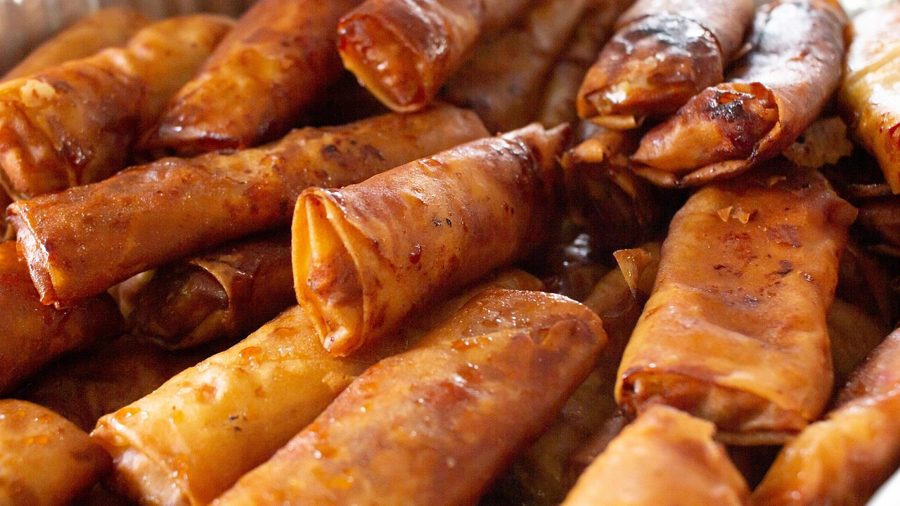
- Drain on a rack set over a tray, not on paper. Cut the first roll open to check the pork is cooked through, then halve the rest if you like and serve within the hour.
Rolling and frying, and why each step is there
Roll thin and tight
The recipes I compared, in English and in Tagalog, nearly all agree on two things: a tablespoon of filling per roll, and roll it tight (irolyo nang mahigpit). A loose roll traps air, which expands in the oil, splits the seam and lets fat in. An overfilled one stays raw in the centre.
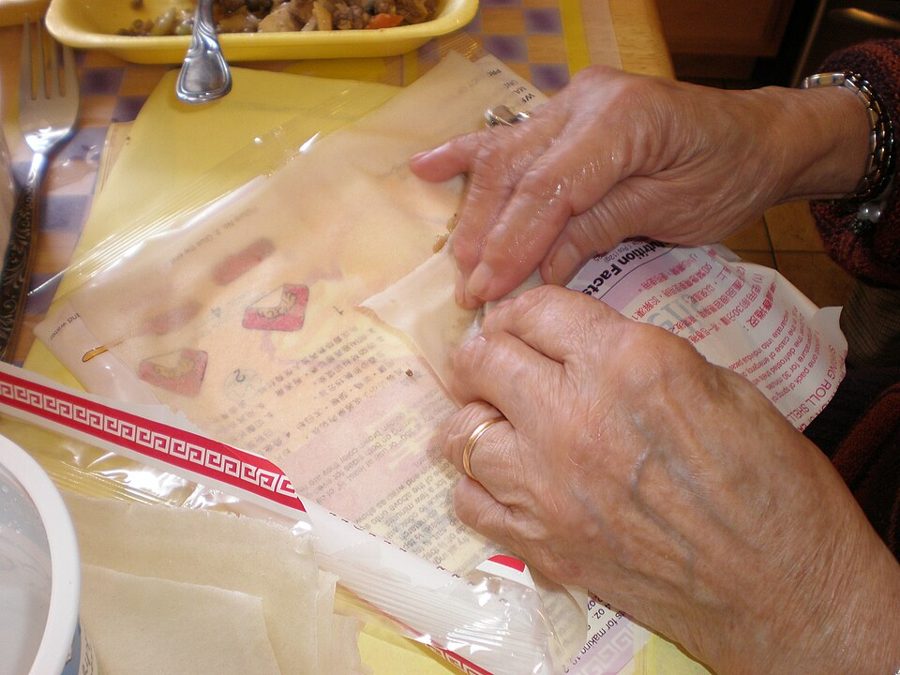
Seal with whatever suits your wrappers. Fresh, thin market wrappers stick with a dab of water; older or frozen ones want beaten egg or a cornstarch paste. Egg seals best but leaves bits that burn in the oil over a long session, so for a hundred rolls I’d use the paste.
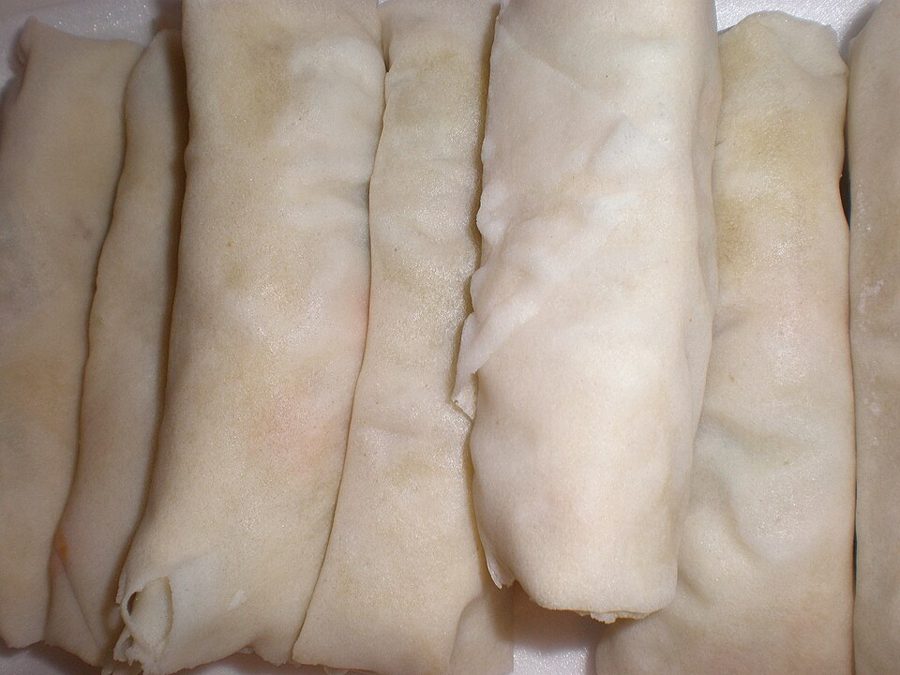
The oil temperature
Recipes disagree here more than anywhere. Most give 175°C (350°F); one of the most-used Filipino ones goes lower, 165°C (325°F), because the pork goes in raw. I fry at 170°C (340°F): hot enough that the wrapper sets at once instead of drinking oil, cool enough that the centre reaches the USDA’s 71°C (160°F) for ground pork before the outside darkens.
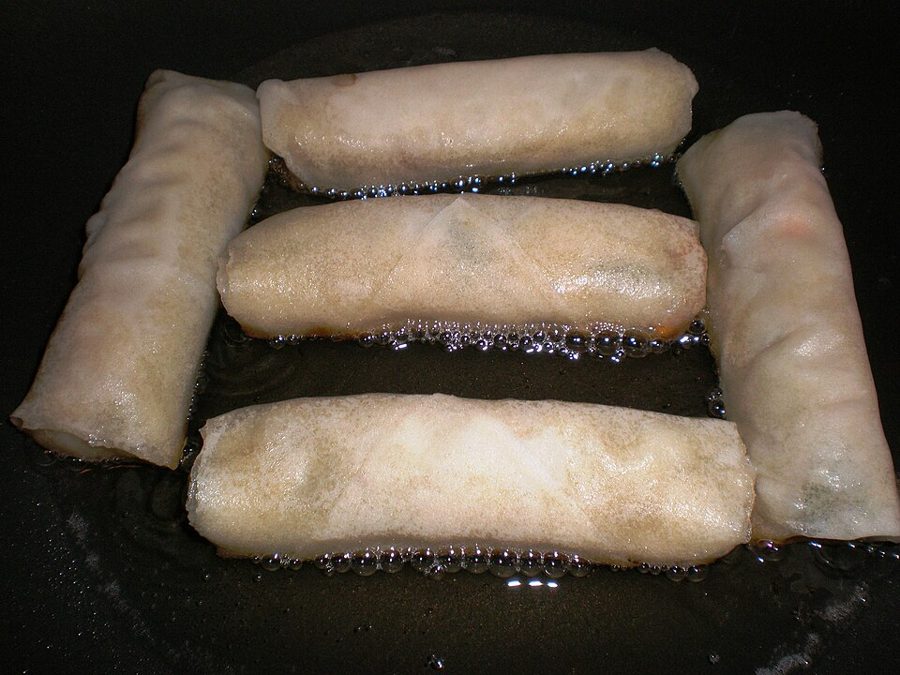
No thermometer? Drop in a scrap of wrapper. It should sizzle at once and rise to the surface; if it sinks and sits, the oil is too cool. The Filipino home test for a raw-filled roll is simpler still: it is done when it floats and the hiss has dropped to a murmur.
Draining, and keeping them crisp
Drain on a wire rack, not kitchen paper, where the underside steams and softens. Taking lumpia to a party? Carry them in a box with the lid ajar; a sealed tub turns crisp rolls limp by the time you arrive.
Leftovers keep three days in the fridge. Reheat them in an air fryer or hot oven at about 190°C (375°F) for 8 to 10 minutes, never in a microwave. An air fryer will also cook raw rolls brushed with oil, at the same temperature for 10 to 12 minutes, though they come out paler and drier than fried ones.
Batch-freezing for a party
This is how Filipino households do it: roll a few dozen at the weekend, freeze them raw on a tray, bag them, and fry straight from frozen whenever a crowd turns up. Thawed rolls go soggy and split in the oil. Two months is the sensible limit, after which the wrappers dry and the filling tastes of the freezer.
Recipe card 2
Lumpiang sariwa with peanut-garlic sauce
Makes 8 large rolls, to serve 4 as a meal or 8 as a starter. About 1 hour 15: the filling, the crepes and the sauce each take around 20 minutes.
Ingredients
For the filling
- 3 tbsp oil
- 280 g (10 oz) firm tofu, cut into small cubes
- 1 onion, chopped
- 2 cloves garlic, minced
- 150 g (1 cup) sweet potato (kamote), in small cubes
- 120 ml (½ cup) water
- 80 g (½ cup) small peeled shrimp
- ½ small head cabbage, shredded (about 450 g, 1 lb)
- 100 g (¾ cup) green beans, thinly sliced
- 1 medium carrot, cut into matchsticks
- 2 tbsp fish sauce (patis)
- ⅛ tsp ground black pepper
- 8 lettuce leaves
For the crepes
- 2 eggs
- 2 tbsp neutral oil, plus a little for the pan
- 360 ml (1½ cups) water
- 125 g (1 cup) plain flour
For the sauce
- 360 ml (1½ cups) water or light pork or chicken stock
- 6 tbsp (about 75 g) brown sugar
- 1½ tbsp soy sauce
- 1 tbsp minced garlic, plus 2 cloves minced raw garlic to finish
- 1 tbsp cornstarch mixed with 3 tbsp water
- 70 g (½ cup) roasted peanuts, crushed
Method
- Fry the tofu cubes in the oil until golden on all sides, lift them out and set aside.
- In the same pan, soften the onion and garlic over medium heat. Add the sweet potato and water, cover, and cook for about 5 minutes, until the sweet potato is just tender.
- Uncover and let the liquid cook off. Add the shrimp and tofu and stir-fry for 1 minute.
- Add the cabbage, green beans and carrot and stir-fry for about 3 minutes, so they wilt but keep some crunch. Season with the fish sauce and pepper, then tip into a colander set over a bowl to cool and drain. Keep the liquid for the sauce.
- For the crepes, beat the eggs with the oil and water, then whisk in the flour a little at a time until smooth and runny.
- Heat a 23 cm (9 in) non-stick pan over medium-low heat and wipe it with oil. Pour in ¼ cup (4 tbsp) of batter and swirl it over the base.
- Cook for 30 to 60 seconds, until the edges lift and the top looks dry, and slide it out. There is no need to flip it; a crepe cooked on one side stays softer. Stack the crepes with baking paper between them. You should get 8 or 9.
- For the sauce, bring the water or stock, plus any liquid drained from the filling, to the boil with the sugar, soy sauce and the tablespoon of garlic. Stir in the cornstarch mixture and simmer, stirring, until it thickens and turns glossy. Stop while it is a little thinner than you want; it thickens as it cools.
- To assemble, lay a crepe flat, put a lettuce leaf on it with the frilly edge over the top, and spoon about ½ cup of filling in a line on the lettuce.
- Fold the bottom of the crepe up over the filling, fold in one side, and roll, leaving the top open so the lettuce shows.
- Serve with the warm sauce spooned over, the crushed peanuts and a little raw garlic scattered on top. Eat within a few hours.
The sauce varies more than anything else in this dish. Tagalog home recipes often run sweeter and saltier, up to a cup or two of sugar and half a cup of soy to a litre of water. I keep it lighter so the vegetables still taste of themselves; it should be sweet first, then salty, and you can add sugar a spoonful at a time.
Dips: sweet, sour and banana red
Fried lumpia gets a dip, and Filipinos have firm views on which. Abroad, sweet chilli sauce has become the default, and it works, sweet and gently hot against salty pork. At Philippine parties you are as likely to get agre dulce, a sweet-sour sauce thickened with cornstarch.
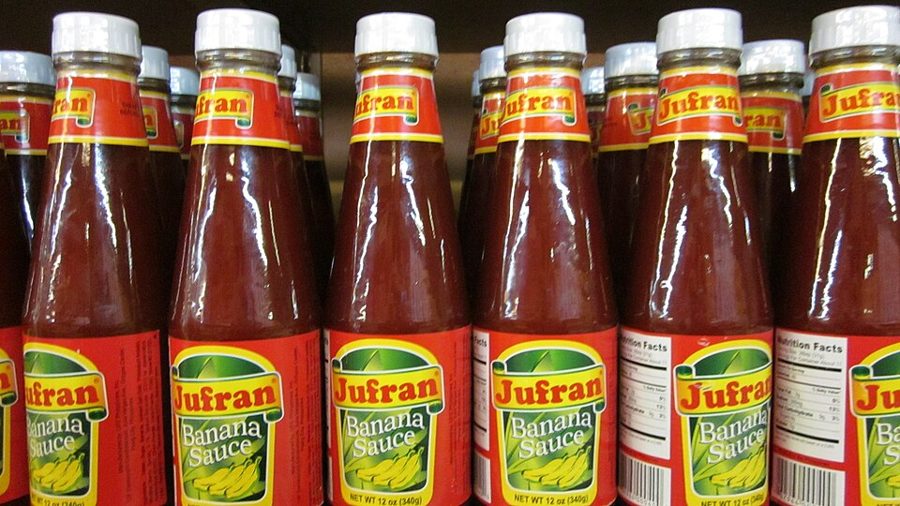
Banana ketchup is the other party favourite, straight from the bottle: bananas, sugar, vinegar and spices, dyed red to pass for tomato ketchup. The food technologist María Orosa is credited with inventing it, and it was being mass-produced by 1942, when war made tomatoes scarce and bananas were everywhere. Stirred into mayonnaise it is the usual dip for lumpiang keso, the fried cheese stick.
The dip I reach for is spiced vinegar: cane or coconut vinegar with crushed garlic, a chopped siling labuyo (the small, fierce bird’s eye chilli), salt and black pepper, left to sit for an hour. It cuts the fat better than anything sweet, and it is what vegetable lumpia and lumpiang toge are made for. In the Visayas, bottles of chilli-steeped sinamak do the same job.
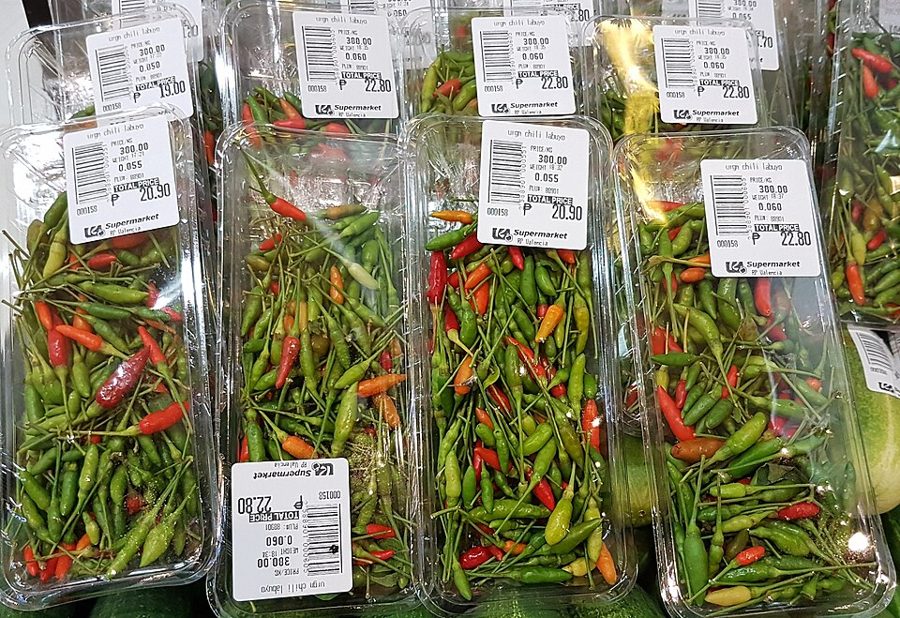
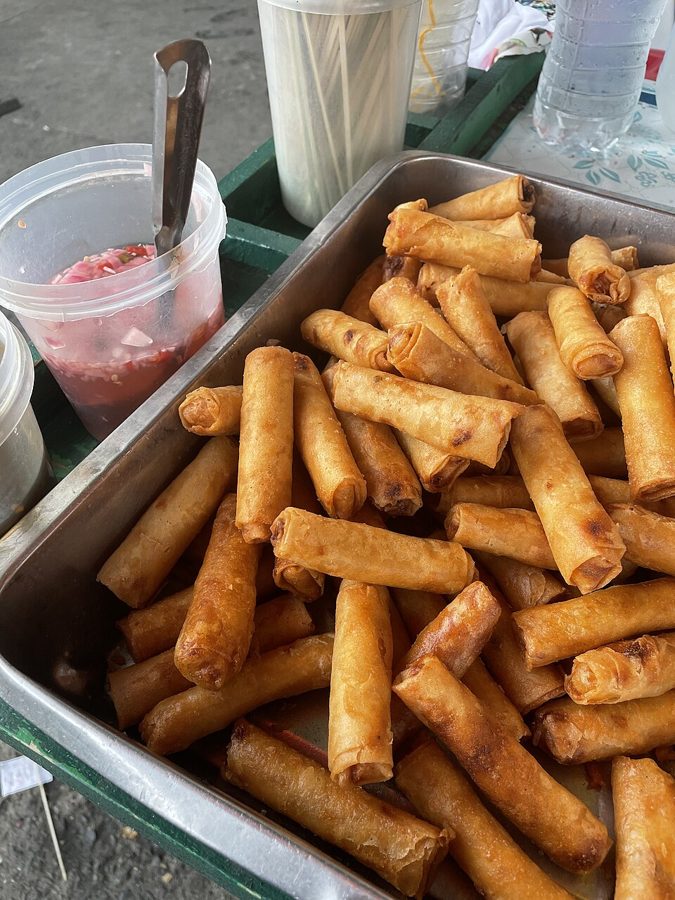
Two more are worth knowing. Some cooks put out the sweet liver sauce that goes with Manila-style roast pig; Cebu’s lechon needs no sauce, but the bottled Manila one turns up on lumpia trays everywhere. And lumpiang prito often comes with toyomansi, the soy and calamansi dip Filipinos also put next to fried fish.
Where to eat lumpia in the Philippines
Lumpia is everywhere, which makes it easy to eat badly: rolls fried in the morning and left in a warmer until dusk. The places worth a detour make it fresh and sell out.
Binondo, Manila
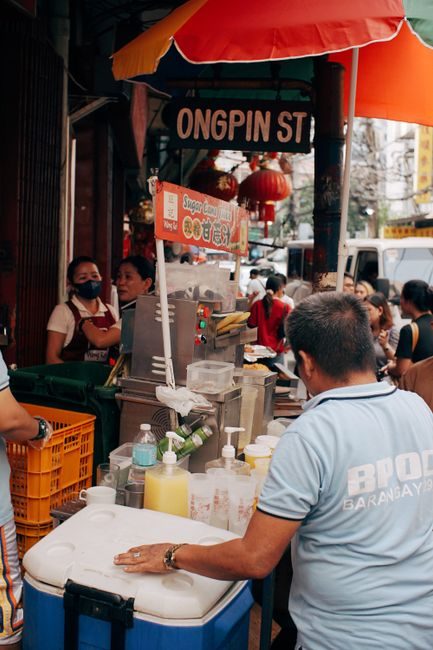
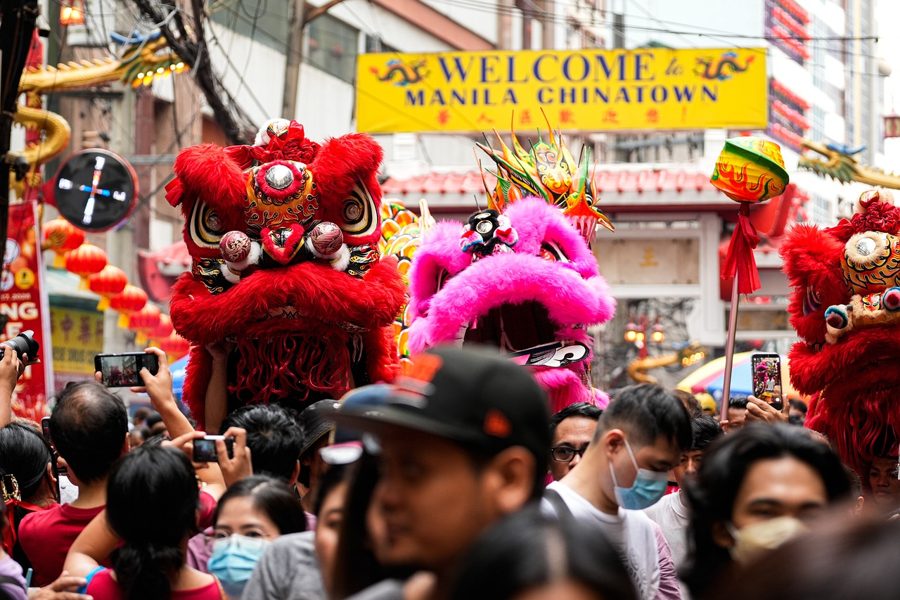
Manila’s Chinatown is where the Hokkien fresh roll still looks most like its ancestor. New Po-Heng Lumpia House has been the name people give for fresh lumpia in Binondo for years, and it was still selling it in 2026. Its rolls are the Chinese-Filipino kind, packed with vegetables and finished with peanut sauce and traditionally powdered seaweed, closer to a Xiamen popiah than to the Manila party plate. Eat it within the hour; a fresh roll does not travel.
Silay, Negros Occidental
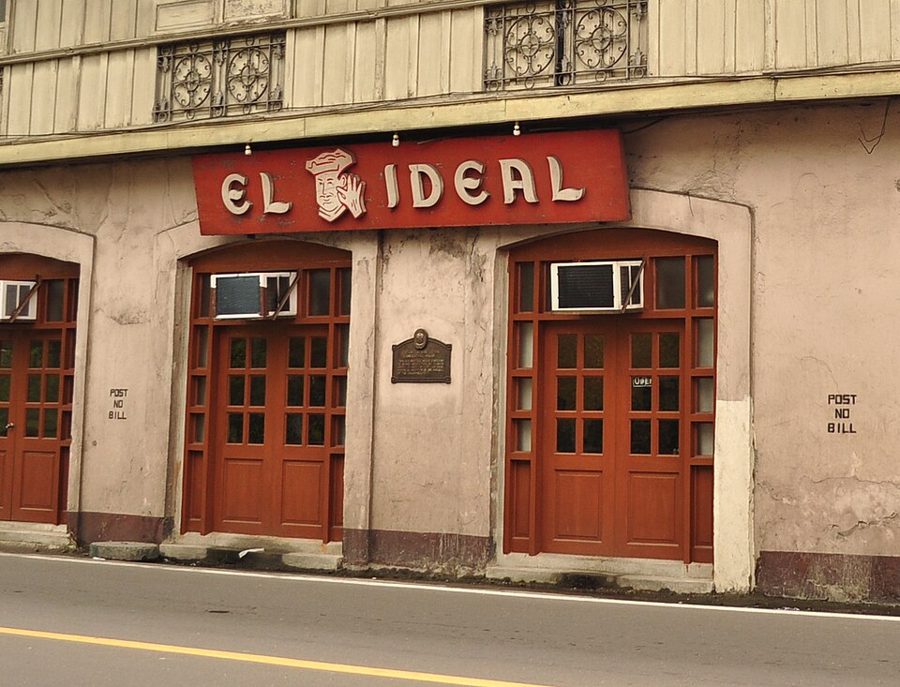
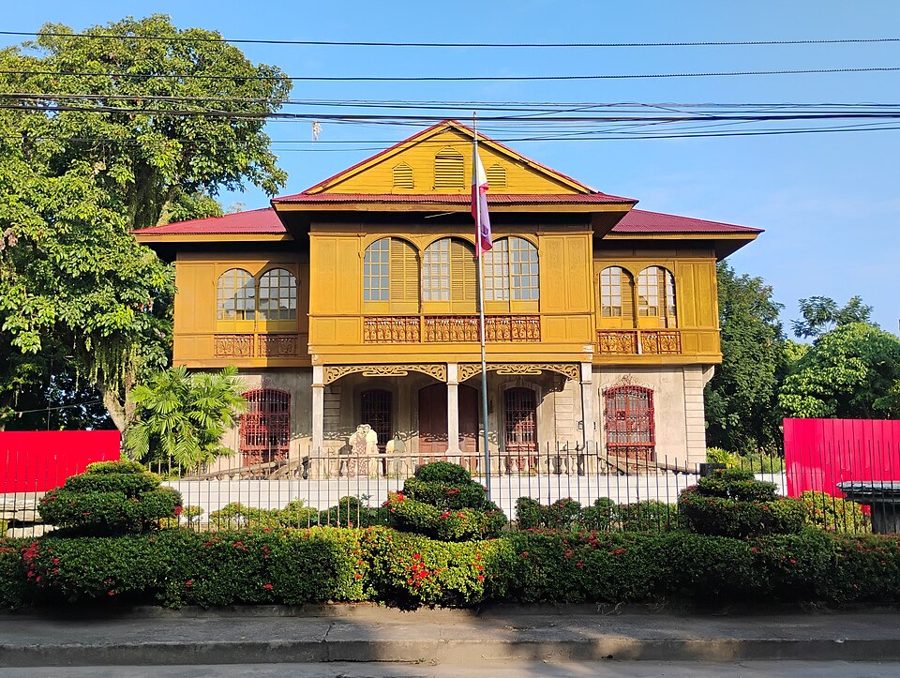
Silay is about half an hour north of Bacolod by road and, with its sugar-era houses, the best day trip in Negros for anyone who eats. El Ideal, the bakery and café on Rizal Street since the 1920s, sells its fresh lumpiang ubod in the old Cesar Lacson Locsin house, along with empanada de kaliskis and pili squares. Its lumpia is the savoury one, with egg in the filling, and in 2026 it was also selling packs of ready-to-cook ubod rolls.
Sinda Belleza’s Fresh Lumpia is the other name in town: the classic Silay market roll, finished with crushed chicharron, now with its own café on Rizal Street opposite BDO. It had a stall at Kaon Ta!, Silay’s heritage food festival, held on 5 to 8 November 2026 on the grounds of Balay Negrense. The festival usually falls in early November, around the Cinco de Noviembre anniversary of the 1898 Negros revolt, and it is the easiest time to taste several Silay lumpia in one afternoon.
The cheapest and often the freshest are the plain rolls laid out on cloth-covered winnowing trays in Silay’s public market and hawked on buses across Negros. Eat them the same morning.
Cebu
In Cebu, lumpia means ngohiong, one of the fixtures of Cebu’s street food. Doming’s Ngohiong, frying it since the 1960s, runs its main shop in Fairlane Village, Guadalupe, and was still at it in November 2026. Order it with puso and a cup of the house sauce, and eat it while the batter is crisp.
Street carts, anywhere
For turon and lumpiang toge you need no address. Look for the cart with a wok of oil going in the afternoon, near a school, a church or a jeepney stop, and buy from the one that is frying, not the one with a full tray. Turon is ₱10 to ₱20 a piece in late 2026.
Taking lumpia home
Frozen lumpiang Shanghai from a Philippine supermarket is tempting cargo, but not for a flight to the United States. African swine fever has been in the Philippines since 2019, and the USDA asks travellers not to bring pork products from countries with African swine fever. All food has to be declared, and under CBP’s rules on agricultural products an undeclared prohibited item is confiscated and can cost up to US$1,000 for a first offence. Other countries set their own rules on pork, so check before you pack.
Wrappers, turrón de maní and banana ketchup are easier. The filling is simpler to make at home than to carry: ground pork, a carrot, an onion and a pack of wrappers from the freezer cabinet.
Back in your own kitchen, make one batch of lumpiang Shanghai, fry half and freeze the rest. Next time guests are coming, heat the oil to 170°C and let the first roll from the freezer tell you how the oil is behaving. Cut it in half. If it is gold outside and cooked through, the tray will be empty before you sit down.