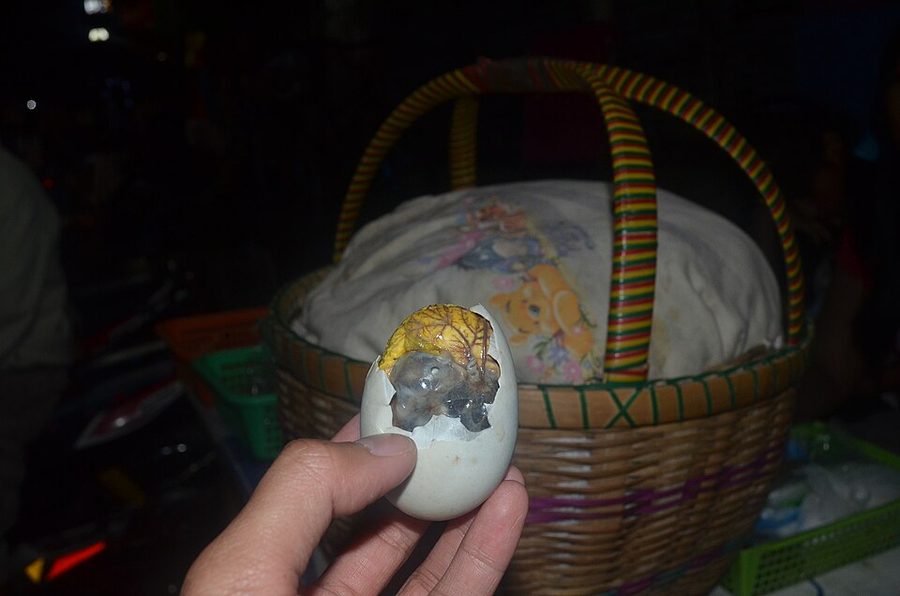
The basket comes out after dark. The vendor sets it down, folds back the cloth, and the eggs underneath are still warm from the sand packed around them. You pick one, he tears off a scrap of paper with a pinch of rock salt in it, and further down the street another seller is calling the word itself, two long syllables into the night: “Baluuut!”
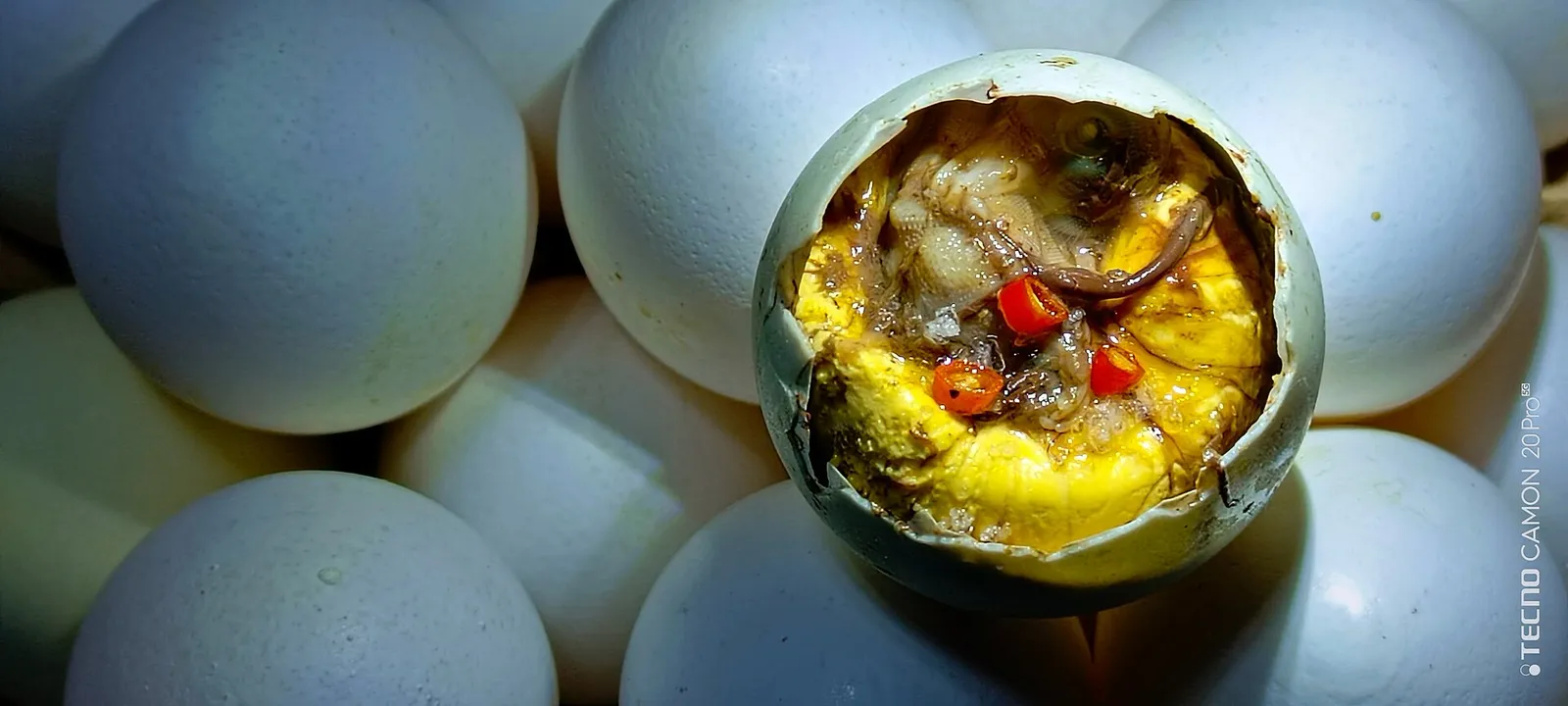
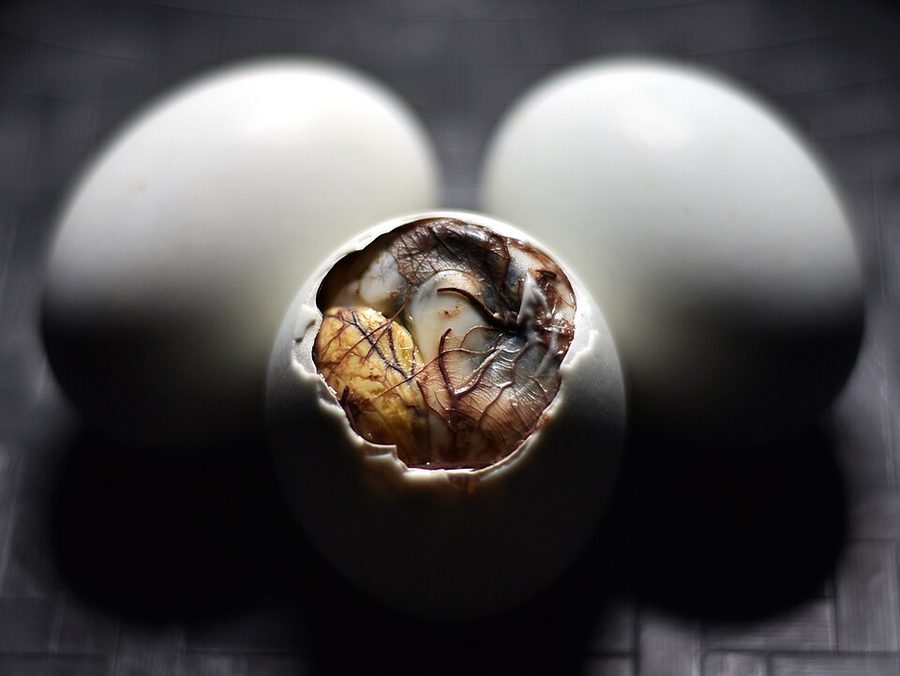
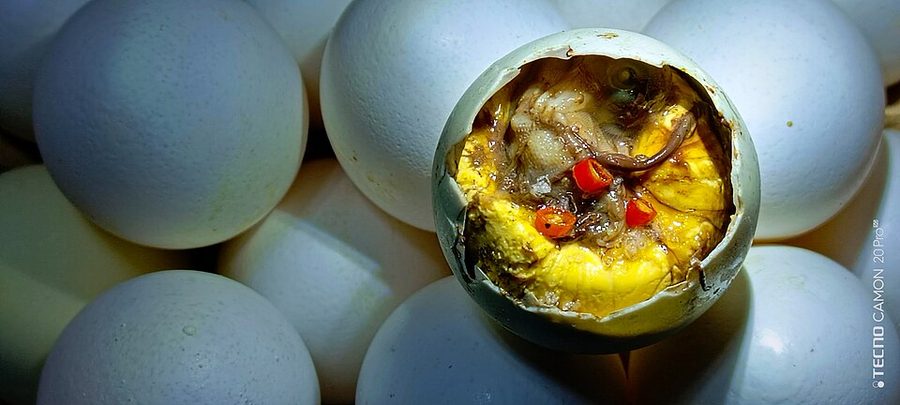
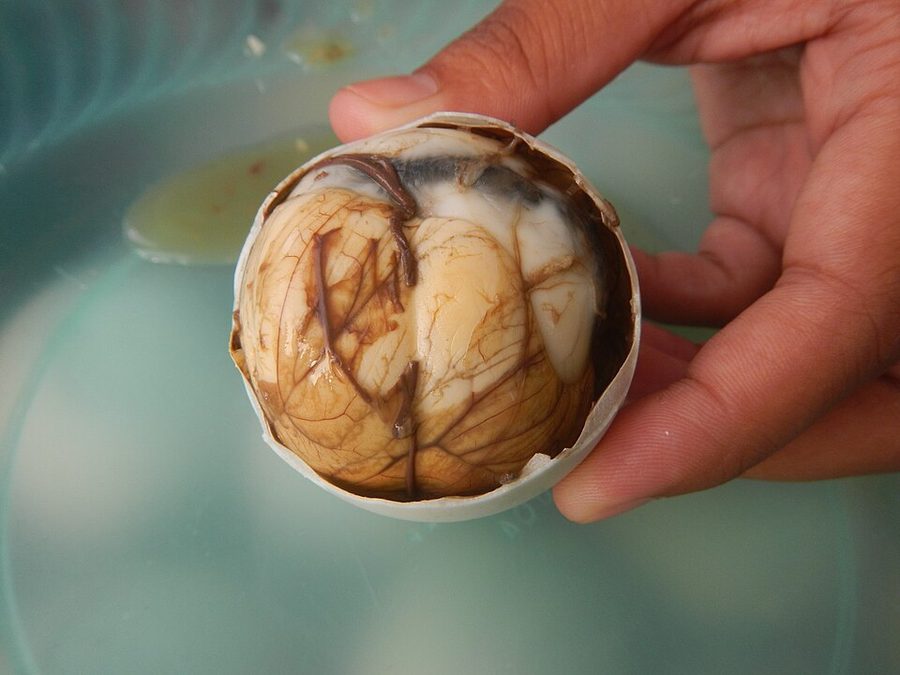
What you are holding is a duck egg that went into an incubator fertilised and came out about eighteen days later, just before it was boiled. Inside there is a spoonful of hot broth, a yolk, a firm white knot the vendors call the stone, and a duck embryo folded against the shell. Timed well, the embryo is still wrapped in a thin pale membrane, and that is the egg Filipinos want.
Abroad, balut is a dare, the egg people film themselves eating. At home it is a cheap, hot, salty snack for the walk home or the second bottle of beer, and the way it is made was refined in one small town beside the Pasig River whose name means duck raisers.
Contents 10 parts
- 01Wrapped in white: what is in the shell
- 02Pateros, the duck town
- 03How balut is made: the balutan
- 04Where balut comes from now
- 05How to eat balut
- 06The evening vendor
- 07Is balut safe? The questions people ask first
- 08Balut abroad: Vietnam, Cambodia and the US
- 09Balut in the pan, and its battered cousins
- 10Boiled balut or penoy at home
Wrapped in white: what is in the shell
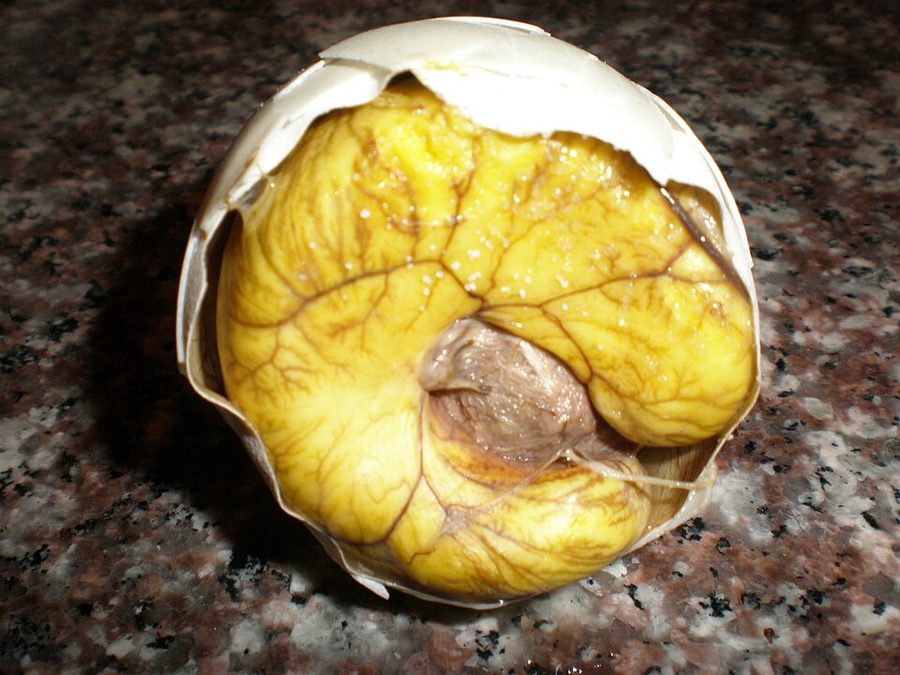
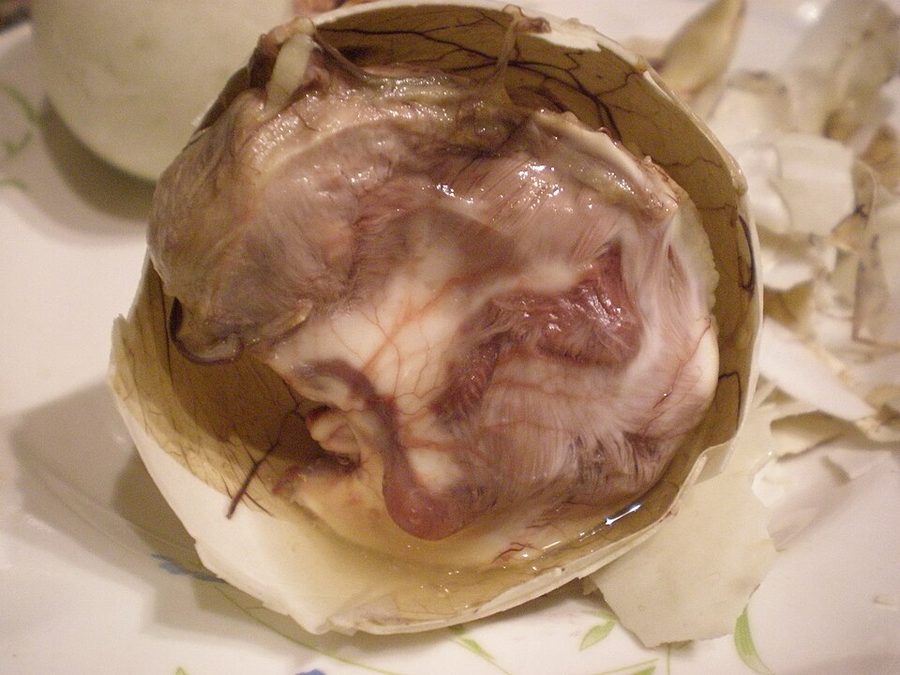
The word is plain Tagalog. Balot, the spelling you will see on half the hand-written signs, means wrapped, and it describes how the eggs were once incubated: bundled in cloth bags inside baskets. It also describes the egg everyone is after, balut sa puti, wrapped in white, where the embryo is still covered by a whitish membrane and has no visible feathers or hard beak.
Days matter more than anything else. Philippine balut is usually incubated somewhere between 14 and 18 days, and the makers’ favourite is 17 to 18, which is balut sa puti. A 2019 study of the balut industry in the Journal of Ethnic Foods puts it plainly: 16 days for a first-timer, because the bones and beak are softer, and 18 for everyone else.
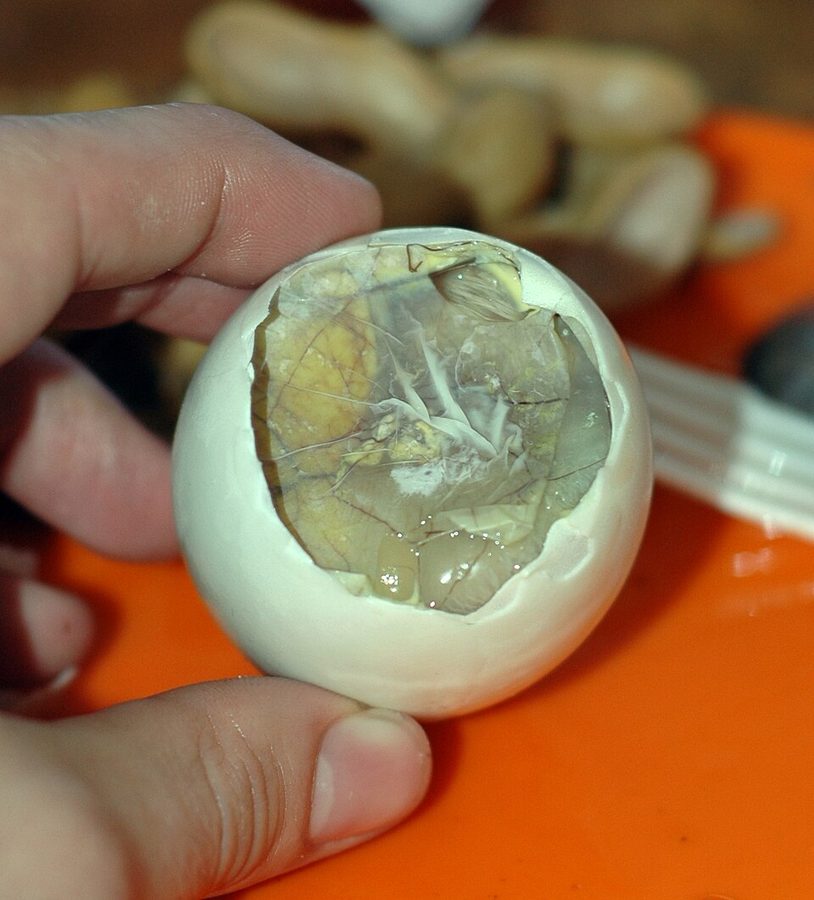
The vendors divide a good egg into four parts: the embryo, the yolk, the broth (sabaw) and the bato, the stone. The stone is the albumen that never got used. Boiled, it goes hard and rubbery, and most people leave it.
There are two kinds of balut by look. In a mamatong the embryo floats above the yolk and white; in balut sa puti it is cupped under the membrane. Some buyers swear you can tell them apart in a bowl of water, the mamatong floating and the balut sa puti sinking, but that is a local belief rather than a reliable test.
Penoy, abnoy and ukbo
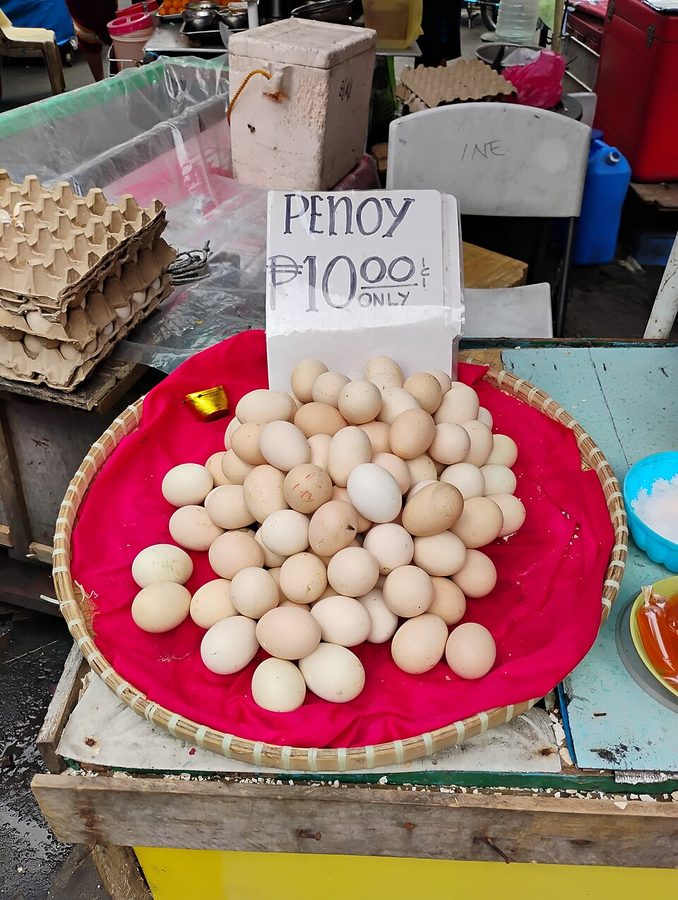
Not every egg becomes balut. One that shows no embryo when it is held up to a light is penoy: boiled, it tastes like a rich hard-boiled duck egg. There are two styles, penoy na may sabaw, with a little balut-like broth, and penoy na tuyo, dry, and I would steer anyone nervous about balut to the first.
An egg that starts to spoil is abnoy, from abnormal, and it smells of sulphur when you crack it. It still gets eaten, scrambled into a pungent omelette that is rarely sold. At the other end, an egg left past the balut stage holds an almost-hatched duckling, ukbo, which gets peeled and cooked as adobo.
Pateros, the duck town
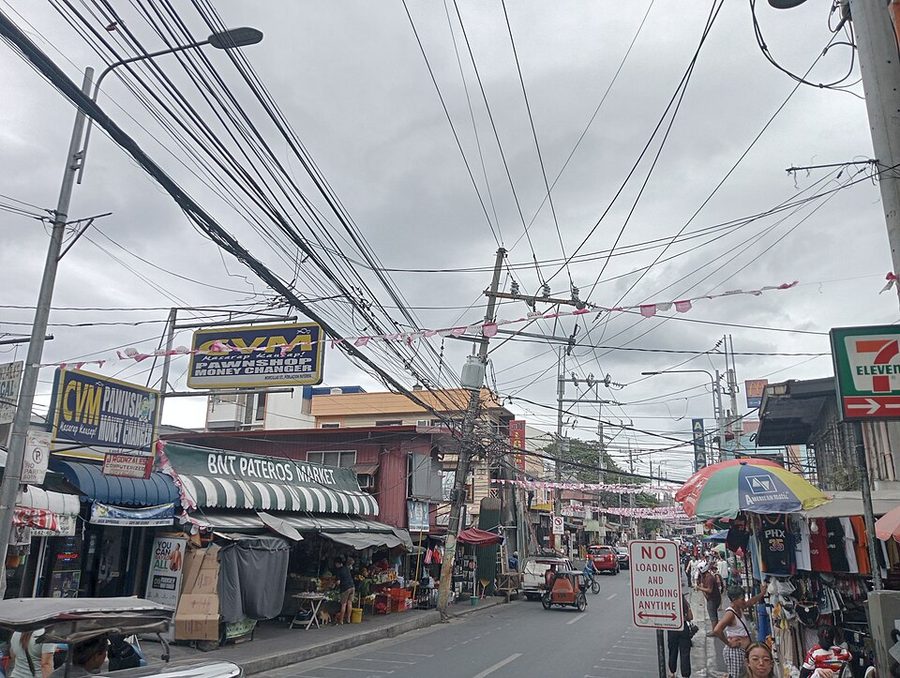
Pateros is the only town in Metro Manila that never became a city, and the smallest place in the capital by area. Until 1799 it was a barrio of Pasig called Aguho, a river landing; then the Spanish made it a town, and its name is usually read as pato, duck, turned into pateros, the men who raise them. An American envoy who came through in the 1830s, Edmund Roberts, called it Duck-town and wrote that he had never seen so many ducks in one place.
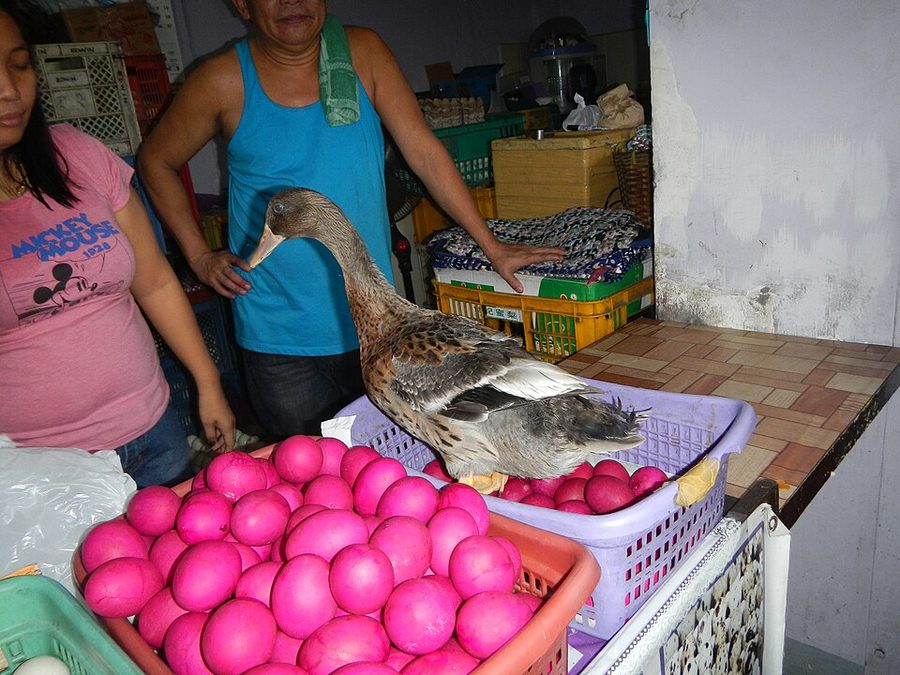
The ducks were itik, the small local mallard-type layers known everywhere as the Pateros duck. They foraged for snails and shellfish in the Pateros and Pasig rivers, and in the 1950s the town is estimated to have kept around 400,000 of them. Balut-making was a cottage industry here, and by the 1960s Pateros balut had the reputation of being the best, made by people who chose their eggs one at a time.
The river ended it. Through the 1970s, building and pollution on the Pasig killed the snails and shellfish the ducks lived on, and the flocks went. The craft did not: Pateros balut-makers kept going with eggs brought in from Bulacan, Laguna and Nueva Ecija, and they still do.

The town has spent years trying to keep the name it earned. It exempted duck egg processors from local business tax and the mayor’s permit fee, and it started a Balut sa Puti Festival built around a cooking contest with balut as the main ingredient. In 2019 the mayor told the Department of Tourism that the town wanted balut to be its main industry again, with a commission for the trade and talk of a new municipal duck farm.

In July 2026 the municipal council went further and passed an ordinance declaring the Balut sa Puti Festival a cultural property of the town. A thousand-egg adobo in 2015, a festival with legal standing a decade later: for a place that no longer keeps many ducks, Pateros guards the egg closely.
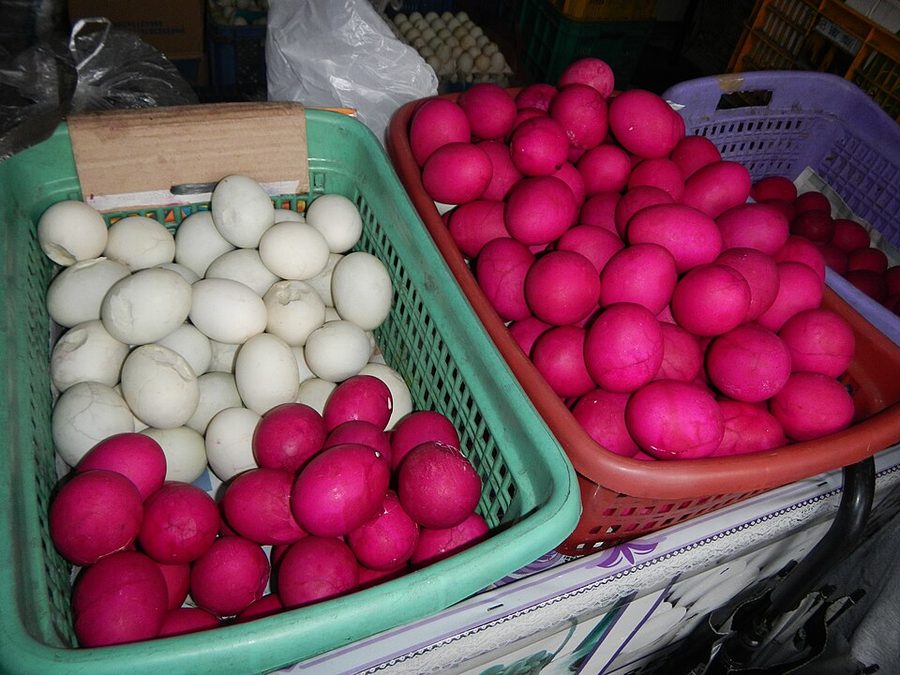
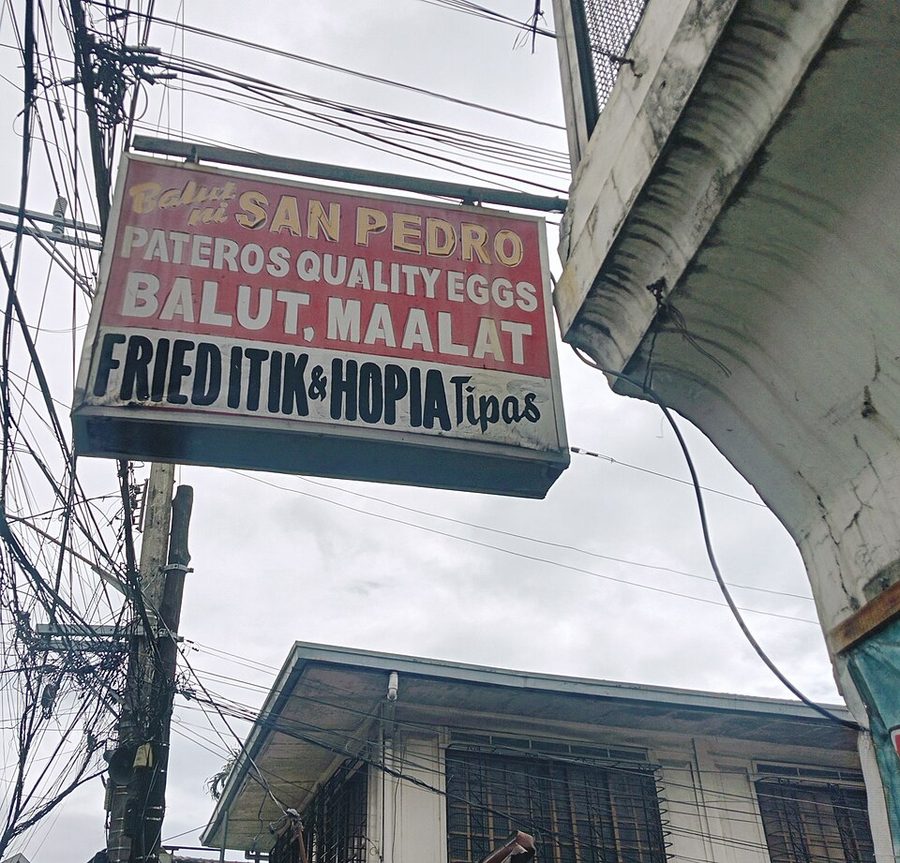
The other Pateros egg is the salted one, itlog na maalat, cured duck eggs sold dyed bright red so nobody mistakes them for fresh. You will see both on the same shop sign, sometimes with fried itik.
How balut is made: the balutan
The idea of eating incubated duck eggs is usually credited to Chinese traders who settled along Laguna de Bay in the sixteenth century; in China the eggs are still sold as maodan, hairy egg. The method Filipinos built around it is their own, and it runs on heat, darkness and patience. The workshop is the balutan, and the maker is the magbabalut.
Selection comes first. Makers want thick-shelled eggs less than five days old, and they sort them by pitik, flicking each egg with a fingernail: a cracked egg sounds hollow, a thin shell sounds brittle, and only the dull solid tap goes forward. The chosen eggs spend two to seven hours in the sun to warm and dry before they go inside.
The traditional balutan is a dark, humid shed of bamboo and nipa palm. Inside stand barrel-shaped bamboo incubators about a metre tall, each holding ten baskets of 100 to 120 eggs, with the eggs wrapped in abaca cloth bags called tikbo. Between the baskets go sacks of palay, unhusked rice, or rice husks heated in copper kettles, and in Pateros the husks were mixed with mud to hold the heat.
The eggs are turned two or three times a day so no side overheats, with the oldest eggs moved to the top and the newest kept at the bottom. That is the hard part of the trade: there is no thermostat, only experienced hands and a schedule.
Candling sorts the batch. Each egg is held to the hole of a silawan, a box with a bulb inside, and a fertile egg shows a dark spot with veins spreading like a spider; a clear one becomes penoy. Makers check around day 11 and again at day 17, and some start as early as day 7.
Most balut is now made in electric incubators that turn the eggs and hold the temperature. Some makers and eaters insist that rice husk heat gives a sweeter egg. I can’t prove that, but I would rather believe it than not.
Where balut comes from now
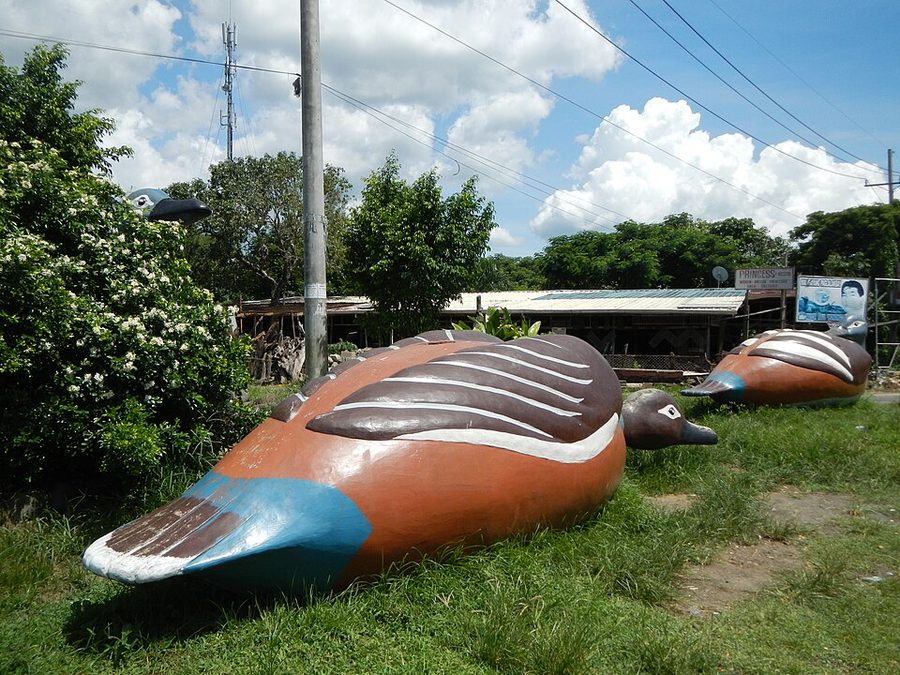
When the Pateros flocks went, many raisers moved south to the shores of Laguna de Bay, where snails and shellfish were still plentiful. Los Baños, Bay and above all Victoria became the big duck towns, and Victoria grew into the largest duck-farming town in the country, with its own Itik Festival.
Commercial feed in the 1990s let duck farms open far from any lake, and production moved north as well. By the late 2010s Central Luzon was the biggest duck-egg region in the country, and Bulacan and Pampanga between them held more than half the commercial duck farms. Western Visayas had the most backyard ducks, and Mindanao’s flocks were growing fast.

Balut is the main reason the flocks exist. By the 2019 study’s figures, roughly 80 percent of the duck eggs laid in the Philippines are made into balut, and the rest go to fresh eggs, penoy and salted eggs. It is also a trade run on thin margins: in May 2026 GMA News reported that Victoria’s duck raisers were squeezed by feed, diesel and heat, and one balut maker had cut his deliveries from four days a week to two because the incubators’ electricity bill had climbed.
How to eat balut
Eat it warm, and eat it the way the vendor would. Hold the egg upright, blunt end up, and tap that end on something hard until it cracks. Peel a hole about the size of a coin, no bigger, because the broth is under there.
Salt the opening and sip. The broth is the best part for a lot of people, hot and savoury, somewhere between chicken stock and the liquid from a steamed egg. Then peel the shell down further, season again with salt or a splash of vinegar, and eat the yolk and the embryo together in bites, the yolk softening the texture of the other.
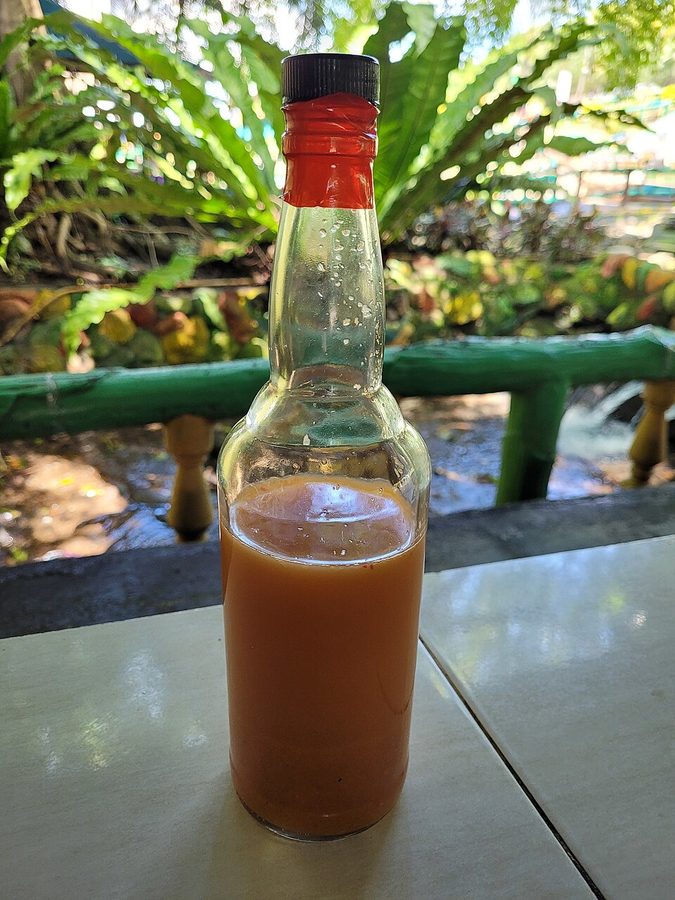
The usual seasoning is coarse salt from a paper twist, or a vinegar sawsawan with chilli, often with garlic and onion, sometimes made with coconut sap vinegar. I’d take the vinegar if you are nervous: the sourness cuts the richness of the yolk and makes the second egg easier than the first.
Leave the stone if you want; most people do. If the bones crunch, you have an older egg, and that is not a fault but a preference, since some eaters seek out 19-day eggs for exactly that. Vendors near bus terminals are said to sell older eggs on purpose, on the grounds that they will never see the customer again.
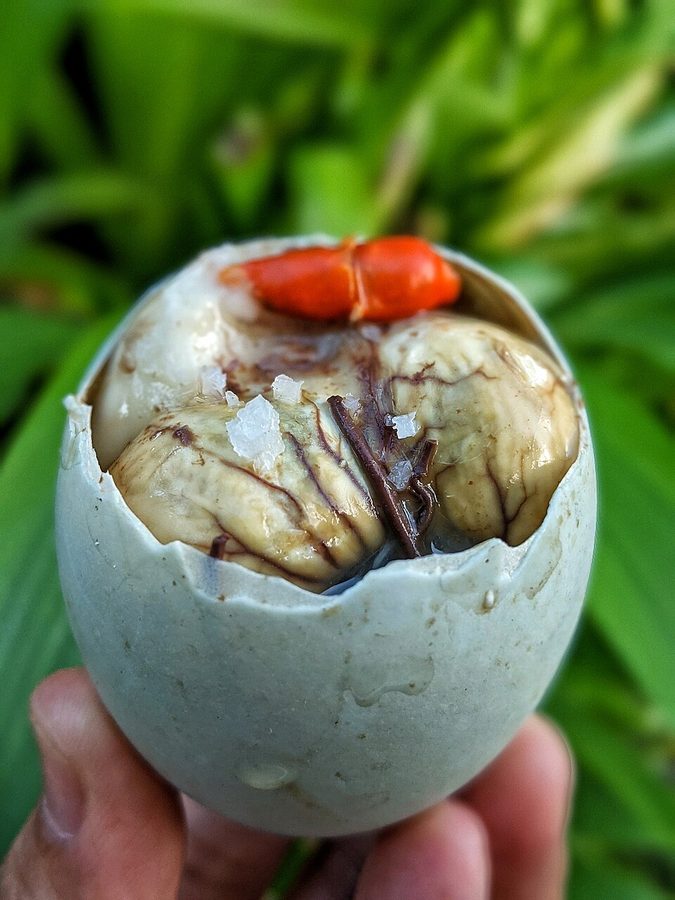
If you are unsure, start with penoy na may sabaw, then a 16-day balut, then an 18. Nobody minds you peeling the egg and eating only the yolk and broth. The taste is egg, chicken soup and a little gaminess; the challenge is texture, not flavour.
The evening vendor
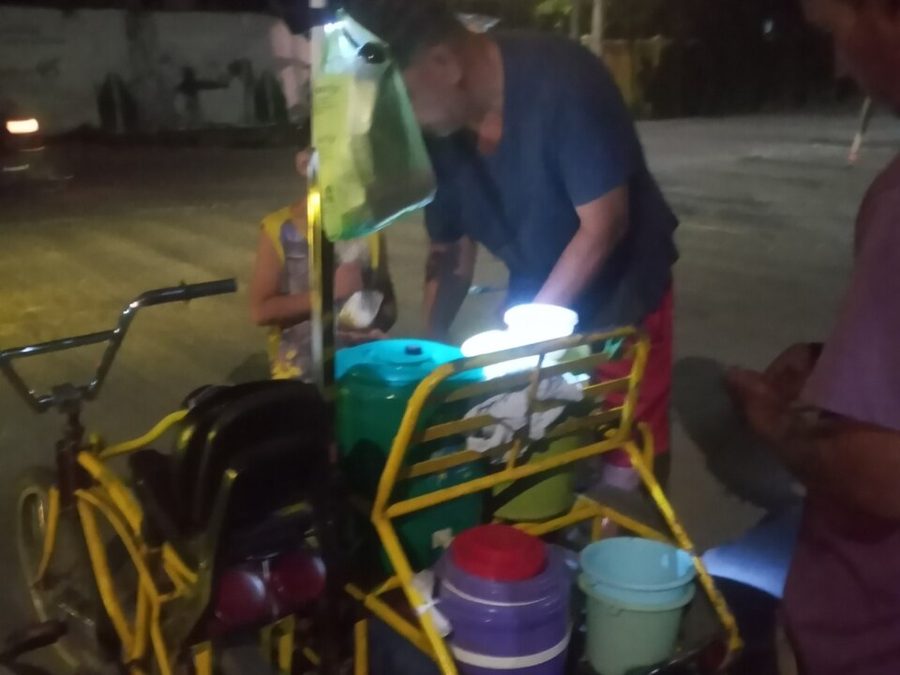
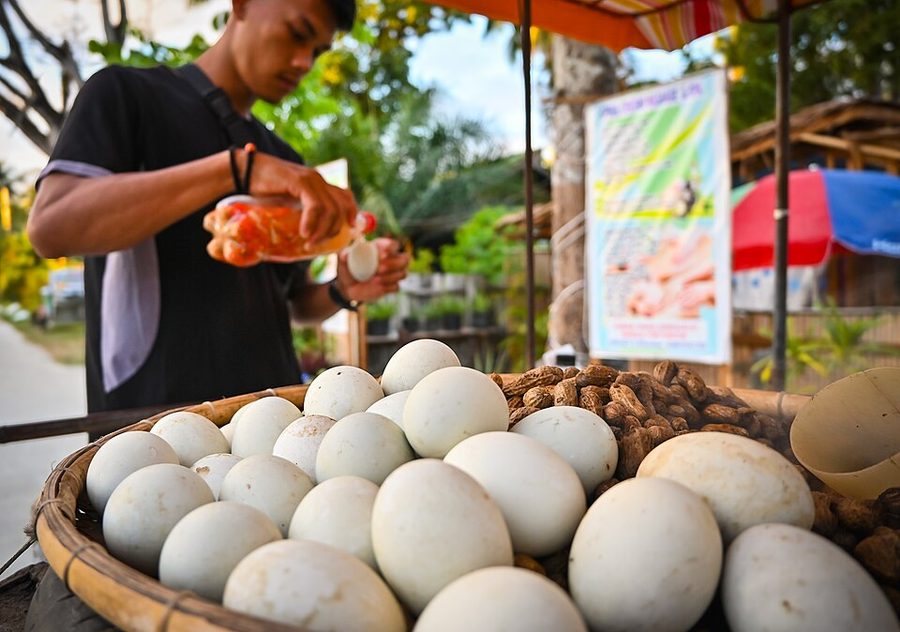
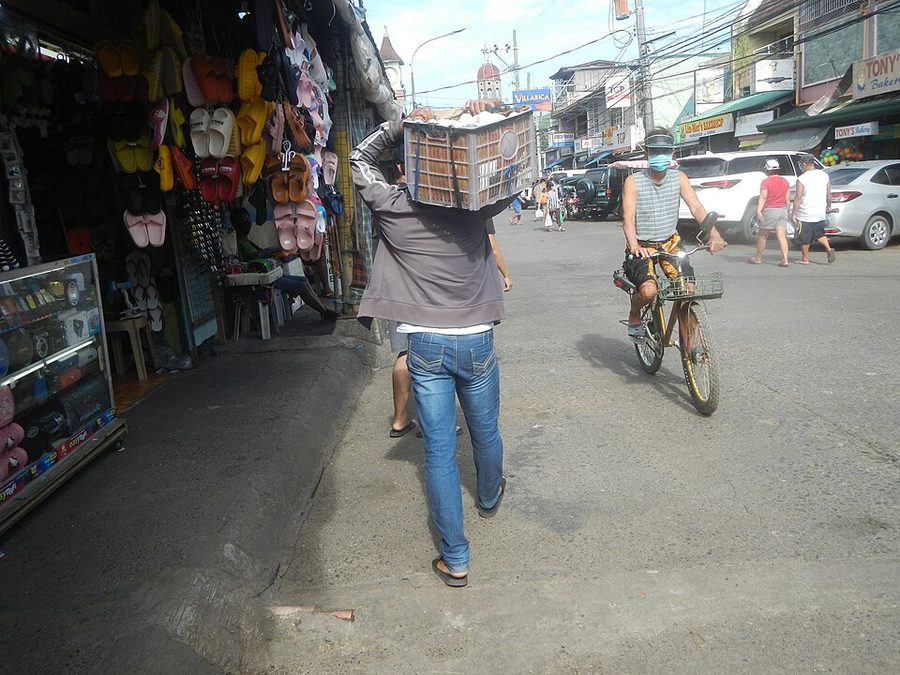
The magbabalut who sells to you is often not the one who made the eggs: balut is delivered from the balutan to stores and street sellers. The sellers go out at dusk with a basket, the eggs bedded in sand under a cloth to hold the heat. They walk, sit at a corner or ride a bicycle, and they sell until the basket is empty, often well past midnight.
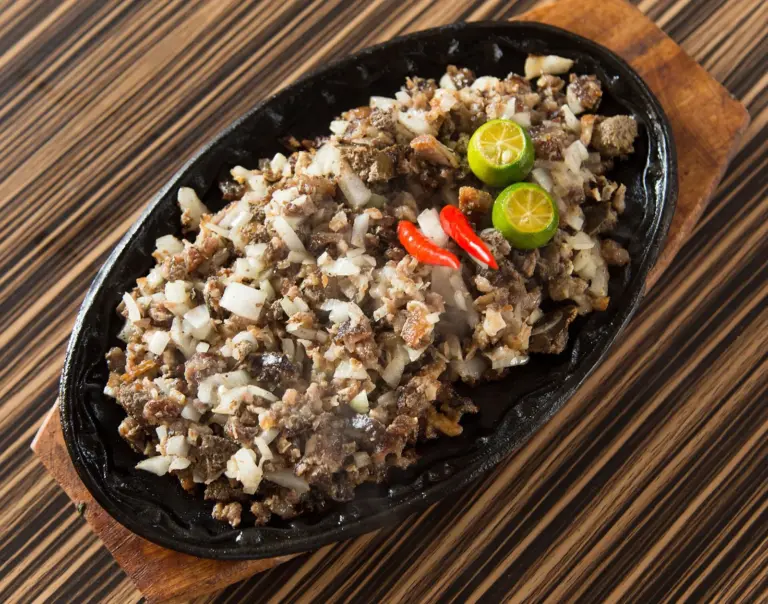
Look for them outside bus terminals, at market gates, by late-opening bars and on any street where people sit outside drinking. Balut is pulutan, food for drinking, as much as it is a snack; with a bottle of beer it sits beside a plate of sisig or chicharon, and many vendors carry peanuts and chicharon in the same basket.
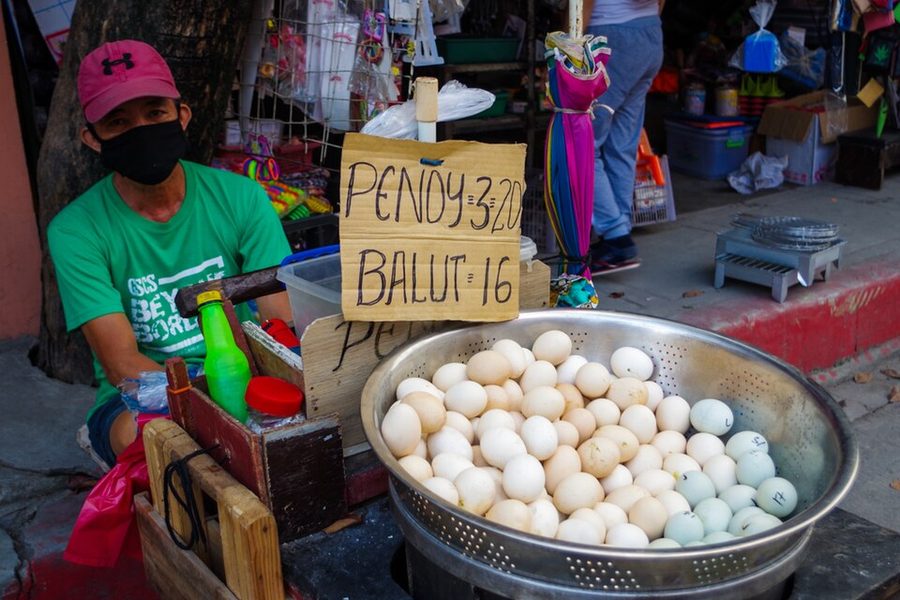
Prices move with feed and fuel. Vendors’ price posts from around Metro Manila during 2026 put a cooked balut at about ₱15 to ₱25, with penoy a few pesos less and a tray of 30 uncooked eggs at a few hundred pesos.
Each egg comes with its seasoning: a twist of newspaper or old directory page holding a pinch of salt, or a little bag of spiced vinegar. Eat it on the spot. A balut that has gone cold has lost its broth’s point, and its safety margin with it.
Is balut safe? The questions people ask first
Is it raw? No. Street balut is boiled, typically for 20 to 30 minutes, and served hot. The incubator temperatures that grow an embryo also suit bacteria, including Salmonella, which is exactly why it is cooked hard and eaten hot.
How long does it keep? Treat it like any hard-cooked egg. The USDA’s shell egg guidance says cooked eggs should be refrigerated within two hours and used within a week, and that warm room temperature lets bacteria multiply. Buy from a vendor whose basket is warm and busy, and do not carry balut around in a bag all evening.
Can I reheat it? Yes, gently: a cold cooked balut warms through in a few minutes in a pot of hot water. The broth dries out as a cooked egg sits, so a reheated balut is never quite as good.
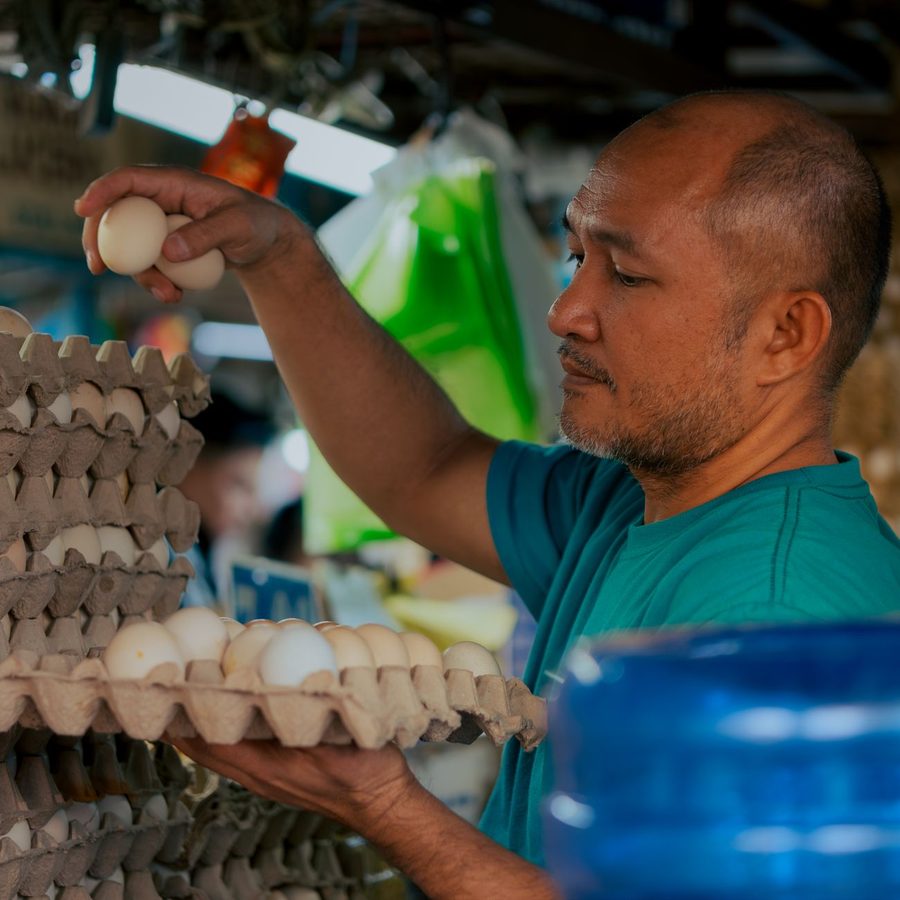
Can the embryo feel pain? Nobody knows for certain. RSPCA Australia’s position, extrapolated from chicken research because duck data is thin, is that embryos should not be boiled from day 18 onwards, while noting that ducks hatch at around 28 days and so develop later. If that matters to you, ask for a younger egg, or eat penoy.
Who avoids it? Balut is not halal or kosher, so many Muslim and Jewish eaters avoid it. Some groups in the Cordillera, among them the Kankana-ey of Mankayan and the Kalinga of Tabuk, forbid it to pregnant women, while in Vietnam the same egg is folk medicine for new mothers.
Balut abroad: Vietnam, Cambodia and the US
Vietnam eats the same egg as hột vịt lộn or trứng vịt lộn, usually left a little longer, 19 to 21 days, so the duckling is firmer. It comes with rau răm, the peppery Vietnamese coriander, shredded ginger, and salt and pepper with a squeeze of lime or kumquat. In Saigon the egg sits upright in a small cup and you dig in with a spoon; in Hanoi it is often peeled into a bowl.
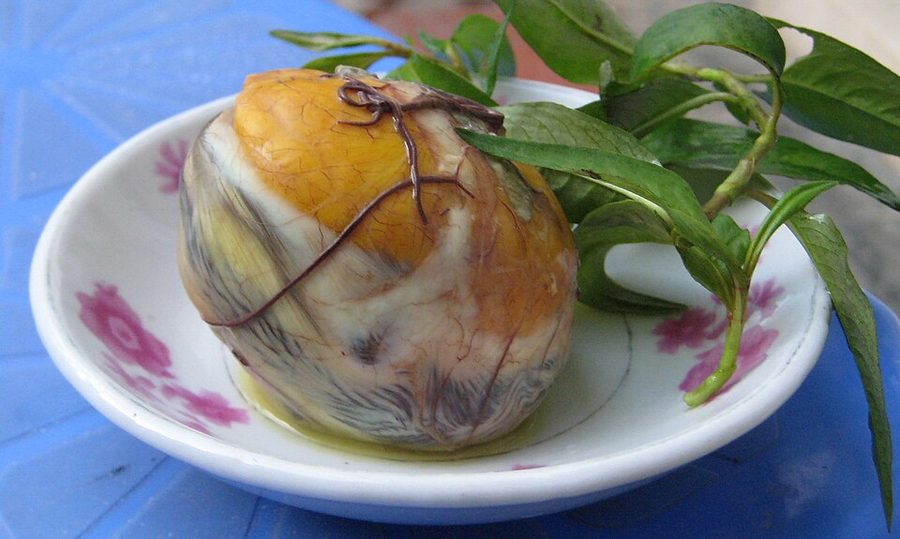
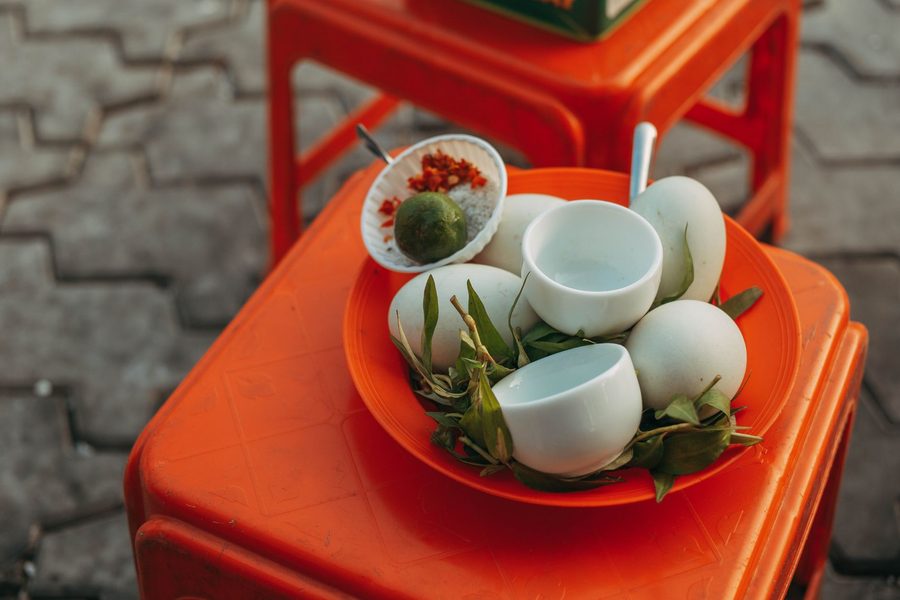
Cambodia’s pong tea khon sits between the two, at 18 to 20 days, eaten warm with lime juice and black pepper. Vietnamese cooks also fry the egg or drop it into a hotpot, and in Nanjing peeled fertilised eggs are fried at street stalls.
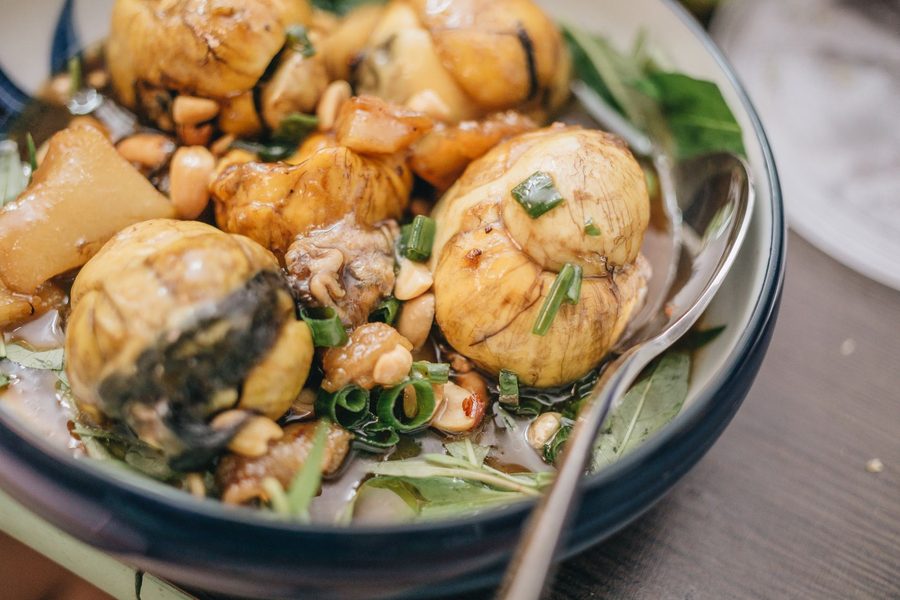
Outside Asia, balut follows Filipino and Vietnamese communities. Filipino groceries and big Asian supermarkets in North America sell it, cooked or uncooked, and in the US Metzer Farms in California ships uncooked balut: eggs candled and pulled from the incubator at 17 days, mailed the same day, with a US$50 minimum order. Uncooked balut goes straight in the fridge until you boil it.
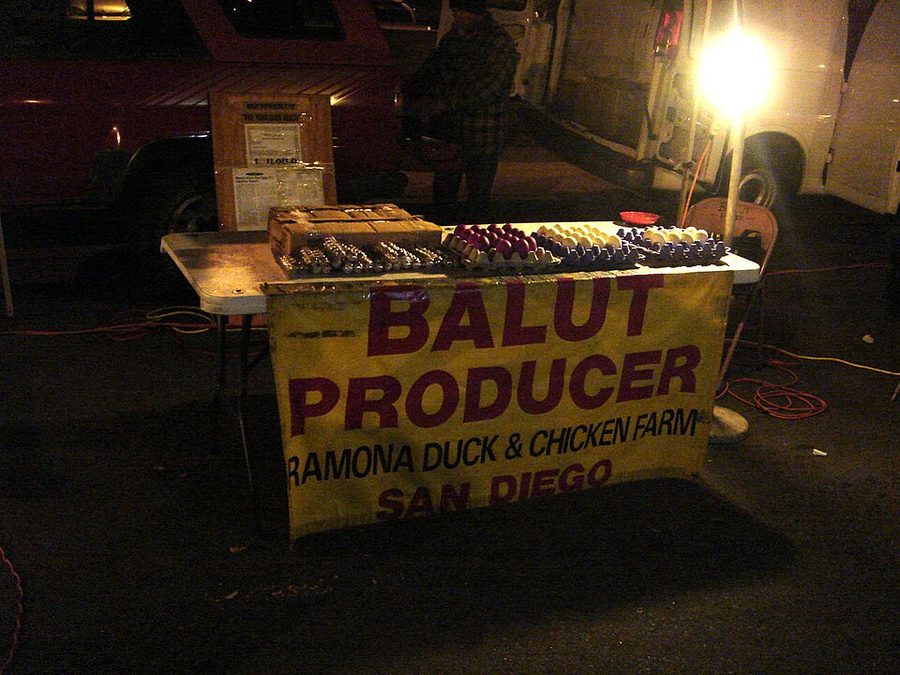
Do not try to fly home with a bag of Pateros eggs. US travellers must declare all animal products, and CBP’s rules on bringing agricultural products into the United States say undeclared prohibited items are seized, with fines of up to US$1,000 for a first offence. Buy balut where you land.
Balut in the pan, and its battered cousins
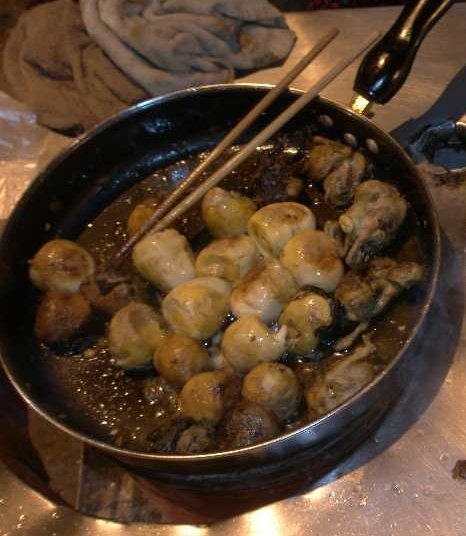
Balut is not only eaten from the shell. Adobong balut peels the eggs and braises them in vinegar, soy, garlic and pepper, the same method as chicken adobo, until the sauce clings. It is the Pateros showpiece, the dish of the 2015 record, and the best way to serve balut to a table of doubters.
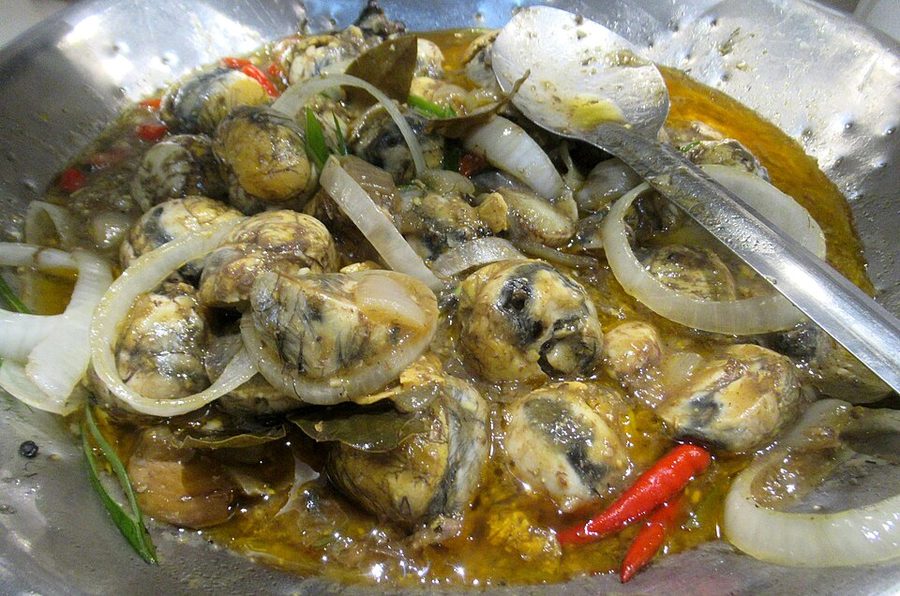
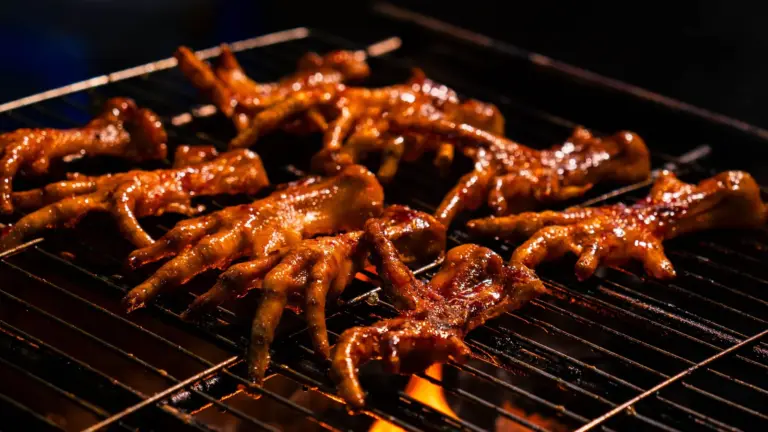
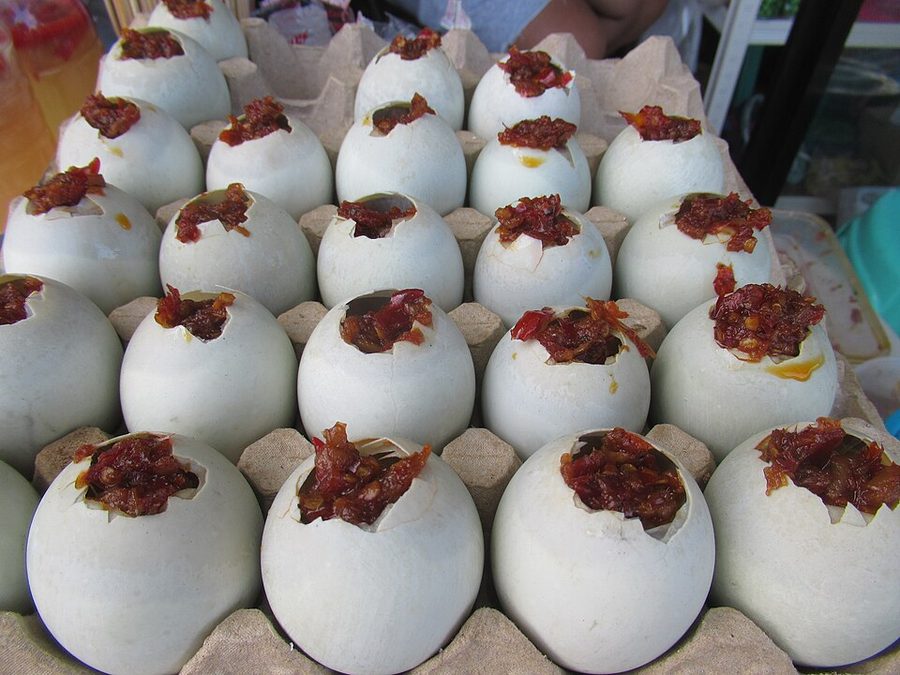
Inihaw na balut, grilled balut, takes the top off the shell, adds chilli and garlic, and cooks the egg over charcoal in its own shell. It belongs to the same smoke as the grill carts that sell adidas, grilled chicken feet, and the rest of the inihaw street skewers.
Kwek-kwek and tokneneng
The orange eggs on every Manila street cart started, by the most repeated story, with a balut vendor in Cubao. Eggs that had stayed too long in the basket were peeled, rolled in flour and fried rather than thrown out, and the flour later became an orange batter. Whether or not that is exactly how it went, the battered egg became its own street food.
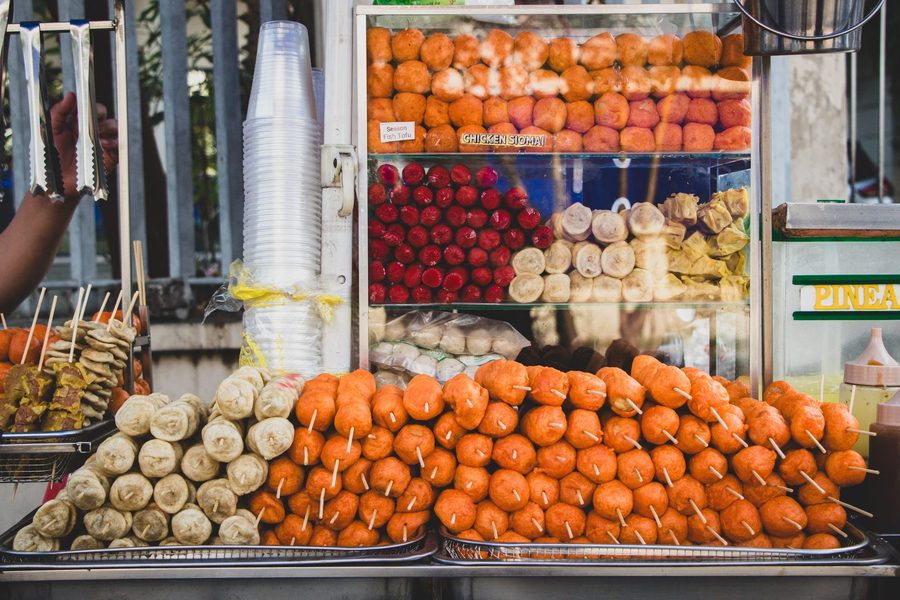
Kwek-kwek is the quail egg version: boiled, peeled, dipped in a batter coloured with atsuete, annatto, and deep-fried. The name is said to imitate a duck’s quack, which suggests it once meant duck eggs. Tokneneng is the bigger one, chicken or duck egg, a word taken from the 1978 komiks Batute, where it meant egg in the hero’s own language.

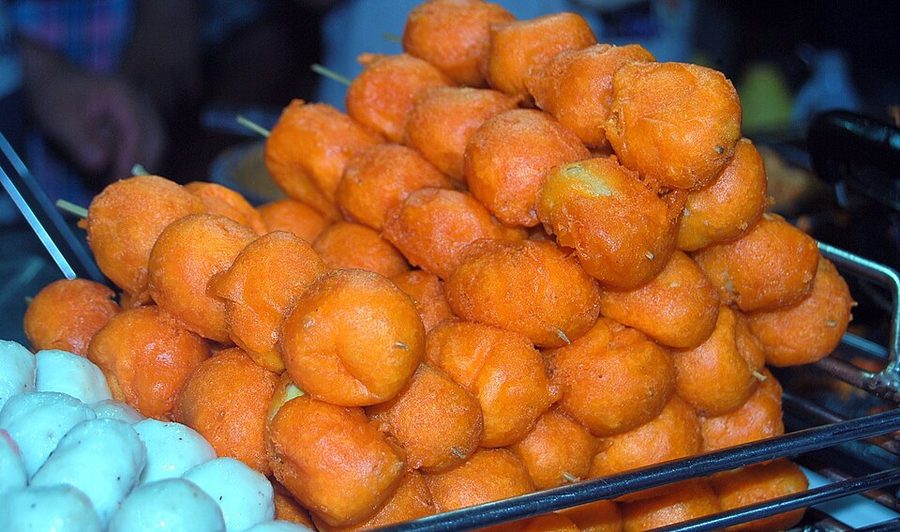
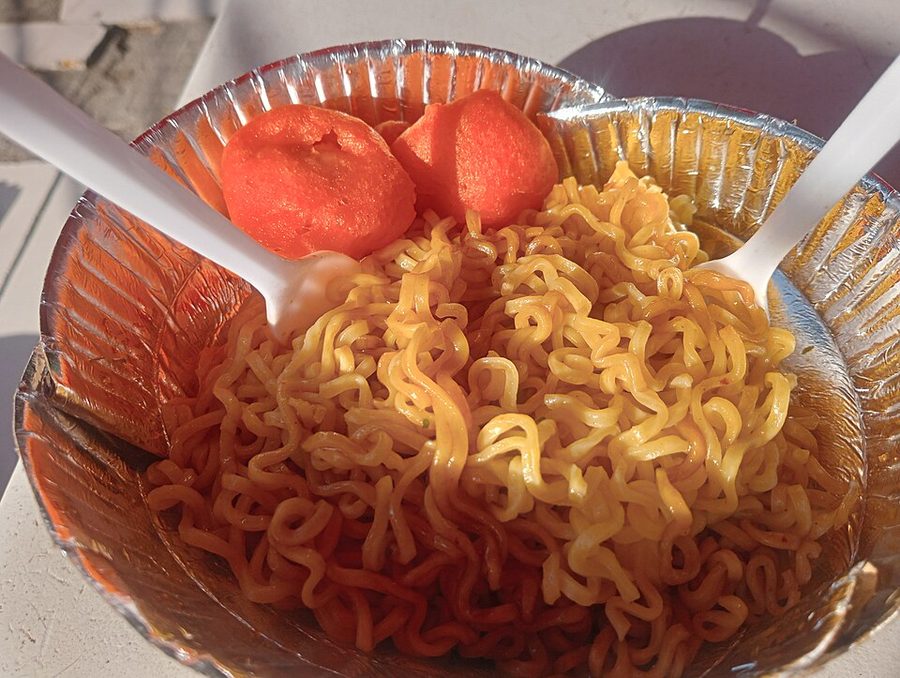
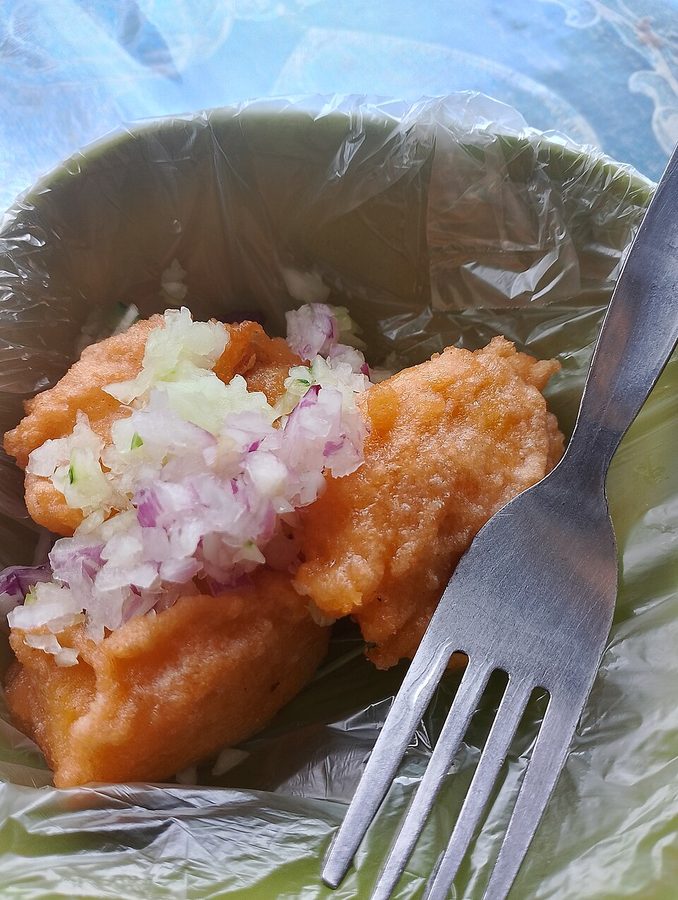
Both are sold on sticks or in a cup with spiced vinegar, often with chopped onion and cucumber in it, or a thick sweet brown sauce. They turn up on top of a plate of pancit canton at campus food stalls, and leftover penoy sometimes gets the same batter the next morning.
Boiled balut or penoy at home
If you can buy uncooked balut or penoy, boiling it is the whole recipe. Filipino sources agree on a long boil: the balut industry study gives 20 to 30 minutes in salted water, and vendor instructions in Tagalog say 25 minutes from eggs just covered in water. Vietnamese recipes boil hột vịt lộn for only 7 to 10 minutes; I go with 25, because a Philippine 18-day egg is bigger inside and USDA advice is to cook eggs until the yolk is firm.
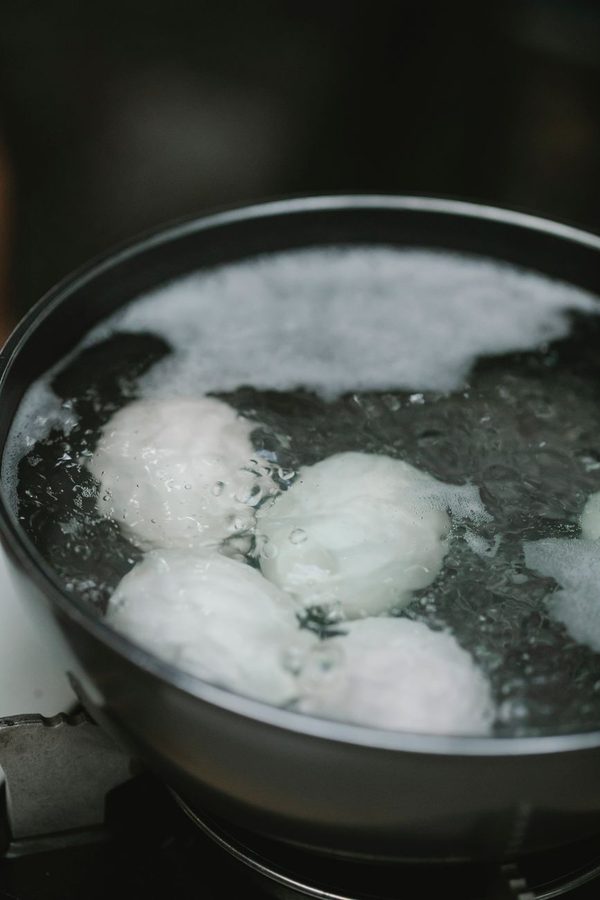
Makes 6 eggs. About 35 minutes.
Recipe card
Ingredients
- 6 uncooked balut or penoy (duck eggs), at room temperature
- Water to cover
- A good pinch of coarse salt for the water
- Coarse salt, for eating
- Cane or coconut sap vinegar with chopped chilli, garlic and onion, for dipping
Method
- Rinse the eggs one at a time under the tap and check each shell for cracks; tap gently with a fingernail and set aside any that sound hollow.
- Lay the eggs in a pan in one layer and pour in cold water until it just covers them. Add the pinch of salt.
- Bring to the boil over medium-high heat, then lower to a steady simmer and cook for 25 minutes.
- Lift the eggs out and wrap them in a clean kitchen towel in a bowl or basket to keep them warm.
- Eat within two hours. Tap the blunt end, sip the broth, salt or dip, and peel down as you go.
- Refrigerate any you do not eat within two hours and use them within a week. Reheat in a pan of hot water for a few minutes.
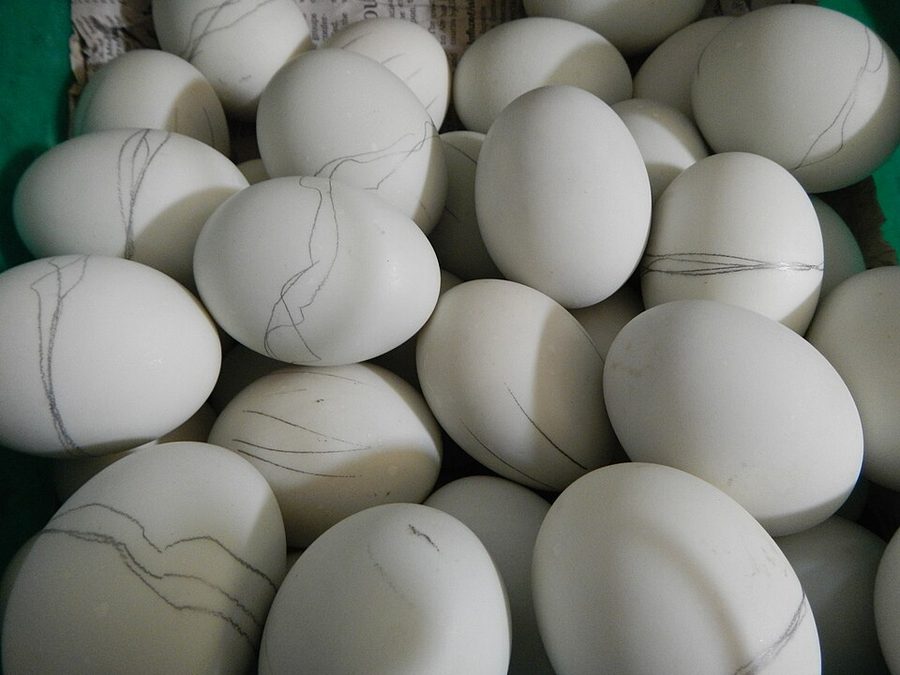
Back on the street, the basket is lighter now and the cloth is tucked back over the last few eggs. Buy one more than you think you want, ask for balut sa puti, and drink the broth before you do anything else.