Toum is garlic, salt, lemon and oil, and the whole recipe comes down to speed. Pour the oil in a thread no thicker than a needle and the garlic paste swells into something white, light and stiff enough to hold a spoon upright. Pour it in a splash and you get a yellow, greasy puddle that smells wonderful and will never set without help.
There is no egg in it. A Lebanese cook holds three cups of oil in suspension with nothing but crushed garlic, which is the reason the sauce has a reputation for breaking. Made well, it sits in the fridge for days without weeping, and it is so strong that a teaspoon on a piece of grilled chicken is a full serving.
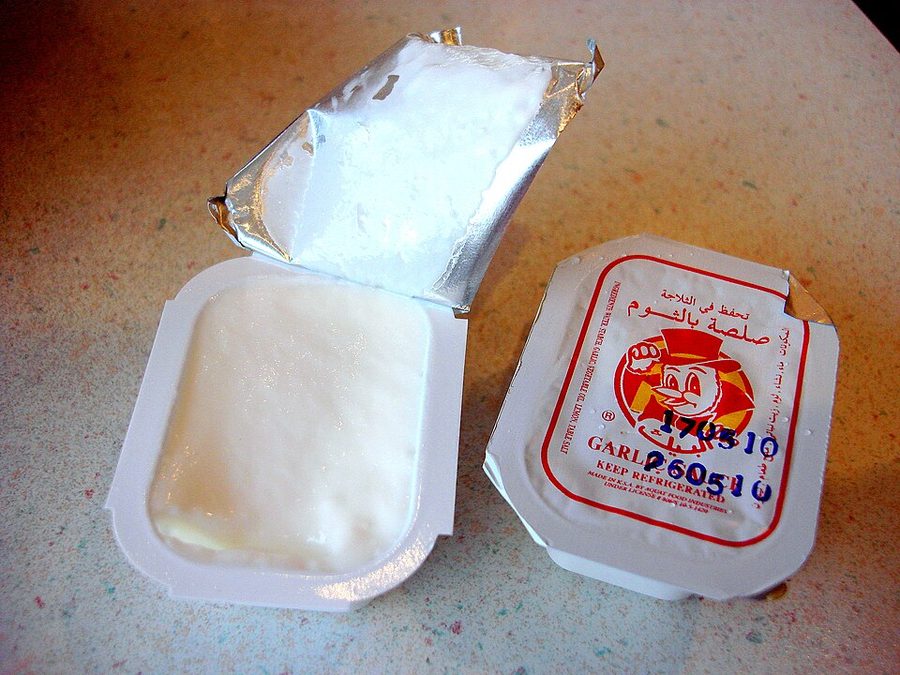
What comes in the plastic tub with a takeaway is often something else. Across Syria and Egypt, the shop sauce called toumiya is commonly thickened with cooked cornstarch and let down with milk, vinegar or mayonnaise. The Lebanese original needs none of that, only fresh garlic, a cold bowl and more patience than you think you have.
Contents 7 parts
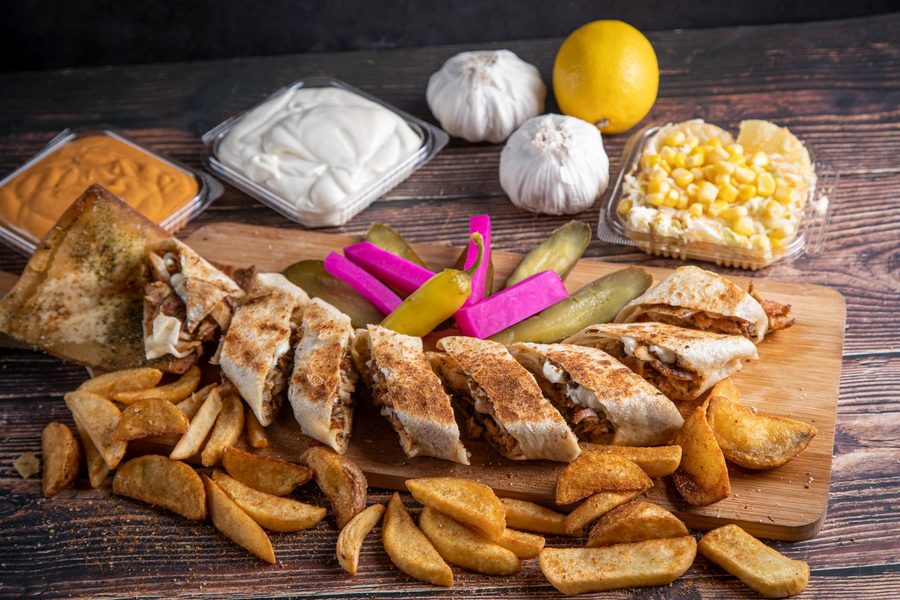
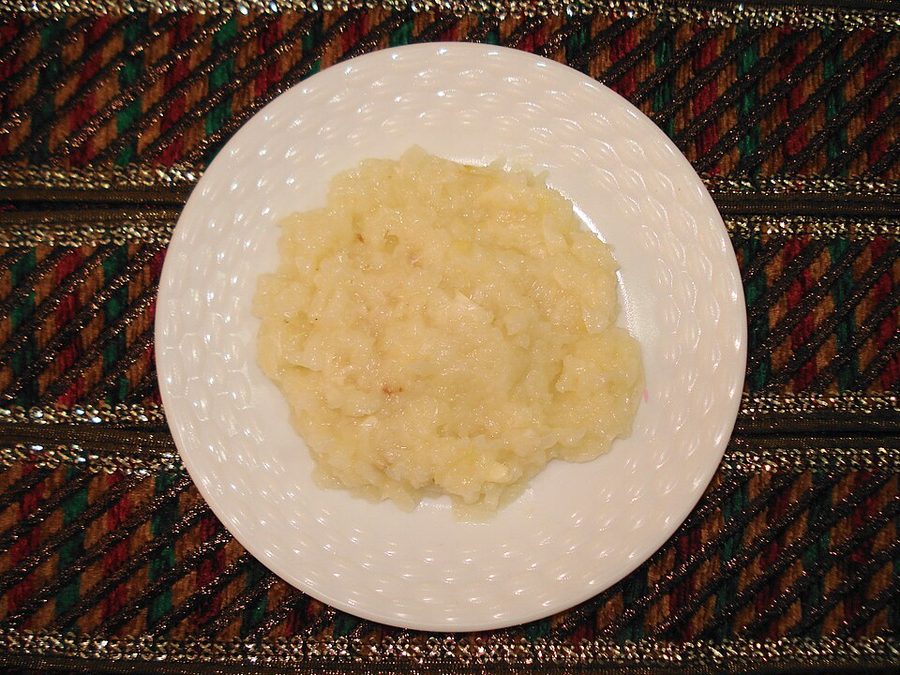
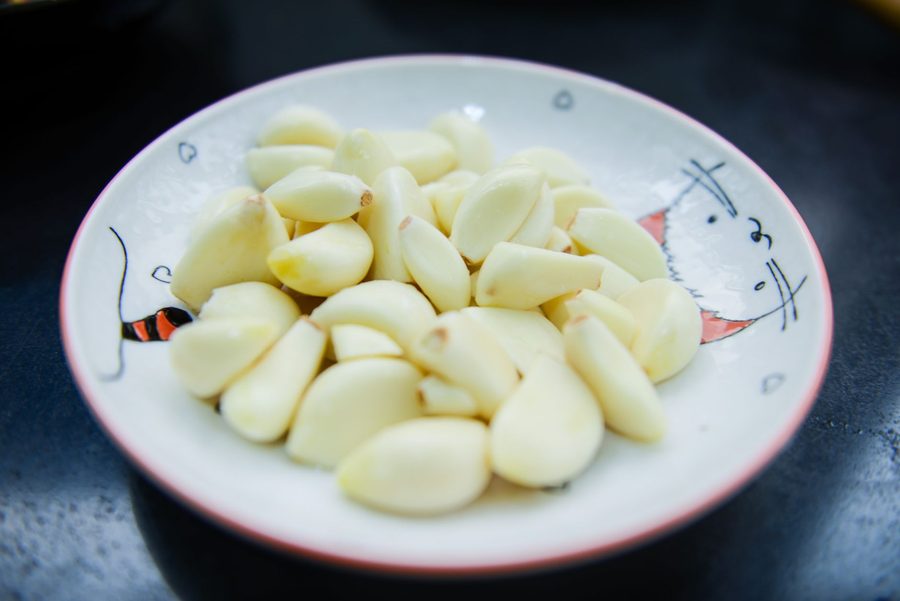
Garlic, oil, lemon, salt
The name is simply the Arabic for garlic: toum (ثوم), also written thoum or toom on menus, and toumiya (ثومية) when people mean the sauce rather than the bulb. In a Lebanese chicken shop you ask for toum and get the sauce. Nobody is confused.
The classic version is four ingredients. Garlic is crushed with salt to a smooth paste, then oil goes in slowly with lemon juice added along the way, until the mix turns white and thick. Traditionally that happened in a mortar; today almost everyone uses a food processor.
The proportions are surprisingly settled. The recipes I checked in English and Arabic nearly all land on one cup of peeled garlic to three cups of oil, with between a quarter and a half cup of lemon juice and around two teaspoons of salt. A Lebanese home cook filming the “original” version uses half a cup of garlic to one and a half cups of sunflower oil, the same 1 to 3.
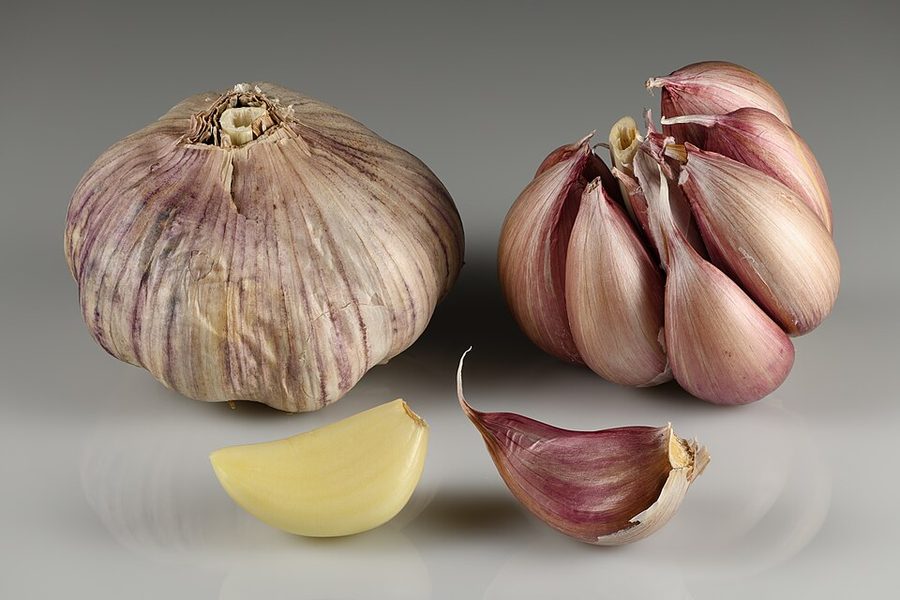
The mortar and the machine
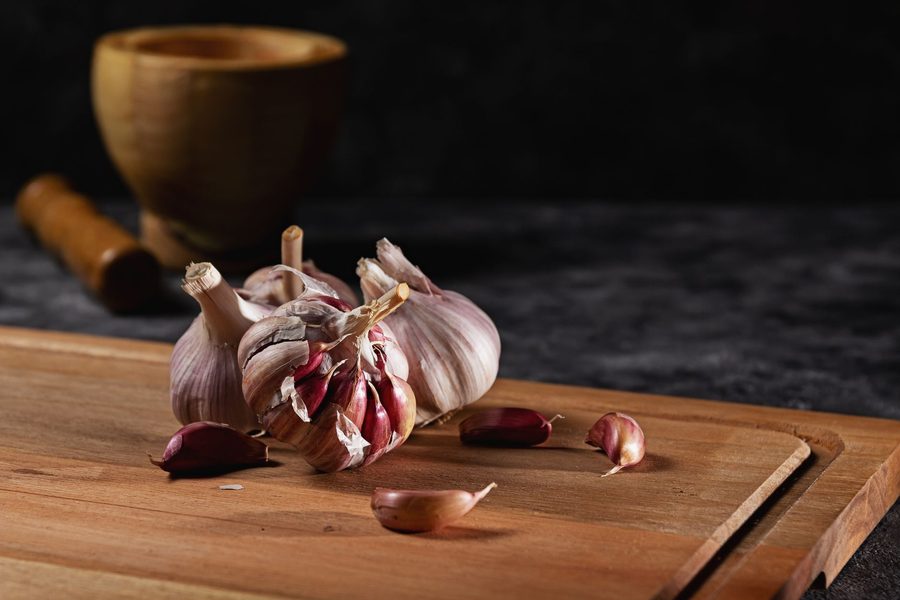
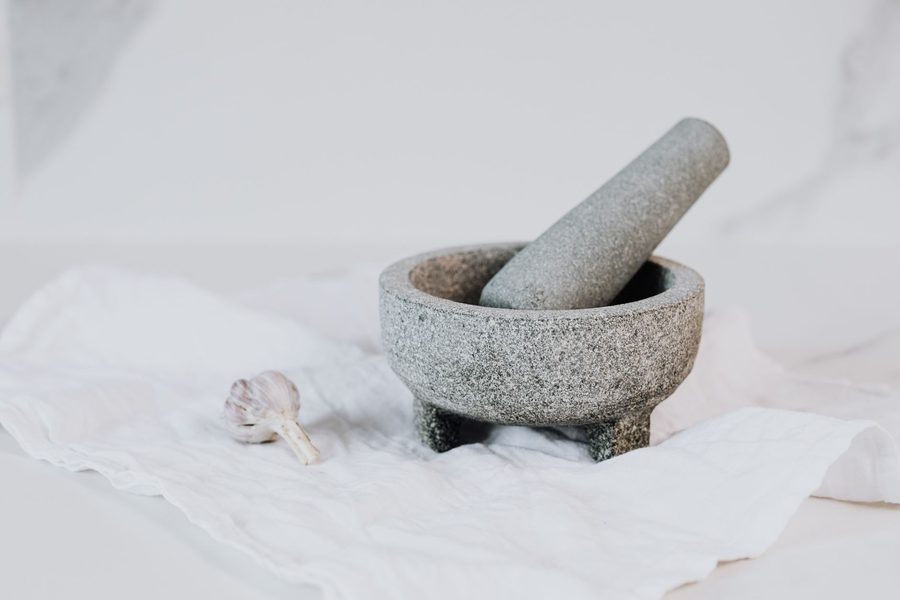
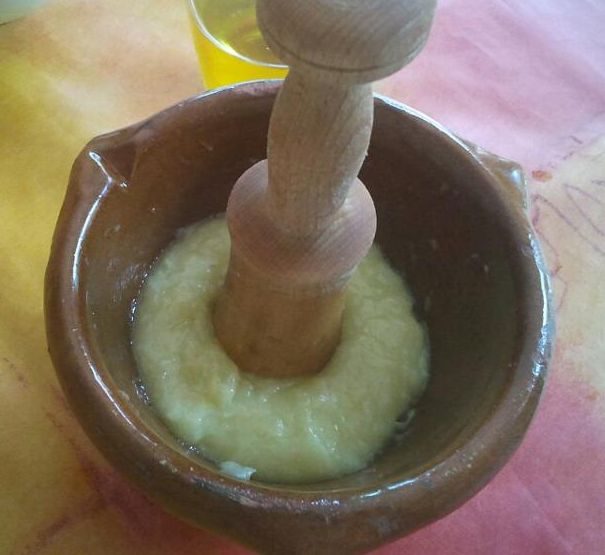
Pounding garlic in a mortar is the old method and it still works, in small batches. You crush the cloves with salt until no lumps remain, then work in oil a teaspoon at a time, a few drops of lemon after every tablespoon of oil. A wooden mortar was the usual tool in Lebanese kitchens, and it gives a dense, slightly coarse toum with a very clean garlic taste.
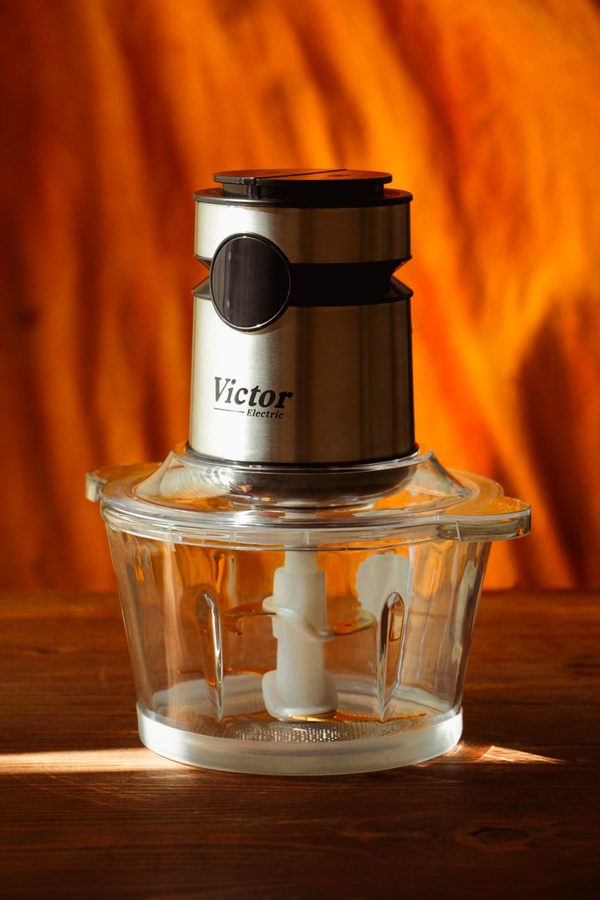
The food processor changed toum from a job into a habit. It grinds the garlic finer than any pestle and beats in air, which is why restaurant toum is so white and light. A small processor is better than a big one for a half batch, because the blade needs to sit in the paste, not spin under it.
A blender or stick blender is the wrong tool for the classic version. It spins too fast and too deep, so the result comes out thinner and denser, closer to a dressing than to the fluffy paste you want. If a stick blender is all you have, use a narrow beaker and go even slower with the oil.
Toum, aioli and the shop sauce
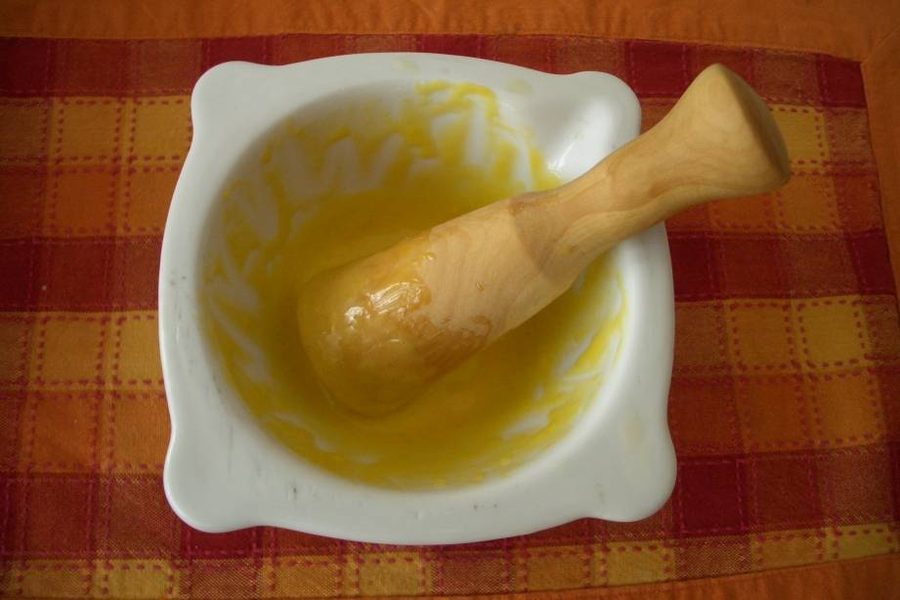
The closest relative is the garlic and oil sauce of Catalonia and Provence: allioli and aïoli, both names meaning garlic and oil. The older versions there had no egg either, but today most aioli is held with egg yolk and made with olive oil, which makes it yellow, rich and much milder. Toum uses a neutral oil, a far bigger share of garlic and lemon instead of vinegar, so it stays white and sharp.
Greek skordalia goes the other way, thickening garlic and oil with bread or potato, and that idea turns up in the Levant too. Arabic reference entries on toumiya list versions with mayonnaise, with potato, with cream and parsley, with chilli paste and with cheese, and the “traditional” recipe given there adds two egg whites to the garlic before the oil. That is the Syrian approach, and it does make the sauce much harder to break.
Then there is the shop sauce. Egyptian newspapers that publish “Syrian toumiya” recipes describe a garlic sauce that spread through Egypt as Syrian cooks opened restaurants there, and their versions start with cornstarch cooked in water to a thick gel, then blend in garlic, vinegar, milk, a little oil and often mayonnaise. It is cheap, stable and mild. It is also a different sauce.
Why toum splits
Toum is an emulsion, like mayonnaise: billions of tiny droplets of oil held apart in a small amount of water, here the lemon juice and the juice of the garlic itself. Left alone, oil droplets bump into each other and merge back into a layer. Something has to coat them and keep them apart.
In mayonnaise that job goes to egg yolk, one of the strongest emulsifiers in any kitchen. In toum it falls to the garlic: once the cloves are ground fine enough to break their cell walls, the released proteins and pulverised plant matter coat the oil droplets. It works, but it is a weak hold, and every rule for making toum follows from that.
The four things that break it
Oil too fast. If oil arrives faster than the blade can break it into droplets, the droplets crowd together, merge, and the sauce flips: instead of oil in water you get water in oil, which looks greasy and runny. The first 60 ml (¼ cup) matter most. Once the paste has turned white and thick, it can take oil a little faster.
Heat. A food processor running for fifteen minutes warms its bowl, and warm oil droplets merge more easily. On a hot day, or in a Beirut or Cebu kitchen in summer, this is the usual cause of a sauce that was fine at the halfway mark and broke at the end. Cold garlic, iced water and a short rest when the bowl feels warm all help.
Not enough water. Three cups of oil cannot sit in two tablespoons of lemon juice. The droplets need room, so the liquid has to go in along the way, a spoonful after each portion of oil. Keep the paste thick at the start, though, because a stiff paste drags on the droplets and holds them better than a loose one.
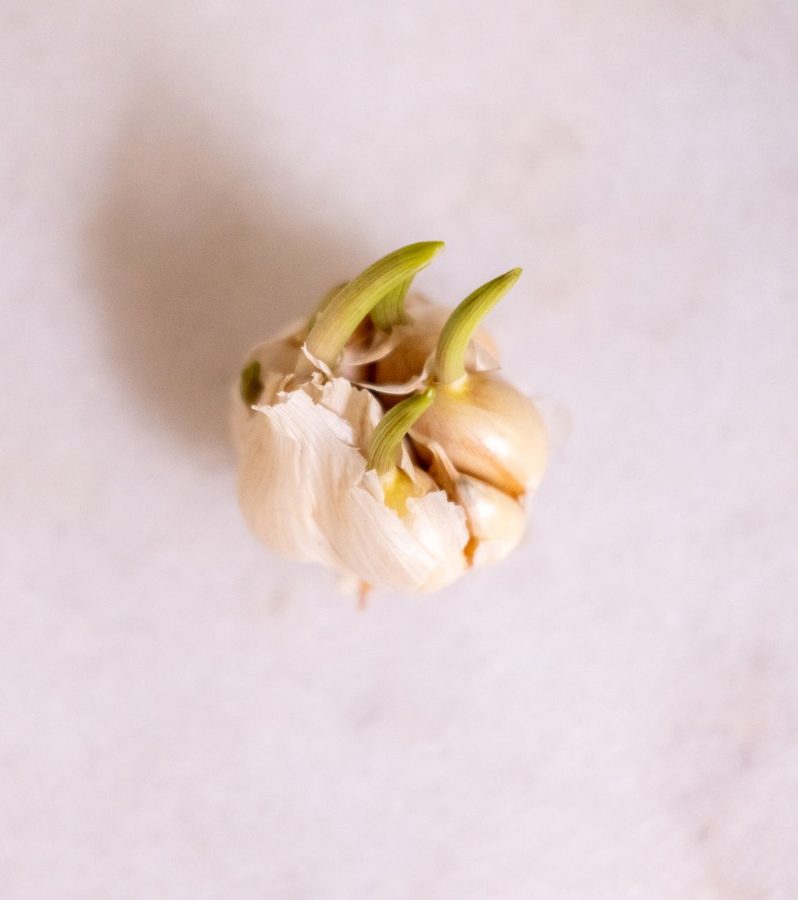
Tired garlic. Pre-peeled cloves from a tub lose much of their pungency, and old, dry or sprouting heads make a harsher, weaker toum. They have less juice, and sprouted cloves add a bitter edge.
The germ, the lemon and the ice
Halve each clove lengthwise and you will often find a green or yellow shoot down the middle. That germ tastes harsh and bitter raw, and pulling it out with the tip of a knife takes a few extra minutes. In toum, where nothing is cooked, the difference is easy to taste.
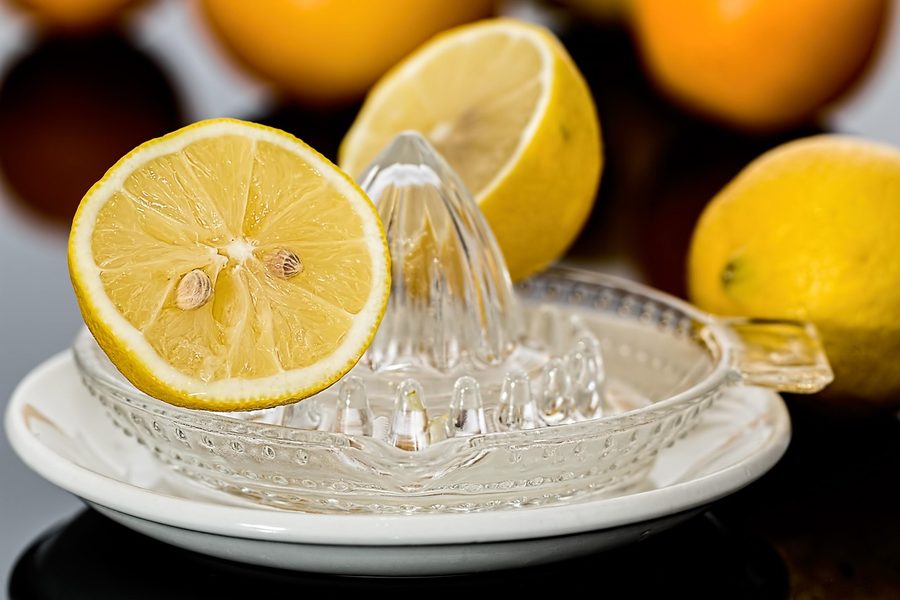
Lemon does two jobs: it seasons, and it is part of the water the oil needs. An all-lemon toum is sharp and slightly yellow. Replace half the lemon with iced water and the sauce comes out whiter and milder, and the cold keeps the emulsion firm while the motor runs. I use half and half.
The burn of raw garlic comes from allicin, which forms the moment the cloves are crushed. It softens with time, so toum made in the morning tastes rounder at dinner and better again the next day. If the first spoonful straight from the processor makes your eyes water, that is normal.
Rescuing a split toum
Do not throw it away. Wash and dry the processor bowl, put in two fresh garlic cloves with a pinch of salt and blend them to a paste. Then add the broken mixture back a teaspoon at a time with the motor running, and only speed up once it has turned white again.
The second method uses an egg white, the strongest rescue there is. Blend one egg white with about 60 ml (¼ cup) of the broken sauce until fluffy, then pour in the rest slowly. It works every time, but it is no longer toum in the Lebanese sense, it contains raw egg, and it keeps for less time.
If the sauce is not split, only loose, it simply needs more oil. Keep the motor running and add oil in a slow thread until it stiffens. A runny toum that is still white and opaque has not broken.
Recipe card
Toum (classic Lebanese garlic sauce)
Where the recipes I checked differ, I have picked one and said why. Most use 120 ml (½ cup) of lemon juice; I split that between lemon and iced water for a whiter, milder, more stable sauce. Salt runs from one to two teaspoons; two teaspoons of fine salt, as most Arabic and English recipes use, helps grind the garlic and seasons a sauce eaten a spoonful at a time.
Makes about 1 litre (4 cups). About 40 minutes, most of it peeling; the oil itself takes 10 to 15 minutes. Best after a night in the fridge. For a half batch, halve everything and use a small processor.
Ingredients
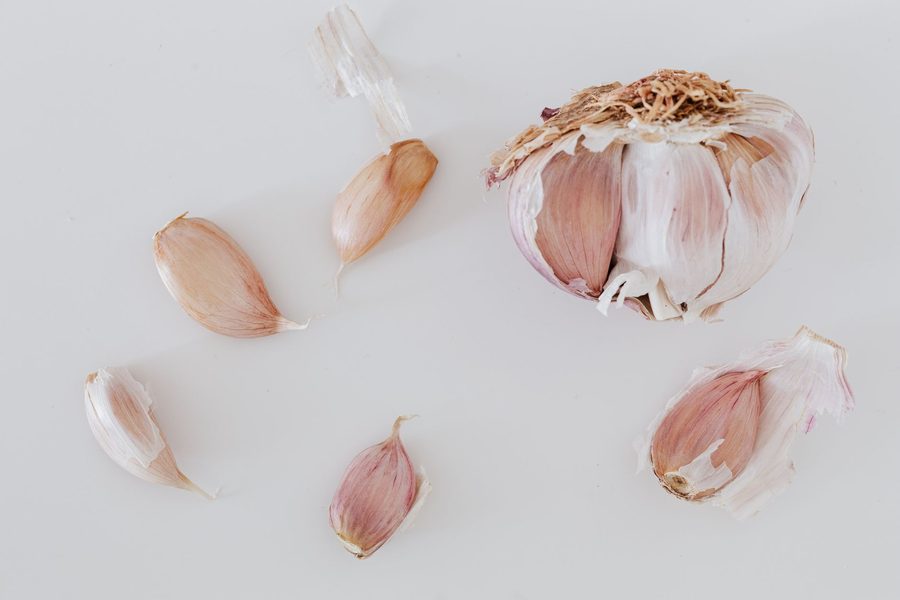
- 140 g (1 cup) peeled garlic cloves, from 3 to 4 large heads
- 2 tsp fine salt
- 60 ml (¼ cup) fresh lemon juice, from about 2 lemons
- 60 ml (¼ cup) iced water
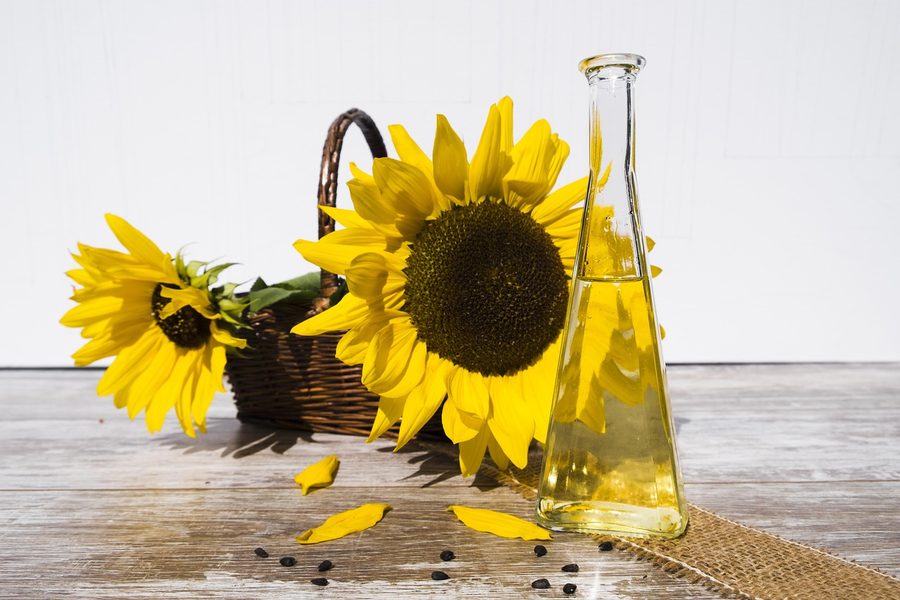
- 720 ml (3 cups) neutral oil: sunflower, canola or grapeseed
Method
- Halve each garlic clove lengthwise and pull out any green or yellow germ with the tip of a knife. Pat the cloves dry.
- Put the garlic and salt in the food processor. Pulse, then run for about a minute, stopping to push the paste down from the sides with a spatula, until the garlic is finely minced and pasty.
- Add 1 tbsp of the lemon juice and process until the paste is smooth and slightly fluffy. Add a second tablespoon if it is still grainy.
- With the motor running, add the oil in the thinnest stream you can manage, about 1 tbsp at a time. The first 60 ml (¼ cup) should take at least 2 minutes. Stop and push the sides down once or twice. The paste will turn white and thick.
- Keep adding oil slowly. After every 120 ml (½ cup) of oil, add about 1 tbsp of liquid, lemon juice first, then iced water, until both are used up. Never add oil faster than the sauce takes it in.
- If the bowl feels warm, stop the motor for a few minutes before carrying on.
- When all the oil is in, the toum should be thick, white and fluffy, like stiff mayonnaise. Taste and add a pinch more salt if it needs it.
- Spoon into a clean glass jar, cover, and refrigerate straight away. The raw heat softens after about 24 hours.
In a mortar, use a quarter of these quantities. Pound the garlic and salt to a completely smooth paste, then work in the oil a teaspoon at a time, adding a few drops of lemon juice or iced water after each tablespoon of oil.
Recipe card 2
Toum with potato
When I want garlic sauce for a crowd and only have a few cloves, I make the potato version. Boiled potato gives the sauce body, so it needs far less oil and very little skill, and it softens the garlic. Arabic descriptions of shish tawook mention it directly: grilled chicken served with a garlic dip made with a little boiled potato to temper the garlic.
The Arabic recipes I worked from, one of them in Annahar, all add yoghurt or laban as well, and I follow them. The quantities below come from the one that gives exact amounts; the others confirm the method. It is softer and milder than toum, closer to a garlic potato cream, and it does not keep.
Serves 4 to 6 as a dip. About 35 minutes, including boiling the potato.
Ingredients
- 1 large floury potato, about 250 g (9 oz)
- 2 to 3 garlic cloves, germ removed
- 1 tbsp lemon juice
- ¼ tsp salt, more to taste
- a pinch of white pepper
- 120 g (½ cup) plain yoghurt
- 60 ml (¼ cup) neutral oil
Method
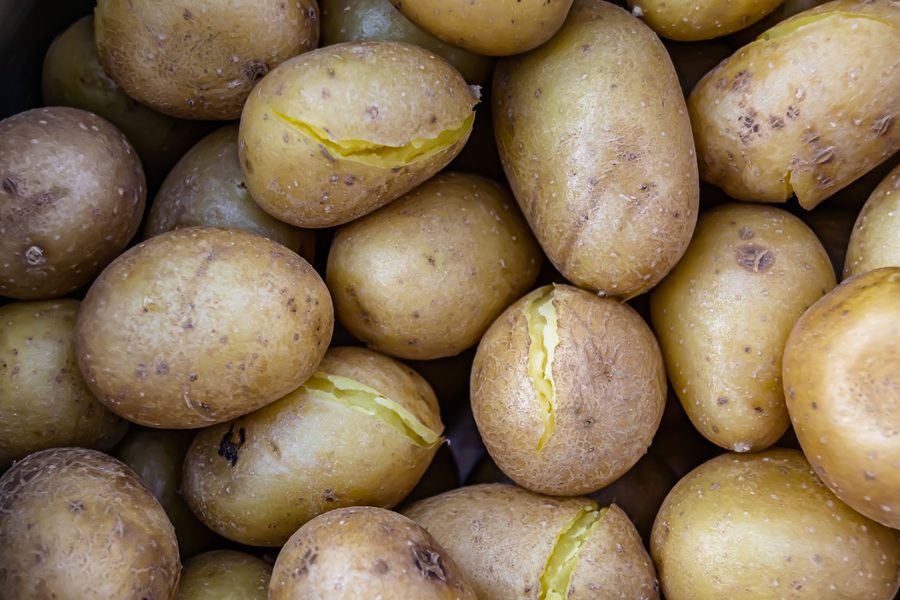
- Boil the potato whole in its skin until a knife slides in easily, about 25 minutes. Peel it and let it cool completely.
- Crush the garlic with the salt to a paste.
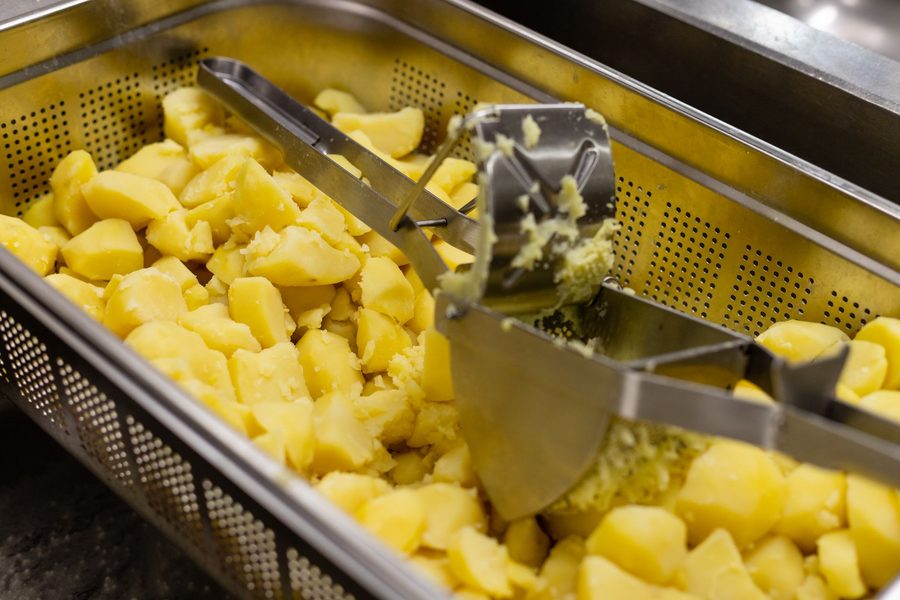
- Put the potato, yoghurt, garlic paste, white pepper and lemon juice in a food processor and pulse until smooth. Do not run it longer than you need: overworked potato turns gluey.
- With the motor running, add the oil gradually until the sauce thickens. Taste for salt.
- Serve the same day, cold, with grilled chicken or fries.
Keeping toum safely
This is where most recipes get vague, and it matters. Garlic is a low-acid vegetable that can carry spores of Clostridium botulinum, and covering it in oil cuts off air, which is exactly what those bacteria like. Oregon State University’s extension service on preserving garlic is blunt: raw, untreated garlic should never be kept in oil at room temperature.
The tested numbers are for garlic in oil. The National Center for Home Food Preservation’s guidance on garlic-in-oil says to make it fresh, keep it in the fridge at 4°C (40°F) or below, and use it within 4 days, or freeze it for up to several months. Its own research confirmed that garlic-in-oil kept at room temperature is at risk of botulism.
Toum has one thing plain garlic in oil does not: lemon juice. Acid is the standard defence, and the US federal definition of acidified foods draws the line at a finished pH of 4.6 or below. The trouble is that nobody measures the pH of a home batch, and the amount of lemon varies from recipe to recipe.
So the “keeps for a month” you will read in many recipes is a kitchen habit, not a tested figure. My rule: toum goes into the fridge as soon as it is made, never sits out on the table for hours, and gets a clean spoon every time. I make a half batch, keep what I will use in four days, and freeze the rest in small jars.
The potato and egg-white versions are shorter-lived again. Arabic home-cooking guides advise making garlic sauces close to the meal and keeping them no more than 24 hours in the fridge, especially those made with egg white. With potato and yoghurt in the mix, I treat that as the limit.
What toum goes with
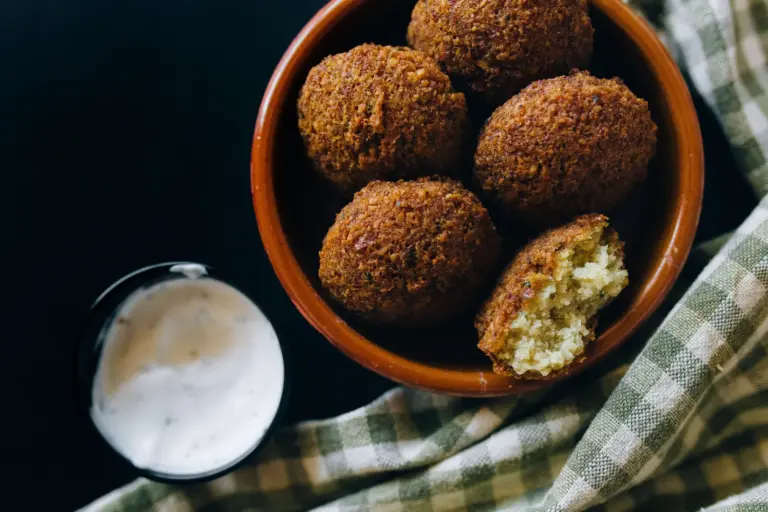
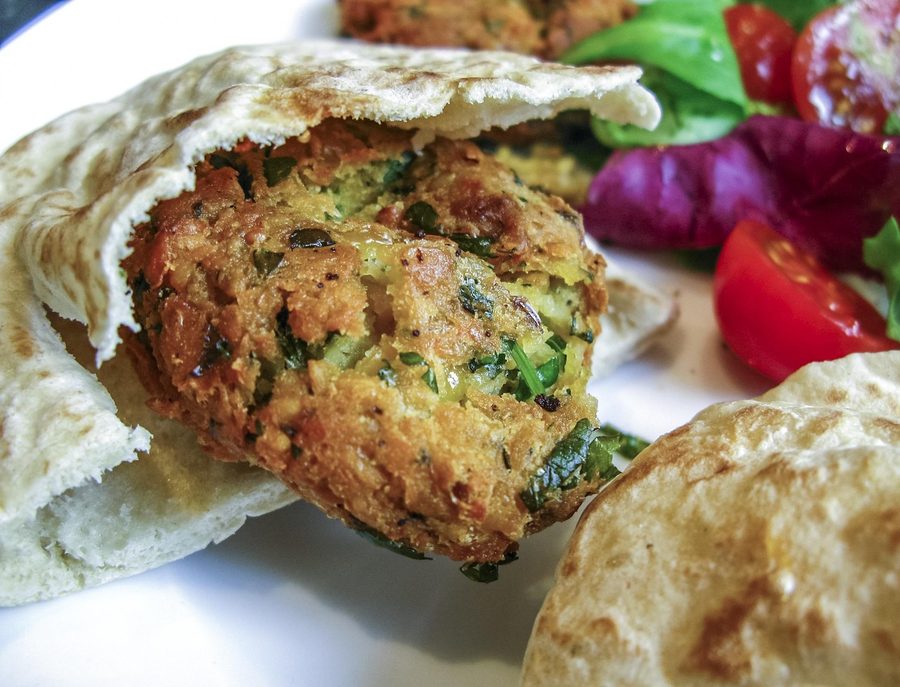
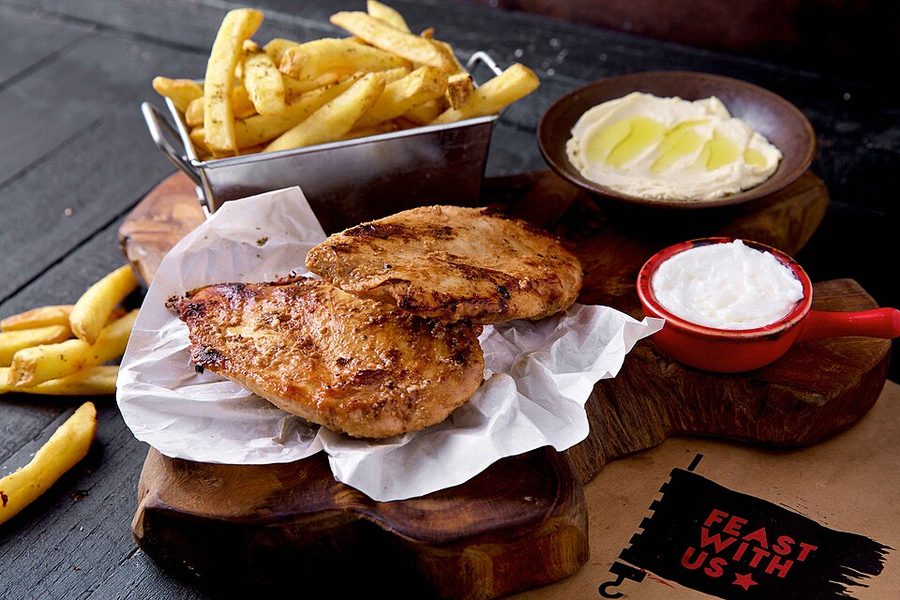
The short answer is chicken. In Lebanon toum is the sauce of the chicken trade: grilled chicken, chicken shawarma, shish tawook and the fries that come with all three. Beef and lamb shawarma get tahini sauce instead, and so does falafel.
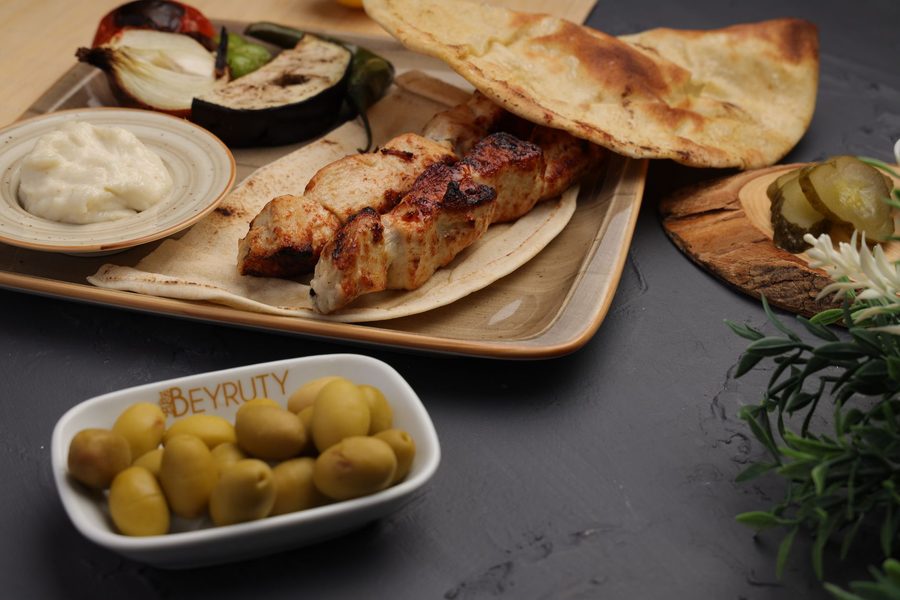
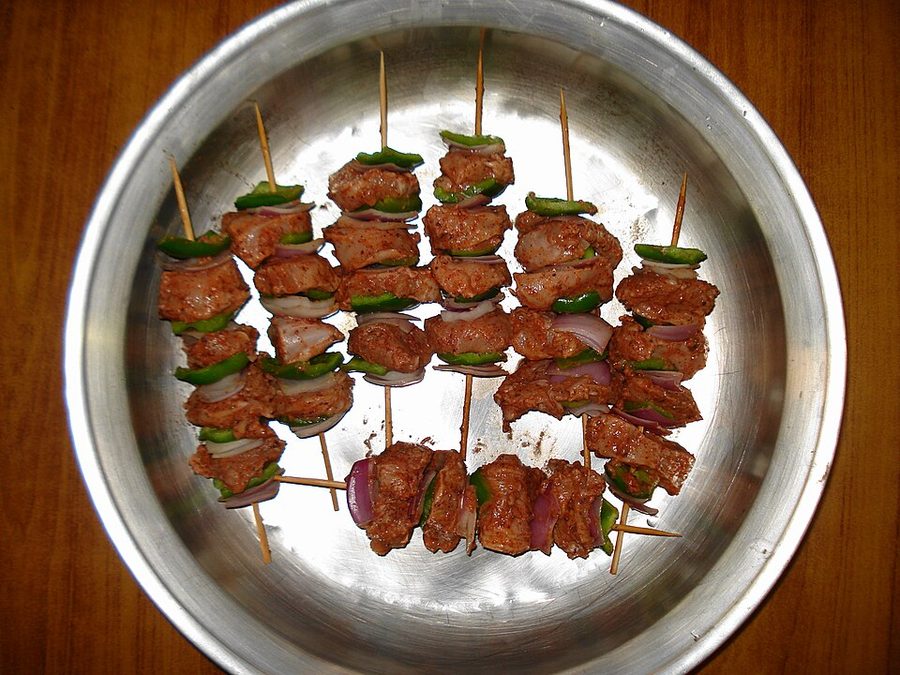
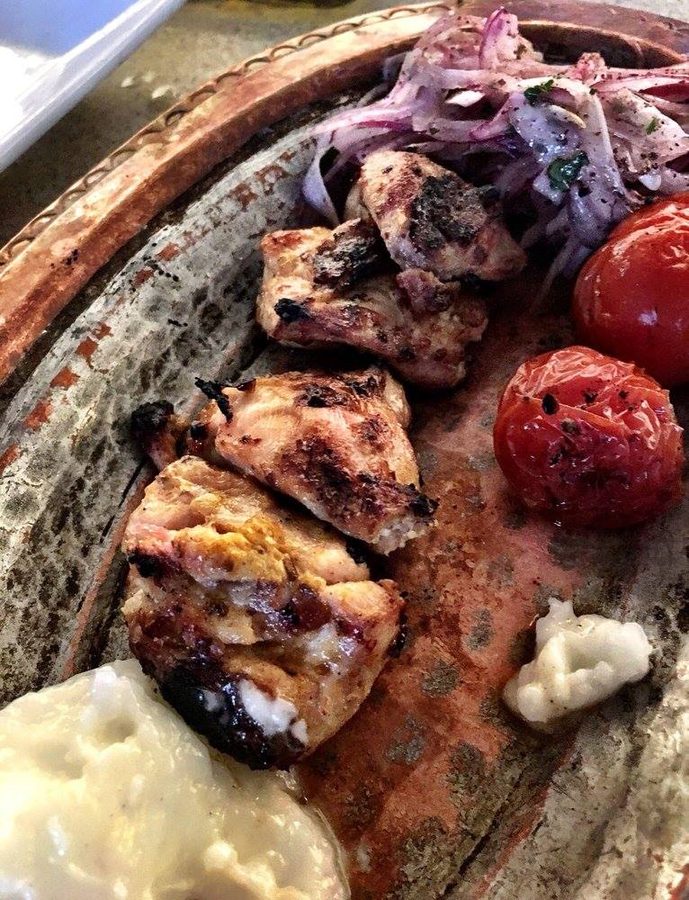
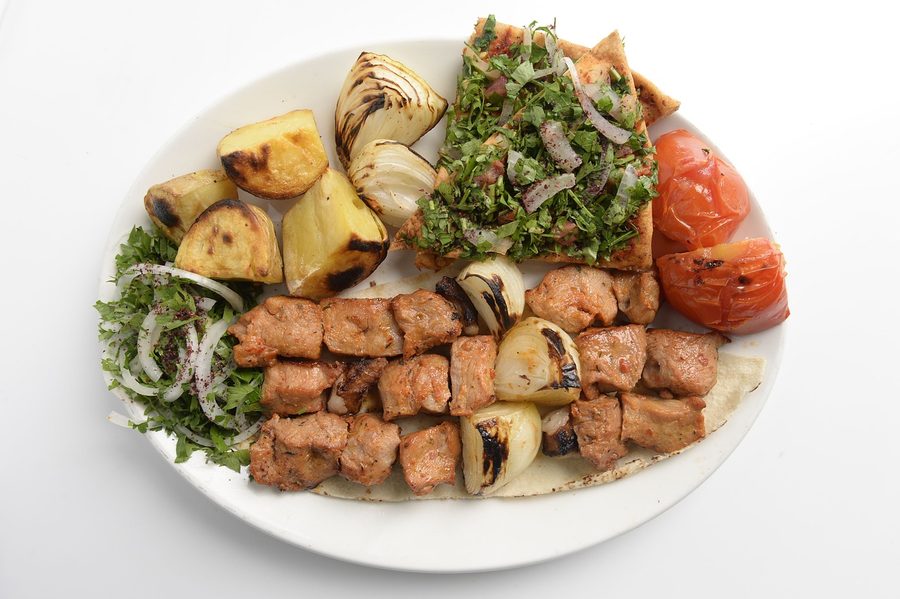
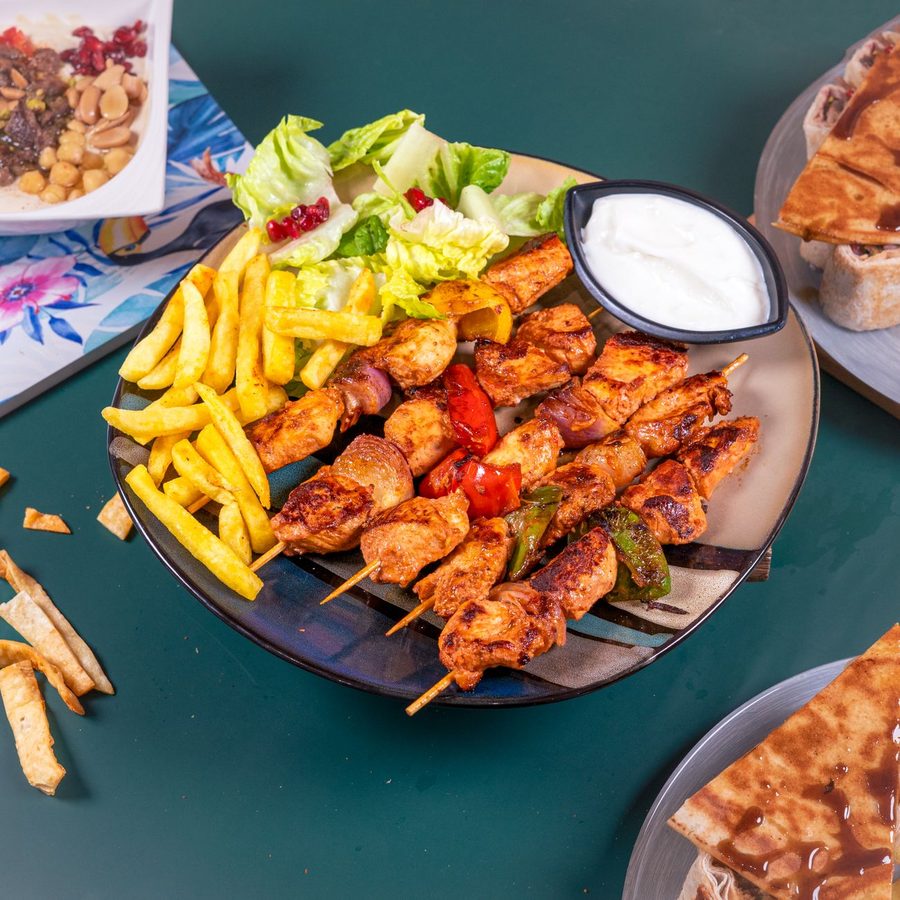
Shish tawook
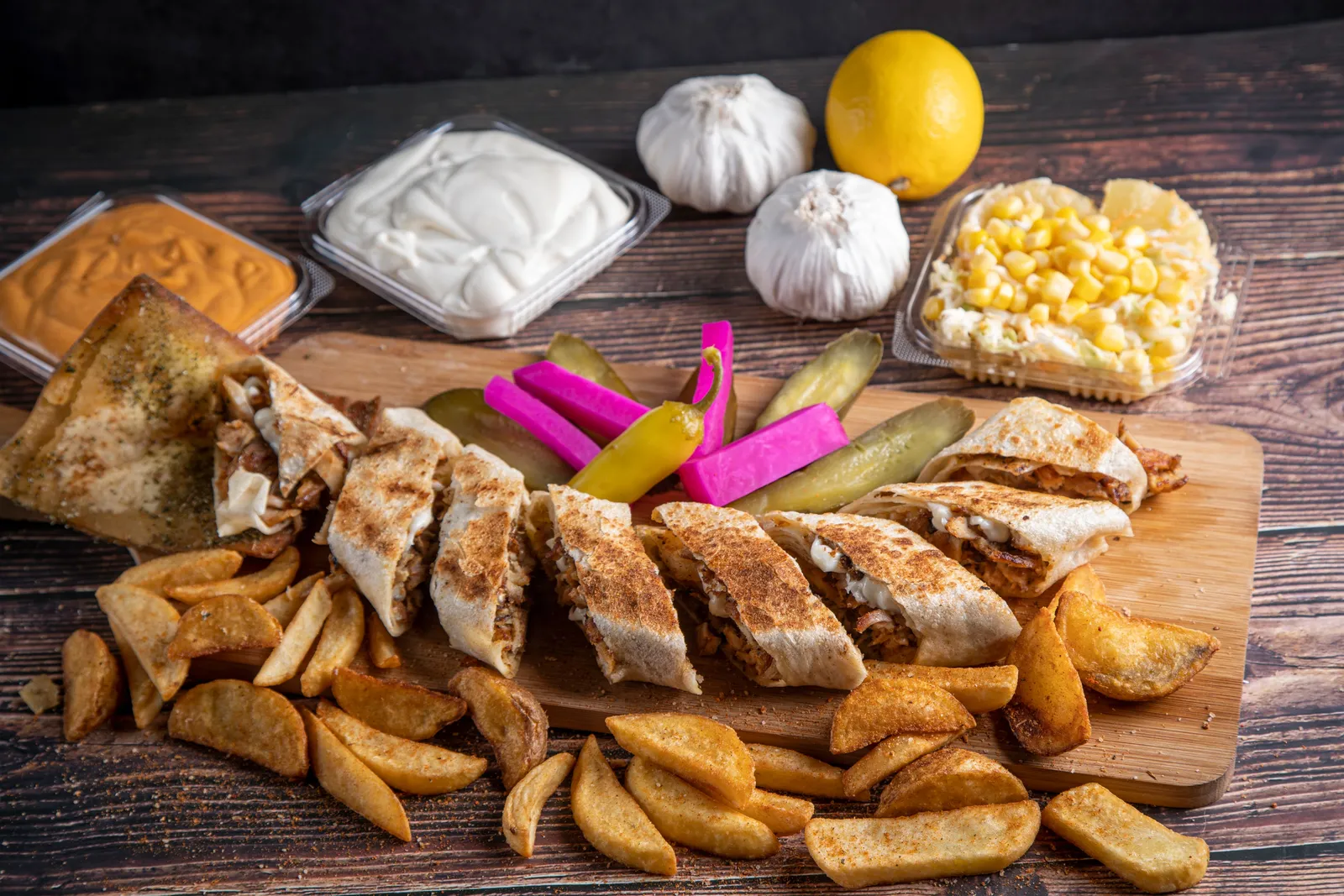
Shish tawook (شيش طاووق) is cubed chicken marinated, usually in yoghurt, lemon, garlic and a little tomato paste, then grilled on skewers. Arabic and English references describe the Lebanese and Syrian plate the same way: tawook with toum, hummus and tabbouleh. As a sandwich it is rolled in thin bread with fries, pickles and toum.
Toum also goes into the marinade. A spoonful stirred into the yoghurt gives the chicken a garlic flavour without raw bits of garlic burning on the grill. Leave it in for a few hours, not days: lemon toughens chicken if it sits too long.
Farrouj: the whole grilled chicken
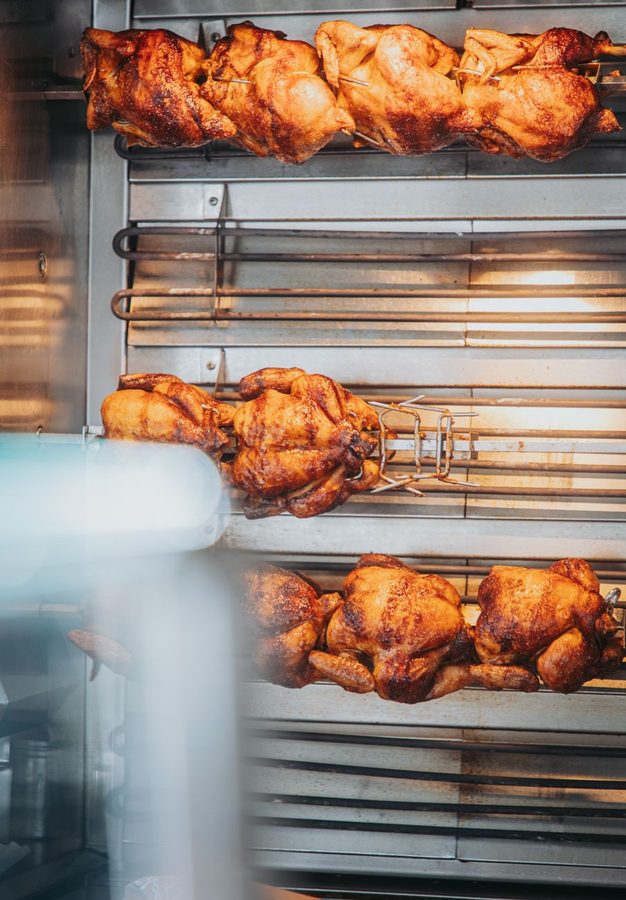
Farrouj (فروج) is a young chicken, and in Lebanon the word on a shop sign means charcoal-grilled or spit-roasted chicken, usually flattened, sold whole or by the half. It comes wrapped in thin bread with a tub of toum, pickles and fries, and the bread soaks up the juices on the way home.
This is the meal toum was made for. The chicken is plainly seasoned, so the sauce supplies the garlic and the sharpness, and you use far more of it than you would with shawarma.
Shawarma
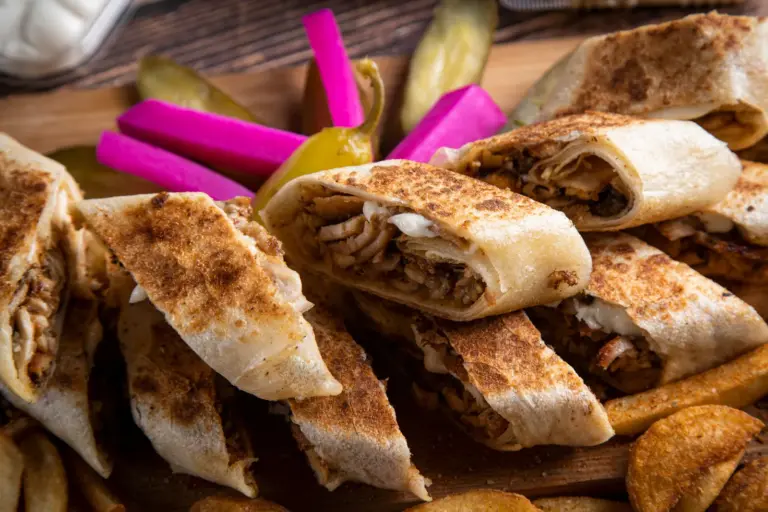
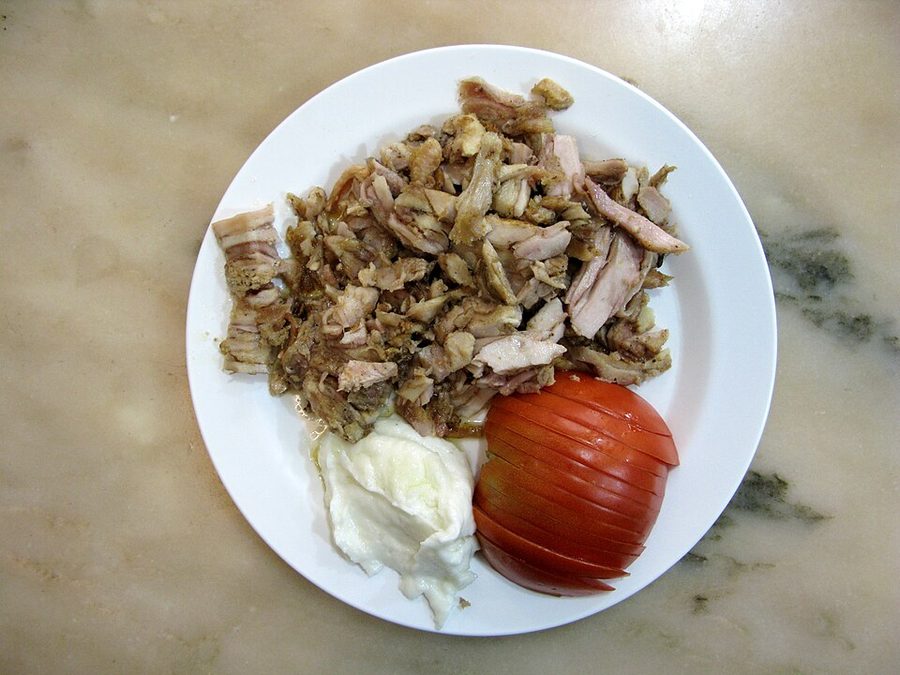
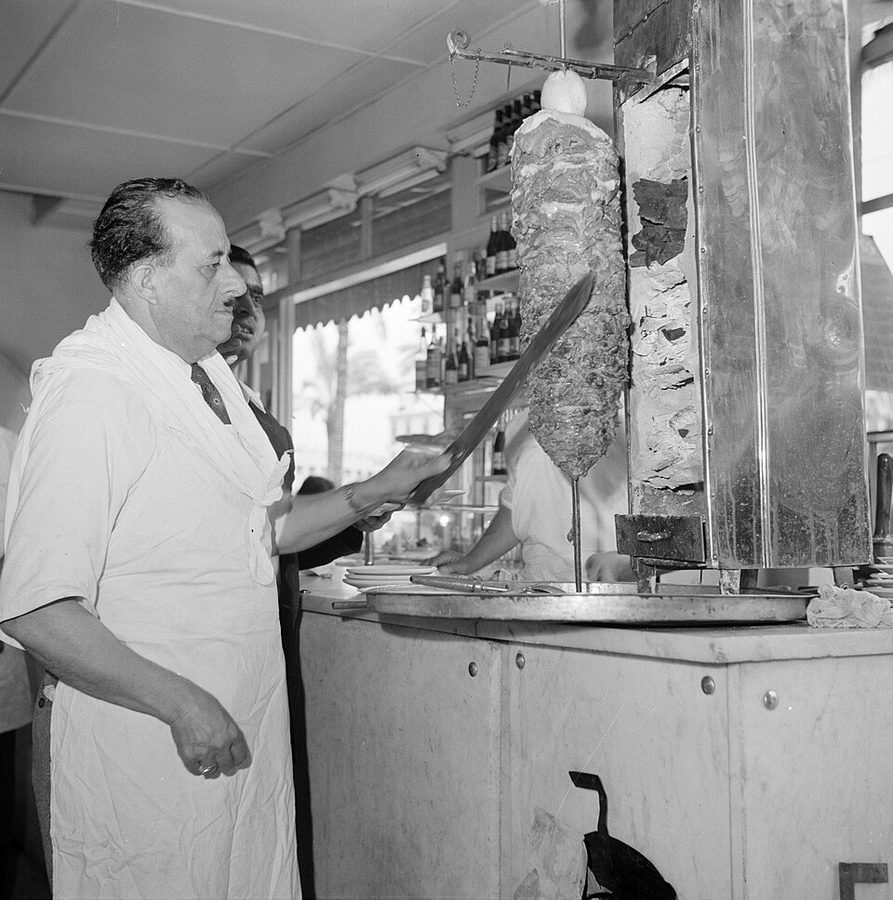
Chicken shawarma is the other big job. The meat is shaved off the spit, rolled in bread with pickles, sometimes fries, and a layer of toum spread inside the wrap.
Fries, bread and everything else
Fries dipped in toum are the snack every Lebanese chicken shop sells without trying. The same goes for bread: a piece of warm flatbread and a spoon of toum is a meal for some people at midnight. Grilled vegetables, roast potatoes and artichokes all take it well.
Outside the chicken trade, I use toum as a shortcut wherever a recipe asks for raw garlic and oil together. A teaspoon whisked into a lemon dressing, stirred into a bowl of soup at the table, or spread thinly on bread before toasting does the work of a clove without the chopping.
Garlic in the rest of the Lebanese kitchen
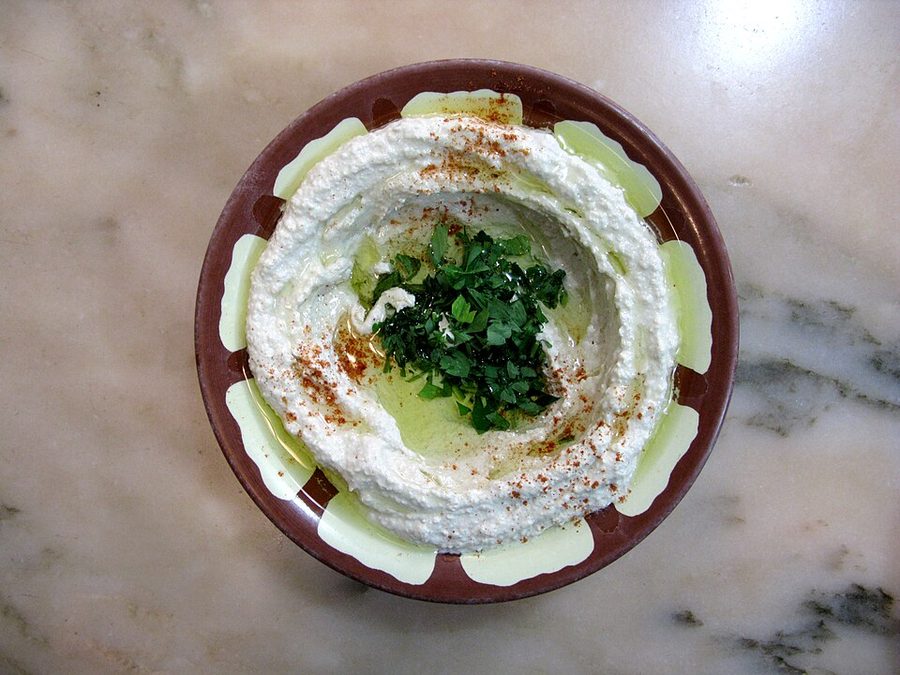
Toum is the loudest use of garlic in Lebanese cooking, but not the only one. Garlic is pounded into the tahini and lemon of hummus and moutabal, into the lemon and oil poured over foul mdammas, and into the coriander and chilli of batata harra, the spicy fried potatoes. Tabbouleh, notably, has none.
That is the logic of a mezze table. Some dishes carry garlic, some carry only lemon and herbs, and the bread moves between them. A table with toum on it usually has something cool and clean beside it, a bowl of labneh or a plate of fattoush, for the moments when your mouth needs a break.
Where to eat chicken with toum in Lebanon
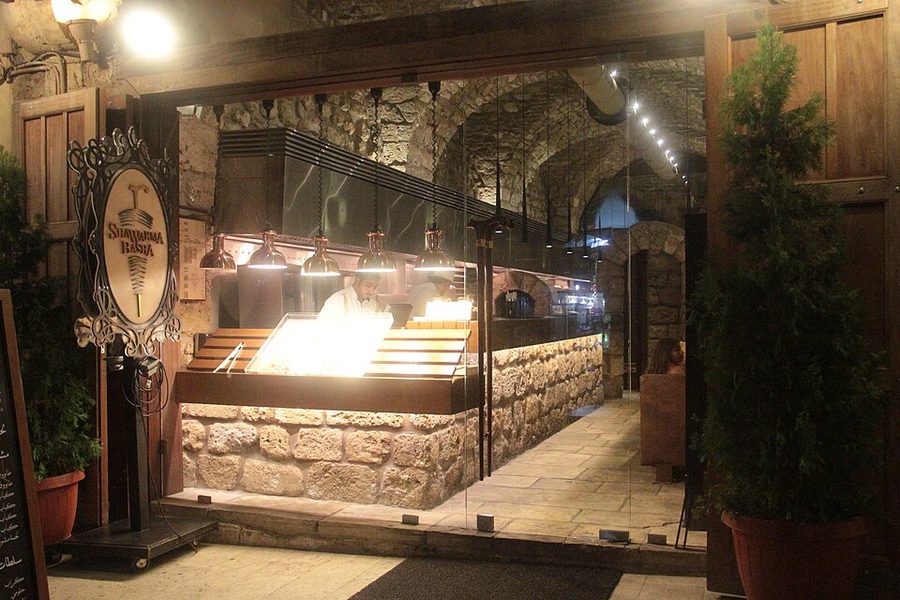
Every neighbourhood in Beirut has a chicken shop, and the best one is often the nearest. These were all serving in November 2026.
Barbar, Hamra
Barbar started in 1979, when Mohamad Ghaziri came home from years at sea and opened a small man’oushe bakery in Hamra. It took its name from a play, “Barbar Agha”, then on at the Piccadilly Theatre a few steps away, and it kept serving through the war. Today the Hamra shop on Piccadilly Street covers the whole street-food range: the oven, shawarma, the grill, juices.
Go for a chicken shawarma or a tawook sandwich with toum and eat it standing up. Barbar keeps very late hours, which makes it the place Hamra ends up after midnight.

Malak al Tawouk, Bliss Street and beyond
The name means “king of tawouk”, and the chain has built itself on one sandwich: tawook rolled with fries and toum. The Bliss Street branch, facing the American University of Beirut, is the one students know, and there are others across the city, in Sassine, Bechara el Khoury, Furn el Chebbak, Dora and the City Centre mall in Hazmieh.
Its website was offline for a redesign in November 2026, with orders still running online. Recent customers grumble that the sandwiches carry more fries and less chicken than they used to, so order a plate if you want the chicken to lead.

Farouj Al Shams, Bourj Hammoud
For whole grilled chicken, Farouj Al Shams on the Mirna Chalouhi highway in Bourj Hammoud is a quick-service offshoot of Al Shams, the big restaurant in Anjar in the Bekaa. Its site lists opening hours of 9am to 12:30am every day. It is busy at weekends; go on a weekday evening if you want a table.
Order the farrouj with toum and fries, and a plate of mezze if there are more than two of you. Bourj Hammoud is Beirut’s Armenian district, so the walk there is worth making for its own food shops too.

Atyab Farrouj and Abou Sami
Atyab Farrouj, “the tastiest chicken”, has a branch on Corniche el Mazraa and another in Hamra, and sells grilled chicken and shawarma. Abou Sami, on the main street in Borj Abi Haidar, is a small neighbourhood chicken place where takeaway works better than sitting in. Both were busy in November 2026.
Outside Beirut, look for the word فروج on any sign in any town. A chicken shop with a charcoal grill, a queue and a stack of bread is almost always a safe bet, and the toum will be made on site that morning.
Back in your own kitchen, the test is the same as it is in any of those shops. Lift a spoonful of toum and turn the spoon over: it should cling, white and stiff, and drop off only when you shake it. If it does, the oil went in slowly enough, and the chicken can go on the grill.