A kilo of dried bihon weighs almost nothing in the hand. It is a stiff white brick of rice threads, the kind of thing that sits at the back of a cupboard for months, and it looks like it could feed two people at most.
Soak it in a basin of water for ten minutes and it turns into enough noodles for a birthday. Fry some garlic, slice whatever pork is in the fridge, pour in the stock and toss, and twenty-odd people are fed off one round tray with a pile of calamansi at the side.
That is the whole appeal of pancit, and it explains why the dish turns up wherever a Filipino house fills with people. The noodles came from China, the name is Hokkien, the word for the sauté is Spanish, and the sour little citrus squeezed over the top is entirely local. Nobody at the table thinks about any of that until the tray is half empty and someone asks who made it.
Contents 7 parts
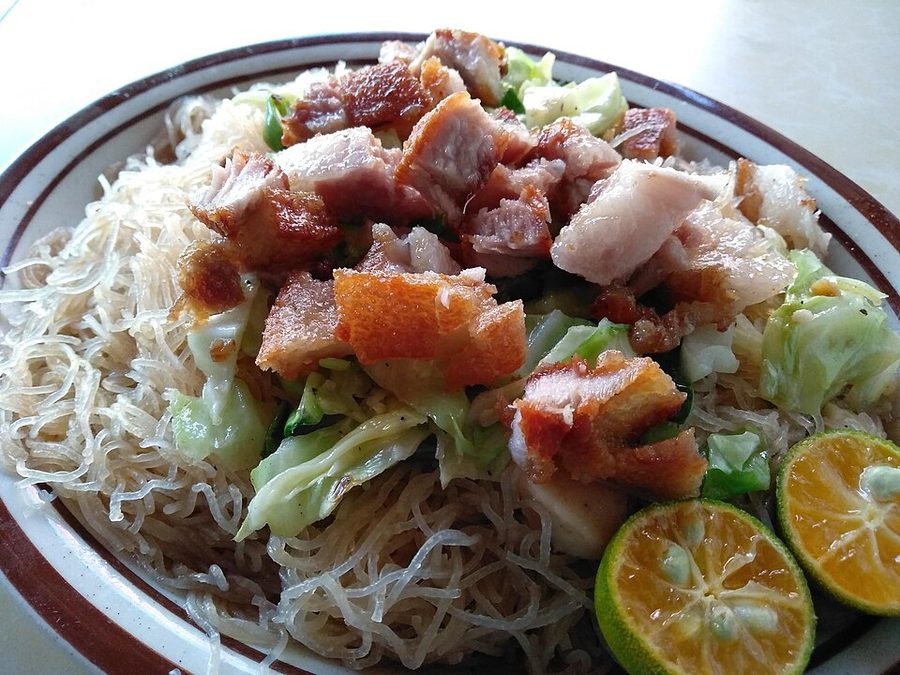
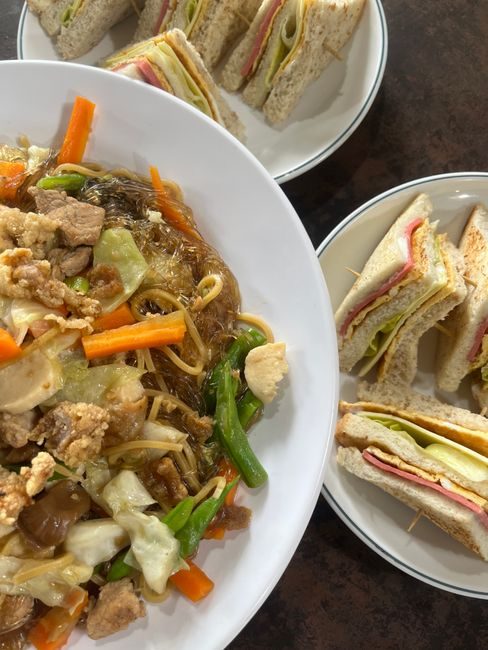
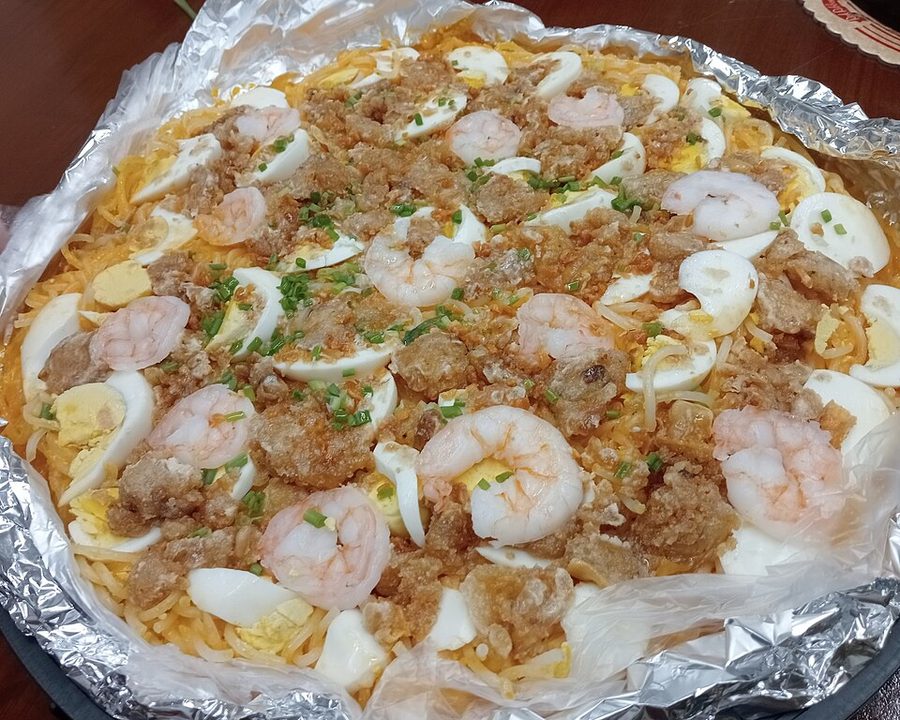
Pian-e-sit: food made to be easy
Pancit, also spelled pansit, is simply the Filipino word for noodles, and the dish takes its name from the noodle in the pan. The usual derivation is Philippine Hokkien piân-ê-si̍t (便的食), “something conveniently cooked”, which is how a Rappler guide to the regional pancit explains it. A second derivation points to pán-si̍t (扁食), the Hokkien word for wonton, so the etymology is not settled. Either way, the word arrived with Chinese traders and cooks, and so did the noodles.
A shop that sells them is a panciteria or pansitan, and the word turns up as early as Rizal’s El Filibusterismo in 1891. The cooking method in most of them is guisado, from the Spanish for sautéed: garlic and onion in oil first, then meat, then vegetables, then the noodles in stock. That order holds for both recipes below.
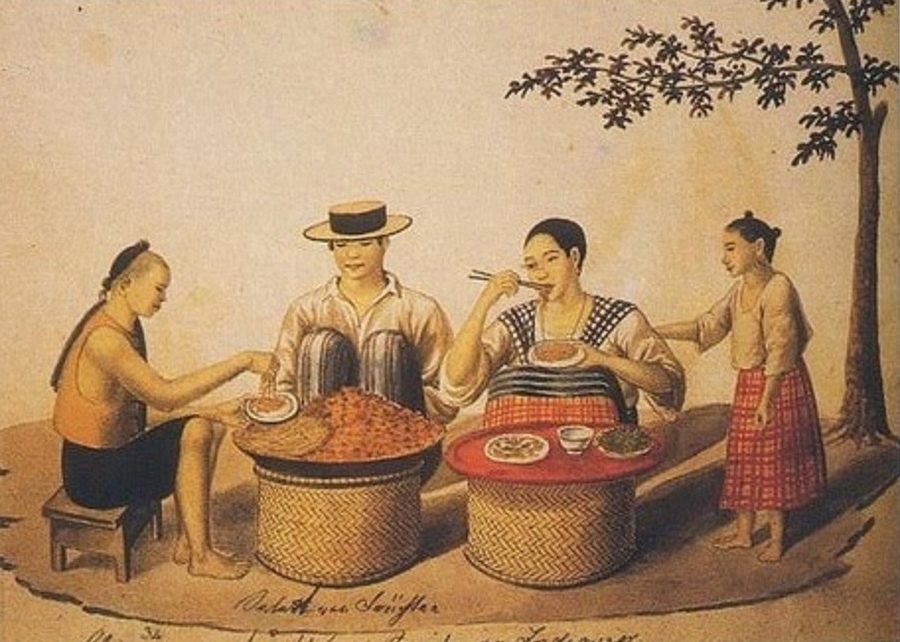
The birthday custom came by the same road. Long noodles stand for a long life in Chinese tradition, and Chinese-Filipino families brought the idea with them; Chinese restaurants across the Philippines still list “birthday noodles” on the menu. Tagalog home cooks put it plainly: pancit, along with spaghetti, is the dish a birthday party cannot do without, a symbol of mahabang buhay, long life, and a custom inherited from the Chinese.
It reaches well past birthdays now. At the opening of an exhibition on the Chinese in the Philippines in November 2026, the civic leader Teresita Ang See listed the Chinese contributions every Filipino eats without thinking, and asked the room: “What is a Filipino fiesta without lumpia and pancit?” The lumpia and the pancit usually arrive together, one tray each.
Pancit is also the default merienda, the afternoon snack that is really a fourth meal. A plate of bihon at 3pm with a cup of coffee, a soft roll or a few rice cakes on the side, is as ordinary as toast. Party, office, roadside stall: the same noodles, in different quantities.
A map drawn in noodles
Most regions have a pancit of their own, and most of them are named either for the noodle or for the town. The ones below are the ones you will meet most often, from the plain party tray to the dish a single town defends as its own.
Bihon and canton, the everyday pair
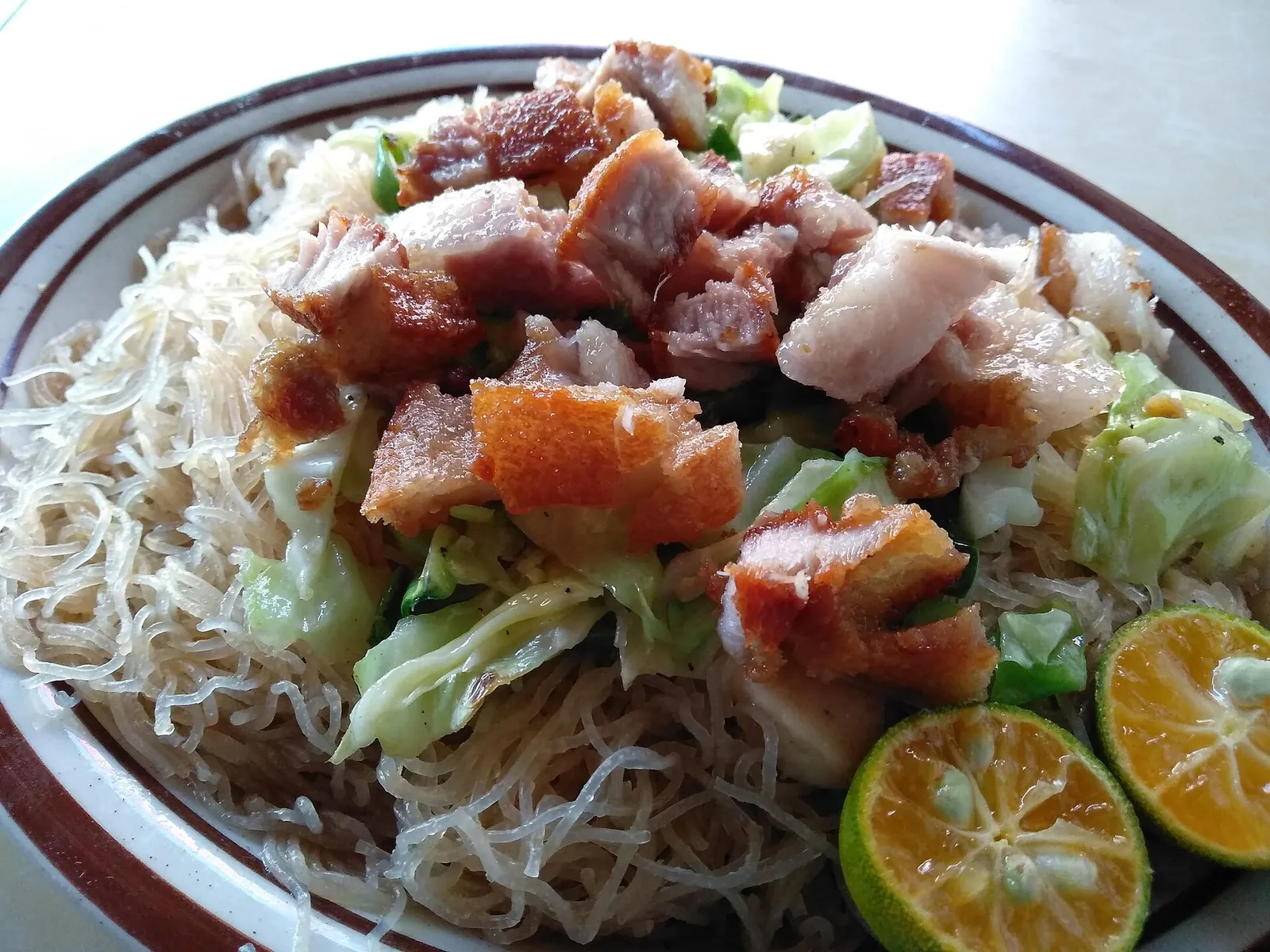
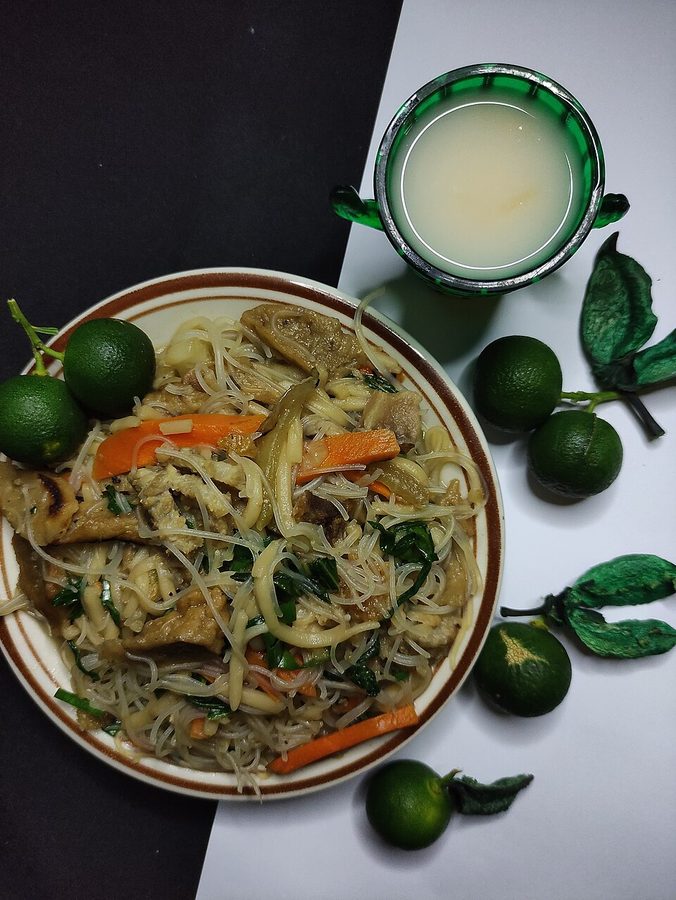
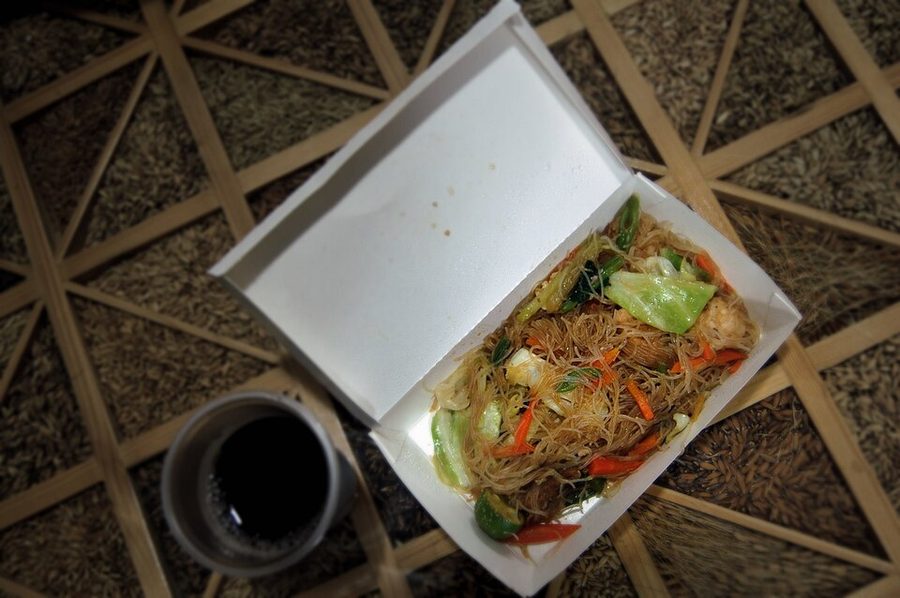
Pancit bihon is the one most people mean when they say pancit: very thin rice noodles stir-fried with soy sauce, sliced pork, shredded chicken, sometimes liver, and whatever vegetables are cheap that week, usually cabbage, carrot and green beans. It is light, slightly dry, and the noodles should stay separate rather than clump. The calamansi goes on at the table, not in the pan.
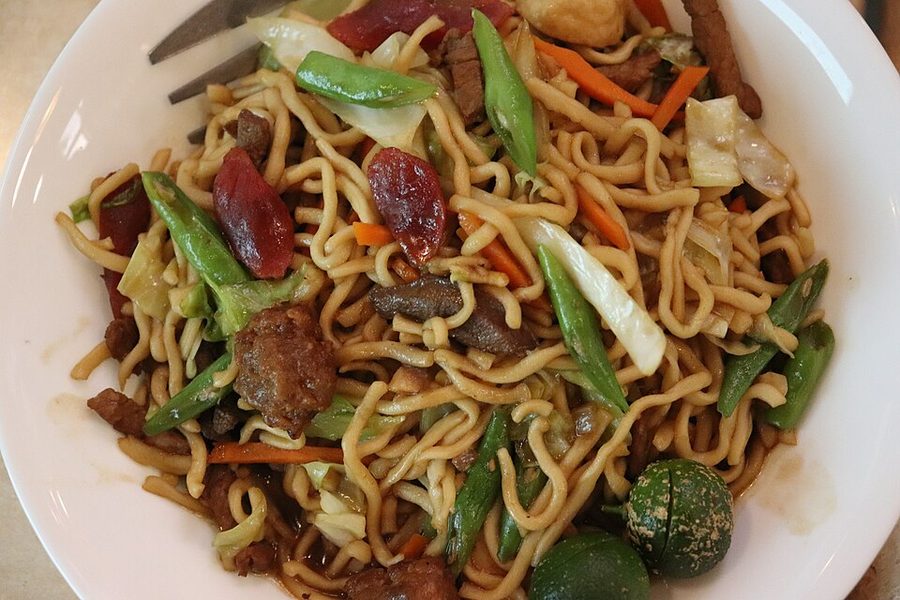
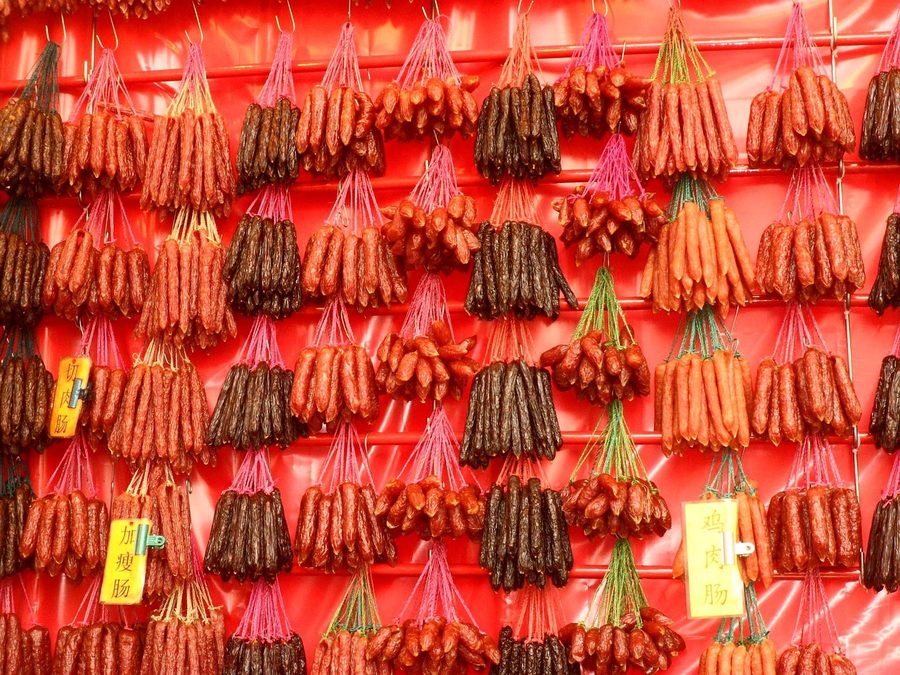
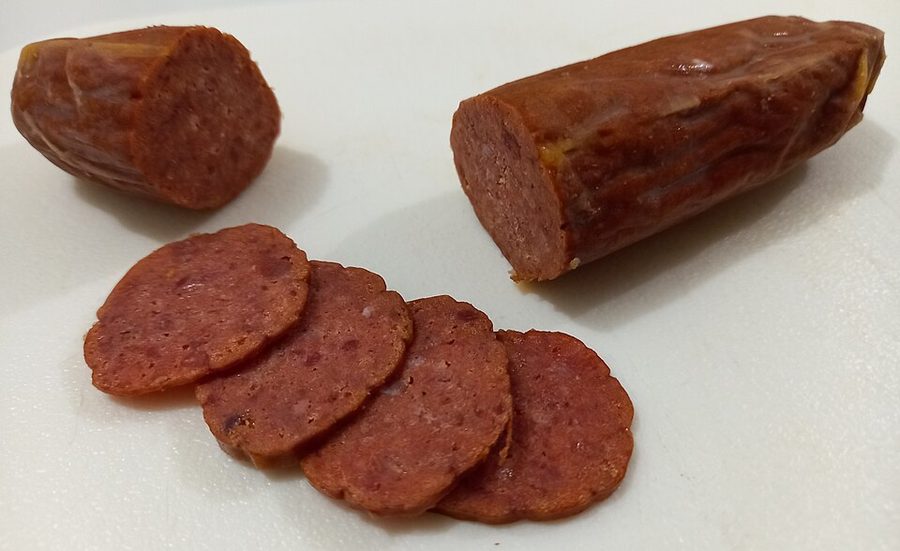
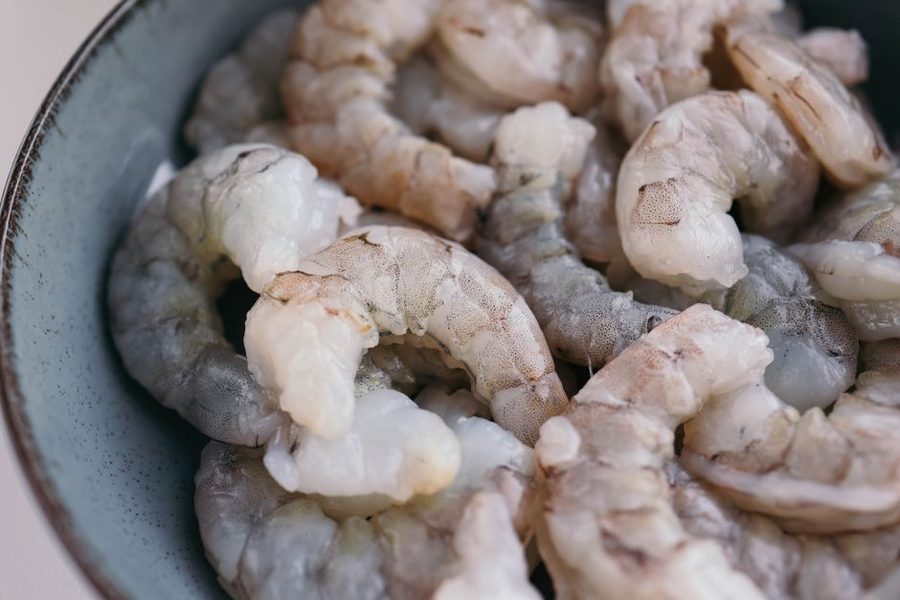
Pancit canton uses wheat-flour egg noodles instead, the Filipino cousin of lo mein, with much the same toppings plus shrimp and often Chinese sausage. It is chewier and more filling, and it holds its texture longer on a buffet table. Plenty of cooks mix the two into a canton-bihon, which I think is the best of both: the canton gives body, the bihon soaks up the sauce.
Palabok, Malabon and luglug: the orange ones
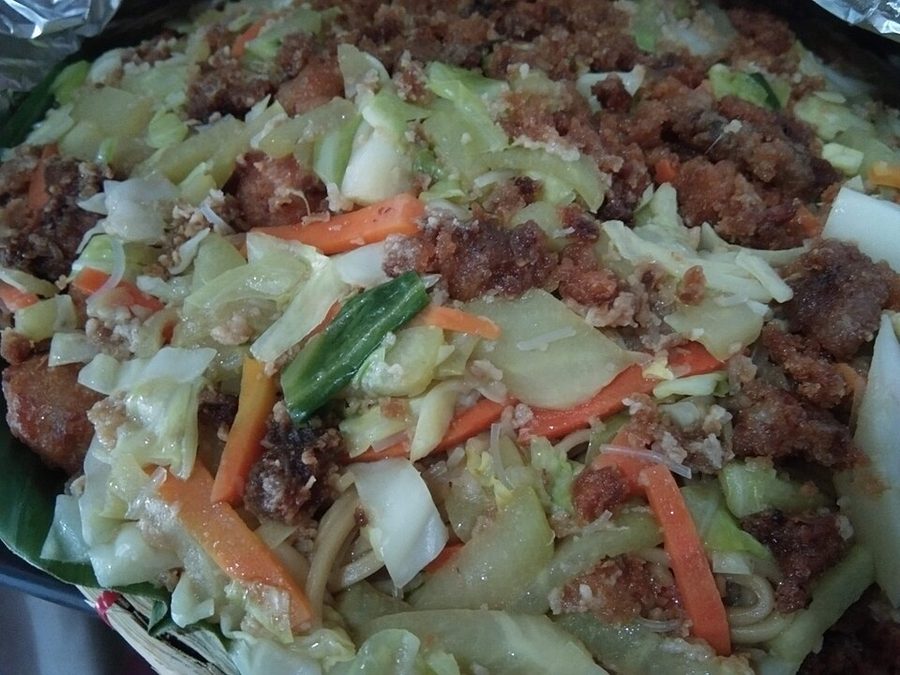
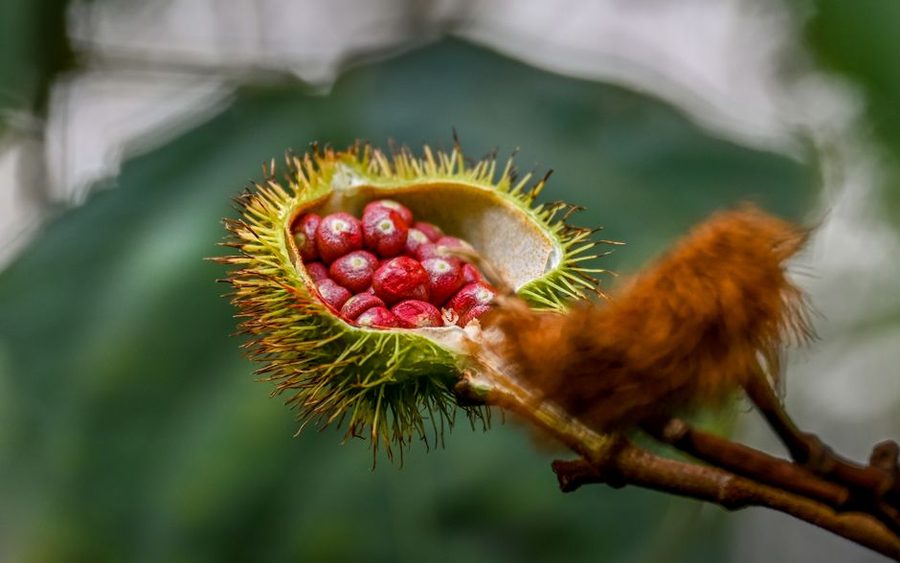
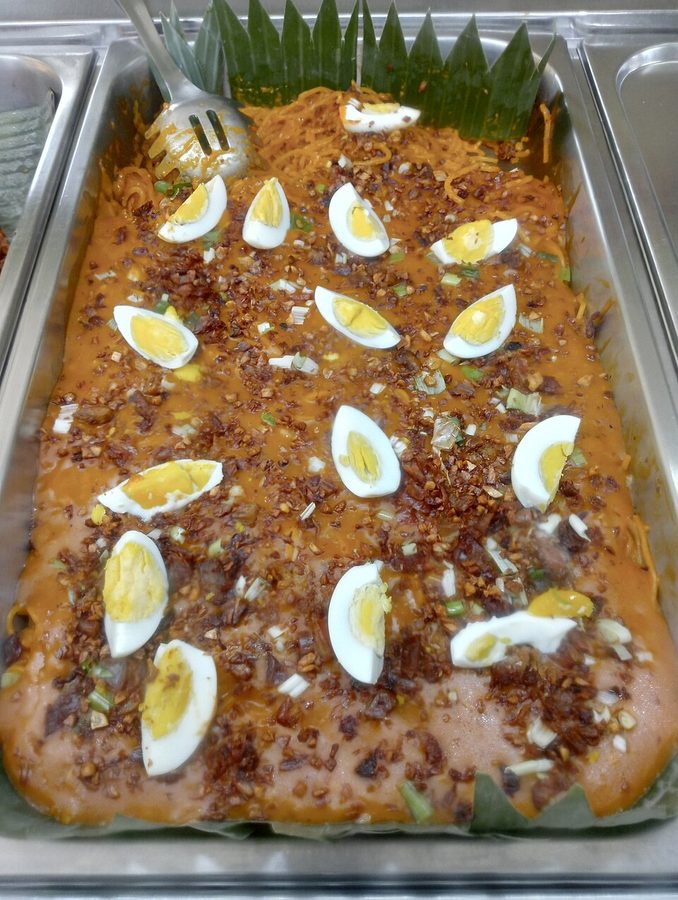
Three dishes share the same bright orange colour from annatto, and plenty of Filipinos mix them up. Palabok uses thin noodles with a thick shrimp sauce poured over the top, then a heap of toppings: crushed chicharon (pork crackling), shrimp, flaked tinapa (smoked fish), boiled egg and spring onion. You mix it yourself at the table.
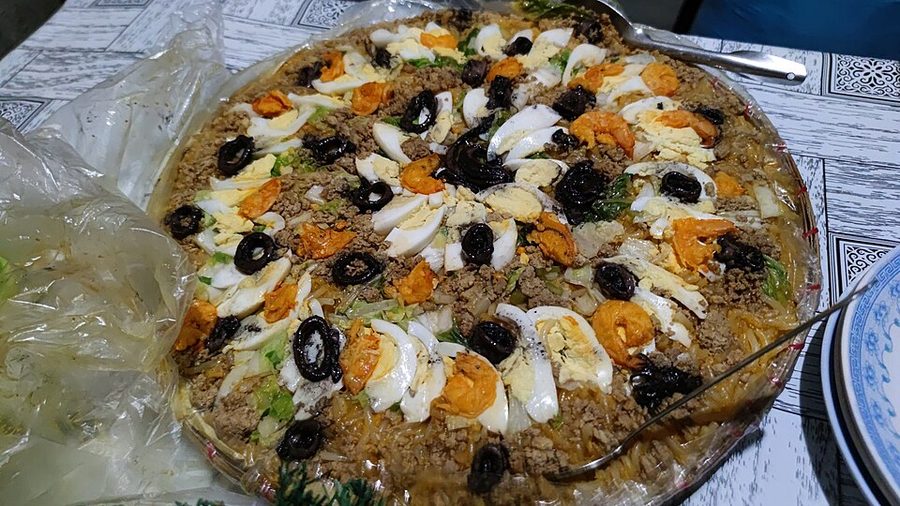
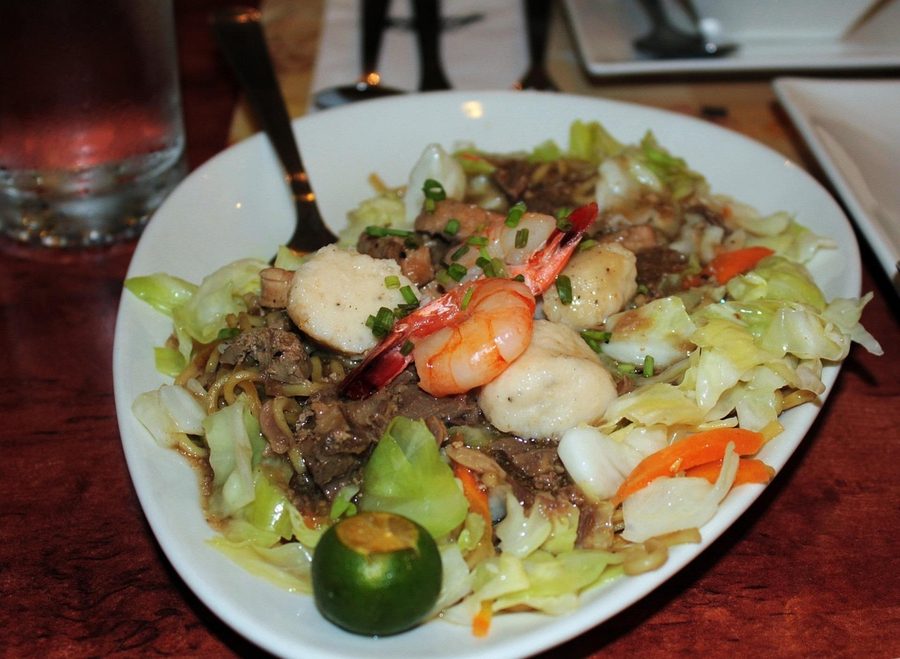
Pancit Malabon comes from Malabon City, a coastal city just north of Manila, and it uses thicker rice noodles with the sauce already mixed in. The chef Camille Colmenares settled the argument in one line in June 2025: palabok is a shrimp sauce, Malabon is a crab-fat sauce, made with taba ng talangka. The seafood on top, squid, shrimp and sometimes mussels, comes from the same coast, as Interaksyon reported.
Malabon takes this personally. In March 2025 the city set a Guinness World Record for the longest line of bowls of noodles: 6,549 bowls of pancit Malabon, made by twelve local restaurant owners, laid out at the Malabon Sports Center over nearly eight hours. Each bowl held 100 grams of noodles with kalamansi, red oil, crushed fish crackers, tinapa flakes, pepper and fish sauce, which is as good a definition of the dish as any.
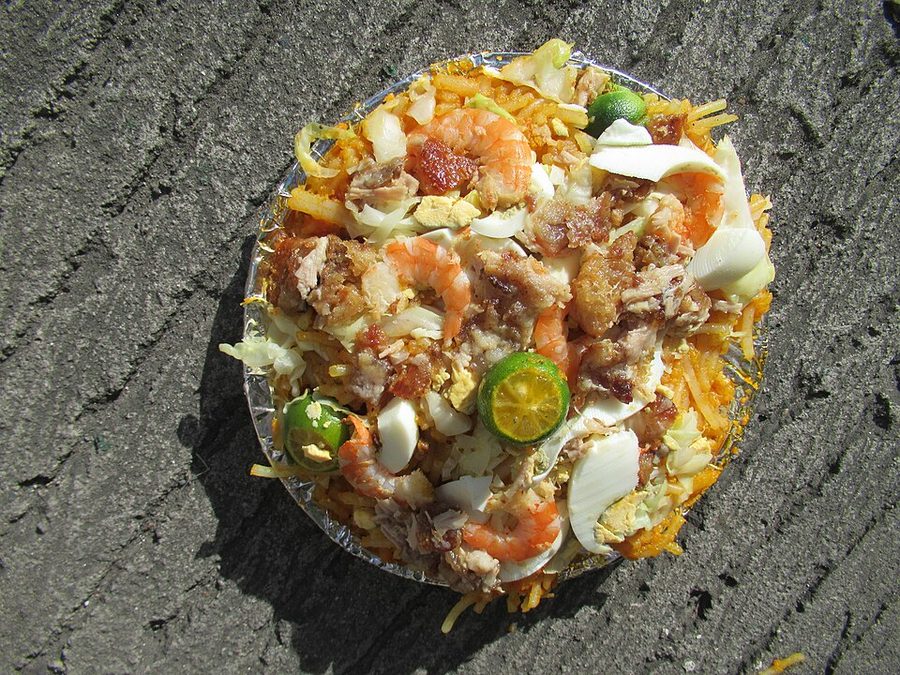
The family names still matter there. When a Makati culinary school held a lunch of Malabon heritage cooking in June 2026, the pancit on the table was Rosy’s pancit Malabon, and a fourth-generation descendant of that line was among the young cooks introduced as carrying the tradition on. If you want the real thing, buy it in Malabon by the tray.
Pampanga’s pancit luglug is the third orange dish, close to palabok but saucier and made with thicker cornstarch noodles. The name comes from the way they are cooked: dunked, luglog, in boiling water in a bamboo strainer until soft.
Habhab: Lucban’s noodles off a leaf
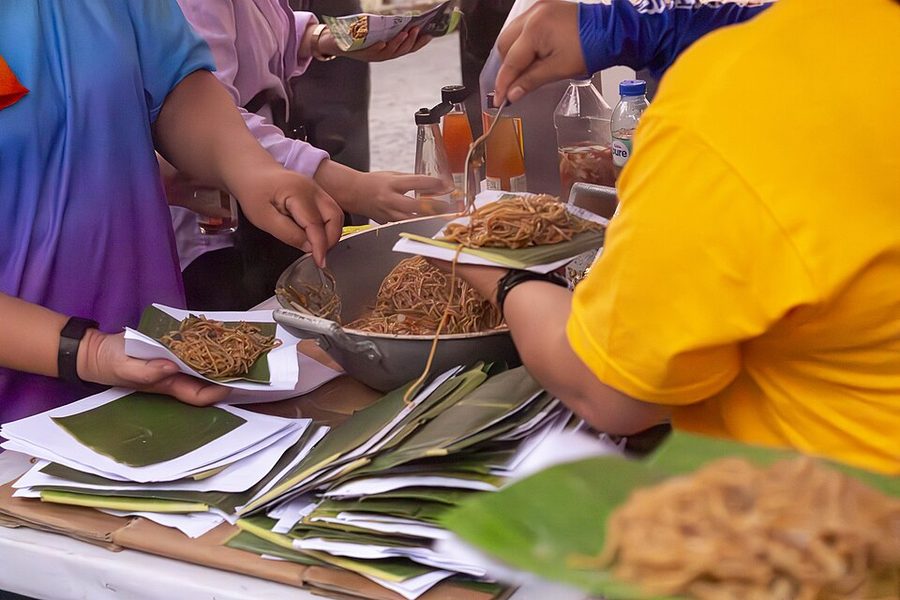
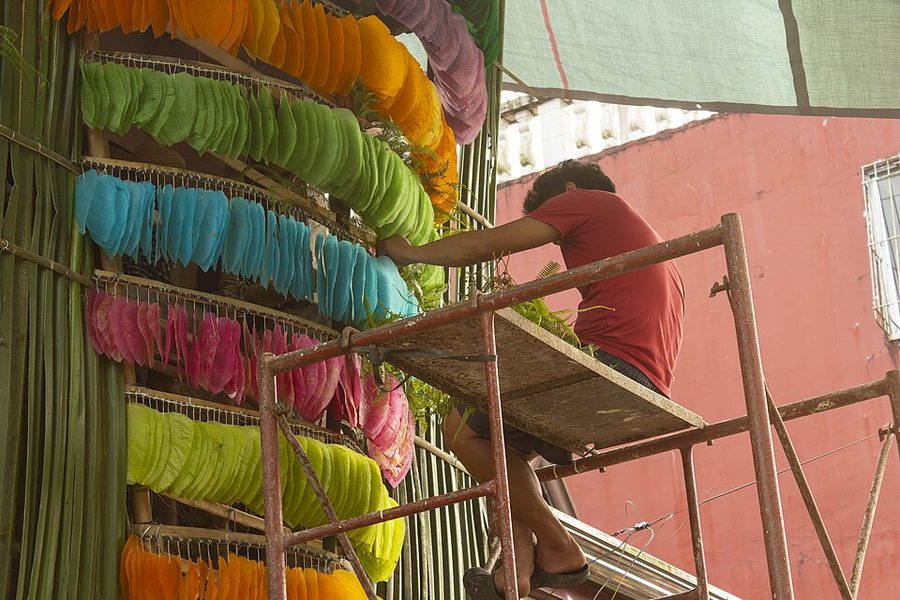
In Lucban, Quezon, the pancit comes without a plate. Pancit habhab is miki, chewy egg noodles, sautéed with pork belly, liver, shrimp and vegetables such as chayote, carrot and pechay, then served on a square of banana leaf. You eat it straight off the leaf with no fork, and the name comes from that gobbling.
Most people pour on spiced cane vinegar, which cuts the fat and is the right call; calamansi works too. The busiest time to go to Lucban is the Pahiyas Festival in mid-May, when houses are hung with kiping, coloured rice-paste wafers. The 2026 festival ran under the theme “Kiping Pahiyas”, with baking demonstrations at Patio Rizal on May 11 and 12.
Lomi: Batangas in a thick bowl
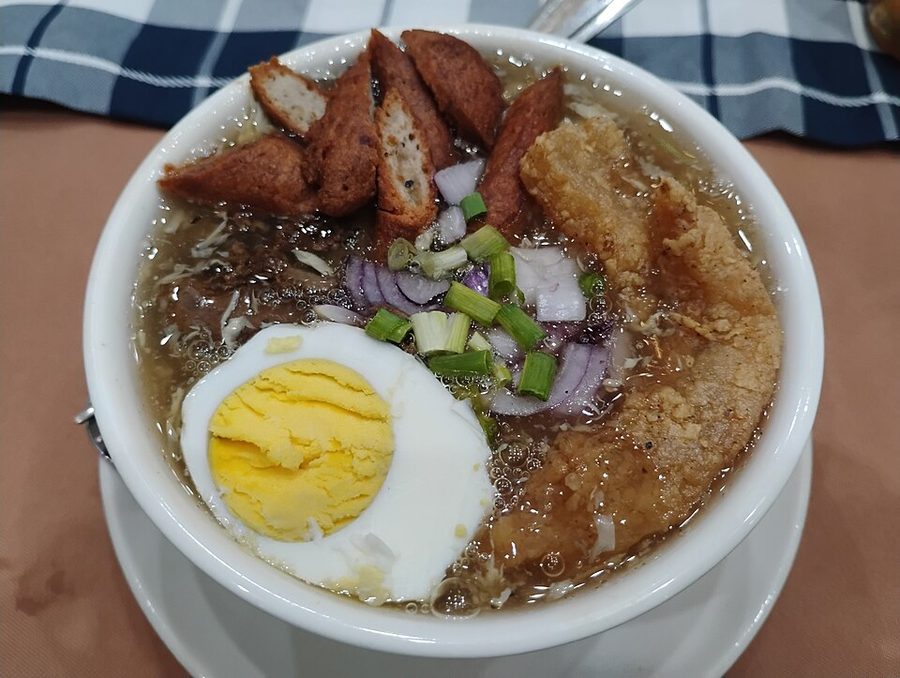
Lomi is a soup, not a stir-fry, and it is the pancit of Batangas. The noodles are fresh egg noodles about a quarter of an inch thick, treated with lye water so they stay springy. Pork and liver are sautéed with garlic and shallots, stock goes in with the noodles and cabbage, a cornstarch slurry thickens it, and a beaten egg is stirred through at the end.
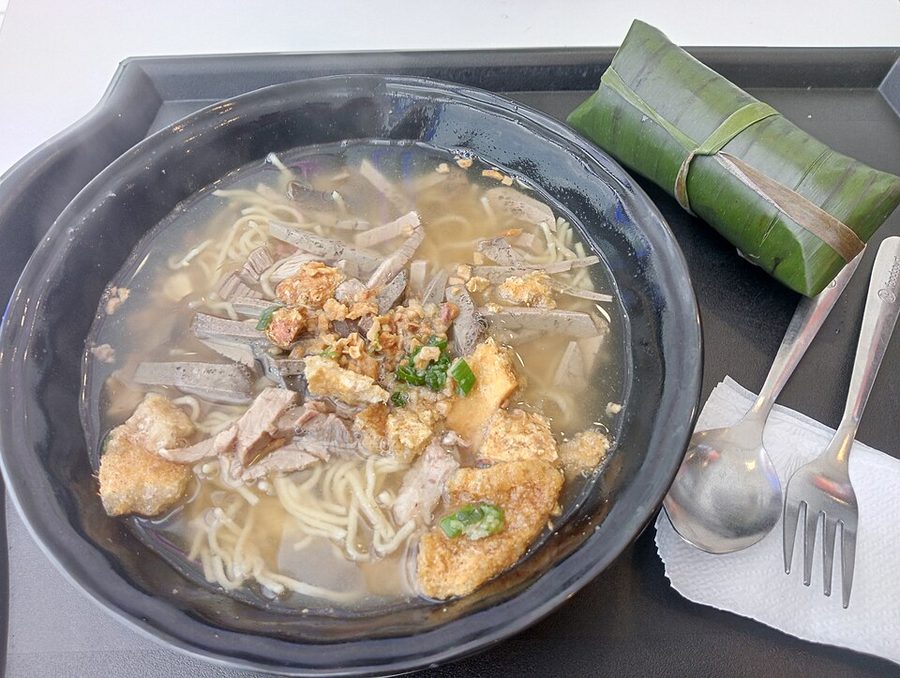
The result is closer to a stew than a broth, and it should be. It gets topped with kikiam, fish balls, meatballs and chicharon, and eaten with a little dish of soy sauce, fish sauce, calamansi and crushed chilli on the side. In Batangas it is sold in the lomi haus, a shop built around lomi and other fresh-noodle pancit, and each bowl is cooked to order in a deep wok in about ten minutes.
Batchoy: Iloilo’s market soup
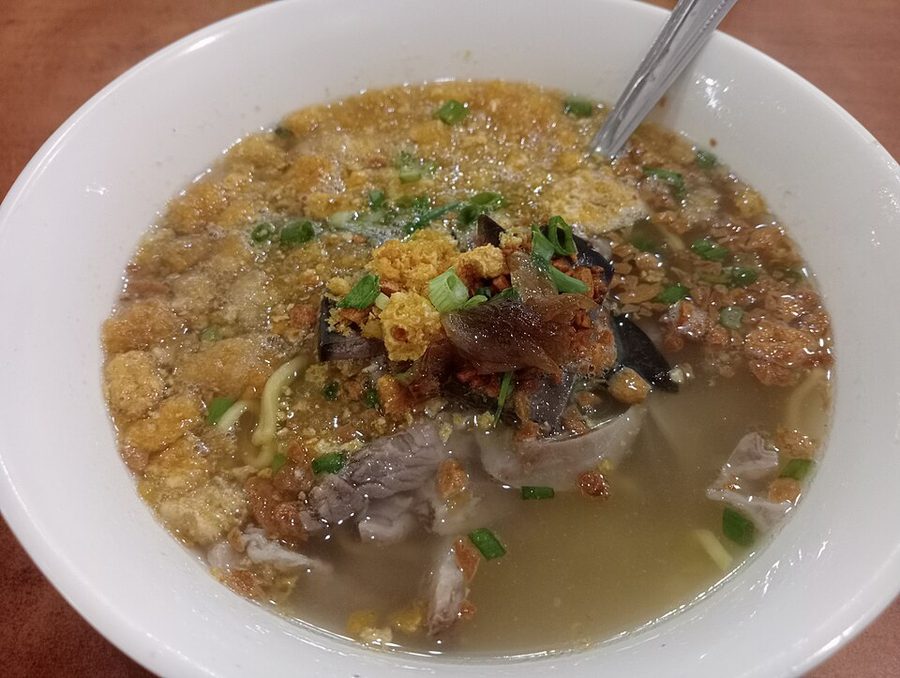
Iloilo’s batchoy is a noodle soup too: round egg noodles in a rich broth with pork offal, a little beef, crushed chicharon and spring onion, sometimes a raw egg cracked in. Doreen Fernandez, the food historian, described it in a 2002 newspaper column as “the famous market dish” of noodles, broth, spleen, liver, heart and kidneys. That is still exactly what it is.
It belongs to the La Paz district of Iloilo City, where several shops around the public market claim to have served it first, with dates running from the 1920s to the 1940s. The city still treats it as a civic matter: the Iloilo Batchoy Festival ran at SM City Iloilo from August 17 to 25, 2026, as part of the city’s 89th Charter Day.
Bam-i: Cebu’s two noodles
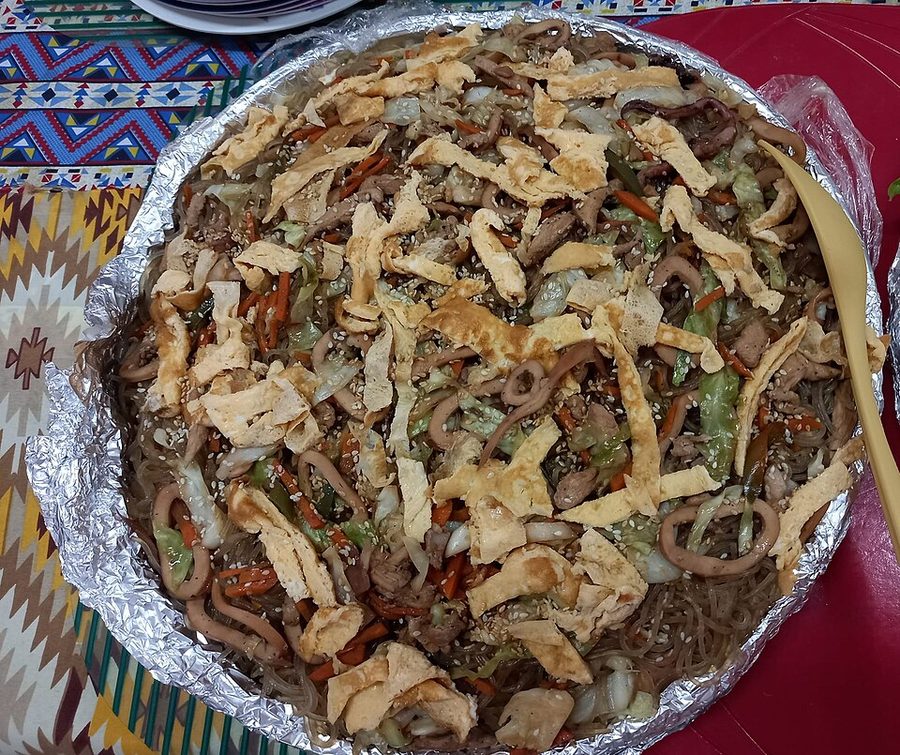
Cebu’s party pancit is bam-i, also called pancit Bisaya, and its trademark is two noodles in one pan: canton plus a thin one. Which thin one depends on who you ask. A Cebuano-language recipe in SunStar’s Superbalita Cebu uses three parts sotanghon to one part canton or miki, and most bam-i recipes I have read use sotanghon too; Manila-based guides often say bihon.
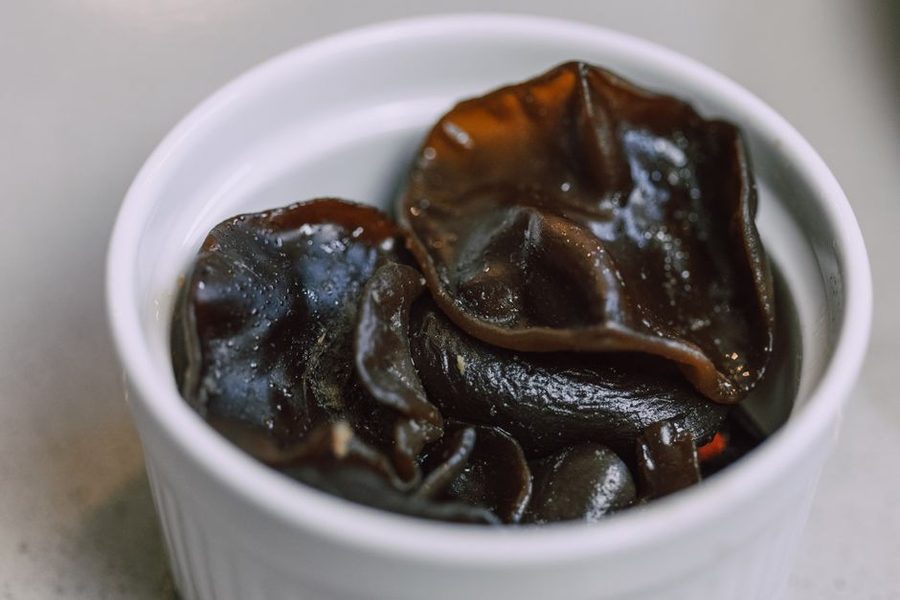
The toppings are generous: pork, chicken, shrimp, squid balls, sausage, cabbage, carrot, kinchay (Chinese celery) and dunggan-dunggan, the dried wood ear fungus Tagalog cooks call tenga ng daga, mouse ears. Where the name comes from is argued over too; the common guess links it to bami, a word for noodles in Indonesia. It is a party dish, and it sits comfortably with the rest of Cebu’s food, which likes its pork and its seafood on the same plate.
Buying the noodles, and what to do with each
The noodle decides the method, so it pays to know what is in the packet. Filipino and Asian grocers abroad stock most of these.
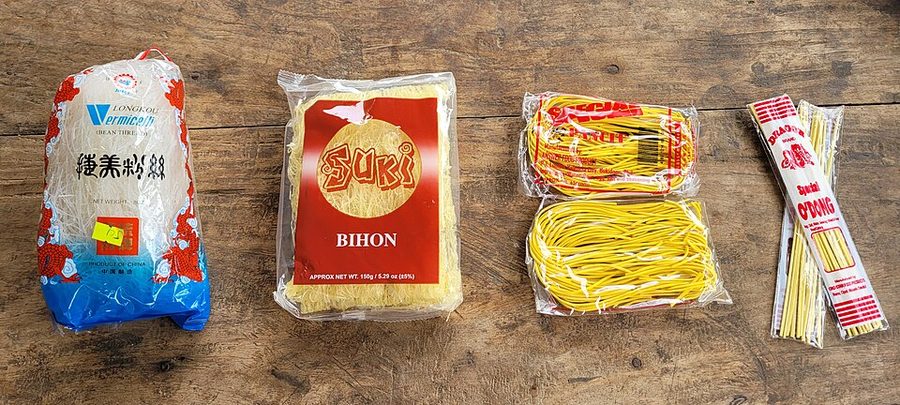
- Bihon is rice vermicelli, sold in brittle white blocks. Soak it in cool or room-temperature water for 10 to 15 minutes until it is limp, drain, and let it finish in the pan. Some packets sold as “golden bihon” are cornstarch sticks rather than pure rice; read the label.
- Canton is dried wheat-flour egg noodle, often labelled “flour sticks”. It goes into the simmering stock dry, no soaking, and takes about three minutes to soften.
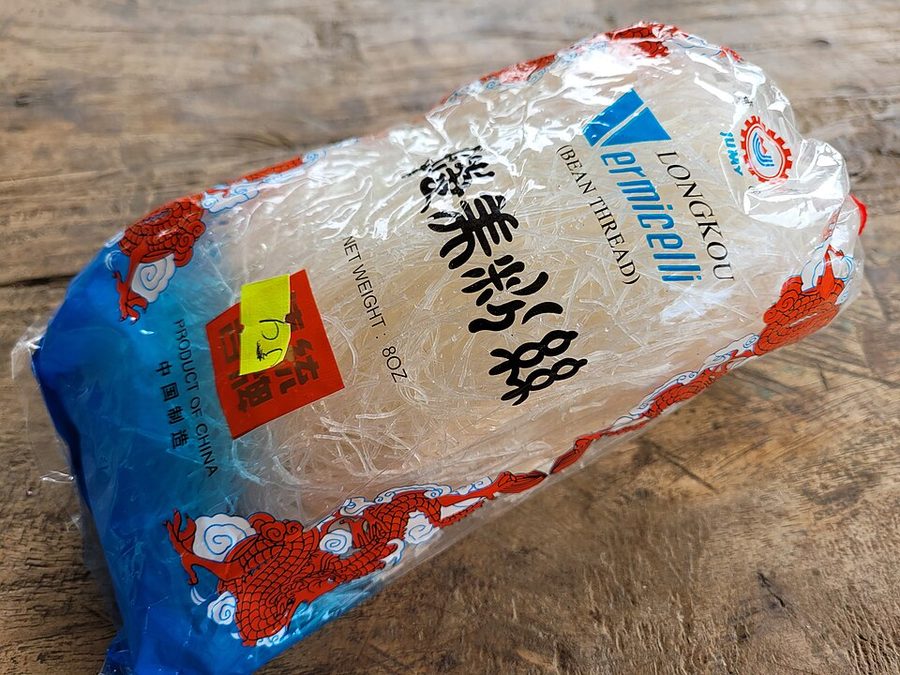
- Sotanghon is bean thread, made from mung bean starch, and turns clear when cooked. Soak it for 10 minutes first; in the pan it needs only a minute or two.
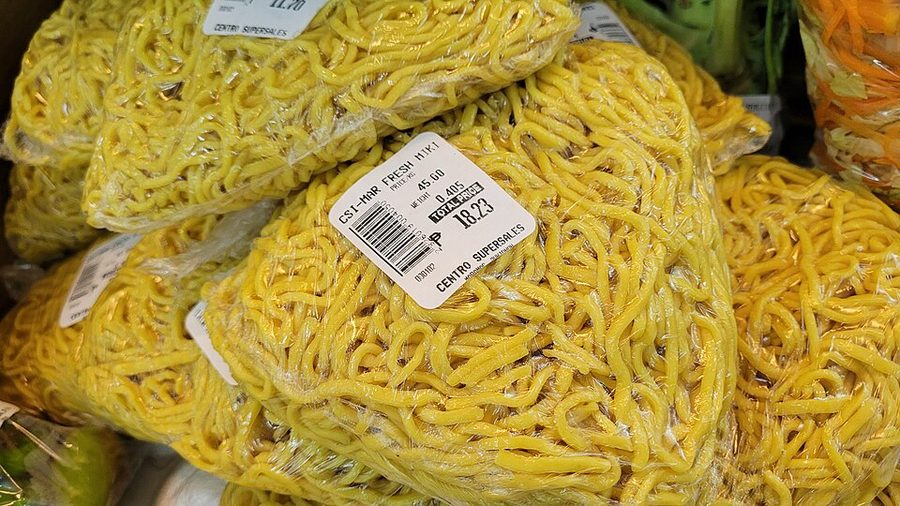
- Miki is fresh egg noodle, sold in bags in the chiller, thin for habhab and batchoy, thick for lomi. It goes straight into the stock.
- Palabok and luglug noodles are cornstarch noodles, boiled or dunked until soft and drained before the sauce goes on.
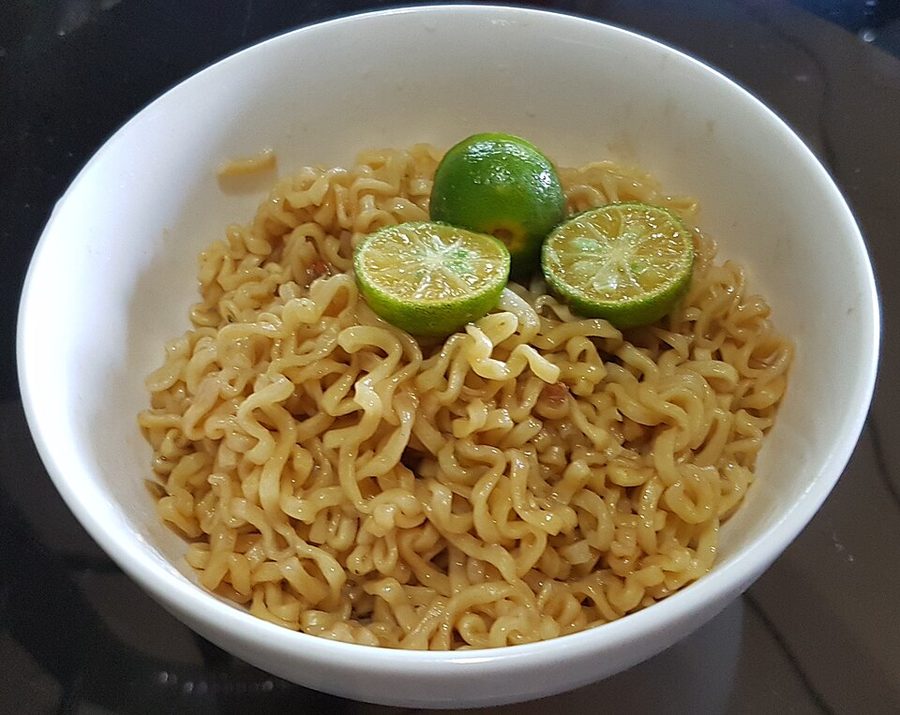
Then there is instant pancit canton, which deserves its own line. Monde Nissin’s Lucky Me! brand sells it in sachets with a seasoning packet, and it is the quick, late-night version of the dish for a lot of people. It is not the same thing as a stir-fried canton, and it was never trying to be.
Pancit bihon guisado
The single thing that makes a pancit good is the stock. Tagalog home cooks say it outright: the secret is yung pinaglagaan ng karne, the water the meat was boiled in, better still if a few pork bones went in with it. So the pork for this recipe is simmered first, and its broth becomes the liquid the noodles drink.
I checked the proportions against five recipes in English and Tagalog. The English ones use 1½ to 2 cups of stock for 8 oz of bihon; a Tagalog party recipe uses about five cups of pork broth for a full kilo, which works out at a little over a cup per 8 oz. Soaked noodles take less liquid, so I settle at 1½ cups with half a cup in reserve, and you add it only if the noodles are still stiff once the pan is dry.
Serves 6 as a main or 10 as part of a spread. About 1 hour 15, most of it the pork simmering.
Recipe card
Pancit bihon: serves 6 · about 1 hour 15Ingredients
For the pork and stock
- 300 g (10 oz) pork belly (liempo), in one piece
- 200 g (7 oz) boneless chicken thigh
- 1 litre (4 cups) water
- 1 tsp salt
For the pancit
- 227 g (8 oz) dried bihon
- 2 tbsp neutral oil
- 5 garlic cloves, minced
- 1 medium onion, sliced
- 1 medium carrot, cut into thin matchsticks
- 100 g (3½ oz) green beans, sliced thin on the diagonal
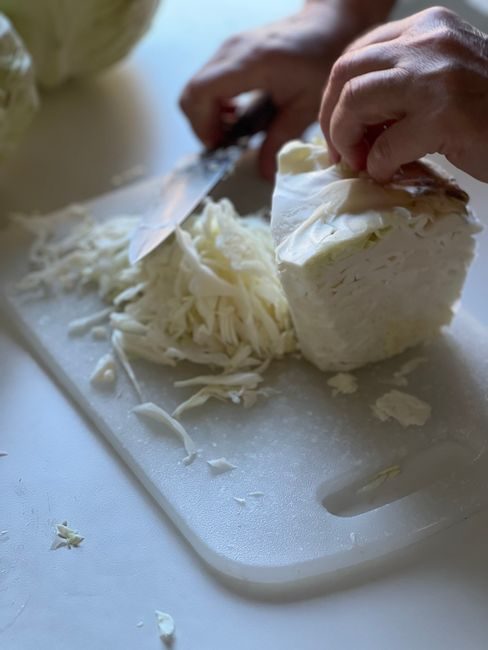
- ¼ head green cabbage, about 300 g (4 cups), shredded
- 3 tbsp soy sauce, divided
- 1 tbsp oyster sauce (optional)
- 1 tsp fish sauce (patis)
- ½ tsp ground black pepper
- 375 ml (1½ cups) of the pork stock, plus 125 ml (½ cup) in reserve
- 3 stalks kinchay or 2 spring onions, chopped
- 6 calamansi, halved, or 2 limes in wedges
Method
- Put the pork belly, chicken, water and salt in a pot, bring to the boil and skim off the grey foam. Lower the heat, cover and simmer. Lift the chicken out after 20 minutes; leave the pork for 35 to 40 minutes in all, until a skewer slides through.
- While the meat cooks, put the bihon in a large bowl, cover with cool tap water and soak for 10 to 15 minutes, until limp but still white and springy. Drain in a colander.
- Slice the pork into thin strips and shred the chicken. Measure out 500 ml (2 cups) of the stock and keep it warm.
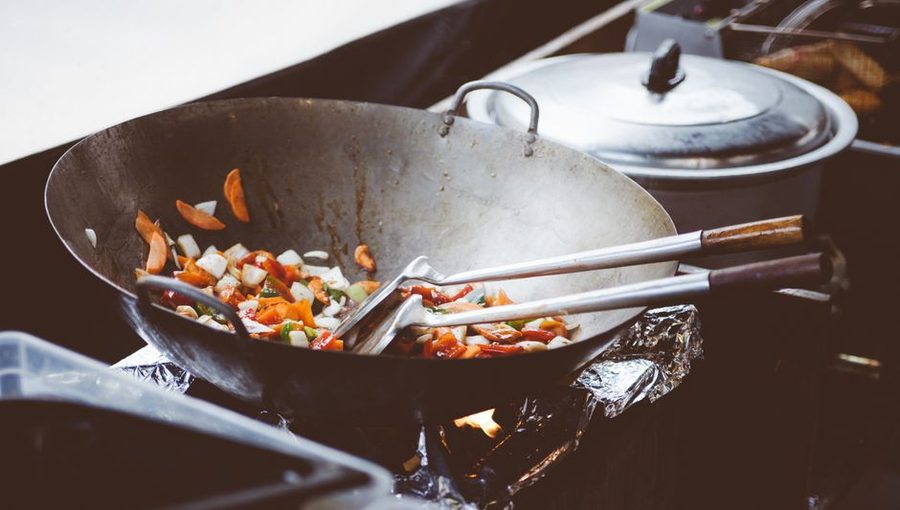
- Heat the oil in a wok or a wide pan over medium-high heat. Fry the garlic until pale gold, about 30 seconds, then add the onion and cook for 2 minutes until soft.
- Add the pork and chicken and fry for 2 to 3 minutes, until the pork edges colour. Add the carrot and beans for 2 minutes, then the cabbage for 1 minute, and season with 1 tbsp of the soy sauce.
- Lift about half of the meat and vegetables onto a plate. They go back on top at the end, still crisp, instead of drowning in the noodles.
- Pour in 375 ml (1½ cups) of stock with the remaining soy sauce, the oyster sauce, fish sauce and pepper. Bring it to a hard simmer and taste: it should be saltier than a soup, because the noodles will dilute it.
- Add the drained noodles and toss continuously with tongs for 3 to 4 minutes, until the liquid has gone and the noodles have turned from opaque to glossy. If the pan is dry and the noodles still feel stiff, add the reserve stock a splash at a time.
- Fold in the kinchay, pile the reserved meat and vegetables on top and serve straight away, with the calamansi on the side.
Bam-i, the Cebu way
The recipes disagree on three things, so here are my choices. On the noodles, the Superbalita recipe goes three parts sotanghon to one of canton, and English-language recipes usually go the other way, about two of canton to one of sotanghon. I side with the canton-heavy version for a party tray, because canton holds the dish together while it waits on a table, and a smaller share of sotanghon is plenty to drink up the stock.
On the sausage, most recipes use Chinese sausage; the Superbalita recipe uses chorizo de Bilbao instead. Both work, so use what you can find. On salt, some recipes add half a cup of soy sauce and a stock cube, which I find too much; I season with soy and patis like the Cebuano version and taste before the noodles go in.
One older trick is worth keeping. Pound the shrimp heads with a little stock and strain it: the shrimp juice gives the noodles a sweetness that bottled seasoning cannot.
Serves 6. About 1 hour, including the stock.
Recipe card 2
Ingredients
For the stock
- 300 g (10 oz) bone-in chicken thighs
- 1.25 litres (5 cups) water
- 1 tsp salt
For the bam-i
- 200 g (7 oz) dried pancit canton (flour sticks)
- 100 g (3½ oz) sotanghon
- 10 g (¼ cup) dried wood ear
- 200 g (7 oz) shrimp in their shells, about 12
- 150 g (5 oz) pork belly, sliced thin
- 2 Chinese sausages, or 1 chorizo de Bilbao, sliced on the diagonal
- 12 squid balls, halved (optional)
- 2 tbsp neutral oil
- 4 garlic cloves, minced
- 1 medium onion, sliced
- 1 medium carrot, cut into thin matchsticks
- 200 g (3 cups) shredded cabbage
- 3 tbsp soy sauce
- 1 tbsp fish sauce
- ½ tsp ground black pepper
- 625 ml (2½ cups) of the chicken stock, plus 125 ml (½ cup) for the shrimp heads
- 3 stalks kinchay or 2 spring onions, chopped
- 6 calamansi, halved
Method
- Put the chicken, water and salt in a pot, bring to the boil, skim, and simmer for 25 minutes. Lift out the chicken, shred the meat and keep the stock; you need 750 ml (3 cups).
- Soak the sotanghon in warm water for 10 minutes and drain. Soak the wood ear in warm water for 15 minutes, trim off any hard knots and slice it into strips.
- Peel the shrimp and keep the heads. Pound the heads in a mortar with 125 ml (½ cup) of the stock, then press through a sieve and keep the liquid.
- Heat the oil in a wok over medium-high heat. Fry the garlic and onion for 2 minutes, add the pork and cook for 3 minutes, then add the sausage and chicken for another 3 minutes.
- Pour in the soy sauce, fish sauce, shrimp-head liquid and 625 ml (2½ cups) of stock with the pepper. Bring to the boil and simmer for 5 minutes, then taste and adjust the salt.
- Add the shrimp, squid balls, carrot, cabbage and wood ear and cook for 2 minutes, until the shrimp turn pink. Lift out about half of the meat, shrimp and vegetables with a slotted spoon.
- Add the canton to the simmering stock and stir for 2 minutes, until it softens and starts to absorb the liquid. Add the sotanghon and keep stirring for 1 to 2 minutes more, until the pan is dry. The canton goes first because it needs about three minutes and the soaked sotanghon needs one.
- Pile the reserved toppings on top, scatter with kinchay and serve hot with calamansi.
Calamansi, puto and a tray for twenty
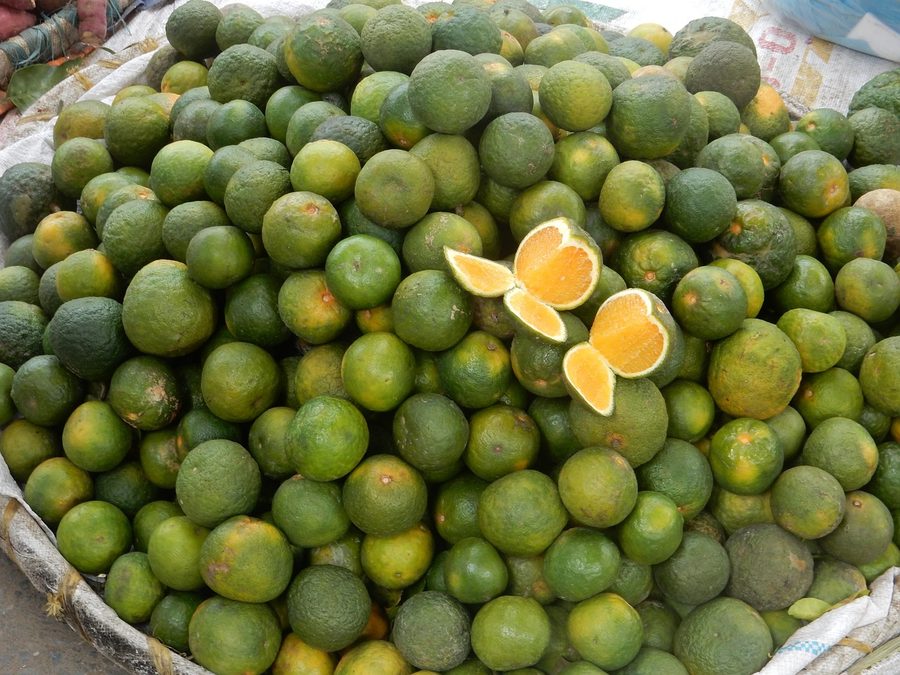
Every pancit comes with calamansi, two or three halves on the rim of the plate, cut side up. Squeeze them over your own portion, not the tray: the juice wakes up the soy and cuts the fat, and everyone gets to choose how sour. A lime is the fallback abroad, and it is fine.
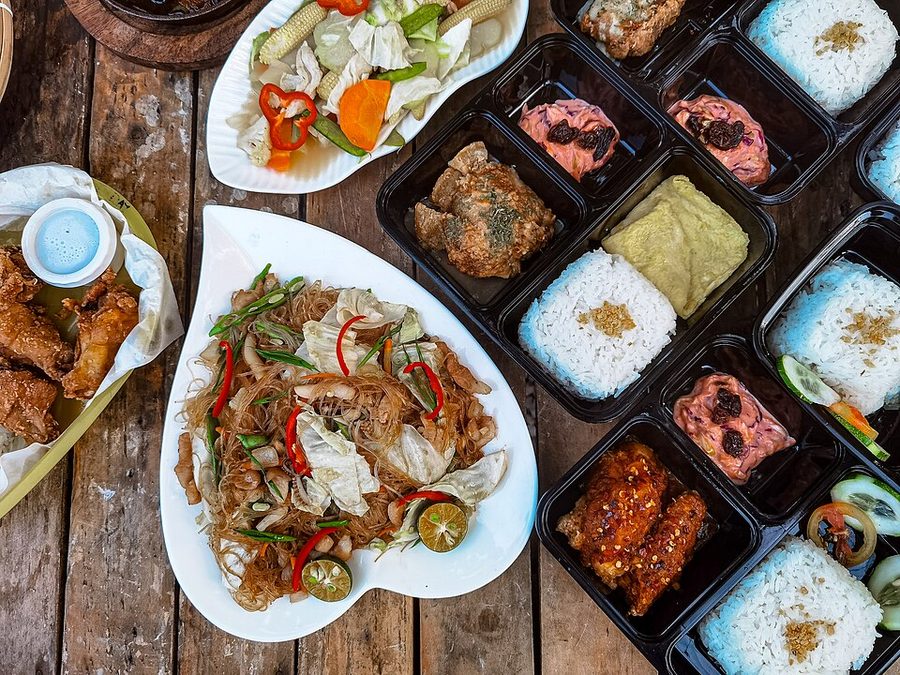
What goes beside it depends on the hour. At merienda the classic partner is puto, the small steamed rice cake, and in some households a pandesal roll split and stuffed with noodles. At a party pancit sits with rice, lumpia and whatever the main roast is, and nobody thinks it odd to have noodles and rice on the same plate.
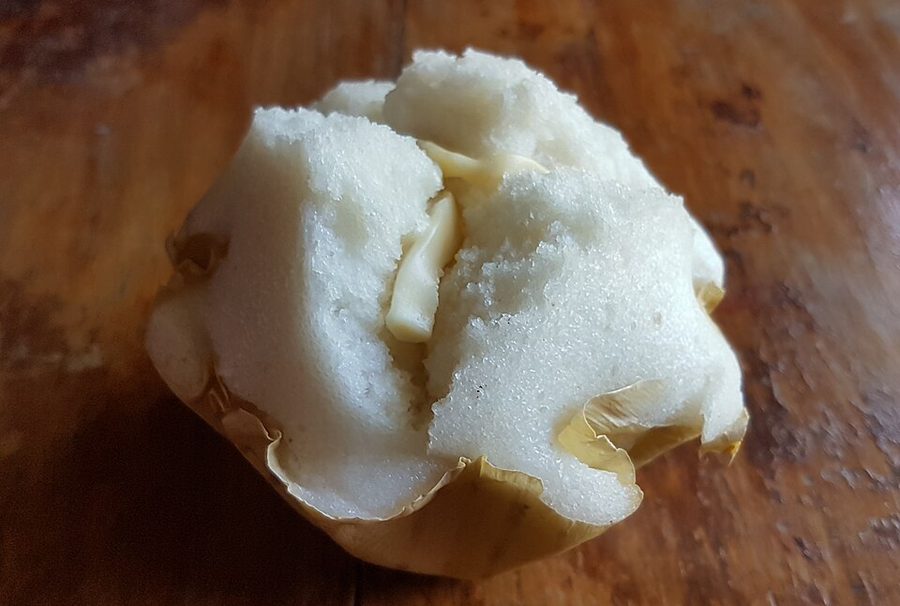
For a crowd, count on 227 g (8 oz) of dried bihon for six main servings, which is what most recipes give; a full kilo feeds at least two dozen people as one dish among several. Do not try to cook the kilo in one wok. Cook it in two batches of 500 g with the stock kept hot in a separate pot, and line the bilao or serving tray with banana leaf, which keeps the bottom layer from sticking.
Leftovers, and pancit that travels
Pancit is best within the hour, and the noodles keep absorbing whatever sauce is left as they sit. Leftovers keep in an airtight container in the fridge for up to three days. Reheat them in a pan over medium heat with a splash of stock or water, tossing until hot, rather than in the microwave.
The other way to deal with leftovers is the Filipino one: stuff them into a pandesal roll for next day’s merienda. It sounds like a student’s trick, and it is, and it is very good.
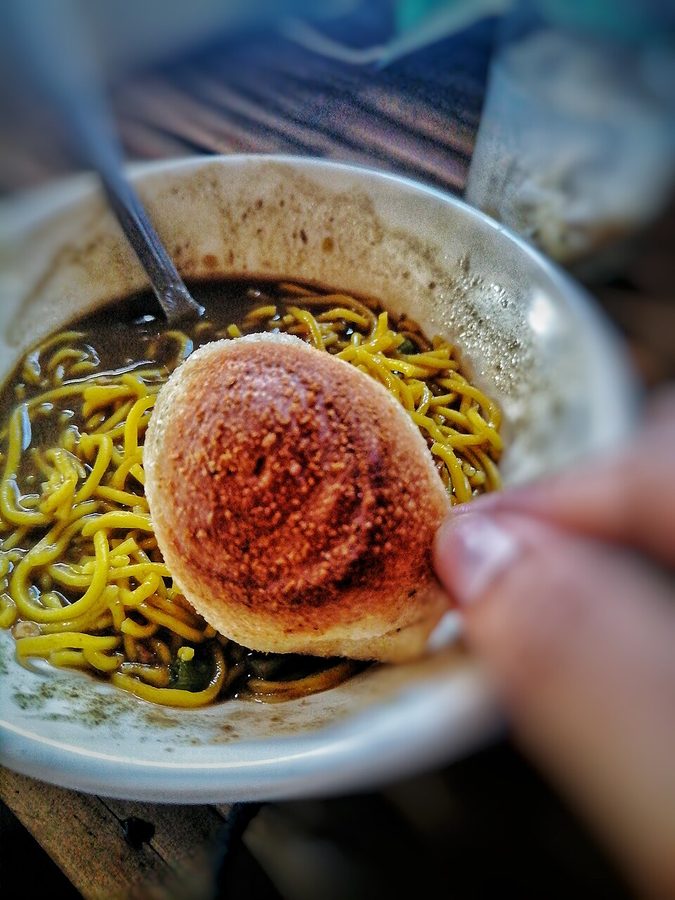
Pancit is also pasalubong, the food you bring back for the people at home. A tray of pancit Malabon carried home from Malabon, or a takeaway box of bihon picked up on the way to a visit, counts. Keep it covered, eat it the same day, and add the calamansi only when you serve.
A tray will not cross a border, though. Flying into the United States, the CBP rules on food bar products prepared with meat, and that covers every pancit with pork, chicharon or sausage in it. Dried noodles are a different matter: sealed packets of bihon, canton and sotanghon contain no meat, and many packaged foods are admissible, so declare them and pack a few.
Which brings it back to the kilo of bihon at the back of the cupboard. Buy two packets of the noodles you liked most, keep a bag of calamansi or limes in the fridge, and when the house fills up at short notice, put the pork on to simmer before you do anything else.