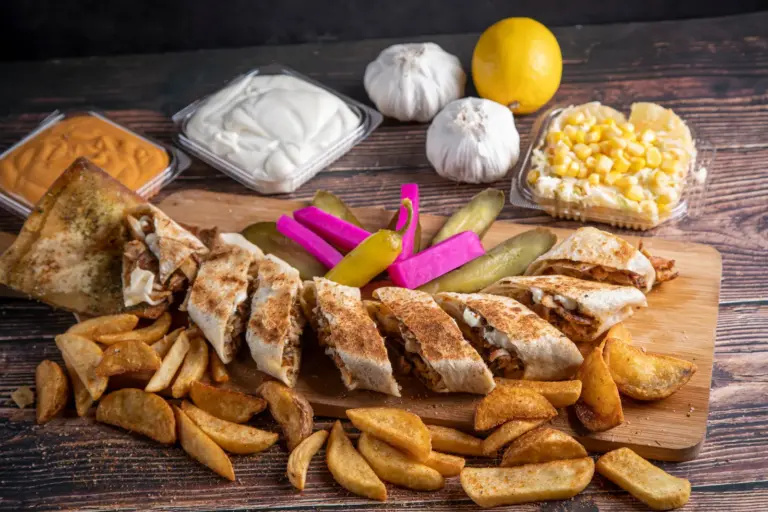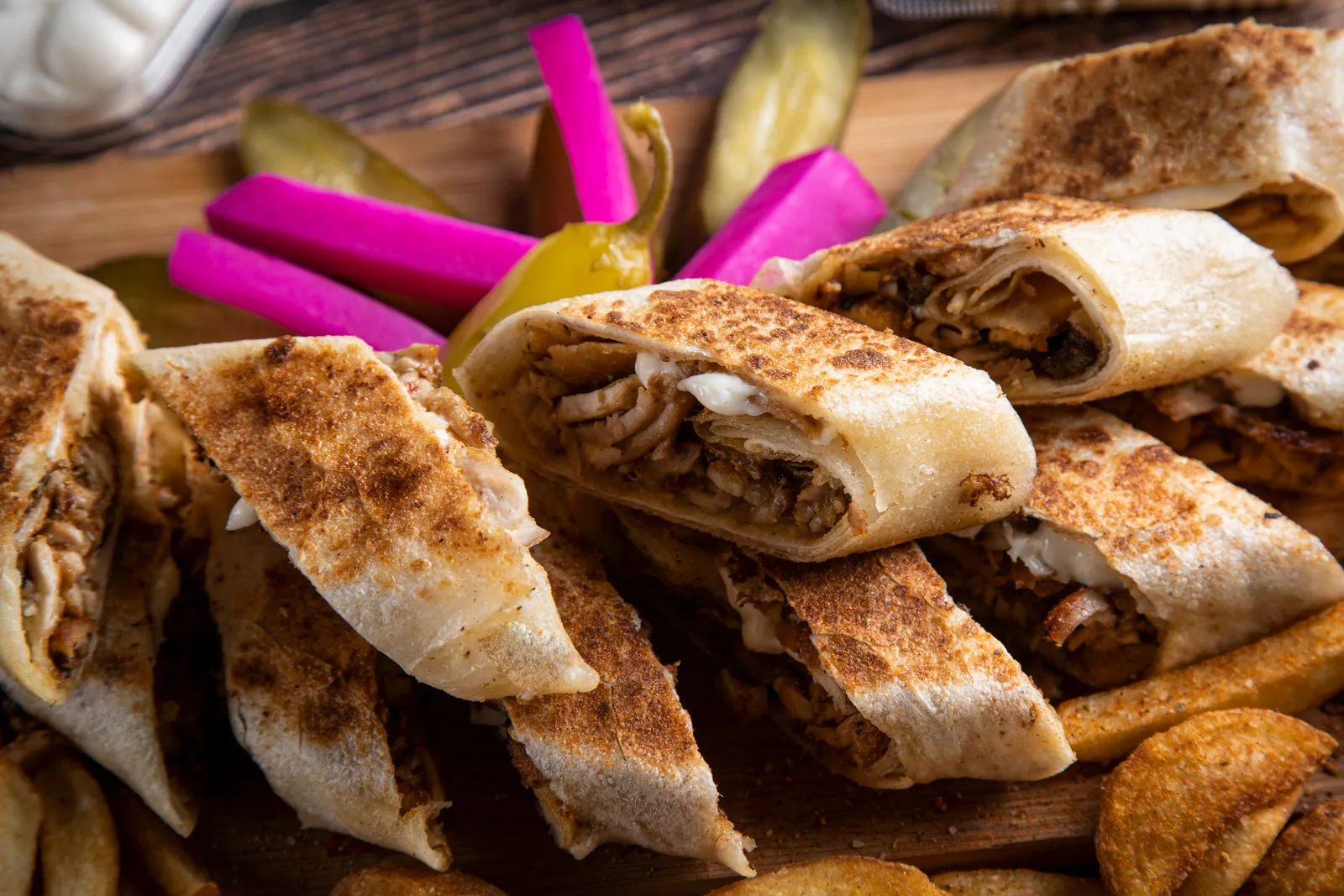
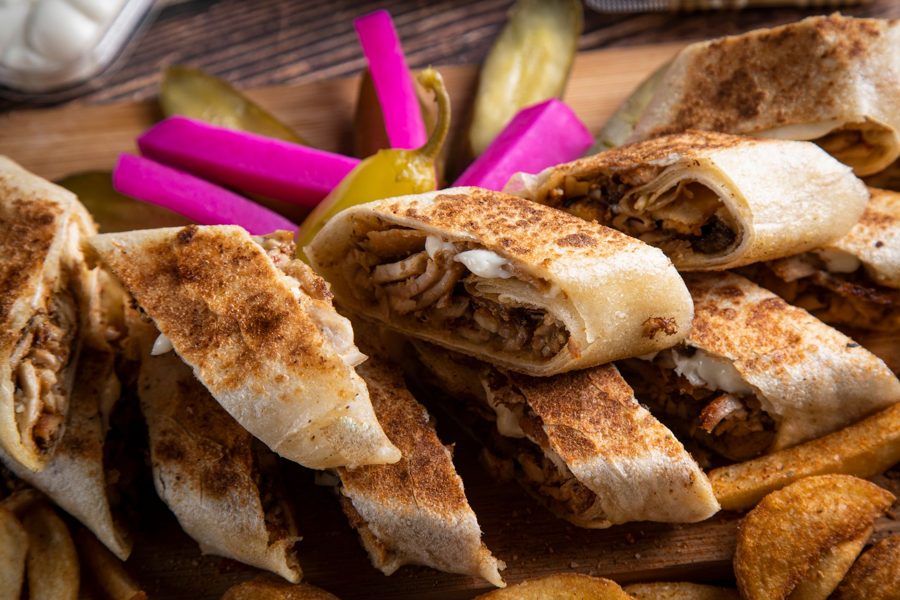
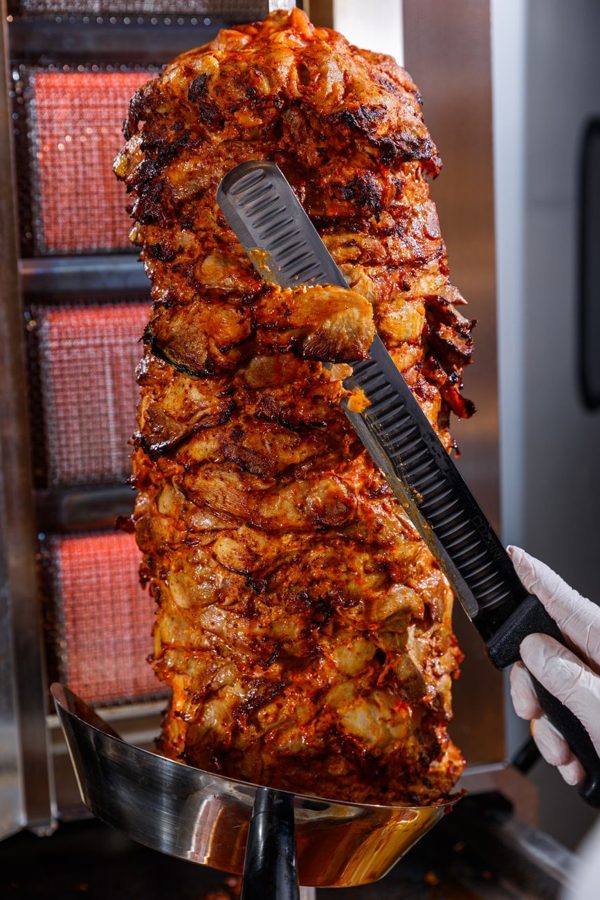
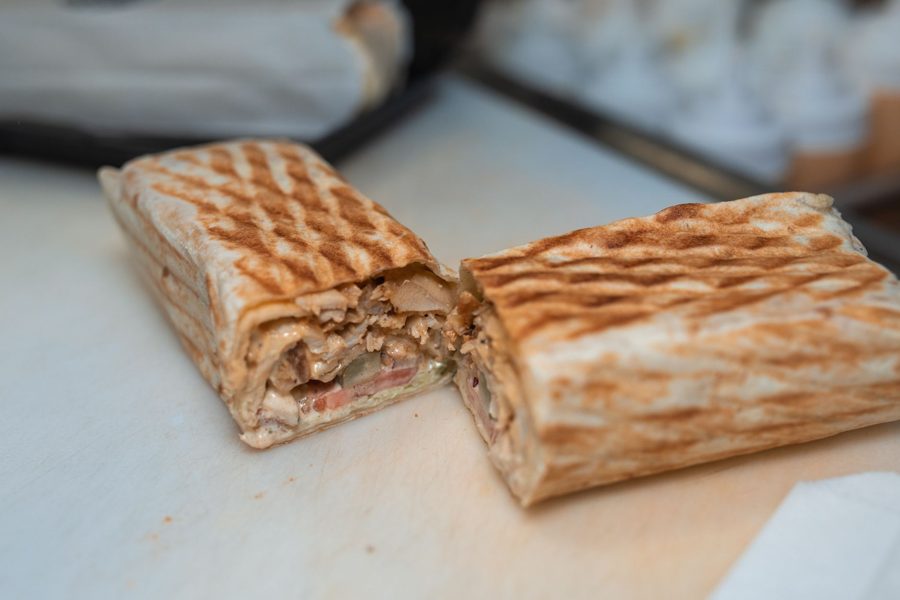
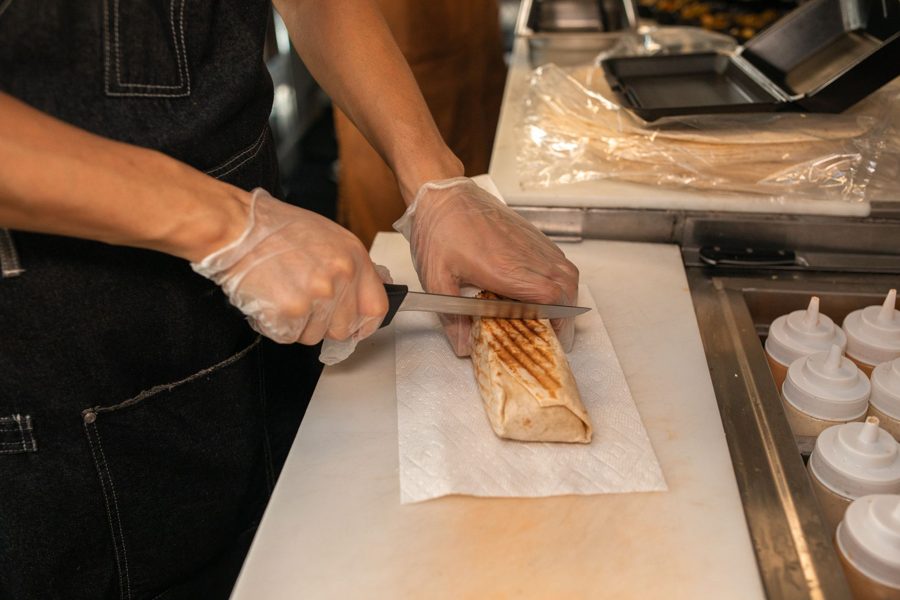
At a Beirut shawarma counter a chicken sandwich comes together in the time it takes to count out the dollars. The cutter runs a long, flat knife down the turning spit, the shavings drop into the tray, and the sandwich man spreads toum along a thin round of Arabic bread, lays the chicken on it with strips of pickled cucumber and a few fries, rolls it tight and presses it on the hot plate until the bread crackles. Nobody asks which sauce you want. Chicken gets toum, and that was settled a long time ago.
Chicken shawarma (شاورما دجاج), shawarma djej to a Beirut cook, is the sandwich to copy at home, and most recipes in English drift away from it. They pile on the spice, swap the garlic for a yoghurt dressing, add lettuce and tomato and stuff it all into a soft pocket pita. The Lebanese version is sour rather than hot, garlicky rather than creamy, and wrapped in bread thin enough to crisp in a minute.
You do not need the spit. Thigh meat stacked on a skewer and roasted upright in a hot oven, then carved and crisped in a pan, gets the browned edges and the juice; the pickles and the garlic do the rest. The one thing worth buying rather than making, if you can find it, is the bread.
Contents 6 parts
Çevirme: the turning spit, from Bursa to Beirut
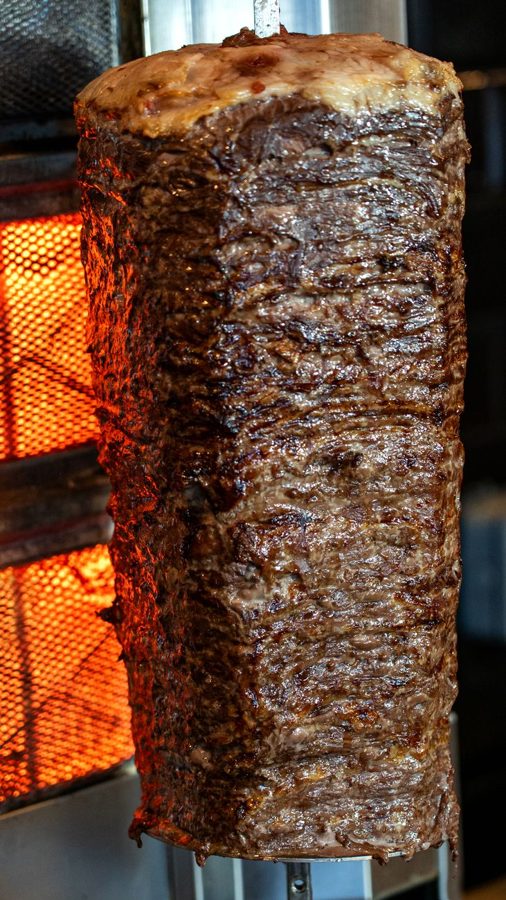
The word shawarma is the Arabic form of the Turkish çevirme, “turning”, the same idea as döner, “rotating”. It names the method, not the meat: thin slices of marinated meat stacked into a tall cone and roasted upright beside the heat, shaved off as each layer browns. Socrates Spiro’s dictionary of Egyptian Arabic, published in 1895, already lists šāwirma, glossed as “rich stew, roast meat”.
Ottoman cooks were roasting stacks of sliced meat on horizontal spits by the 17th century. The upright spit came later, by the middle of the 1800s, and Bursa is the town usually named as its birthplace. The family of İskender Efendi says he had the idea as a boy in his father’s Bursa restaurant in the 1850s; another account credits a Hamdi Usta of Kastamonu some twenty years earlier.
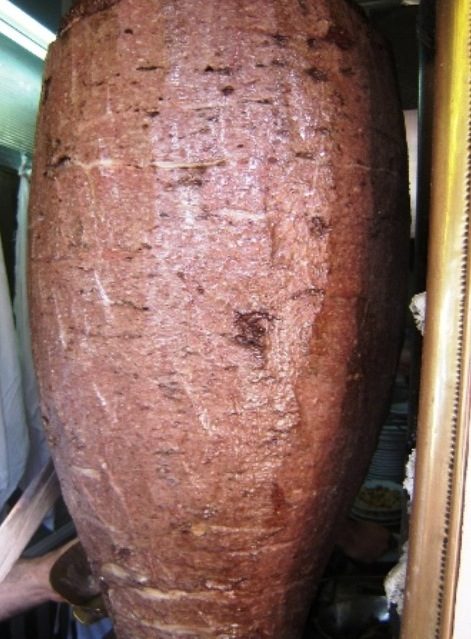
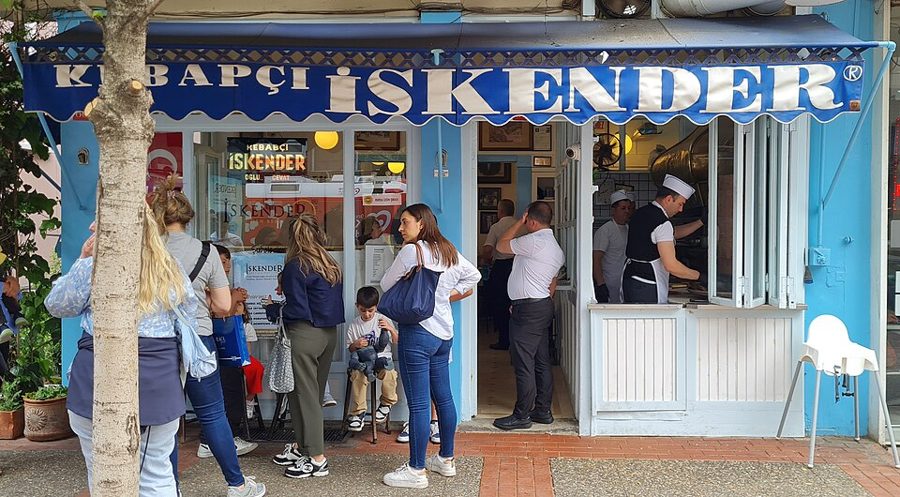
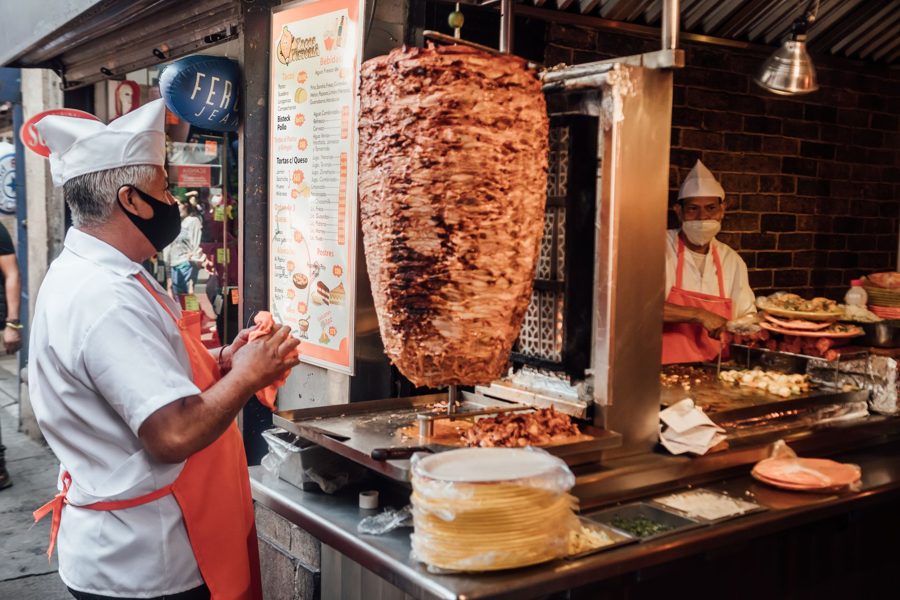
From Anatolia the upright spit spread through the Ottoman Levant and picked up its Arabic name on the way. By the 1930s Lebanese emigrants had carried it as far as Mexico, where the same vertical spit, loaded with pork, became the trompo behind tacos al pastor.
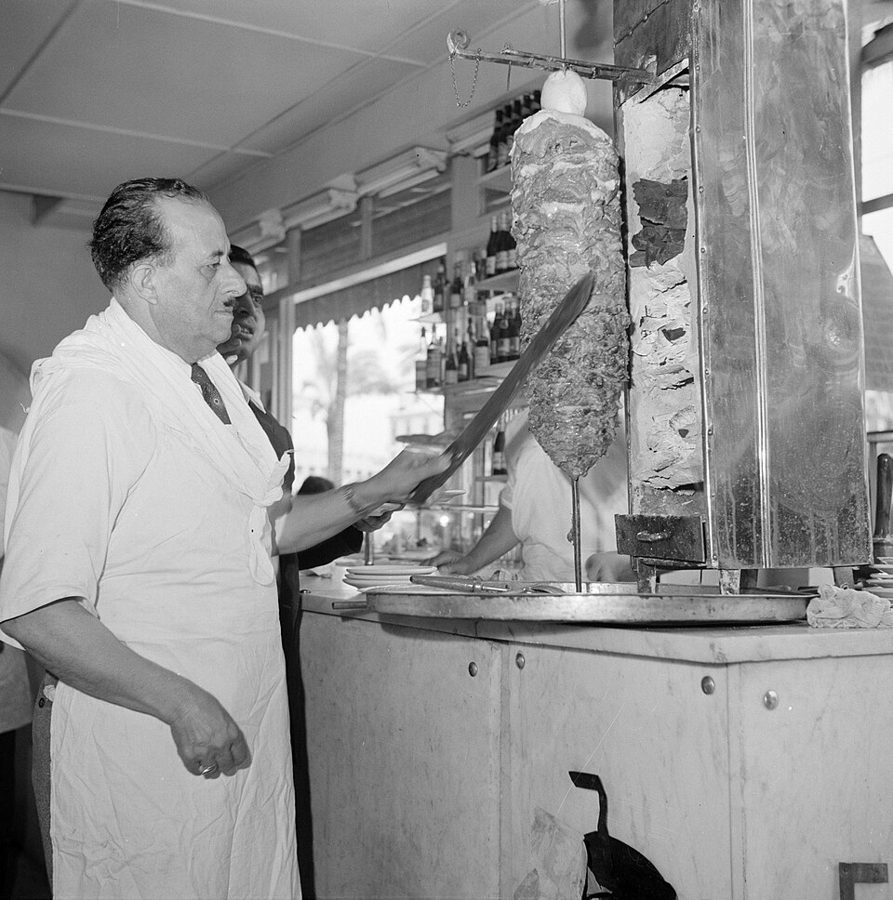
Lamb and mutton were the traditional meats, and beef followed. Chicken is now the everyday order on the same streets, though even Beirut’s best-known counter took time to get it right. Barbar in Hamra opened in 1979 as a man’oushe bakery and only added shawarma in the 1980s, and the founder’s son admitted to Le Commerce du Levant that at first “it wasn’t very good”.
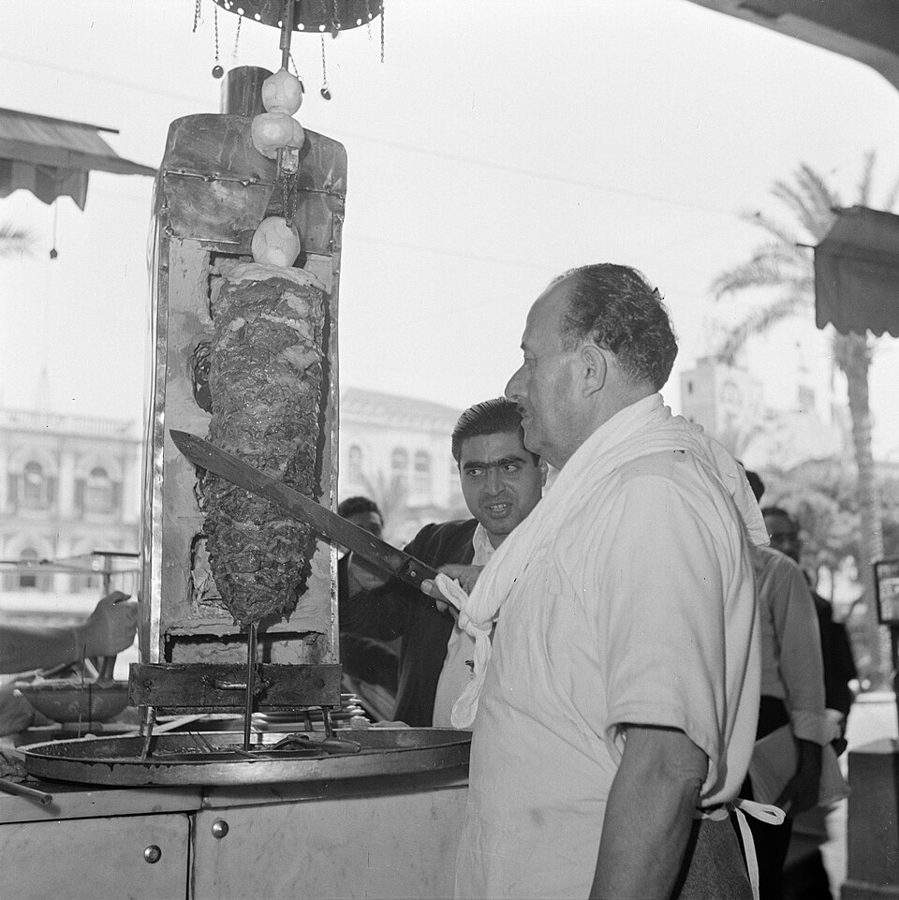
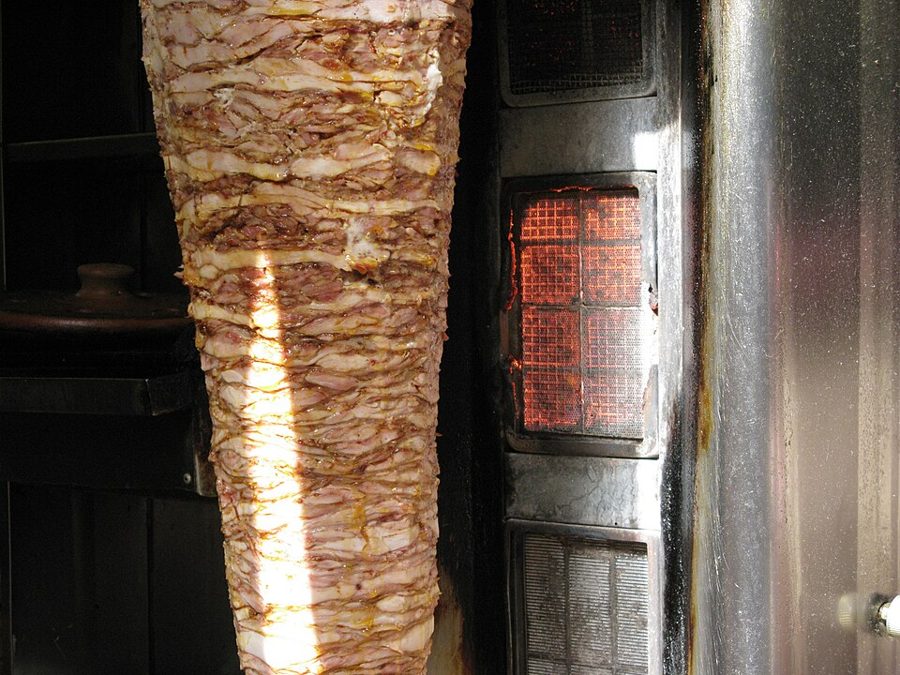
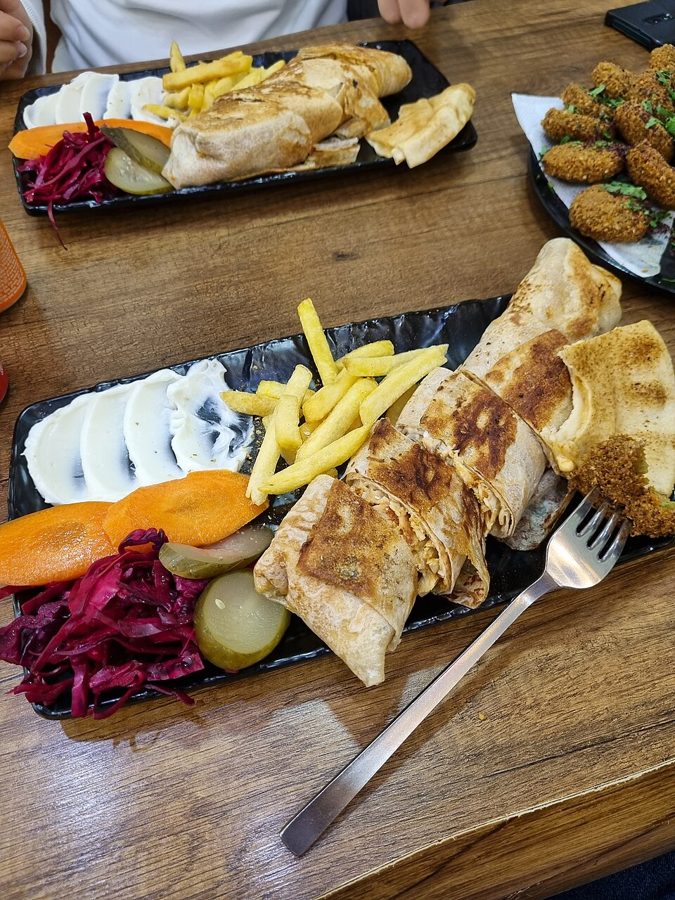
Chicken with toum, beef with tarator
Lebanese counters keep two spits turning and two sets of rules. Chicken comes with toum, pickled cucumbers and fries. Beef comes with tarator, a sauce of tahini, lemon, garlic and water, plus biwaz, sliced onion tossed with parsley and sumac, and tomato.
Barbar prints exactly that split on its own menu. Elsewhere the rules shift: Palestinian shawarma leans on sumac, onion and tahini, Egyptian on tahini, and in Lagos a shawarma comes with shredded cabbage and a sliced hot dog. The Lebanese chicken version is the one built on garlic.
The marinade: sour first, spice second
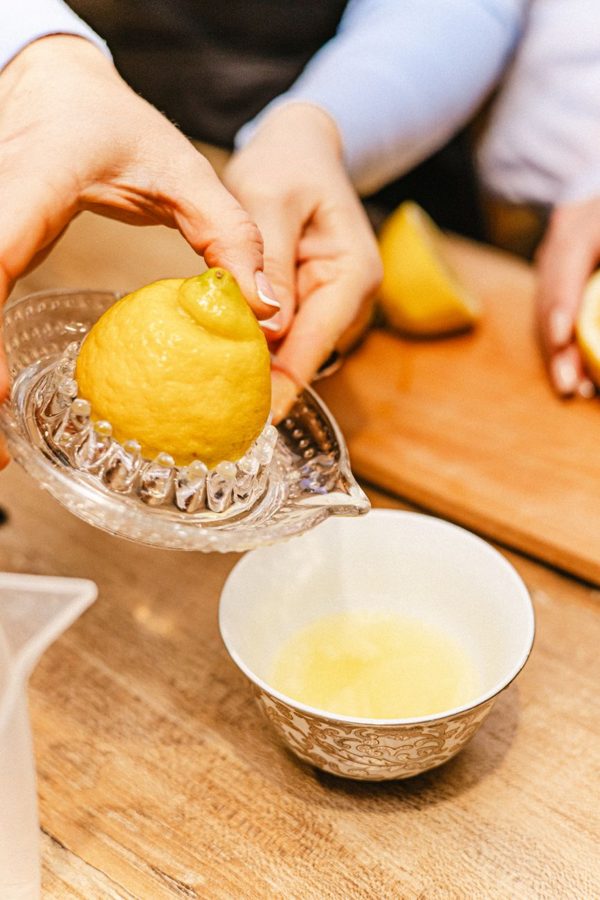
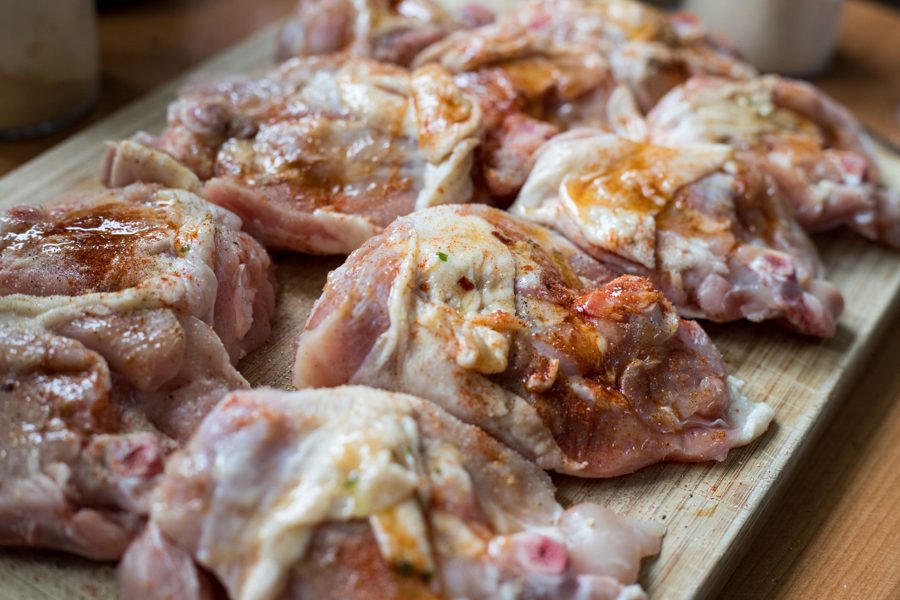
The biggest difference between a Beirut chicken shawarma and most recipes written in English is acid. Lebanese marinades are built on vinegar and lemon, often with orange juice, and the spices come second. Barbar marinates its chicken for three days in a mixture based on lemon and orange before it goes anywhere near the spit.
Most recipes in English use two to four tablespoons of ground spice per kilo of chicken and only a couple of tablespoons of lemon. The Arabic recipes go the other way: more vinegar and citrus, more garlic, less spice, sometimes a quarter teaspoon of seven spice and little else. I side with the sour versions, with a little more spice than they use. The chicken should taste of garlic and lemon first, with the spice as warmth behind it rather than a crust of cumin.
Seven spice, cardamom and the rest
Seven spice, sabaa baharat, is the Lebanese house blend, and every shop’s jar is a little different. The base is usually allspice, black pepper, cinnamon and cloves, with nutmeg, coriander or ginger making up the seven. Cardamom is what makes shawarma smell like shawarma rather than kebab, so I add a teaspoon of it on top of the blend, with cumin and a little paprika for colour.
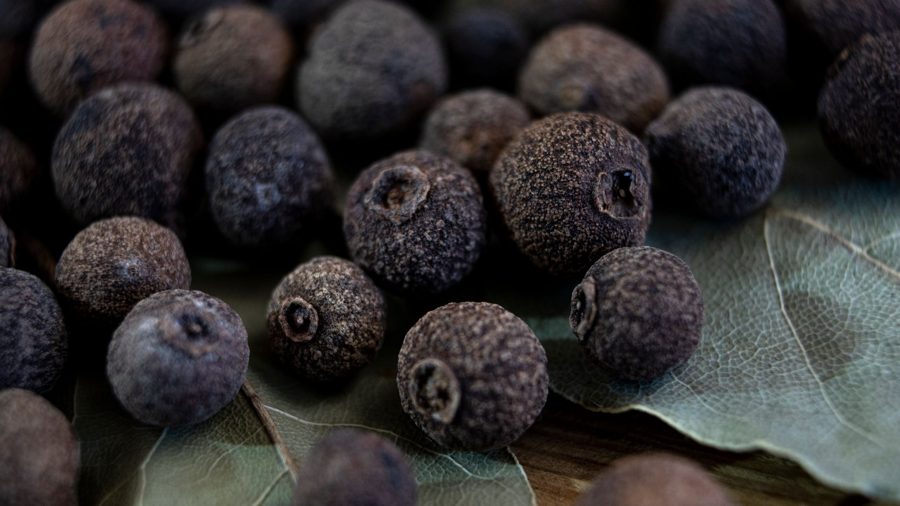
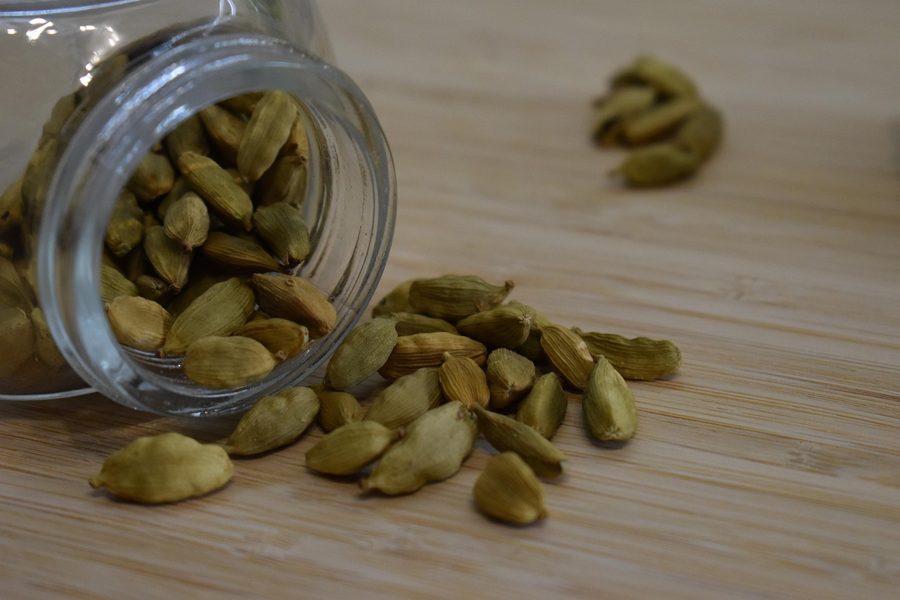
Skip turmeric if you want the Beirut colour. Lebanese chicken shawarma browns to amber from paprika and the sugar in the citrus, not to the yellow of a turmeric marinade. Cayenne is optional and, to my taste, unnecessary: the heat in a Lebanese sandwich comes from the raw garlic in the toum.
Yoghurt, or not
Some Lebanese home cooks add a few spoonfuls of laban, plain yoghurt, to the vinegar and garlic. One Arabic recipe for the Lebanese style goes further and lays thin slices of lamb fat between the chicken pieces. The yoghurt helps the surface brown and softens the acid; two tablespoons is enough, because more turns the marinade into a coating that scorches before the meat is cooked.
Strained overnight, the same yoghurt becomes labneh, the thick spread eaten with olive oil and bread. It has no job in the marinade, but a bowl of it on the table next to the shawarma plate is never wasted.
How long to marinate
Barbar’s three days suit a commercial spit. Home recipes in English ask for two hours to a day, the Arabic ones mostly say twelve to twenty-four hours, and one Lebanese recipe gets by with three. I marinate overnight and no longer than 24 hours: thin pieces of thigh left for days in vinegar and lemon turn soft and mealy at the edges.
Recipe: chicken shawarma in a home oven
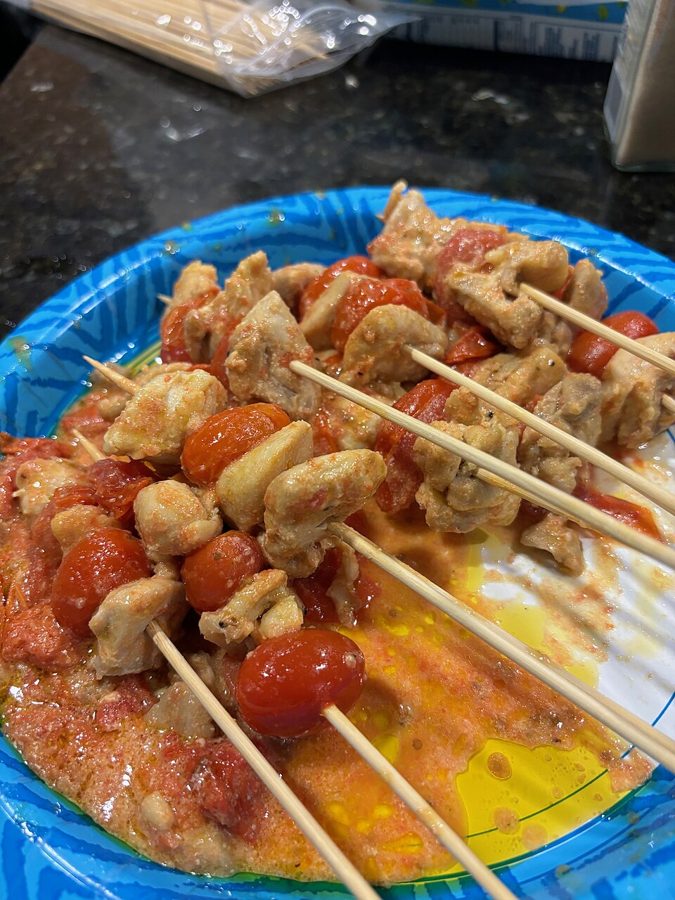
There are two ways to cook it. The stack is the closer copy of the spit: whole thighs threaded on a skewer that stands in an onion, roasted upright at 190°C (375°F) the way one Arabic home recipe does it, then carved and crisped. The sheet pan is quicker and nearly as good at 220°C (425°F), the temperature most English recipes use, with the meat sliced before roasting and finished under the grill. I give the stack a slightly lower heat because it is thick, and the outside would burn before the middle cooked.
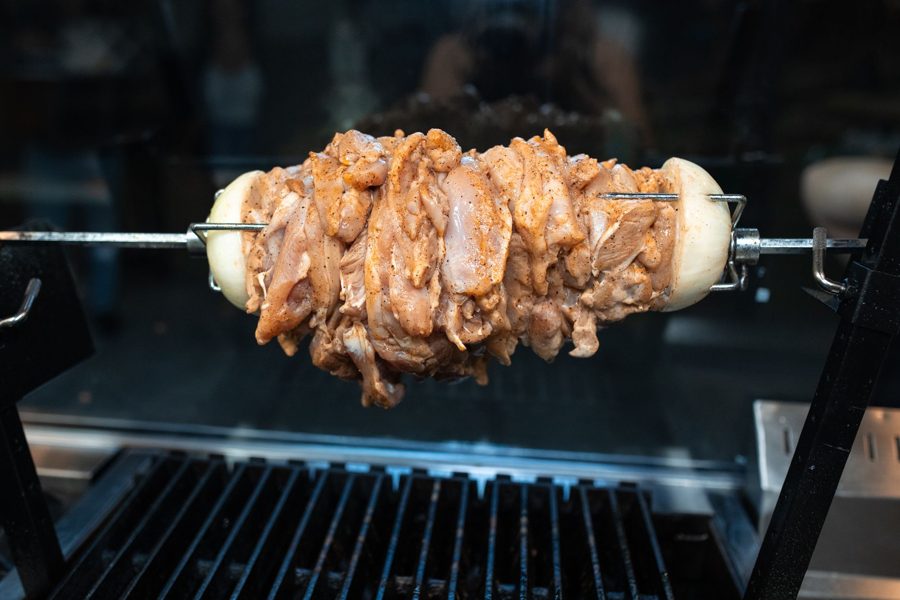
Serves 4 (8 wraps). About 2 hours with the stack or 50 minutes on the sheet pan, plus overnight marinating.
Recipe card
Serves 4 · about 2 hours, plus marinatingIngredients
For the chicken
- 1 kg (2.2 lb) boneless, skinless chicken thighs
- 4 garlic cloves
- 2 tsp fine salt
- 45 ml (3 tbsp) white vinegar
- 45 ml (3 tbsp) lemon juice, from about 1 lemon
- 45 ml (3 tbsp) orange juice, from about half an orange
- 60 ml (¼ cup) olive oil or sunflower oil
- 2 tbsp plain yoghurt (optional)
- 1 tbsp seven spice (sabaa baharat)
- 1 tsp ground cardamom
- 1 tsp ground cumin
- 1 tsp sweet paprika
- ½ tsp ground cinnamon
- ½ tsp ground black pepper
- 1 large onion, for the stack
For the wraps
- 8 thin Arabic flatbreads (khubz), saj or markouk bread, or 4 of the thinnest pitas you can find, each split into two rounds
- About 125 ml (½ cup) toum
- 8 to 12 pickled cucumbers, sliced lengthwise
- Pickled turnips, to serve
- 2 large handfuls of hot, thin-cut fries (optional, but Beirut puts them in)
Method
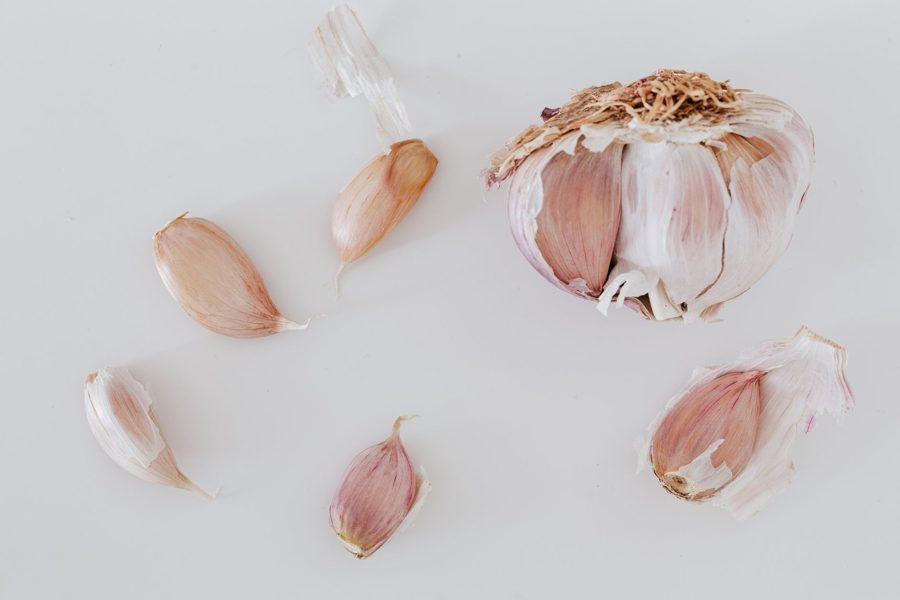
- Crush the garlic to a paste with the salt, in a mortar or on a board with the flat of a knife. Whisk in the vinegar, lemon and orange juice, oil, yoghurt if using, and all the spices.
- Trim off any large lumps of fat but leave the rest. For the sheet pan, slice each thigh into strips about 1 cm (½ in) wide now; for the stack, leave them whole and open them out flat. Turn the chicken in the marinade, cover and refrigerate overnight, and no longer than 24 hours.
- Take the chicken out of the fridge 30 minutes before cooking. Heat the oven to 190°C (375°F) for the stack, or 220°C (425°F) for the sheet pan.
- For the stack: halve the onion across and stand one half cut side down in a small roasting tin. Push a long metal skewer down through its centre so it stands upright, then thread the thighs on one at a time, pressing each down onto the last, until you have a tight cone. Finish with the other onion half on top.
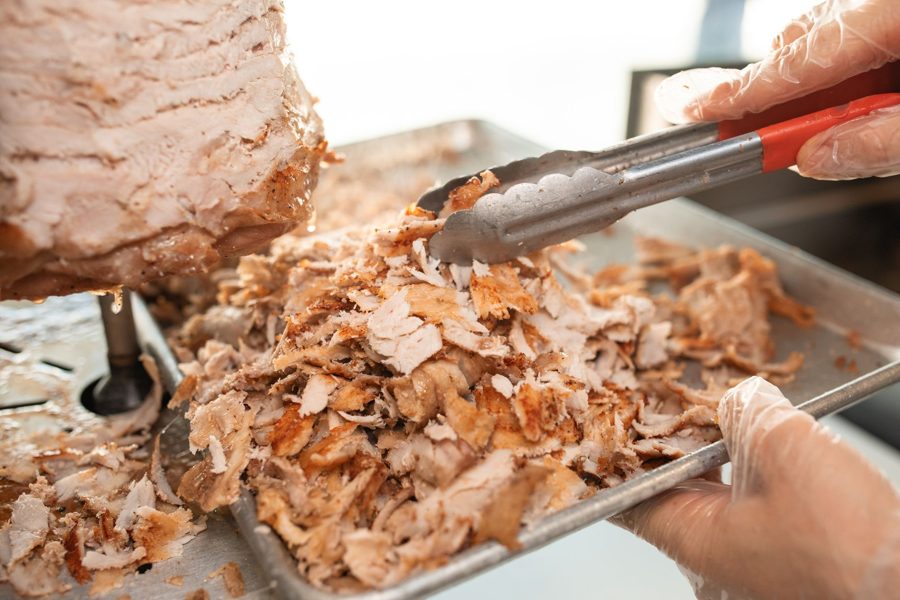
- Roast the stack for 1 hour 15 to 1 hour 30, spooning the pan juices over it twice, until a thermometer pushed into the thickest part, close to the skewer, reads 74°C (165°F). Rest it for 10 minutes, then hold it by the skewer and carve thin slices downwards with a sharp knife.
- For the sheet pan: spread the strips in one layer on an oiled tray, with space between them, and roast for 20 to 25 minutes, until cooked through. Slide the tray under a hot grill (broiler) for 2 to 3 minutes to char the edges, and do not walk away.
- Crisp the meat: heat a heavy frying pan over high heat with a spoonful of the pan juices, add the chicken in one layer and leave it for 1 to 2 minutes, until the edges catch. Work in batches.
- Warm a bread in a dry pan for a few seconds a side. Spread a tablespoon of toum down the middle, lay on about 80 g (3 oz) of chicken, 3 or 4 strips of pickled cucumber and a few fries.
- Fold in the bottom edge and roll tightly into a long cylinder. Press it seam side down in the dry pan, turning, until the bread is crisp and blistered, then wrap the bottom half in paper and eat it hot, with pickled turnips on the side.
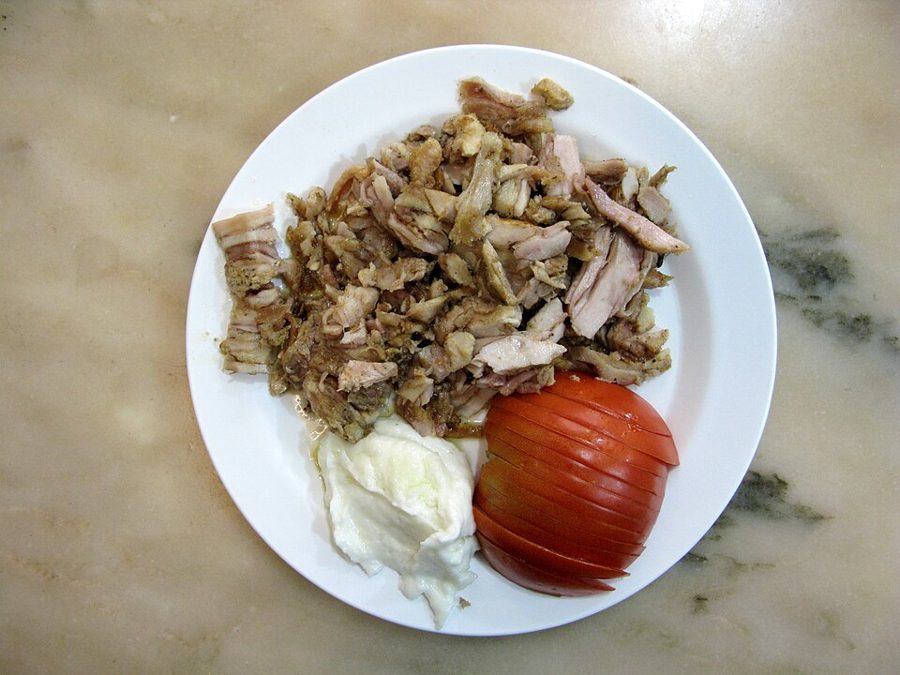
No oven, or only a few thighs? Cook them whole in a heavy pan over medium-high heat, 5 to 7 minutes a side, until they reach 74°C (165°F), then rest them for 5 minutes, slice thin and crisp as in step 7. The flavour is the same; you lose some of the layered texture of a carved stack.
The bread, the pickles, the fries and the toum
The bread
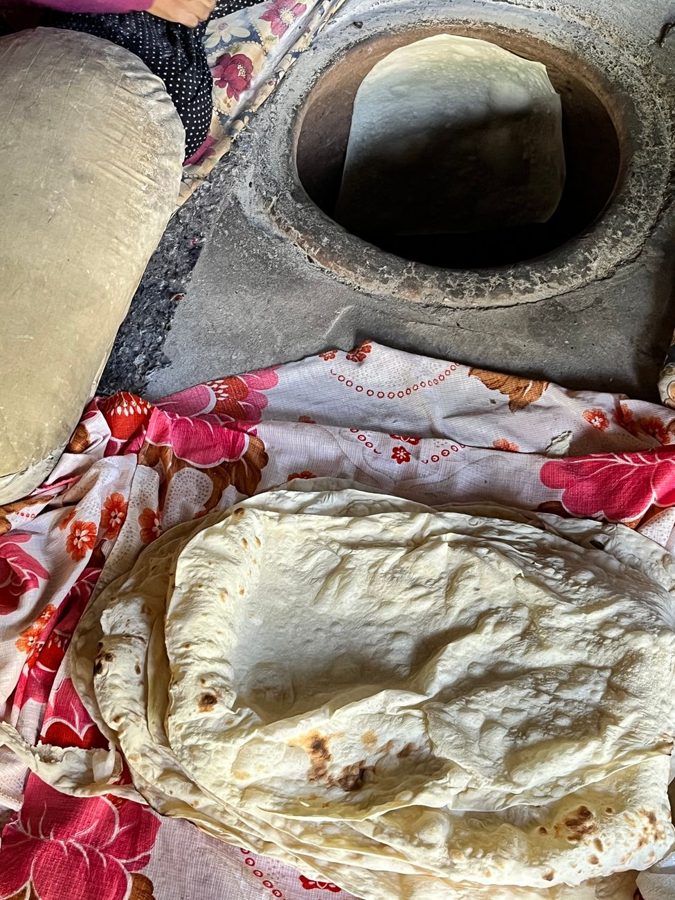
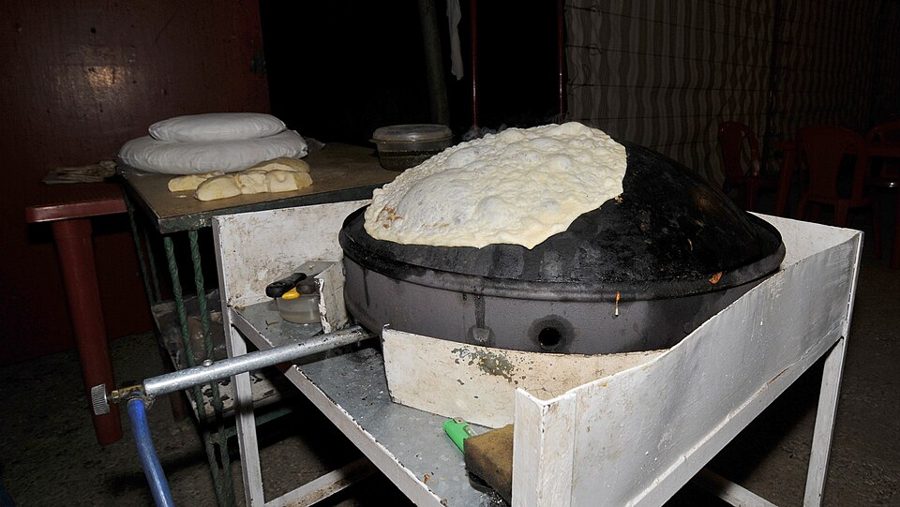
Beirut snack bars roll chicken shawarma in khubz arabi, the round Arabic bread, split or rolled thin, or in the even thinner saj bread, markouk, baked on a steel dome. What matters is a bread you can roll into a tight cylinder without it cracking, then crisp on the hot plate. A thick, fluffy pocket pita does neither.
Middle Eastern grocers sell thin Lebanese bread in bags, usually labelled “Arabic bread” or “Lebanese bread”; buy the thinnest on the shelf. Failing that, split a pita into its two rounds and use each one, or use lavash. Warm whichever you have in the pan for a few seconds first, or it will split as you roll.
The pickles
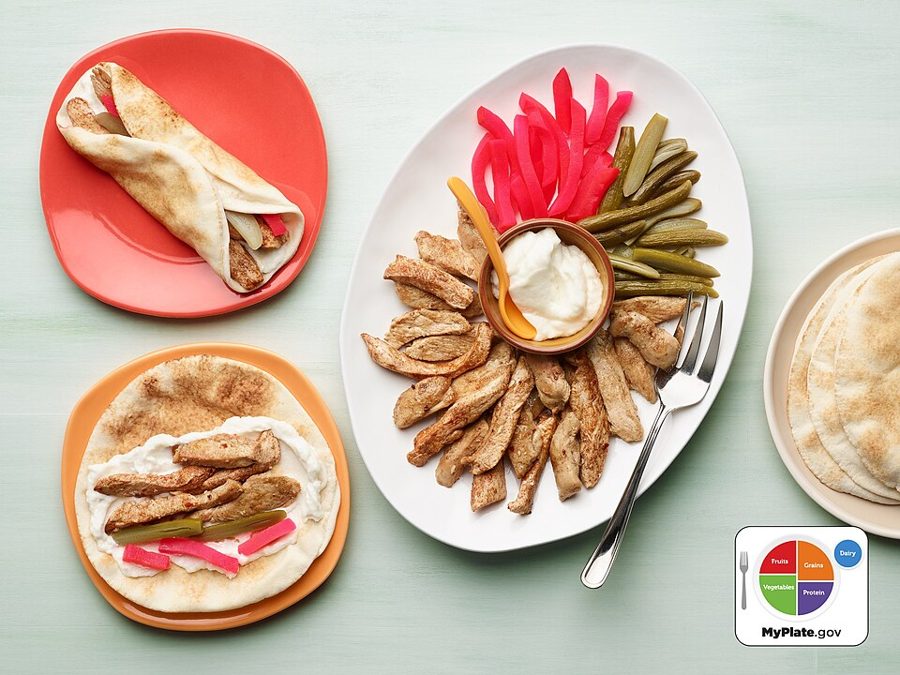
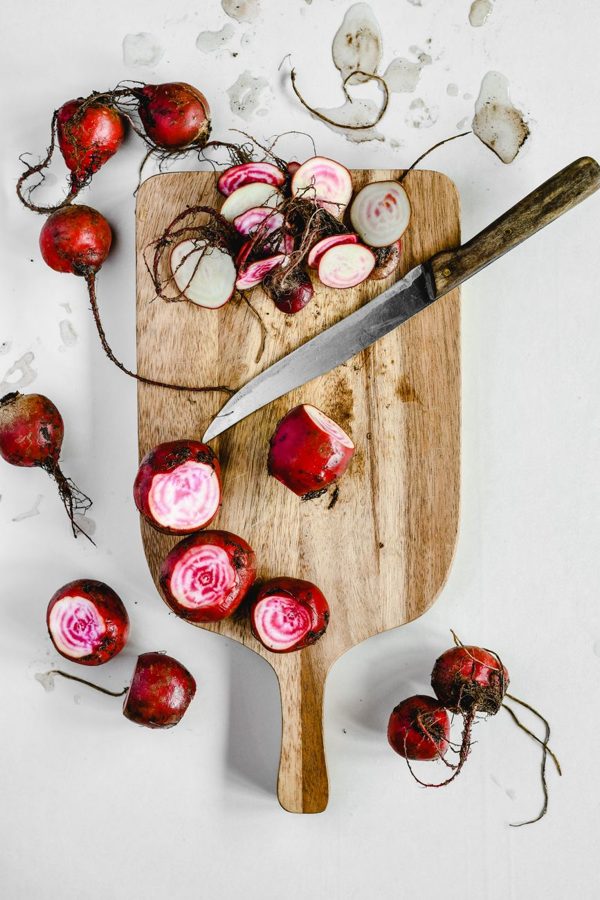
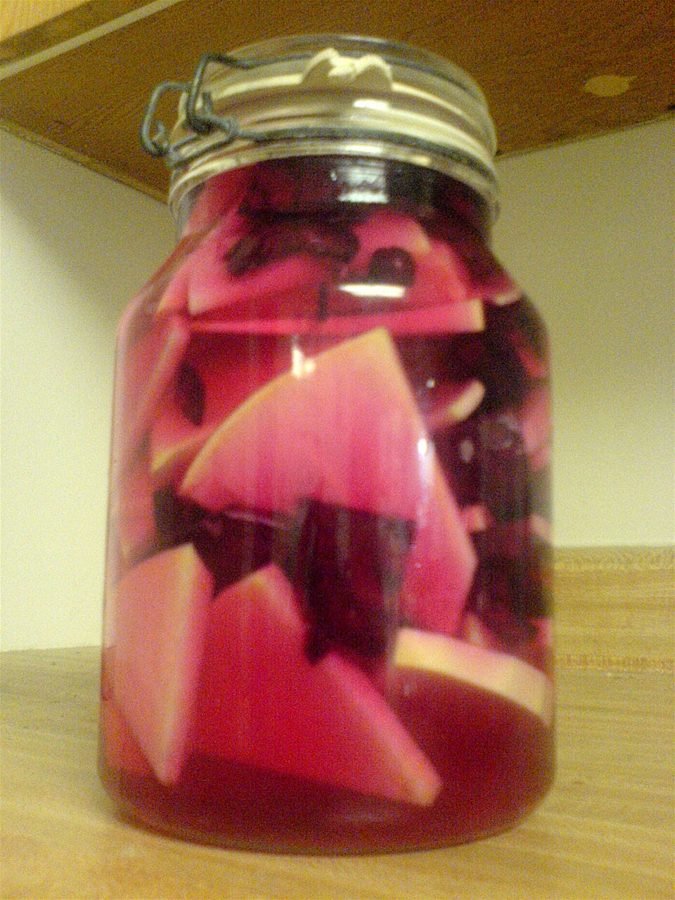
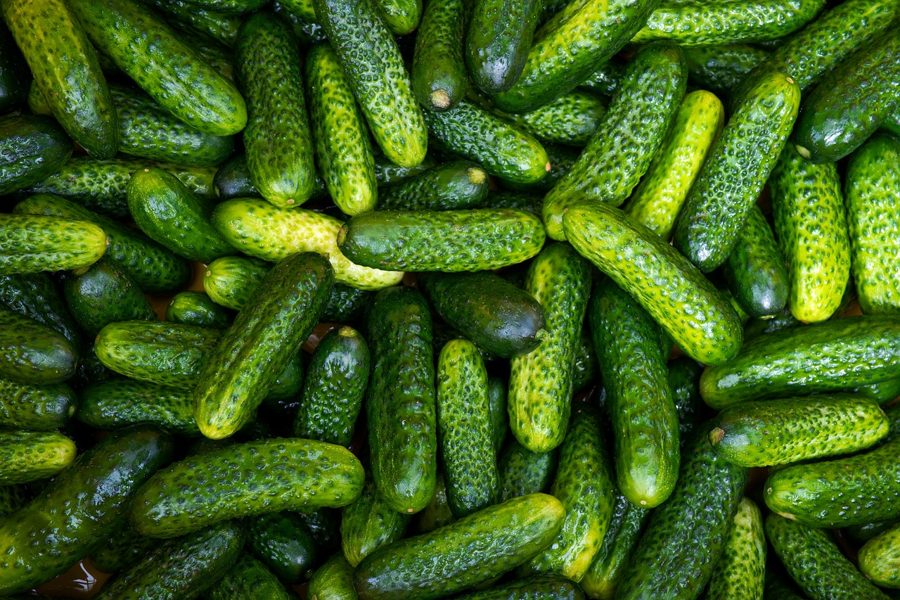
Pickled cucumbers go inside the chicken sandwich: small, thin-skinned cucumbers cured in salted vinegar and sliced lengthwise into strips. The bright pink pickled turnips, kabees lifit, usually come on the side or in the falafel sandwich. Their colour comes from a few slices of raw beetroot in the jar, which turn the turnips magenta within days.
Buy both from a Middle Eastern grocer if you can; Lebanese cucumber pickles are crisp and plainly sour, without the dill or sugar of deli pickles. Pickling turnips at home is easy but slow, so start the jar about five days before you want it.
Fries in the sandwich
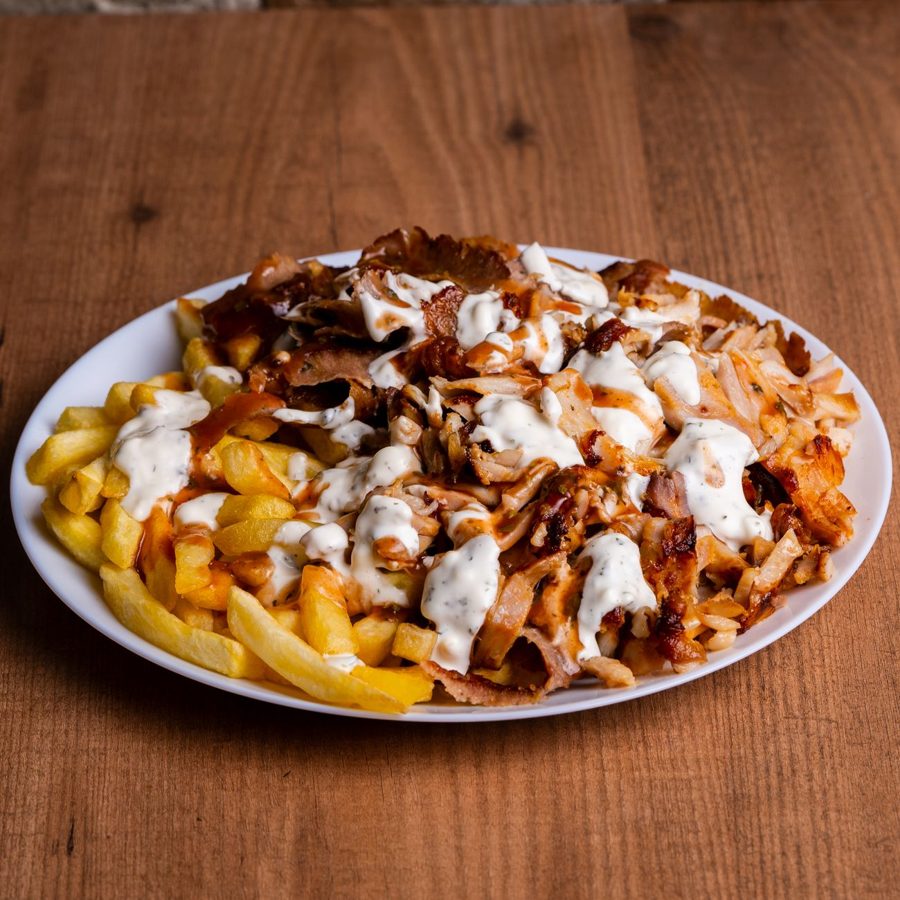
In Beirut the fries go inside: a few thin, hot ones laid along the chicken before the bread is rolled. They soak up the toum and the juices, and they are why a Lebanese shawarma fills you up more than its size suggests. Barbar takes the same idea to its Lebanese burger, which has the coleslaw and the fries inside the bun.
Ask for a plate and the fries come on the side instead, with the chicken, toum, pickles and bread. For a table of people the plate is easier at home too: everyone builds their own.
The toum
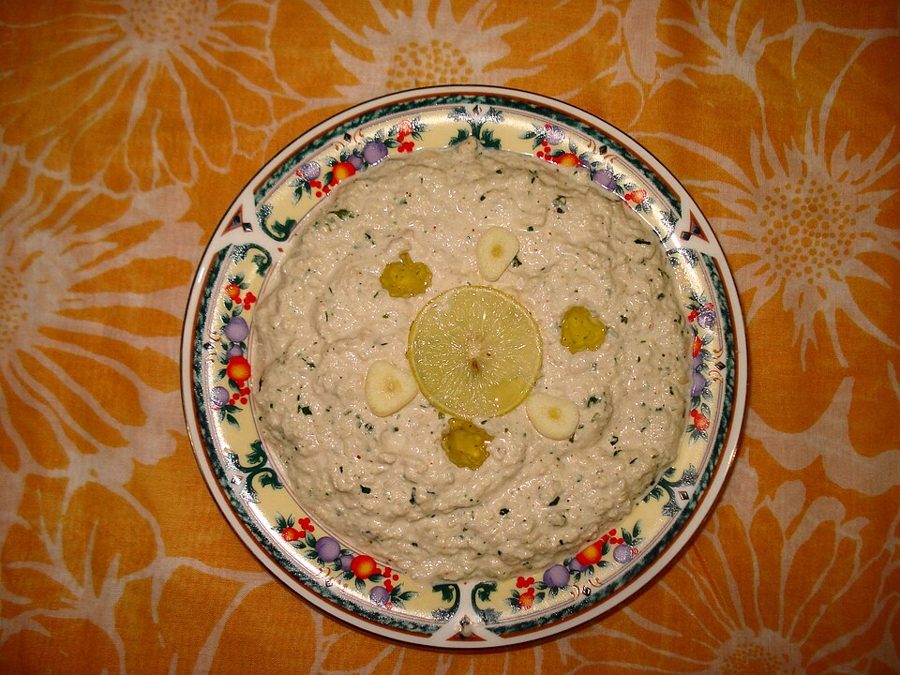
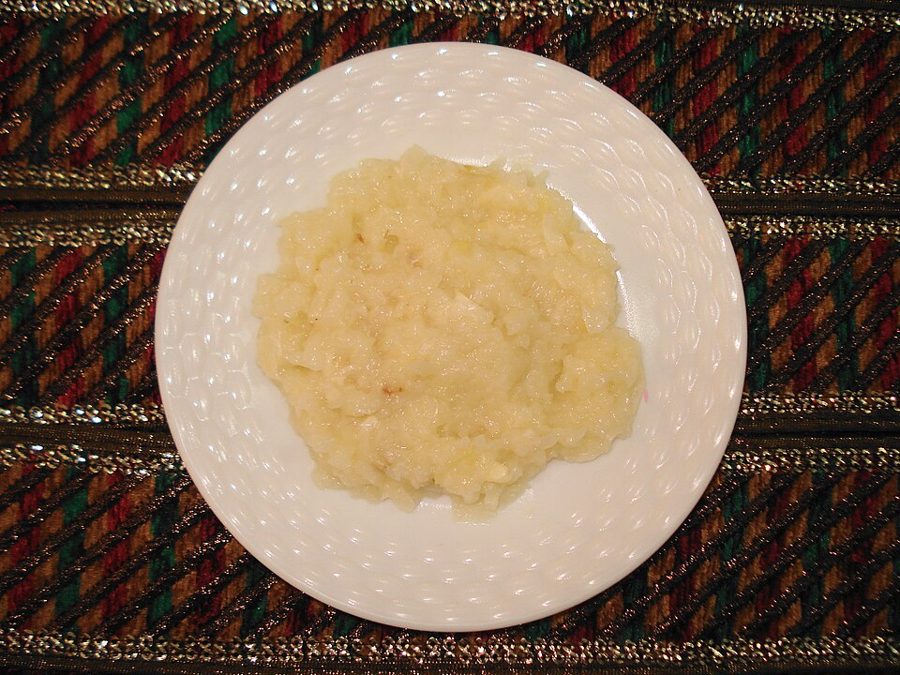
Toum is garlic pounded with salt and lemon, then beaten with oil, a thin stream at a time, until it turns white and stiff enough to hold a peak. Lebanese cooks make it without egg; some snack bars stabilise theirs with egg white or starch. Allow about a tablespoon per wrap, and make it a day ahead, because the raw edge of the garlic softens overnight in the fridge.
Do not swap in garlic mayonnaise or a yoghurt sauce. Both are fine on something else, but toum is what makes the chicken sandwich Lebanese, and its sharpness is the point.
Where to eat it in Beirut
Lebanon has priced almost everything in US dollars since 2023, and snack bars are no exception, so carry small notes. I could not confirm current sandwich prices at either place below, so check the board before you order.
Barbar, Hamra and Spears
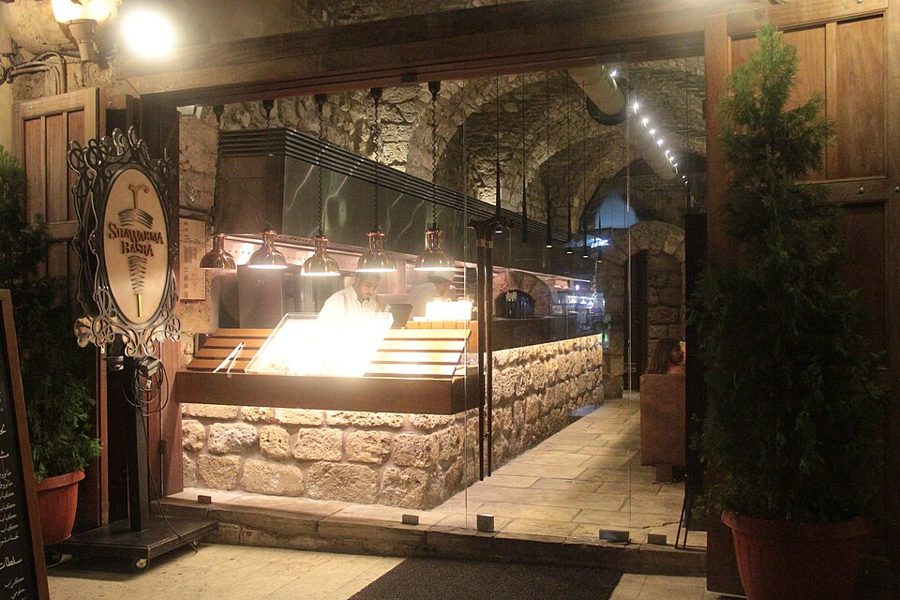
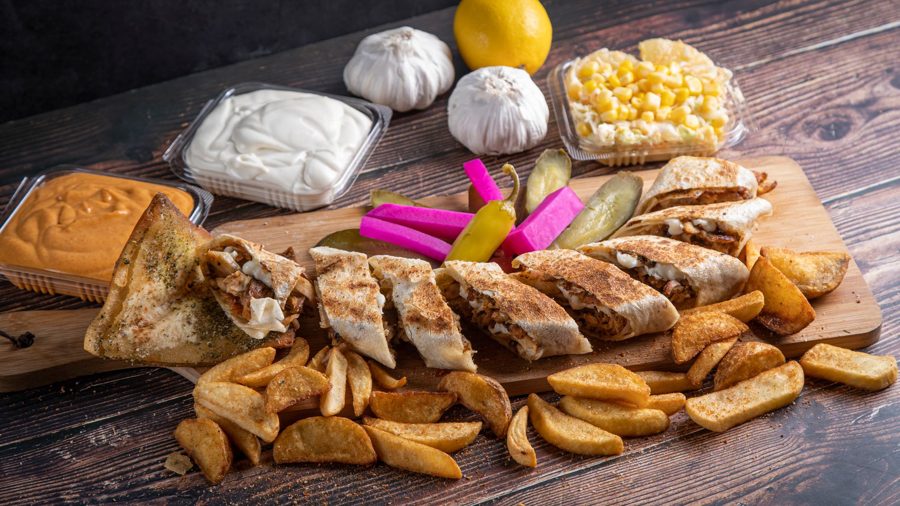
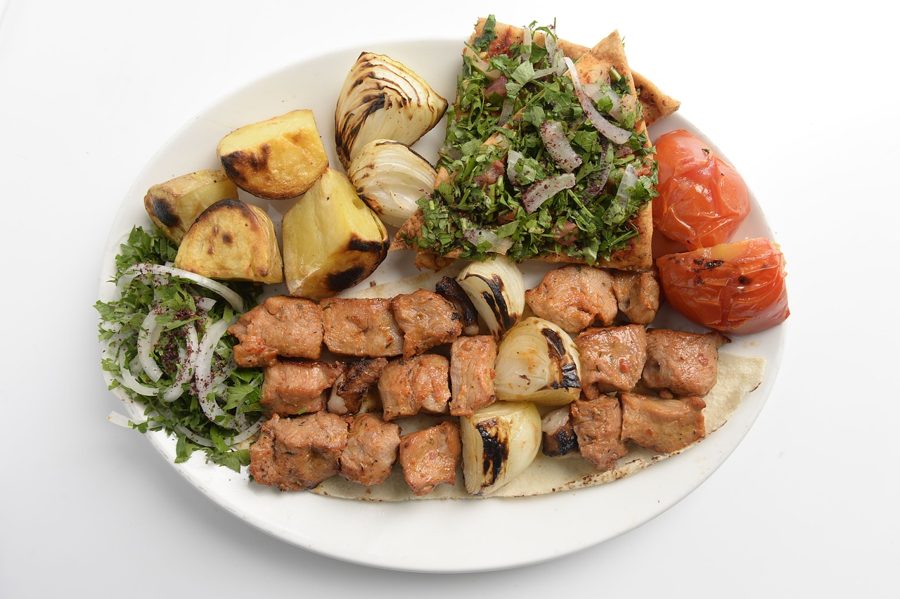
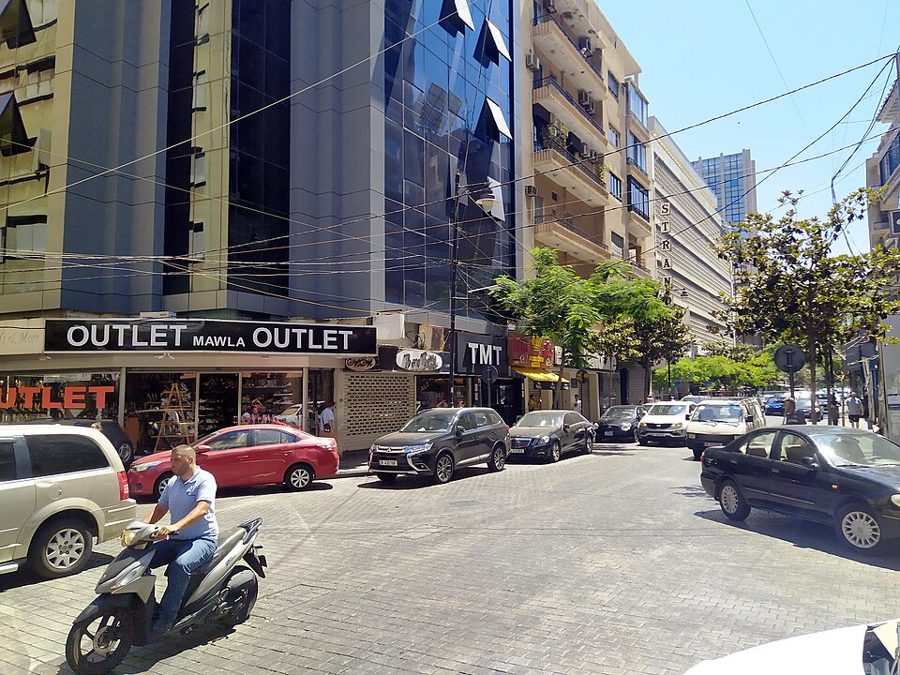
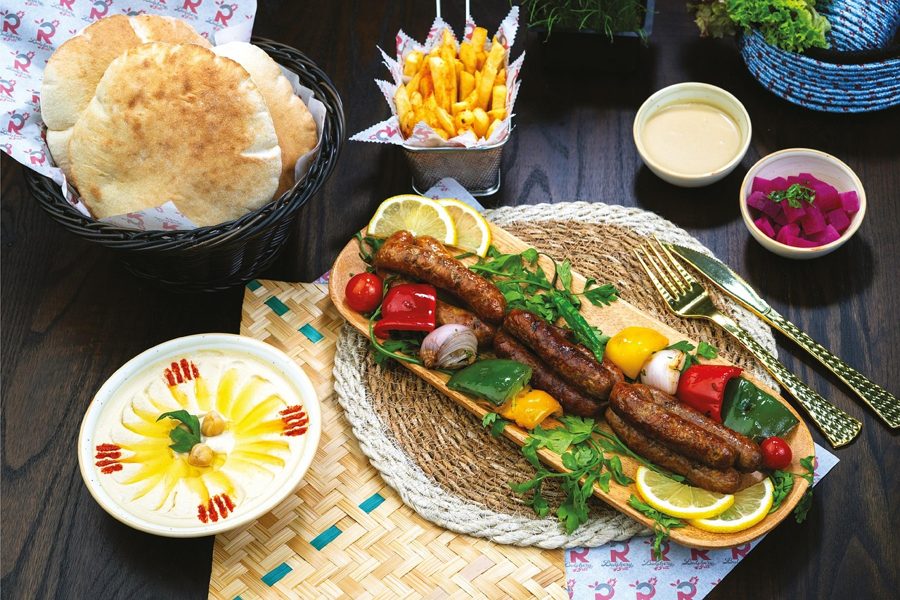
Barbar started in 1979 as a small man’oushe bakery in Hamra, opened by Mohamad Ghaziri after years at sea and named after a play, Barbar Agha, then showing at the Piccadilly Theater a few steps away. It kept serving through the civil war, added shawarma in the 1980s, and now has two Beirut branches, on Piccadilly Street in Hamra and on Spears Street in Ras Beirut, both open 24 hours. The chicken sandwich is the textbook one: toum, pickles and fries, rolled in Arabic bread.
At 3am on Hamra it is the reason to still be awake. The menu runs on to falafel, shish tawouk, man’oushe from the oven, fresh juices and a mezze list with hummus, tabbouleh and fattoush, so a group can eat there without anyone settling for a sandwich.
Basterma Mano, Bourj Hammoud
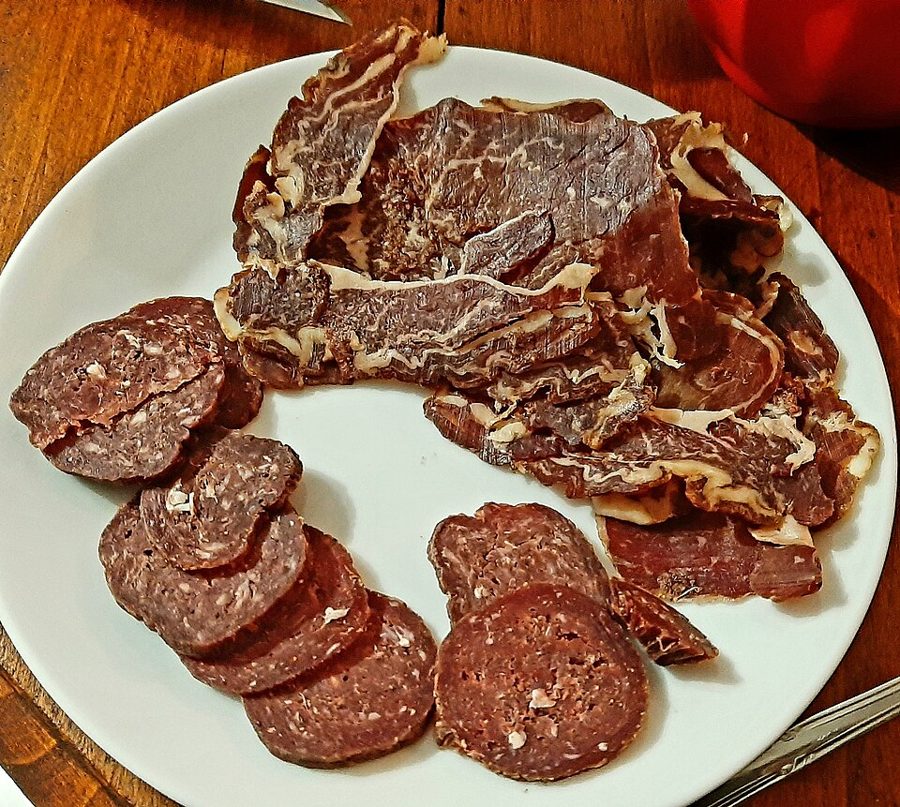
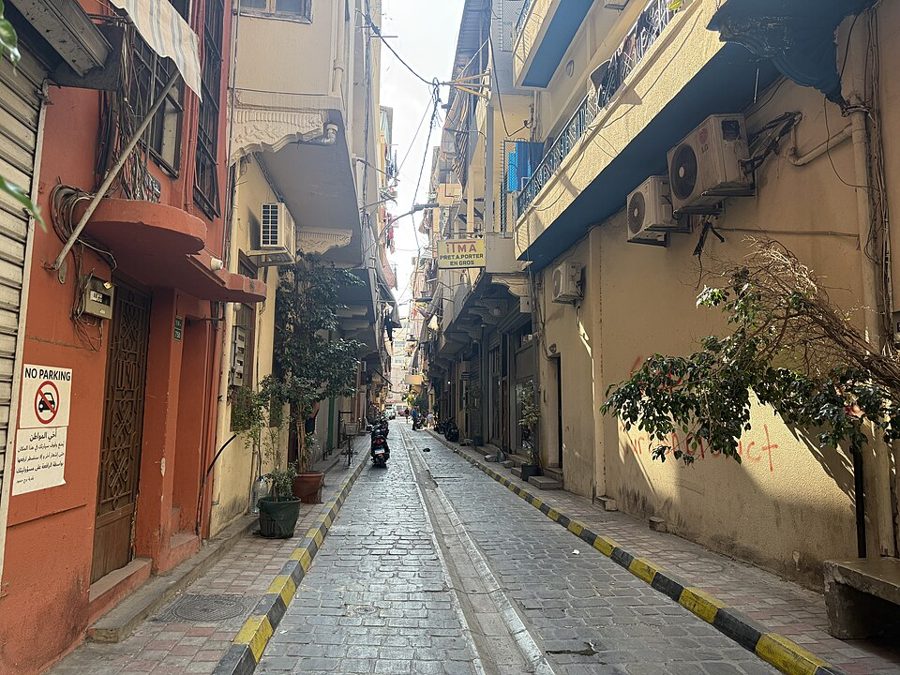
Across the Beirut River in Bourj Hammoud, the Armenian quarter, Basterma Mano has been making sandwiches since 1966. Its owner, Mano, came up with a shawarma of soujouk, the Armenian sausage spiced with cumin, sumac and red pepper, served in Lebanese bread with tomato and pickles. A L’Orient Today writer who crossed town in February 2026 ordered one soujouk and one chicken and settled the matter for herself: Barbar for man’oushe, Basterma Mano for shawarma.
Safety, leftovers and the next day
A home stack is far thicker than the outer layer a shawarma cook shaves off a spit that turns all day, so cook the whole stack through. The centre must reach 74°C (165°F), the USDA’s safe temperature for all poultry; check it near the skewer, where it cooks slowest. Keep raw and cooked chicken on separate boards and plates.
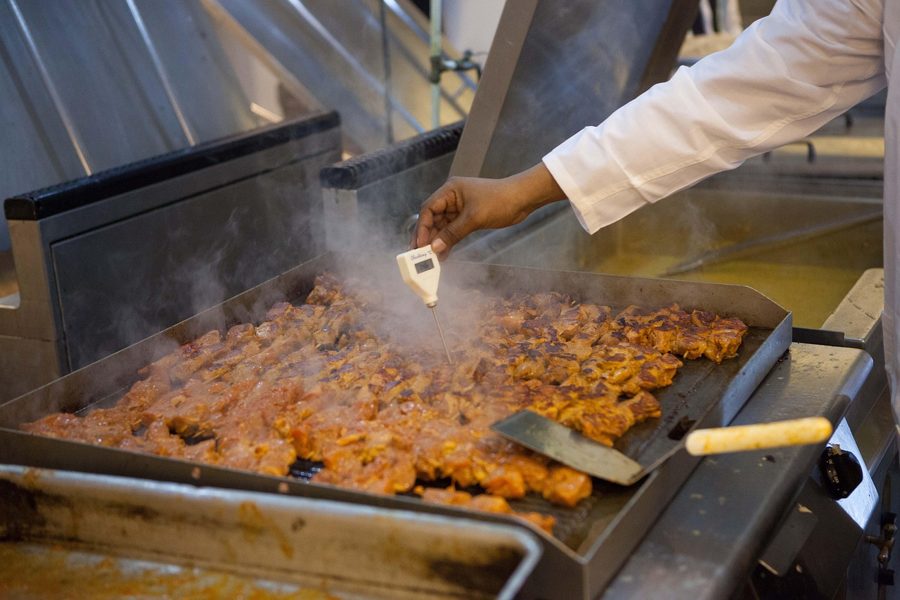
Leftovers go into the fridge within two hours and keep for three to four days, according to the USDA’s guidance on leftovers. Reheat the slices in a hot pan with a splash of water, covered for a minute, then uncovered to crisp, until they are steaming hot through. Build the sandwiches fresh: a rolled shawarma kept overnight is soggy bread around cold toum.
Cold leftover chicken is good torn over fattoush, or on a plate with hummus and pickles. The toum and the pickles keep in the fridge long after the chicken has gone.
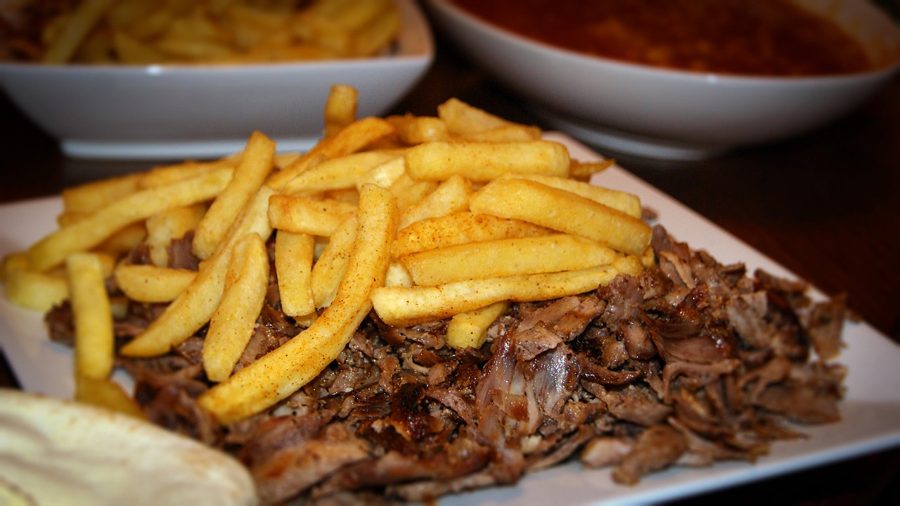
Back at the counter, the cutter is already shaving the next layer off the spit while you unwrap the first bite: crisp bread, a sour pickle, a hit of raw garlic, and chicken that tastes of lemon before it tastes of spice. That is the order of flavours to chase in your own kitchen. Get the bread thin and the toum sharp, and the stack will forgive you a lot.