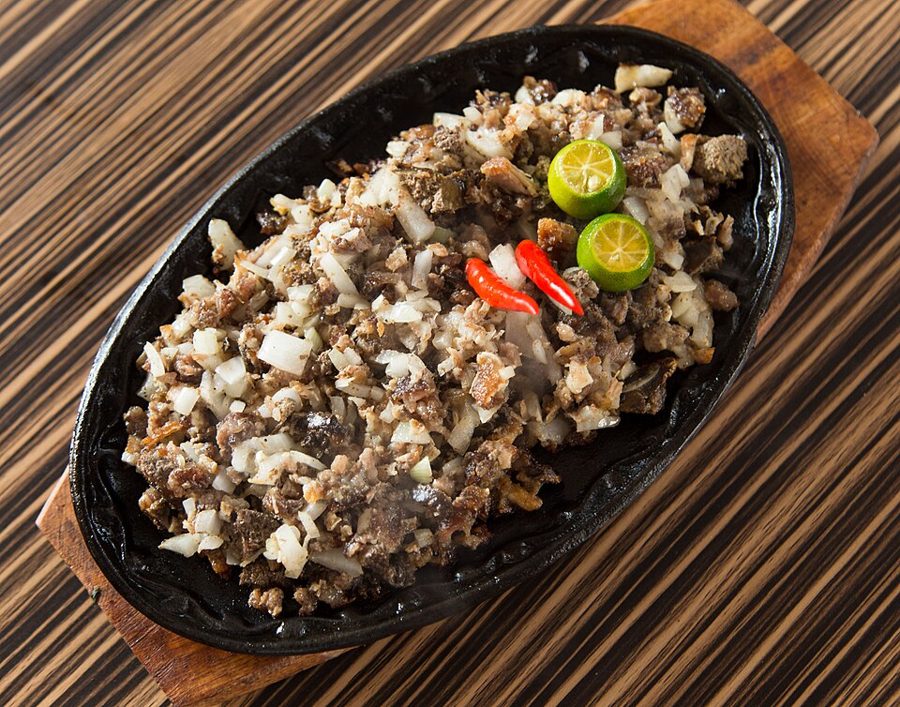
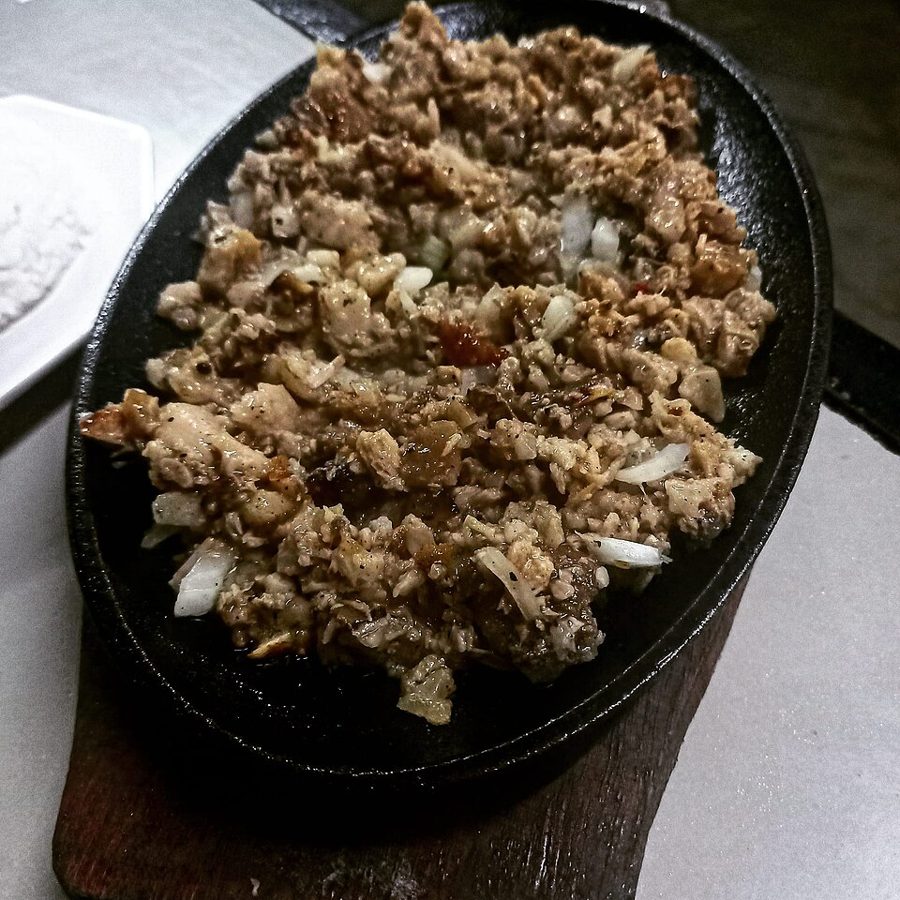
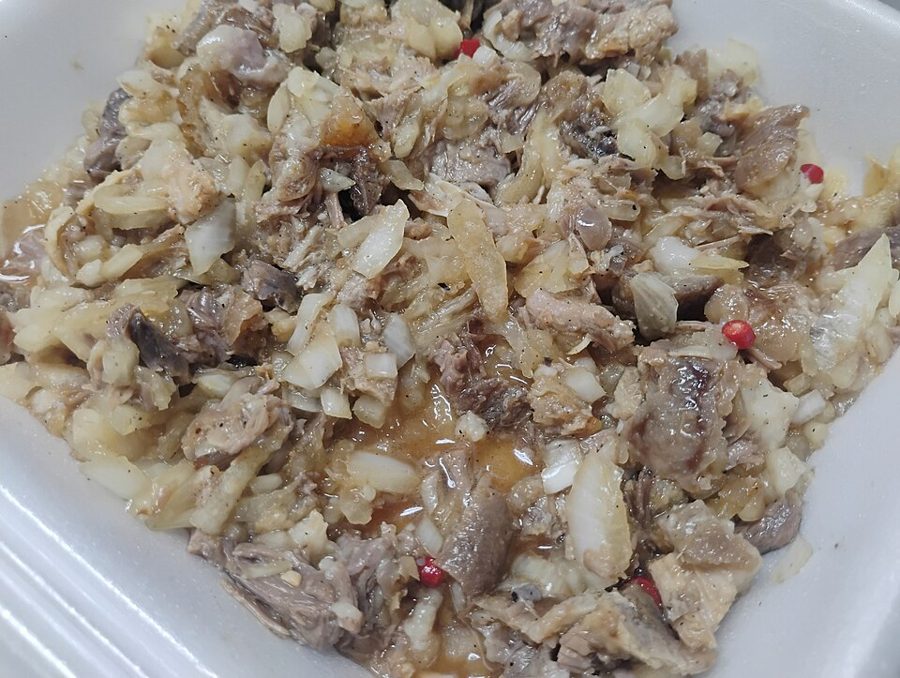
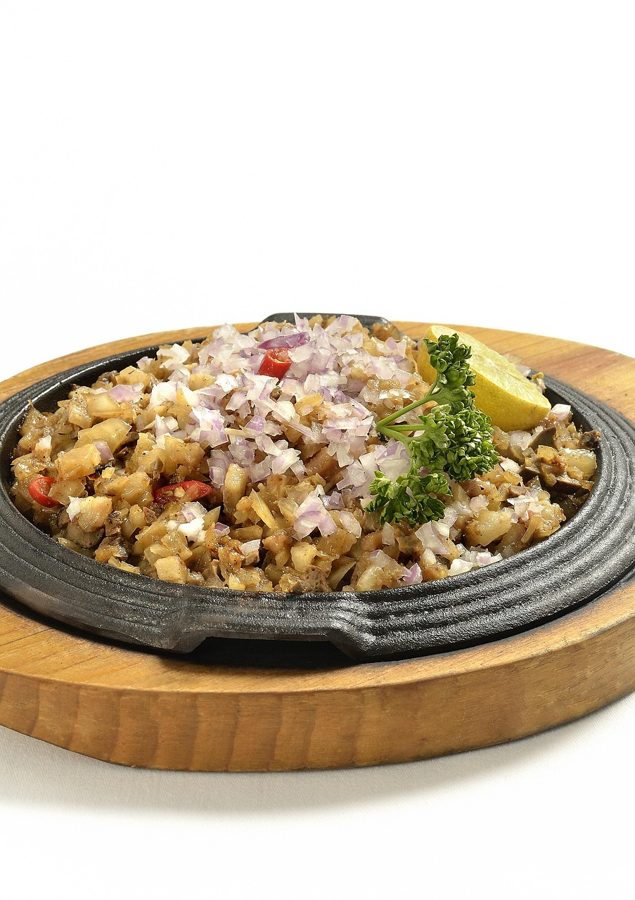
Sisig is a dish made from the cheapest part of the pig, and it only works if you cook that part three times. Boil the face until the skin gives. Char it over coals until it blisters. Then chop it so fine that every spoonful carries soft fat, crackling skin and the snap of ear cartilage at once.
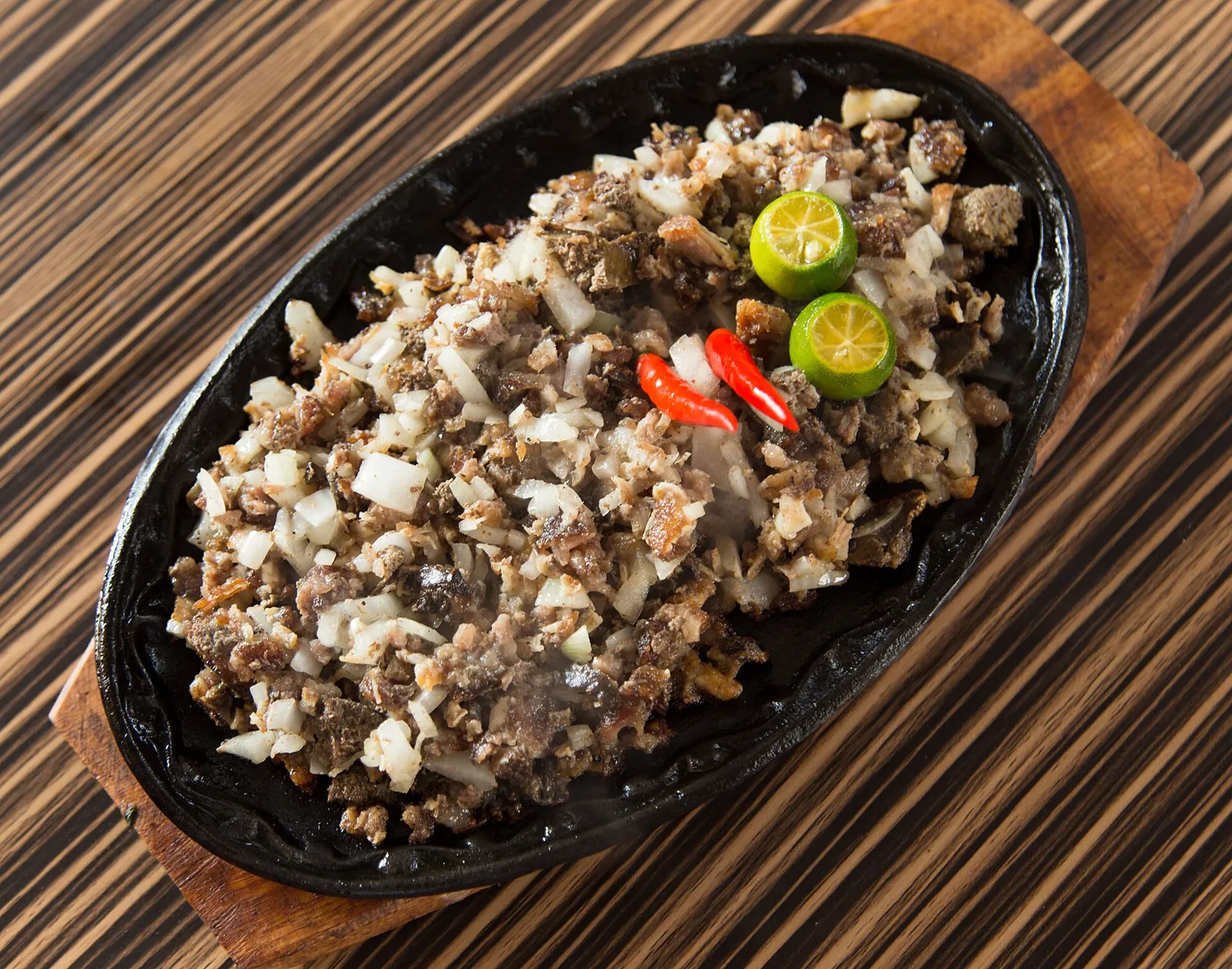
Do that and the seasoning is almost nothing: raw onion, a hard squeeze of calamansi, a few chillies, a little chicken liver mashed in for body. Skip a stage and you have chopped pork with lime on it. In Angeles City, where the modern version took shape at a stall beside the railway tracks in 1974, the real thing reaches the table on an iron plate that is still spitting.
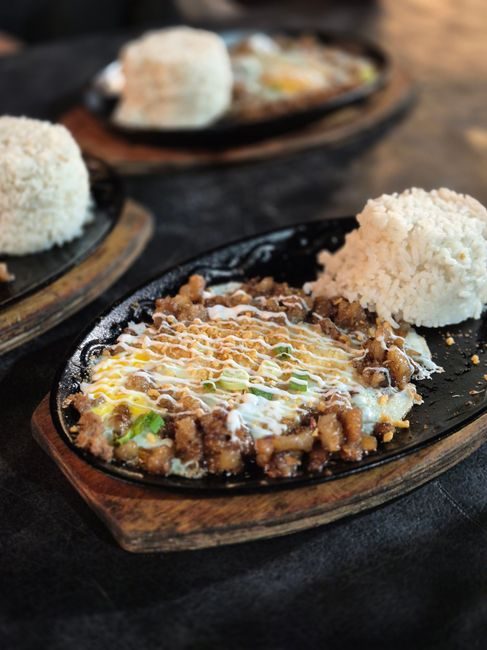
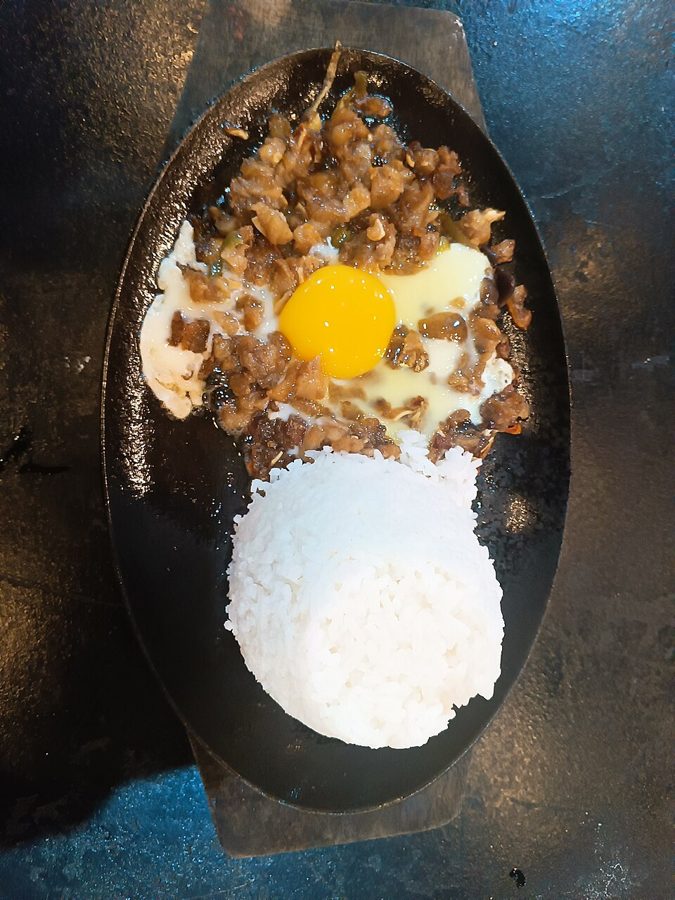
Much of what goes by the name elsewhere has drifted: an egg cracked on top, mayonnaise stirred through, pork belly in place of the face. Some of that is fine. Some of it covers for a cook who skipped the grill.
Contents 10 parts
- 01A sour word, three centuries old
- 02Aling Lucing and the Crossing
- 03The parts: face, ears and liver
- 04Egg, mayonnaise and the argument
- 05Kapampangan pork sisig at home
- 06Getting it right at home
- 07Chicken, tuna, bangus and tofu: the variations
- 08Where to eat it in Angeles
- 09Where to eat it in Manila and Cebu
- 10Rice, beer and calamansi
A sour word, three centuries old
The word is older than the dish. In 1732 the Augustinian friar Diego Bergaño put sisig in his dictionary of the Kapampangan language, defining it as a salad of green papaya or green guava eaten with a dressing of salt, pepper, garlic and vinegar. In Kapampangan the word still carries the sense of snacking on something sour, and people still say manisig manga for eating green mango dipped in vinegar.
Over time the same word came to cover a way of treating meat and fish: marinated in something sour, then salted and peppered. That is the thread that runs from Bergaño’s green fruit to the plate in Angeles. The sourness was always the point, and the pork came later.
It helps to cook with that in mind. Sisig belongs to the same family as kilawin and the other Filipino dishes where acid does part of the cooking, and it should taste sharper than you expect from a pile of grilled pork. If it tastes of fat and salt first and sour second, it needs more calamansi.
Aling Lucing and the Crossing
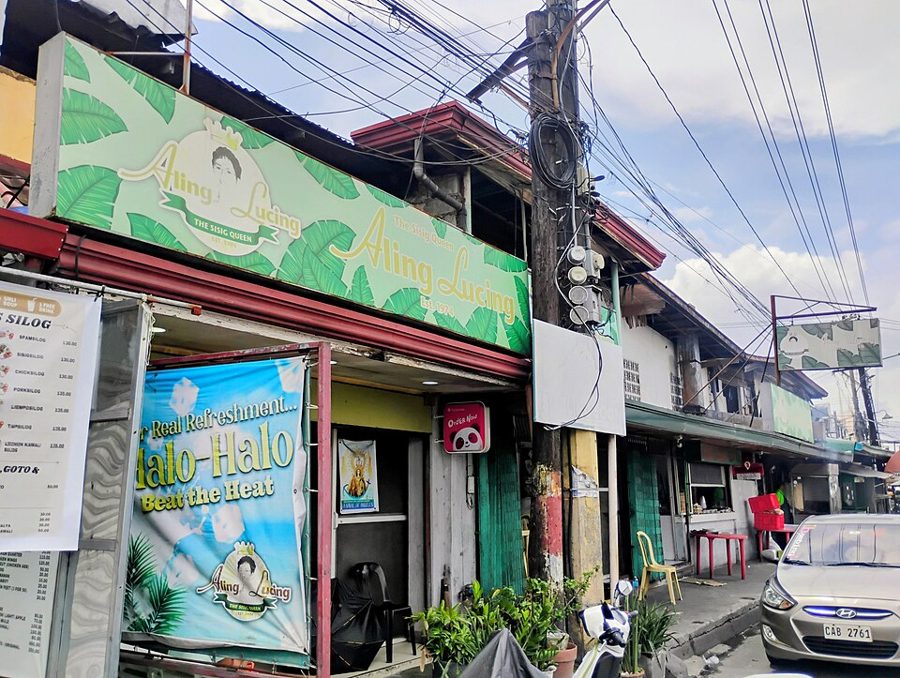
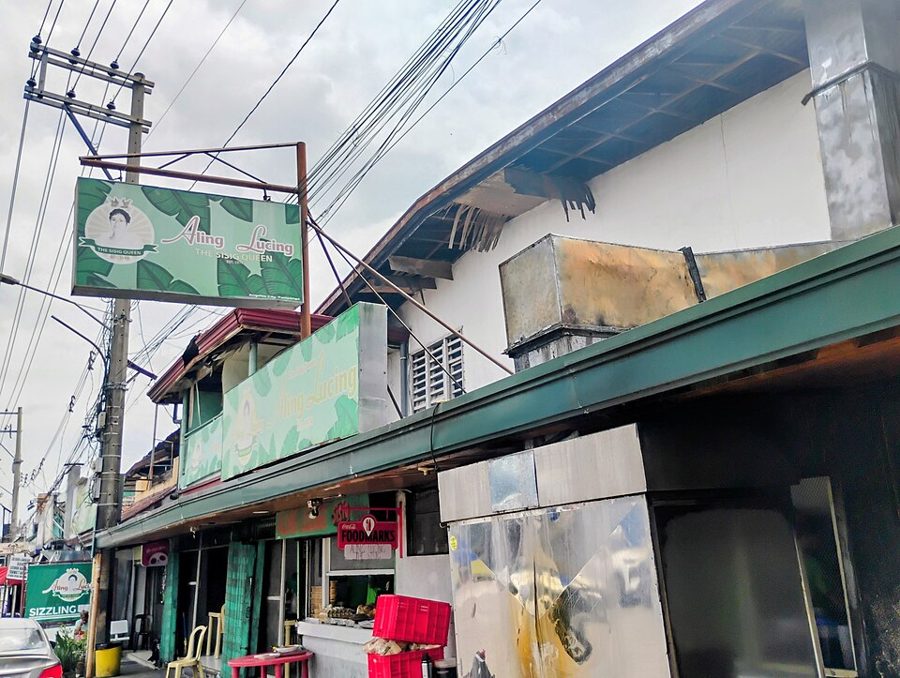
The modern dish is credited to Lucia Cunanan, known to everyone as Aling Lucing. Born in Tarlac, she settled in Pampanga after marrying Victorino Cunanan, and in 1974 she was running a stall in Angeles at the Crossing, the stretch of G. Valdes Street where the railway once ran. Her customers came for beer, and what she gave them to eat with it became famous.
Her version was grilled pig’s ears and cheeks, chopped and dressed with vinegar, calamansi, onion and chicken liver. One Tagalog account of her story adds that she learned the grilling from a neighbouring stallholder at the Crossing, Ricardo Dinio, known as Bapang Kadok. The Department of Tourism later credited her restaurant with making Angeles the sisig capital of the country.
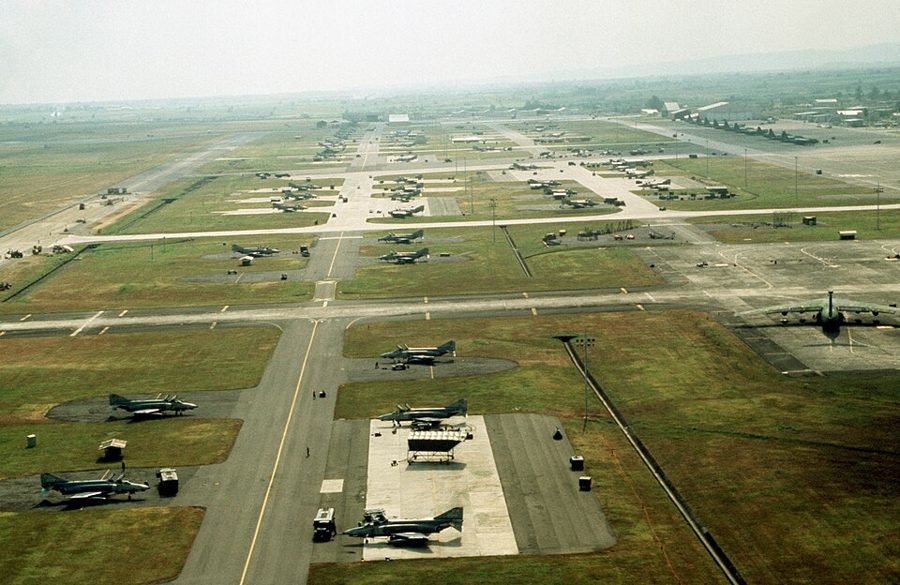
Why pig heads? The usual explanation points to the air base on the city’s edge. Clark Air Base was an American installation until 1991, and its commissaries had no use for the heads of the pigs they butchered, so local cooks could buy them for very little. Whether or not every detail holds, it fits the dish: sisig is what a good cook makes from what the kitchen next door throws out.
The sizzling plate has a more tangled history. Some accounts have Aling Lucing serving on hot plates from the start, while the same Tagalog account credits Benedict Pamintuan of Sugay’s, another Angeles restaurant, with putting sisig on a sizzling plate so the pork fat would not cool and set while people drank. Both restaurants were in the same small city, so I would not bet on either.
What matters is the reason. Hot iron keeps the fat liquid and crisps the bottom layer as you eat.
Aling Lucing was killed in her home in Angeles in April 2008, at 80, and her husband was charged with the crime. The city’s sisig festival stopped that year. Her name did not: the business still trades in Angeles under the sign she started, and her granddaughter Carmina Pangilinan has cooked her version at the city’s sisig cooking demonstrations.
The parts: face, ears and liver
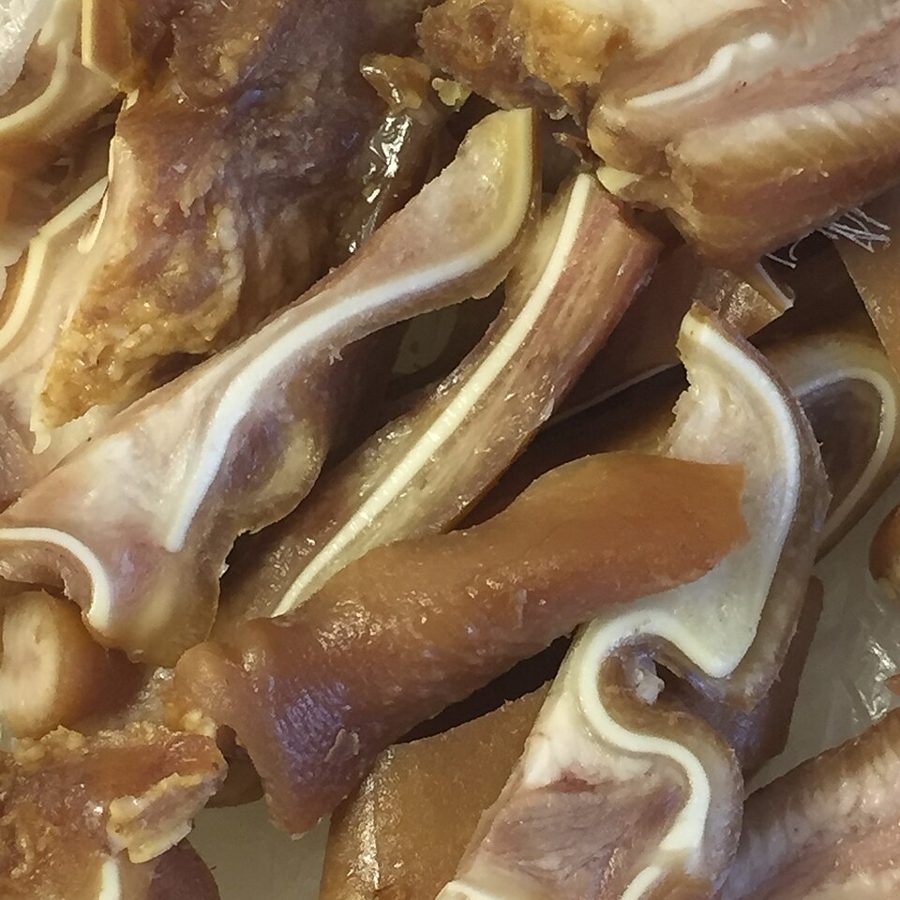
Sisig is made from the maskara, the pig’s face: cheeks, jowl, snout and the skin over them, plus the ears. Each part does a different job: the cheek and jowl bring soft meat and a lot of fat, the snout and skin bring gelatine, and the ears bring cartilage, which stays crunchy through boiling and grilling and gives the dish its bite.
Liver is the binder. Aling Lucing used chicken liver, grilled or cooked and mashed into the pork, where it melts into the fat and makes the mix cling together. Pork liver works but turns grainy if you overcook it. Older recipes also used pig’s brain for the same creamy effect, which is where the trouble with mayonnaise begins.
Pork belly is the common substitute when the face is hard to find, and plenty of Filipino home cooks use it. It tastes close, but you lose the cartilage and most of the gelatine, and belly dries out if you cook it three times. If you can only get belly, buy it with the skin on and add a pig’s ear or two. Ask a Filipino or Chinese butcher for maskara and you will usually get the whole face, split.
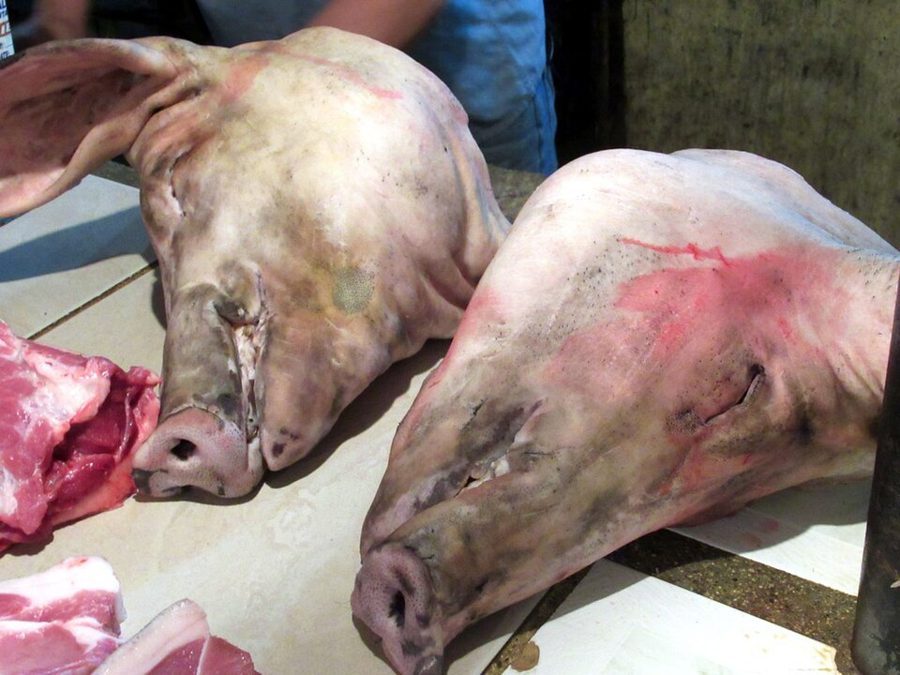
Boil, grill, chop
The order is the method. Boiling cleans the face, softens the skin and renders some fat. Grilling dries and chars the outside, which is where most of the flavour comes from. Chopping fine at the end mixes the soft and the crisp so every bite has both.
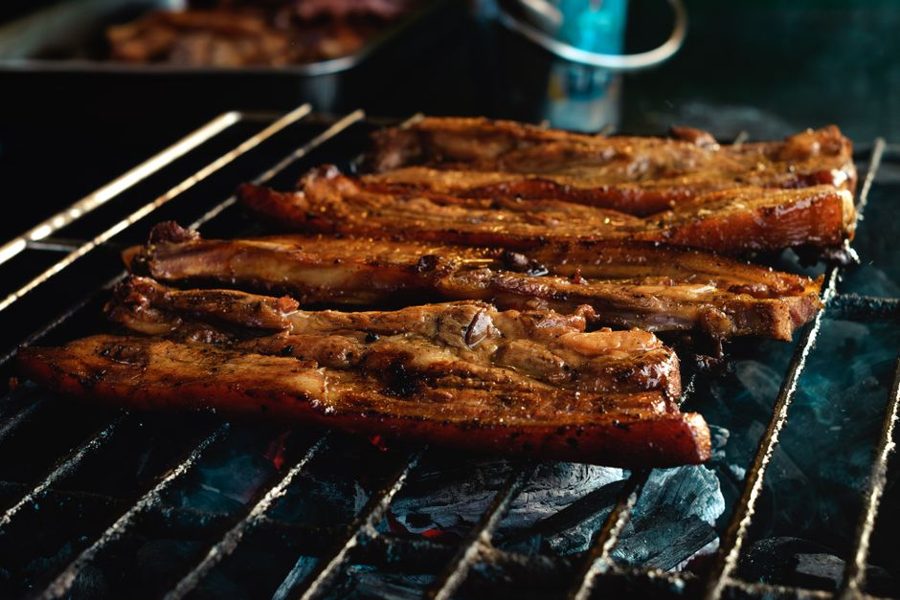
Some cooks fry instead of grilling. One Tagalog home recipe I compared boils the face, freezes it for an hour or two, then drops it into hot oil so the cold skin puffs and crackles like chicharon. It is very crisp and messy to cook, and brand recipes for “crispy sisig” deep-fry boiled belly in much the same way. Both are good to eat, but neither tastes of the charcoal grill, which is the same grill that does the inihaw street skewers outside Kapampangan beer houses.
Egg, mayonnaise and the argument
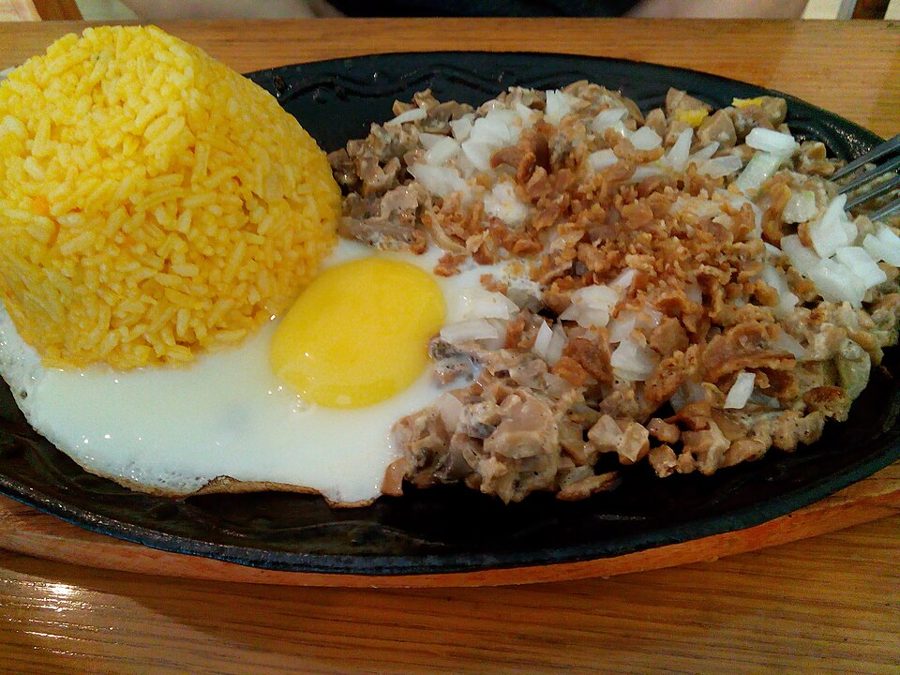
The most common sisig in Manila today is creamy. Mayonnaise is stirred in, a raw egg is cracked on top and stirred into the hot pork at the table, sometimes both. It is the style of the big grill-restaurant chains and of most recipe cards from mayonnaise and seasoning brands.
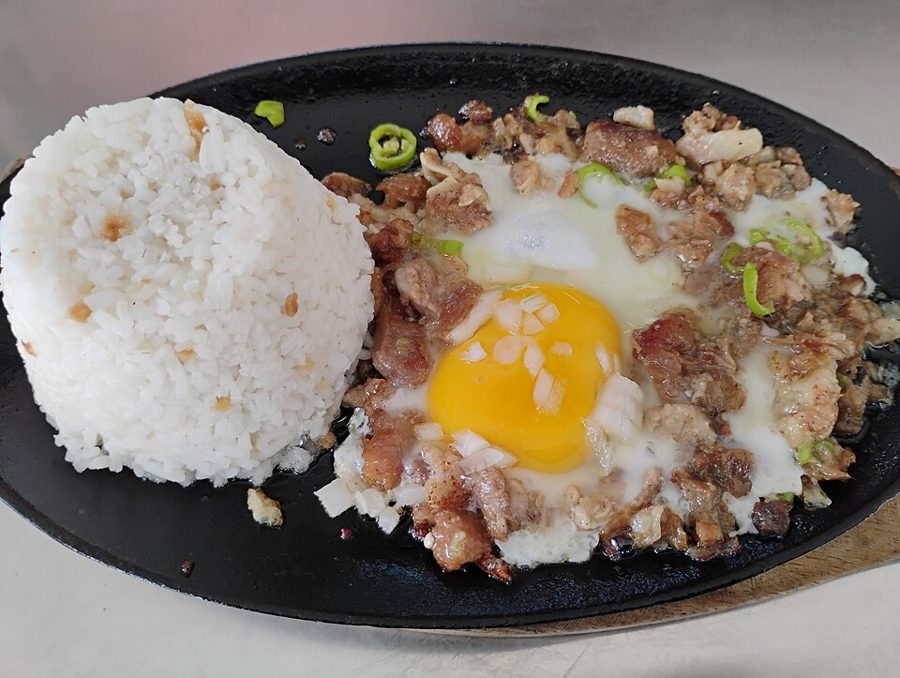
Kapampangan cooks mostly reject both, and the objection has a logic to it. The creamy texture once came from brain and liver; mayonnaise is a shortcut to the same mouthfeel without the offal, and an egg does much the same. In 2017 Angeles passed Ordinance No. 405, declaring sizzling sisig babi (pork sisig) an intangible heritage of the city and setting out to safeguard the original recipe and the way it is prepared.
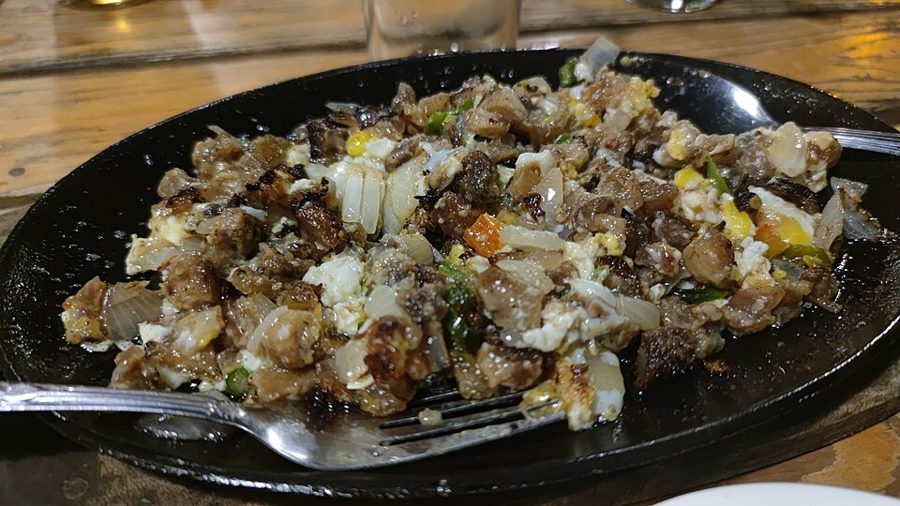
Even the guidebooks disagree. A 2026 MICHELIN Guide feature on Philippine offal describes the Pampanga dish with an egg “ceremoniously cracked on top”, which is how much of the country eats it and how much of Pampanga would rather not.
My view: leave out the mayonnaise. It dulls the calamansi and makes the whole plate taste of the jar. An egg on a weeknight is fine and makes a small batch go further with rice. But cook it the Kapampangan way first, at least once, so you know what the additions are covering.
Recipe card
Kapampangan pork sisig at home
This is the boil, grill and chop version, seasoned with calamansi, a little cane vinegar, onion and chilli, with chicken liver for body and no egg or mayonnaise. The quantities sit in the middle of the Kapampangan, Tagalog and English recipes I compared, which run from 90 g to a whole cup of onion per kilo of pork; I use one large onion, half mixed in and half scattered on top raw, because the crunch of raw onion against hot fat is part of the dish.
Serves 4 with rice, or 6 as pulutan with drinks. About 2 hours 15, most of it boiling and cooling.
Ingredients
For boiling
- 1 kg (2.2 lb) pig’s face (maskara) and ears, roughly two-thirds face to one-third ears; or skin-on pork belly with one or two ears
- About 2 litres (8 cups) water, enough to cover
- 1 tbsp salt
- 3 bay leaves
- 1 tsp black peppercorns
- A thumb of ginger, sliced (optional)
For the liver
- 150 g (5 oz) chicken livers, trimmed
- A pinch of salt
For seasoning and serving
- 1 large red onion, about 150 g (5 oz), finely chopped
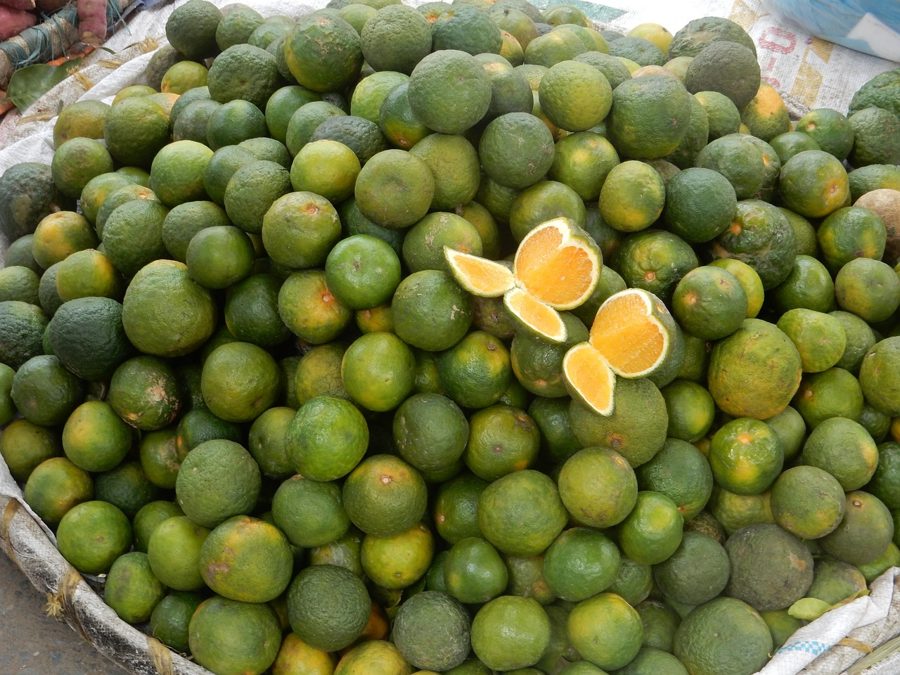
- 2 tbsp calamansi juice (6 to 8 calamansi), plus more calamansi halved for the table
- 1 tbsp cane vinegar
- 3 to 5 siling labuyo (bird’s eye chillies), chopped, or 1 long green chilli, sliced
- 1 tbsp soy sauce (optional)
- ½ tsp ground black pepper
- Salt to taste
- 1 tbsp pork fat, butter or neutral oil, for the plate
Method
- Check the face and ears for stray bristles and shave or singe them off, then rinse. Put the pork in a large pot with the water, salt, bay leaves, peppercorns and ginger. Bring to the boil, skim off the grey foam, then lower the heat and simmer, partly covered, for about 1 hour, until a skewer slides into the thickest part of the cheek with little resistance. The ear cartilage should still be firm.
- Lift the pork out and drain it on a rack. Leave it uncovered for at least 30 minutes so the skin dries; if you have time, chill it overnight. Dry skin blisters on the grill; wet skin steams.
- Light a charcoal grill and let it burn down to medium-hot coals. Grill the pork skin side down first, about 5 to 8 minutes a side, turning when the skin is blistered and spotted black. Thread the chicken livers on a skewer, salt them and grill them alongside for 4 to 5 minutes a side, until firm and no longer pink in the middle. Without a grill, use the oven grill (broiler) on its highest setting with the pork on a rack close to the element, and cook the livers in a hot pan.
- Rest everything for 5 minutes. Chop the pork with a heavy knife or cleaver into pieces about 5 mm (¼ in) across, the ears a little finer. Crush the liver with the flat of the knife and chop it into the pork.
- In a bowl, mix the pork and liver with half the onion, most of the chillies, the calamansi juice, vinegar, soy sauce if using, and the pepper. Taste. It should be sharp first, then salty, then rich; add salt or calamansi until it is.
- Heat a sizzling plate over a burner, or a cast-iron pan, until a drop of water skitters across it. Set the plate on its wooden base, add the fat, pile on the sisig and press it flat. Let it hiss for a minute or two without stirring so the bottom crusts.
- Scatter the rest of the onion and chillies on top and serve at once with halved calamansi, rice and cold beer. Squeeze the calamansi over at the table and stir the crust up from the bottom as you eat.
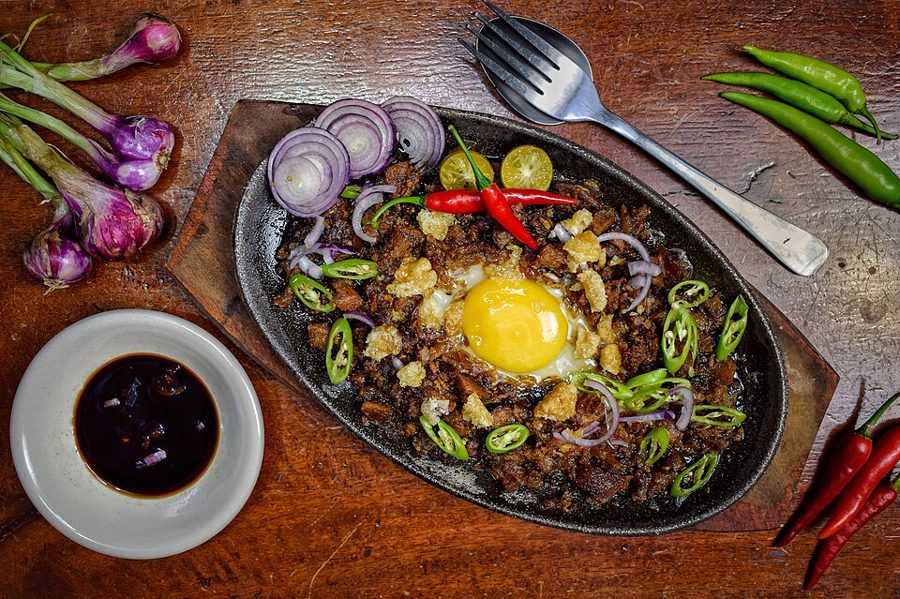
On timing, the recipes I compared boil for anything from 40 minutes to an hour, and grill for about 5 minutes a side. I go for the full hour because face and ears are tougher than belly, and the grill time stretches when the pork goes on cold from the fridge. Watch the skin, not the clock.
Getting it right at home
The plate. A sizzling plate is an oval of cast iron on a wooden board, sold cheaply in Filipino stores and online. A cast-iron skillet does the same job; heat it on the stove and bring it to the table on a board. A non-stick pan will not get hot enough to crust the bottom, and the crust is the best part.
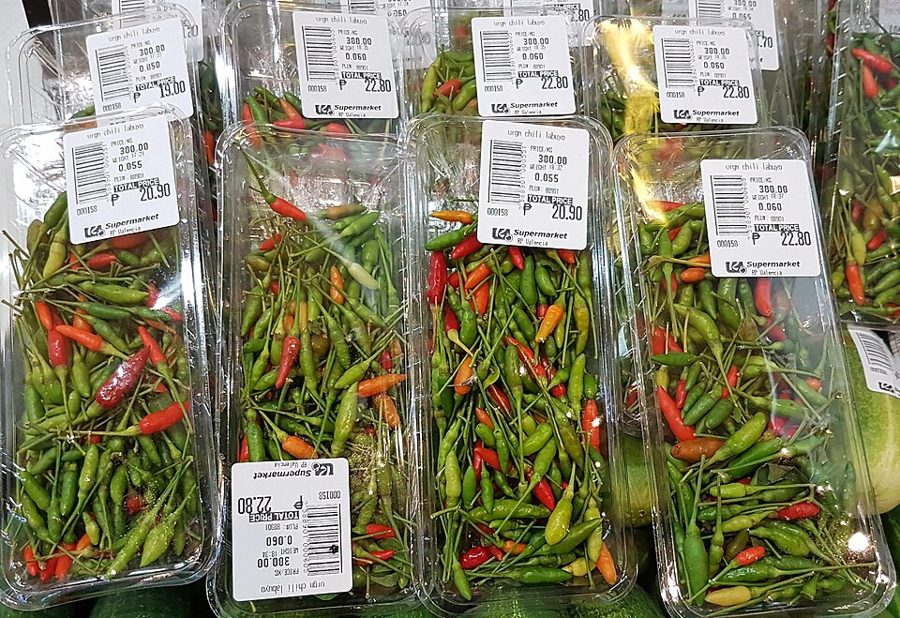
The chillies. Siling labuyo are small and very hot; use three if you are cooking for people who are not used to them, five if you are. The long green siling haba is milder and more aromatic, and plenty of cooks use both.
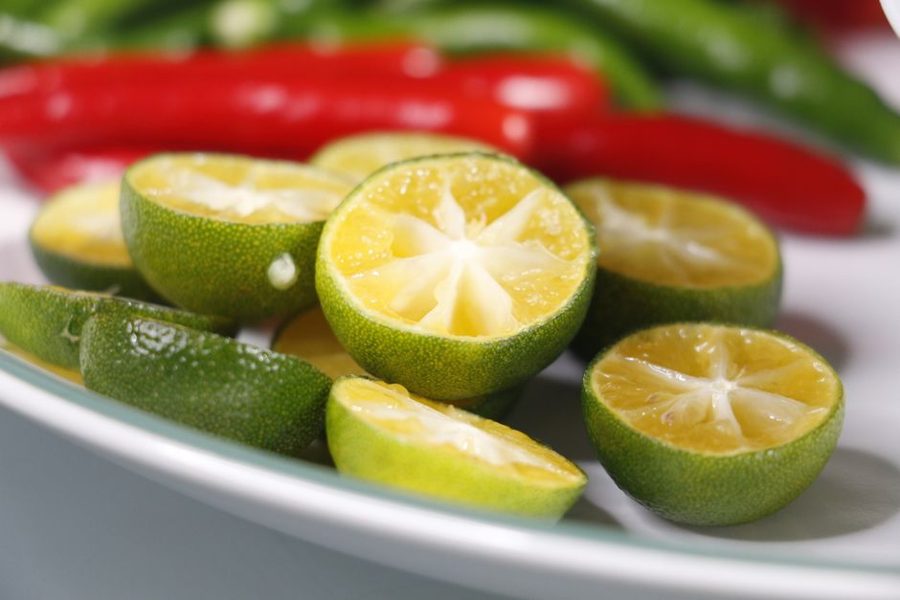
The sour. If you cannot find calamansi, use lime with a little orange juice to soften it, or lemon. Cane vinegar is the Kapampangan choice; coconut or rice vinegar work, malt vinegar does not.
The shortcut. Mama Sita’s makes a Capampangan Sisig Mix, and its own recipe uses one 40 g pouch for a kilo of grilled or fried pork, with onion and green chilli. It saves the measuring but not the boiling and grilling, which is where the work is.
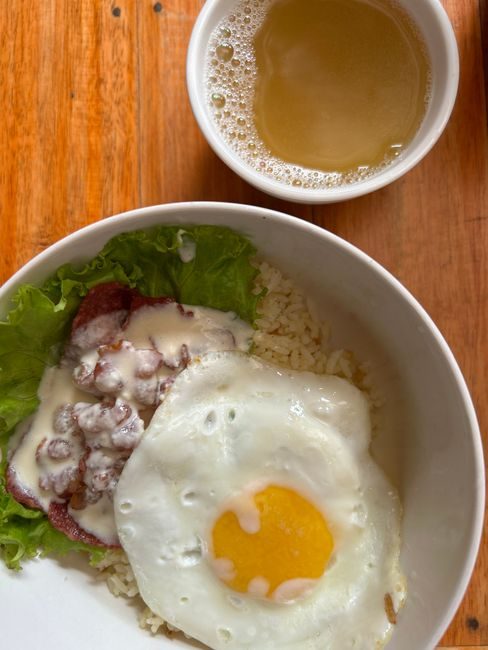
Leftovers. Sisig keeps for a couple of days in the fridge. Reheat it in a hot dry pan until it crisps again, not in the microwave, and add fresh onion and calamansi. Sisig with garlic rice and a fried egg makes the sisig version of silog, and it is on the silog board outside Aling Lucing next to tapsilog and liemposilog.
Chicken, tuna, bangus and tofu: the variations
Once the method is clear, almost anything can be chopped, crisped and soured. Most variations keep the onion, calamansi and chilli and swap the meat. Some are very good. Very few are sisig in the Kapampangan sense, and they do not need to be.
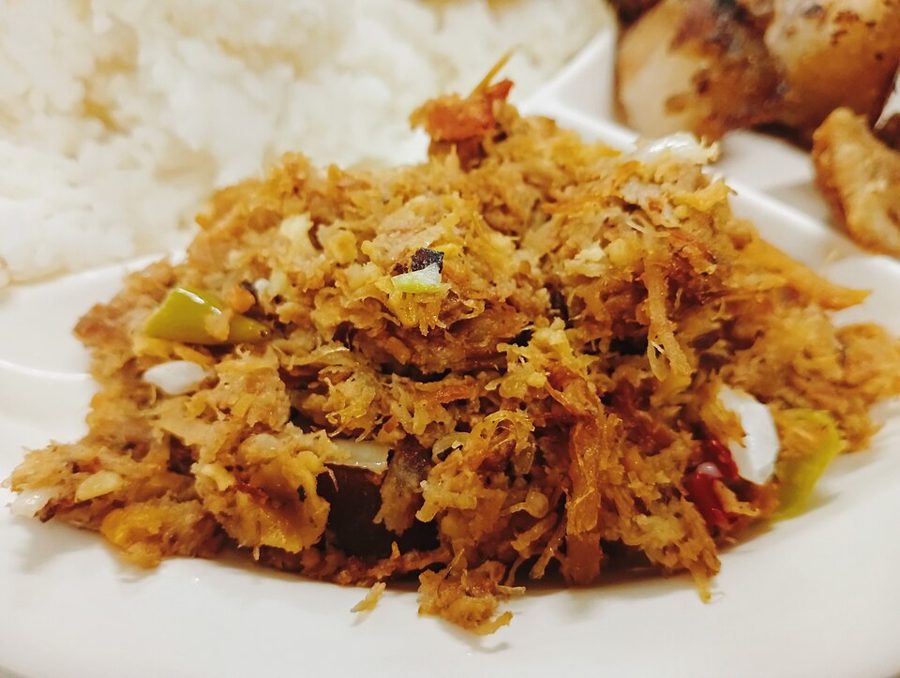
Chicken sisig
The most common swap, and the easiest for people who do not eat pork. Thigh meat with skin is the only cut worth using. Boil and grill it like pork, or take a shortcut with a cooked chicken: fry the meat in a little butter with onion and garlic until it browns, then season. If it comes out soft and wet, it needed more time in the pan.
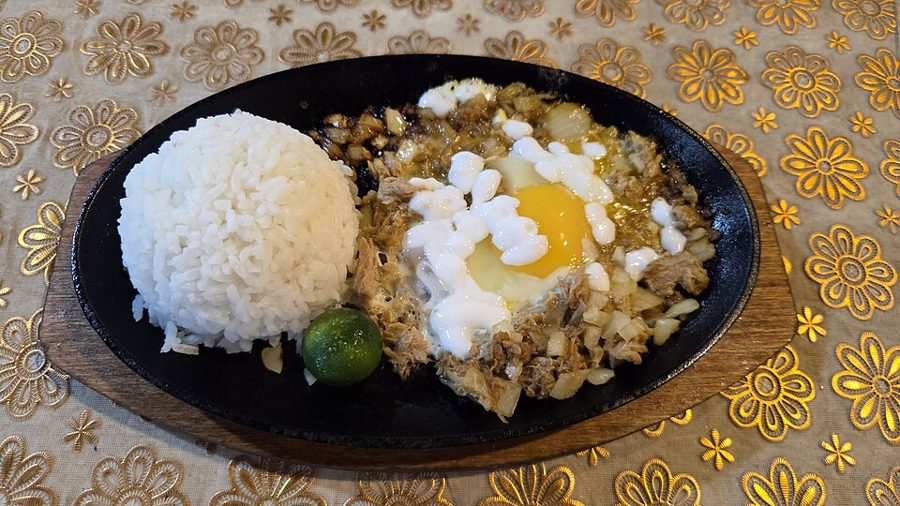
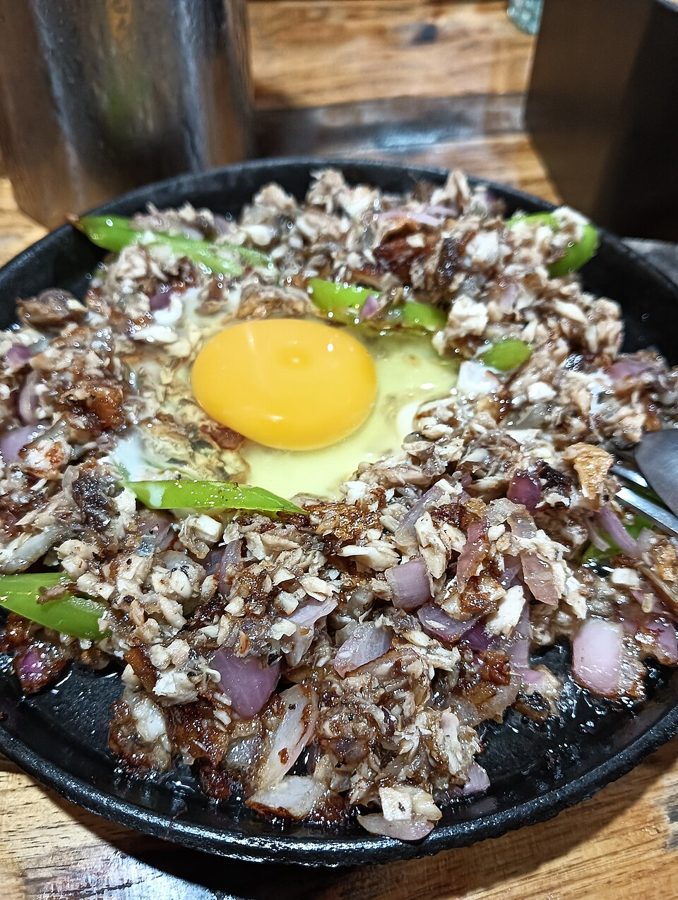
Tuna and bangus
Fish sisig is cooked from flaked fish fried until the edges crisp. Tuna sisig turns up on night-market grills in Davao. Bangus, milkfish, is the other common fish version and the one to try if you like the flavour of the fish; it is oily enough to stand up to the vinegar.
Tofu sisig
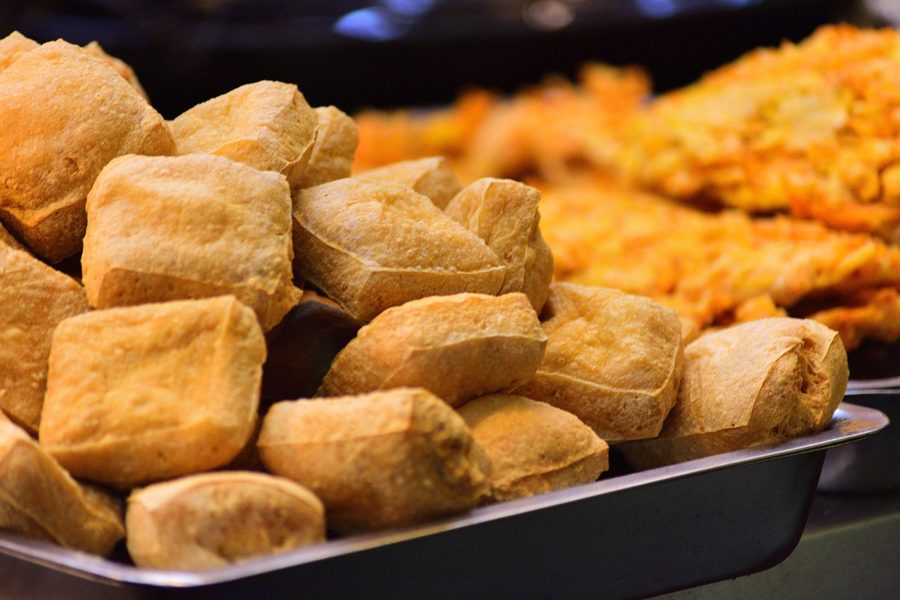
Firm tofu, pressed, cubed small and fried until golden on every side, then dressed like pork. It is the vegetarian sisig on most Filipino menus now, and it works because fried tofu takes on the sour and the chilli well.
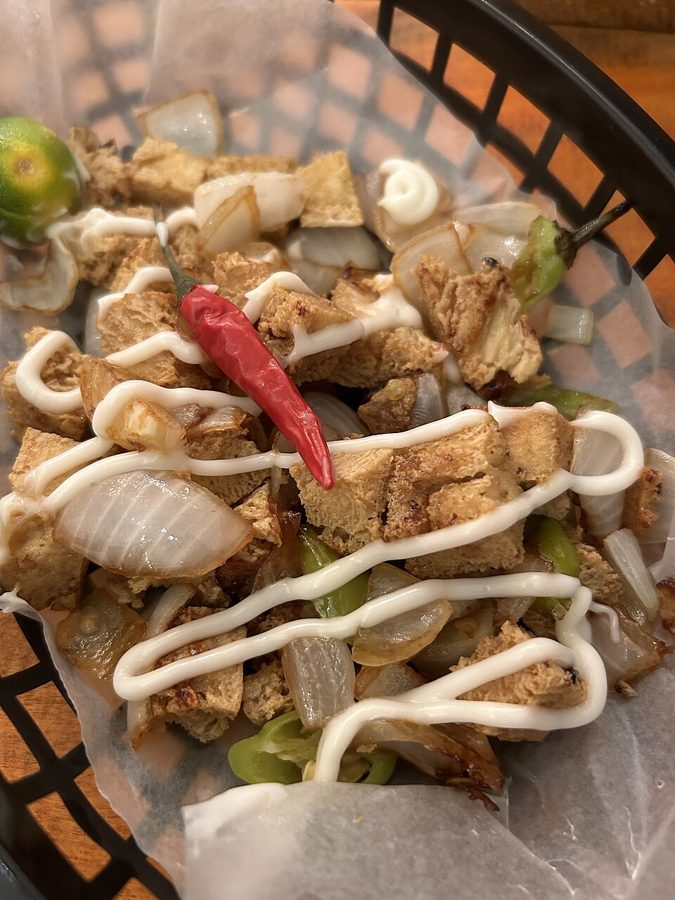
Mushroom sisig, made the same way with oyster mushrooms or button mushrooms fried until they brown, is another meatless version, and one you will meet in Bulacan.
Lechon sisig
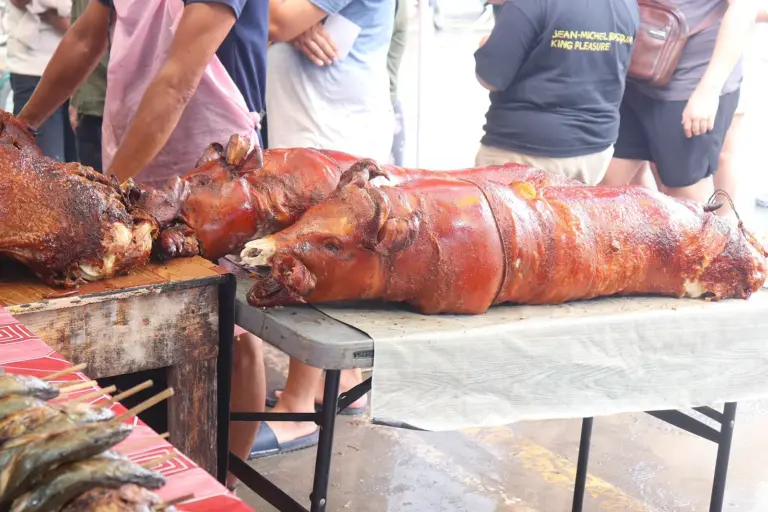
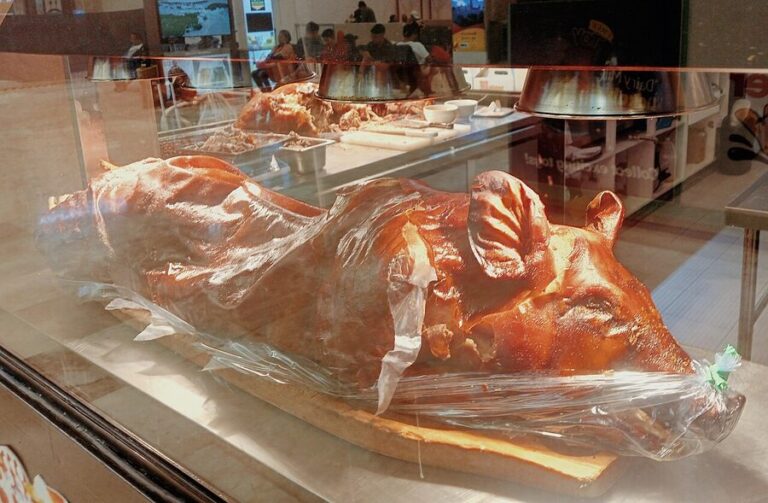
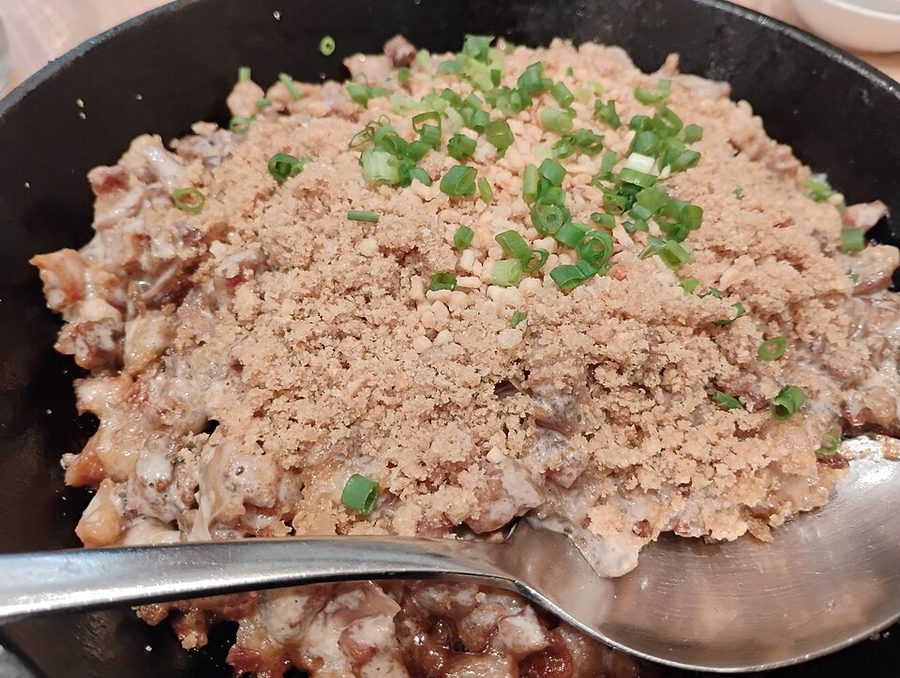
Where there is roast pig, there is lechon sisig the next day. Chop leftover lechon, meat and skin together, and fry it hard in a pan with onion before dressing it with calamansi. The skin is already crisp and the meat already seasoned, so it is the fastest sisig there is.
The cousins
Two other Filipino dishes start in the same place. Ilocano dinakdakan is grilled pig’s face and ears dressed with vinegar, onion and, traditionally, pig’s brain, served cold rather than sizzling. Tokwa’t baboy is boiled pork ears and belly with fried tofu in a soy and vinegar dressing. Order either next to sisig and the family resemblance is plain.
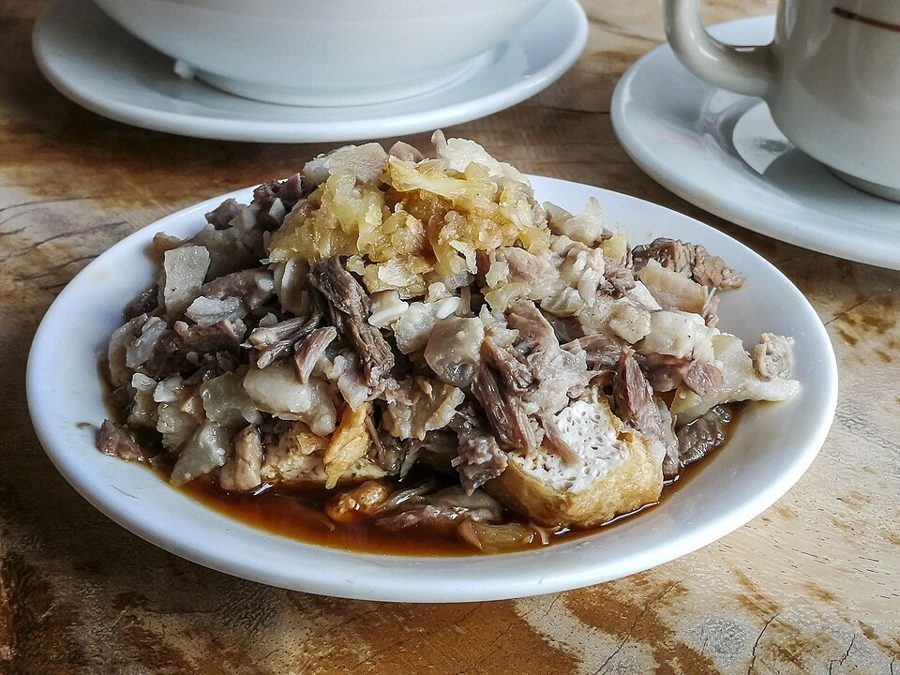
Where to eat it in Angeles
Angeles sits north of Manila beside Clark, and the sisig is the reason to stop. Go hungry and go at lunch or after dark, when the grills are going. All three below were open in 2026.

- Aling Lucing, G. Valdes Street, at the Crossing. The name that started it, still trading as The Sisig Queen in 2026. Go for the history and the grilled, mayonnaise-free original. Opinion in Pampanga is split on whether it is still the best in town; I would eat here first and then compare.
- Mila’s Tokwa’t Baboy, 195 San Andres Street. The Angeles sisig house the inspectors chose, and one of two Pampanga restaurants MICHELIN Selected in the 2027 guide. The inspectors single out the sizzling sisig on a cast-iron plate and the locally made soy sauce that sweetens the seasoning a little. Cash only.
- Tito Boy, Clark. A 2027 Bib Gourmand with Filipino comfort cooking, including sisig croquettes. Not the place for the classic, but a good example of where the dish goes next.
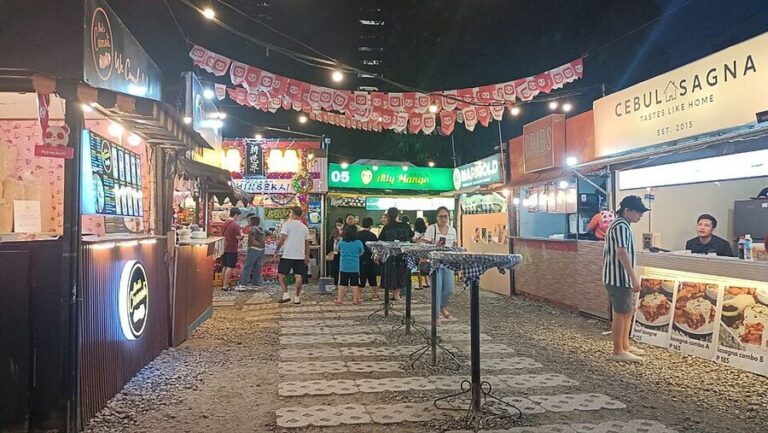
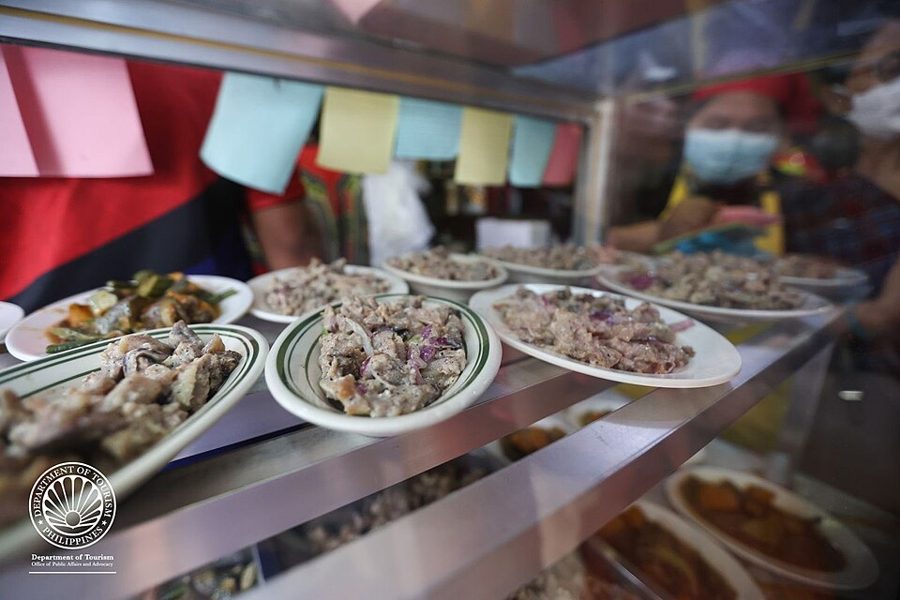
Roadside sisig is everywhere in Pampanga, from carinderia trays to grill stalls along MacArthur Highway, and much of it is good. Look for a stall where the pork is grilled in front of you and chopped to order, rather than sitting in a tray.
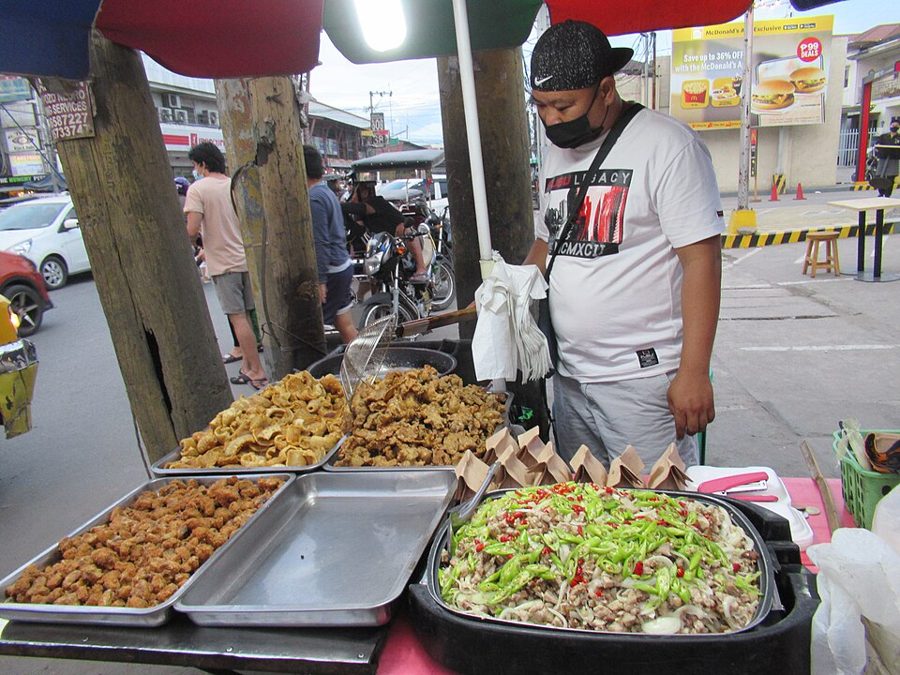
The Sisig Fiesta
Angeles has run a sisig festival on and off since 2003, first in December as Sadsaran Qng Angeles, paused after Aling Lucing’s death, and revived in 2017 as the Sisig Fiesta on G. Valdes Street. The 2017 ordinance sets it for the last week of April. At the 2019 edition the city cooked 60 kilograms of sisig on a single giant sizzling plate at the Crossing.
I could not confirm a date for the next one. If you are planning a trip around it, check with the Angeles City Tourism Office first; the city has also held sisig cooking workshops and demonstrations at other times of year.
Where to eat it in Manila and Cebu
Every bar and Filipino restaurant in Metro Manila has sisig, most of it the creamy kind. These places do it with more care, and all are in the 2026 or 2027 MICHELIN Guide selection.
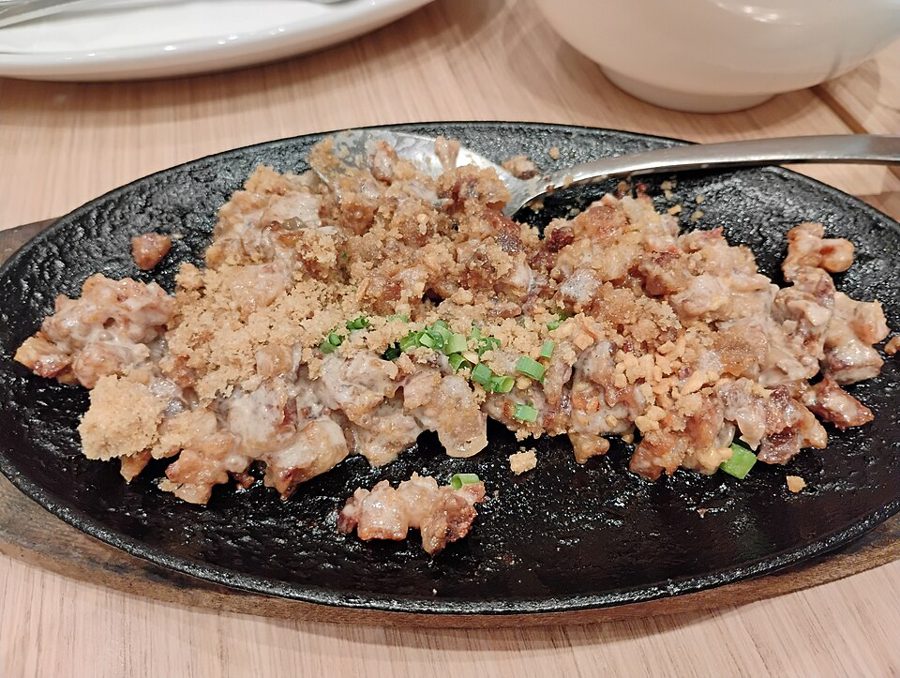
- Abé, Serendra, Bonifacio Global City, Taguig. Kapampangan cooking since 2006, with the walls hung with paintings and photographs by the man it is named after. The spicy sisig pampanga is crisp and springy and bright with calamansi. The closest thing to Angeles in the capital.
- Manam, the branch at the Triangle. Bib Gourmand, and the crispy sisig is the dish everyone orders.
- Sarsa. Unfussy Filipino cooking, and the MICHELIN inspectors picked its sisig as one of the dishes to try in Manila for its clean flavours.
- Locavore, Forbes Town Center, Burgos Circle, Bonifacio Global City. Modern Filipino; the oyster sisig is a long-time favourite and a good one to try after you know the original.
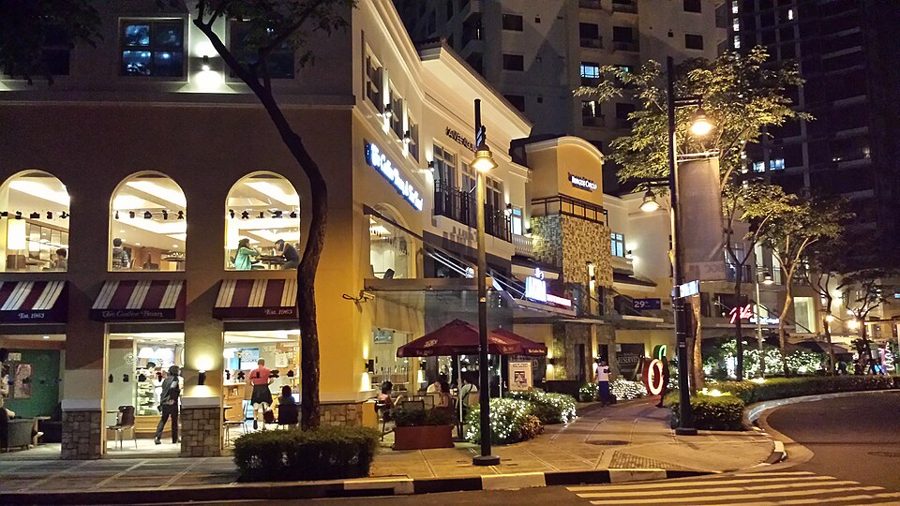
In Cebu, sisig is bar food first and the lechon houses do their own. COCO, on the second floor of Mactan Seaport Village in Lapu-Lapu, is MICHELIN Selected for a Filipino and Thai menu whose highlight is sisig with egg. House of Lechon in Cebu City does lechon sisig from its roast pigs.
Rice, beer and calamansi
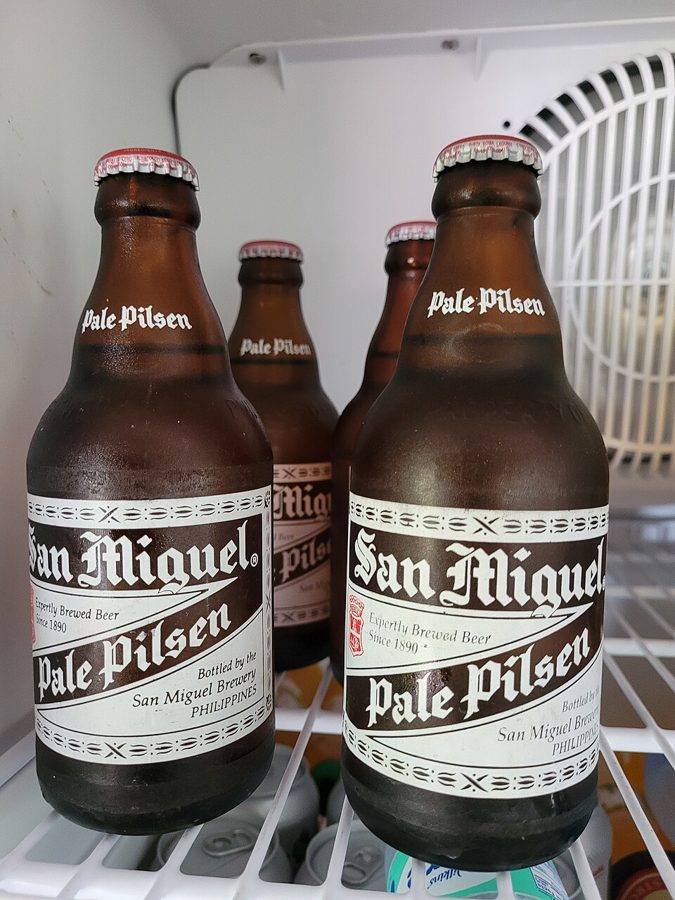
Sisig was invented as pulutan, food for drinking, and that is still how most of it is eaten: a shared plate in the middle of the table, everyone reaching in with spoons, cold beer alongside. In the Philippines that usually means San Miguel Pale Pilsen, and the MICHELIN inspectors who wrote up Abé reached for a cold beer too.
As a meal it goes with plain rice, which soaks up the fat and the calamansi juice from the bottom of the plate. Pampanga also eats it at breakfast with garlic rice and a fried egg, and a little dish of soy sauce with calamansi and chilli on the side does no harm.
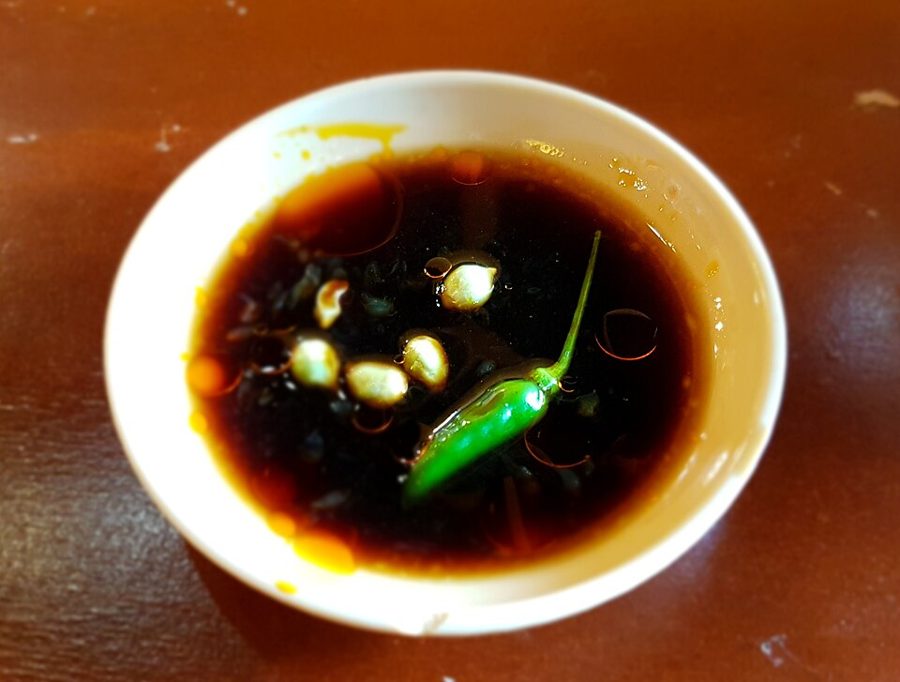
Squeeze the calamansi in two goes: once when the plate lands, and again halfway through, when the fat has warmed up and the first squeeze has faded. That second hit of sour is what keeps the last spoonfuls as sharp as the first.