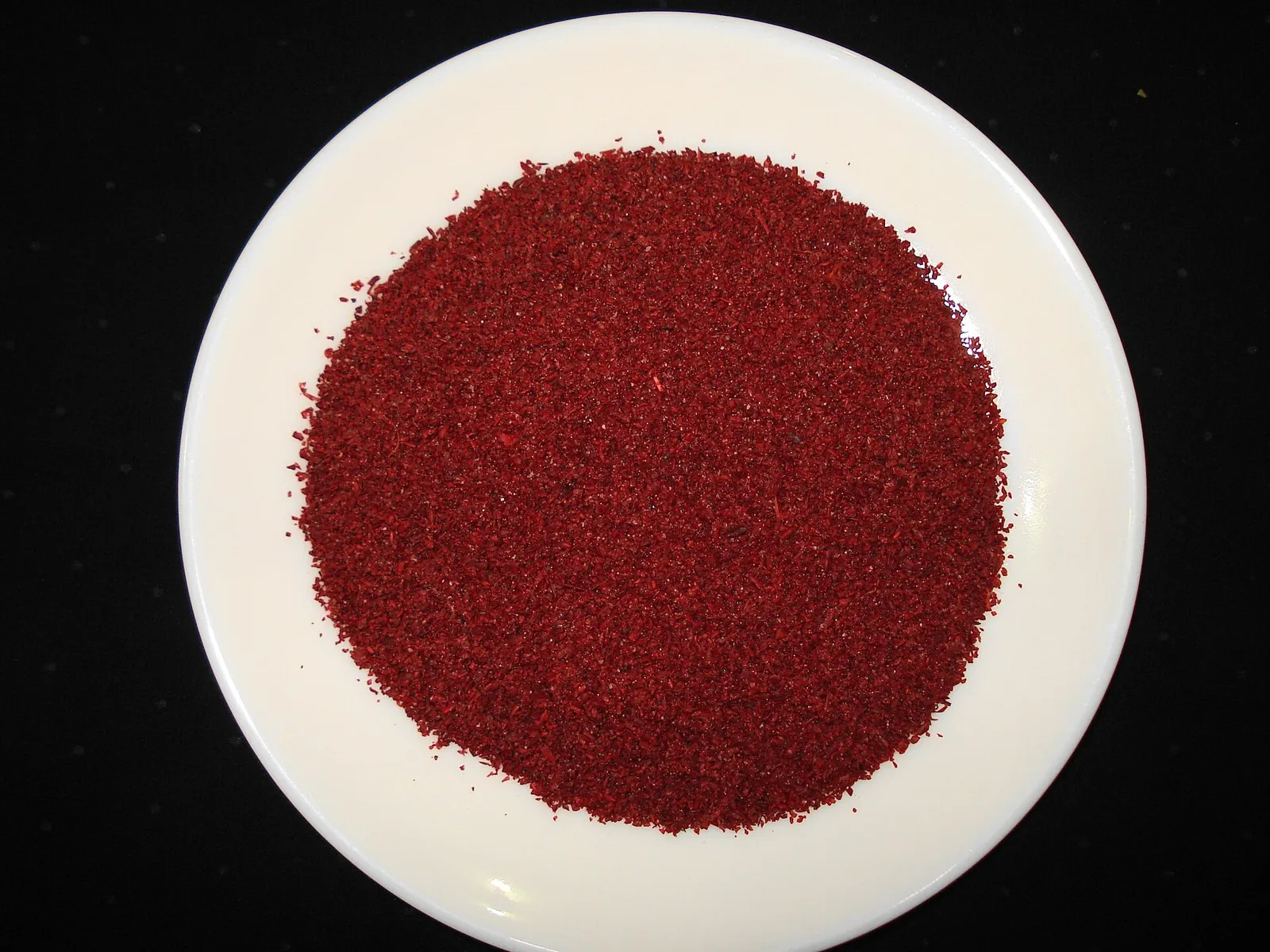
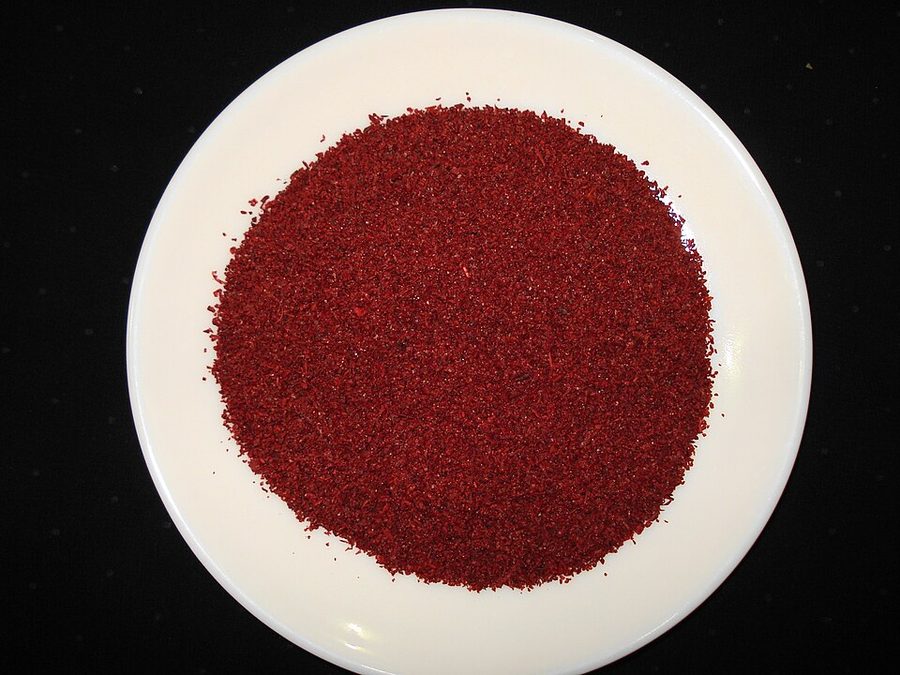
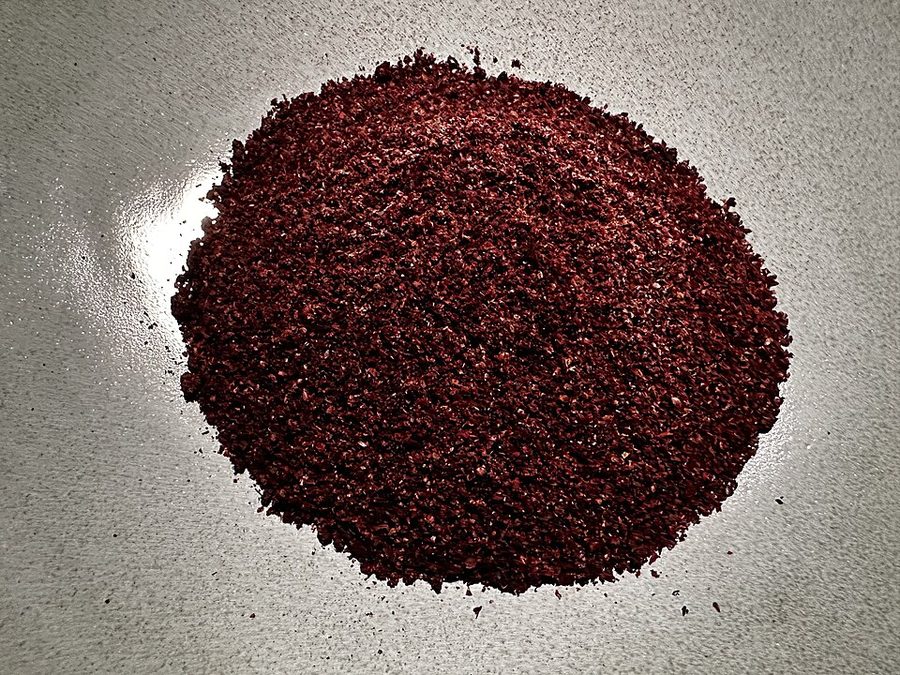
Sumac (سماق) is a sour you can sprinkle. In Lebanon’s mountain villages it did the job lemon does on the coast, and families still pick it at the end of August, dry the red clusters in the sun for about two weeks, beat the berries loose in sacks and carry them to the mill. What comes back is a coarse, dark red powder that sits next to the salt in most Lebanese kitchens.
It tastes like the skin of a sour apple, and for a good reason: the acid is largely the same. There is no juice to water down a salad and no peel to grate. You shake it on, it clings to whatever is wet or oily, and the dish turns sharper and a little fruity, with a faint saltiness if the jar was ground the Levantine way.
Outside the region most people treat it as red dust for the top of the hummus. That wastes it. Sumac is a seasoning in its own right: rubbed into onions it softens them, cooked into chicken it turns the oil crimson, and whisked into a dressing it lets you go easy on the lemon.
Contents 9 parts
- 01A sour berry from the pistachio family
- 02Poison sumac is a different plant
- 03Buying sumac: colour, salt and grind
- 04How Lebanon and its neighbours use it
- 05Sumac onions
- 06Musakhan-style sumac chicken
- 07Sumac dressing for fattoush
- 08Substitutes, and what not to reach for
- 09Buying sumac in Lebanon and bringing it home
A sour berry from the pistachio family
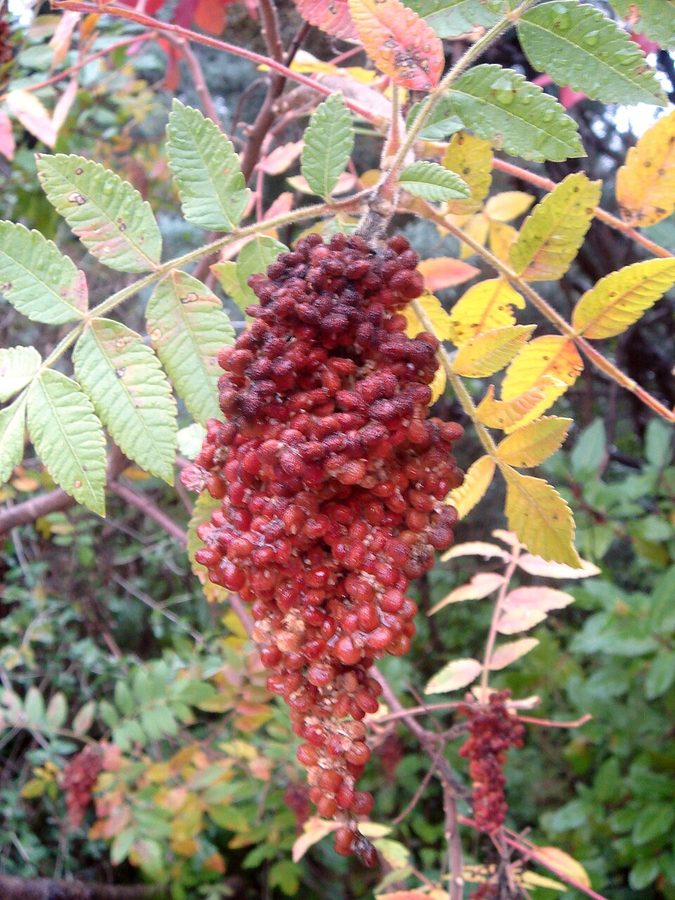
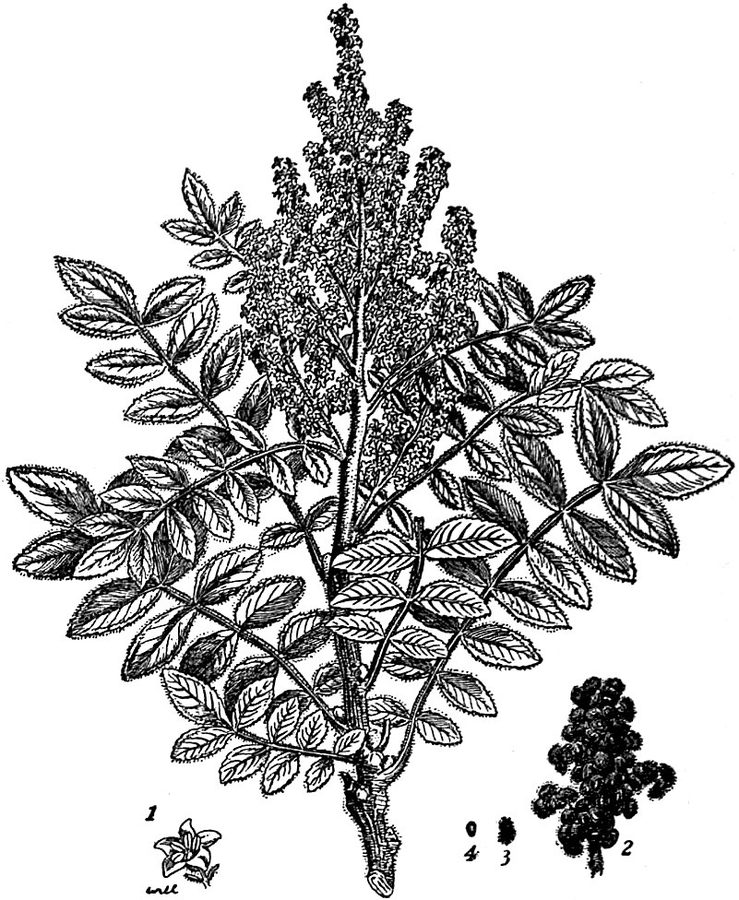
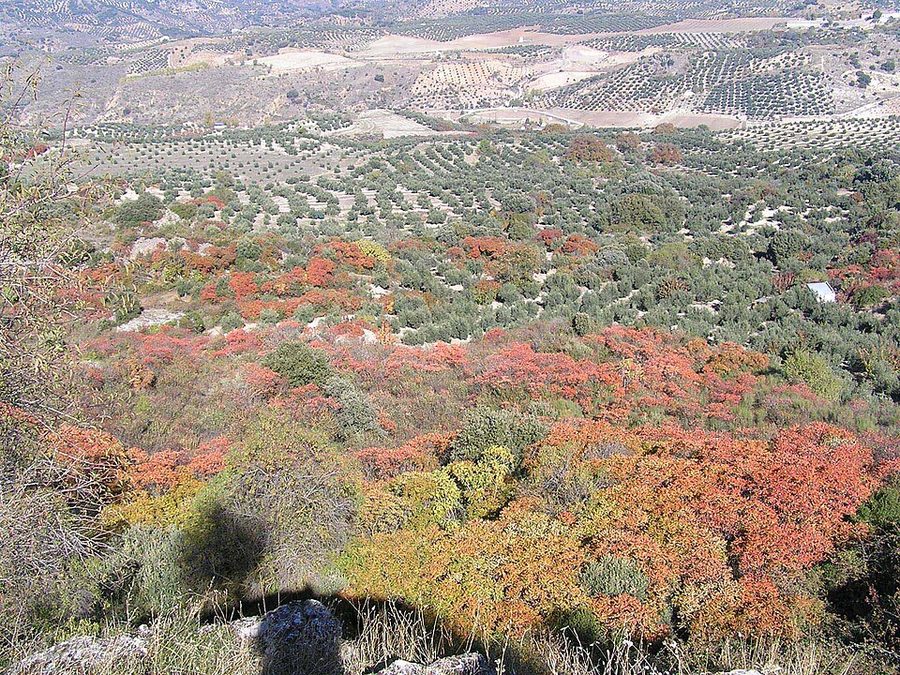
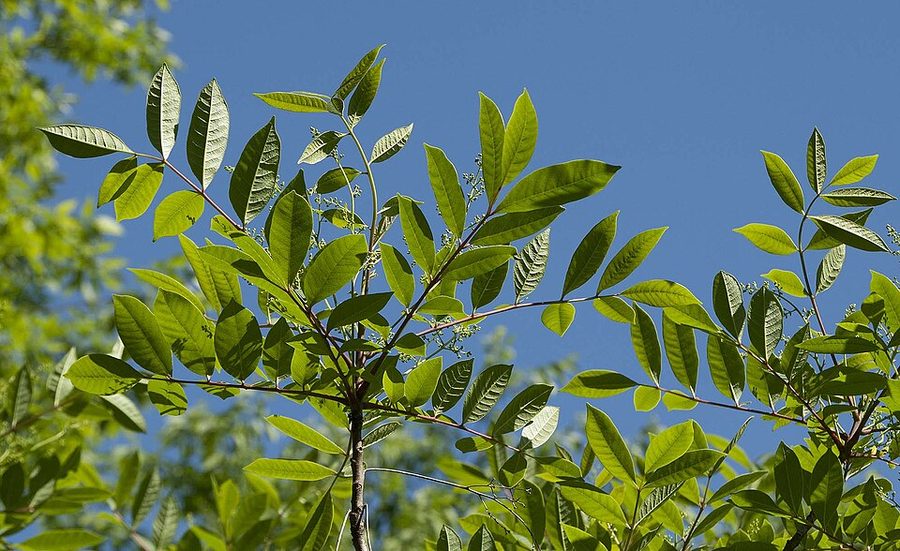
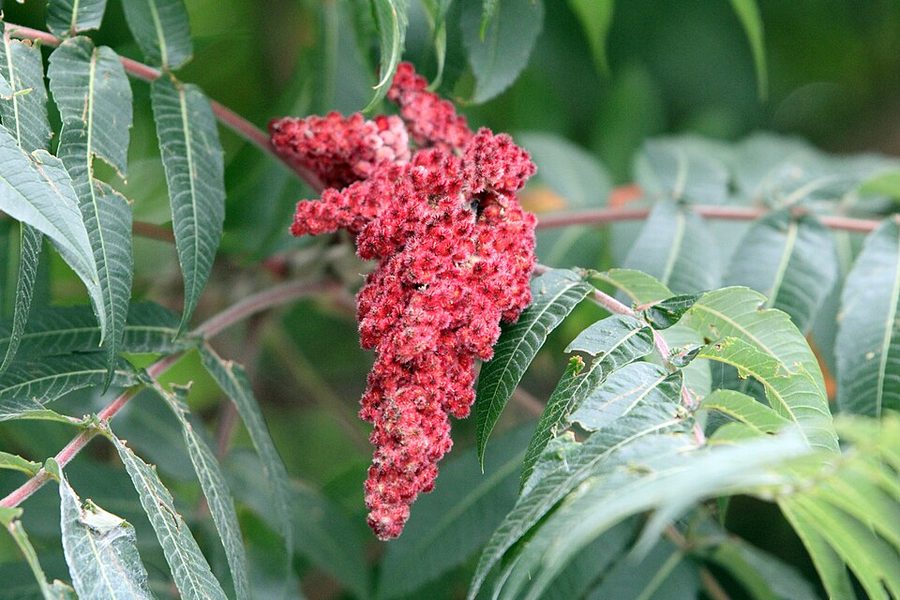
The spice comes from Rhus coriaria, a shrub that grows to about three metres on dry, chalky hillsides around the Mediterranean and into western Asia. Its leaves are long and feathered, with toothed leaflets. It flowers in May and June, and the fruit ripens in August and September into dense, upright cones of small red berries, each covered in fine sticky hairs and holding a single seed.
Arabic botanists call it summaq al-dabbaghin, tanner’s sumac, because the leaves are so rich in tannin (a quarter to a third of their dry weight) that they were used to cure leather. The English word took a long road to get here: Old French sumac, from Latin, from the Arabic summaq, from Syriac summaqa, which means red.
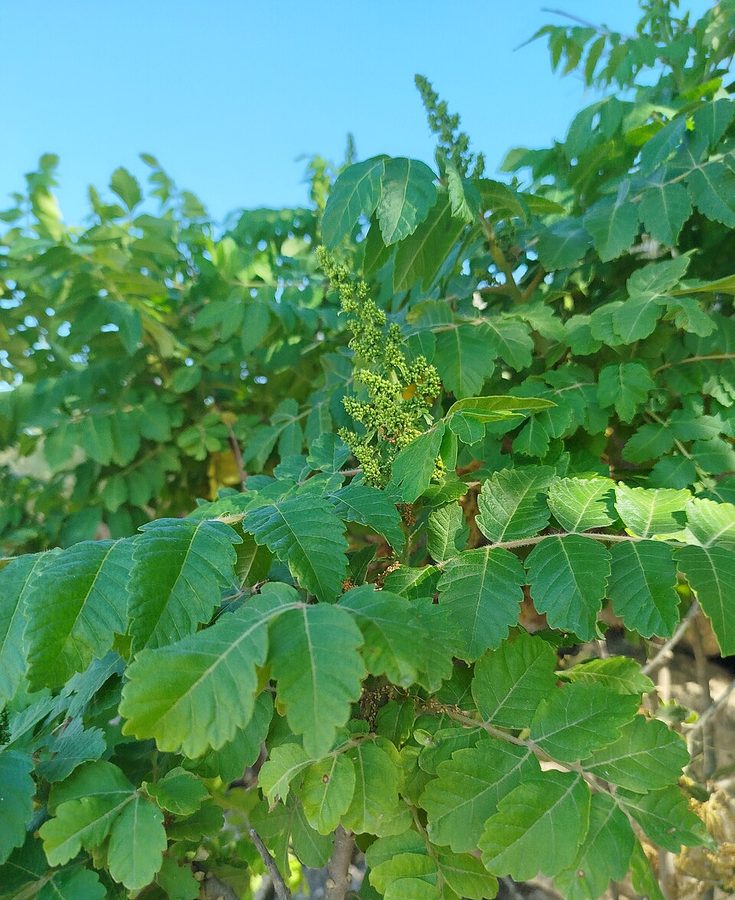
The family is the interesting part. In Arabic it is the butmiyya family, named after the terebinth, the wild pistachio of the Levant hills; in English it is the cashew family, which also holds mango. The sourness comes mostly from malic acid, the acid of green apples. If you are allergic to cashews or mango, check with your doctor before you start shaking sumac over everything.
Picked in late summer, beaten in a sack
Lebanese sumac is still picked by hand. In Kfarhilda, in the hills above Batroun, villagers describe the method in four steps: cut the clusters in late August, strip off the leaves and dry them in the sun for about two weeks, beat them in large sacks until the berries fall from the stalks, then pick out the stalks and take the berries to the mill. The Plants of Lebanon project, filming the harvest at Saqi Rechmaya in the Byblos district, describes sumac as a core part of mouneh, the store cupboard every mountain household fills before winter.
At the mill the berries are often ground with salt. That is why a lot of Levantine sumac tastes faintly salty, and why some sellers make a point of grinding it “without seed”, skin and hairs only. Syria grows it as a dryland crop in the Qalamoun mountains north of Damascus, and Spain and Sicily grow it too.

Sour before lemons were everywhere
Greek and Roman cooks used sumac where a modern cook reaches for lemon or vinegar, and in the Middle Ages it travelled west again in Arab merchants’ cargoes. Archaeologists excavating an 11th-century wreck off Rhodes in the 1970s found sumac berries aboard in commercial quantities.
The old Levantine trick was to make it wet. Whole sumac soaked in warm water, squeezed and strained, gives a deep red sour liquid that older Lebanese fattoush recipes use in place of lemon juice, and in Lebanon, Syria and Egypt cooks have long boiled sumac down to a thick sour paste for meat and vegetable dishes. It survives in dishes like kibbeh summakiyeh, kibbeh cooked in sumac water.
Poison sumac is a different plant
The fear comes from North America, where “poison sumac” grows. That plant is Toxicodendron vernix, once filed under Rhus and since moved into the same genus as poison ivy and poison oak. It carries the same oil, urushiol, that raises the itching rash and blisters.
It is easy to tell apart once you know what to look for. The FDA’s guide to poison ivy, oak and sumac describes a tall shrub or small tree of bogs and swamps in the Northeast, Midwest and parts of the Southeast, with seven to 13 smooth-edged leaflets and whitish-green fruits that hang in loose clusters. Edible sumacs hold their fruit up, in tight red cones, and their leaflets are toothed.
North America has its own edible sumacs. Smooth and staghorn sumac are native there, and their red berries have long been steeped in cold water and sweetened for a drink sold as “sumac-ade”. The spice in your jar is not one of them. It is Rhus coriaria, which does not grow wild in the Americas and arrives in sacks from Turkey, Syria, Lebanon and Iran.
Buying sumac: colour, salt and grind
Sumac keeps for months and is easy to buy badly. A few things on the label or in the scoop tell you most of what you need.
Colour and smell
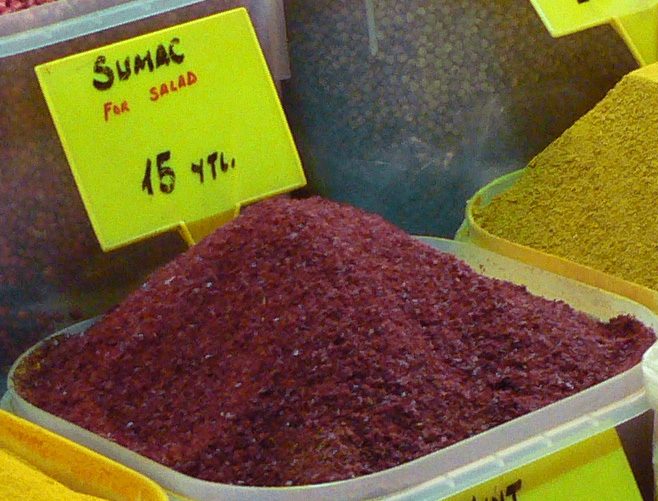
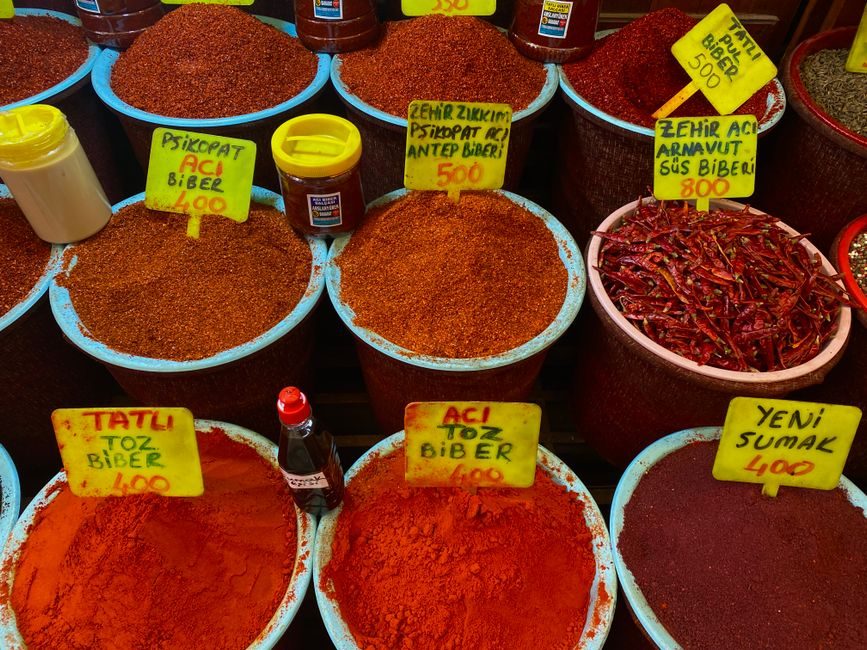
Look for a deep wine-red to brick-red, slightly moist, with a smell that is sharp and fruity before you even taste it. Brown, dry, dusty sumac is old. A red so bright and even it looks like paint is worth a question too: Lebanese village producers now advertise their sumac as “with no additives or artificial colours”, which tells you some sumac does not come that way.
Salted or not
Read the ingredients or, at a market, taste a pinch. Much of the sumac sold in Lebanon and Syria is ground with salt, and the Beirut daily L’Orient-Le Jour reminds readers that sumac bought in shops already contains it. That changes your seasoning: with salted sumac, hold back some of the salt in a dressing or a rub and taste before adding the rest. Unsalted sumac lets you control salt and sourness separately.
Coarse, fine or whole
Coarse sumac, in visible flakes, is for finishing: eggs, labneh, a plate of grilled meat, the top of a dip. Fine sumac disappears into dressings, marinades and spice blends. Whole dried berries keep longest and are the only form for sumac water, but you will need a spice grinder and a sieve for the seeds if you want powder.
The best grade in a Levantine shop is skin only, “peeled, without seed”. Because the sourness lives in the hairy skin, a sumac with the seed ground in is paler in taste as well as colour. If two heaps cost the same and one is noticeably redder and more sour, buy that one.
Where it comes from
A lot of the sumac in Western shops is Turkish, with Iranian, Syrian and Lebanese sumac in Middle Eastern grocers. Lebanese producers sell their own summaq baladi, village sumac, on being hand-picked and sun-dried with nothing added. Origin matters less than age: a fresh Turkish bag beats a tired Lebanese one.
Storage
Keep it airtight, dark and away from the stove. Sellers give it anything from six months to a year at its best, and the real test is your nose. If you buy a kilo in a Lebanese market, decant a month’s worth into a small jar and keep the rest sealed in the fridge, which slows the fading of colour and sourness.
How Lebanon and its neighbours use it
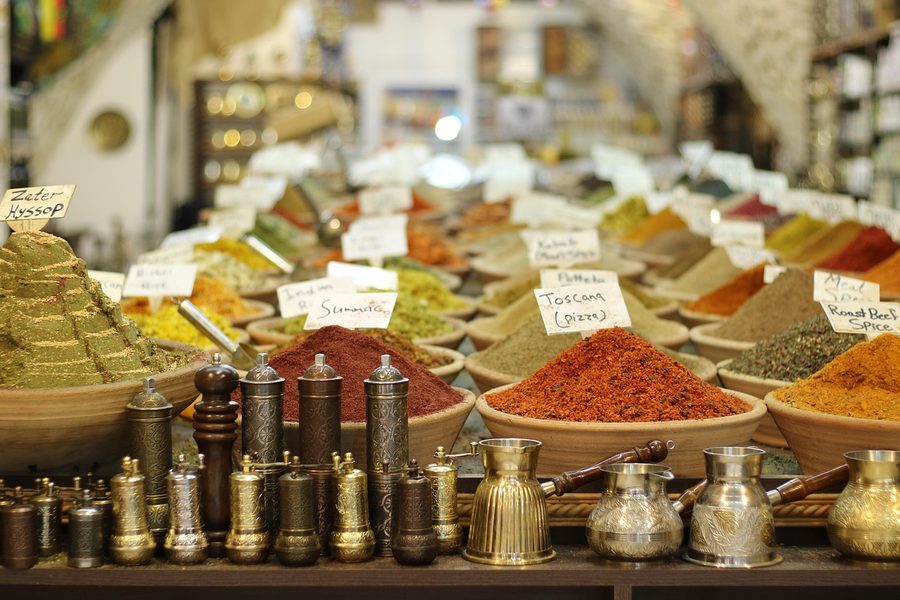
The Beirut daily L’Orient-Le Jour’s list of where sumac goes reads like a Lebanese day of eating: in za’atar, on labneh, in fattoush, in the sauce for falafel, over grilled meat and over fried eggs. Across the border and further east the uses change, but the idea is the same: sumac goes where you would otherwise squeeze a lemon.
Fattoush
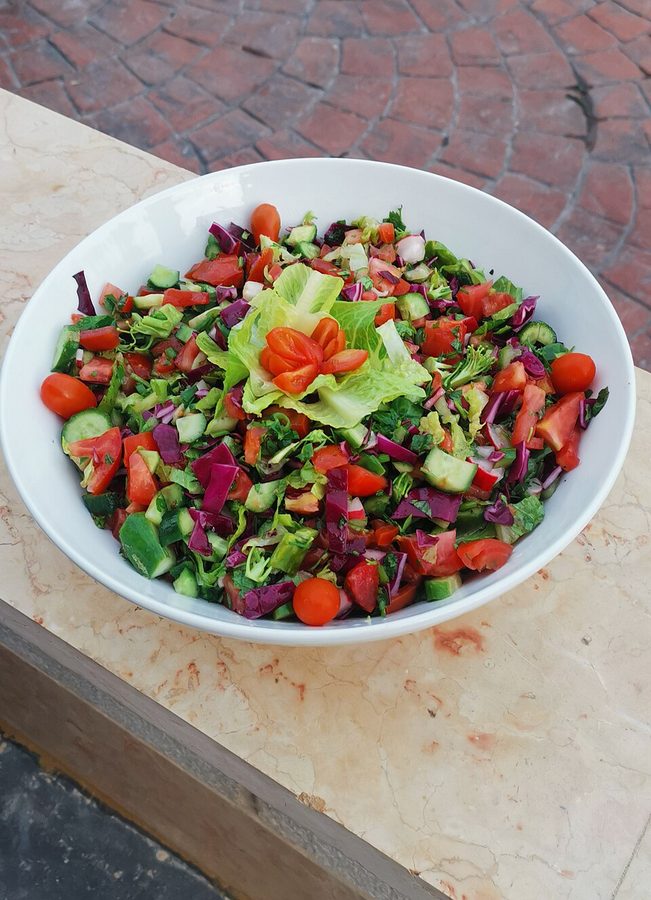
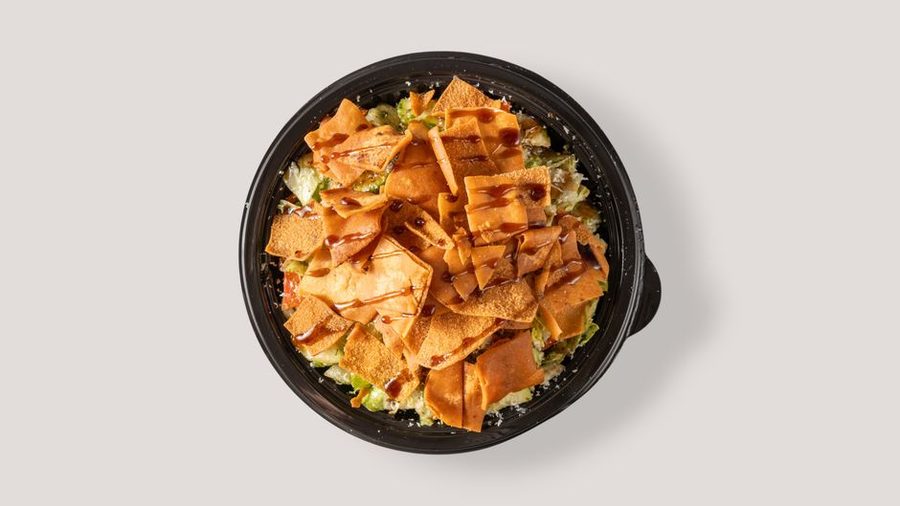
If one dish is built around sumac, it is fattoush, the Levantine salad of chopped vegetables and toasted or fried bread. The name comes from fatt, to break into pieces. Where tabbouleh leans on parsley and lemon, fattoush leans on sumac, with purslane, radish, mint and a dressing that turns pink as it sits.
Za’atar
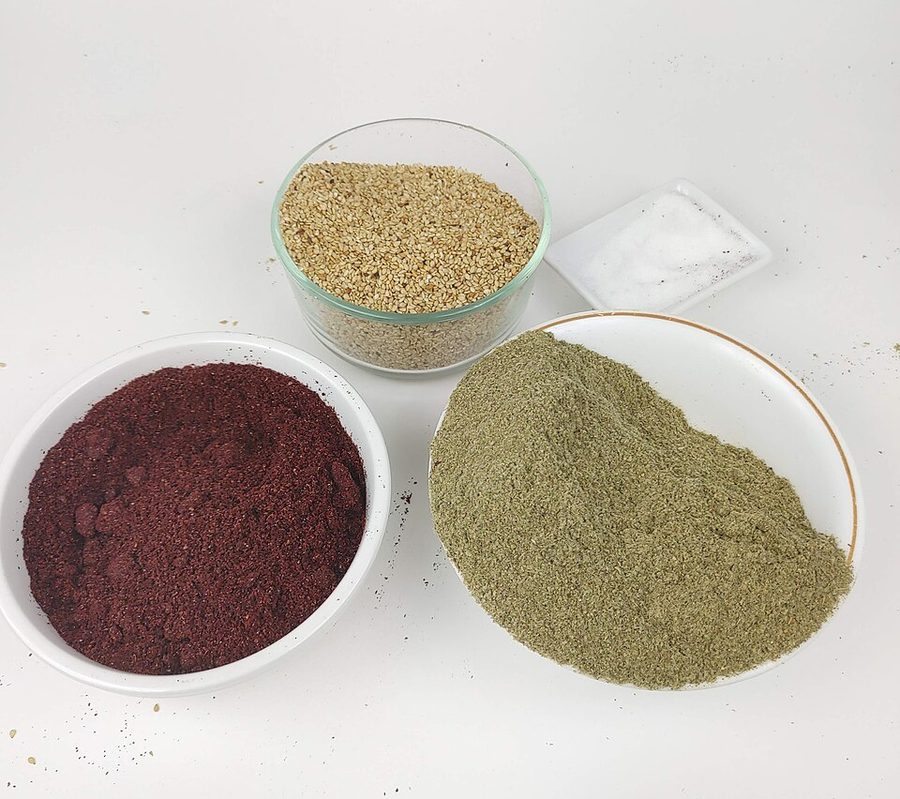
The blend called za’atar is the dried wild herb rubbed with sumac, toasted sesame and salt, and the proportions are a family argument. Spread with olive oil on dough, it becomes the morning manousheh of Lebanon’s corner ovens. Without sumac it tastes flat and dusty; with too much, it goes sour and purple.

On hummus, labneh and eggs
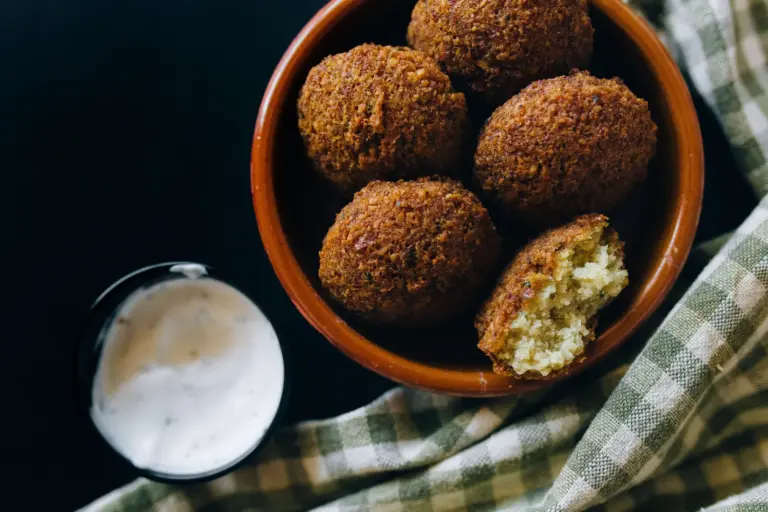
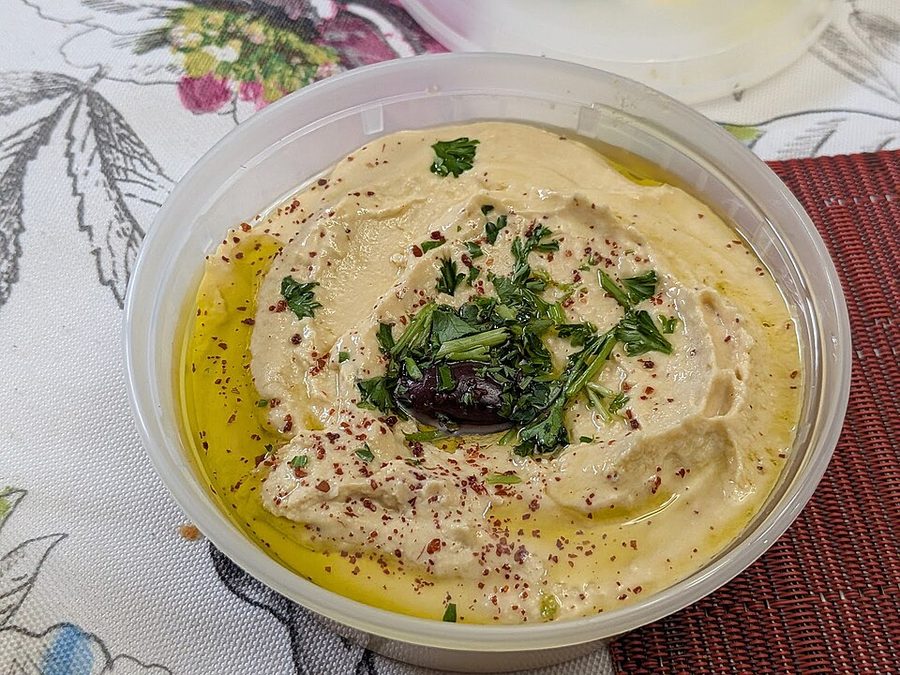
A pinch of sumac over hummus or labneh is where most people first meet it, and it is the one use where it does both jobs at once, colour and taste. Fried eggs are better still: a good pinch over the yolks as they come out of the oil. In Lebanon it also goes into the tahini sauce for falafel.
Onions with anything grilled
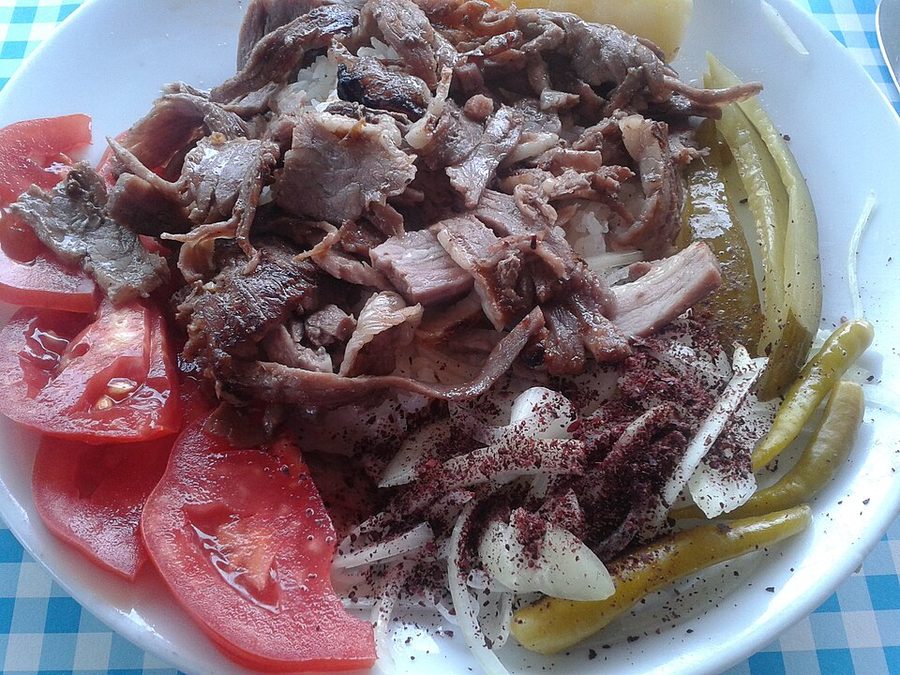
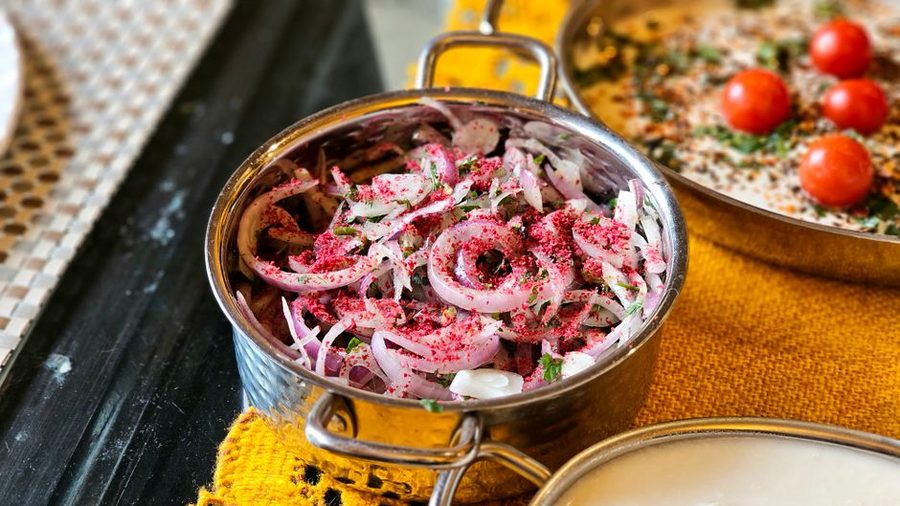
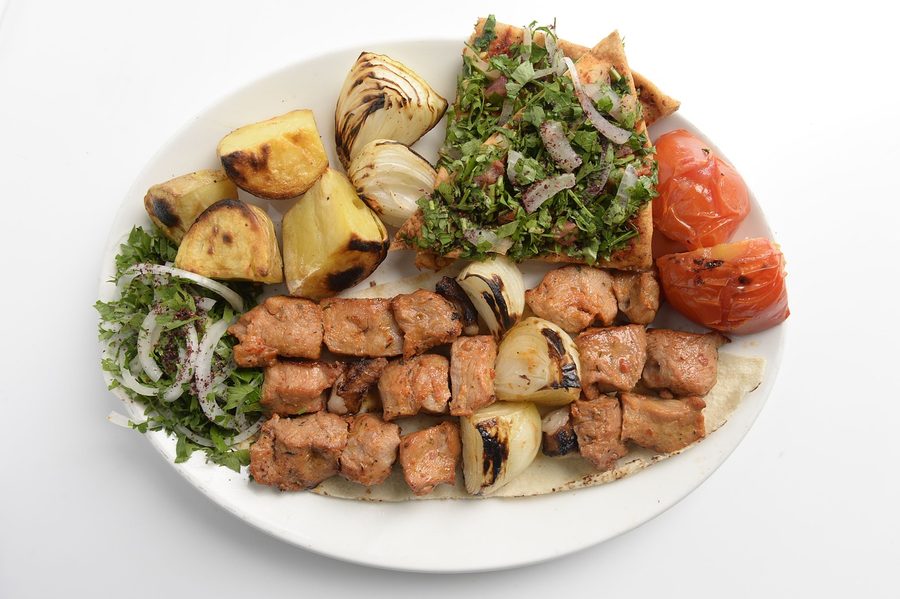
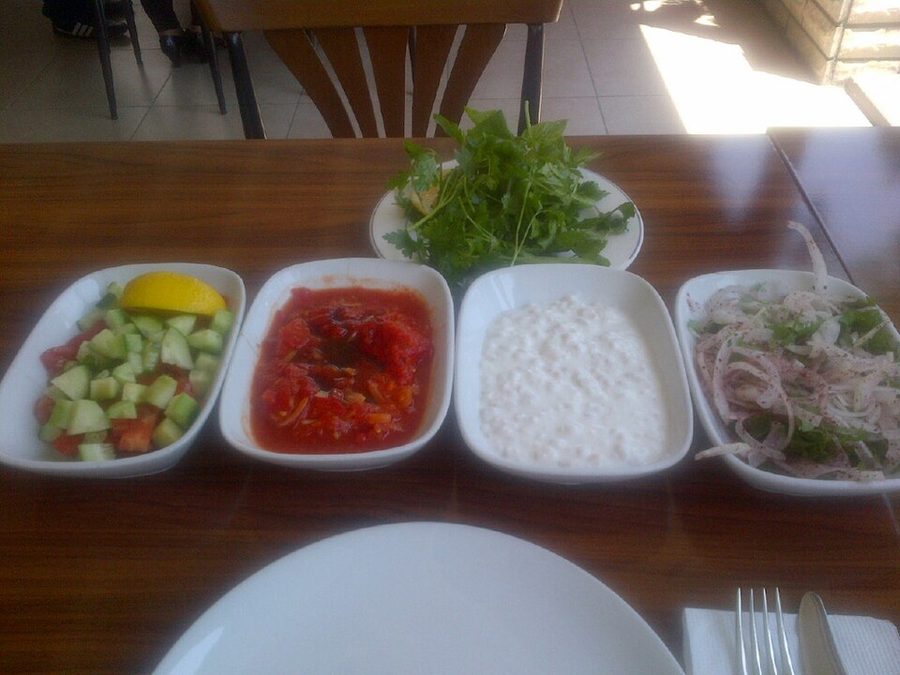
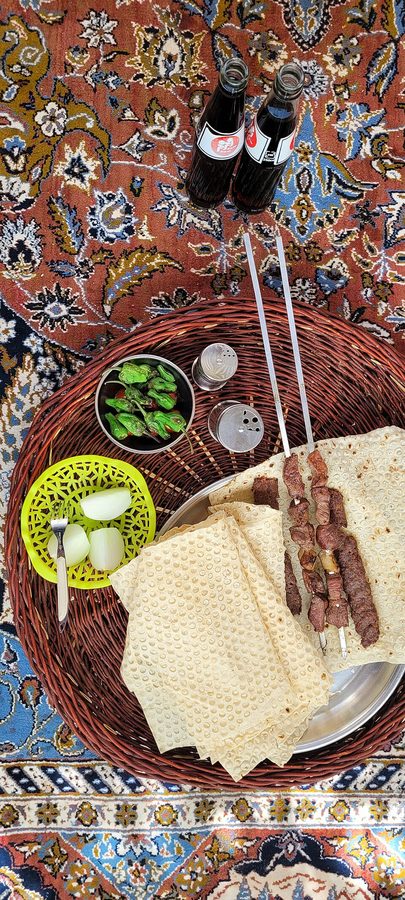
In Beirut grill houses and Turkish kebab shops alike, raw onion with sumac and parsley sits beside the skewers. The salt draws water out and takes the harshness away; the sumac adds sourness without making the onion soggy, as lemon juice would.
Musakhan
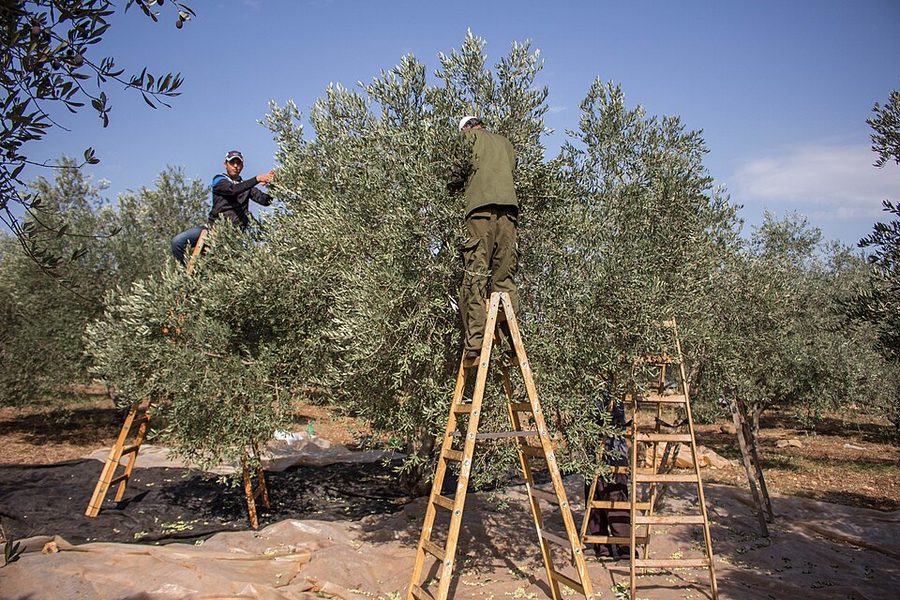
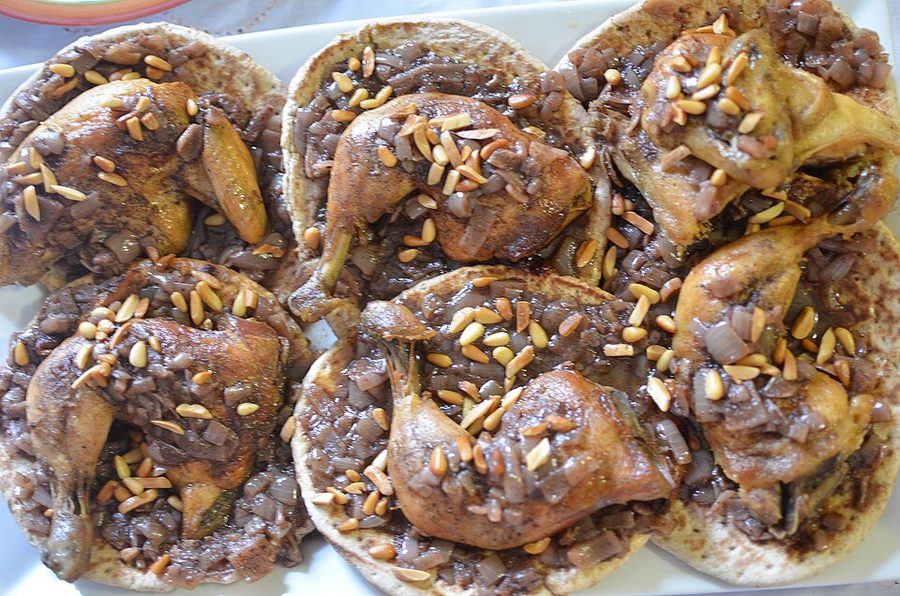
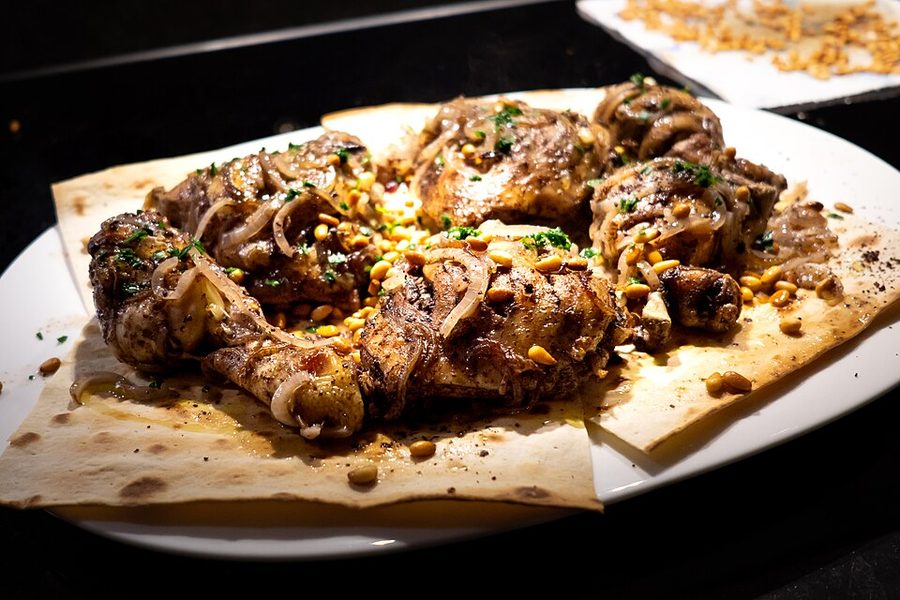
Musakhan is Palestinian: roast chicken on taboon bread under a thick layer of onions cooked in olive oil with sumac, scattered with pine nuts. It comes from the Tulkarm and Jenin area, it is the dish of the olive harvest, made when the new oil comes from the press, and it is eaten across Jordan, Syria and Lebanon too. The name means “the reheated one”, after the farmers’ habit of warming yesterday’s taboon bread; another name for it is muhammar, “the reddened”, because of the sumac.
Further east and north
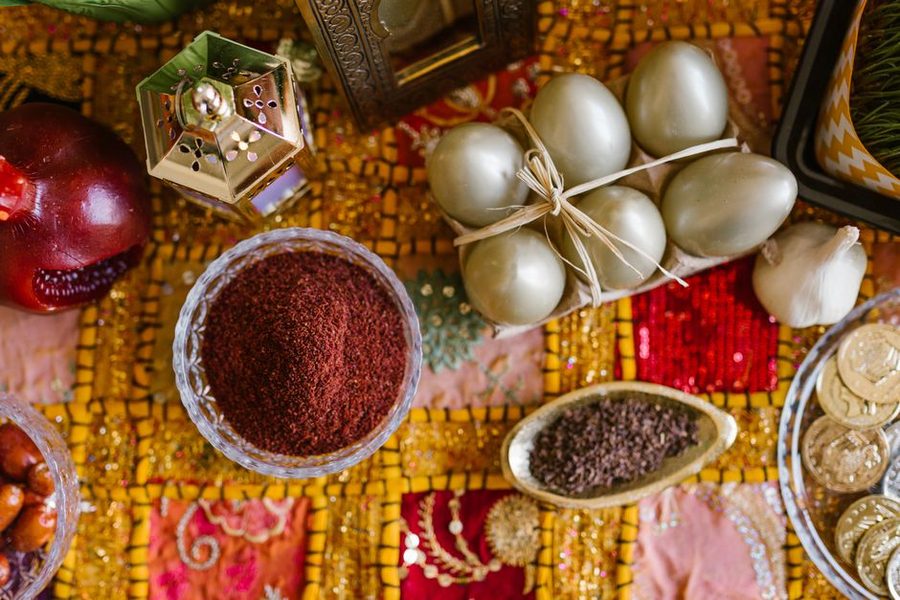
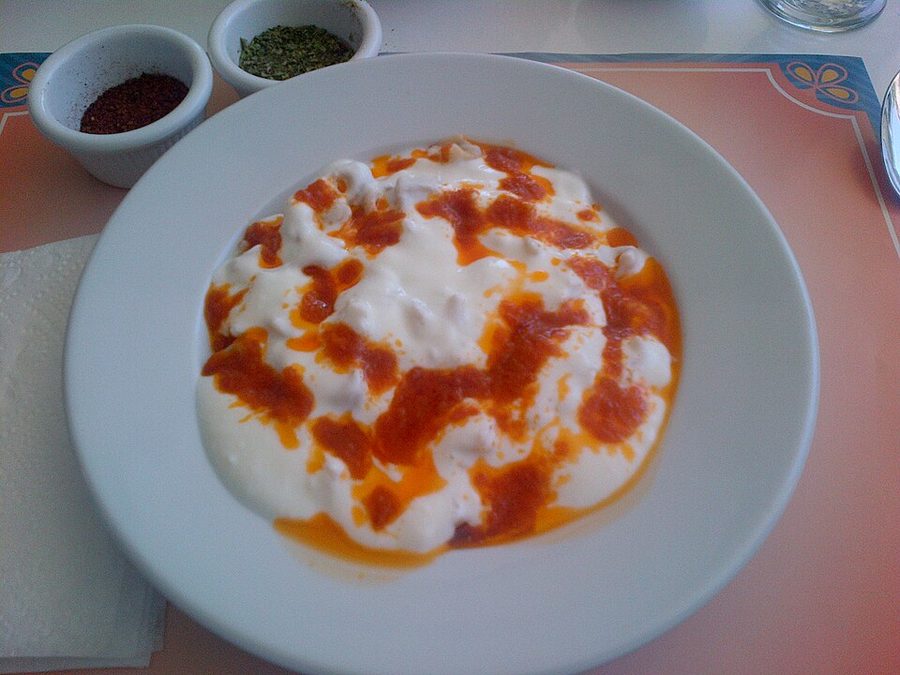
In Iran sumac is shaken over kebab and rice at the table, and a bowl of it is one of the seven items on the haft-seen table laid for Nowruz, the Persian New Year, each beginning with the letter s. Turkish cooks put a dish of sumac and one of dried mint beside a plate of mantı, the small dumplings in garlic yoghurt. And in Lebanon the spinach pies called fatayer are filled with spinach and onion seasoned with sumac and lemon, which is why a good one is sour enough to make you blink.
Recipe card
Sumac onions
The onions every grill house serves, and the fastest way to learn what sumac does. Recipes I checked in English and Arabic ran from one teaspoon of sumac for two onions to three tablespoons for one. I settled on a tablespoon for two, enough that the onions look red rather than dusted.
Serves 4 as a side. About 30 minutes, most of it waiting.
Ingredients
- 2 medium red onions
- ½ tsp fine salt (less if your sumac is salted)
- 1 tbsp ground sumac, plus a pinch to finish
- A small handful of flat-leaf parsley, chopped
- 1 tbsp olive oil (optional)
- 1 tbsp lemon juice (optional)
Method
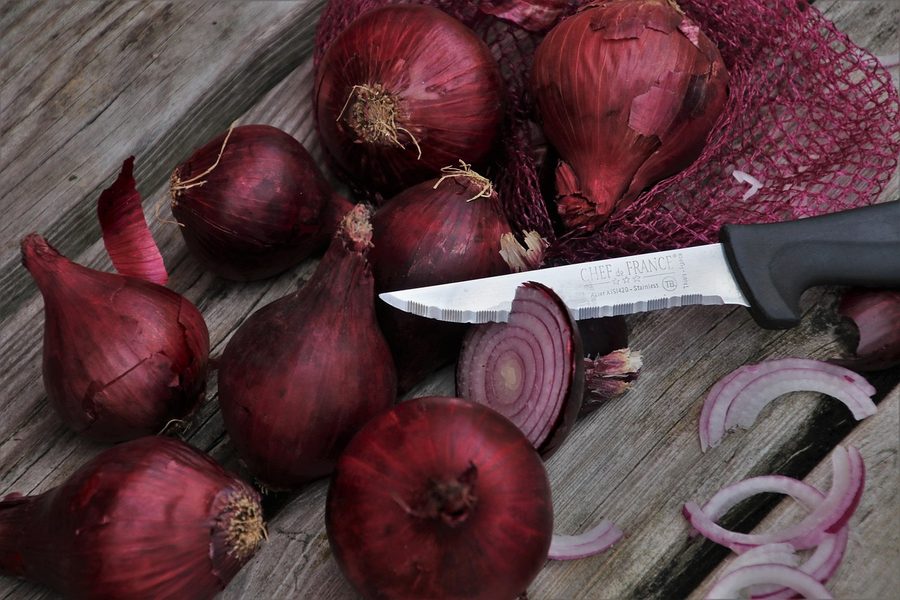
- Halve the onions through the root, peel them and slice each half as thinly as you can into half-moons.
- Put the onions in a bowl, add the salt and rub it in with your fingers until the slices start to soften and separate.
- Leave for 20 minutes, then squeeze the onions by the handful and pour off the liquid in the bowl.
- Add the sumac, parsley and the oil and lemon if you are using them, and toss until every slice is stained red.
- Serve straight away for a sharp onion, or rest 20 to 30 minutes for a softer one. Taste for salt and sourness and finish with a pinch of sumac.
They are sharpest on the day and mellow over the next two or three; covered in the fridge they keep for up to five days. Pile them into a wrap with grilled chicken, onto a plate of kafta, or beside the musakhan below.
Recipe card 2
Musakhan-style sumac chicken
A home version of the Palestinian dish, roasted rather than baked in a taboon. I cross-checked three recipes, two in Arabic and one in English. One boils the chicken before baking; I roast it, because the skin crisps and the fat ends up in the onions.
They also disagree on when the sumac goes in, and I side with the cook who stirs it in off the heat: cooked hard, sumac turns flat and earthy. Serves 4. About 1 hour 30, including 30 minutes for the chicken to lose its fridge chill.
Ingredients
For the chicken
- 4 whole chicken legs, or 1 chicken cut into quarters
- 1 tbsp ground sumac
- 1 tsp ground allspice
- 1 tsp salt
- 2 tbsp olive oil
For the onions
- 6 large onions, thinly sliced
- 100 ml (scant ½ cup) olive oil
- A pinch of salt
- 3 tbsp ground sumac
To finish
- 3 taboon or markouk breads, or the thickest flatbread you can find
- About 2 tbsp olive oil
- 50 g (⅓ cup) pine nuts, toasted
- Extra sumac, and plain yoghurt to serve
Method
- Rub the chicken with the sumac, allspice, salt and oil, pushing some under the skin. Leave at room temperature for 30 minutes.
- Heat the oven to 200°C (400°F). Roast the chicken skin side up on a rack over a tray for 40 to 45 minutes, until the skin is dark bronze and the juices run clear at the thigh joint. Keep the fat in the tray.
- While it roasts, cook the onions in the 100 ml of oil with a pinch of salt in a wide pan over low heat for 35 to 40 minutes, stirring every five minutes, until they collapse and turn pale gold. Do not let them brown.
- Take the pan off the heat and stir in the 3 tbsp of sumac and the fat from the roasting tray. The onions should taste almost too sour; the bread will tame them.
- Brush the breads with the remaining oil and a spoonful of the onion oil, lay them on a baking tray, spread the onions over in a thick layer and sit the chicken on top.
- Return to the oven for 10 minutes, until the bread edges crisp. Scatter with pine nuts and a little more sumac, rest for 5 minutes and serve with yoghurt.
Recipe card 3
Sumac dressing for fattoush
This is the dressing that makes fattoush taste of something. Most of the recipes I compared in English and Arabic crush garlic with salt and add dried mint, and the lemon-to-oil ratio runs from three to one down to about half and half.
I use equal parts, sharp enough to stand up to fried bread. Enough for a fattoush for 4. About 5 minutes.
Ingredients
- 1 garlic clove
- ½ tsp salt
- 60 ml (4 tbsp) lemon juice (1 large lemon)
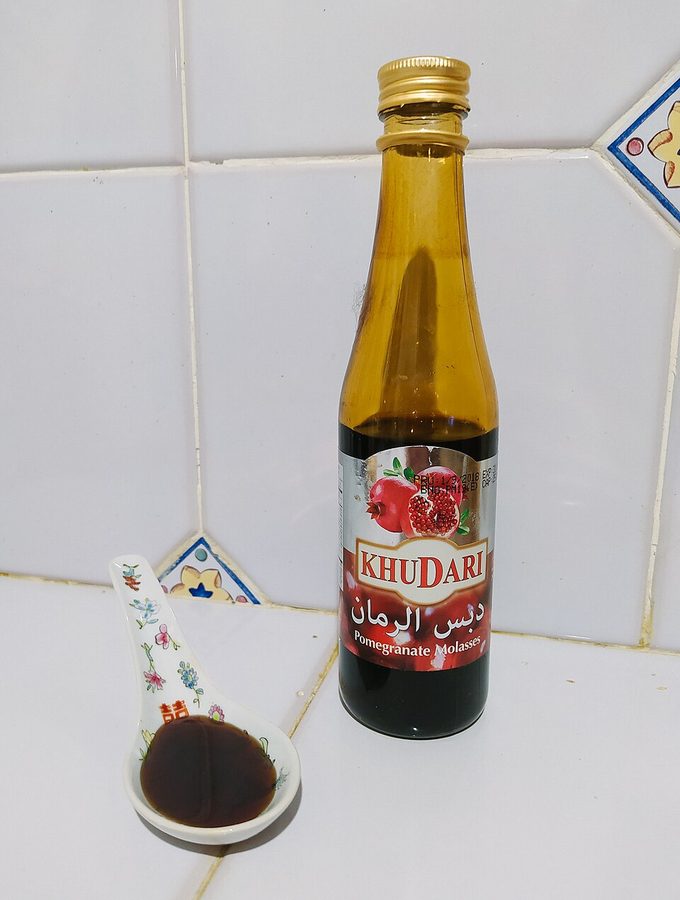
- 1 tbsp pomegranate molasses
- 1 tsp ground sumac, plus more for the salad
- ½ tsp dried mint
- 60 ml (4 tbsp) olive oil
Method
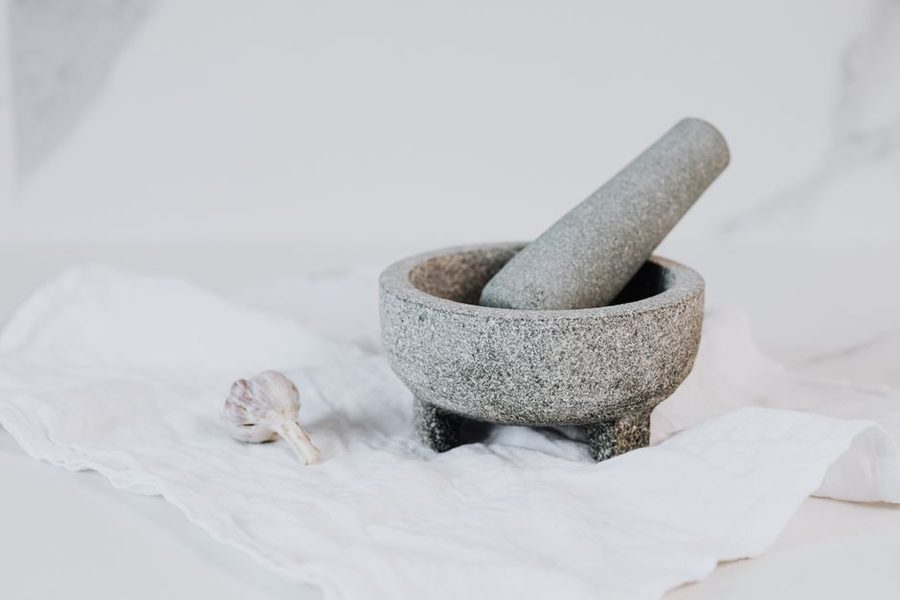
- Crush the garlic with the salt to a paste, in a mortar or with the flat of a knife. The salt grips the garlic and stops it sliding about.
- Whisk in the lemon juice, pomegranate molasses, sumac and dried mint.
- Whisk in the olive oil, taste, and add more salt or lemon until it is sharper than you would want on its own.
- Toss with the salad just before it goes to the table, so the bread stays crisp, and dust the top with sumac.
For the older version, make sumac water instead of using lemon: soak whole sumac berries in three times their weight of warm water, squeeze them hard, strain, and use the red liquid in place of the lemon juice. It is less sharp than lemon and much redder.
Substitutes, and what not to reach for
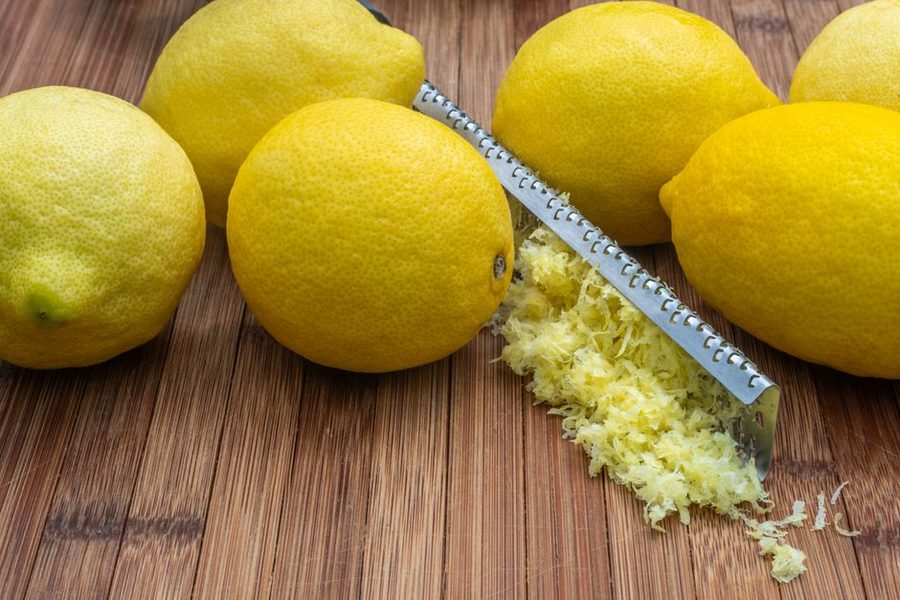
Nothing replaces sumac exactly, because nothing else is sour, dry and fruity at once. For a finishing sprinkle, finely grated lemon zest with a pinch of salt is the closest match; it is brighter and loses the fruit, but it does the job on eggs and grilled meat. In a dressing, lemon juice alone is fine, and a spoonful of pomegranate molasses brings back some of the fruit and colour.
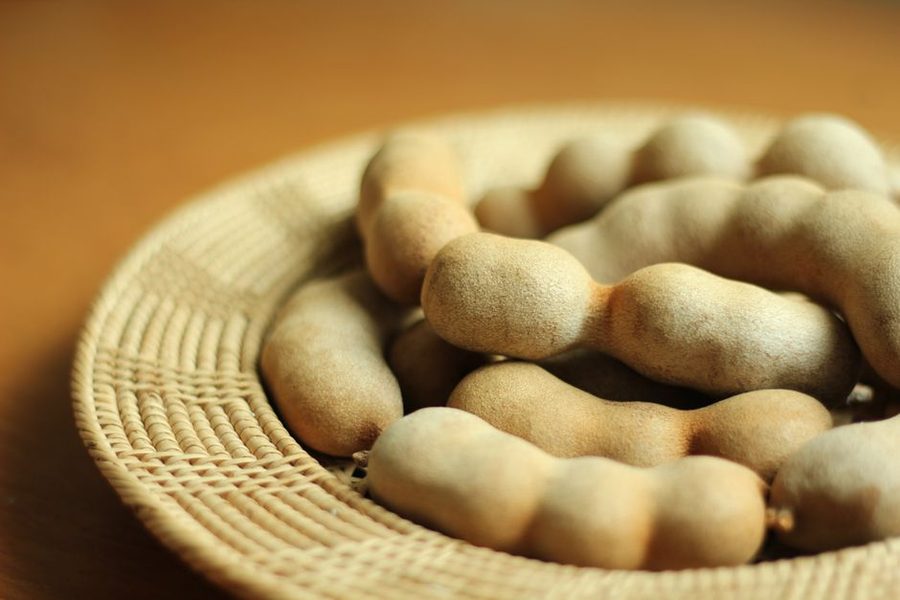
Tamarind, the souring agent behind Filipino sinigang, works in cooked dishes and marinades, but it is darker and sweeter, so use less. Vinegar is wet and harsh and will make onions limp; keep it out of anything that should stay crisp.
Do not reach for paprika because the colour is close. It gives the look of sumac and none of the sourness, which is the whole point. Za’atar contains sumac but also the za’atar herb and sesame: lovely on eggs and bread, wrong in sumac onions or musakhan. And do not substitute anything foraged unless you are certain which plant it came from.
Buying sumac in Lebanon and bringing it home
In Lebanon sumac is sold by the attar, the spice and herb seller, and the place to see a row of them is Souk al-Attarin in the old city of Tripoli, named for the attars and still one of the liveliest lanes in the old souks, lined with spice, herb and incense shops. Ask for summaq baladi, ask whether it is salted, and taste before you pay. The new season’s sumac appears in the autumn, after the late-summer harvest, and that is the time to buy enough for the year.

Have it bagged and sealed in front of you, or decant it into a zip bag the same day, double-bagged so it cannot dust everything else in your case red. Dried spices are allowed into the United States once declared, and how to pack them and what other countries ask is in the guide to bringing food home. Whole berries are the one exception worth thinking about, because each holds a seed, and the American rules on dried spices and fruit seeds leave that call to the inspector.
Then use it like the mountain villages did, as the sour in the meal rather than the colour on top. Slice two onions tonight, salt them, and give them a full tablespoon.