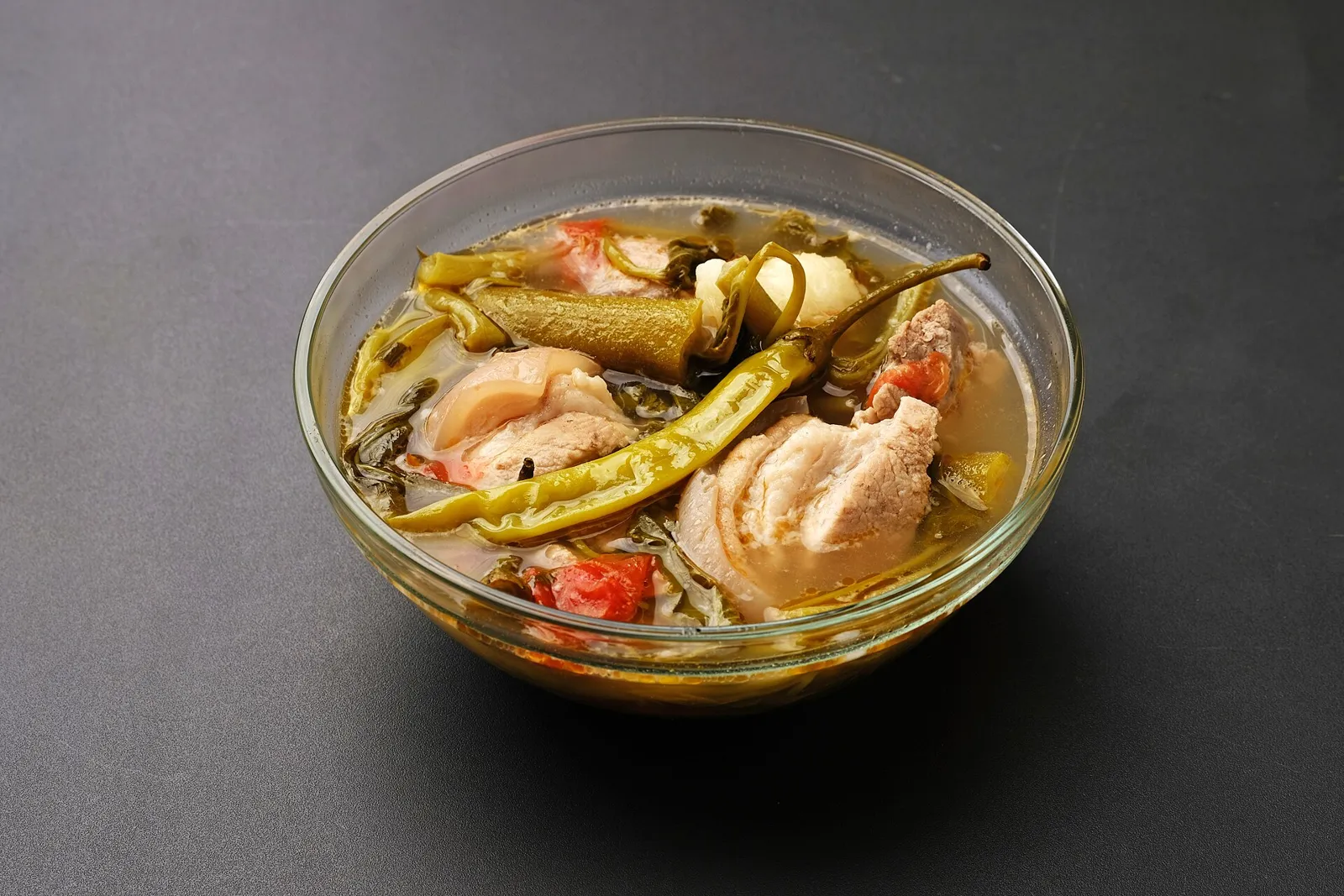
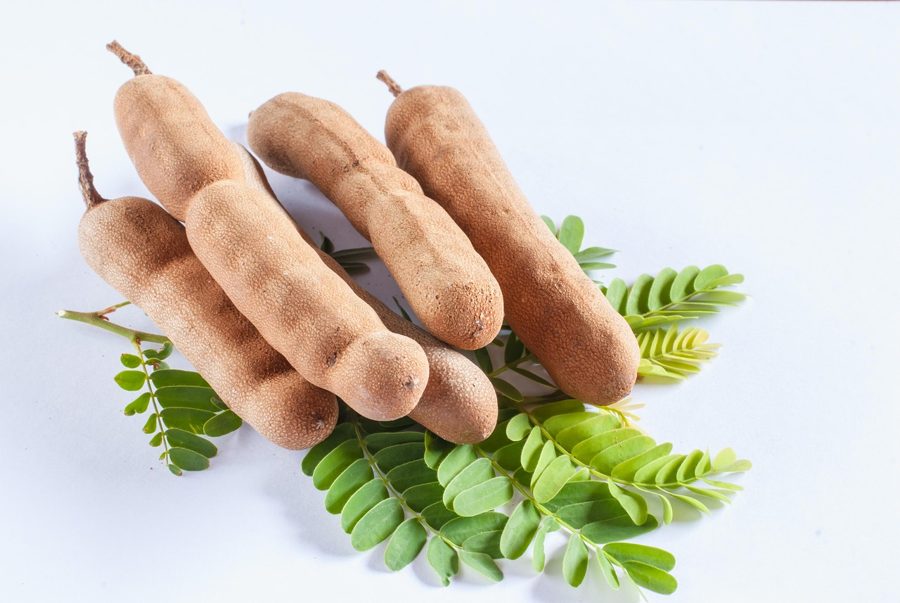
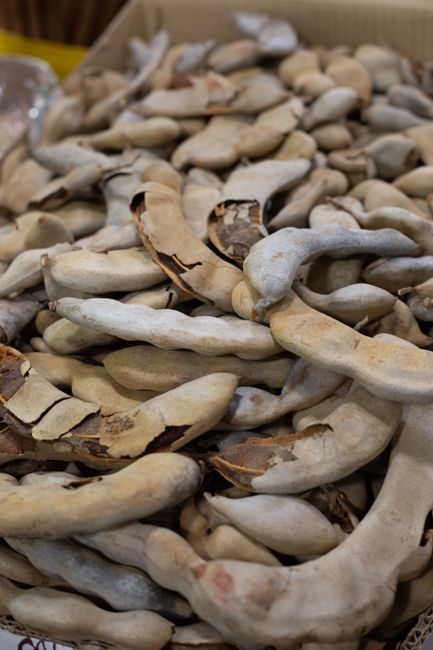
In a Filipino wet market, the tamarind that matters is the one nobody eats out of hand. It is the young pod, hard and grey-green, so sour that one bite clenches your jaw, and it is sold for a single job.
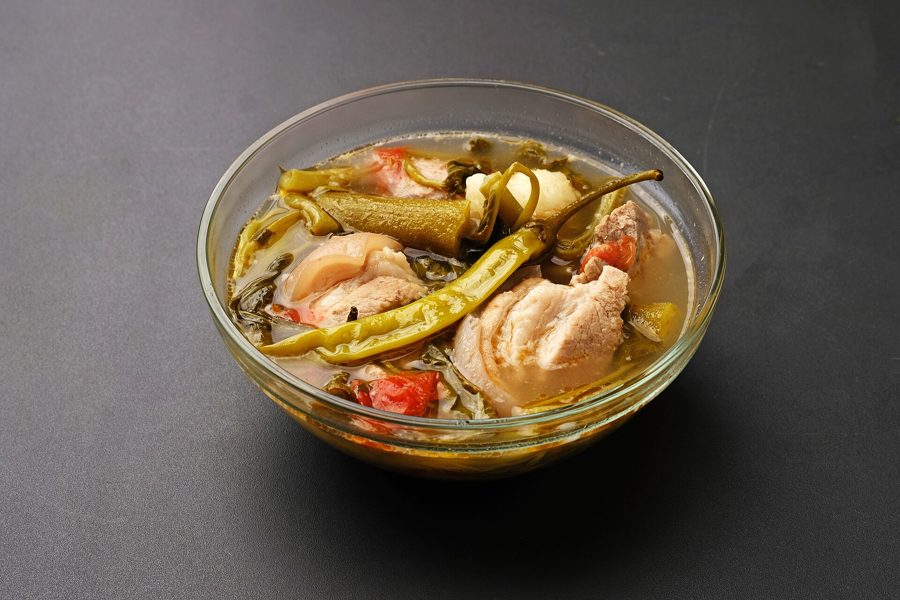
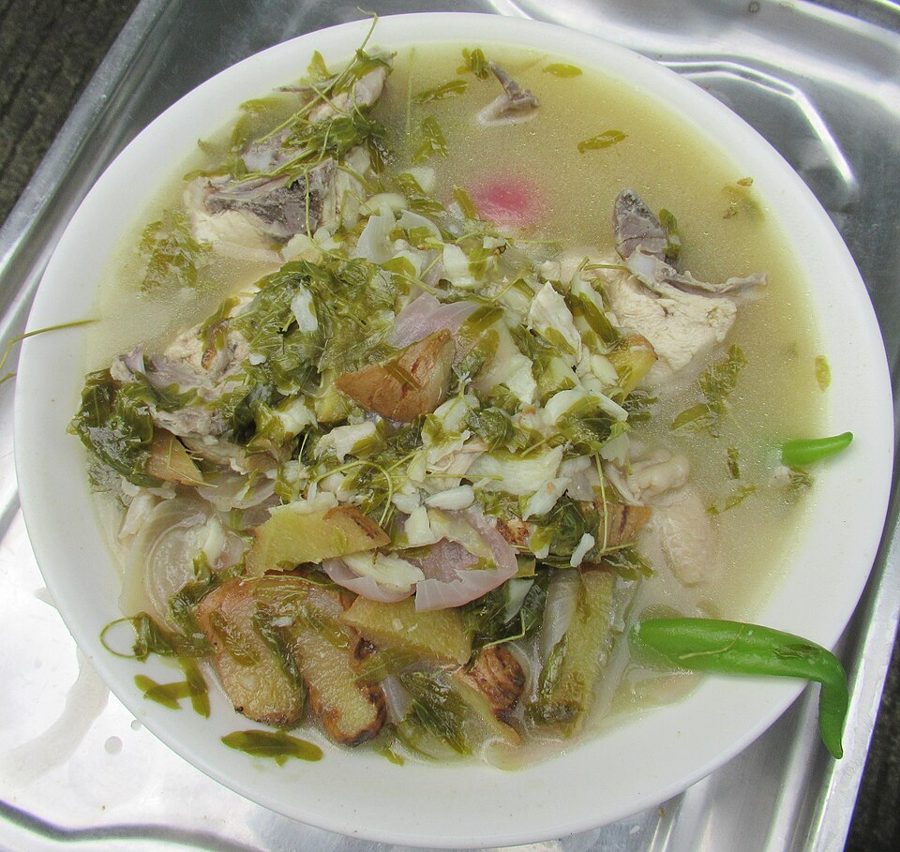
That job is sinigang. Simmer the pods until the skins split, push the flesh through a sieve, and what drips into the bowl is the sharp, cloudy liquid behind the soup every Filipino family has an opinion on: pork or shrimp, tamarind or guava, gabi or none, pod or packet.
Most of those arguments are settled by a sachet now, and on a weeknight I don’t blame anyone. But a pot soured with real sampalok tastes of fruit as well as acid, and the extra work, twenty minutes of simmering and a minute of mashing, happens while the pork cooks anyway.
Contents 9 parts
A sour broth, not a single recipe
The name comes from the Tagalog verb sigang, to stew. In older usage sinigang meant any meat or seafood cooked in a sour broth, set apart from paksiw, which is soured with vinegar. Tamarind became the default later. The method came first.
That makes it a cousin of chicken adobo, which is also a method before it is a dish: meat braised in vinegar and garlic until it keeps for days. Sinigang has the opposite temperament. It is cooked to be eaten the same day, hot, with rice, and its whole appeal is lightness.
Doreen Fernandez, the scholar who did more than anyone to put Filipino food on the page, wrote an essay called “Why Sinigang?” for The Culinary Culture of the Philippines in 1976. She called it “the dish most representative of Filipino taste”, meaning the lightly boiled and the lightly soured, made from whatever the land around the kitchen gave. Native cooks, she argued in another essay, worked without recipes and without fixed rules, using what was there.
In Tikim, her later collection, she quoted her collaborator Edilberto Alegre on the regional map of taste: the Ilocanos favour the bitter, the Bicolanos the hot, the Tagalogs the sour, the measured asim of sinigang. When she tried to answer what Filipino food is, she named sinigang and kinilaw among its most typical dishes.
The soup is seen as Tagalog in origin. The sour soups of the Visayas and Mindanao go by their own names, and Cebu’s linarang or the Western Visayas’ cansi are relatives, not regional sinigang. I come back to them at the end.
The packet and the pod
Most sinigang in the Philippines today starts with a sachet. Knorr’s own sinigang na baboy recipe uses one 20 g pack of its Sinigang sa Sampalok Mix for a litre of water, and the brand sells a 40 g pack for people who like it sharper. Mama Sita’s makes a rival mix, and both turn up in Asian groceries far from Manila.
The packet is not the enemy. It is consistent and fast, and a couple of generations grew up on it. What it lacks is fruit: the powder brings acid and its own salt, while a broth from young pods has a green, almost grassy sourness and a little body from the pulp, and the salt is yours to set.
The pods you want are unripe: firm, fuzzy and grey-green, with flesh that clings to the shell. Ripe tamarind, brown and brittle-skinned around a sticky sweet pulp, belongs in candy and in the tamarind syrup for market sodas. In a pot it gives a darker, sweeter, duller sour, and Filipino cooks are unusual in Southeast Asia for reaching past it to the green fruit.
Young pods are around for much of the year. In Southern Luzon markets they run from about May into February and are most plentiful around September and October; sources on the harvest give a peak anywhere from August to October. Outside that window, or outside the country, seedless tamarind pulp soaked in hot water, or a jar of tamarind paste, is the next best thing.
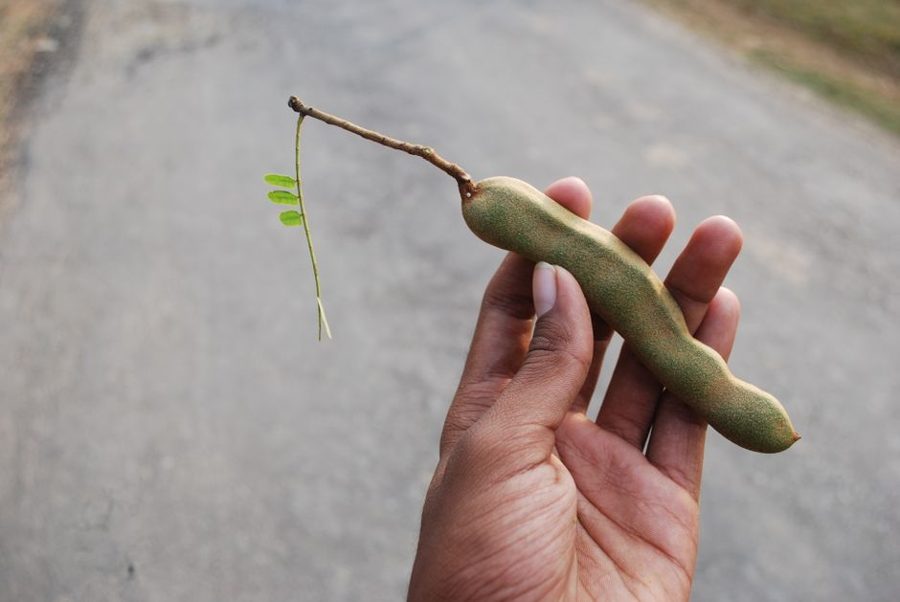
There is a supply story behind the pod. Local tamarind production has been falling for years, which is why the Department of Science and Technology’s farm research council backed a Tamarind R&D Center at Pampanga State Agricultural University in Magalang. It has grafted trees that fruit two years after planting and added 121 hectares of sour tamarind plantations in Central Luzon. Its first sour line, PSAU Sour 2, has been put forward for registration with the National Seed Industry Council.
Souring agents, region by region
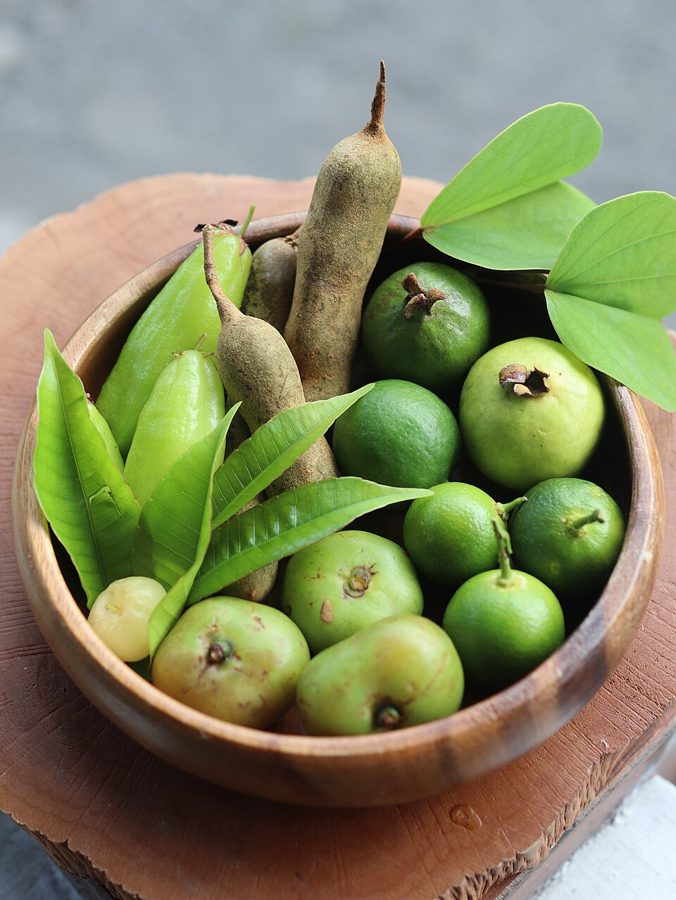
Sampalok is the default, not the rule. The list of things Filipinos sour a broth with is long and follows the trees: what grows in the yard, or in the next province, decides the pot. Every hot-country kitchen keeps a sour, and where Lebanon dries and grinds sumac, the Philippines boils whatever green fruit is nearest.
Sampalok (young tamarind)
Young tamarind gives the clean, sharp sour most Filipinos mean when they say sinigang, and the unripe pods carry far more acid than ripe ones. Some cooks add the young leaves too. Chicken soured with tamarind leaves, sinampalukang manok, is counted as its own dish, because the chicken is sautéed with ginger first instead of going straight into the pot.
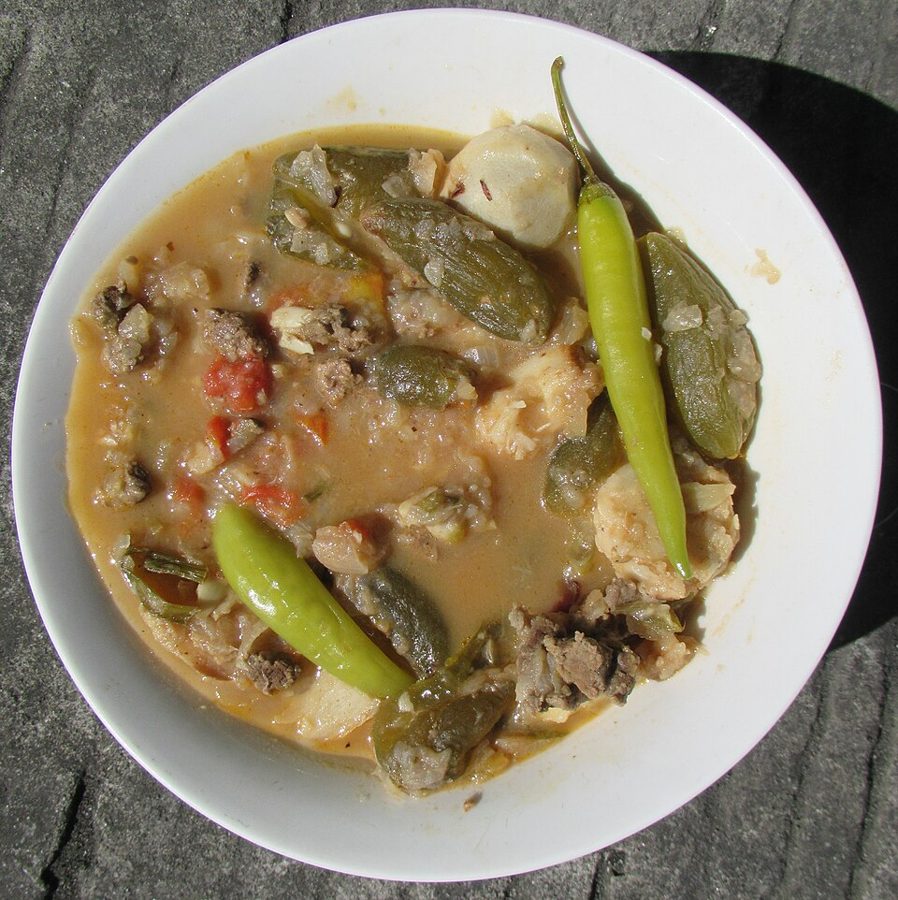
Kamias (bilimbi)
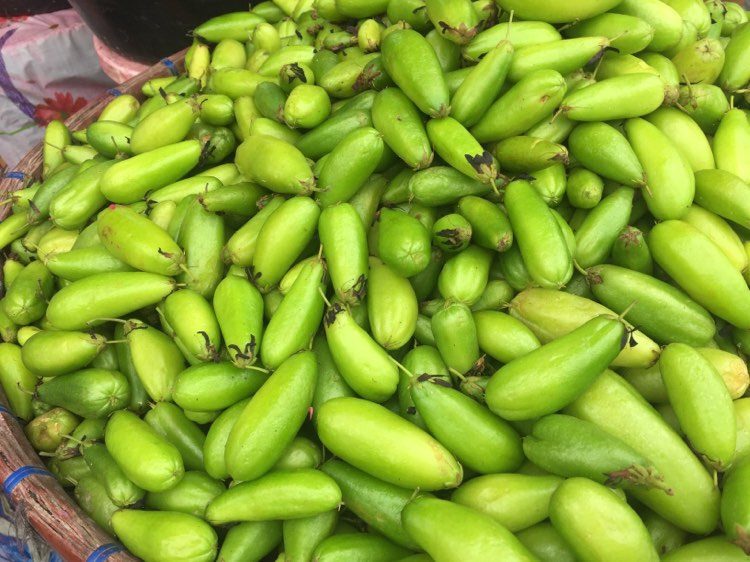
Kamias, or iba in Cebuano, grows in clusters straight off the trunk: small green cylinders so acidic they are rarely eaten raw. It gives a brighter, sharper sour than tamarind and a thinner, clearer broth. Halve or slice the fruit and add it with the meat; it softens to almost nothing.
Bayabas (guava)
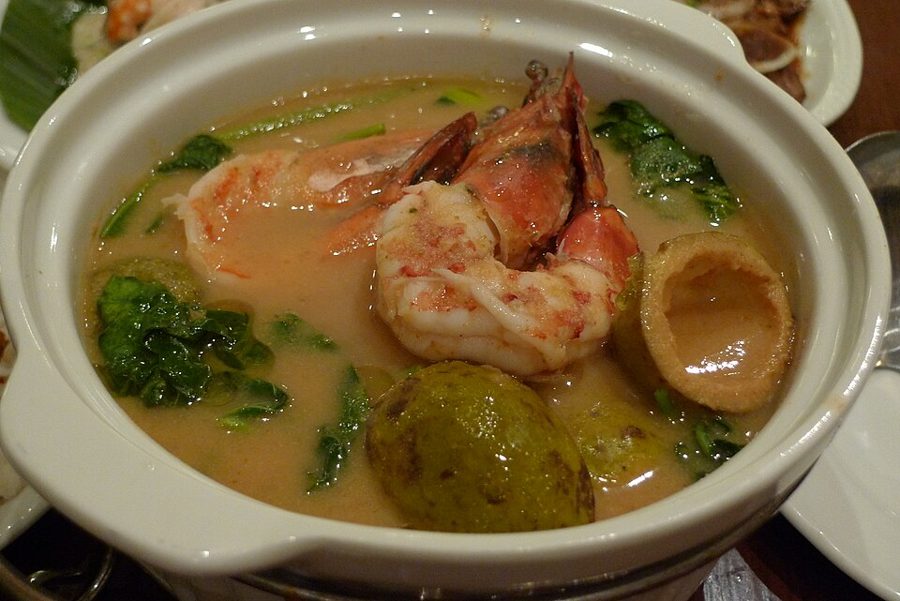
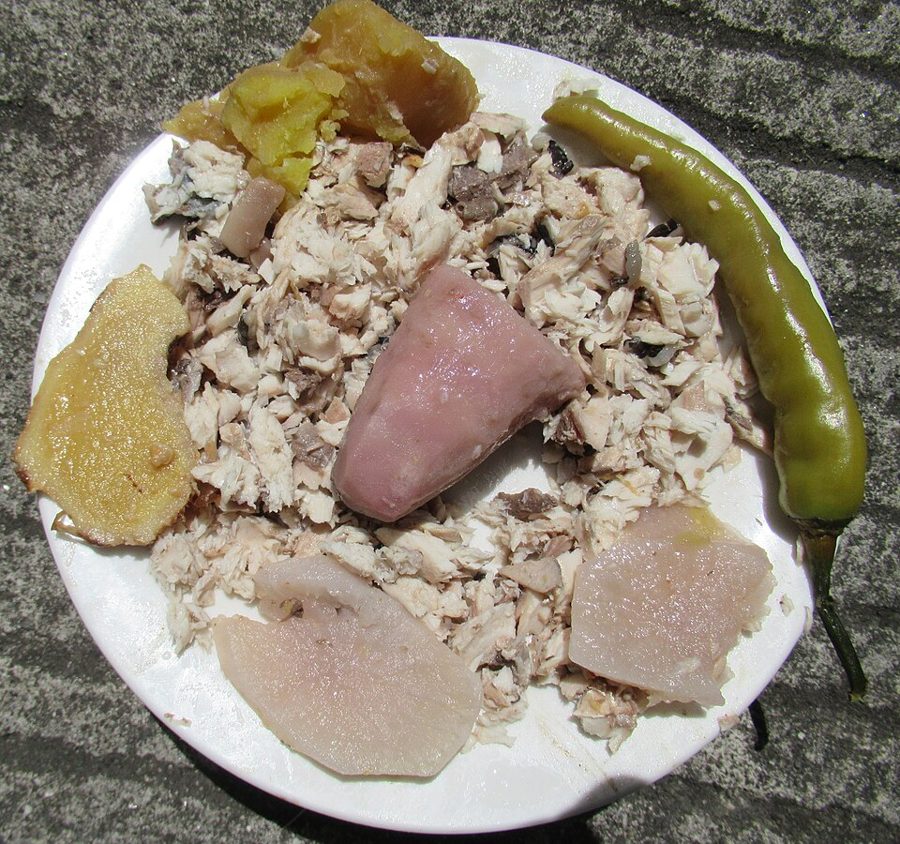
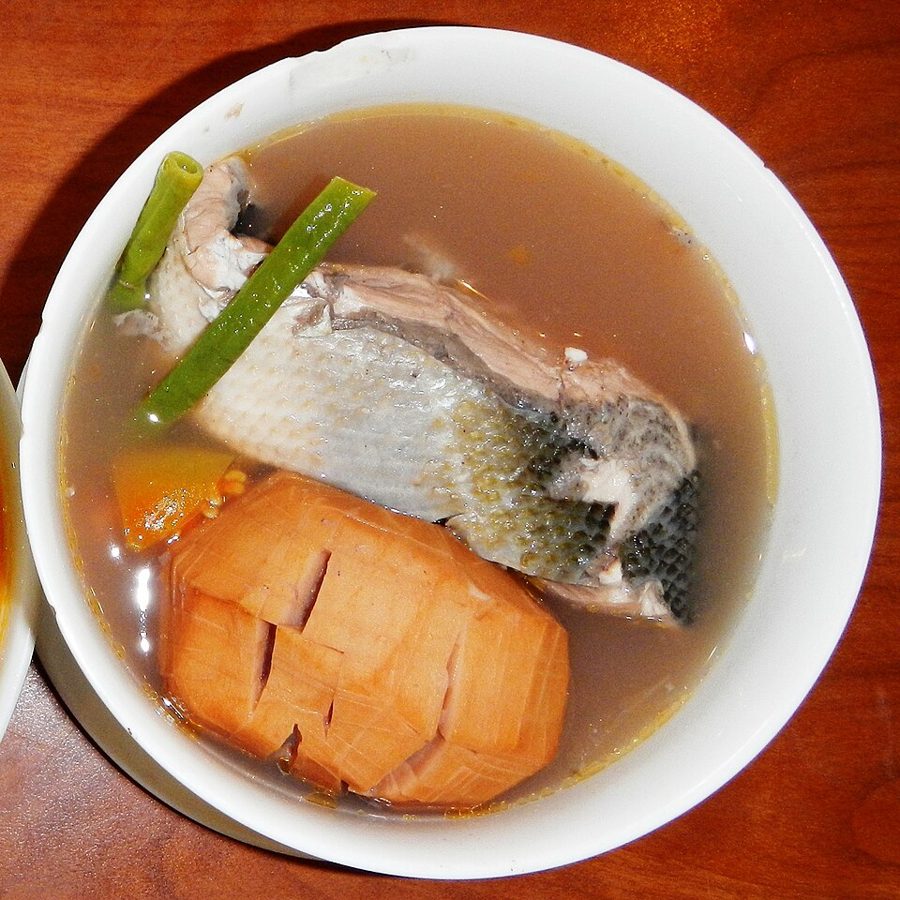
Guava came to the Philippines on the Manila galleons. In sinigang sa bayabas it goes in ripe, is boiled soft and mashed into the pot, and turns the broth thick, pale and faintly sweet. It is the mildest sour on this list and is cooked most often with fish, milkfish above all, and with shrimp.
Kalamansi
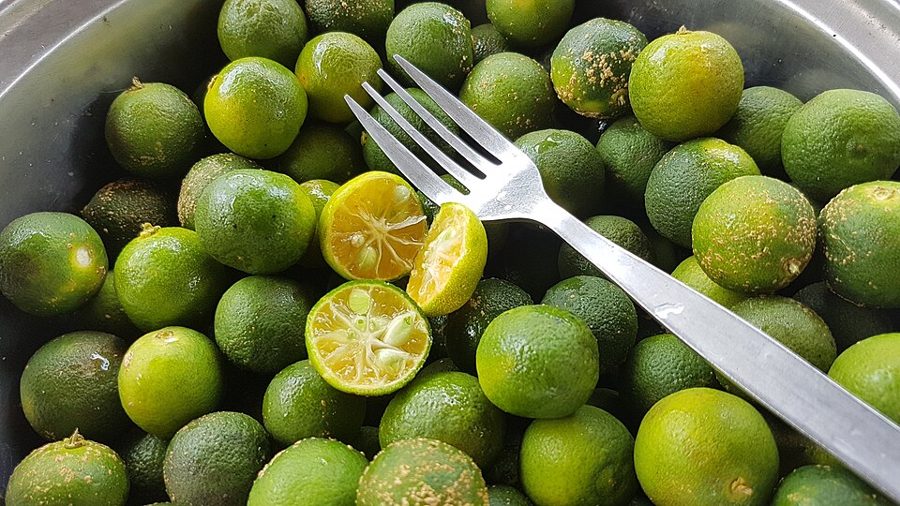
Kalamansi juice makes a lighter, citrusy sinigang. It goes in at the end, off the boil, because long cooking flattens it; recipes call for the juice of eight to ten fruits for a pot. The native lime dayap and the native biyasong do the same job where they grow, and kalamansi also turns up on the side, squeezed into the saucer of patis.
Santol
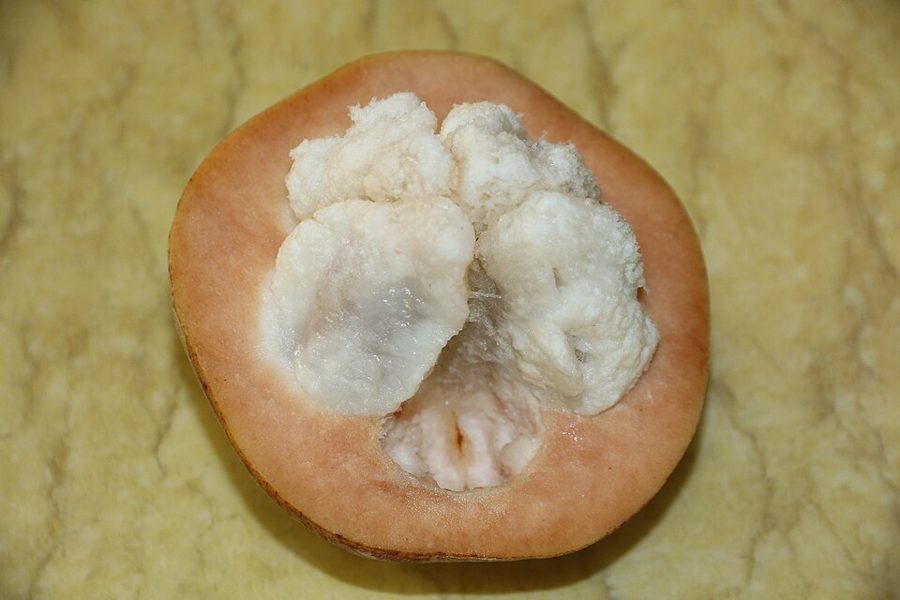
Santol, the cotton fruit, has a thick rind around white, cottony pulp and big seeds. For sinigang the sour rind and pulp go in together, cut up or grated, and both give sour to the broth. It is a Southern Luzon habit, strongest in Quezon and Laguna, where the same fruit is cooked down in coconut milk as sinantolan.
Batuan in the Visayas
In Panay and Negros the sour is batuan or batwan (Garcinia binucao), a small green relative of the mangosteen and the preferred souring agent there. It goes into sinigang, into cansi and into KBL, the Ilonggo pot of kadyos (pigeon peas), baboy (pork) and langka (young jackfruit), and its sour is subtler than tamarind’s. Wild trees are getting scarcer, and Slow Food lists batuan in its Ark of Taste. Growers in Negros now raise it in backyards, and a Negros foundation dries and powders it so cooks elsewhere can buy it.
Green mango, katmon and miso
Green mango gives a tart, nearly citrus sour; one medium unripe fruit, peeled and sliced, is enough for a pot of pork. Katmon, a green fruit wrapped in thick sepals, sours a broth where the tree grows, and the leaves of the alibangbang tree sour bule, an Aeta sinigang from Pampanga made with lima beans. Restaurant cooks have tried watermelon, pineapple and strawberries; the old fruits still win.
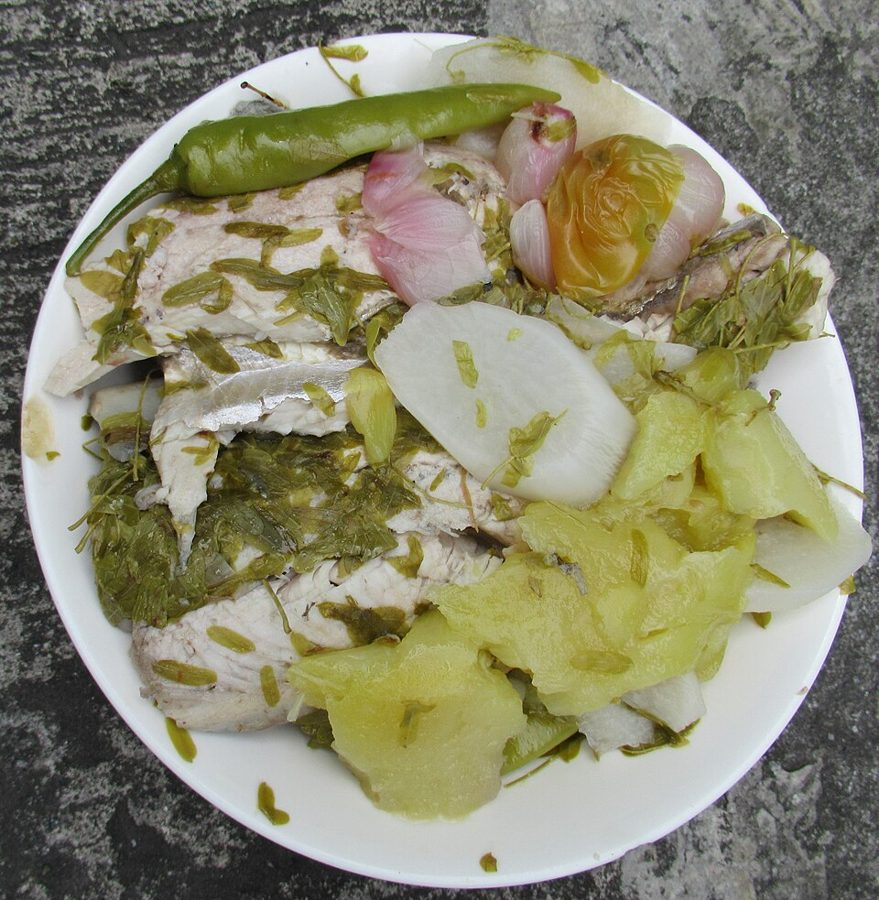
Then there is sinigang sa miso, where a spoonful of fermented soybean paste goes into a tamarind broth as a savoury base. It is usually made with fish, milkfish or salmon head and belly, and the miso makes the broth cloudy, salty and rounder.
What goes in the pot
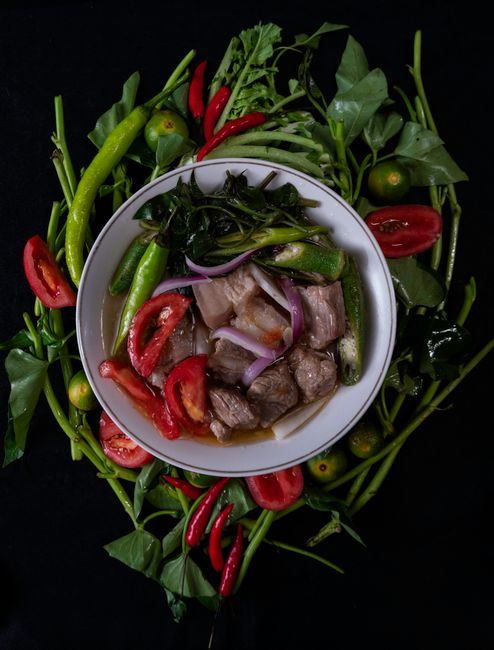
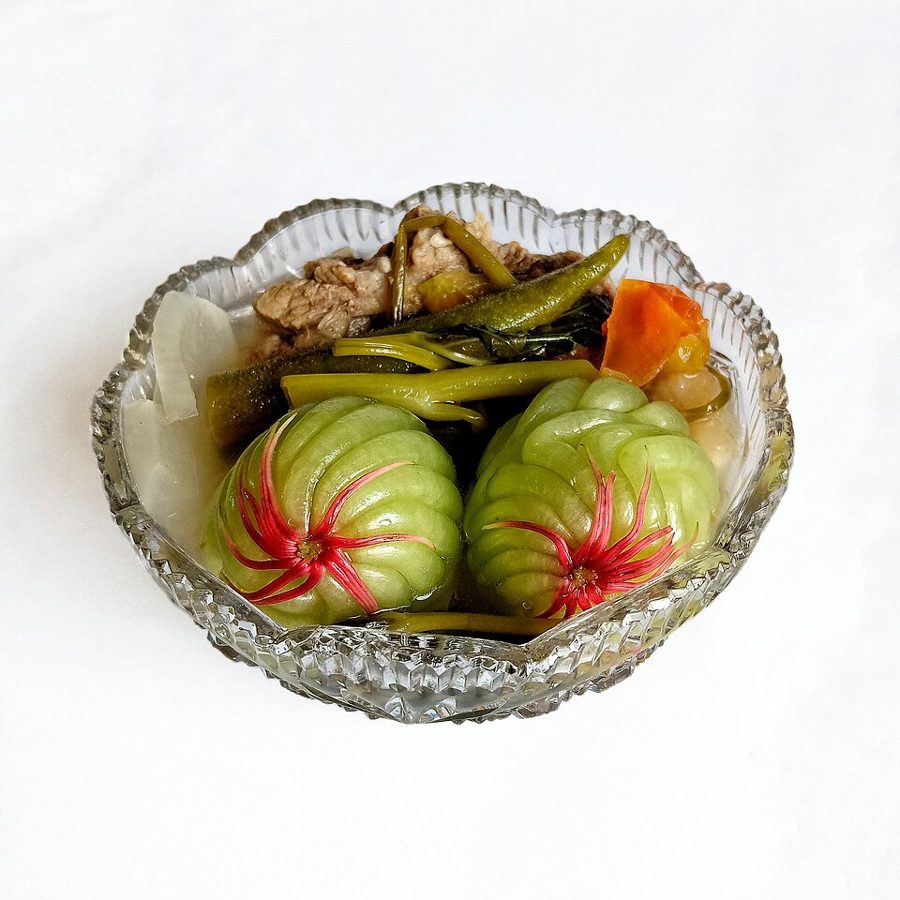
Pork is the version most Filipinos mean when they say sinigang with no qualifier. Belly (liempo) gives fat and richness; spare ribs and neck bones give a deeper broth. I’d use belly and ribs together: the belly for the fat, the ribs for the body. Shoulder (kasim) is leaner and fine if you prefer it.
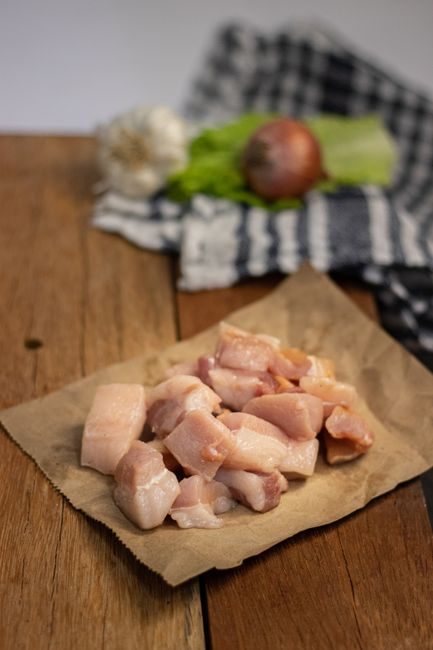
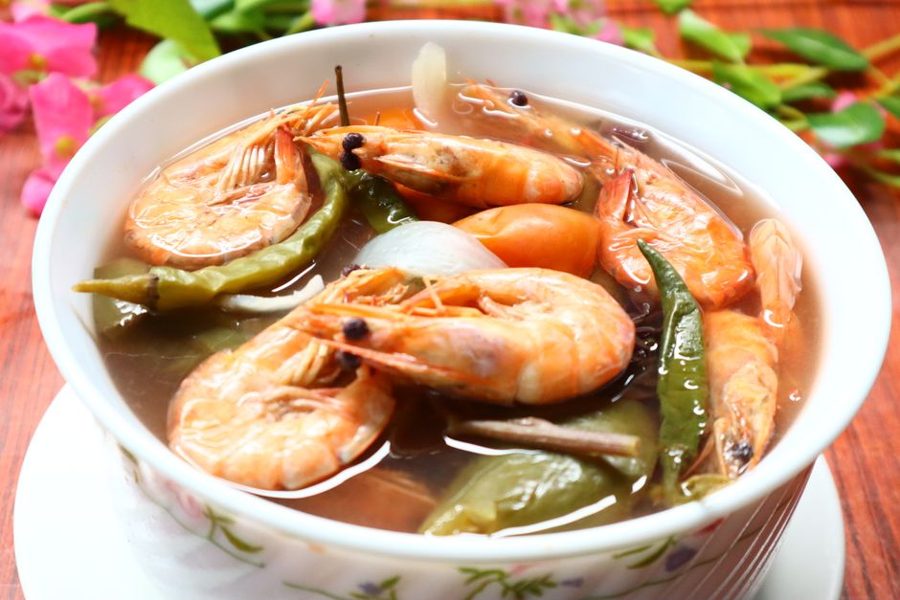
Shrimp is the fast one. Cook it with the heads and shells on, because that is where the flavour is, and it is done in a few minutes; big prawns (sugpo) need three or four minutes more. In Cebu the shrimp version goes by the Cebuano word for shrimp, pasayan.
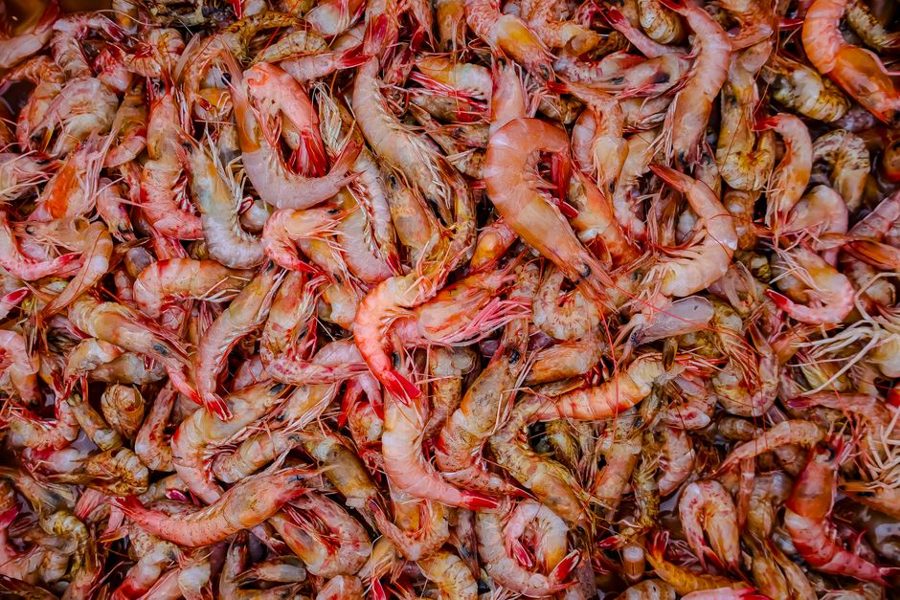
Fish sinigang is as old as the pork one and cooked more often near the coast. Milkfish (bangus) belly is the favourite, simmered only until it flakes, and salmon head and belly have become a city standard, usually in the miso version. Beef (baka) works with shank or ribs and needs 1½ to 2 hours before the vegetables go in.
Vegetables, in the order they go in
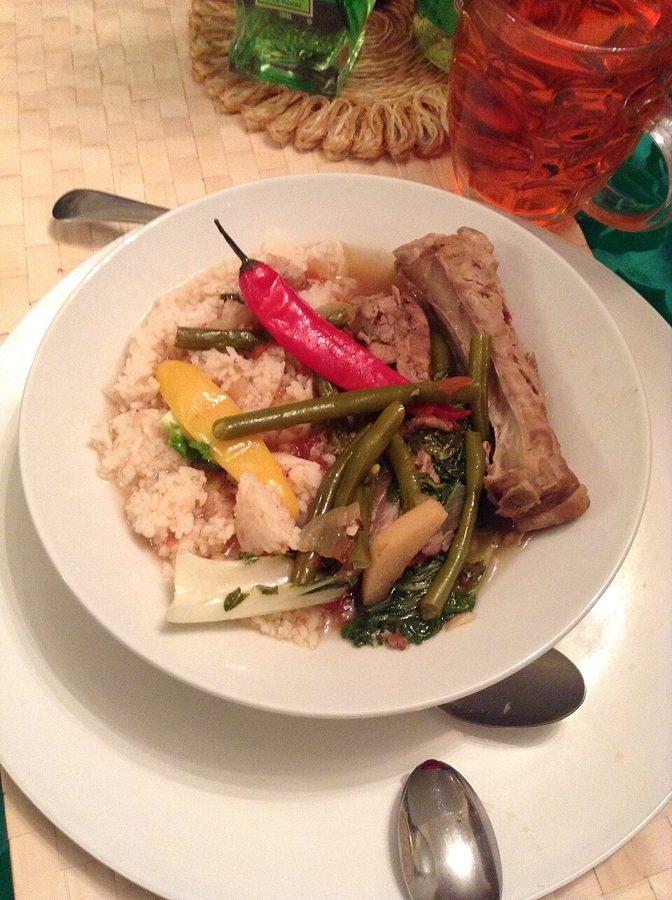
The vegetables go in by how long they take, hardest first, so that everything is just done at the same moment. Get the order right and nothing turns grey. Tomatoes and onion are the exception: they go in at the start with the meat and cook down into the broth.
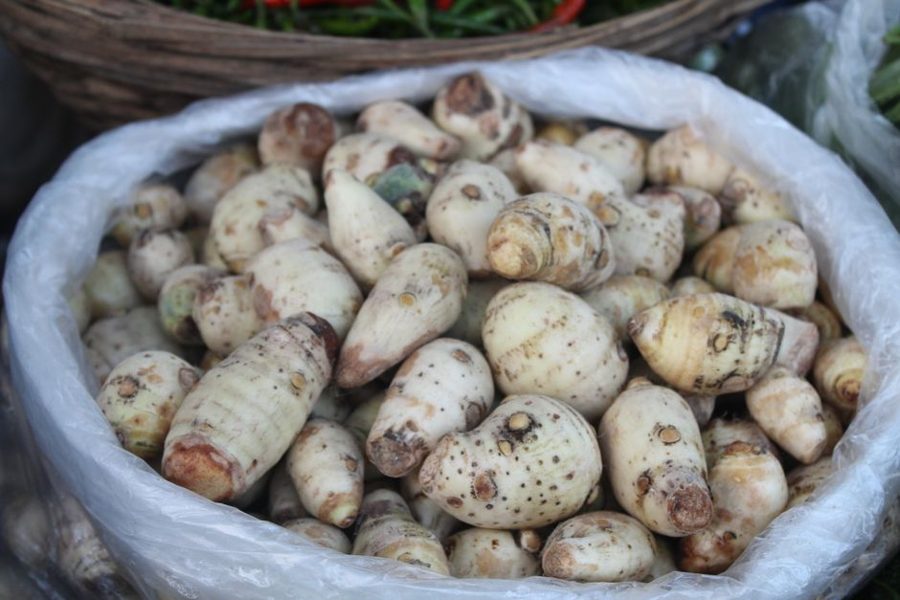
Gabi (taro) goes in first if you use it, peeled and halved. It is optional and it divides families, because its starch clouds and thickens the broth. Once the pieces are soft, mash one or two against the side of the pot for a thicker soup.
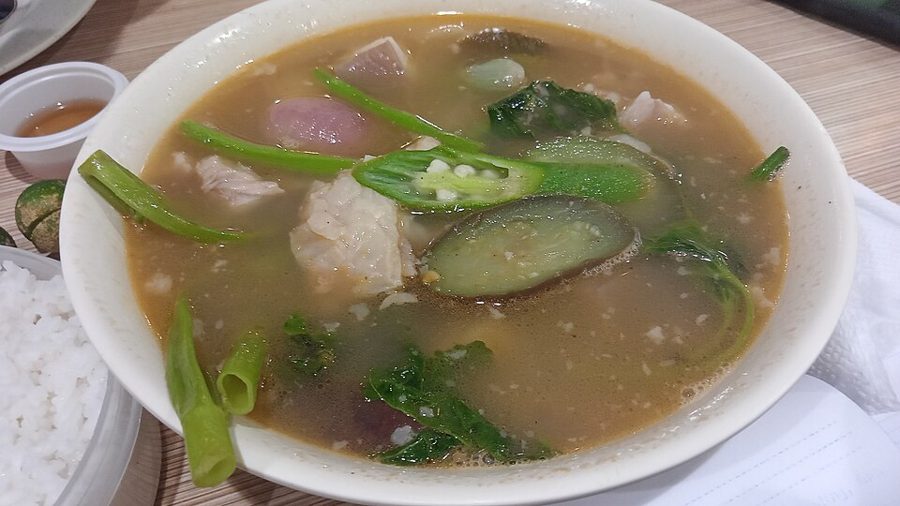
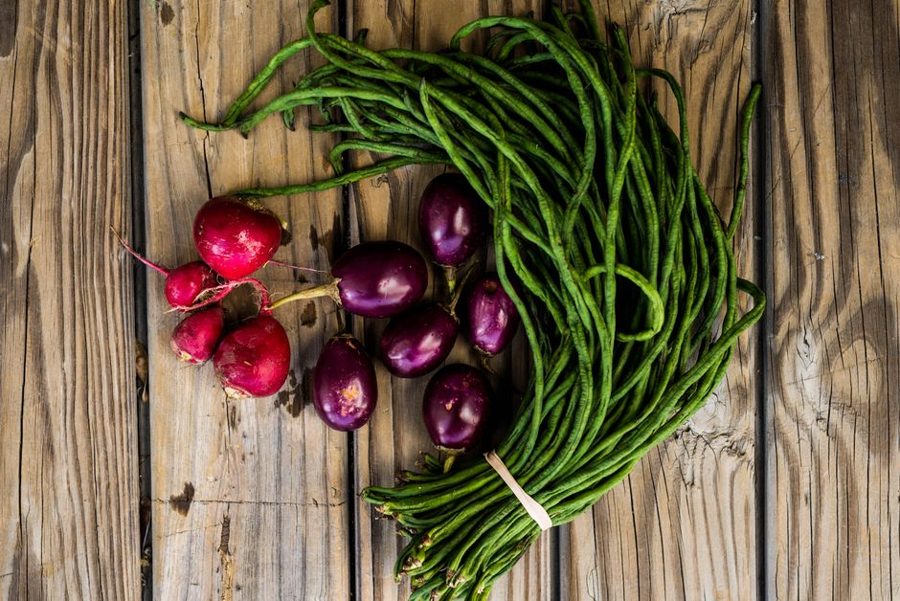
Labanos (white radish) comes next, in rounds about 5 mm (¼ in) thick, with the eggplant (talong), the long Asian kind, cut on the diagonal. Give them five minutes. The radish brings a sweet, peppery edge, and it is the vegetable I would keep if I could keep only one.
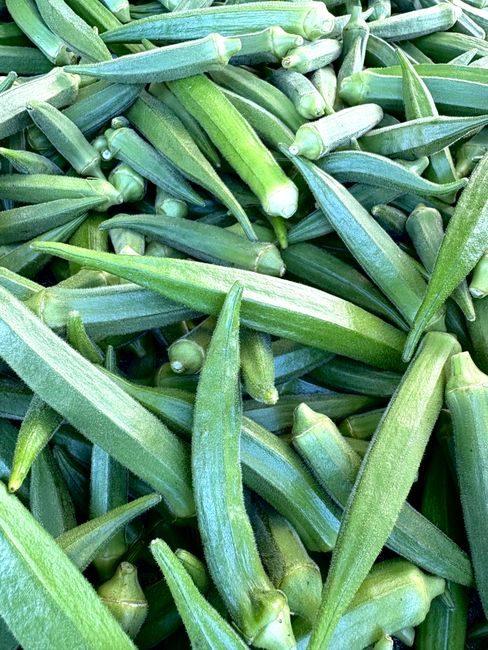
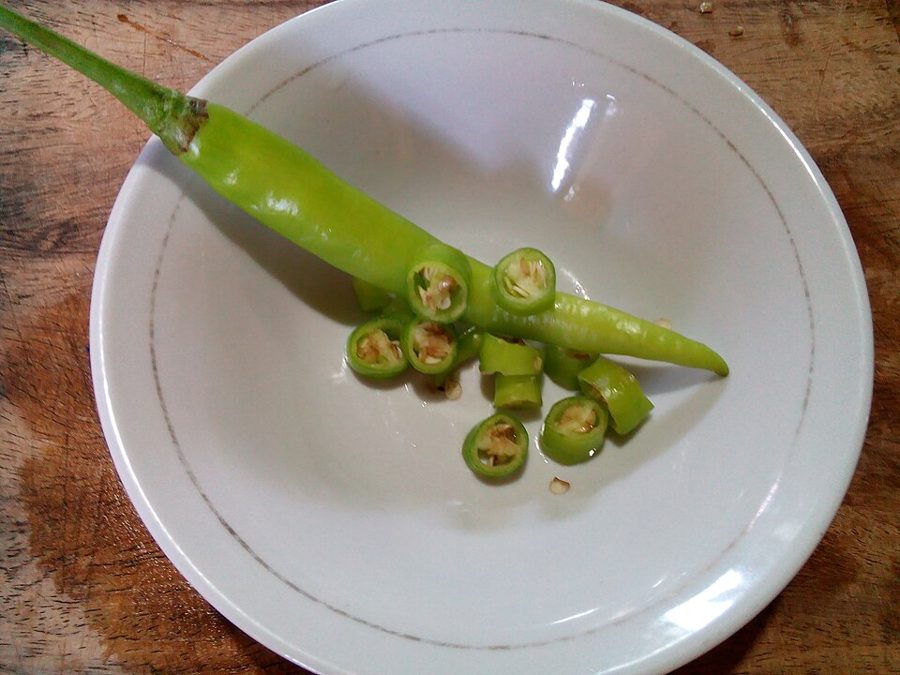
Sitaw (yardlong beans) in 5 cm (2 in) lengths, okra left whole, and the long green chilli, siling haba or siling pansigang, follow for about three minutes. Okra left whole stays crisp and keeps its slime to itself.
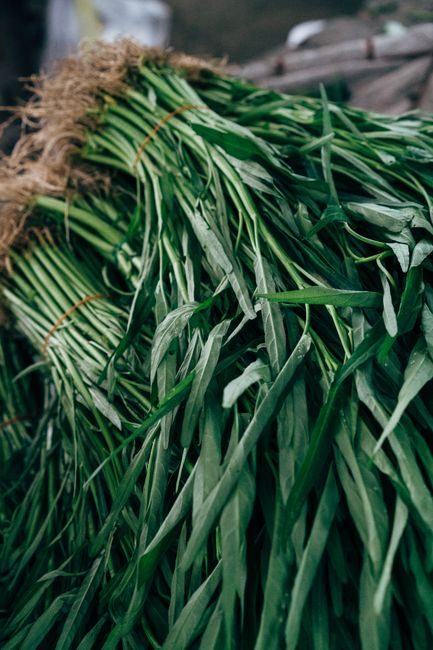
Kangkong (water spinach) goes in last: stalks first for two minutes, then the leaves with the heat off and the lid on, to wilt in the steam. Left to boil, the leaves go dark and slimy, and they are the first thing to suffer in leftovers. Pechay, bok choy or spinach will do the same job.
Sinigang na baboy with fresh sampalok
The recipes I compared, in English and in Tagalog, agree on the order and disagree on the tamarind. For about a kilo of pork they call for anything from 225 g to 450 g of young pods, boiled for anything from five minutes to forty.
Pods vary so much in sourness that I take the high figure, mash instead of boiling for an hour, and stir the sour liquid in near the end, in stages, until it tastes right. Added at the start, it reduces with the broth and you can’t judge the final sourness. Any left over can go into the next pot.
The other split is browning. Some recipes sear the pork first; the older way, and the one I follow, is a plain boil with the scum skimmed off, which gives a clearer broth that tastes more of tamarind than of fried meat.
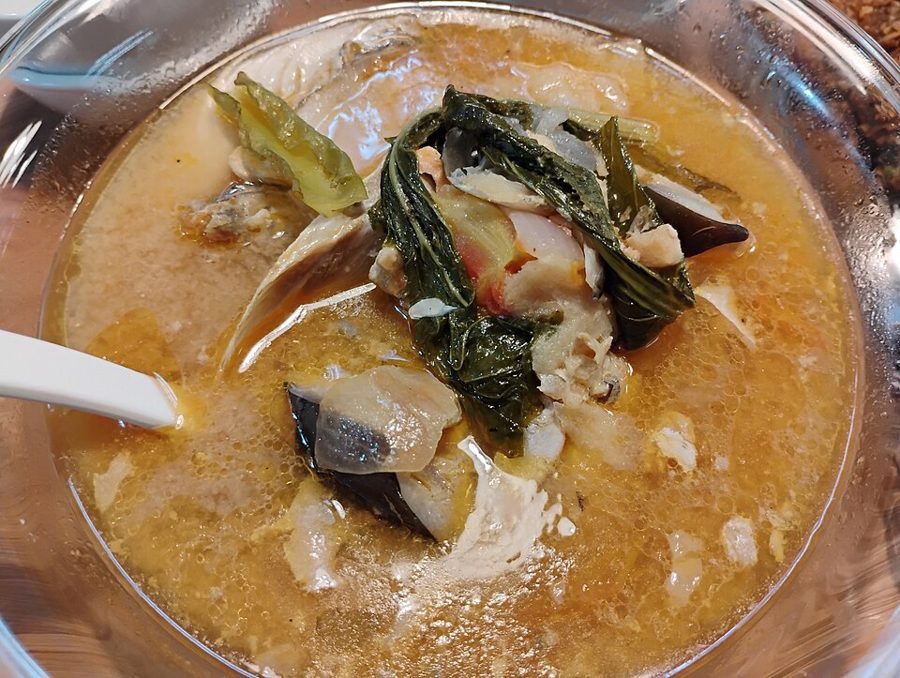
Serves 4 to 6. About 1 hour 45 minutes, most of it simmering.
Recipe card
Serves 4 to 6 · about 1 hour 45Ingredients
For the tamarind liquid
- 450 g (1 lb) young green tamarind pods, rinsed
- Water to just cover the pods, about 500 ml (2 cups)
For the soup
- 1 kg (2 lb) pork belly and spare ribs, cut into 5 cm (2 in) pieces
- 2 litres (8 cups) water, plus more to top up
- 1 medium onion, quartered
- 2 large tomatoes, quartered
- 2 to 3 tbsp patis (fish sauce), plus more at the table
- 2 medium gabi (taro), peeled and halved (optional)
- 1 medium labanos (white radish), peeled and cut into 5 mm (¼ in) rounds
- 2 Asian eggplants, sliced on the diagonal
- 8 to 12 sitaw (yardlong beans), cut into 5 cm (2 in) lengths
- 8 okra, stem tips trimmed
- 2 siling haba (long green chillies)
- 1 bunch kangkong (water spinach), about 250 g (½ lb), leaves and stalks separated
- Ground black pepper (optional)
- Steamed rice, to serve
Method
- Put the pork and the 2 litres of water in a wide pot and bring to the boil. For the first 10 to 15 minutes, skim off the grey scum with a slotted spoon until no more rises. Lift it off; stirring it back in clouds the broth.
- Add the onion, half the tomatoes and 1 tbsp patis. Cover and simmer gently for 1 to 1½ hours, until the pork is tender, topping up with water to keep roughly the same level.
- Meanwhile, put the tamarind pods in a saucepan with water to just cover. Simmer, covered, for about 20 minutes, until the skins split and the flesh is soft.
- Mash the pods in their liquid with a fork or potato masher. Pour through a sieve set over a bowl, pressing hard on the pulp. Return the pulp to the pan with a ladle of the pork broth, mash again and strain again. Discard the skins, strings and seeds.
- When the pork is tender, add the gabi, if using, and simmer for 5 to 10 minutes, until soft. Mash a piece or two against the side of the pot if you want a thicker soup.
- Add the radish and eggplant and simmer for 5 minutes.
- Add the rest of the tomatoes, the sitaw, okra and siling haba, and cook for 3 minutes.
- Stir in about two-thirds of the tamarind liquid. Taste, then add more until the broth is as sour as you like it. Season with patis and a little pepper.
- Add the kangkong stalks and cook for 2 minutes. Add the leaves, cover the pot, turn off the heat and leave for 3 minutes. Serve straight away with rice and a saucer of patis.
Recipe card 2
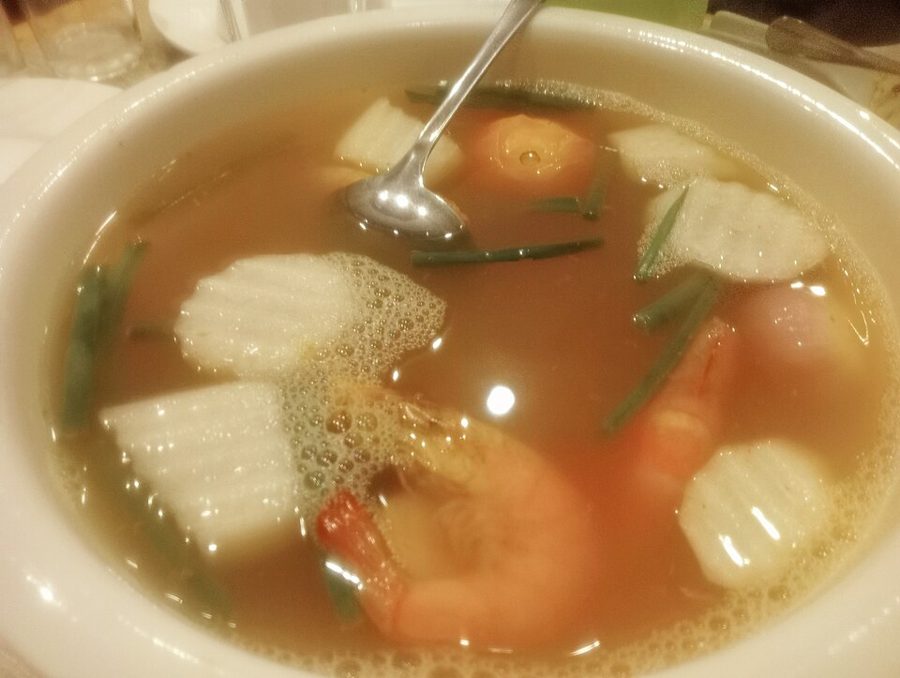
Sinigang na hipon: the fast version
Shrimp sinigang is the same broth in a fraction of the time, because the shrimp needs minutes, not an hour. Many cooks start it with hugas bigas, the cloudy water from rinsing rice, for a little extra body. Use a smaller batch of pods: 10 to 12, boiled in a cup of water until soft, then mashed and strained as above.
Serves 4. About 40 minutes, including the tamarind.
Ingredients
- 500 g (1 lb) medium shrimp, heads and shells on
- 10 to 12 young tamarind pods, boiled in 240 ml (1 cup) water, mashed and strained
- 1 litre (4 cups) rice-rinsing water (hugas bigas) or plain water
- 1 onion, quartered
- 3 tomatoes, quartered
- 1 cup (100 g) sliced labanos (white radish)
- 1 cup (100 g) sitaw, cut into 5 cm (2 in) lengths
- 2 siling haba
- 1 bunch kangkong, about 100 g to 250 g (¼ to ½ lb), leaves and stalks separated
- Patis, to taste
Method
- Rinse the shrimp. With scissors, trim the sharp horn on the head and snip off the whiskers and legs; devein the larger ones.
- Bring the rice water to the boil with the onion, tomatoes and radish. Cover and boil for 8 minutes, until the radish is nearly tender.
- Add the shrimp, sitaw and siling haba, then stir in most of the tamarind liquid. Simmer for about 3 minutes, until the shrimp turn pink and curl. Taste, adding more tamarind and patis as needed.
- Add the kangkong stalks for a minute, then the leaves. Turn off the heat, cover, and serve as soon as the leaves go limp.
At the table, and the day after
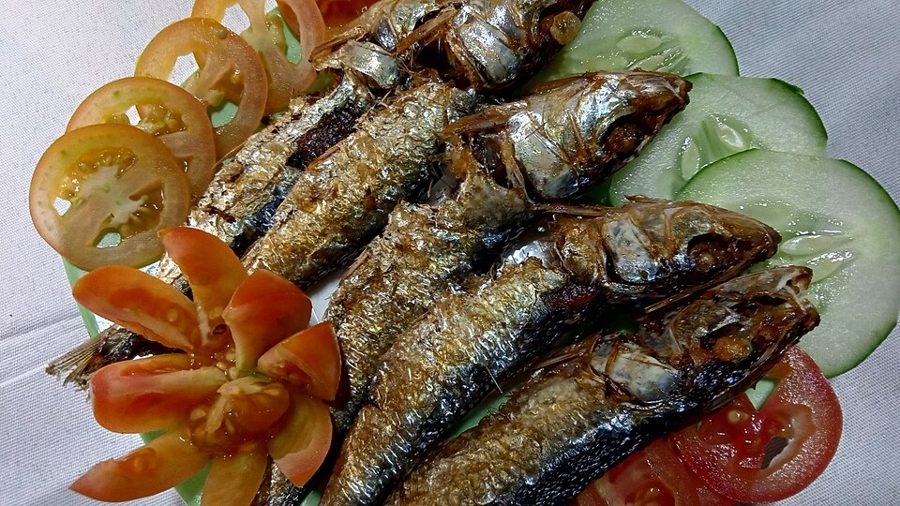
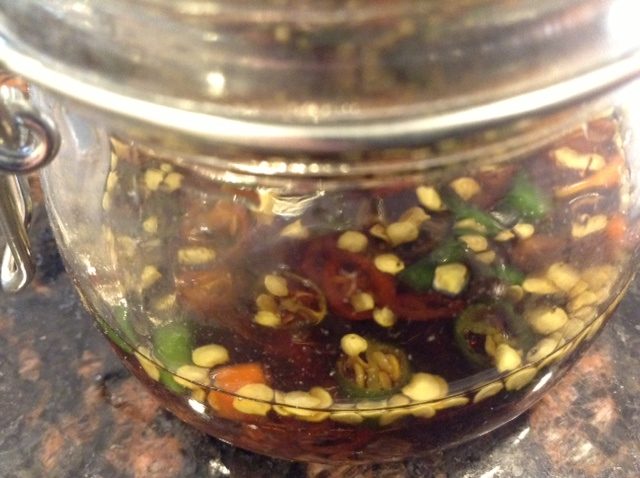
Sinigang goes in one big bowl in the middle of the table with plenty of rice. Next to it goes a saucer of patis with a crushed siling labuyo, the small hot chilli, for dipping the meat. Something salty and fried is the usual partner: fried tuyo, the dried salted fish, or a crisp piece of fried bangus.
Leftovers keep three days in the fridge, and the broth tastes deeper the next day. Lift out the kangkong before you store it, and add fresh leaves when you reheat on the stove. It also freezes for up to two months, without the leafy greens and soft vegetables.
Visayan cousins, and where to eat it
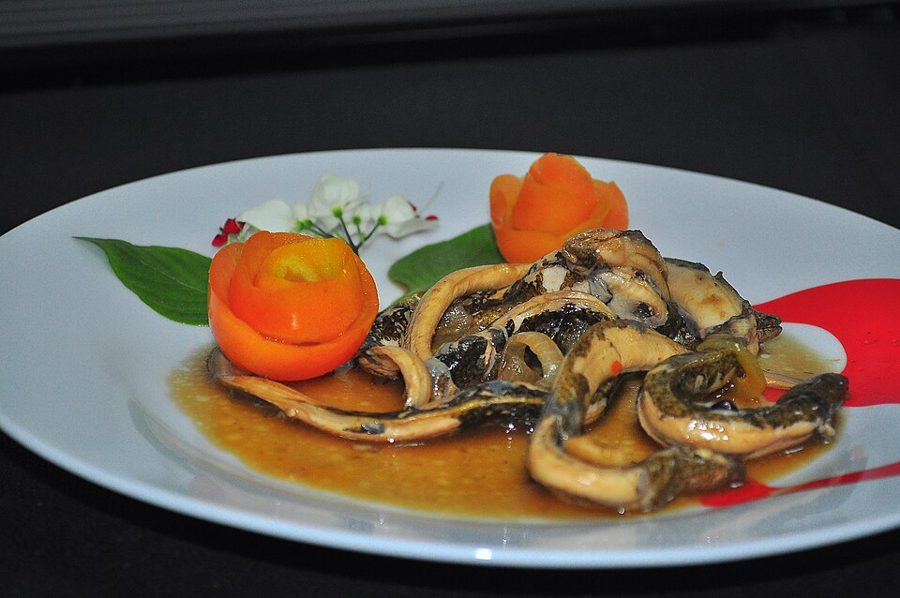
Cebu cooks sour soups too, but they rarely call them sinigang. Linarang, also larang or nilarang, is fish stewed with garlic, onion, tomato, salted black beans (tausi), chillies and a sour fruit: usually kamias, green mango or tamarind. In Cordova, on Mactan, it is made with bakasi, little moray eels from the surrounding waters.
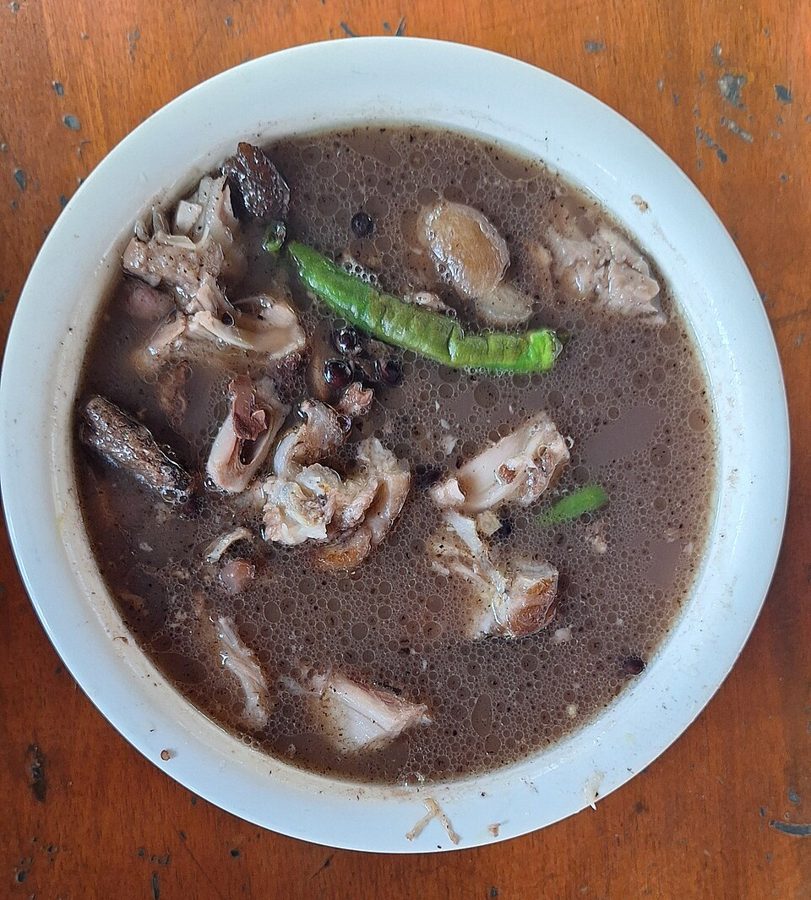
Tinola is the contrast. It is a clear, gingery, unsoured soup, chicken with green papaya or chayote and leafy greens, for when you want comfort without the pucker. In the Western Visayas, cansi is beef shank and breadfruit soured with batuan, so close to a sour beef bulalo that some cooks call it sinigang na bulalo.
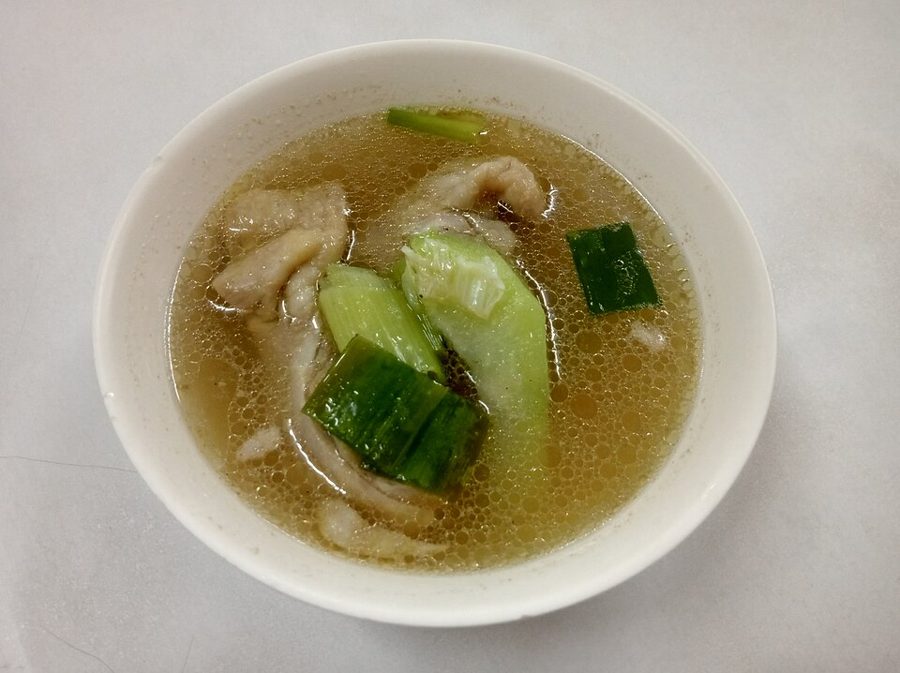
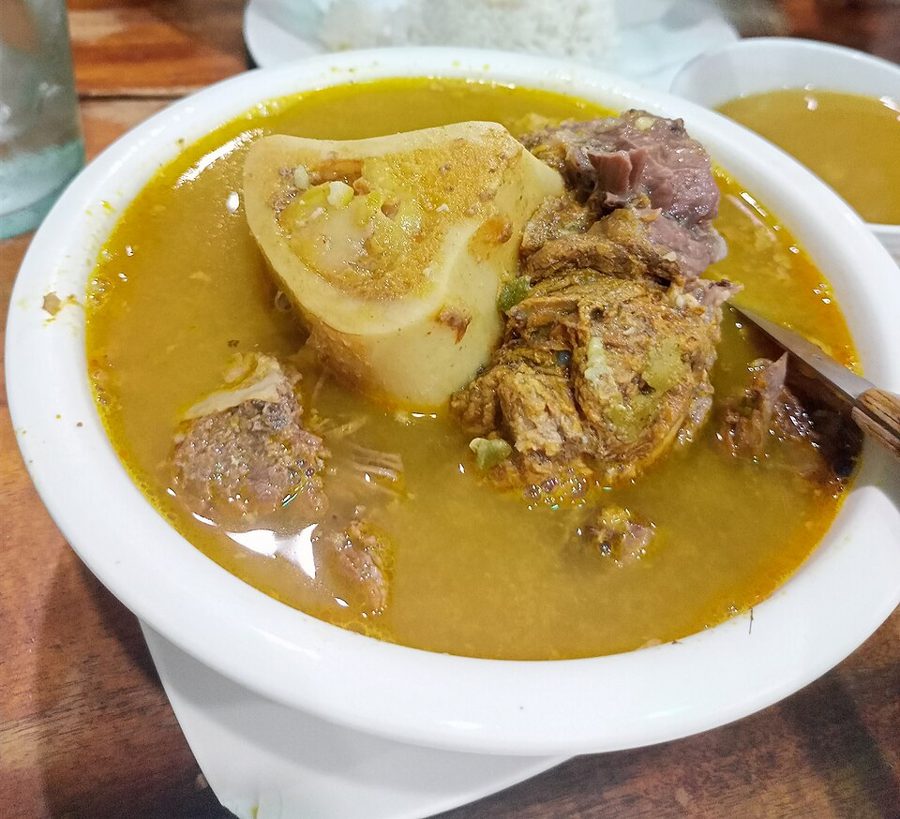
For linarang in Cebu City, the address is Esmen, a carinderia by the Pasil market that has been cooking one dish for more than sixty years: fresh porcupine fish, tagotongan, slow-simmered over a wood fire in a sour broth. It was made a Bib Gourmand in the first Michelin Guide to the Philippines and kept the distinction in the 2027 selection. In the same list, Abaseria Deli & Cafe is singled out for its sinigang pasayan, the shrimp version.
For ordinary sinigang, go to any carinderia at lunch. The pot sits behind the glass with the day’s other dishes, and you point. Around Cebu City it shares the counter with the rest of the Cebu food on offer, and it is usually soured with tamarind or kamias.

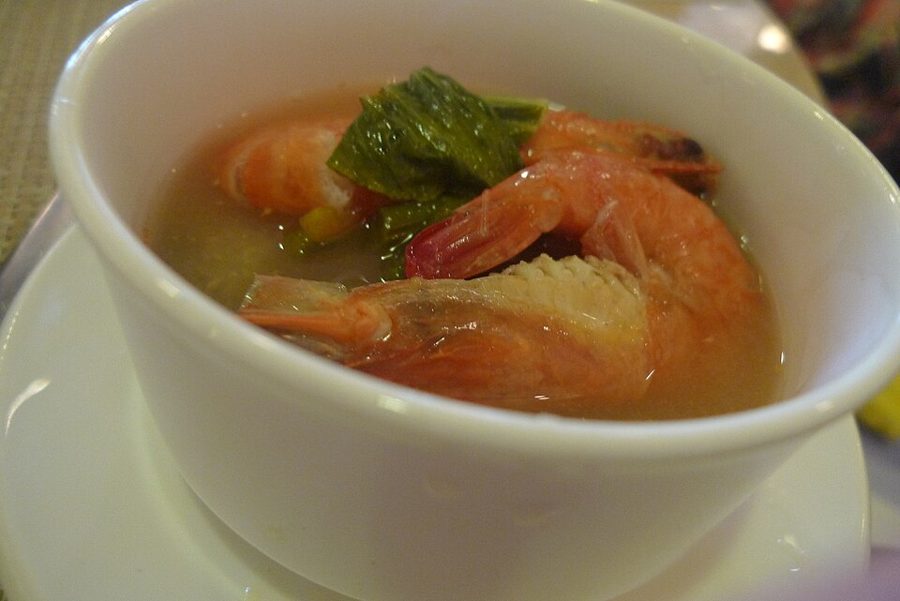
Next time you see the heap of hard green pods beside the kamias, buy half a kilo. That is one pot of sinigang, sour the way the fruit makes it, and the packet can wait for a weeknight.