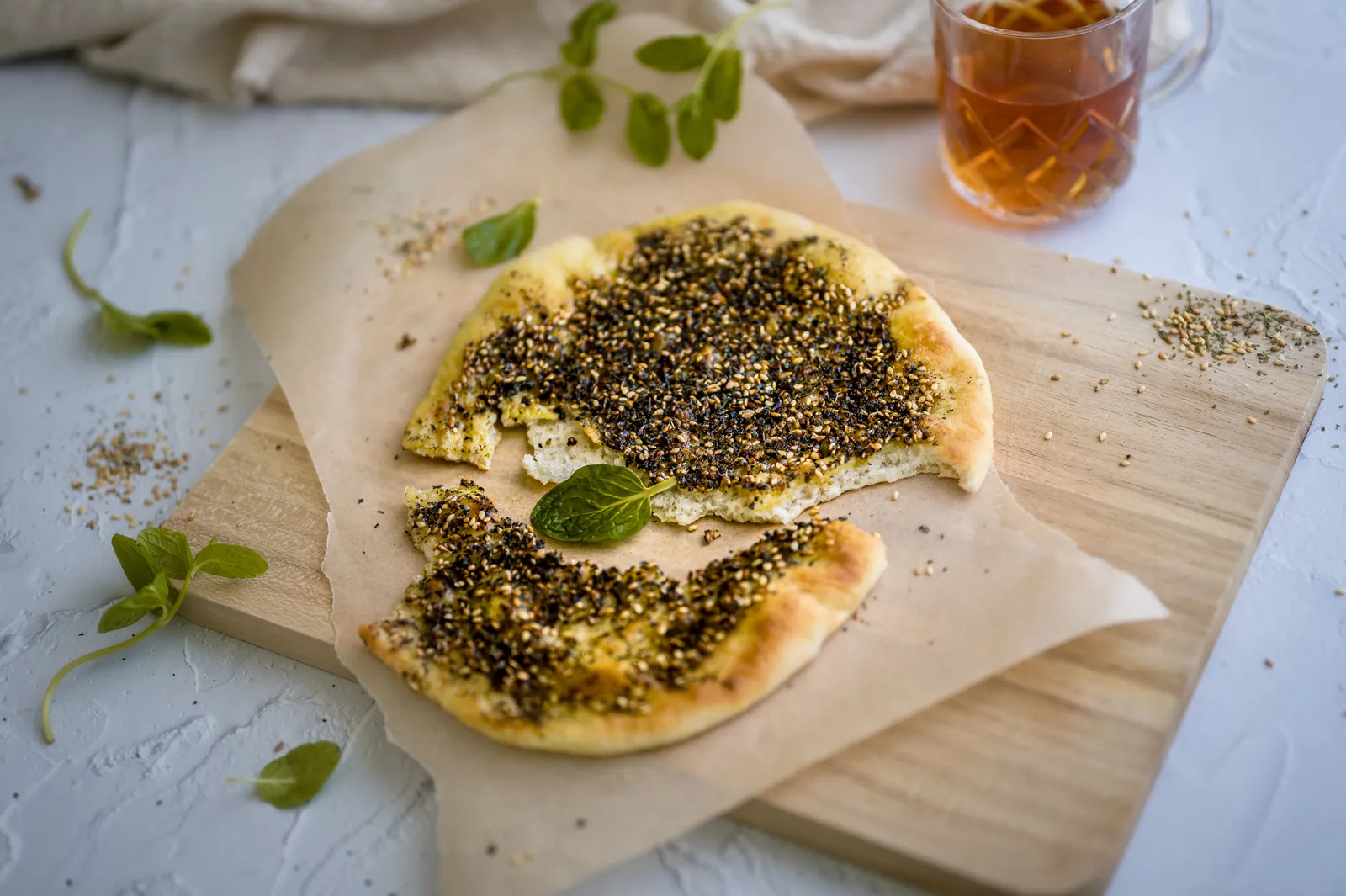
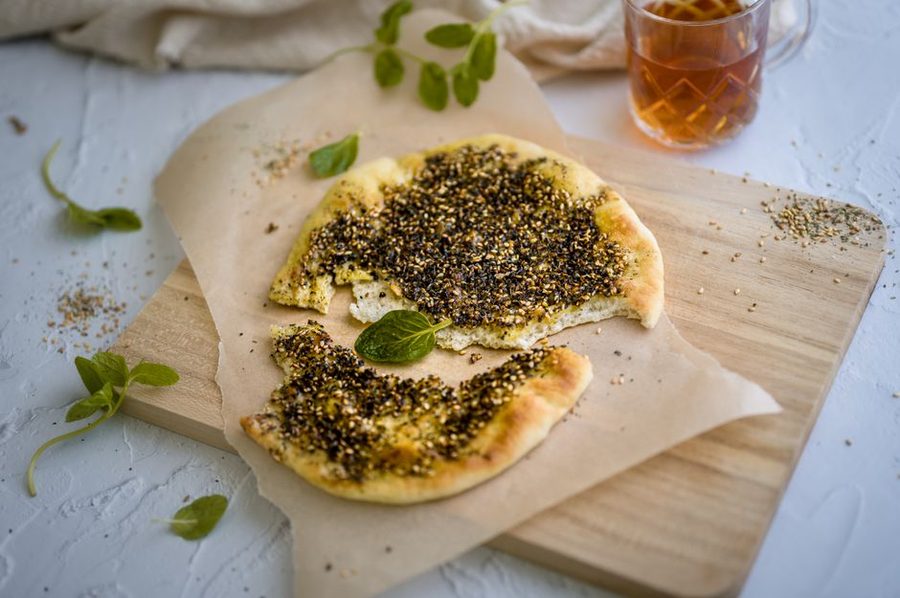
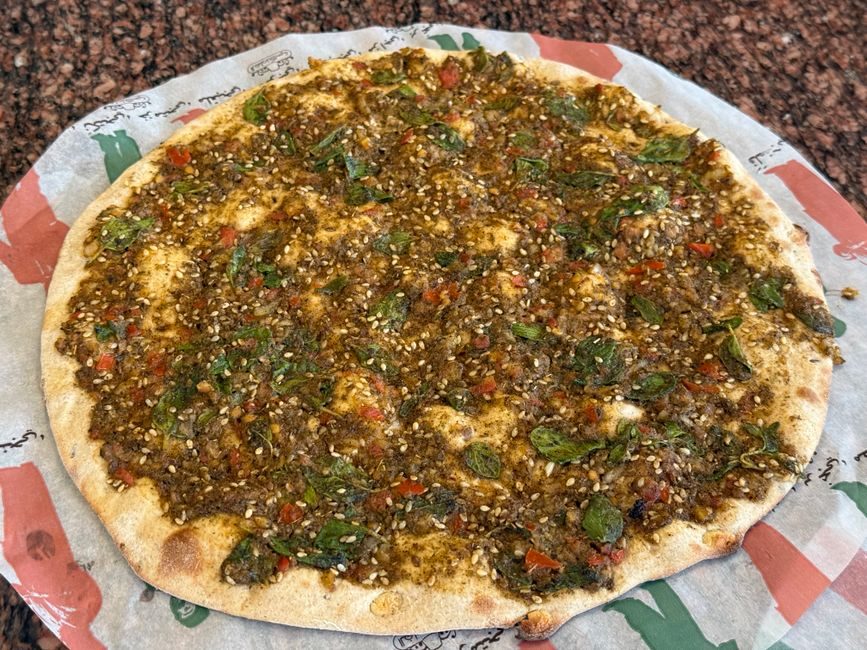
The baker presses ten fingertips into a round of dough, spoons a dark, oily paste into the dents and slides it onto the floor of an oven hot enough to blister the rim in minutes. What comes out is folded in paper and handed over the counter with a few slices of tomato, some cucumber and a sprig of mint. In Lebanon that is breakfast, and the paste is za’atar (زعتر) stirred into olive oil.
Za’atar is also a plant. The word covers a grey-green, fuzzy-leaved wild oregano that grows on Lebanese hillsides, several other herbs that smell something like it, and the jar of dried herb, sour sumac, toasted sesame and salt that sits next to the olive oil in most Levantine kitchens. Which one somebody means depends on who is talking, and where.
The blend is easy to make and easy to get wrong. The herb you start with, the share of sumac, how far you take the sesame and how much oil goes in at the end decide whether the bread tastes of a hillside in June or of a jar that has been open since spring.
Contents 9 parts
- 01A plant with several names
- 02From hillside to jar
- 03Lebanese, Palestinian, Aleppo and Jordanian blends
- 04Lebanese za’atar blend
- 05Buying za’atar: colour, smell and what to skip
- 06Man’oushe bi za’atar, the Lebanese breakfast
- 07Man’oushe bi za’atar at home
- 08Other ways to use it
- 09Keeping it, and carrying it home
A plant with several names
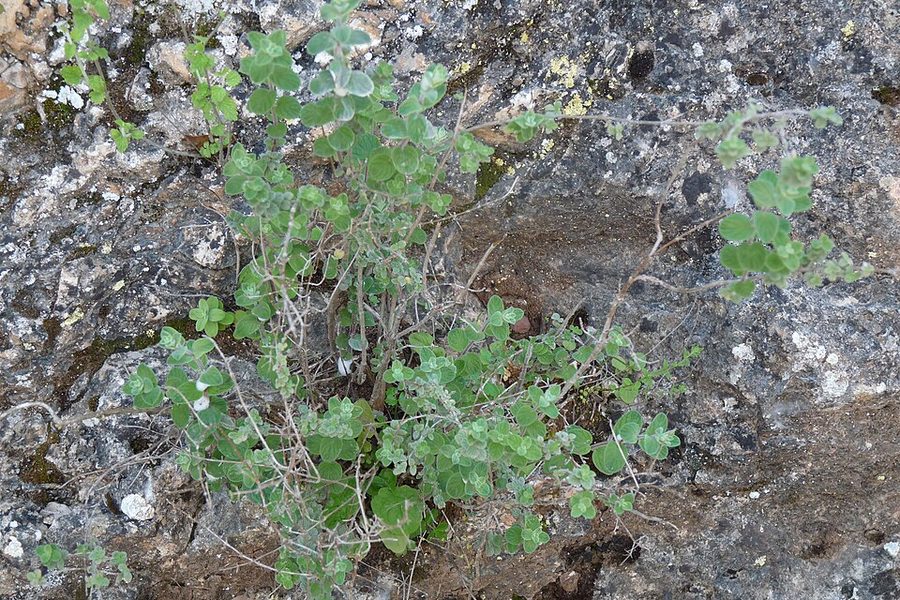
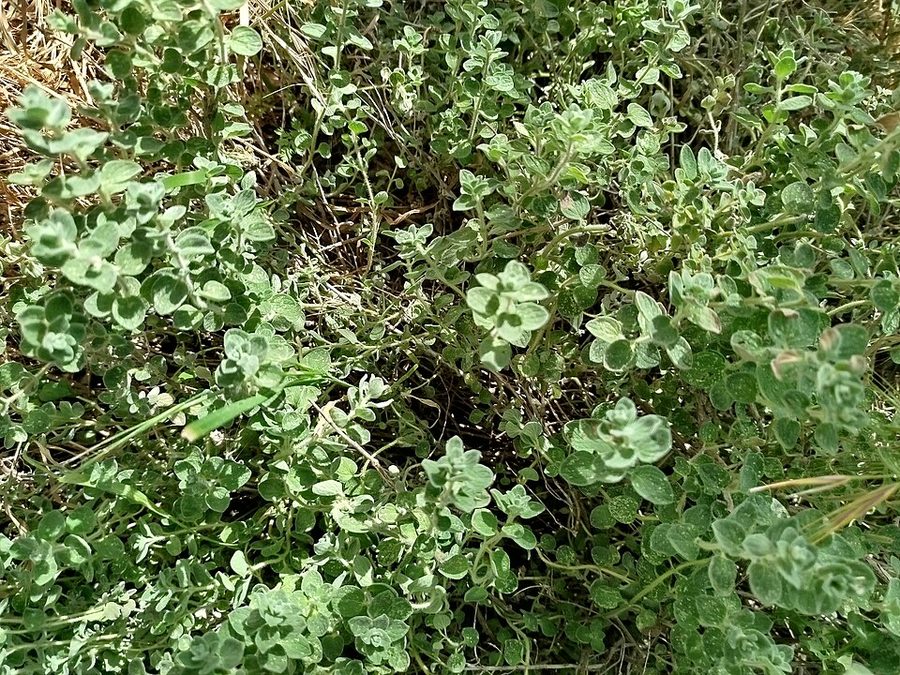
The za’atar Lebanese cooks prize is Origanum syriacum, a perennial in the mint family that grows to about a metre, with small white flowers and leaves covered in dense, soft hairs. In English it turns up as Syrian oregano, Lebanese oregano or Bible hyssop. Arabic also spells it sa’tar, and in the mountains some people call it zoubaa.
Lebanon has three wild oreganos, and only two of them taste of anything. The ethnobotanist Marc Beyrouthy of the Holy Spirit University of Kaslik walked readers of L’Orient-Le Jour through the three species in 2017: O. syriacum, the one most used in the kitchen; O. ehrenbergii, a smaller relative found between 300 and 2,000 metres; and O. libanoticum, which grows only in Lebanon and has no smell at all. He counted nine plants that Lebanese people call za’atar. Three are oreganos.
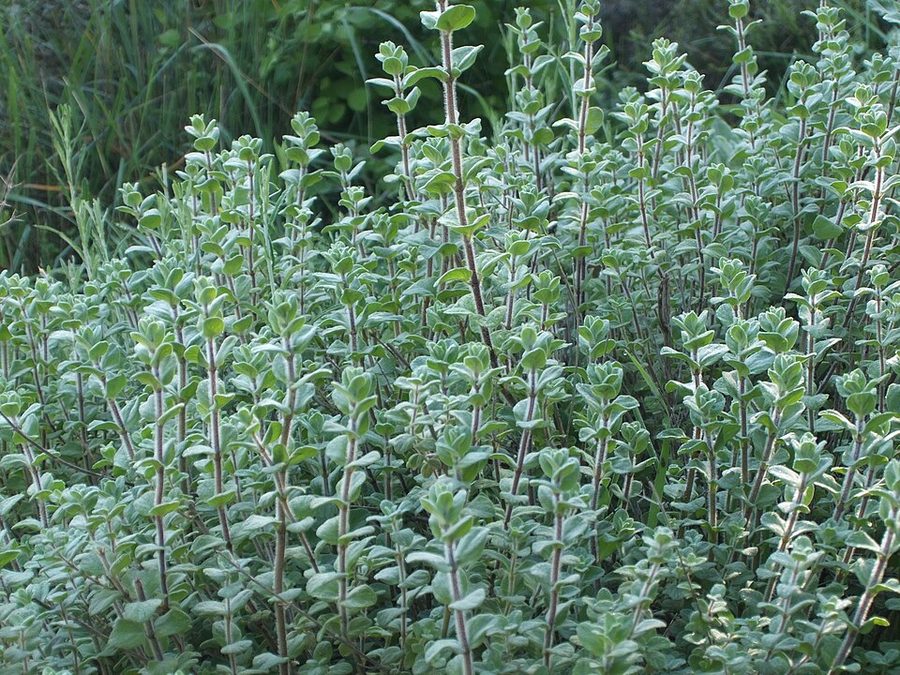
The plant dies back above ground in winter and comes back from the roots in spring, which is how it survives on the dry, stony slopes it likes. In Lebanon O. syriacum flowers from June into December. The leaves are at their most aromatic just before the flowers open, and that is when growers cut.
The hyssop name comes from scripture. Jewish scholars from Saadia Gaon to Maimonides identified the ezov of the Hebrew Bible with za’atar, so some English packets still say “hyssop”, though true hyssop does not grow wild in the Levant. On a label, “hyssop” and “thyme” are translations, not species.
The other za’atars
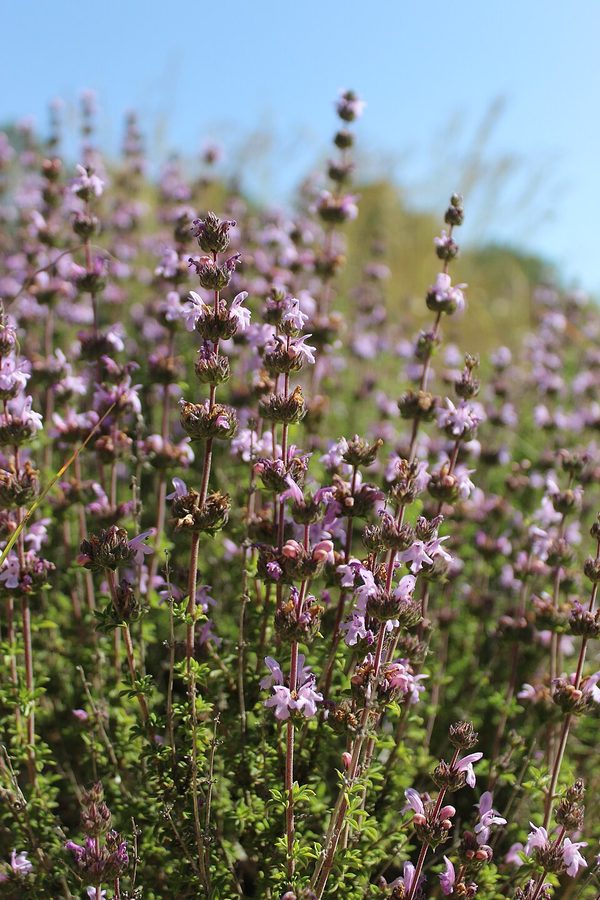
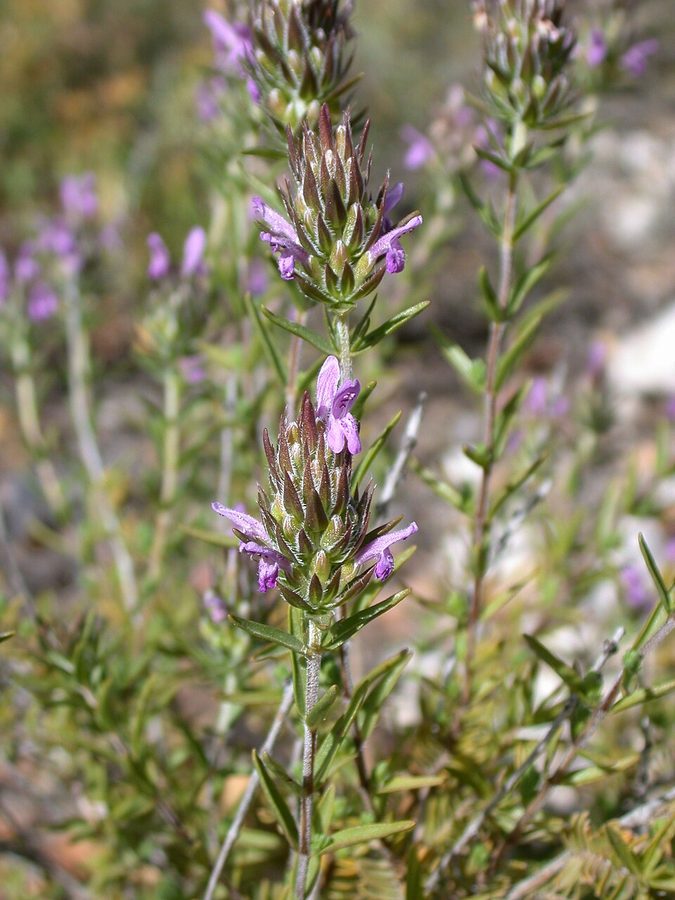
Several unrelated herbs share the name, usually with a second word to tell them apart. Thymbra spicata, a spiky, thyme-like shrub with pink flowers, is common enough in Lebanese blends that botanists list it next to O. syriacum as a standard ingredient. Satureja thymbra is za’atar rumi, Roman za’atar. Thymbra capitata goes by za’atar farsi.
Outside the region, cooks use what they can find: dried oregano, marjoram, garden thyme, or a mix. That works, within limits. Common thyme is sharper and more medicinal than O. syriacum, and a blend made with thyme alone tastes thin and a little like cough sweets. Oregano and marjoram together get closer.
Picking it wild, and the rules
Wild za’atar is overpicked across the Levant, and both Lebanon and Israel have tried to limit it. In Lebanon, a Ministry of Agriculture decision numbered 1/179 allows wild O. syriacum and sage to be picked only between 1 June and 30 October. When L’Orient-Le Jour reported it in 2017, the paper’s verdict was that it was rarely respected, and pickers were also stripping the smaller O. ehrenbergii because they mistook it for its cousin. I could not find a newer text, so check with the ministry or the local municipality before you pick.
Israel declared O. syriacum a protected plant in 1977 and tightened the rules with fines in 2005. For Palestinians, picking za’atar is a family habit, and some Arab citizens of Israel have called the ban close to anti-Arab; in 2006 there were reports of za’atar being confiscated at West Bank checkpoints. It has been a political argument for decades.
If you do pick where it is allowed, cut the leafy stems and leave the root, which holds the slope together and grows back next spring. Take a little from many plants rather than everything from one.
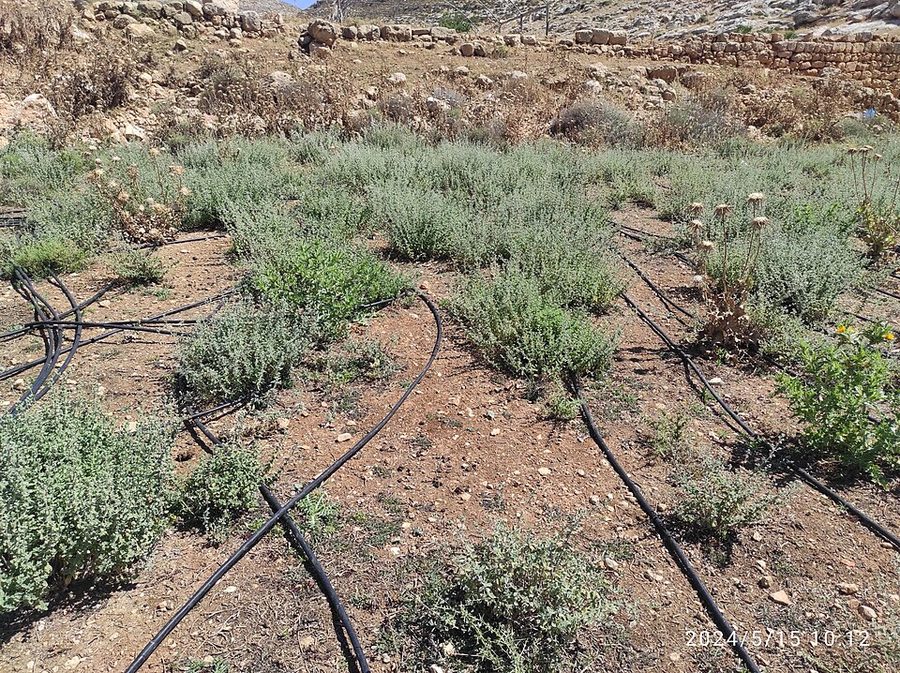
Much of the za’atar sold now is farmed rather than foraged. In 2022 L’Orient-Le Jour visited a cooperative in Qaouzah, a village near the southern border, that had turned the wild plant into a crop: planted in October, cut in the first week of June before the flowers fully open, with each plant producing for seven or eight years. That year it dried 821 kg of za’atar from more than 5.5 tonnes of green herb. That is roughly seven kilos of fresh leaves for every kilo in the jar, which tells you why good za’atar is not cheap.
From hillside to jar
The herb is dried in the shade, somewhere airy, until the leaves crumble. Then it is rubbed between the palms or milled, and the woody stems are sieved out. In many Lebanese houses the dried herb is part of the mouneh, the winter stores, put up once a year with the jams and the pickles.
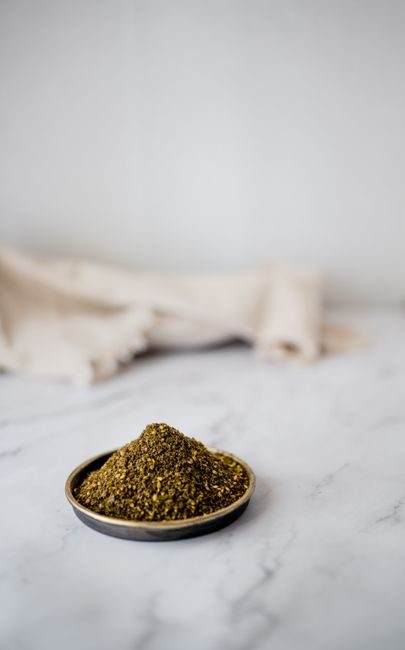
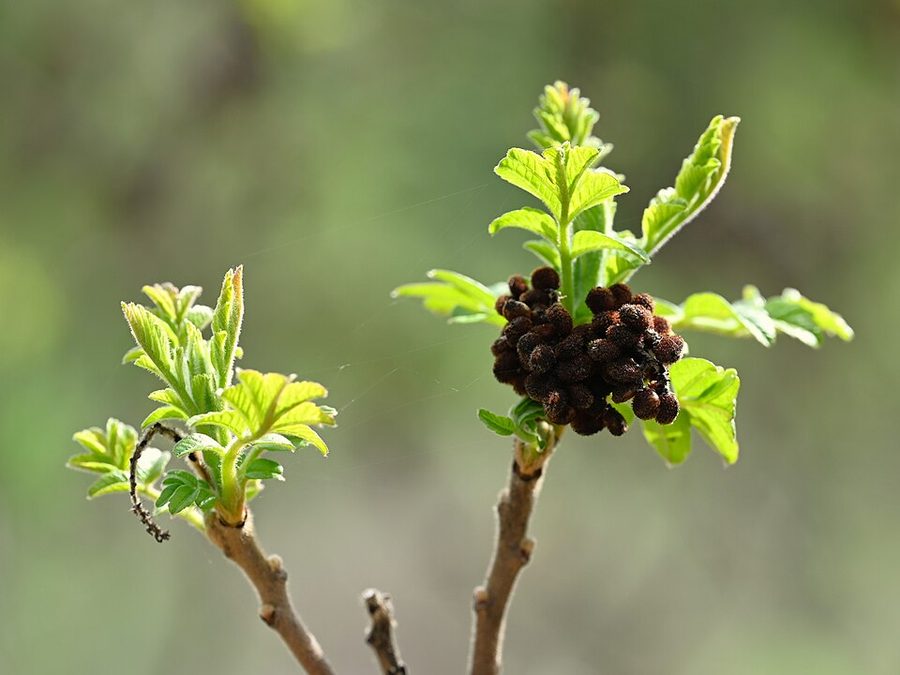
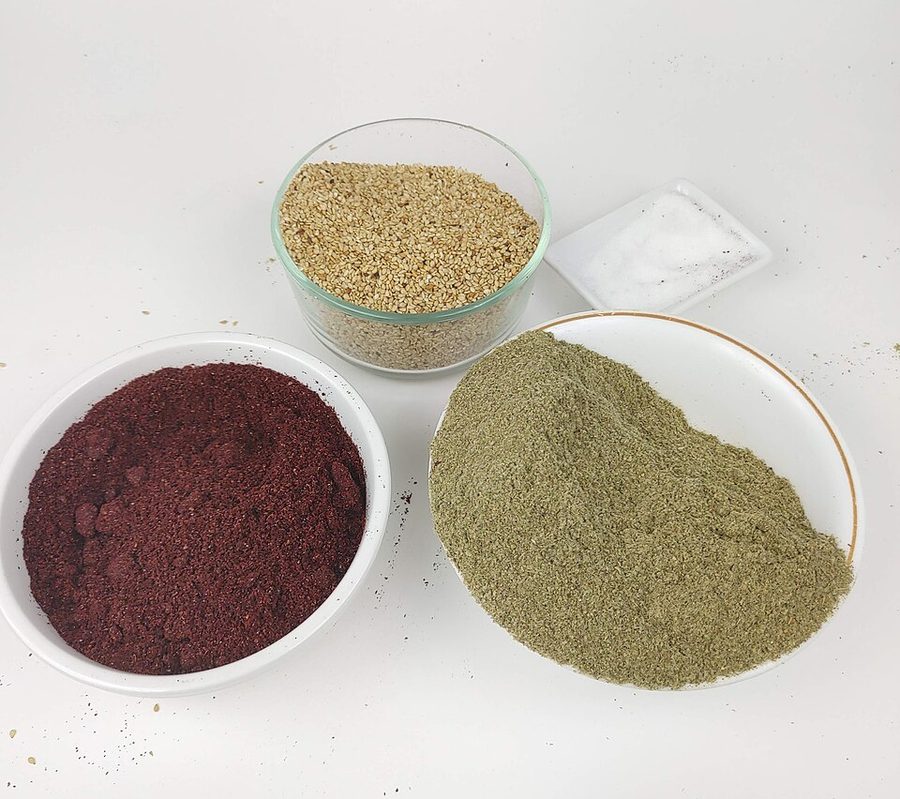
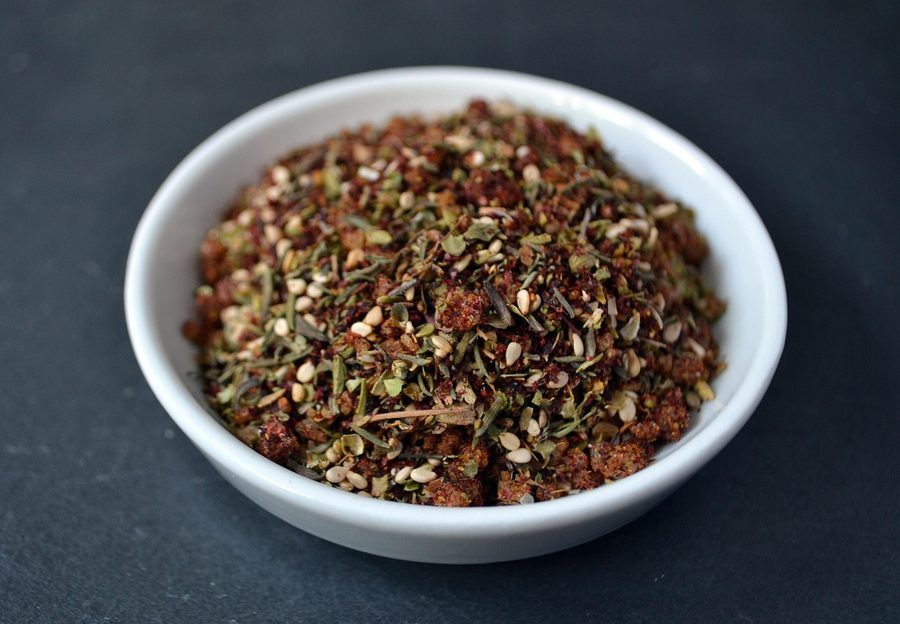
Three things go in with it: ground sumac, the dried berry of Rhus coriaria, for sourness and dark red flecks; toasted sesame for fat, crunch and a nutty smell; and salt to pull them together. Some cooks rub a spoonful of olive oil through the finished mix, which darkens it and makes it clump in the village way.
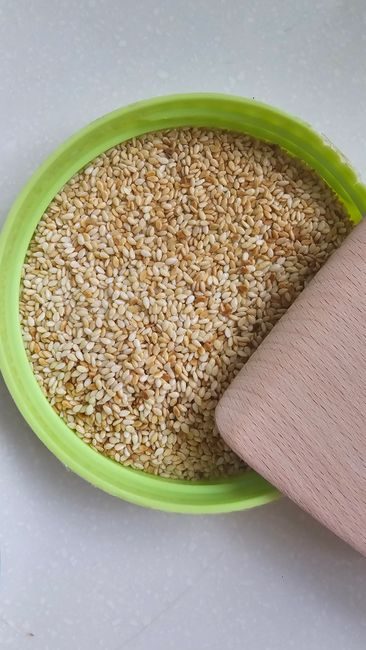
The sesame is where home blends go wrong most often. Raw seeds taste of almost nothing, and seeds toasted to brown taste bitter and drown the herb. You want them pale gold and just smelling of nuts, which takes a few minutes in a dry pan over medium-low heat and needs you standing there shaking it.
Lebanese, Palestinian, Aleppo and Jordanian blends
Every family has its own ratio, and every one of them is right in its own kitchen. Still, the regional styles differ in ways you can see across a market.
| Style | Herb | Sumac | Sesame | Also in it |
|---|---|---|---|---|
| Lebanese | Leads by volume, often O. syriacum with some Thymbra | Generous; the blend reads red-brown | About as much as sumac by weight | Salt; sometimes olive oil rubbed in; in the Chouf, some producers add almonds or walnuts |
| Palestinian | Dominant; the blend reads green | Less | Moderate | Salt; some families add caraway |
| Aleppo (za’atar halabi) | Ground fine, one part among many | Yes | Equal to the weight of everything else combined | Roasted chickpeas, peanuts or pistachios, cumin, coriander, aniseed, fennel, sometimes citric acid |
| Jordanian | Close to the Palestinian style | Moderate | Often more than the Palestinian | Salt |
Lebanese za’atar is the one most people outside the region know, and its mark is the sumac: enough to tint the jar red and make the first taste sour. A typical Lebanese recipe runs four parts herb to roughly three of sumac and three and a half of sesame by weight, which is what I give below. Push the herb up by half and you have the milder, greener mix many mountain villages make; double the sumac and you get a sharp red blend that suits salads and grilled chicken.
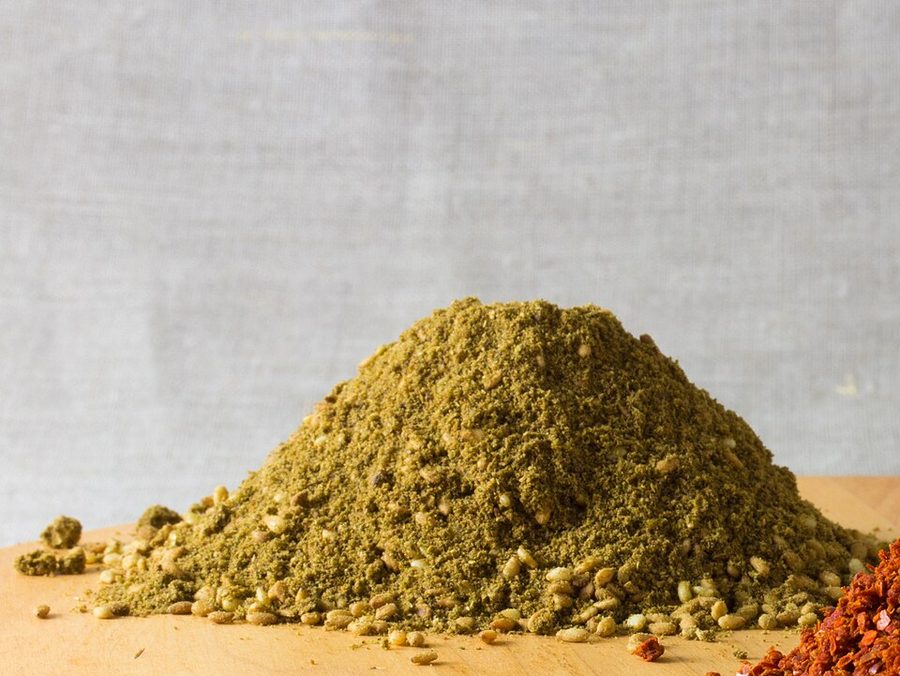
Palestinian za’atar leans the other way: more herb, a greener colour, and in some households a pinch of caraway. For Palestinians the jar carries weight beyond breakfast: its presence marks a Palestinian home, and for refugee families it is a link to the villages they came from.
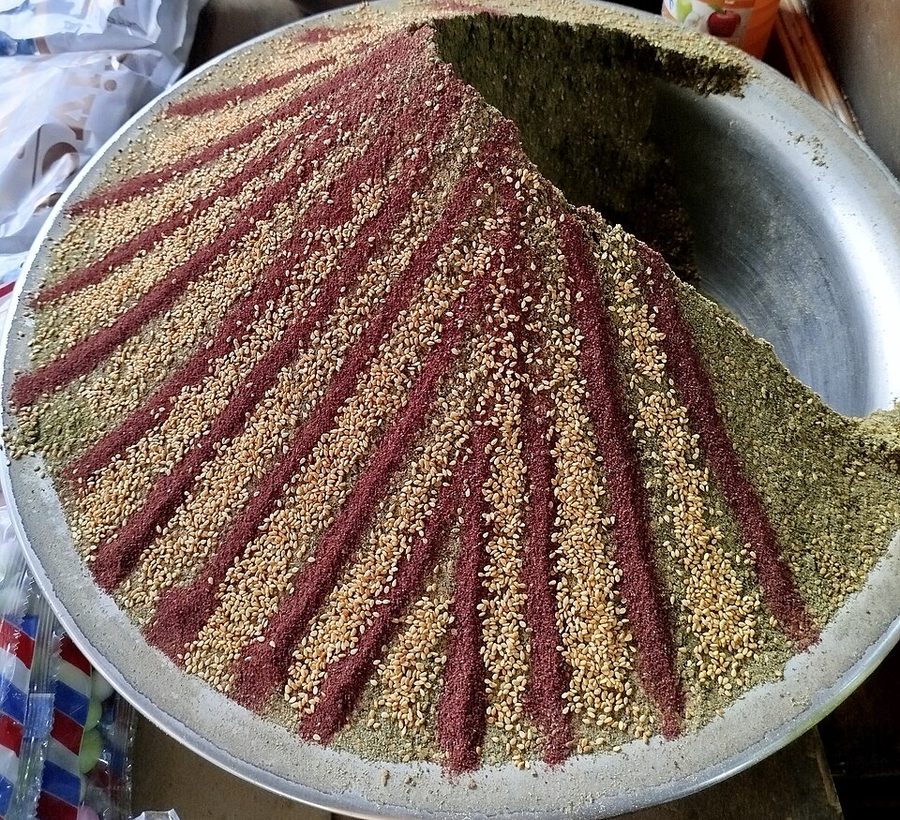
Aleppo’s za’atar is closer to a spice mix with herb in it. The recipe Annahar printed for za’atar halabi roasts and grinds chickpeas and peanuts, warms cumin, aniseed, coriander and sumac before grinding them, and only then adds the finely ground herb. Aleppine home cooks have a rule of thumb for the sesame: weigh everything else, then add the same weight of toasted seeds. The result is browner, nuttier and more filling than the Lebanese mix, and it is eaten the same way, with bread and oil.
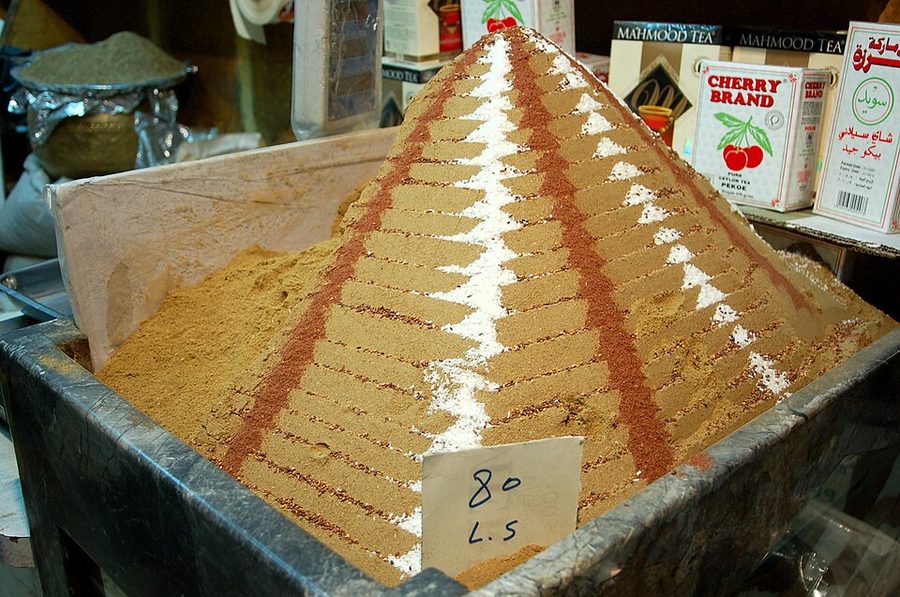
Jordanian za’atar is close kin to the Palestinian blend; commercial Jordanian packs are often described as milder and heavier on sesame. Across all four, more sesame and nuts mean a shorter shelf life, and more salt means a cheaper blend.
Recipe card
Lebanese za’atar blend
Published ratios vary more than you would expect. A Lebanese recipe in Arabic uses a cup of herb to a quarter cup each of sumac and sesame; an English one uses five tablespoons of herb to two each of the others; another uses equal parts of all three, which gives a sesame-heavy, sour mix in which the herb gets lost. I go with the Lebanese one: four parts herb to one each of sumac and sesame by volume keeps the herb in front, where it belongs.
Makes about 110 g (1 1/2 cups), enough for two batches of man’oushe. About 20 minutes, including cooling the sesame.
Ingredients
- 40 g (1 cup) dried za’atar leaves, Origanum syriacum, or 20 g (1/2 cup) each dried oregano and dried marjoram
- 30 g (1/4 cup) ground sumac
- 35 g (1/4 cup) sesame seeds
- 1 tsp fine sea salt, or to taste
- 1 tsp olive oil (optional, for a darker, clumpier village-style blend)
Method
- Toast the sesame in a dry frying pan over medium-low heat, shaking the pan constantly, for 3 to 5 minutes, until pale gold and smelling of nuts. Tip onto a plate at once and leave to cool completely, about 10 minutes. Warm seeds sweat in the jar and the blend clumps.
- Pick out any woody stems from the herb. Rub the leaves between your palms over a bowl, or pulse a few seconds in a spice grinder, until fine but not powdered.
- Add the sumac and salt to the herb and mix with your fingers, breaking up any lumps of sumac.
- Stir in the cooled sesame gently, so the seeds stay whole.
- If using the oil, drizzle it over and rub the blend between your fingertips for a minute, until it darkens slightly and smells stronger.
- Taste a pinch on bread dipped in olive oil. Add sumac if it is flat, salt if it is dull. Store in a clean, dry jar with a tight lid.
Buying za’atar: colour, smell and what to skip
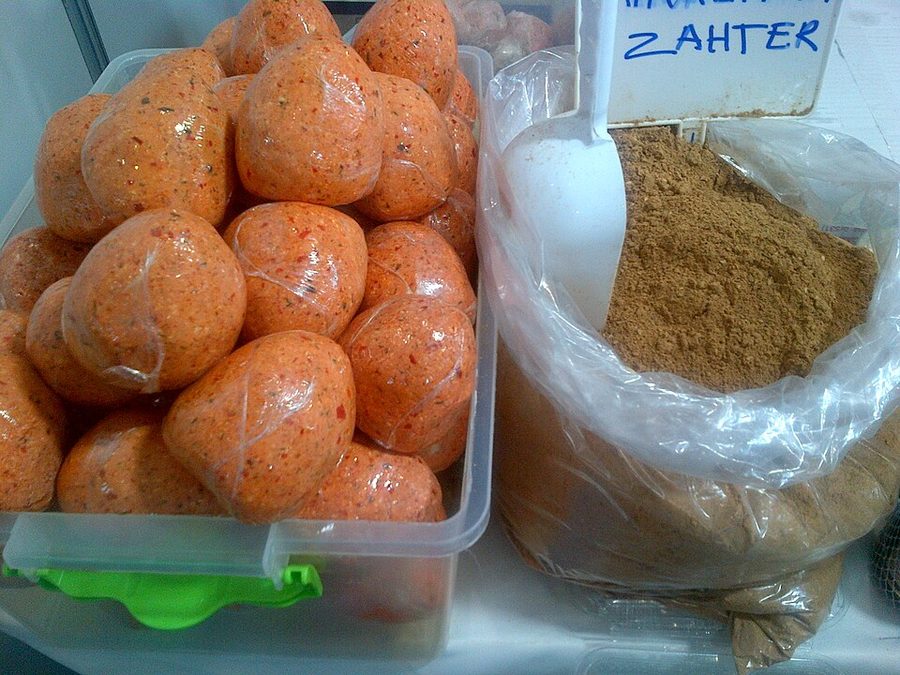
Buy it loose where you can, from a spice shop or a market stall that lets you rub a pinch. Look first. The herb should be green to olive, with burgundy flecks of sumac and visible sesame. Grey or khaki dust is old, and a blend that is mostly tan seeds is mostly filler.
Then smell it: fresh za’atar smells clean and green, old za’atar of dust or of nothing. Taste it last, sour first, then herb, then salt. If the salt arrives first, the maker was saving money.
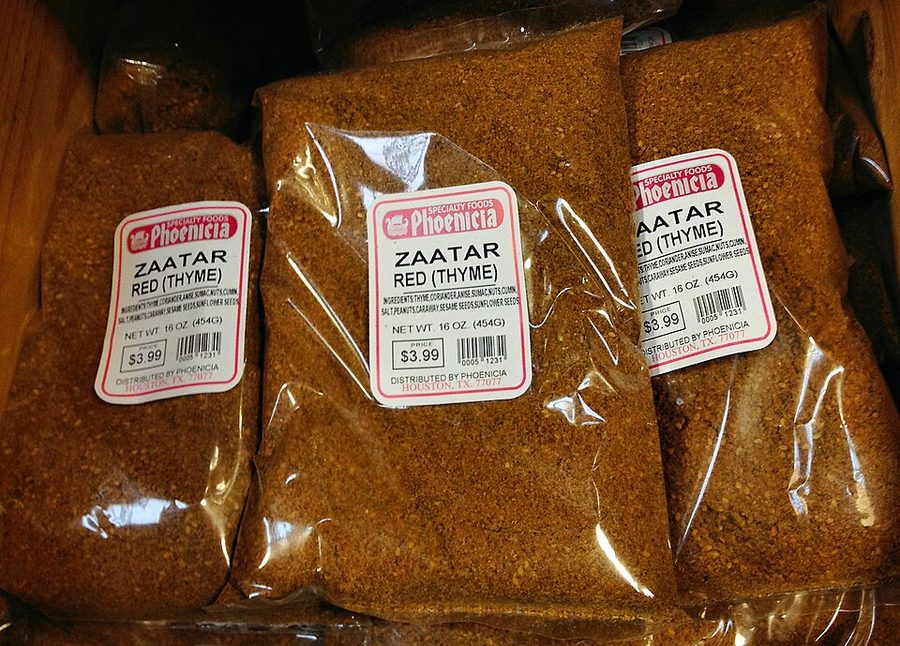
On a packet, read the ingredients in order. Commercial blends sometimes bulk up with wheat flour, which matters if you cook for anyone who avoids gluten. Citric acid is a cheap stand-in for sumac’s sourness, and lots of salt or sesame near the top of the list is the same trick. “Thyme”, “hyssop” and “wild oregano” on the front tell you nothing about which plant is inside.
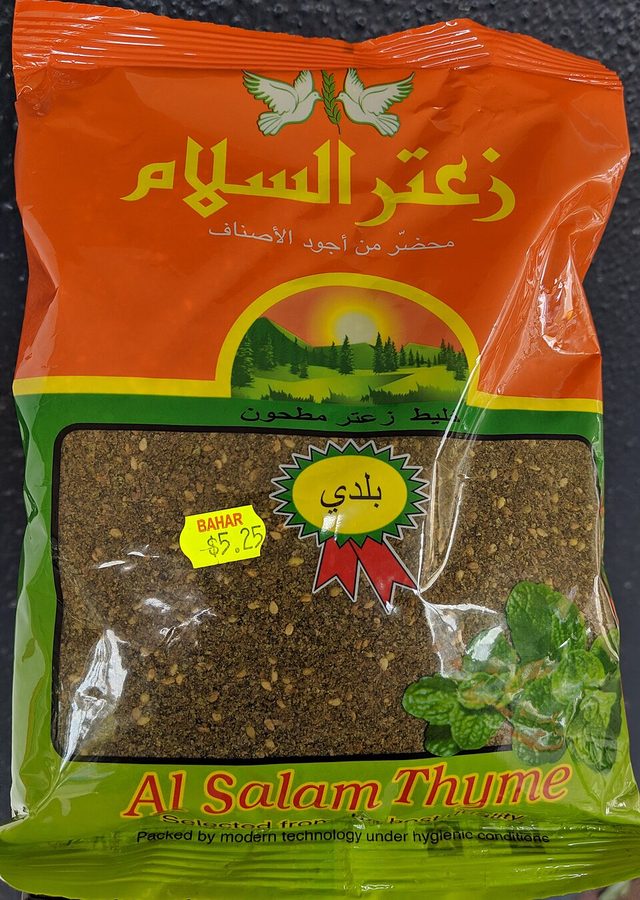
Look at the sumac in the mix too. It should be deep burgundy and slightly moist. Sumac that has faded to pale brown has lost its sourness, and no amount of it will make the blend taste right.
Even Lebanese bakeries do not always use Lebanese herb. In 2023 a baker in Mar Mikhael told L’Orient Today he bought his za’atar from abroad, because the local herb did not suit his manakish. A bakery blend has to be cheap and hold up in a very hot oven. The jar you take home can be better than that.
Man’oushe bi za’atar, the Lebanese breakfast
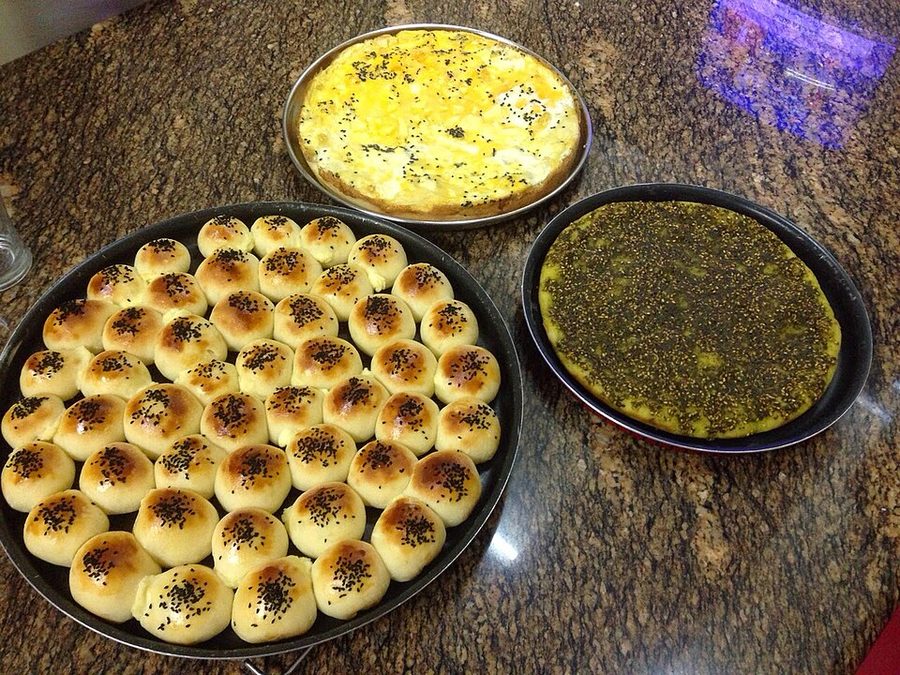
The man’oushe (منقوشة), plural manakish, takes its name from the Arabic root n-q-sh, to carve or engrave. It describes the fingertip dents pressed into the dough so the topping has somewhere to sit. The za’atar version is the default; the same bakeries also make them with cheese, with kishk, the fermented yoghurt and wheat paste, or half and half.
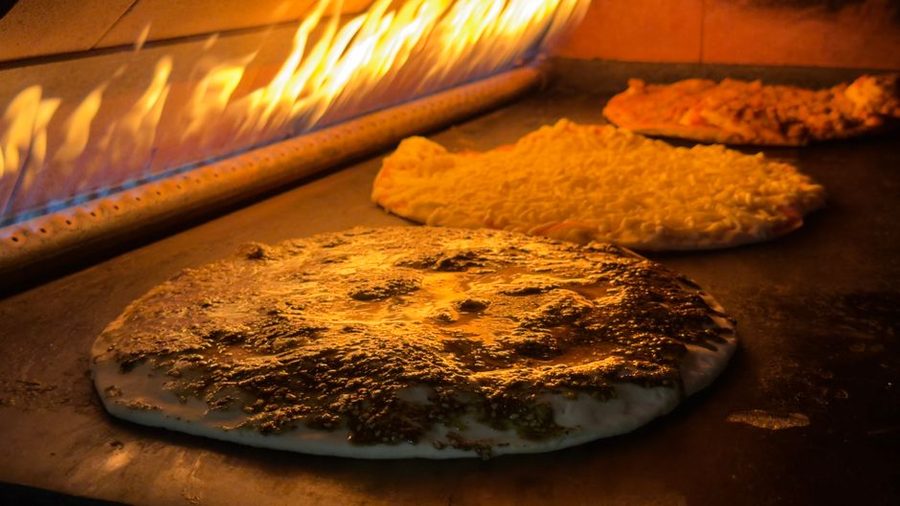
In 2023 UNESCO added al-man’ouché to its list of the intangible cultural heritage of humanity, as a culinary practice of Lebanon. The file describes the dough topped with thyme, sumac, toasted sesame, salt and olive oil, and a second garnish after baking: labneh, tomatoes, cucumbers, olives, mint. It also records that bakers pray over the dough as it rises, Muslims reciting the opening of the Fatiha and Christians making the sign of the cross.
The morning gathering around it has a name, sobhiyé, and the UNESCO file singles out the smell of the bake as a mark of identity in its own right. The food writer Barbara Abdeni Massaad visited more than 250 bakeries for her book Man’oushé: Inside the Lebanese Street Corner Bakery, and told Olive Oil Times the listing was a small win in years of crisis.
The corner furn
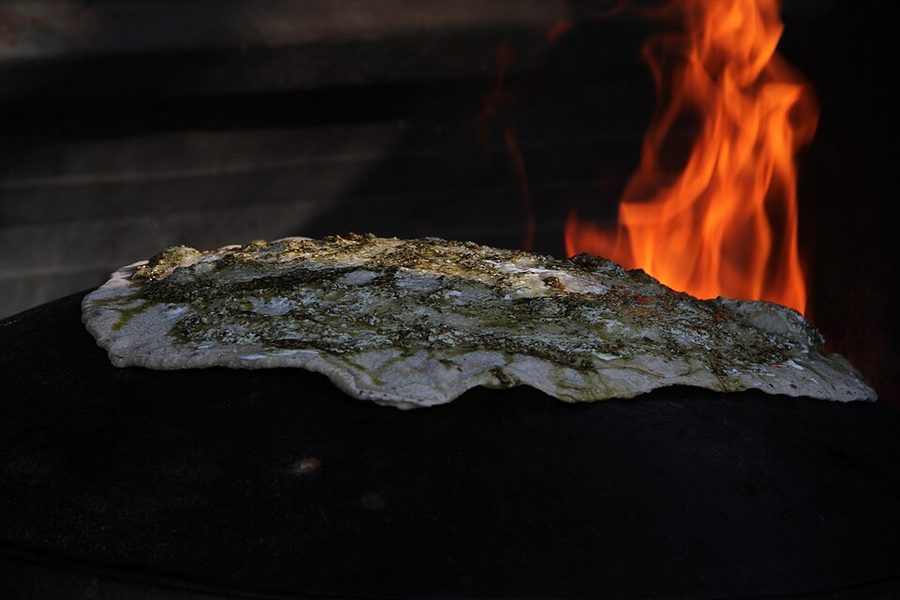
The furn is the neighbourhood bakery oven, and the man’oushe belongs to it. The food historian Gil Marks tied the spread of topped flatbreads in the Levant to bakers’ ovens with a heated floor, where dough lies flat, rather than the clay tannur, where it is slapped onto the wall. The thinner versions are baked on the saj, a domed iron griddle, and come out soft enough to roll.
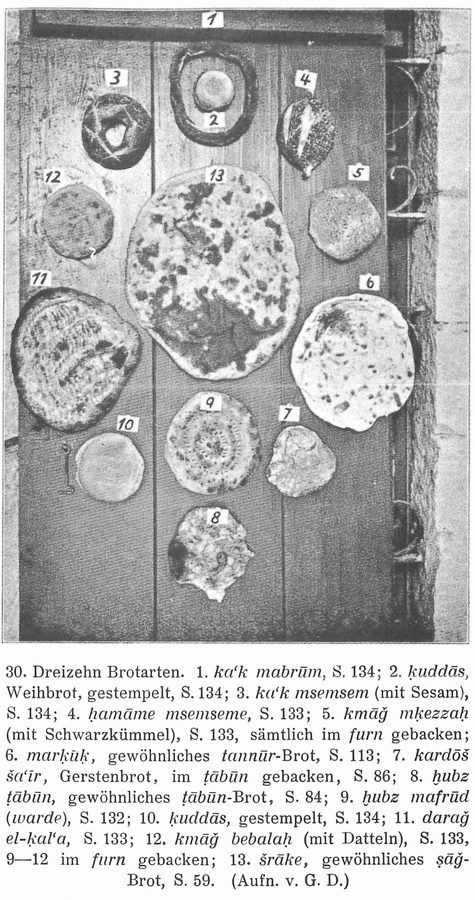
The topping is old. In 1936 the German scholar Gustaf Dalman described manakish in Arbeit und Sitte in Palästina as dough, leavened or not, coated in oil and oregano and baked in a tabun oven. Swap the clay oven for a hot bakery floor and that is still the recipe.
Bread prices in Lebanon are set by the state; manakish prices are not. The Ministry of Economy fixes the price of a bundle of Arabic bread, and in September 2026 raised it to 80,000 Lebanese pounds, about US$0.89, because of fuel costs. A man’oushe has no such cap, so what it costs depends on the bakery, the neighbourhood and that month’s diesel.
Man’oushe bi za’atar at home
Dough recipes in Arabic and English agree on about 300 ml of water to 500 g of flour, and most put olive oil in the dough. Where they split is the oven: 200°C (400°F) for 10 to 12 minutes, 220°C (425°F) for 15, or 250°C (480°F) for 6 to 8 on a preheated tray. I go with the hottest and shortest, because the bread stays soft and the topping cooks before it dries out, which is the nearest a home oven gets to the furn.
For the topping, most recipes mix za’atar and oil in equal volumes; some use twice as much za’atar as oil. Equal parts is right. A dry paste scorches and turns bitter in a hot oven.
Makes 8. About 2 hours, of which an hour is rising.
Recipe card 2
Ingredients
For the dough
- 500 g (4 cups) plain flour, plus a little for dusting
- 7 g (2 1/4 tsp, one sachet) instant or active dry yeast
- 1 tsp (4 g) sugar
- 1 1/2 tsp (9 g) fine salt
- 60 ml (1/4 cup) extra virgin olive oil
- about 300 ml (1 1/4 cups) warm water, 38 to 40°C (100 to 105°F)
For the topping
- 60 g (about 1/2 cup) Lebanese za’atar blend
- 120 ml (1/2 cup) extra virgin olive oil
To serve
- Sliced tomato and cucumber, fresh mint, olives and labneh
Method
- If using active dry yeast, stir it with the sugar into the warm water and leave 5 to 10 minutes, until foamy. Instant yeast goes straight into the flour.
- In a large bowl, mix the flour and salt (and the sugar and instant yeast, if using). Add the olive oil and most of the water and stir to a rough dough, then add the rest of the water a little at a time until no dry flour is left.
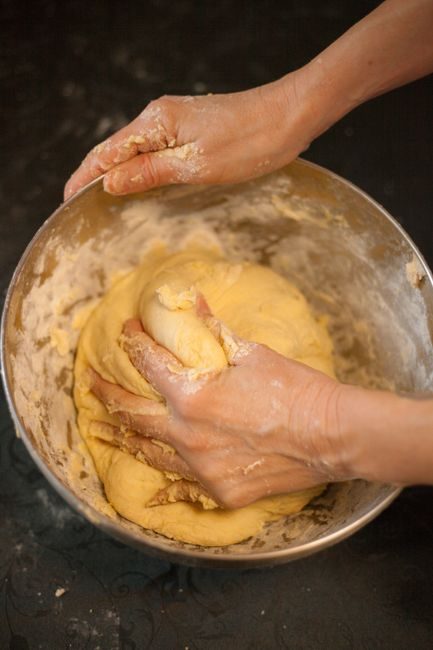
- Knead on a lightly floured surface for 8 to 10 minutes, until smooth, soft and springy when pressed.
- Put the dough in a lightly oiled bowl, turn it to coat, cover and leave somewhere warm for about an hour, until doubled.
- Meanwhile, stir the za’atar and olive oil together into a loose, spreadable paste and leave it to stand so the herb softens.
- Put a heavy baking tray upside down, or a pizza stone, on the middle shelf and heat the oven to 250°C (480°F), or as high as it goes, for at least 30 minutes.
- Knock back the dough and divide it into 8 pieces of about 100 g. Roll into balls, cover and rest 10 minutes.
- On a floured surface, roll or press each ball to a round about 18 cm (7 in) across and 5 mm (1/4 in) thick. Press your fingertips all over the surface to make dents, leaving a thin rim.
- Stir the za’atar paste, because the oil settles, and spread 1 1/2 to 2 tbsp over each round, right to the rim.
- Slide two or three rounds at a time onto baking paper and onto the hot tray. Bake 6 to 8 minutes, until the edges and base are golden and the za’atar smells toasted but has not darkened.
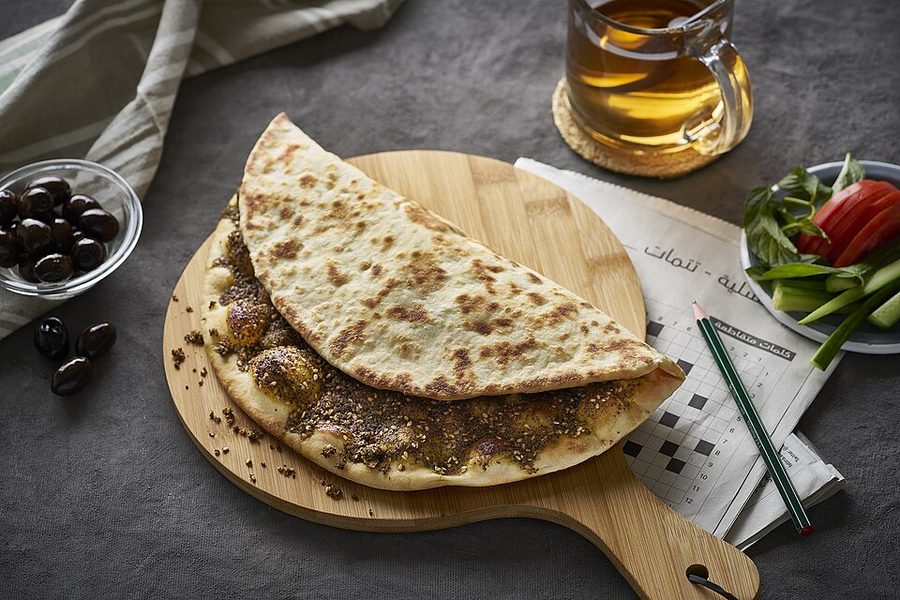
- Serve hot, flat or folded in half, with the tomato, cucumber, mint, olives and labneh alongside.
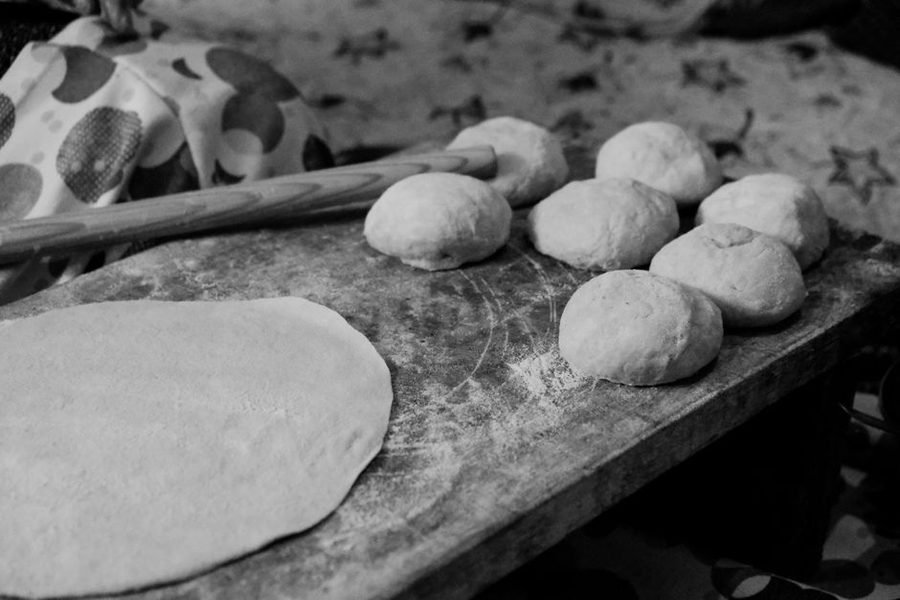
Two fixes for the usual problems. If the bread comes out thick and bready, you rolled it too thick: 1 cm is a bun, 5 mm is a man’oushe. If the crust is hard, wrap the hot breads in a clean tea towel for a few minutes and they soften.
Other ways to use it
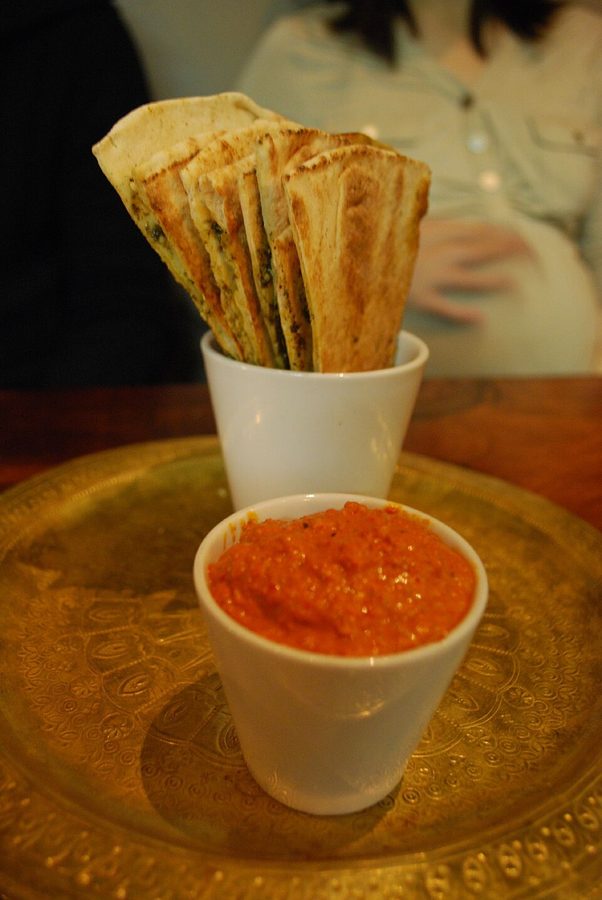
The simplest is also the most common. Put a bowl of good olive oil next to a bowl of za’atar, tear warm bread, dip it in the oil first and the za’atar second. This is zeit w za’atar, oil and za’atar, and with tea, tomatoes, cucumber and olives it is a full breakfast in much of the Levant.
Za’atar also goes with ka’ak, the soft sesame bread, either on the side for dipping or tucked inside the split loaf. A spoonful on a plate of hummus or baba ganoush, over the pool of oil, is where many people first meet it outside the region.
Labneh and shanklish
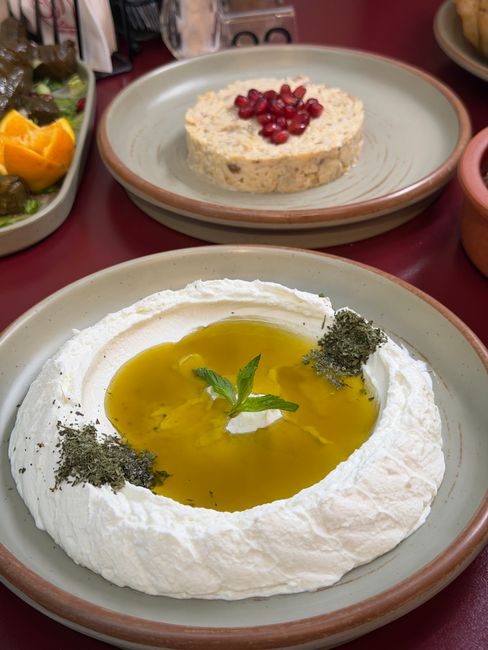
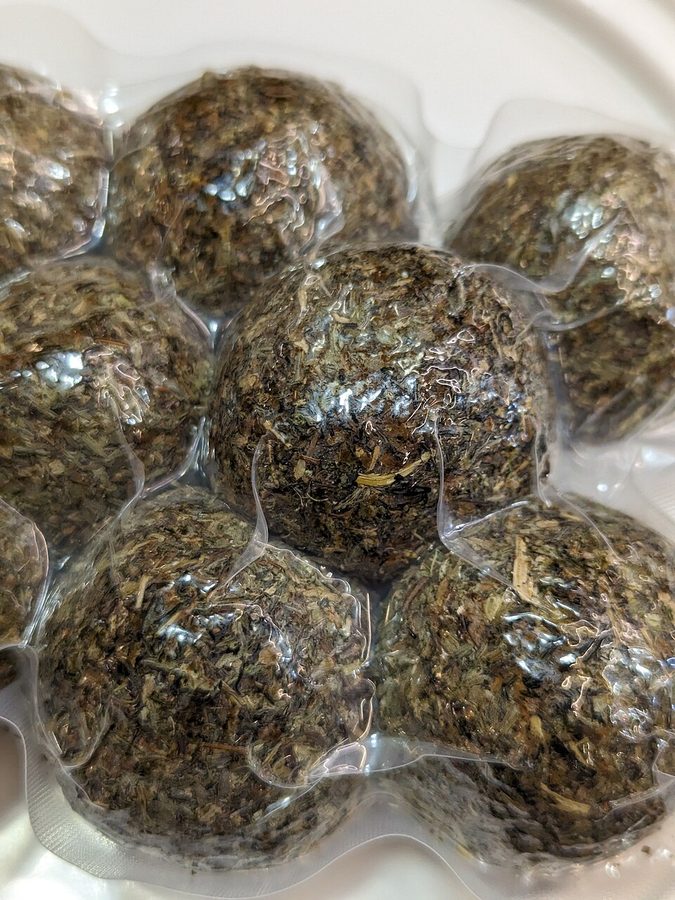
Labneh, the thick strained yoghurt, is the natural partner: spread it on a plate, make a well, fill it with oil and scatter za’atar over the top. The sourness of the sumac sharpens the yoghurt’s own tang. Shanklish, balls of fermented, aged yoghurt cheese, comes rolled in za’atar, or in chilli for the spicy red version that Syrians favour.
Fresh za’atar salad
In spring, when the leaves are young and soft, Lebanese and Palestinian cooks eat fresh za’atar as a salad, salatet za’atar akhdar. The leaves are picked off the stems and dressed with thinly sliced onion, a little garlic, lemon juice and olive oil. It tastes strong, almost peppery, so it comes in a small bowl, eaten with bread.
Roast vegetables, eggs and chicken
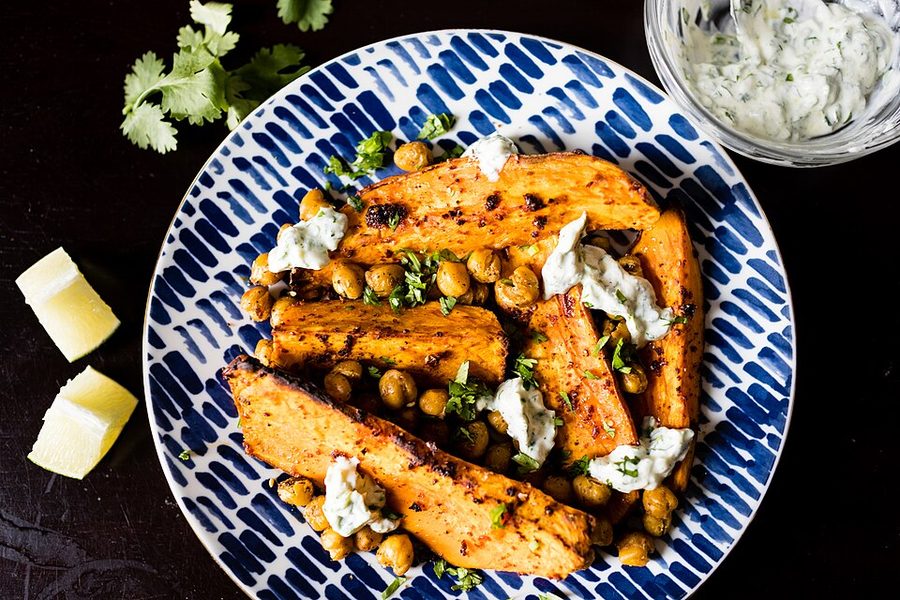
Toss potatoes, cauliflower or carrots with olive oil and roast them, then add the za’atar for the last few minutes or after they come out. Added at the start, the herb and sesame burn long before the vegetables are done.
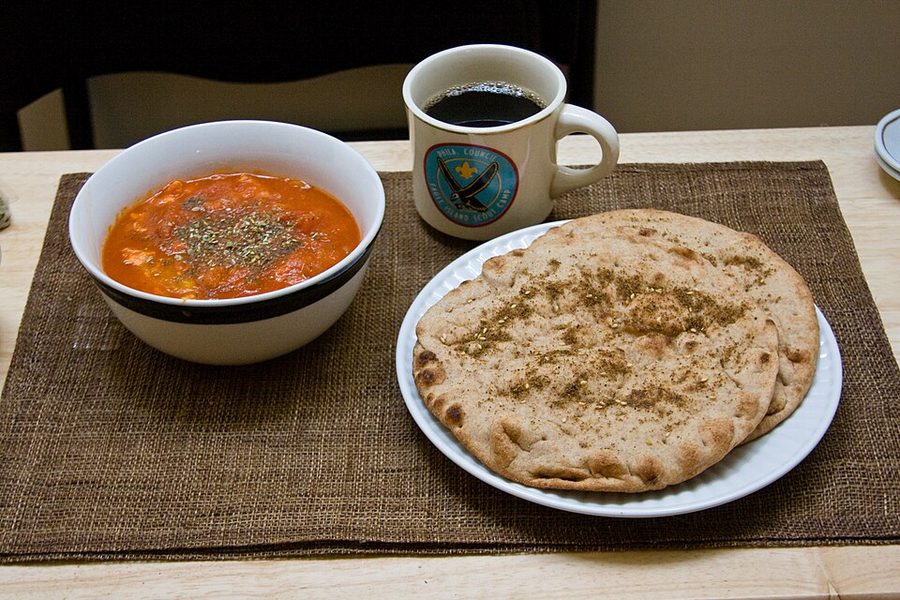
The same goes for fried eggs: crack them into hot oil, then scatter za’atar over the whites as they set. Eggs poached in tomato sauce take it well too, with bread on the side for the sauce.
For chicken, a sumac-heavy blend mixed into olive oil and lemon makes a quick marinade before grilling or roasting. Keep the heat moderate, or finish under a grill for only a minute, because the sesame catches.
Keeping it, and carrying it home
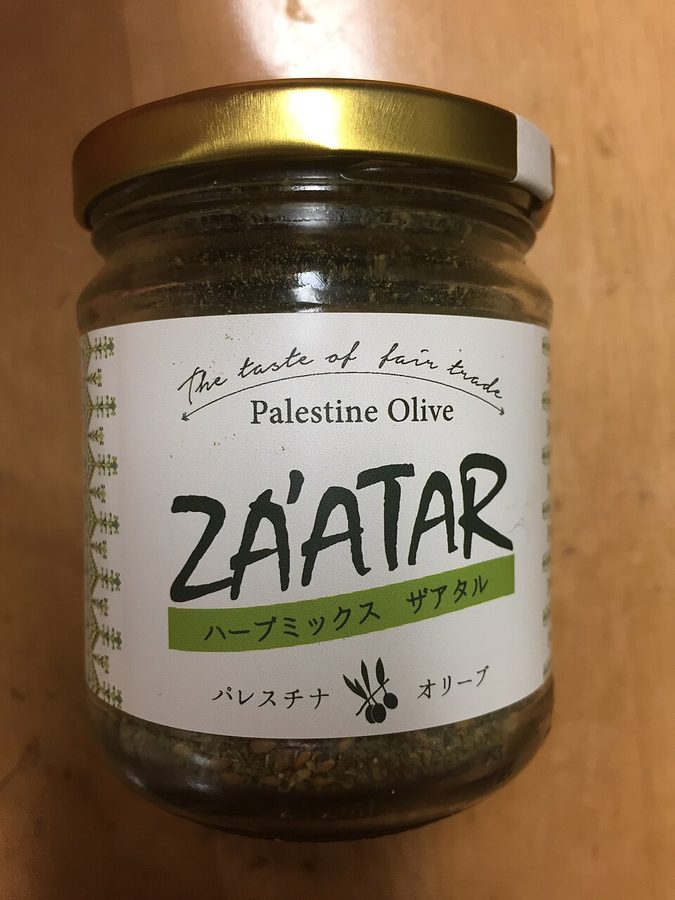
Dried herb on its own keeps a long time; dried thyme-family leaves can hold their flavour for up to two years in a sealed jar. The blend does not. Sesame carries oil, and the oil goes rancid, so a mixed za’atar is at its best for about three months and worth using within six. Store it in a dry, airtight jar away from the stove and out of the light, and use a dry spoon.
Blends with nuts, like the Chouf versions with almonds or walnuts, belong in the fridge and should be finished within a month. Aleppine households freeze their year’s za’atar halabi, and some keep the sesame aside and mix it in a few hundred grams at a time, so the end of the year’s batch is not short of seeds. I’d do the same with any za’atar: keep the herb and sumac mix in a jar, add toasted sesame to a small batch, and make another when it runs out.
Za’atar is one of the easiest things to bring home from a Lebanese market: a dried spice, which travels well sealed and declared at the border, and the simplest item on any list for bringing food home.
Back at the furn, the baker has already folded the next one. Make yours at home the same way: dough thin, paste wet, oven as hot as it goes, tomato and mint on the side, and eat it before the oil soaks through the paper.