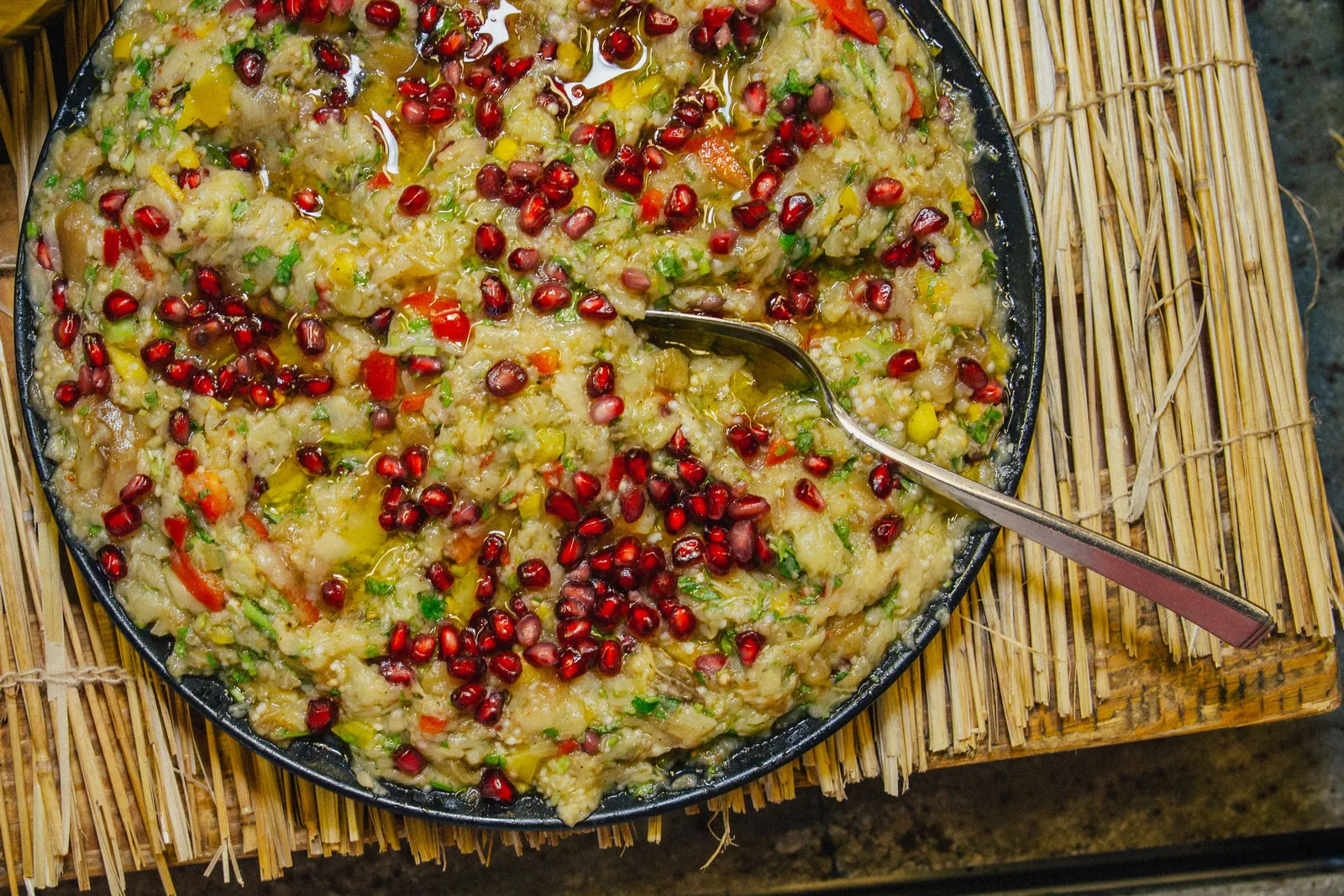
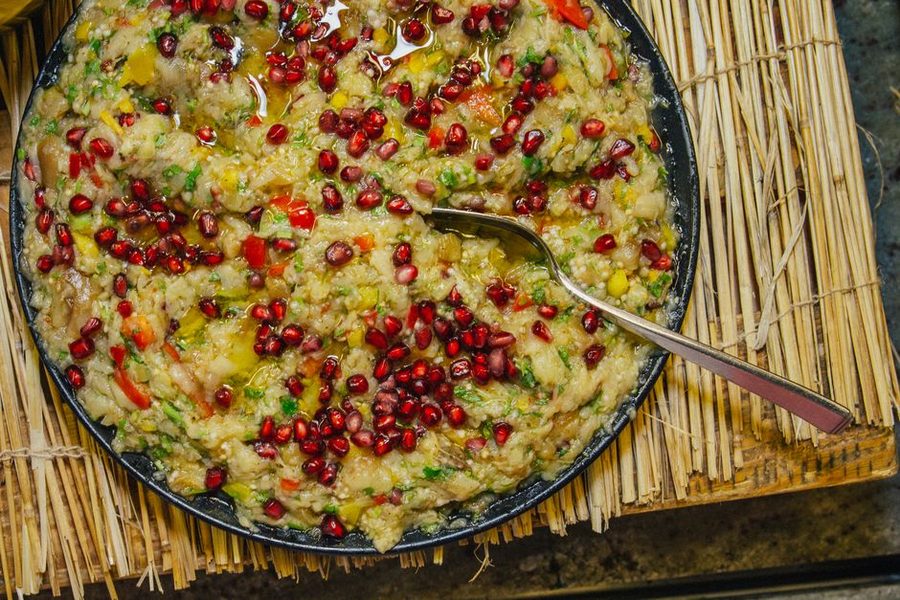
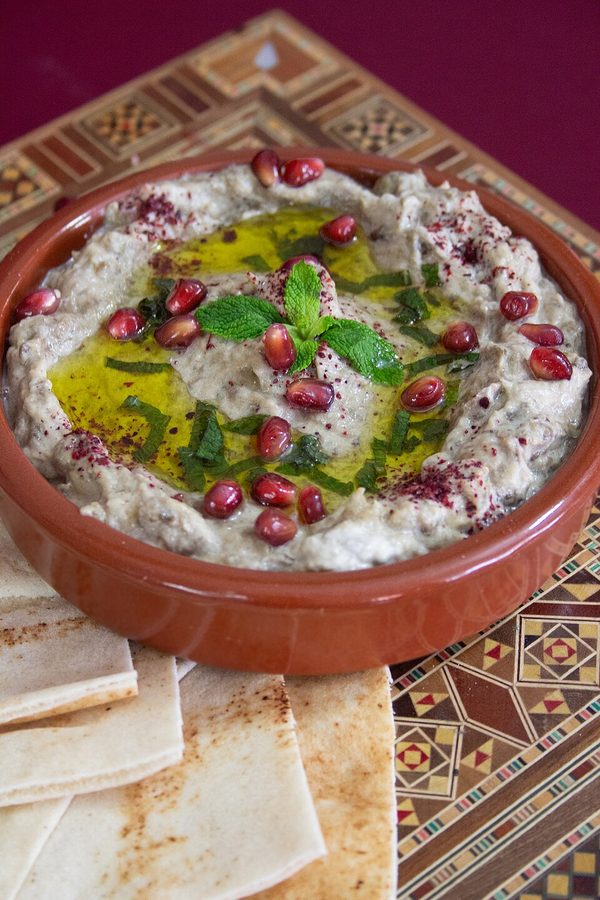
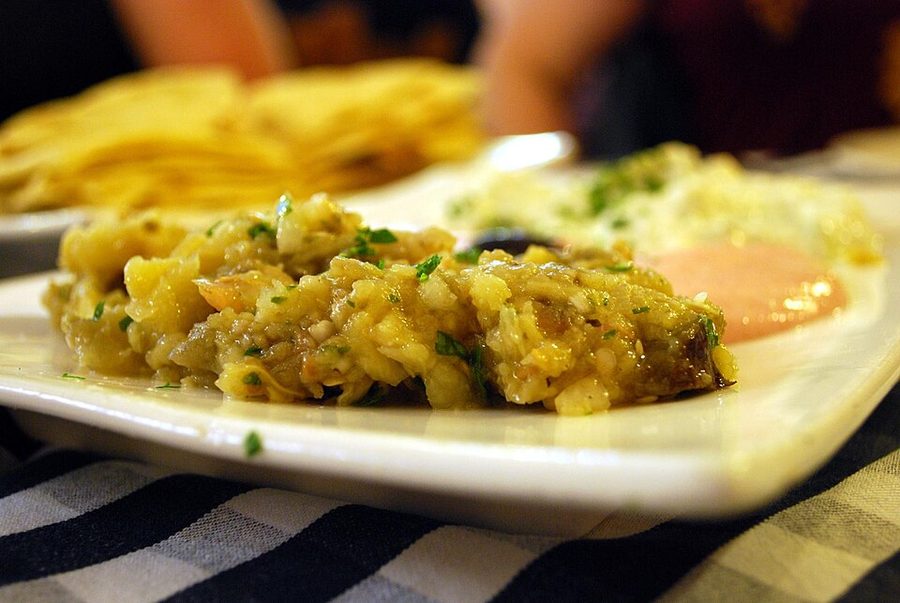
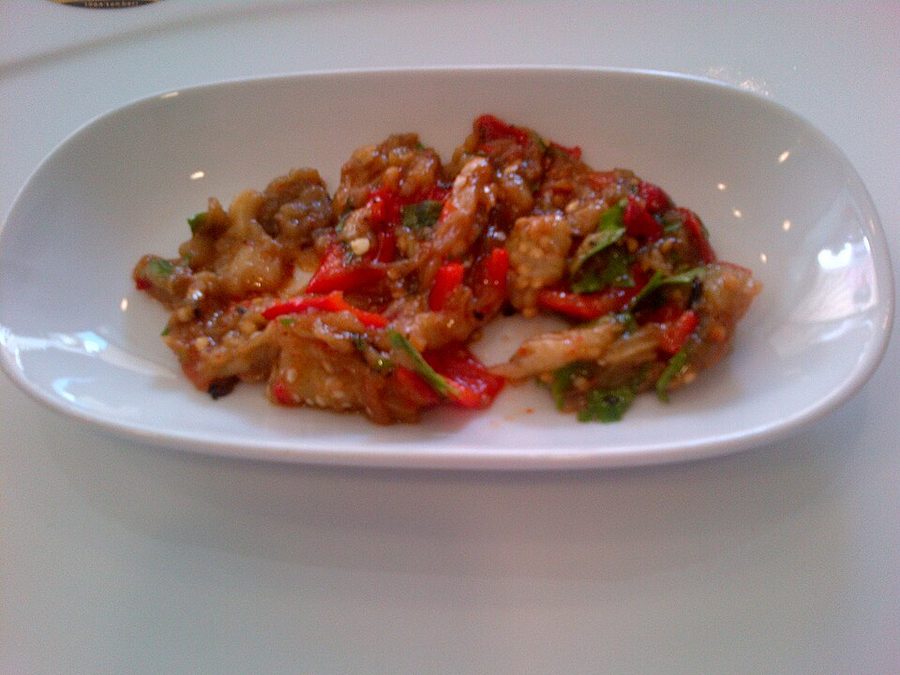
Ask for baba ganoush at a Lebanese table and there is a fair chance the bowl that comes back holds no tahini at all. What arrives is smoky eggplant chopped with a knife, tossed with tomato, green pepper, onion and parsley, and dressed with lemon, olive oil and a dark streak of pomegranate molasses. The pale, creamy dip you were picturing is on the menu too, under another name: moutabal.
Outside the Levant the two names slid together, and in most of the English-speaking world “baba ganoush” now means the tahini dip and nothing else. Even inside the region the line is blurred. Lebanese cooks do not all agree, Syrian and Jordanian kitchens stir yoghurt into theirs, and one of the best-known Lebanese food writers in English calls her tahini dip baba ghannuge without apology.
The good news is that both dishes start in exactly the same place: an eggplant left over a flame until its skin turns to black paper and the inside slumps into a smoky, silky mess. Get that part right and either recipe is about ten minutes of work. Get it wrong and no amount of tahini will save you.
Contents 9 parts
Two names, one eggplant
Baba ganoush (بابا غنوج) is usually spelt baba ghanoush or baba ghanouj on menus, and nobody is quite sure what it means. Baba is “father” or “daddy”, and ghannuj is read as “pampered” or “coquettish”, so the name comes out as something like spoiled old dad. Hans Wehr’s Dictionary of Modern Written Arabic, in its 1979 edition, lists both baba ghannuj and abu ghannuj as a dish of mashed eggplant with sesame oil and marks the term as Syrian and Lebanese. Arabic-language reference works add a folk story about a well-loved priest called Ghannuj and a poor parishioner who brought him the only dish he could afford, which you can take or leave.
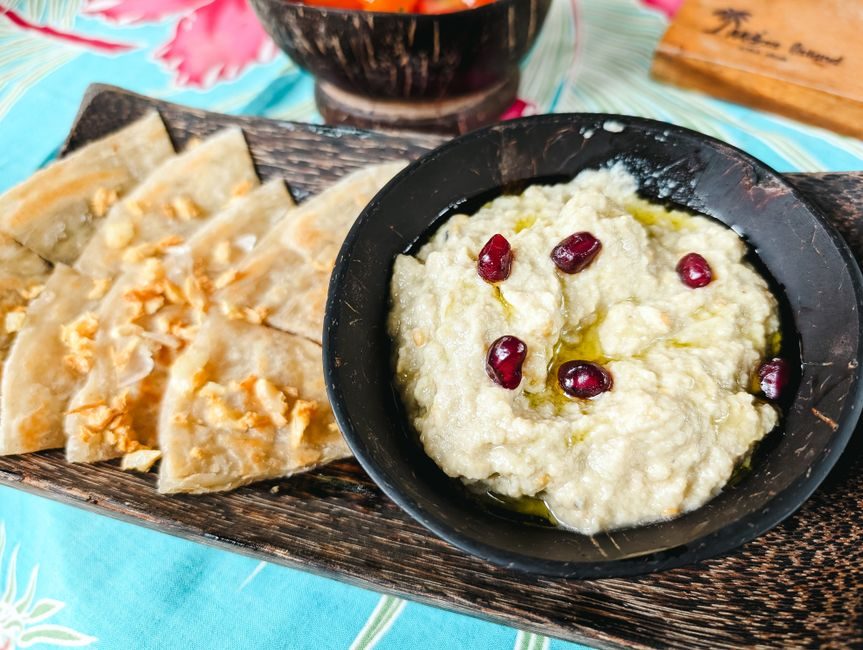
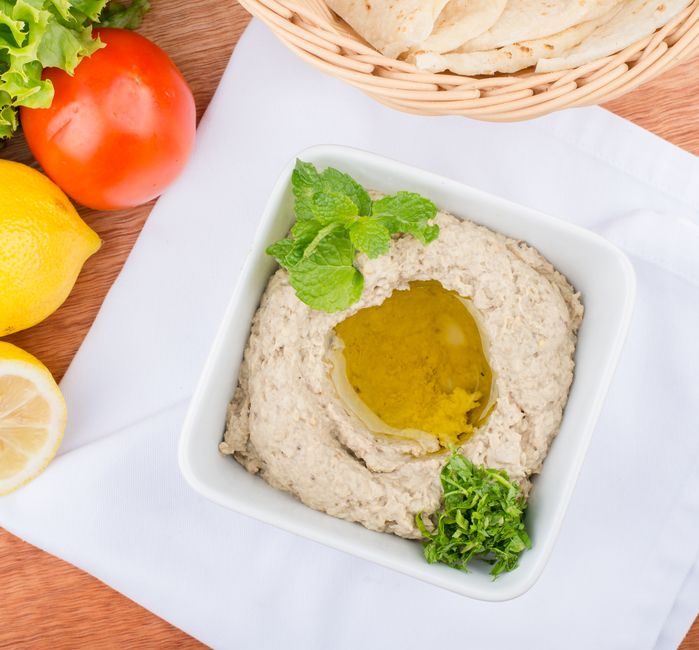
Moutabal (متبّل) is easier. It means “seasoned” or “spiced”, from the same root as tabil, spice, and in Lebanon it is the name for the creamy dip of smoked eggplant, tahini, lemon and garlic. Lebanese and Arabic-language sources make the same point again and again: in much of Lebanon the tahini version is moutabal, and baba ghanouj is the coarser salad of smoked eggplant with tomato, onion, parsley and pomegranate molasses. Abroad, and on plenty of Lebanese restaurant menus outside Lebanon, the tahini dip took the more musical name.
Then the exceptions start. Anissa Helou, the Lebanese-Syrian writer whose first book on Lebanese cooking came out in 1994, gives a recipe for “baba ghannuge” that is eggplant, tahini, garlic and lemon, so the dip by its foreign name. Arabic-language reference entries treat the two words as near-synonyms and describe moutabal as the version with thick yoghurt added. Recipes from Jordan, Syria and the Gulf often stir a spoonful or two of yoghurt or laban into their moutabal, and in Egypt the tahini dip goes by baba ghannug.
So there is no single correct answer, and anyone who tells you there is has not eaten in enough kitchens. In most of Lebanon the split holds, moutabal for the tahini dip and baba ganoush for the chopped salad, and that is how I use the names. If you are ordering abroad and want the salad, describe it; the name alone will almost always get you the dip.

Buying the eggplant
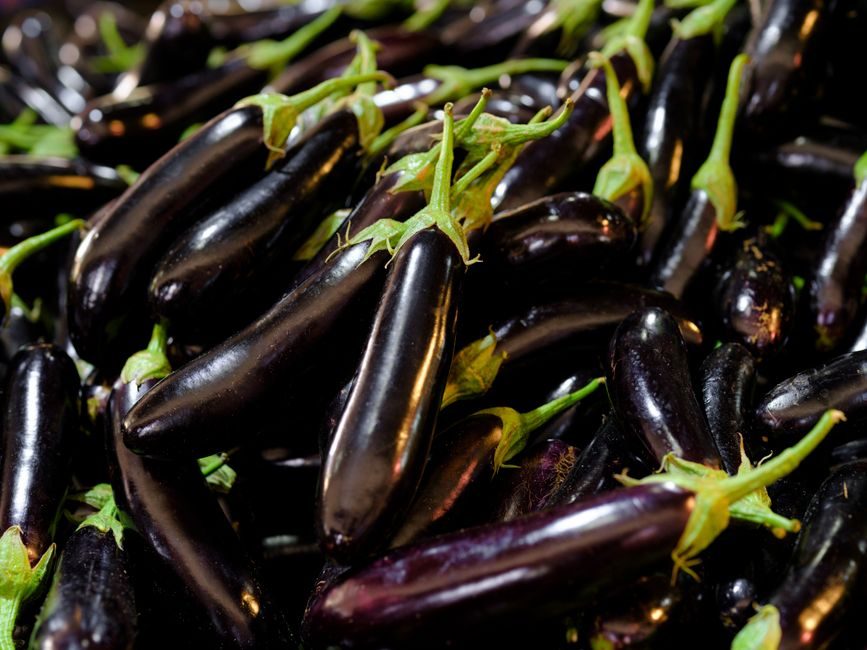
Both dishes are mostly eggplant, so the shopping matters more than the recipe. Look for fruit that is firm, smooth and glossy, with a fresh green cap rather than a brown, shrivelled one. Ohio State’s extension guide to selecting and storing eggplant puts the best size at about 8 to 10 cm (3 to 4 inches) across, and it says plainly that shrivelled, flabby eggplant is often bitter.
Bitterness is mostly an age problem. Eggplants are picked before the seeds harden, and the UC Davis postharvest notes on eggplant say the fruit turns pithy and bitter as it passes that point. Press the skin with your thumb: it should give a little and spring back. A dull skin, a hollow feel or a fat seed pocket when you cut one open all mean the fruit sat too long on the plant or the shelf.
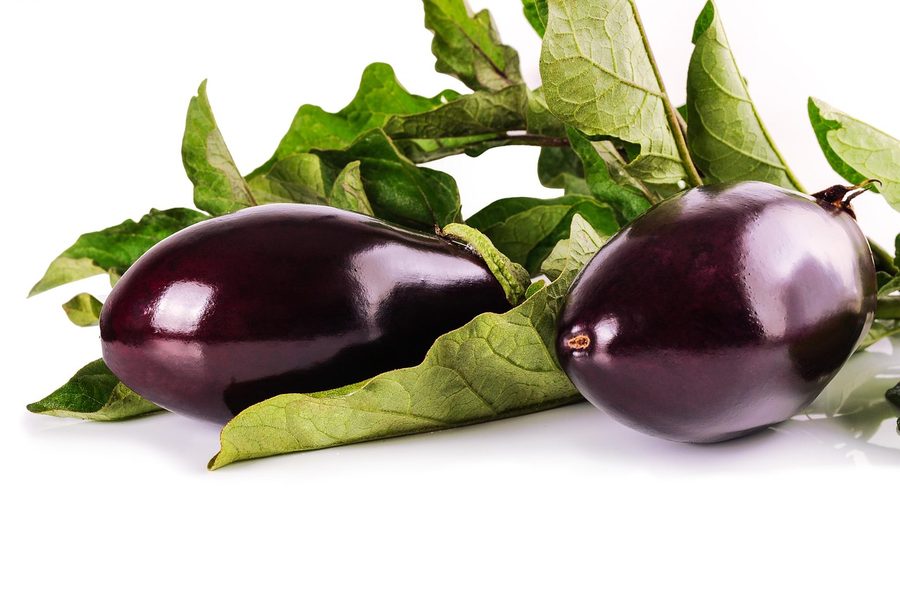
Sources disagree on weight. The extension guides say heavy and firm, while some Lebanese cooks say to choose one that feels light for its size because it will have fewer seeds. I side with firm and glossy, and I would rather have two medium eggplants of about 500 to 600 g each than one giant, which takes forever to cook through and is more likely to be seedy.
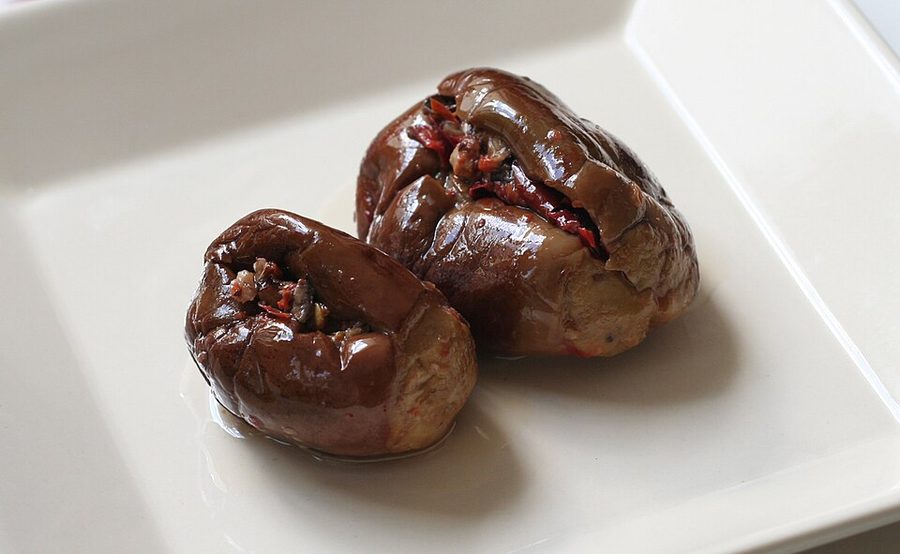
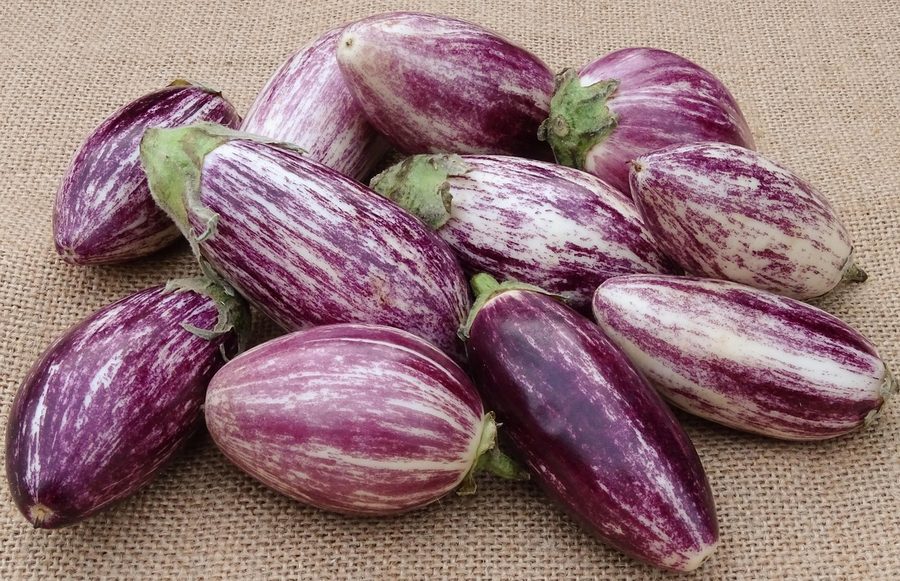
Shape matters less than freshness. Large round or teardrop globe eggplants give the most flesh for the least skin and are what most moutabal recipes call for. The long, slim kind chars fast and works fine, it just yields less. Lebanese and Syrian cooks keep the small round black baladi eggplant for makdous, and stuffing it is a better use of it than a dip.
Do not buy eggplants a week ahead and keep them in the coldest part of the fridge. UC Davis recommends 10 to 12°C (50 to 54°F) and warns that colder storage brings chilling injury after a few days: pitting, bronzed patches, browned seeds. The Ohio guide suggests the vegetable drawer and using them within a week. I buy them the day before, or the morning of.
Charring: flame, coals or oven
Whatever heat you use, prick each eggplant three or four times with a fork or the tip of a knife first. It lets steam out. Skip it and sooner or later one will split with a bang and spray hot pulp across the stove.
Over a gas flame
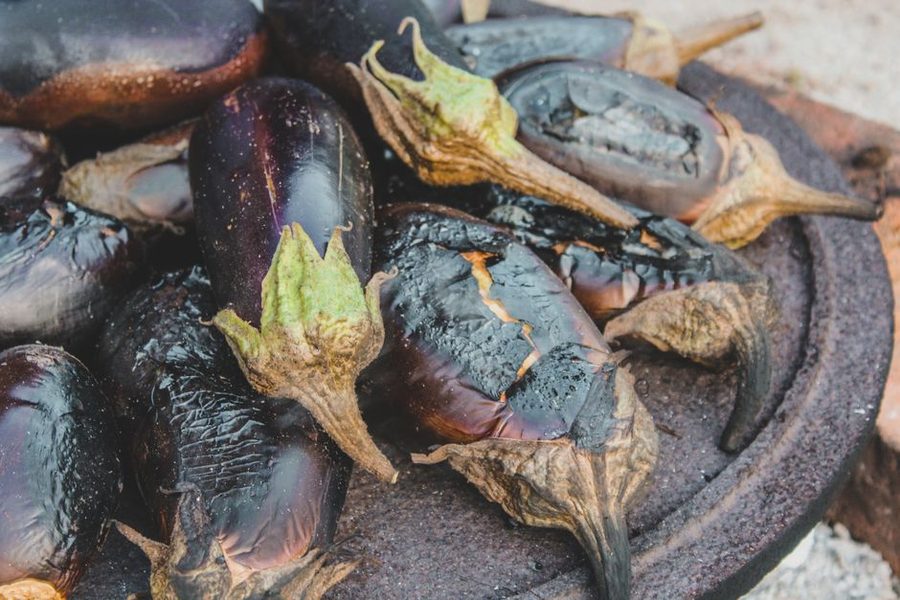
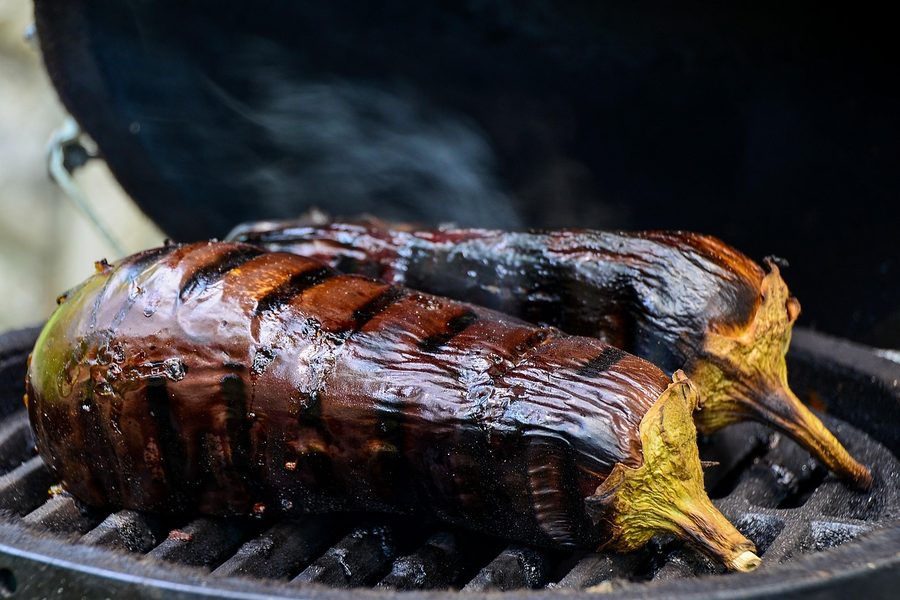
Nearly every Arabic recipe for either dish starts here, straight on the burner. Line the stovetop around the burner with foil, because juice will drip and burn on. Set the eggplant directly on the grate over a medium-high flame and turn it with tongs every four or five minutes, until the skin is black and papery on every side and the whole fruit has gone limp right up to the stem. That takes 15 to 25 minutes depending on size.
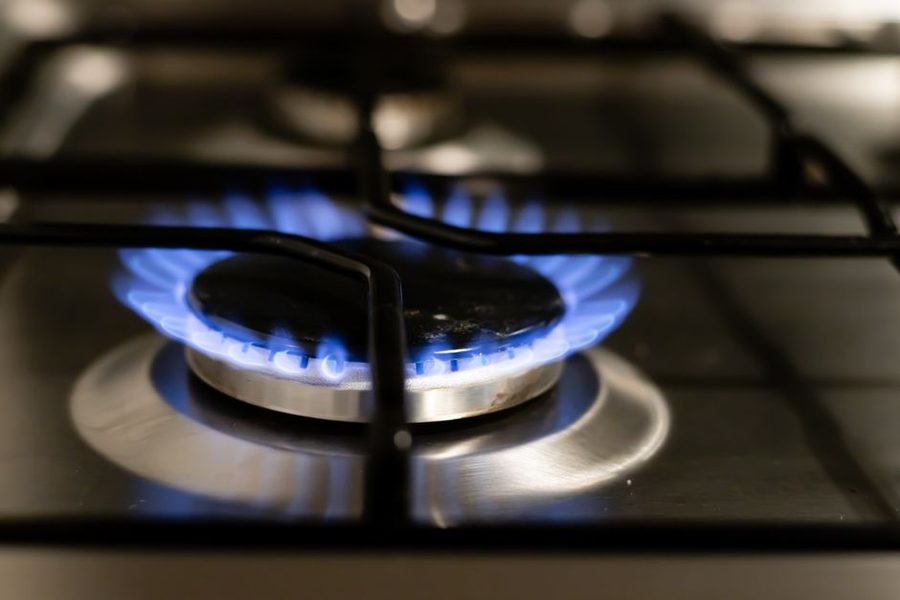
You want it blacker than feels sensible. The flesh nearest the skin picks up the smoke, and the flavour of the finished dip comes almost entirely from this step. Open a window. Your kitchen will smell like a campfire for an hour, which is the correct result.
Over charcoal
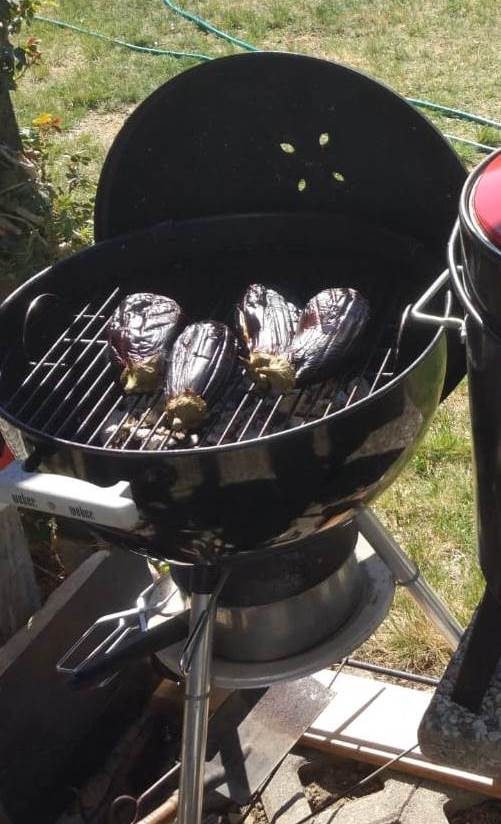
If you have a charcoal grill lit for meat, put the eggplants on first. Coals give a deeper, cleaner smoke than gas, and the eggplants can sit at the edge of the grate while the kebabs cook. Charcoal is also forgiving: a bit too long does no harm, and the skin peels off in big sheets.
Very large eggplants sometimes char outside before the centre is cooked. The fix is simple. Wrap the charred eggplant in foil and leave it at the cool side of the grill for ten minutes, or do what one Spanish-language mutabbal recipe suggests and give it a few minutes in the microwave to finish the middle without losing the smoke.
Under the grill or in the oven
No flame and no barbecue is a common situation, and the oven works, with less smoke. Heat the overhead grill (broiler) to high, put the pricked eggplants on a foil-lined tray on the top shelf and turn them every 10 minutes, for 35 to 45 minutes in all. Anissa Helou grills hers for 25 minutes on each side, which is about right for big eggplants of around 250 g each.
A plain hot oven is the last resort. Recipes ask for anything from 220°C (425°F) for about 50 minutes to 245°C (475°F) for 40 to 45; I use the hotter setting, because the skin needs to blister, not just soften. If you have even a small gas ring, char the roasted eggplant over it for two or three minutes a side at the end. It puts back a surprising amount of the smoke.
Draining off the bitter juice
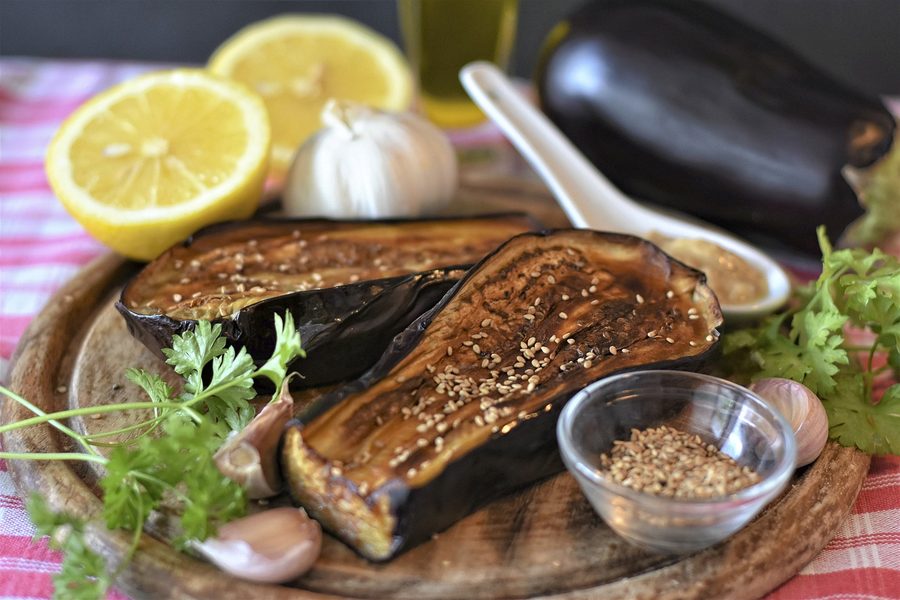
Here is the step most recipes rush. A charred eggplant is full of brown, bitter liquid, and if it goes into the bowl the dip turns thin, sour and a bit grey. Put the hot eggplants in a colander set over a bowl and leave them until you can handle them, 10 to 15 minutes.
Then slit each one lengthways and lift the flesh off the skin with a spoon. Pick out any large clumps of seeds and stray flakes of black skin; a few dark specks are fine and add flavour. Put the flesh back in the colander and let it drain again.
How long is where sources split. Some say two or three minutes, some 15 or 20, and Anissa Helou says at least half an hour and that you would be surprised at how much liquid comes out. I go with 20 to 30 minutes and a gentle press with the back of a spoon at the end. Do not squeeze it dry in a cloth: a little moisture keeps the dip soft.
One Kuwaiti newspaper recipe drops the charred eggplants into iced water to keep the flesh white, then peels them under the tap. It works for colour. It also washes off a good part of the smoke, which is why I skip it and peel by hand, rinsing my fingers instead of the eggplant.
Moutabal: the tahini dip
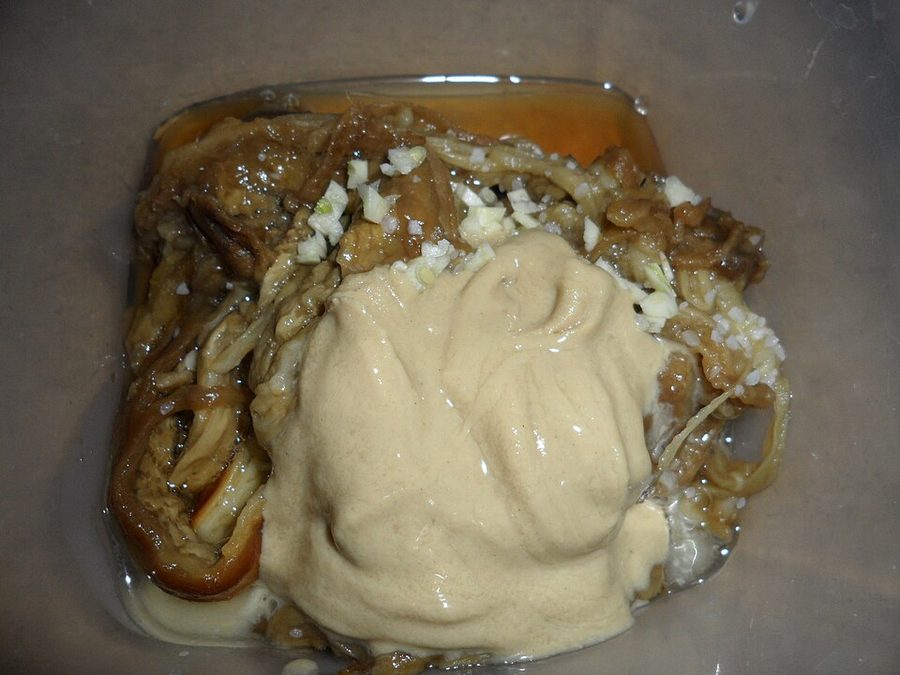
Recipes in English and Arabic, from Lebanon, Jordan and Kuwait and from cooks writing abroad, sit in a fairly narrow band: roughly 60 to 80 g of tahini for each kilo or so of raw eggplant, the juice of about a lemon, and a small amount of garlic. Anissa Helou goes lighter on tahini than anyone, 4 tablespoons for 1.5 kg of eggplant, which gives a dip that tastes mostly of smoke. I start at the low end and add more after tasting, because you can always add tahini and never take it out.
Two techniques make the difference. Pound the garlic to a paste with the salt before it goes in, so it spreads evenly instead of biting in pockets. And whisk the tahini with the lemon juice first: it seizes into a stiff paste, then loosens and turns pale as you add a spoon of iced water, and that creamy base folds into the eggplant without streaks.
Serves 6 as part of a mezze. About 1 hour 30, most of it waiting for the eggplant to cool and drain.
Recipe card
Moutabal: serves 6 · about 1 hour 30Ingredients
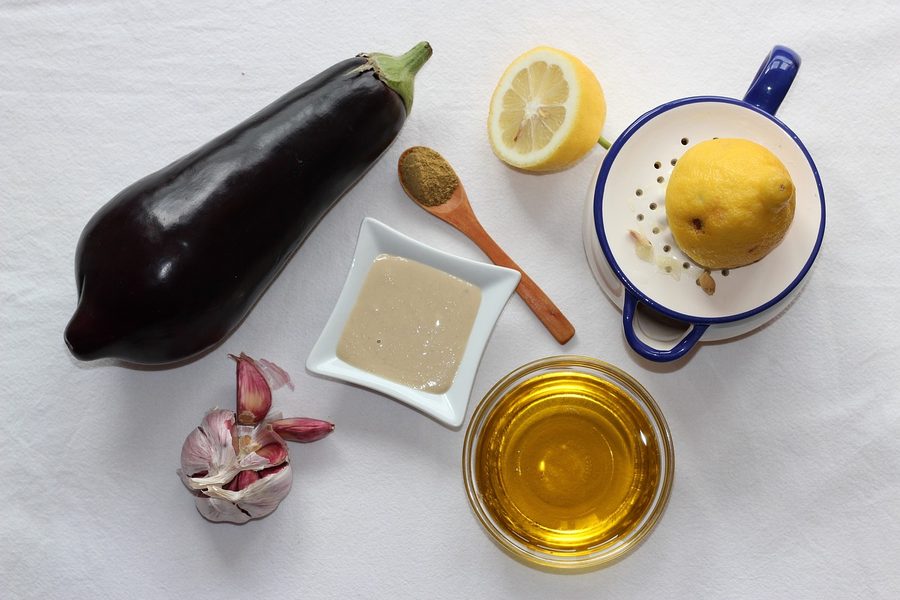
- 2 large globe eggplants, about 1.2 kg (2 lb 10 oz) in total
- 60 to 80 g (4 to 5 tbsp) tahini, stirred well in the jar
- 45 ml (3 tbsp) lemon juice, about 1 lemon, plus more to taste
- 1 small garlic clove
- ½ tsp fine salt, plus more to taste
- 1 to 2 tbsp iced water
- 2 tbsp thick yoghurt (optional, the Syrian and Jordanian way)
To finish
- 2 tbsp extra virgin olive oil
- 1 tbsp chopped flat-leaf parsley
- 2 tbsp pomegranate seeds, or a pinch of paprika, Aleppo pepper or sumac
Method
- Prick the eggplants three or four times each. Char them over a gas flame or charcoal, turning every 4 to 5 minutes, until black and collapsed all over, 15 to 25 minutes. Or grill them on a foil-lined tray under a hot overhead grill, turning every 10 minutes, for 35 to 45 minutes.
- Put the hot eggplants in a colander over a bowl and leave for 10 to 15 minutes, until cool enough to handle.
- Slit each eggplant open and spoon the flesh off the skin. Discard the skin, the stem, large seed clumps and loose flakes of char. Return the flesh to the colander and drain for 20 to 30 minutes, pressing lightly at the end.
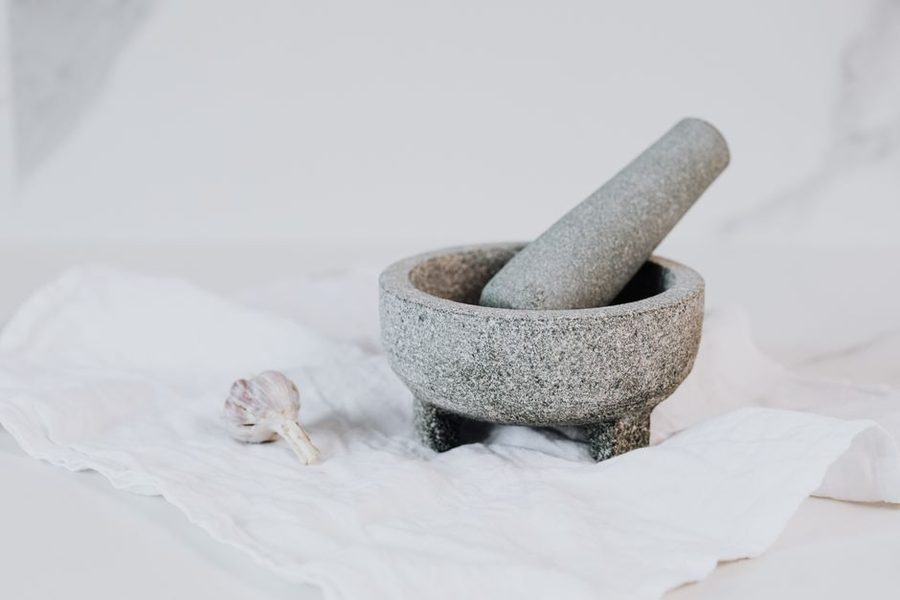
- Pound the garlic with the salt in a mortar, or crush it on a board with the flat of a knife, until it is a smooth paste.
- In a large bowl, whisk the tahini with the lemon juice. It will thicken and seize. Whisk in the iced water a spoonful at a time until it is smooth, pale and the texture of thick cream, then whisk in the garlic paste and the yoghurt, if using.
- Tip the drained eggplant onto a board and chop it roughly, or mash it in the bowl with a fork or potato masher. Stir it into the tahini mixture. Stop while you can still see soft strands of eggplant.
- Taste. Add lemon if it tastes flat, salt if the smoke is not coming through, and a spoon more tahini if you want it richer.
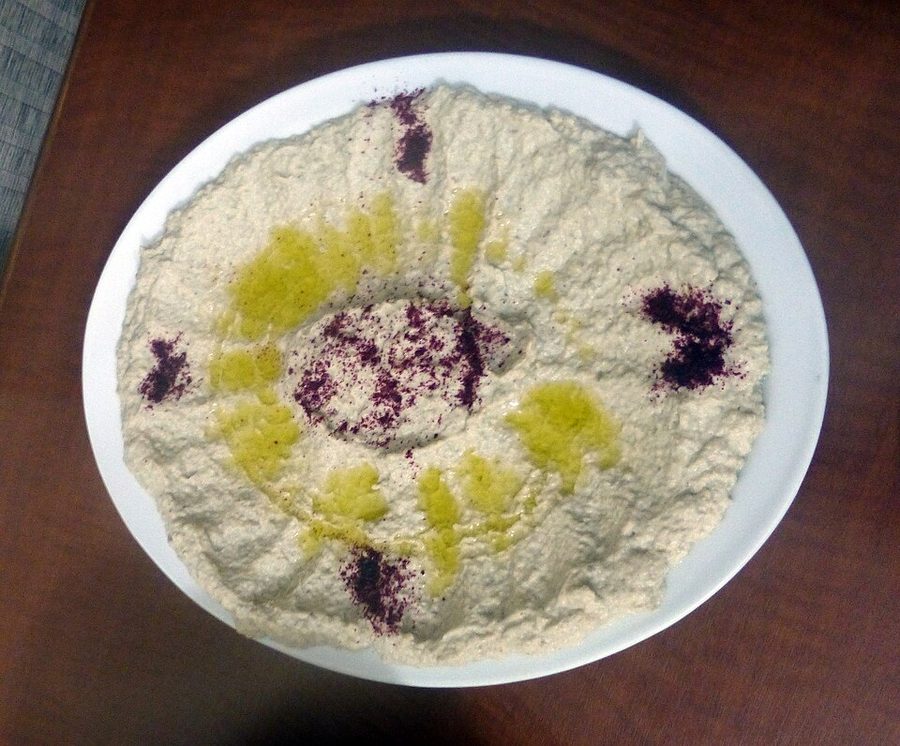
- Leave it for at least 30 minutes so the garlic calms down. Spread it in a shallow dish, make a groove with the back of a spoon, fill it with olive oil and scatter over the parsley and pomegranate seeds or a pinch of spice.
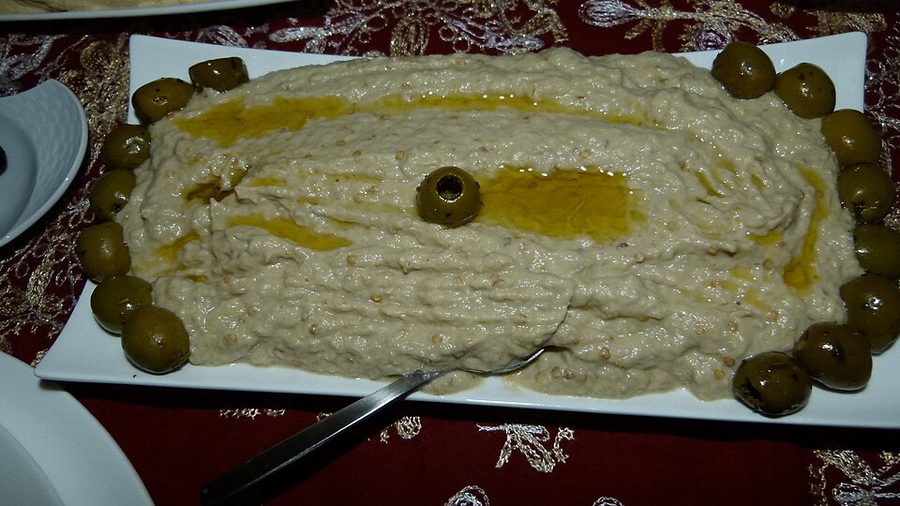
Lebanese baba ganoush, the salad
The salad treats eggplant as a vegetable rather than a purée, and in summer it is the better dish. There is no tahini to weigh it down. The smoked eggplant is chopped, not mashed, and the dressing of lemon and pomegranate molasses keeps it sharp enough to eat by the forkful next to grilled meat.
Lebanese versions agree on the cast and argue about the amounts. One Arabic-language magazine recipe uses only 40 g each of tomato, red onion and pepper to 500 g of grilled eggplant, which reads as a garnish. A Lebanese recipe site goes the other way, with a whole tomato, half an onion and a handful of parsley for about a kilo of eggplant, and home cooks writing “the Lebanese way” add green pepper and spring onion. I take the middle: enough vegetables to see in every spoonful, never so many that it turns into a tomato salad with eggplant in it.
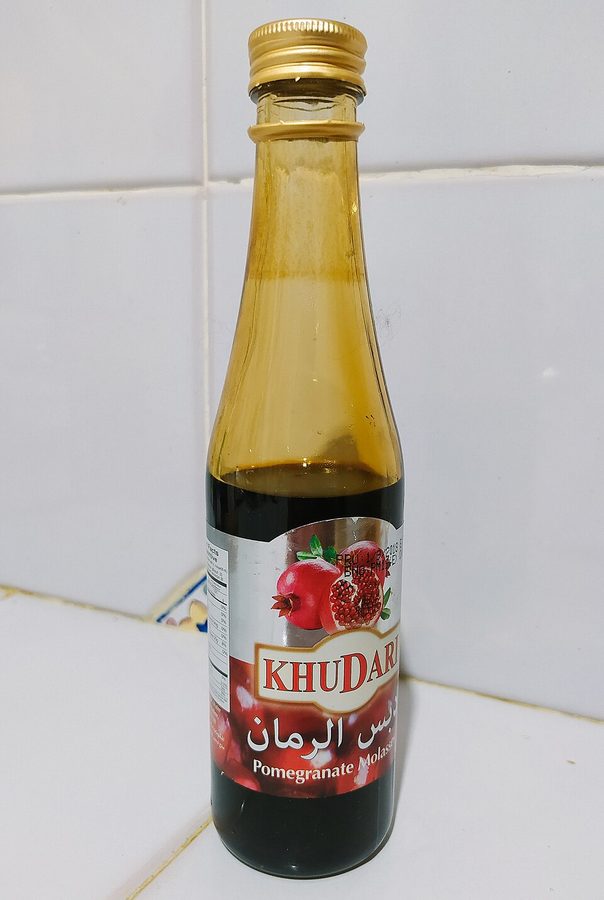
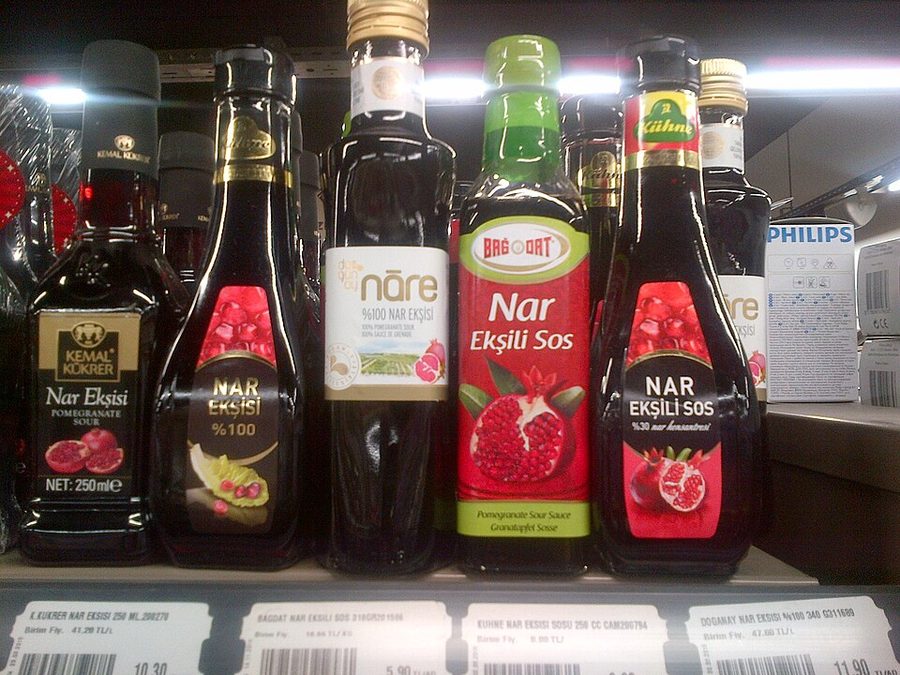
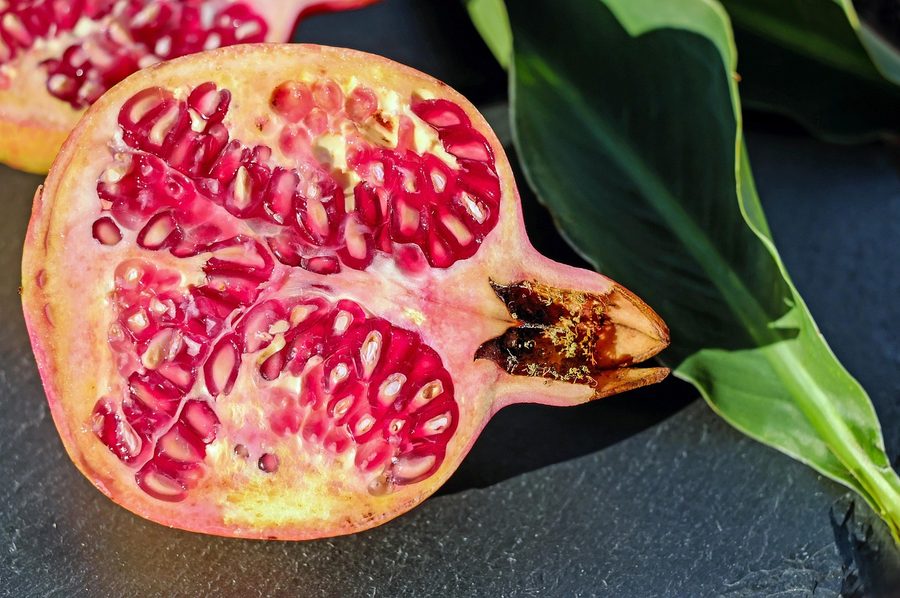
Pomegranate molasses, dibs al-rumman, is what makes it Lebanese. It is sour pomegranate juice reduced to a thick, nearly black syrup, and a tablespoon gives the salad a deep fruity sourness that lemon alone cannot. If yours tastes mainly sweet, it is the wrong bottle; use a little less and add more lemon.
Serves 4 as part of a mezze. About 1 hour 15, including charring and draining.
Recipe card 2
Ingredients
- 2 medium globe eggplants, about 1 kg (2 lb 3 oz) in total
- 1 medium tomato, about 150 g (5 oz), seeded and cut into small dice
- ½ green bell pepper, about 75 g (2½ oz), finely diced
- 2 spring onions, finely sliced, or ½ small red onion, finely chopped
- A small bunch of flat-leaf parsley, about 20 g (¾ oz), finely chopped
- A few mint leaves, chopped
- 1 small garlic clove, pounded with a pinch of salt (optional)
- 30 ml (2 tbsp) lemon juice
- 15 ml (1 tbsp) pomegranate molasses, plus a little for the top
- 45 ml (3 tbsp) extra virgin olive oil
- ½ tsp salt, or to taste
- 2 tbsp pomegranate seeds
Method
- Char, cool and drain the eggplants exactly as for moutabal, steps 1 to 3. The flesh should be well drained, or the salad will sit in a puddle.
- Put the eggplant flesh on a board and chop it with a knife into rough pieces about the size of a fingertip. Do not mash it.
- In a bowl, whisk the lemon juice, pomegranate molasses, garlic if using, salt and olive oil.
- Add the eggplant, tomato, pepper, onion, parsley and mint and fold together gently with a spoon.
- Taste for salt and sourness. Leave for 10 minutes so the eggplant takes up the dressing.
- Spread on a plate, drizzle over a thread of pomegranate molasses and a little more olive oil, and scatter the pomegranate seeds on top. Serve at room temperature, the same day.
The cousins
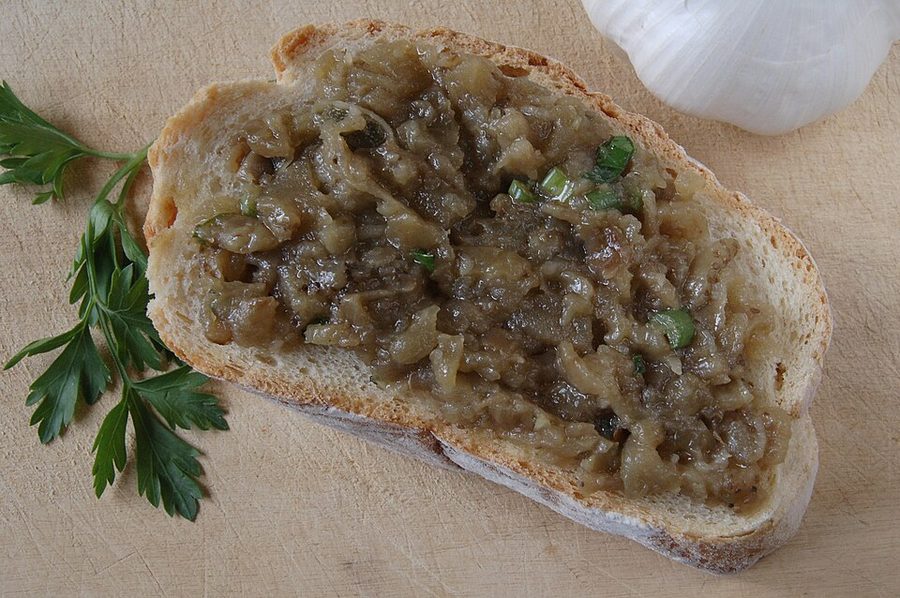
Eggplant charred and mashed turns up wherever eggplant grows. In Turkey, patlıcan salatası is grilled eggplant with olive oil, lemon and garlic, sometimes chopped with pepper and tomato and very often stirred with yoghurt, and the Levantine tahini dip is known there separately as abugannuş. In Israel the tahini version, salat hatzilim, sits beside one made with mayonnaise; it became a staple during the austerity years of 1949 to 1959, when it stood in for meat.
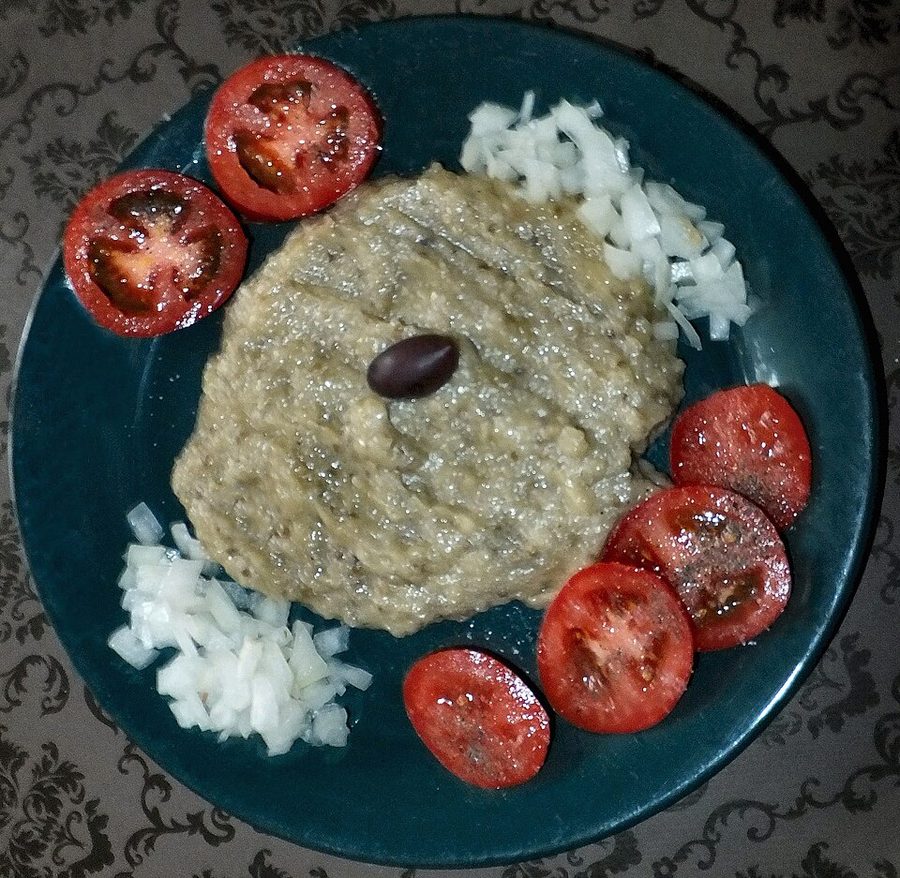
Greek melitzanosalata has no tahini at all, just eggplant, olive oil, lemon, garlic, onion and parsley, and is a staple of the forty days of Orthodox Lent. Romania’s salată de vinete goes further still, beaten with sunflower oil and raw onion.
At the mezze table
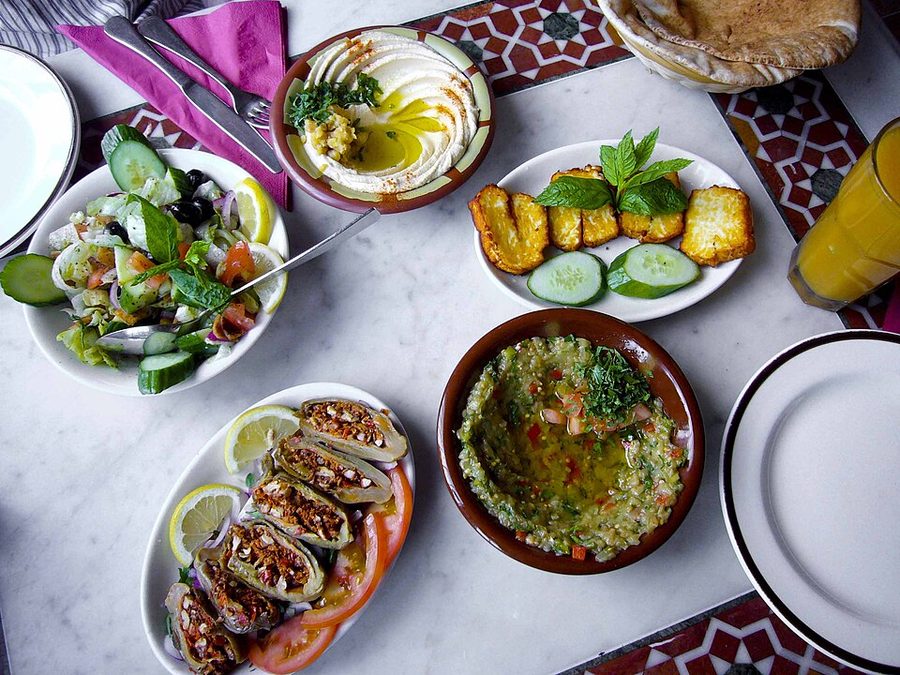
Neither dish is meant to be eaten alone. Both belong to the cold mezze, the first round of small plates that lands before any grilling starts. Moutabal usually sits next to hummus, its chickpea twin built on the same tahini, lemon and garlic, and the two are often ordered together because they taste so different: one nutty and smooth, one smoky and loose. Then come tabbouleh, labneh, pickles, olives and, once the hot mezze arrive, fried kibbeh.
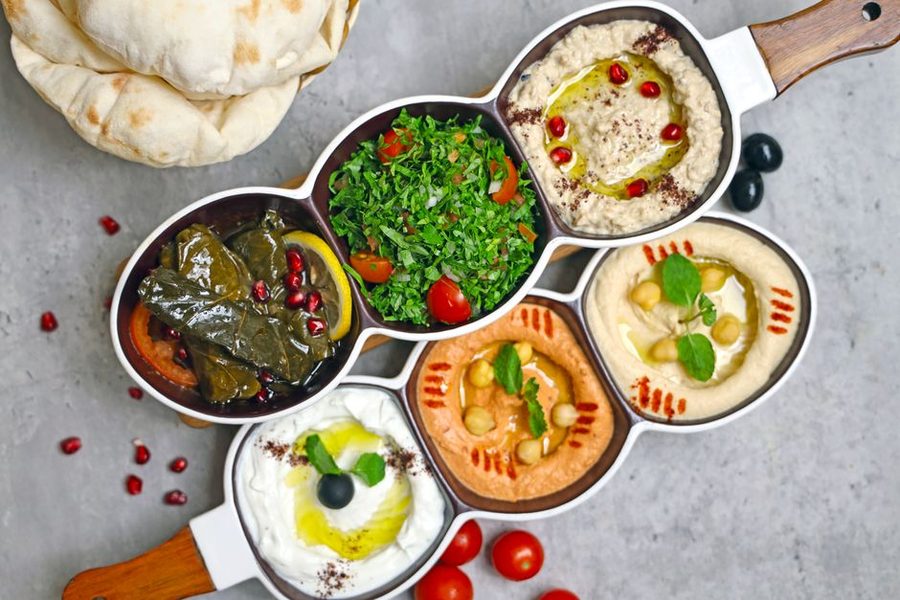
The bread is flat and thin, Lebanese khubz, torn by hand and used as a scoop. Raw vegetables help too: cucumber spears, radishes, crisp romaine leaves, a few green chillies for anyone who wants them. The salad version is happiest next to grilled chicken or lamb, where its sourness cuts the fat.
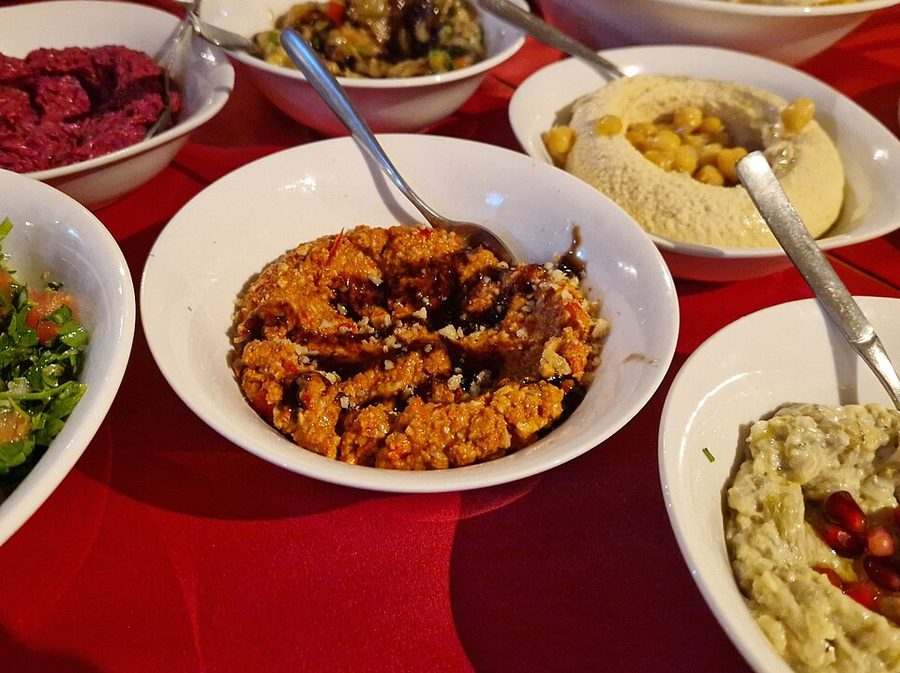
For garnish, the Lebanese default on moutabal is a groove of olive oil, a few pomegranate seeds when they are in season, and maybe some chopped parsley. A dusting of sumac, paprika or Aleppo pepper is common too. When she serves three dips side by side, Anissa Helou garnishes them only with olive oil so the colours do the work, which is good advice for any crowded table.
Keeping it, and fixing it
Moutabal keeps in a covered container in the fridge for 3 to 4 days, which is the figure the recipes and the food-safety guidance on cooked leftovers agree on. It often tastes better on the second day, once the garlic has settled. If it has wept a little liquid overnight, pour that off or drain it briefly in a sieve, stir, and put fresh olive oil on top before serving. Take it out of the fridge half an hour ahead, because cold tahini tastes of very little.
The salad does not keep. The tomato turns watery and the parsley wilts within hours, so make it the day you eat it. If you want to get ahead, char and drain the eggplant the day before, keep the flesh covered in the fridge, and chop and dress it at the last minute. I do not freeze either dish: the eggplant goes watery and stringy when it thaws.
When it goes wrong
- Bitter. Usually undercooked eggplant, old seedy fruit or juice left in the bowl. Cook until the eggplant collapses to the stem, discard big seed clumps and drain properly. Once bitter, a little more lemon and salt and an extra spoon of tahini soften it but will not cure it.
- Watery or thin. Not drained long enough. Put the whole dip in a sieve for 15 minutes, or stir in a spoon of thick yoghurt or extra tahini.
- Grey and gluey. Too long in a food processor. Next time mash by hand or pulse two or three times at most. This one cannot be undone; call it a spread and move on.
- No smoke. The eggplant was roasted, not charred. Hold the roasted eggplant over a gas ring for a couple of minutes a side before peeling. Smoked paprika on top is a cheat that some people like; it tastes of paprika, not eggplant.
- Harsh garlic. Too much, or added in pieces. Pound it with salt and let the finished dip rest 30 minutes. For the next batch, use half a clove.
- Lumpy tahini. It seized when the lemon hit it. Keep whisking and add iced water a spoonful at a time until it turns smooth and pale.
Next time someone puts a bowl of chopped eggplant and pomegranate in front of you and calls it baba ganoush, they are not wrong, and neither was the restaurant that gave you the tahini dip. Buy two firm, shiny eggplants, char them until they look ruined, and make both. Then you can argue about the names with your mouth full.