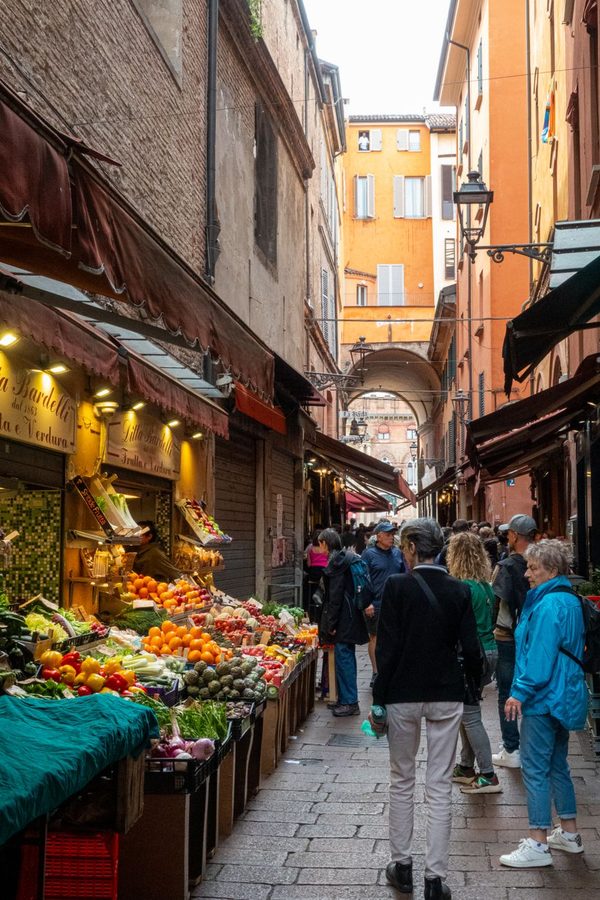
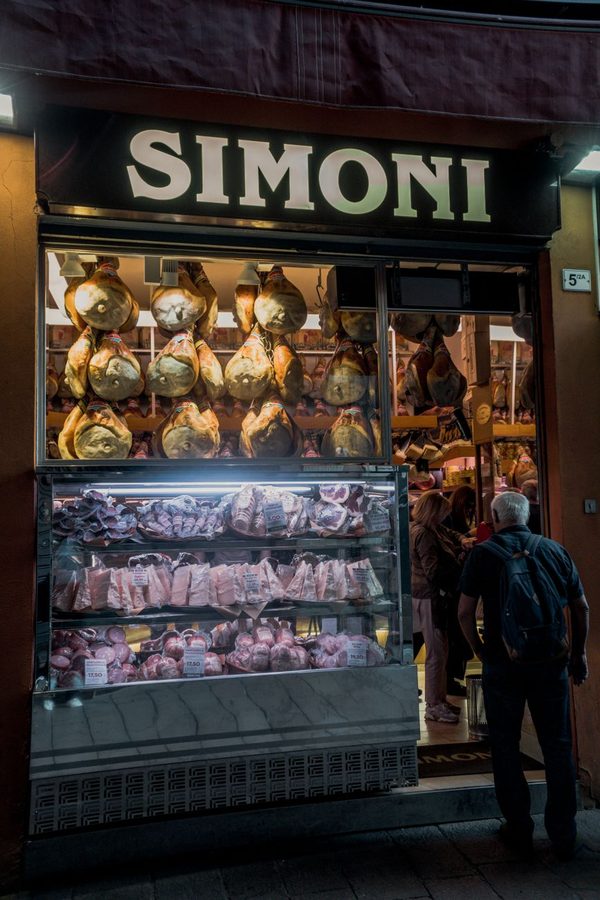
The man behind the salumeria counter on Via Drapperie slices mortadella so thin it folds like cloth, lays it on waxed paper and asks whether you want the Parmigiano at 24 months or 36. Most visitors point at the bigger wedge. The ones who have spent a morning with a good food guide ask for both, a sliver of each, and taste the difference standing at the counter.
That is what a food tour in Bologna buys you. Tortellini and ragù are on every board in the centre; the hard part is telling the shop that makes its own pasta from the one that buys it in. A guide sorts that out in a morning.
The tours split by the clock and by distance. Market walks start with coffee in the medieval lanes off Piazza Maggiore, a noon walk eats lunch over four or more stops, the classes happen in home kitchens and a grocer’s back room, and the day trips leave town early enough to watch Parmigiano being lifted out of the vat. Ten of them follow, at €42 to €255 a head as listed in November 2026.
Contents 6 parts
What Bologna eats, and what to order
Bologna’s nickname is la Grassa, the fat one, and the cooking earns it. This is egg pasta country: flour and eggs rolled by hand into a sheet, the sfoglia, by a sfoglina. Pork, butter, Parmigiano and slow meat sauces do the rest.
The city registers its recipes. Since 1972 the Bologna Chamber of Commerce has kept notarised recipes and measures, and in October 2026 it filed the thirty-fifth.
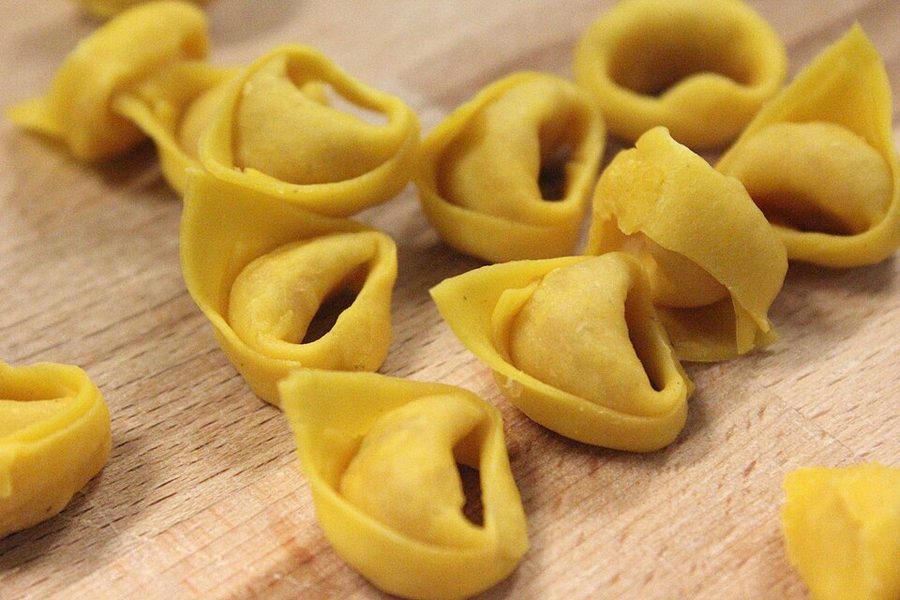
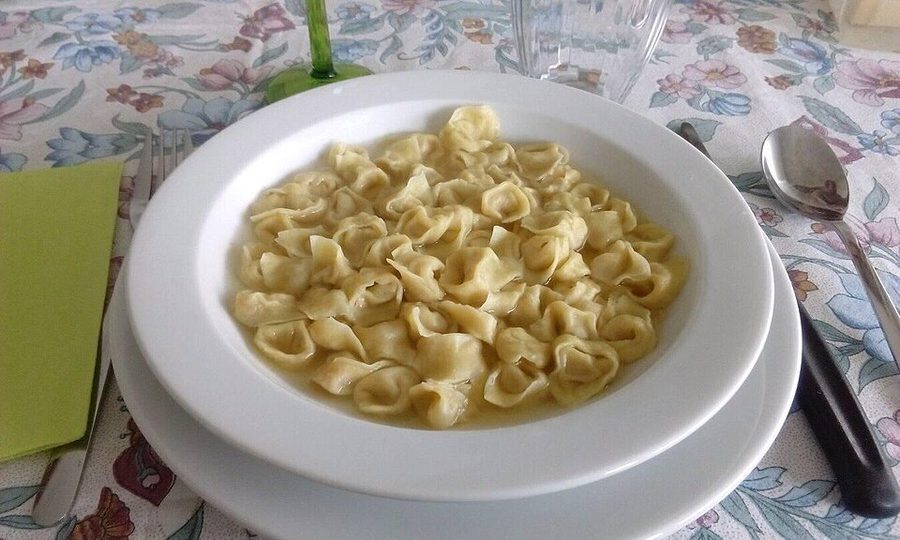
Tortellini in brodo
The small ring of filled egg pasta, cooked and served in broth, is the dish Bologna eats at Christmas and defends all year. The Dotta Confraternita del Tortellino’s registered recipe dates from 7 December 1974: pork loin browned in butter, prosciutto crudo, mortadella, Parmigiano Reggiano, egg and nutmeg, chopped fine and rested for a day. A second deed in 2008 fixed the pasta itself, sheet thickness and all.
The broth got its turn on 16 October 2026. According to the Corriere di Bologna’s report on the broth deposit, it calls for half a capon at least five months old, a kilo of beef, a marrow bone, a crust of Parmigiano and four hours on a low flame. The same paper puts the best handmade tortellini in town at up to €72 a kilo, which tells you why a bowl in a trattoria costs what it does.
Order them in brodo, never with cream.
Tagliatelle al ragù
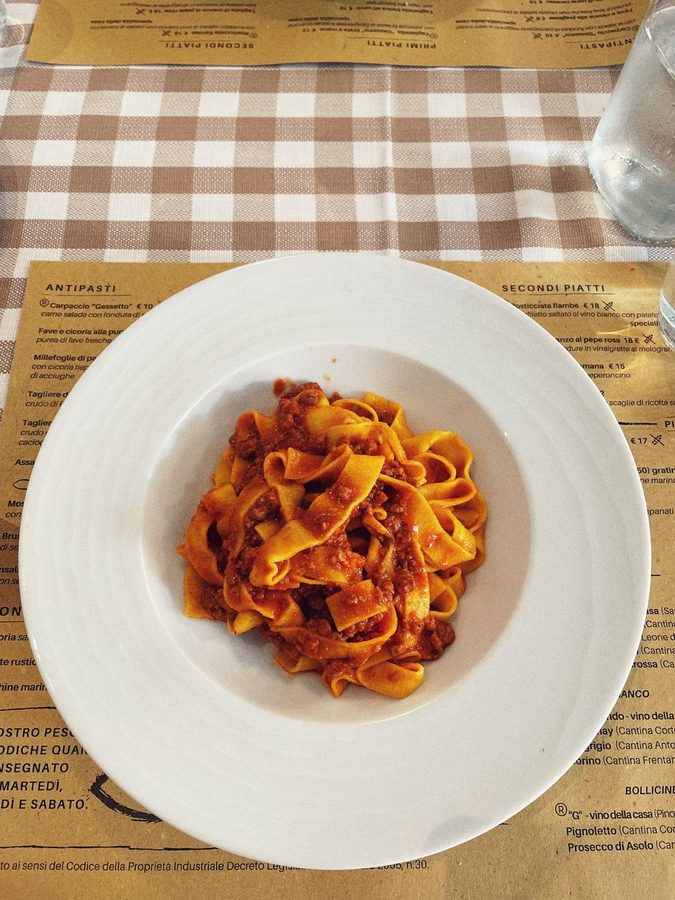
This is the dish the rest of the world calls spaghetti bolognese, which Bologna does not serve. The pasta is tagliatelle, and its width is on file: 8 mm once cooked, registered in 1972 and said to be the 12,270th part of the height of the Asinelli tower. The golden tagliatella is a ceremony, and trattoria cooks admit their grandmothers never owned a ruler.
The ragù is a slow meat sauce with very little tomato. The Accademia Italiana della Cucina filed its recipe in 1982 and replaced it with a revised ragù recipe at the Chamber of Commerce on 20 April 2023. Coarse-minced beef, fresh pancetta, onion, carrot, celery, wine, a little passata and concentrate, two or three hours on the stove, milk optional. Garlic, herbs, veal, smoked pancetta and flour are named as not allowed.
Lasagne verdi, tigelle and cotoletta
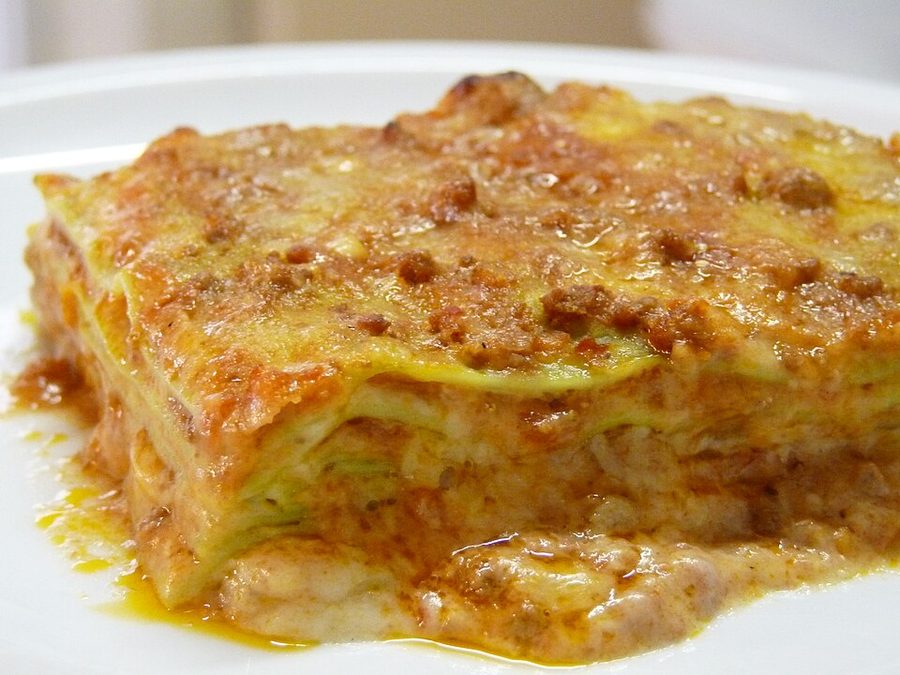
Bologna’s lasagne is green. Spinach goes into the egg pasta, and ragù, béchamel and Parmigiano go between the layers. Several tours serve a square of it.
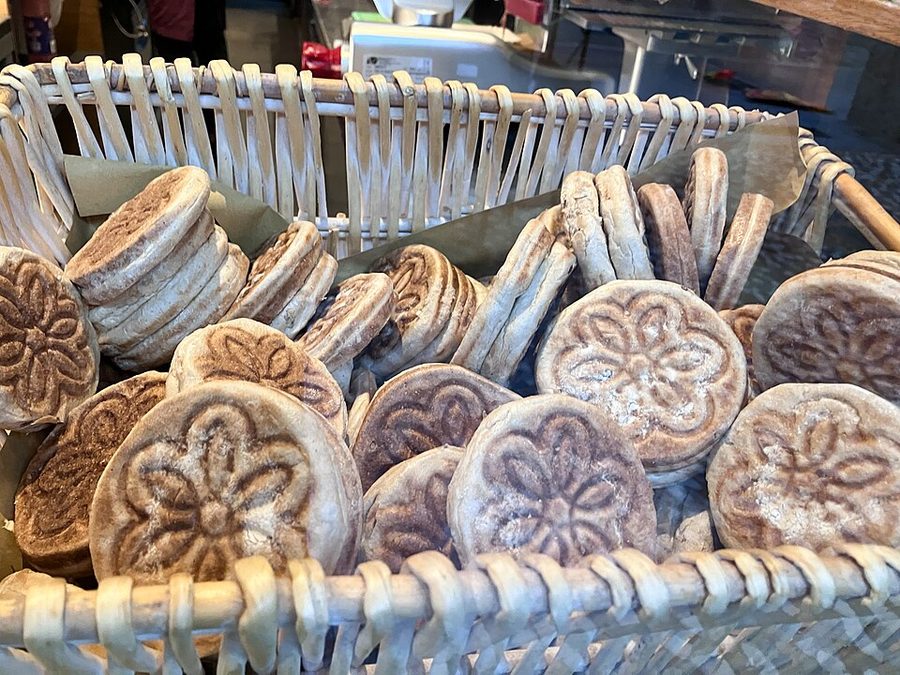
Tigelle are small round flatbreads from the Modena hills, baked in a disc-shaped mould and split to hold mortadella, cheese or a smear of lard pounded with garlic and rosemary. Bologna has adopted them as its standing-up snack. The heavier end of the menu is cotoletta alla bolognese, a fried veal cutlet finished in a pan with ham and Parmigiano, which the noon tour serves as its main course.
For something sweet, look for torta di riso, a rice cake set with eggs and almonds. One noon walk serves it under its older name, torta degli addobbi, a cake the city baked for the Corpus Domini processions as early as the 1400s.
Mortadella
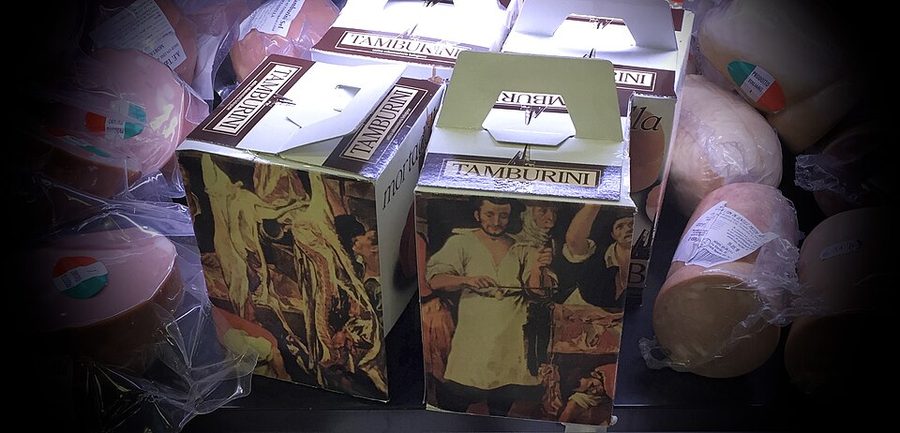
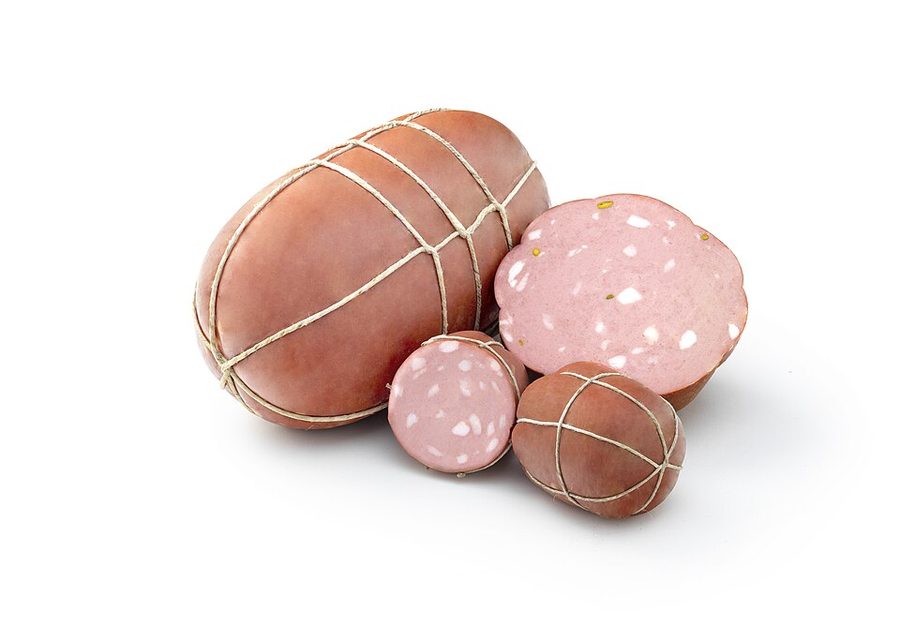
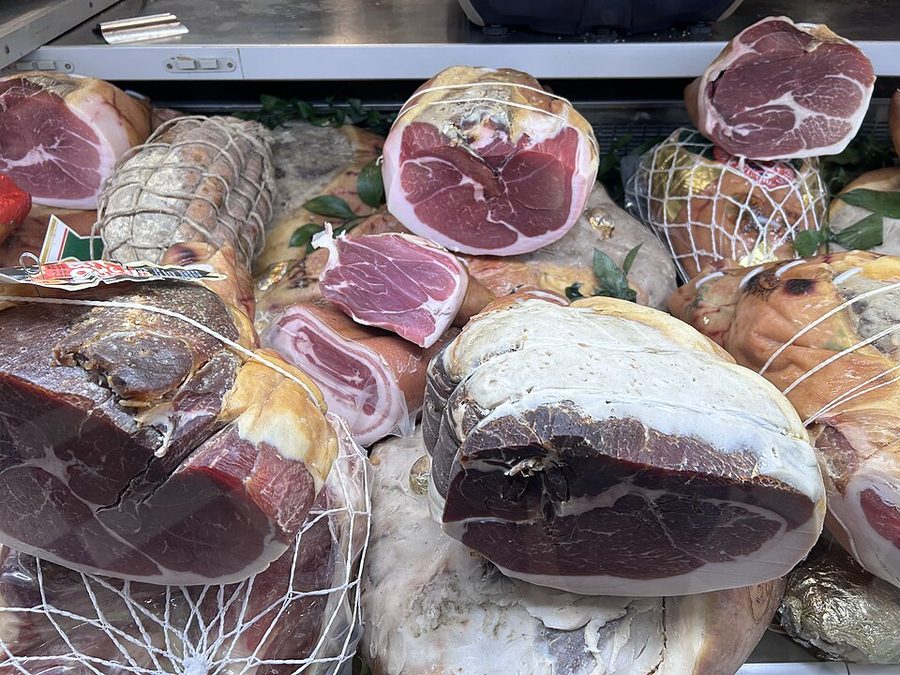
The pale pink sausage studded with cubes of fat is the original baloney, and it shares almost nothing with the sliced American version. Mortadella Bologna has been a protected IGP since 1998, and the Mortadella Bologna consortium now counts 33 producers and slicers working to one set of production rules. In the shops it is sliced off a cylinder thicker than your thigh.
Ask for it sliced to order and eat it within the hour; pre-cut mortadella dries at the edges.
From the countryside: Parmigiano, Parma ham and balsamico
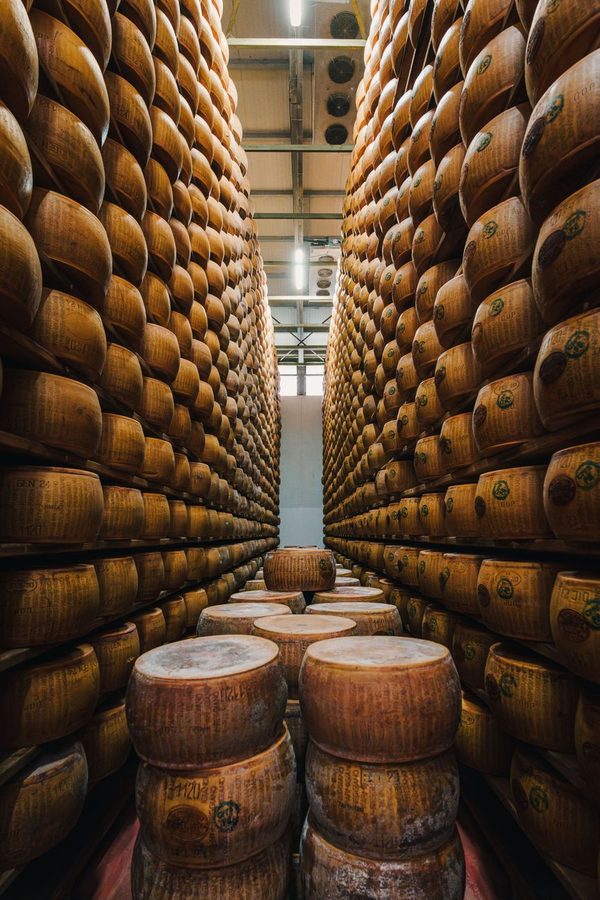
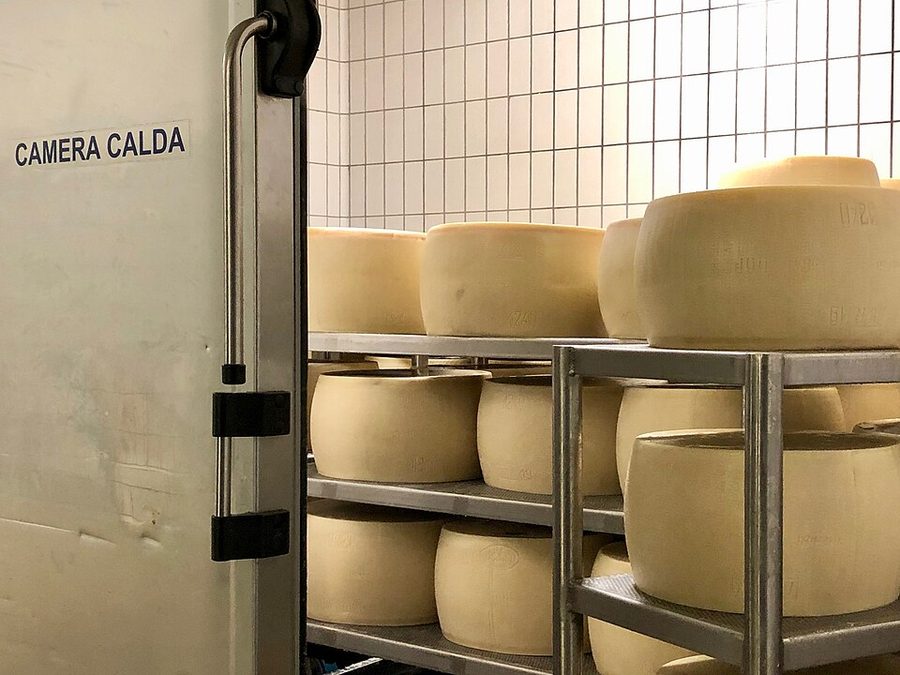
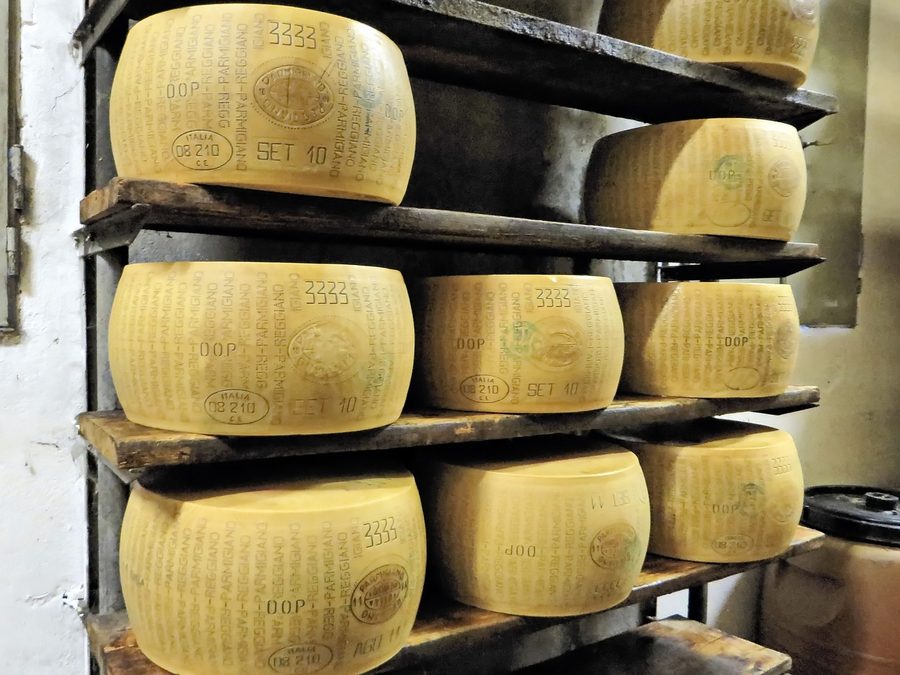
Parmigiano Reggiano is made from raw milk, calf rennet and salt, and ages for at least 12 months before an inspector taps each wheel with a hammer to pass it. Because the rennet is animal, it is not vegetarian; tell your guide if that matters to you.
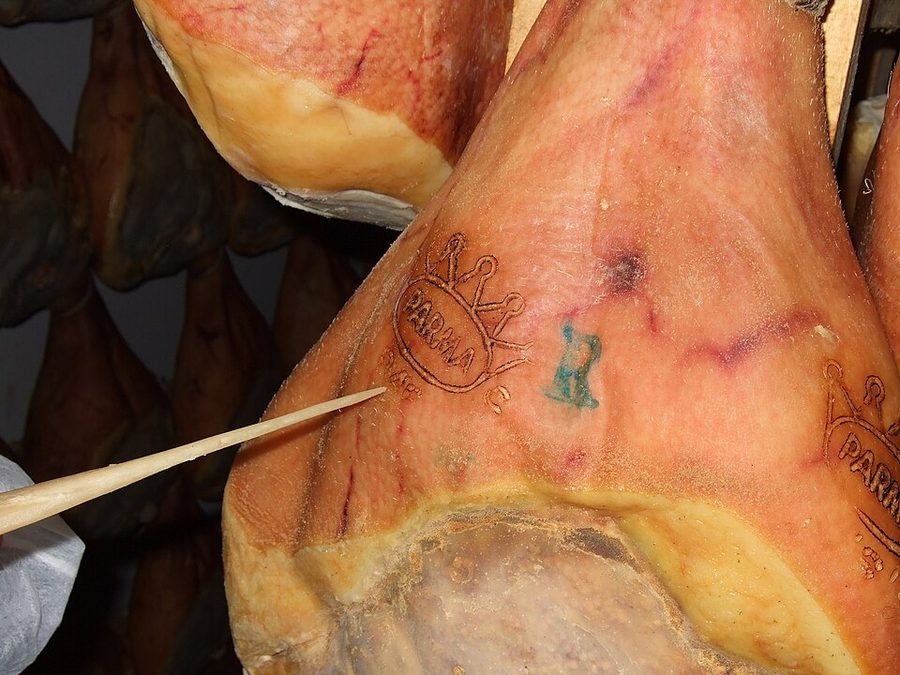
Prosciutto di Parma comes from the hills south of Parma. The consortium’s revised Prosciutto di Parma rules raised the minimum ageing from 12 months to 14 and cut the salt ceiling from 6.2% to 6%.
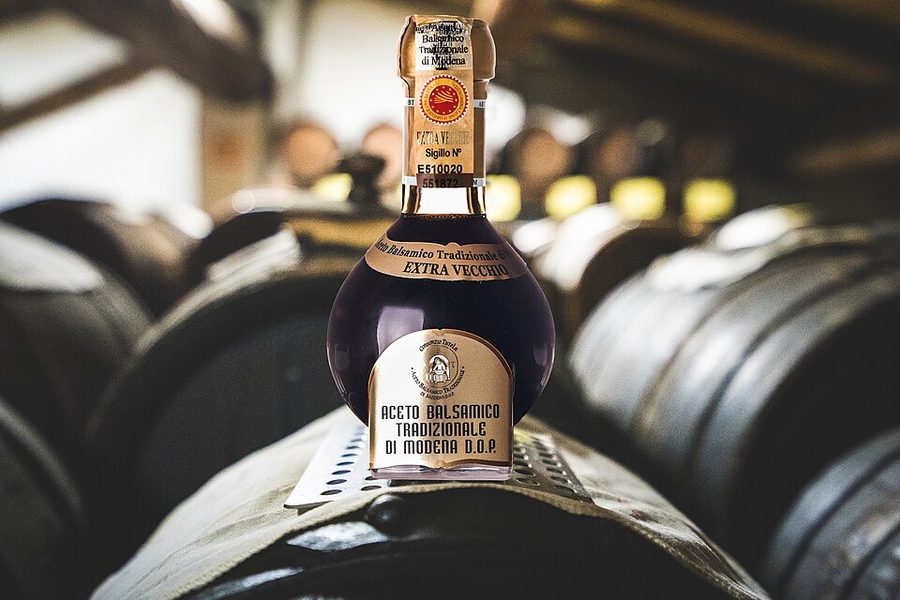
Balsamic comes in two kinds. The everyday Aceto Balsamico di Modena IGP is wine vinegar and cooked must, made in large quantities. The Aceto Balsamico Tradizionale di Modena DOP is cooked grape must alone, aged at least 12 years through a battery of small barrels, and labelled extravecchio after 25. It is sold only in a small numbered bottle, and you eat it in drops from a spoon.
Where the tours go
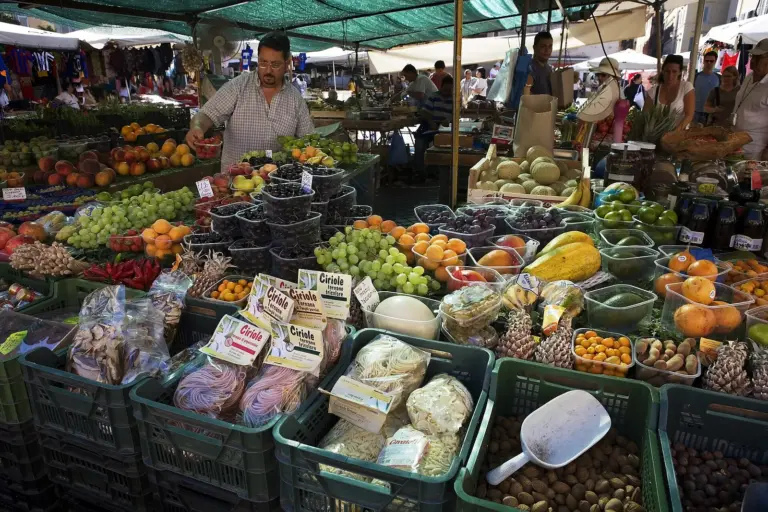
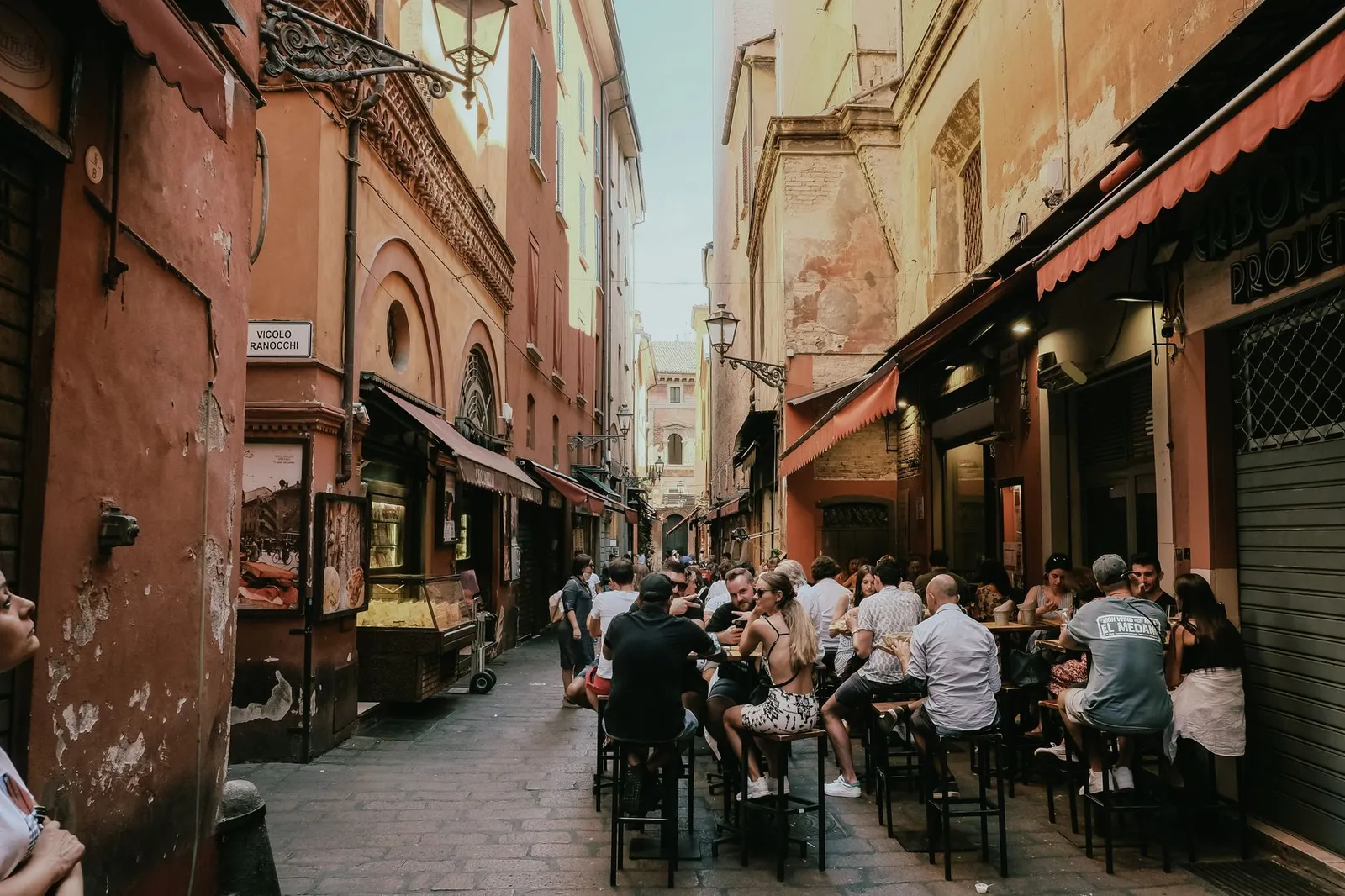
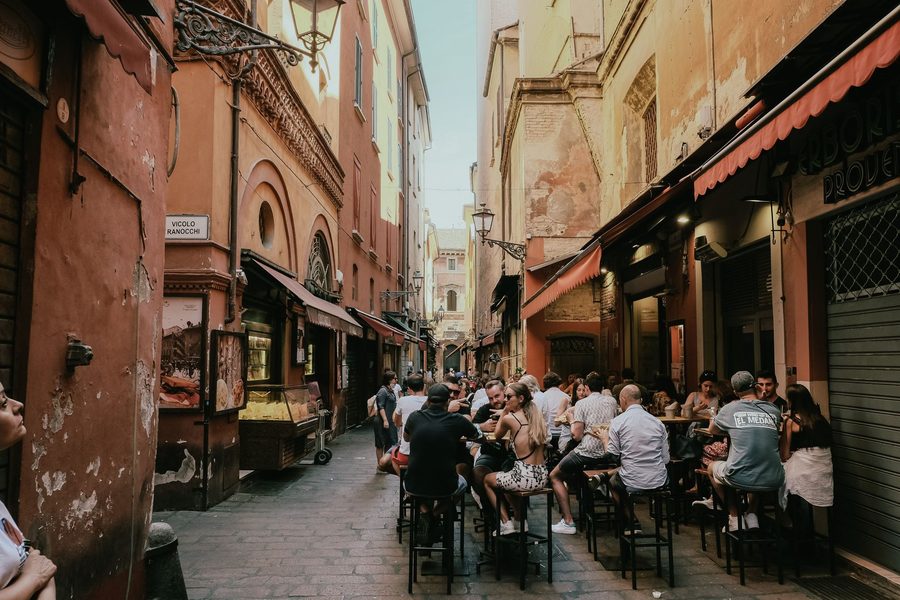
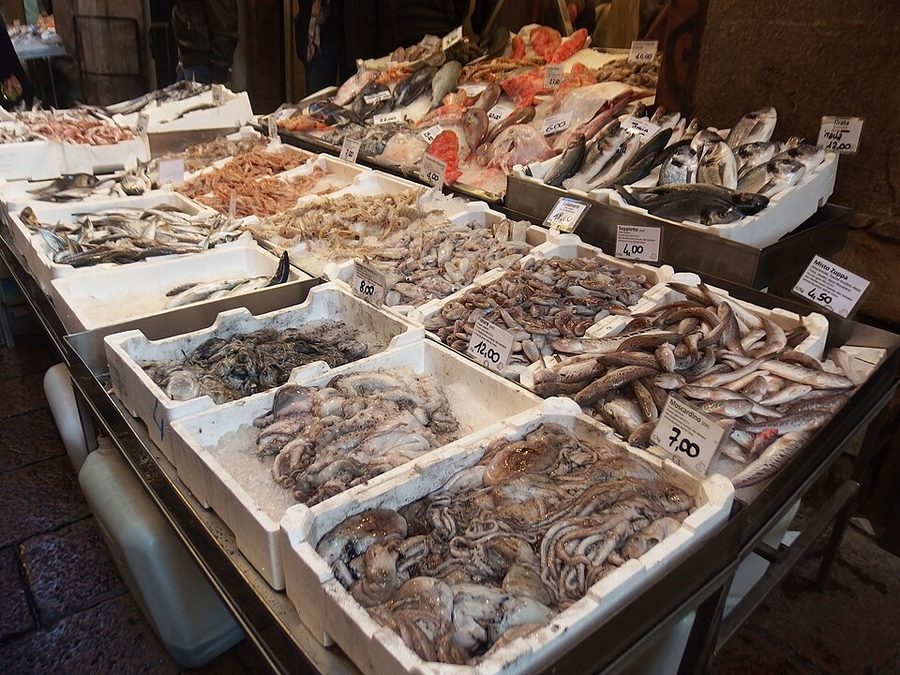
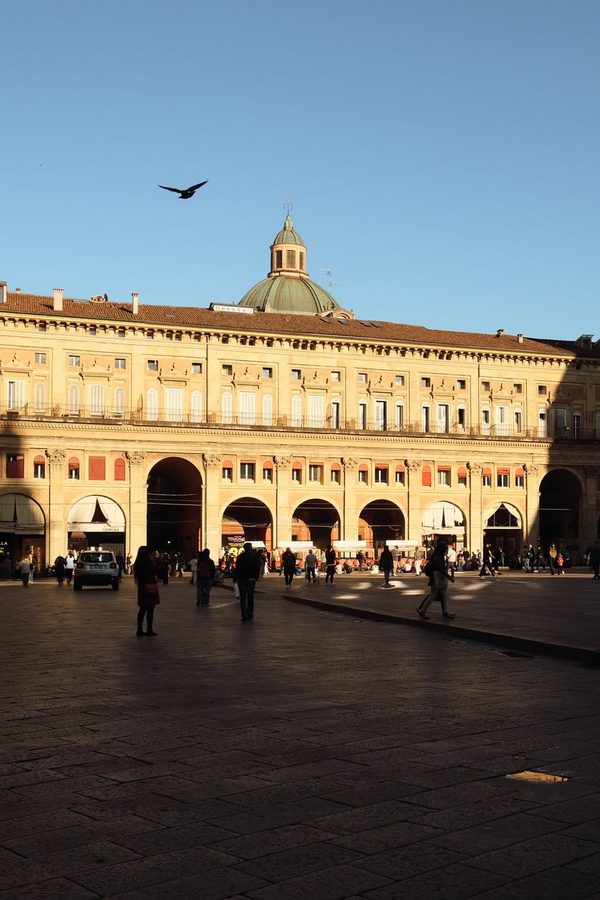
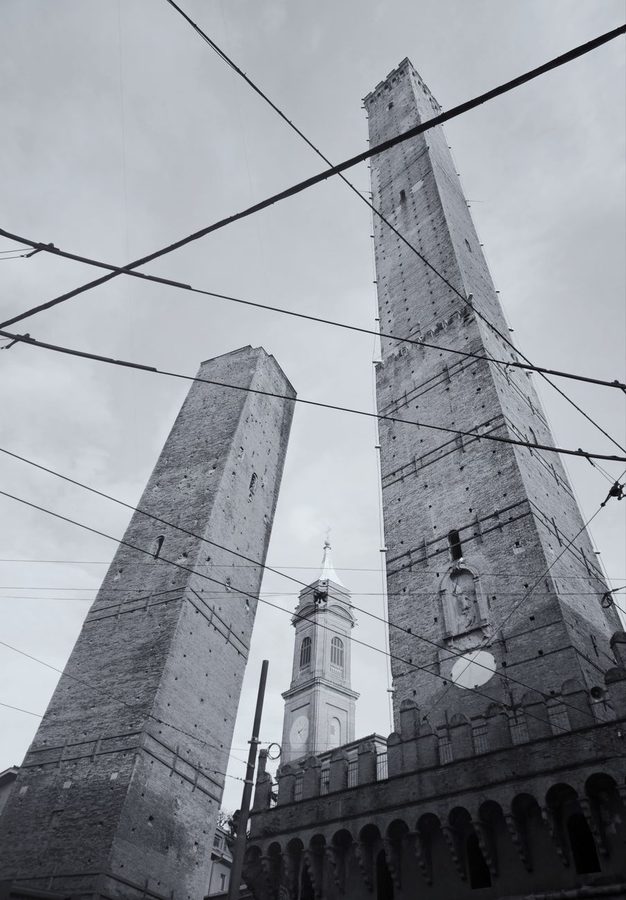
Nearly every city walk uses the same few hundred metres. The Quadrilatero, the old market quarter, sits between Piazza Maggiore and the Two Towers, a grid of narrow lanes named for the trades that once filled them: Via Drapperie for drapers, Via Pescherie Vecchie for the old fish market, Via Clavature for locksmiths. Salumerie, pasta shops and fishmongers still trade there.
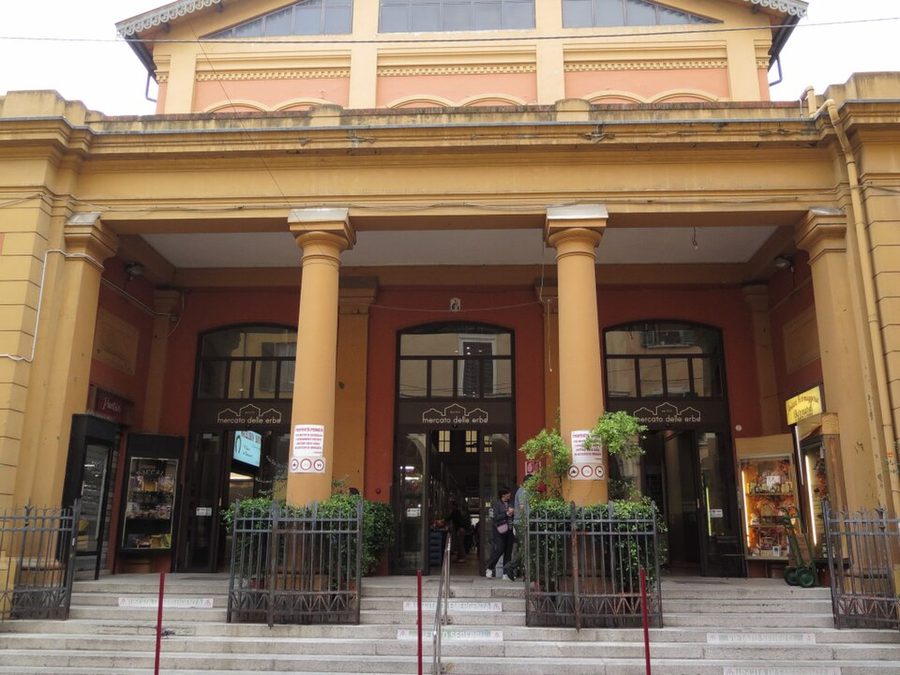
The second market is the covered Mercato delle Erbe on Via Ugo Bassi, a few minutes’ walk west. Its back entrance on Via Belvedere is a tour meeting point. The Mercato di Mezzo on Via Clavature is a food hall in the city’s first covered market.
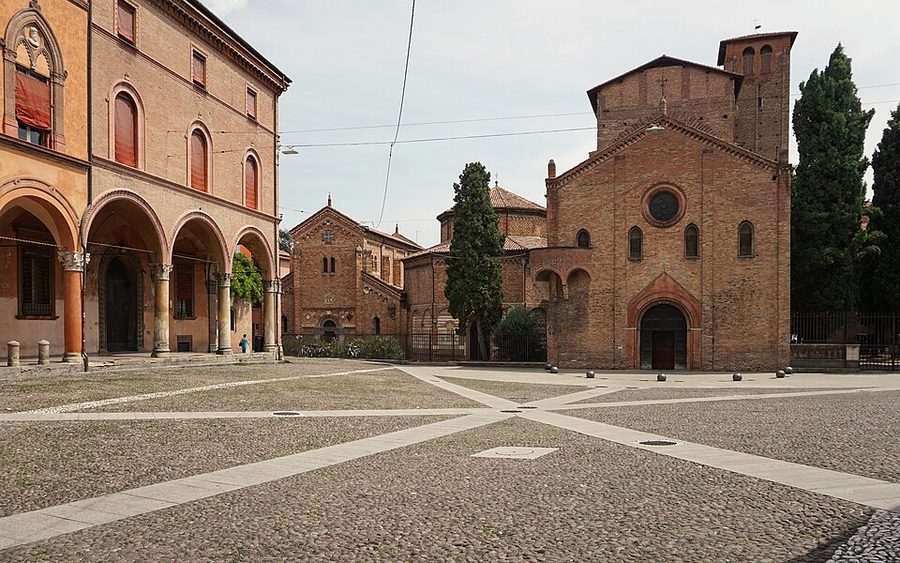
Most walks end at Piazza Santo Stefano, the triangular square below the Santo Stefano churches, a five-minute walk from the Two Towers. The day trips go the other way: west along the Via Emilia to the dairies and acetaie of Modena province, and on to Parma and the ham towns in its hills.
Ten Bologna food tours and classes, by what they cover
The list runs from morning walks in the centre to a noon lunch walk, two short tastings, two classes and two countryside days. Prices are per adult as shown on each booking page in November 2026.
Two morning walks first. Both start with coffee and put a sfoglina at work in front of you.
Bologna Food Tour by Taste Bologna: Intimate Group (Max 10)
This four-hour walk starts at Bar Romano, Via de’ Pignattari 1c, on the corner by the Basilica of San Petronio, with a coffee or cappuccino and a croissant. It then crosses to the Mercato delle Erbe to watch the sfogline roll pasta at a fresh pasta workshop, and shops for lunch in the Quadrilatero: mortadella, Prosciutto di Parma, 24-month Parmigiano Reggiano and a 12-year Aceto Balsamico Tradizionale.
The good part is where you eat it. You carry the shopping into the Osteria del Sole, the old wine bar where people have brought their own food for centuries, and eat it with a glass of Pignoletto or Sangiovese from the hills above the city. A portion of handmade pasta follows (lasagne or tortellini, depending on the season), then gelato, and the walk ends in Piazza Santo Stefano.
The walk is about 3 km and wheelchair accessible, with vegetarian, pescatarian and gluten-free versions on notice; it is not recommended for vegans.
Bologna Food Tour by Taste Bologna: Intimate Group (Max 10): from €115 per person (checked November 2026).
from €115Dates and prices
Small Group Bologna Food Tour – Local Food & Market Experience
The longest of the city walks, at four and a half hours, is run by Delicious Bologna and meets at 9:55am in Piazza di Porta Ravegnana, at number 2a, between the Bottega dei Portici and the Feltrinelli bookshop at the foot of the Two Towers. After a cappuccino and cornetto, it stops at the pasta workshop of the Bruno e Franco salumeria to watch the sfogline at work, and to taste their cold meats and 30-month Parmigiano.
Then it walks the Quadrilatero with an aperitivo of cold meats, Parmigiano and wine at an old osteria, crosses Piazza Maggiore, and sits down to lunch: three handmade pastas with wine. Afterwards come balsamic tastings at 15 and 25 years, both the IGP and the DOP, and a gelato, before ending back where it started. Groups are capped at nine, and a vegetarian version is available if you ask when booking. It is stroller friendly but not wheelchair accessible.
This is the one I’d book for a first morning: lunch is in the price, so €110 covers two meals.
Small Group Bologna Food Tour – Local Food & Market Experience: from €110 per person (checked November 2026).
If you would rather sleep in, the next walk eats lunch on the move.
from €110Dates and prices
Bologna Small-Group Food Tour with Full Meal & Local Food Expert
Do Eat Better’s walk starts at noon in front of the Feltrinelli bookshop on Piazza di Porta Ravegnana and runs three and a half hours, with a maximum of twelve. It is built as a meal served across at least four stops: tagliatelle al ragù with Parmigiano first, then fresh tigelle or a paper cone of mortadella, then a cotoletta alla bolognese with its ham and Parmigiano.
Dessert is gelato or a slice of torta degli addobbi, the old rice cake, then an espresso, and the walk ends in Piazza Santo Stefano. At least one alcoholic drink is included. It is the cheapest city walk with a full meal. Guests with severe food allergies cannot join, and the guide may speak in both English and Italian.
Bologna Small-Group Food Tour with Full Meal & Local Food Expert: from €67 per person (checked November 2026).
Two shorter options for an afternoon or a tight schedule.
from €67Dates and prices
Bologna Food & Market Tour with Local Dishes, Pasta, Wines & More
Secret Food Tours runs this walk in two lengths. The three-hour version serves two homemade pastas, Prosciutto di Parma, mortadella, aged Parmigiano and balsamic aged 8 to 25 years, with a welcome treat, a dessert, local wines, a digestif and an espresso, plus one dish the guide keeps back as a surprise. The two-hour express version is a mortadella sandwich, a tigella, a square of lasagne verde, a dessert and one glass of wine.
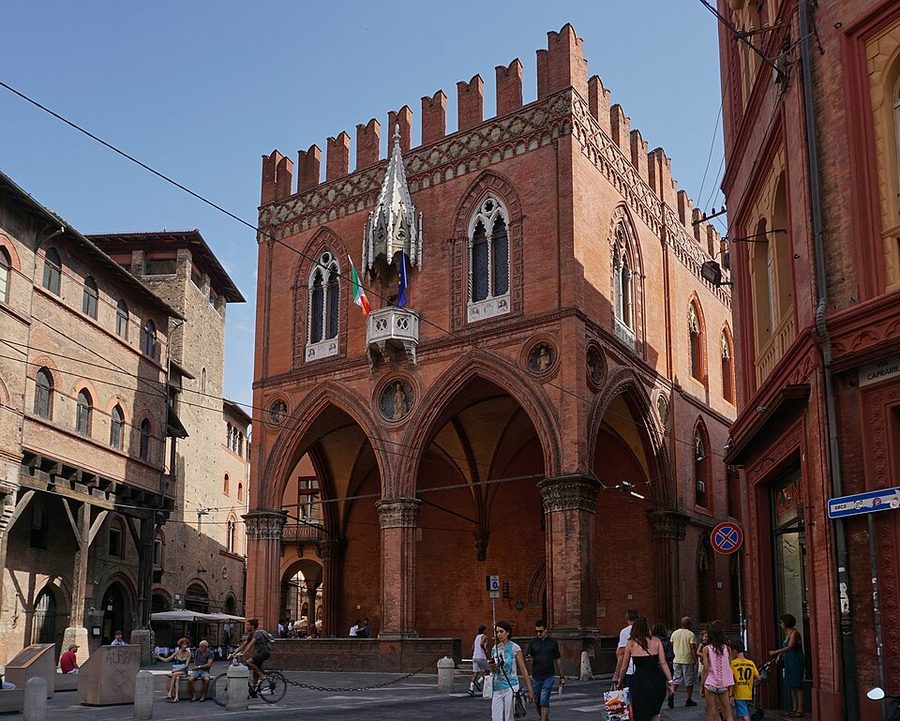
It meets at Via Zamboni 8c, in front of the Flying Tiger shop near the Two Towers, starts its stories at the Palazzo della Mercanzia, walks the Quadrilatero, and ends in Piazza Santo Stefano. Groups are capped at twelve. The listing is plain about diets: no vegan or gluten-free version, and no wheelchair or stroller access. Confirmation can take 48 hours, so book ahead.
Bologna Food & Market Tour with Local Dishes, Pasta, Wines & More: from €75.49 per person (checked November 2026).
from €75.49Dates and prices
Bologna: 2-Hour Food Tour with Mortadella, Lasagna & Wine
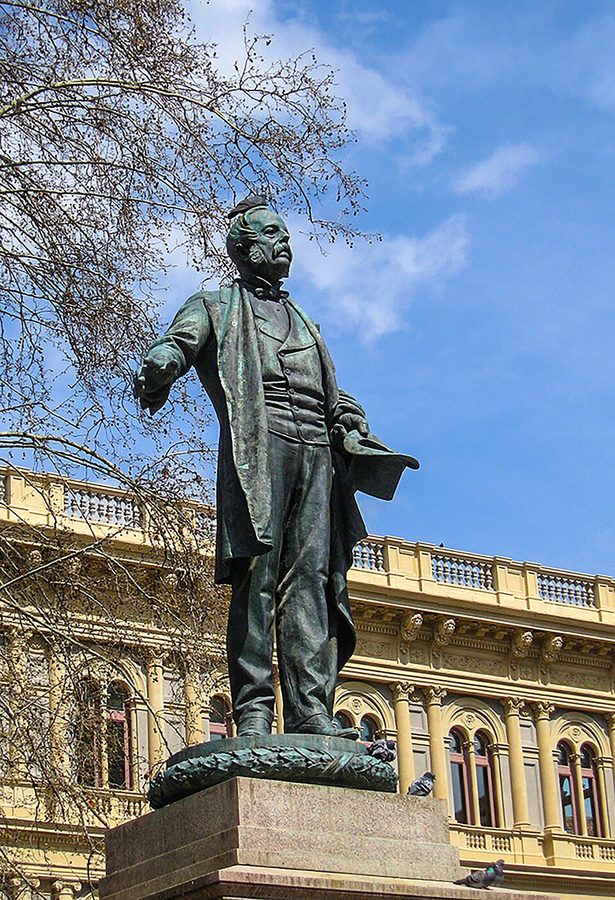
The shortest tasting walk on the list starts at the statue in Piazza Minghetti, south-east of Piazza Maggiore. It opens in a salumeria with mortadella on bread or a tigella and a glass of regional wine, moves to a square of lasagne verde, then walks under the porticoes to the Two Towers and into the Quadrilatero.
The stop worth the ticket is a side-by-side tasting of aged Parmigiano and traditional balsamic, first separately and then together, so you taste what each does to the other. It ends near Piazza Maggiore with torta di riso. It is wheelchair accessible, and the price was reduced from €66 when checked.
Bologna: 2-Hour Food Tour with Mortadella, Lasagna & Wine: from €56 per person (checked November 2026).
One walk works differently: you pay the guide, and pay for the food only if you want it.
from €66Dates and prices
Bologna: Guided Food Markets Tour
MyBologna’s two-hour walk meets at Via Belvedere 6, the back door of the Mercato delle Erbe, and spends an hour inside that market before ten minutes’ walk to the Quadrilatero, then dessert in Piazza Santo Stefano. Along the way you can buy Parma ham, cheese, hand-rolled fresh pasta, mortadella, balsamic, local bread and a gelato. Groups are limited to ten.
Food is not in the price. The guide estimates around €17 a head if you taste everything, and you choose at each counter. That makes it the most flexible tour on the list for diets: the listing says vegetarian and lactose-free options are always available, and a vegan can simply eat at the greengrocer and skip the salumeria.
Bologna: Guided Food Markets Tour: from €42 per person, food extra (checked November 2026).
Now the classes. Both are small, both end with lunch, and both teach the two pastas Bologna is proudest of.
from €42Dates and prices
Pastamama, Preserving the intimacy of Italian domestic cooking
A three-hour class in a home kitchen at Via Mazzini 125, east of the centre (ring the Azzaroni bell), from 10am to 1pm, for a maximum of five. You make tagliatelle and tortelloni from scratch, the larger ricotta-filled cousin of the tortellino, along with two sauces, one of them ragù. Then you sit down to eat what you made, with wine and a dessert.
A vegetarian menu is available on request; there is no gluten-free version, and the flat is not wheelchair accessible. With five at the table you roll a lot of pasta yourself.
Pastamama, Preserving the intimacy of Italian domestic cooking: from €95 per person (checked November 2026).
from €95Dates and prices
Bologna: Pasta Secrets Cooking Class with Local Expert
This class is taught by Daniele in the back of Drogheria degli Elefanti, the grocery he runs in the centre, with the meeting point given as Via Orfeo 18 and the full address sent with the booking. Over five hours, for four people at most, you make tortellini and tagliatelle alla bolognese and learn the sauces and broths that go with them, then eat lunch together with Emilia-Romagna wines. You leave with the recipes.
It is the only class here that covers broth, which makes it the one to take if tortellini in brodo is the dish you want to cook at home.
Bologna: Pasta Secrets Cooking Class with Local Expert: from €105 per person (checked November 2026).
The last two leave the city. Both run all day, and both go to a working dairy in the morning.
from €105Dates and prices
Bologna Food Valley Experience: Factories, Winery & Lunch
Tours and the City picks you up at the Hotel NH Bologna De La Gare on Piazza XX Settembre, by the station, and drives about 45 minutes to the Moscattini farm dairy in Modena province. There you watch Parmigiano being made and taste it at 12, 24 and 36 months with ricotta, erbazzone (a savoury chard pie), tigelle and cold meats.
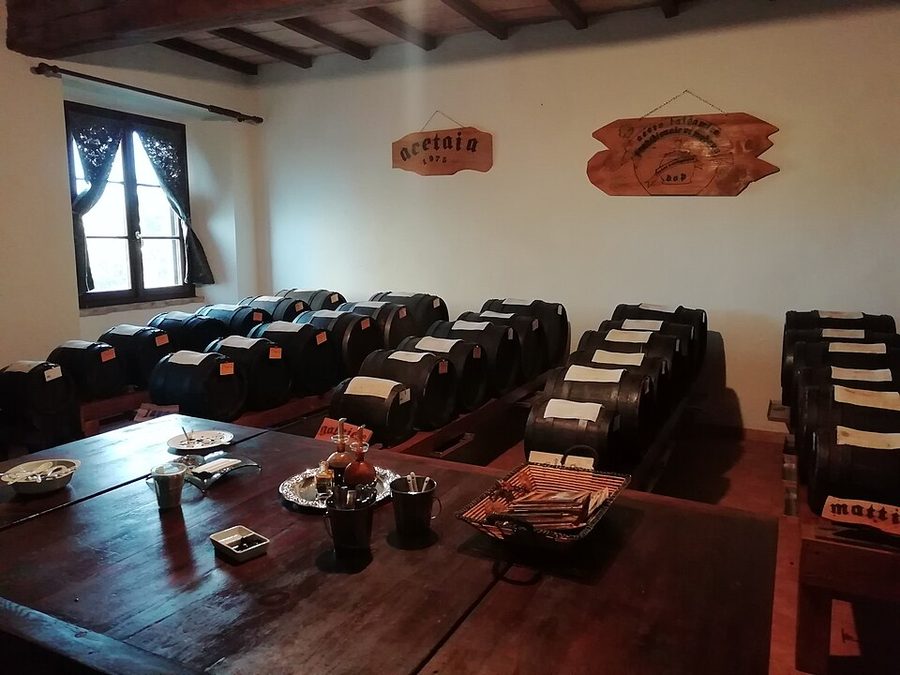
Next is the Acetaia Museo Boni, for traditional balsamic at 15 and 25 years, poured on Parmigiano and on ice cream. Then a family Lambrusco winery in Castelvetro di Modena, and a long lunch at an osteria in Castelnuovo Rangone: antipasti, two handmade pastas, a main course, tiramisu, wine and coffee. The day runs about eight hours for up to 19 people, and it is not suitable for wheelchair users.
Bologna Food Valley Experience: Factories, Winery & Lunch: from €153 per person, reduced from €219 (checked November 2026).
from €153Dates and prices
From Bologna: Parma Cheese & Ham Factory Tours and Tastings
This is the trip for Prosciutto di Parma. You make your own way to Bologna Centrale, with the return train ticket included, and meet the guide outside the Hotel NH in Parma. A driver takes you to a dairy to see the stages of Parmigiano production and taste two ages with local wine, then up into the hills to a prosciuttificio, a ham house, to see the legs curing and taste them with a glass of wine.
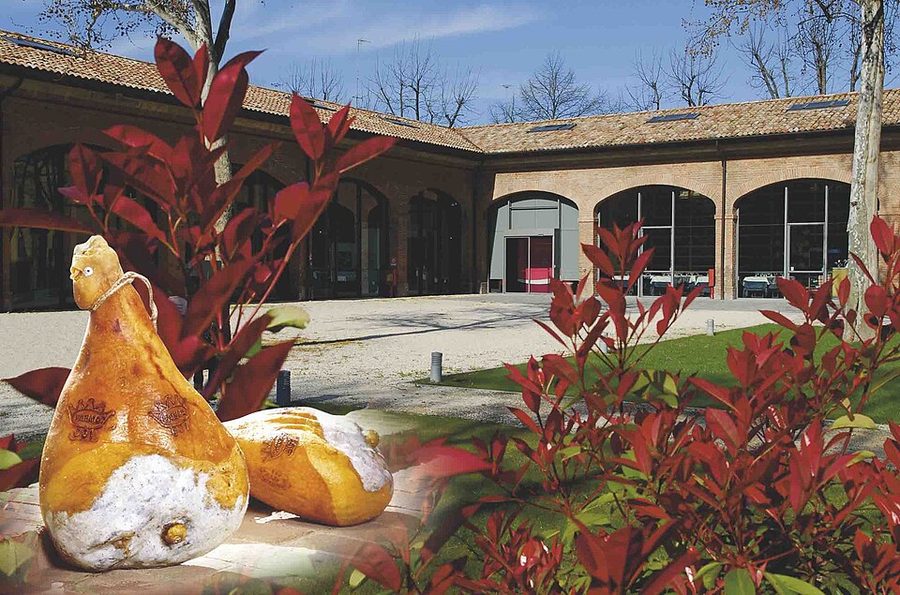
The day runs about eight and a half hours and returns you to Parma station for the train back. Lunch is not included, so eat in Parma before the train. It is the dearest tour here, sold as private or small-group.
From Bologna: Parma Cheese & Ham Factory Tours and Tastings: from €255 per person (checked November 2026).
from €255Dates and prices
How to choose: a walk, a market, a class or a day out
Start with time. If you have one morning, take a city walk; if you have two days, a walk on the first and a class or a countryside trip on the second is the best order, because the walk teaches you what to look for and the rest goes deeper. The countryside trips eat a whole day and pick you up early to reach a dairy while the curd is being lifted, so do not book one for the morning after a late dinner.
Then appetite. The noon walk and the Delicious Bologna morning are meals; the 2-hour walk and the market tour are snacks. The classes are lunch with homework.
Then diet. Pork, dairy and egg pasta run through every menu here. Vegetarians are looked after by the Taste Bologna and Delicious Bologna walks, the Pastamama class and the market tour, if you say so at booking. Gluten-free is possible only on the Taste Bologna walk, and vegans are best off on the market tour.
Compared with the Rome food tours, Bologna’s are less about street food eaten on the hoof and more about shops: buying, slicing, sitting down. Expect more cured meat and fewer fried snacks.
| Tour | Length | Starts | From |
|---|---|---|---|
| Taste Bologna walk | 4 hours | Bar Romano, by San Petronio | €115 |
| Delicious Bologna walk with lunch | 4½ hours | Two Towers, 9:55am | €110 |
| Do Eat Better full-meal walk | 3½ hours | Two Towers, noon | €67 |
| Secret Food Tours walk | 2 or 3 hours | Via Zamboni 8c | €75.49 |
| 2-hour mortadella and lasagna walk | 2 hours | Piazza Minghetti | €56 |
| Guided food markets tour | 2 hours | Via Belvedere 6 | €42 plus food |
| Pastamama home class | 3 hours | Via Mazzini 125, 10am | €95 |
| Pasta Secrets class | 5 hours | Via Orfeo 18 | €105 |
| Food Valley day trip | 8 hours | Hotel NH De La Gare | €153 |
| Parma cheese and ham trip | 8½ hours | Train to Parma | €255 |
When to go: season and time of day
The city walks run all year. Spring and autumn suit three hours on foot; winter is the season for tortellini in brodo. In August many family shops take their holidays around Ferragosto on the 15th, and the Mercato delle Erbe’s own closure list shows stalls shutting for up to a month in late July and August.
Time of day matters more than season. The market walks are best before noon, when the Quadrilatero is shopping rather than drinking; by late afternoon the lanes have turned to aperitivo. The dairies work early every morning, and the curd comes out of the vats before mid-morning, so the trips into the countryside are morning trips. Sundays are thin: many shops and some market stalls close, so book walks for Monday to Saturday.
Eating the same ground on your own
None of these needs a guide. Bring cash for the small counters.
The Quadrilatero
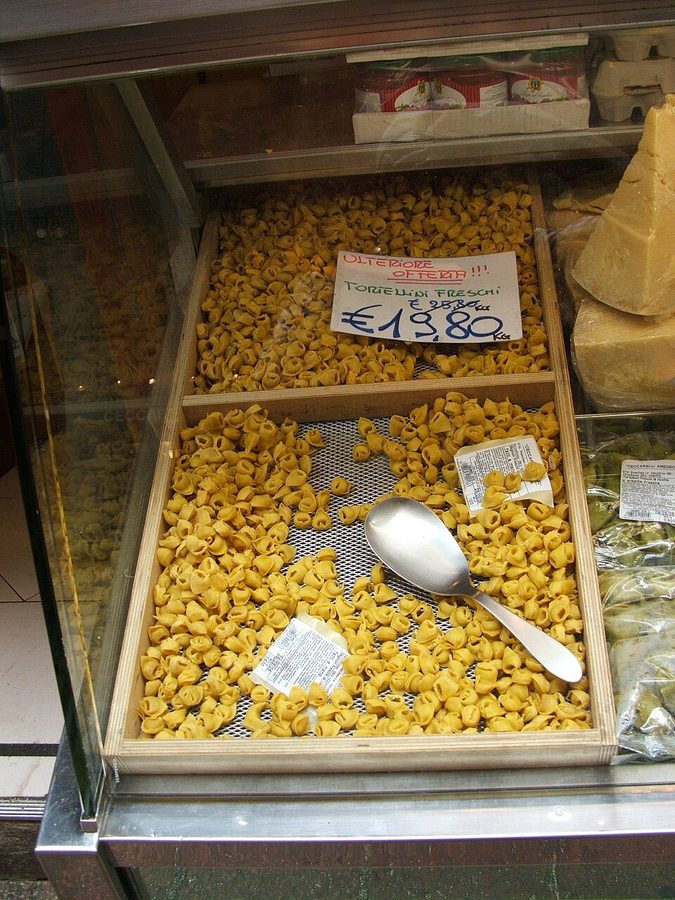
Begin at Tamburini, Via Caprarie 1, a salumeria trading since 1932, which sells tortellini, mortadella and Parmigiano at the counter and serves plates in its wine bar. It opens on Sundays too, from 10am to 6:30pm, which solves the Sunday problem. Two lanes over, Salumeria Simoni keeps its shop at Via Drapperie 5/2a, a restaurant at Via Pescherie Vecchie 3/b and a hot takeaway at number 6/b. Paolo Atti & Figli, the bakery and fresh pasta shop, has two doors, at Via Caprarie 7 and Via Drapperie 6.
Then do what the Taste Bologna walk does without the guide. Buy a paper cone of mortadella, Parmigiano and bread, and carry it to the Osteria del Sole at Vicolo Ranocchi 1/d. It has served wine since 1465, it serves only wine and beer, and the house rule is on its own page: they bring the wine, you bring the food. On Sundays it opens from noon to 4pm.
For a sit-down glass in between, the Mercato di Mezzo at Via Clavature 12 is open from 10am to midnight, Monday to Saturday.
The Mercato delle Erbe and Via Castiglione
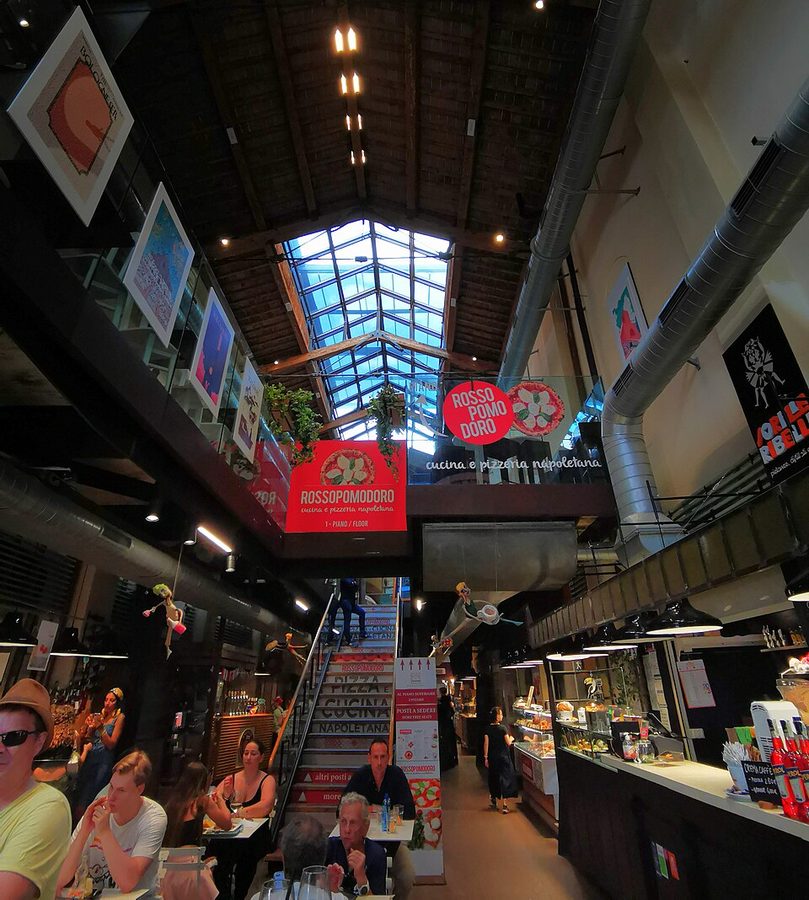
The Mercato delle Erbe at Via Ugo Bassi 25 is the city’s largest covered market in the centre, rebuilt in 1949 after wartime bombing. Since 2014 part of it has been given over to places to eat, so you can shop the stalls in the morning and lunch at the back. It keeps ordinary shop hours, and the individual stalls set their own.
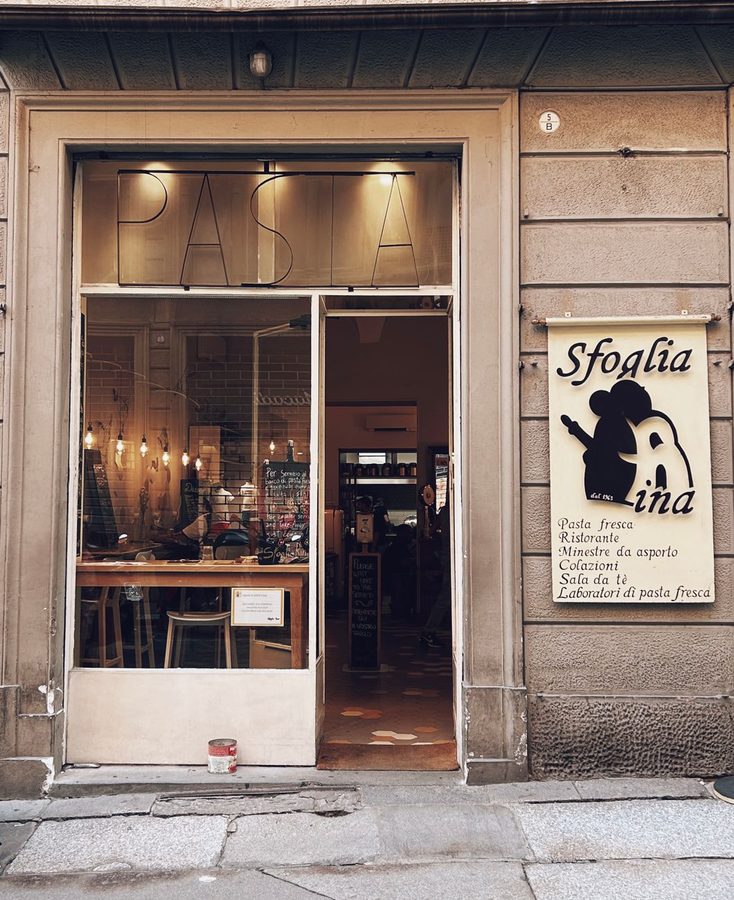
On the other side of the centre, Sfoglia Rina at Via Castiglione 5/b sells fresh pasta to take away and serves it at tables; it does not take reservations, so go early or late. From there it is a short walk to Piazza Santo Stefano, where most of the tours end.
Bolognina, and the old FICO site
Cross the railway north into Bolognina, the old working-class district, for Trattoria di Via Serra at Via Luigi Serra 9/b. It is in the Michelin Guide for regional cooking and fresh pasta, it is small and informal, and it fills up: book even for lunch.
FICO Eataly World, the food theme park on the city’s north-east edge, closed in its original form on 18 February 2024 and reopened later that year as Grand Tour Italia, with one eatery for each Italian region. Entry is free and it was open from 10am to 11pm when checked. It has had a rough run, with six of its regional eateries shut within months of reopening, and in August 2026 its founder Oscar Farinetti told la Repubblica after a €6 million loss that it would not close. I’d skip it: everything it sells is better in the Quadrilatero.
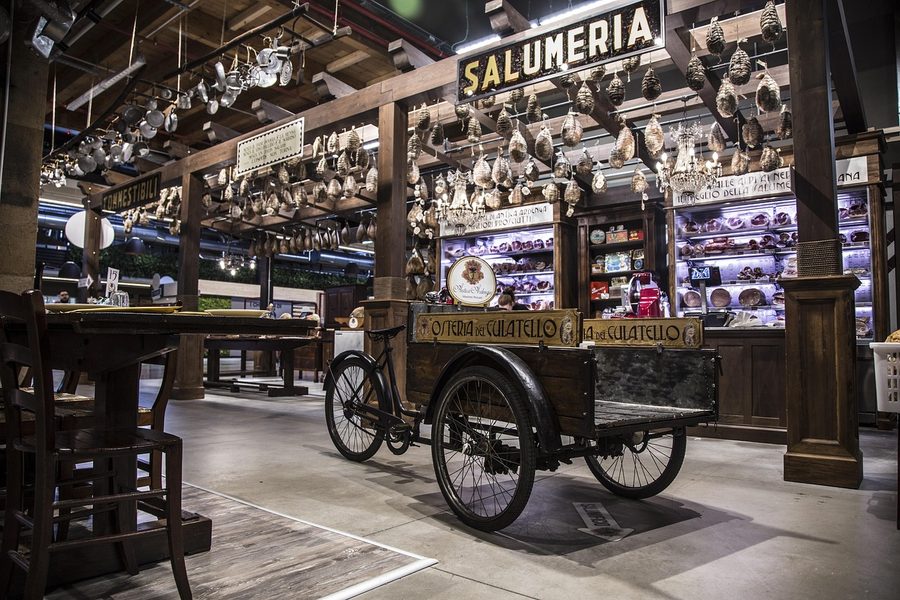
Back on Via Drapperie, the slicer is still running. Ask for the 24-month and the 36-month side by side, an etto of mortadella cut to order, and take the paper parcel round the corner to the Osteria del Sole before it gets warm.